The Essential Guide to the 8th Arrondissement
- SUBSCRIBE
- ALREADY SUBSCRIBED?
BECOME A BONJOUR PARIS MEMBER
Gain full access to our collection of over 5,000 articles and bring the City of Light into your life. Just 80 USD per year.
Find out why you should become a member here.
Sign in
Fill in your credentials below.
Discovering the 8th arrondissement for the first time is like opening a treasure trove of riches and not knowing which to choose first. Not only is it redolent with history – not all of it pretty – but the district is also stuffed with some of the most expensive hotels, restaurants, fashion brands, and real estate in Paris. Home to the Elysée presidential palace, the 8th is also known for the so-called Golden Triangle, edged by the avenues Montaigne, Georges V and the Champs-Elysées.
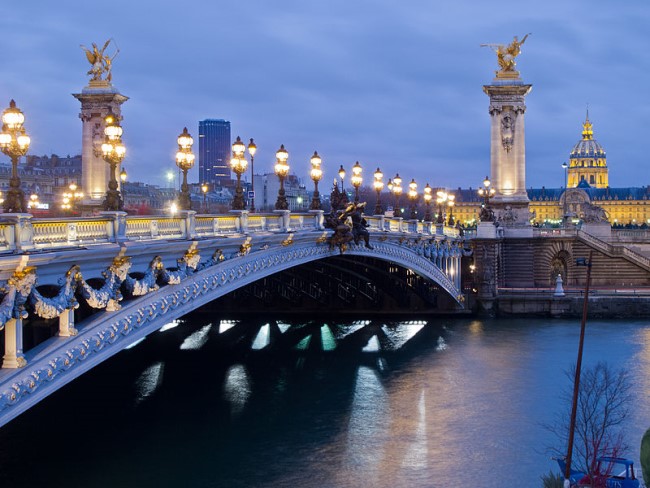
Nighttime view of Pont Alexandre III. Photo: Carlos Delgado/ Wikimedia Commons
What to See and Do
The glorious Pont Alexandre III was built for the 1900 Exposition Universelle, to link Invalides on the left bank to the Grand and Petit Palais across the Seine. The 160-meter bridge, festooned with gilded statues of winged horses, nymphs, and Art Nouveau lamps, could not be a more dramatic portal to the 8th arrondissement. The 1900 Exposition Universelle was not universally popular among the public who felt the money could be better spent; however the stunning architecture of both the Grand and Petit Palais with their glass roofs and ornate interiors, and the breathtaking beauty of Le Pont Alexandre III, have withstood the test of time. Impossible to imagine Paris without them.
The most famous street in the world, the Champs-Elysées, was created by Louis XIV’s brilliant gardener André Le Nôtre in 1667 to improve the view to the Tuileries. It was extended at the end of the 18th century and trees replanted.
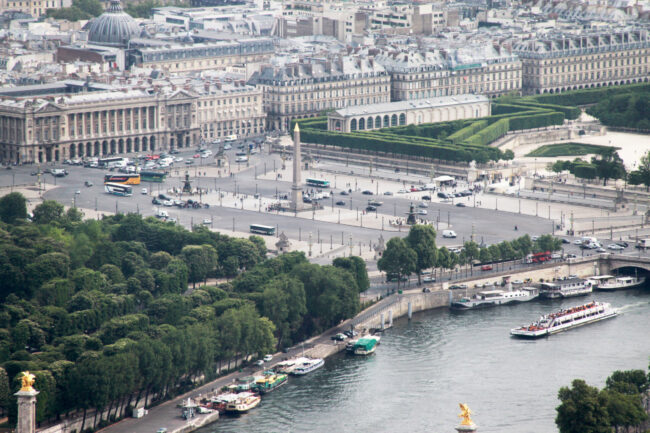
Place de la Concorde as seen from the Eiffel Tower. Photo: Cristian Bortes / Wikimedia commons
Place de la Concorde is the largest square in Paris. Situated at its center, the Egyptian obelisque was brought from the Temple of Luxor in Egypt. Of course, Place de la Concorde, formerly Place de la Revolution, is forever famous for its well-used guillotine – and the executions of King Louis XVI and Marie Antoinette during the Reign of Terror.
At the other end of the Champs-Elysées, the Arc de Triomphe was commissioned by Napoleon in 1806 and completed in 1836. The tomb of the Unknown Soldier was placed under the arch in 1920, where an eternal flame burns in tribute to the French killed in both World Wars. (Tickets should be purchased online to access the top of the 50-meter monument.)
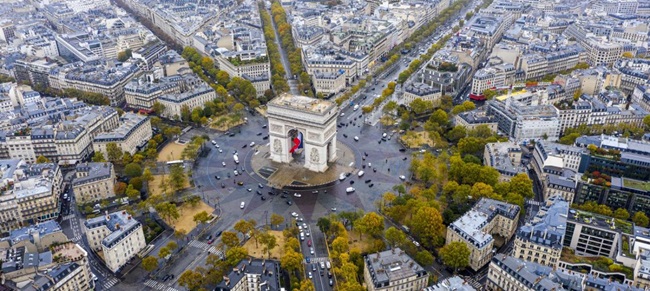
Champs Élysées. Photo credit: iStock – GlobalP
The Elysée Palace, located on the extremely fashionable Rue du Faubourg Saint-Honoré, is the official residence of the President of France. It was completed in 1722 and had a checkered history – once being the abode of Madame de Pompidou. (Louis Napoleon Bonaparte resided in the Tuileries Palace but kept the Elysée as a secret meeting place for his mistresses. A secret underground passage, since demolished, ensured discreetness.) De Gaulle, who occupied the Elysée from 1959 -1969, decried its lack of privacy and oversaw the purchase of the luxurious Hotel de Marigny opposite to lodge foreign state officials. At present Emmanuel Macron and his wife Brigitte have been in residence since 2017.
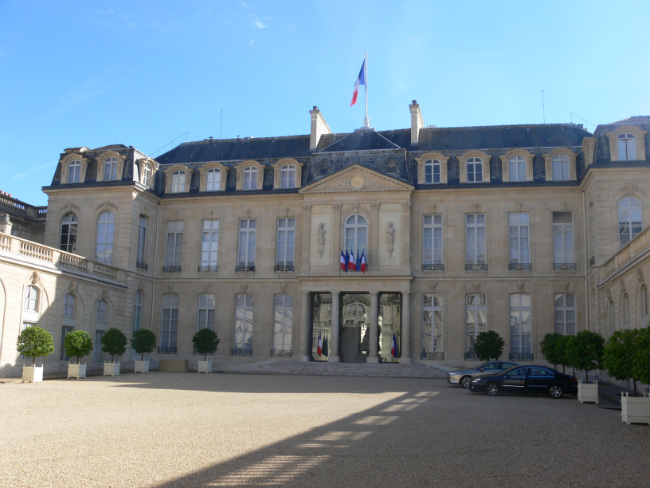
Élysée Palace. Photo: Remi Mathis/ Wikipedia Commons
Museum Multitude
Museums not to be missed in the 8th include Le Grand Palais which combines steel, stone and glass in a light-filled architectural masterpiece. After a four-year renovation, the Grand Palais prides itself as being so much more than an art gallery. It is a diverse cultural and exhibition center with book shops, stores, and restaurants, and it now boasts dedicated family areas such as the Palais des Enfants and the Salon Seine. The Palais des Enfants is an innovative, 620-square-meter space beneath the Rotonde d’Anton, especially designed for children aged between 2 and 10 offering “a poetic and playful exploration blending art and science.”
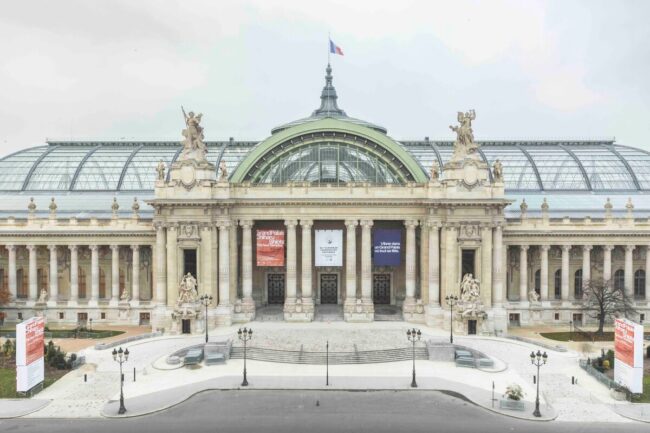
Façade du Grand Palais, avenue Winston Churchill. Photo: ©SIMON LERAT pour le GrandPalaisRmn, Paris 2024
Opposite Le Grand Palais, its little sister Le Petit Palais has a permanent display of paintings and sculptures as well as temporary art exhibitions. Its café in its palm-filled courtyard is a haven after a busy morning’s sightseeing and better still, Le Petit Palais does not charge an entrance fee.
Just steps from the Champs-Elysées the Musée Jacquemart-André (158, Boulevard Haussmann) boasts one of the finest private art collections in Paris. In this sumptuous private mansion, 19th-century power couple Edouard André and his wife Nélie Jacquemart amassed an almost unsurpassed collection of furniture and objet’s d’art as well as masterpieces by Botticelli, Rembrandt, Fragonard, Van Dyck and Ucello.
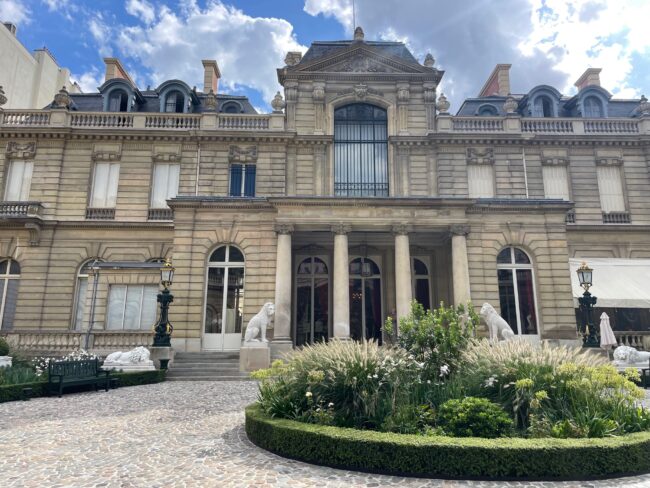
Musée Jacquemart-André. Photo: Bonjour Paris Editors
If 18th-century furniture is your thing, the Hotel de la Marine with its breathtaking view of Place de la Concorde is a must to visit. Ange-Jacques Gabriel, who was chief architect to King Louis XV, created this emblematic building which was used for storing furniture for the royal palace before becoming the headquarters of naval staff. In order to return to the Age of Enlightenment, the apartments were restored to their 18th-century state to allow visitors to step back in time where in the diplomatic salon, for example, a secret door can be found which allowed a spy to listen in to secret conversations. The Loggia promises one of the most beautiful views in Paris. A room that witnessed not only the theft of the crown jewels and the erection of the obelisk, but also the less romantic view of the execution of Louis XVI and Marie Antoinette.
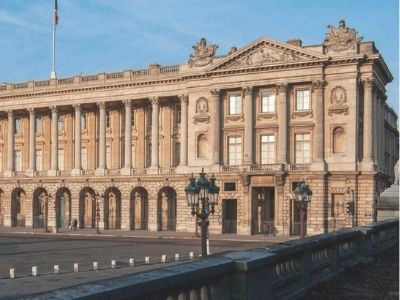
Hotel de la Marine. ©CMN / Jean Pierre Delagarde
On the edge of the Parc Monceau is a little-known museum, the Musée Nissim de Camondo, which was home to great philanthropists and art collectors of the late 19th century (who lost a son in WWI, and family members in the Nazi death camps in WWII). Another private mansion, it was built on the model of the Petit Trianon in Versailles. Of special interest are petrified wooden vases that belonged to Marie Antoinette and a bottle of Madame Pompadour’s sake!
At the same time, the 20-acre Parc Monceau, on the very boundary of the 8th, is a folly not to be missed. In 1778, the fabulously wealthy Duc de Chartres, the future duc d’Orléans, a cousin of King Louis XVI and a lover of all things English, decided to construct an Anglo-Chinese garden with reconstructions of buildings of different ages and continents. The gardens contained a miniature Egyptian pyramid, a Roman colonnade, a tartar tent, a Dutch windmill, a temple of Mars and an Italian vineyard. Over the ensuing years, some structures were added and others removed. Haussmann’s team planted the park with exotic trees and flowers. Later, statues of writers and musicians were erected. Parc Monceau remains a wonderful folly, with nine gated entries, colonnades, a lake, curving paths and water lily pond. It is beloved by Parisians and their families and is well worth discovering.
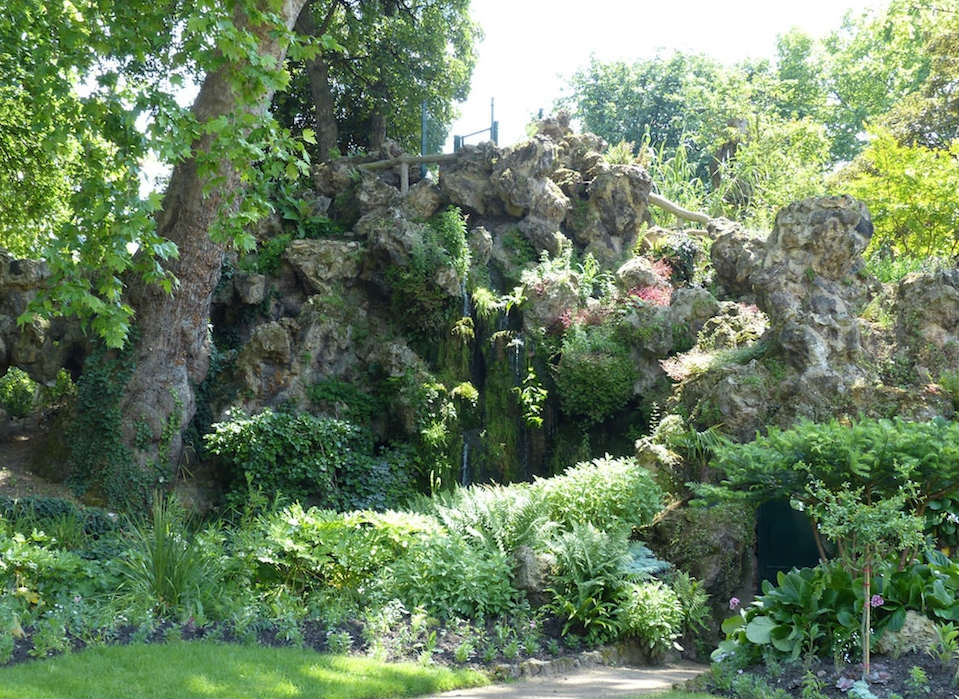
Parc Monceau by Carnat Joel/Flickr
Palace Hotels
As can be expected in this affluent arrondissement, it is home to some of the most expensive hotels in Paris. Built in 1928, the George V Hotel, now Four Seasons George V (situated at 31, Avenue George V) has rooms starting at around 2,000 euros per night up to around 20,000 euros per night for luxurious suites. The Hotel de Crillon, overlooking Place de la Concorde, has prices to match its luxurious interiors and consequently is not for the budget-minded traveler! Likewise, the Plaza Athenée and the Hotel Le Bristol are absolute top-end hotels and wonderful if you can afford them. Searching websites well in advance of your visits to compare prices is the best way to go, but you don’t need to stay in the 8th to enjoy its attractions. It is well served by numerous metro lines – 1, 2, 6, 8, 9, 12, 13 and 14.

“A forest of Christmas trees” at Le Bristol Paris
Where to Dine Out
Expensive, Michelin-star restaurants abound but there are alternatives which will not break the bank.
At 10, Rue de L’Isly, La Pause Libanaise Resto offers starters from 5 euros and main courses from around 20 euros. Vegetarians and vegans are well catered for.
La Pâte à Nouilles, at 8, Rue de la Castellane, is an Asian restaurant with good reviews, especially for their noodles and crispy chicken.
Capriccio, at 33, Rue du Rocher, is renowned for its Milanese schnitzel and its authentic Italian atmosphere.
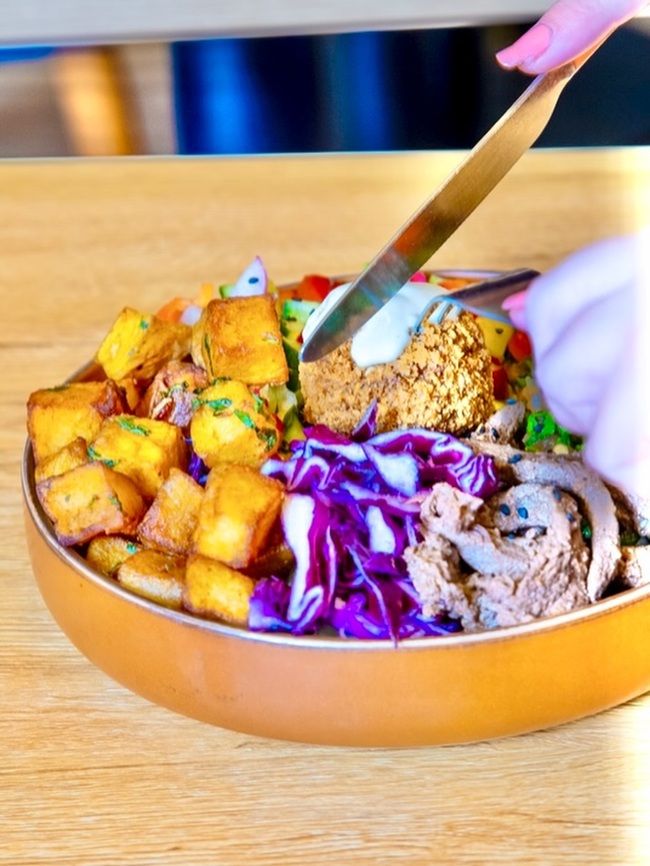
Photo: La Pause Libanaise Resto Instagram
Perhaps the most unexpected lunch restaurant is the Foyer de la Madeleine, inside the Madeleine Church, where volunteers serve home-made courses with fresh ingredients. The Foyer is open to everyone — local residents, students, retirees and tourists — with prices adapted to aid people in precarious situations or loneliness. Membership for one day costs 4 euros and lunch 13.50. An annual membership costs 10 euros. (L’Eglise de la Madeleine is a must see for its internal and external beauty. Its 52 Corinthian columns and vast ocastyle portico has been the subject of extensive renovation which will continue throughout 2026, restoring the façade to its original whiteness.)
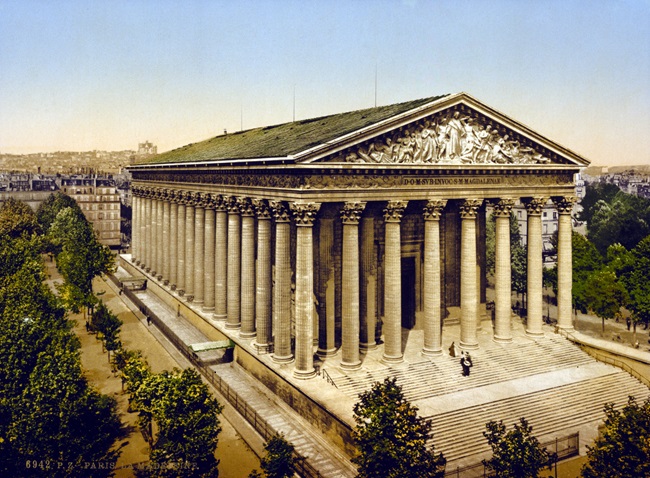
The Madeleine, Paris, France, Photo: Wikimedia Commons
For special occasions or just pushing the boat out, fine dining is not in short supply in the 8th arrondissement. The Four Seasons Hotel George V has three Michelin starred restaurants all promising high-end gastronomic experiences in luxurious settings.
The legendary Brasserie Fouquet’s, which first opened its illustrious doors in 1899, is situated at the crossroads of Champs Elysee and Avenue George V. The Brasserie offers breakfast menus, a 3pm to 6.30 menu and a Theatre dinner menu, all in an elegant and refined décor, its wall decorated by black and white photographs of cinematic icons who have dined there.
The two Michelin star restaurant of Jean–François Piège, at 7, Rue d’Aguesseau, offers a tasting menu under a sculptural ceiling made up of panes of glass. Reservations are a must.
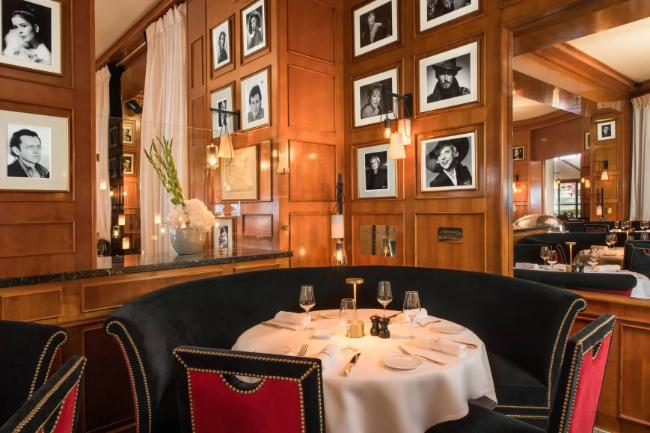
Fouquet’s
Nightlife
Celebrated for its clubs, the 8th arrondissement offers a vibrant, sophisticated (and perhaps more expensive!) nightlife scene.
The renowned Le Boeuf Sur Le Toit at 34 rue du Colisée has moved premises many times since its inception in 1922, but always within the confines of the 8th. It was an instant success with jazz aficionados, and its opening night audience included Picasso, Diaghilev and Maurice Chevalier. It remains a popular restaurant and music hall with cabaret and Can Can.
At 78 avenue des Champs-Élysées, the Lido, renowned for its BlueBell girls, closed as a cabaret in 2022 and transformed into Lido 2, shifting to large-scale musicals.
Not so The Crazy Horse, the legendary cabaret which promises a sensual and dizzying show featuring nude female dancers. The Crazy Horse can be found at 122 avenue George V.
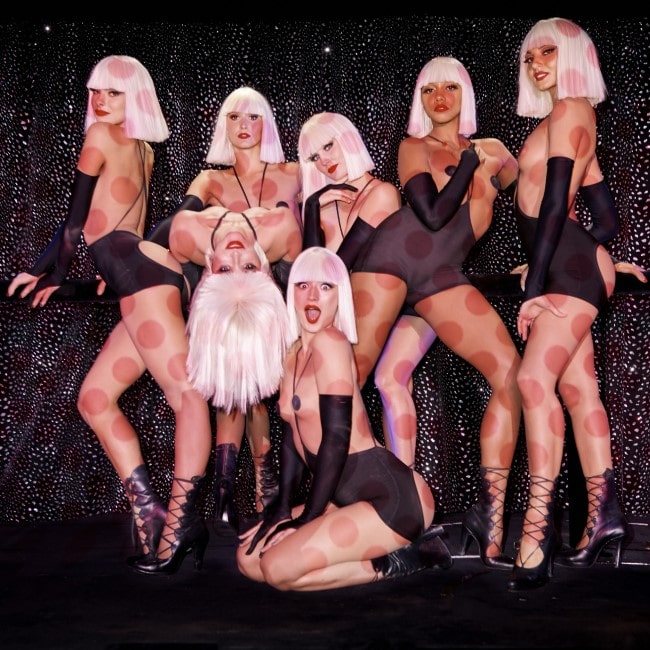
© Remi Desclaux/ Crazy Horse Paris.
However, if you are simply wanting to relax after a busy day in impressive surroundings and enjoy the vibes, chilling out with a cocktail could not be easier. Most of the major hotels offer cocktail bars, but Les Ambassadeurs at the Hotel de Crillon is hard to beat, embodying Parisian elegance.
Choose one of the 15 signature cocktails like the Birthday Cake, a combination of vodka, marscapone, ladyfinger, coffee, white cacao, cream, cherry, and pecan bitters. Les Ambassadeurs also invites guest bartenders from all over the world to show off their own individual concoctions. Dress code is casual and with its fabulous interior, live music and view over the Place de la Concorde, it is hardly surprising that Les Ambassadeurs has become a much-loved haunt of Parisiansand visitors alike. Les Ambassadeurs is open from 5 pm until 1am.
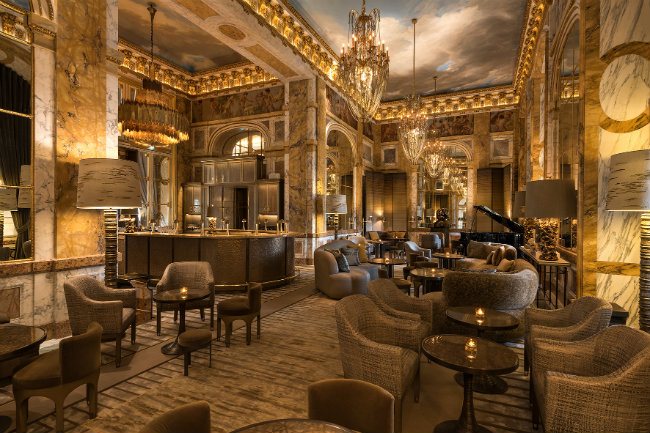
Bar Les Ambassadeurs. Courtesy of Hotel de Crillon
Where to Shop
While the Rue du Faubourg St Honoré cannot compete in size and grandeur to the nearby Champs-Elysées, it’s nevertheless acknowledged as one of the most luxurious and fashionable streets in the world. Hermès, Louis Vuitton, Chanel, Gucci and Louboutin boutiques are interspersed along its mile length with art galleries, wine purveyors, and even a house of chocolate, La Maison du Chocolat. When you are finally spent out, either in the wallet or simply window shopping, drop into the Elysée-Saint Honoré, a chic brasserie with sidewalk terrace offering bistro fare such as garlic prawns, carpaccio, and risottos.
The Champs-Elysées, of course, is the real home of the exuberant flagships of iconic fashion houses, but there are small arcades to wander around and less exclusive fashion shops such as Celio, Zara, Levi’s and Galeries Lafayette which are more affordable. Better still, while you are spending money, your men can he sent off to discover either the Citroen store (housing seven stories of Citroen cars, past, present or future), the Atelier Renault (a showroom since 1910), or at no 136, an impressive display of Peugeots.
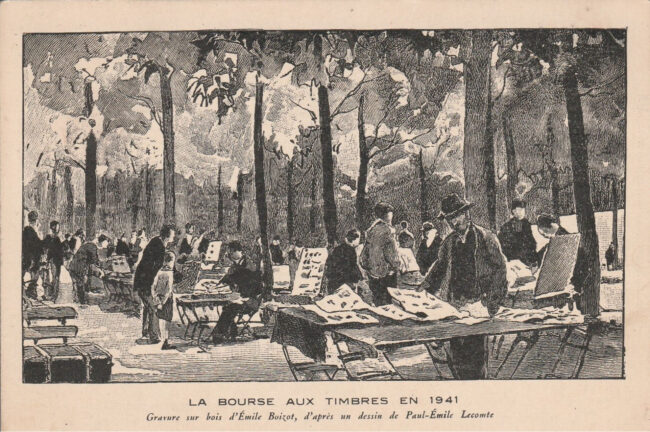
France open-air stamp market. Émile BOIZOT (1897-c.1932). Public domain
A few steps but a world away from the crowds of the Champs-Elysées — in a little, tree-filled square in the Carré Marigny — an open-air stamp market is held three days a week.
This little square was donated to the city of Paris in 1864 for the specific purpose of the trading of postage stamps. Now more than 50 dealers trade in stamps and postcards from all over the world and even if you are not a philatelist, this incongruous little market at the foot of the Champs-Elysées is a fascinating, peaceful reminder of bygone Paris.
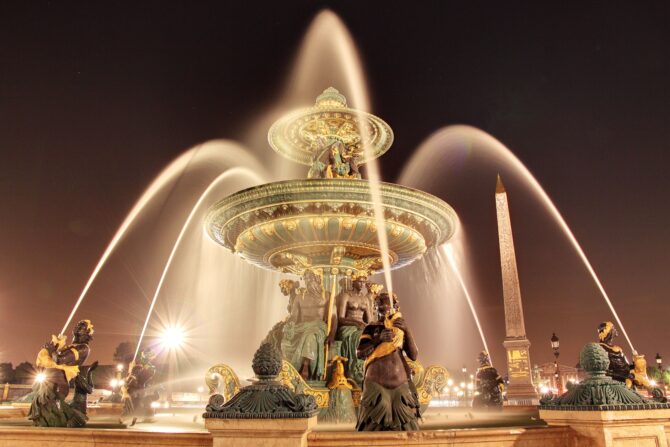
Lead photo credit : La fontaine des Fleuves, Place de la Concorde. Photo credit: Pierre-Louis FERRER / Wikimedia commons
Related Articles