
Flâneries in Paris: Surprises Around Richelieu-Drouot

- SUBSCRIBE
- ALREADY SUBSCRIBED?
BECOME A BONJOUR PARIS MEMBER
Gain full access to our collection of over 5,000 articles and bring the City of Light into your life. Just 80 USD per year.
Find out why you should become a member here.
Sign in
Fill in your credentials below.
This is the 46th in a series of walking tours highlighting the sites and stories of diverse districts of the Paris region.
When I travel on the metro, I like to picture the area around the stations I pass through. Traveling north from Invalides on Line 8, it was easy. Concorde, Madeleine, Opéra all conjured up specific images. But then came Richelieu-Drouot, which was harder. The fact that it’s named after two unconnected men – Louis XIII’s wily chief minister, Cardinal Richelieu, and a Napoleonic general seemed random until I realized that both have buildings named after them in this little area which spans the 2nd and 9th arrondissements. And that’s how I got the idea of a walk between the two, starting at the Bibliothèque Nationale’s Richelieu site and making my way to the renowned auction house, the Hôtel Drouot.
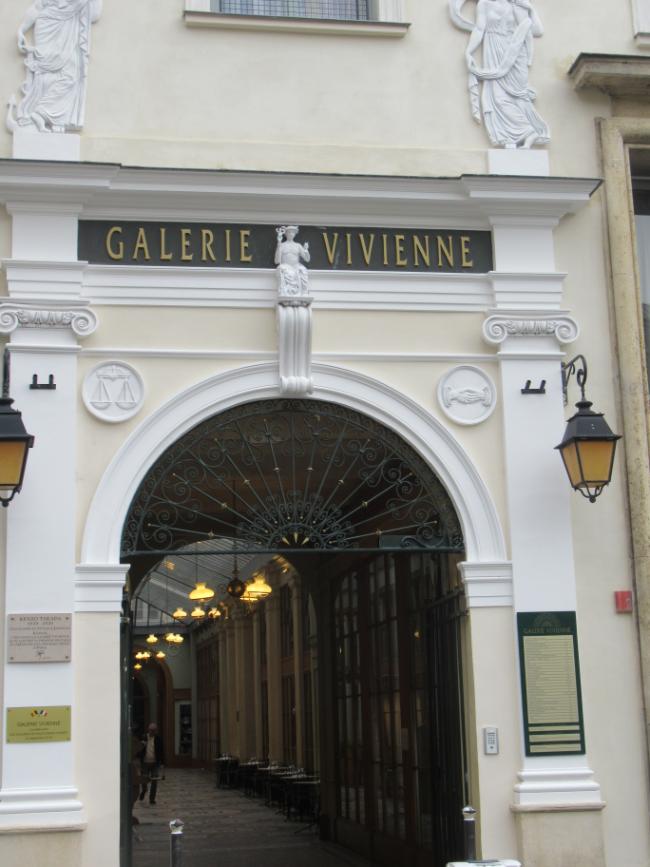
Part of the attraction was that you can wander into both for no charge, so this flânerie would have an interesting focus at each end. After a coffee in the gorgeous marble-floored Passage Vivienne, I crossed over Rue Vivienne to the library’s entrance and went into the imposing courtyard of the palace begun in the 17th century for another First Minister of France, Cardinal Mazarin. After a bag check, I went straight ahead into the building’s public reading room, the Salle Ovale, a giant hall where bookshelves line the walls all the way round under a central, Art Nouveau-style glass-and-iron dome.
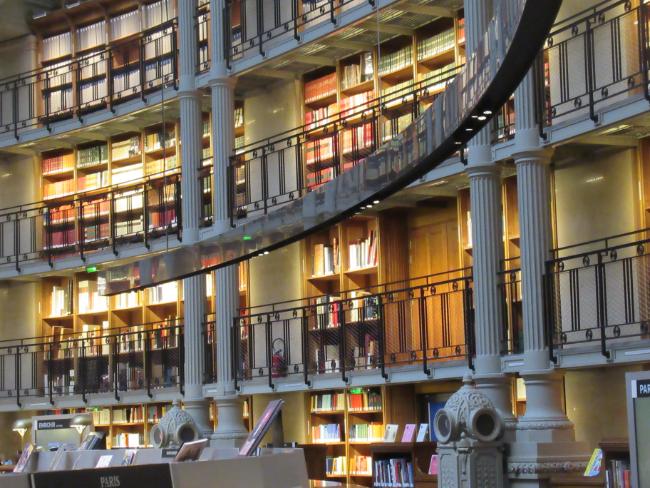
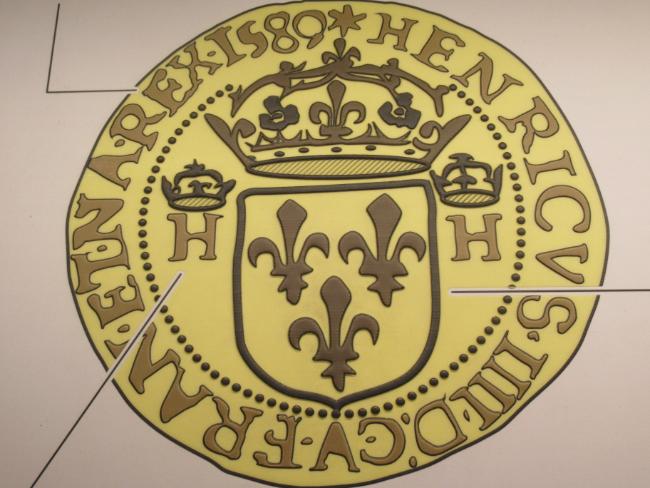
Handily, there is a walkway lined with display cases right around the edge, so I could do a tour without disturbing the atmosphere of hushed concentration. Recent copies of the house magazine, the Journal du Musée, advertised articles as varied as The Treasures of St Denis and the Symbolist movement. Especially fascinating to me was a case showing the design of écus, gold coins minted in 1589 after the coronation of Henry IV, stamped with his title – Henricus IIII – and the initial H, intertwined with crowns and fleur-de-lys. The library’s history dates back to the collection of François I and his ruling in 1537 that a copy of every book published in France should be sent to him, so it’s a total treasure trove for anyone interested in the past.
Salle Ovale. Photo: Marian Jones
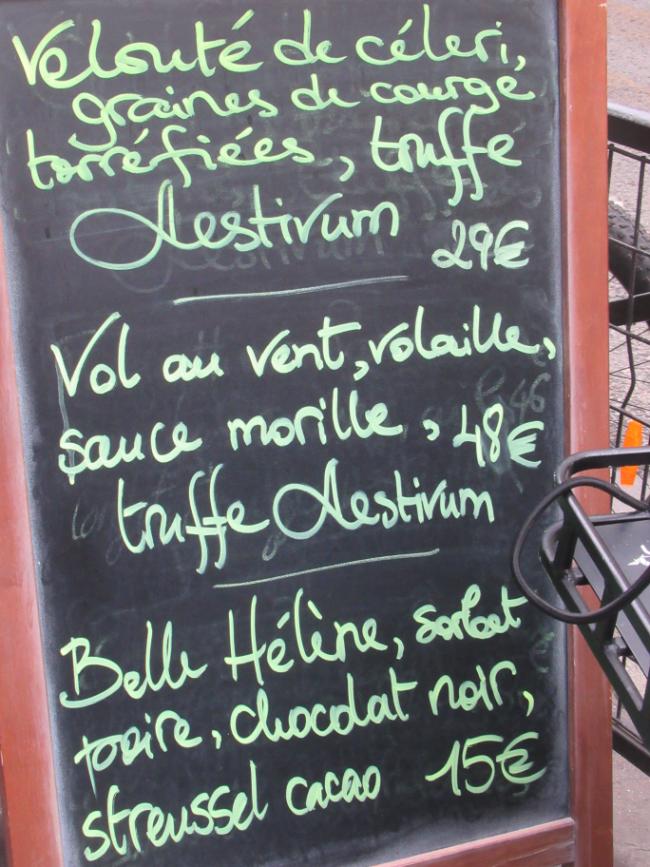
There’s a museum too, but paying to visit it seemed against the spirit of a flânerie and best left for another time. I set off up the Rue Vivienne, where small things kept reminding me that this is an exclusive area. I saw a golden cockerel high up on the side of the Bibliothèque Nationale, a side road named after yet another of Louis XIV’s advisers, Jean-Baptise Colbert, and a blackboard menu advertising soup for €29. That seemed rather a lot. It wasn’t labeled “soup,” but rather velouté de céléri and would arrive garnished with truffles and roasted pumpkin seeds.

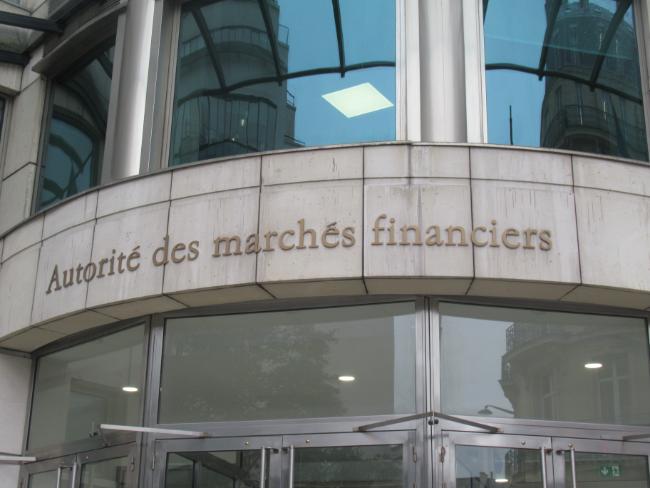
As I reached the end of Rue Vivienne, I crossed over into the Place de la Bourse, where the atmosphere became a little more current. The square is dominated by the Palais Brongniart, formerly the Paris stock market, where I once watched men in brightly colored jackets trading frenetically, but which is now a congress and events center. The air of consequence it lends the square is reinforced by other important-looking buildings belonging to the Autorité des Marchés Financiers and the Agence France Presse. Between them, they made it clear that I’d left the 17th century behind and entered an area where today’s movers and shakers operate, people who stride out of buildings where the tricolore flies and snatch a moment to lunch on truffles.


Nearby street names looked interesting. Why was the busy main road called Rue du 4 septembre? Because, research revealed, it recalls the day in 1870 when the Second Empire fell and France became a republic … again! Although this time, after a turbulent 19th century, they stuck with it, rejecting kings and emperors for (presumably!) evermore. A little way along Rue de Richelieu, named after the cardinal whose stamp is all over this district, came a chance to glance right into Rue de la Bourse and enjoy another look at the elegant, pillared building still labeled Bourse in gold lettering. And further along, a brief detour led to Place Boieldieu, another name which turned out to be significant when I looked it up.
François-Adrien Boieldieu was an early 19th-century composer whose Encyclopaedia Britannica entry explains he “helped transform the French opéra comique into a more serious form of early romantic opera.” He wrote more than 30 comic operas with cheerful titles like L’Heureuse nouvelle (Happy News) and Ma Tante Aurore (My Auntie Dawn) and he must have been completely at home in the little square now named after him because it’s been the Paris home of comic opera for over three centuries. The Opéra Comique is a stone beauty, embellished with suitably operatic design features: caryatids, sculptures in arched niches, a decorative balcony and gilded wooden windows. A poster in a side window advertised the current production, Tales of Hoffmann.
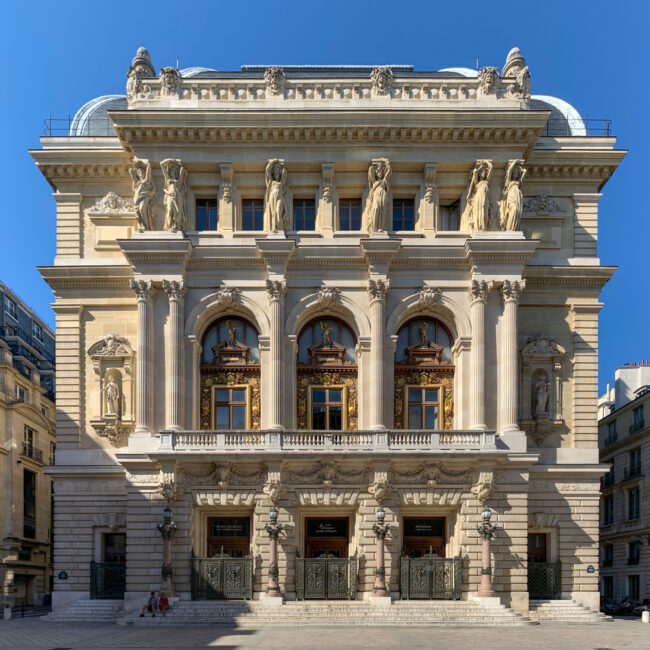
Théâtre National de l’Opéra Comique. Photo: Chabe01 / Wikimedia commons
A quick walk up Rue Favart, named after another librettist, brought me to the Boulevard des Italiens and I realized I was just a minute or two from Paris’s more famous opera house, the Garnier. Instead of turning towards it I went right in search of the Passage des Princes because I love the city’s shopping arcades. Disappointment! It’s boarded up, being renovated. However, while we wait, information posters about the area’s history have been glued to the windows and so I discovered a few more titbits about this part of Paris.
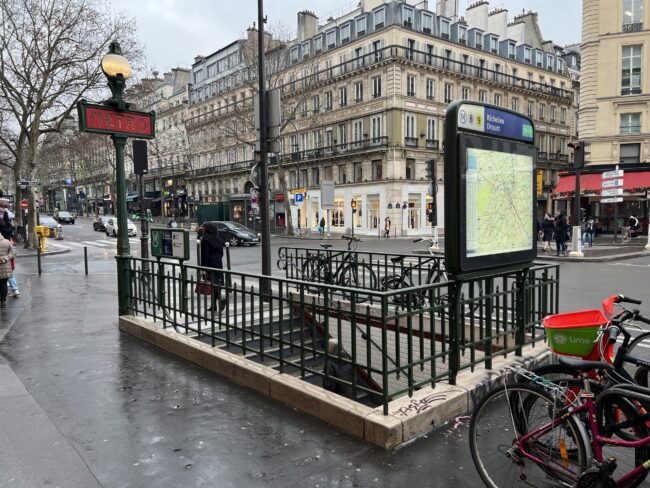
Richelieu-Drouot metro station, from Boulevard Montmartre. Photo: Chabe01/ Wikimedia Commons
I knew about its opera connections, but not about its long-standing links to the French press. That explained the Agence France Presse building I’d just passed, but there was more. Rue de Richelieu had been the first home of l’Humanité, the famous socialist newspaper founded by Jean Jaurès. And, said the next paragraph, it was near here, at the Café du Croissant, that Jaurès was assassinated in July 1914 by a French nationalist who found his pacifist views unpatriotic. It’s now the Bouillon du Croissant, at 146 Rue Montmartre.
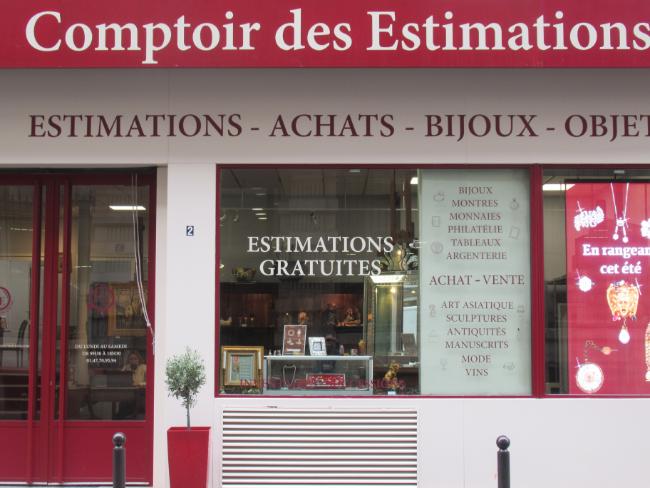
The nearby Richelieu-Drouot metro station was on the corner of Rue Drouot and as soon as I turned into it, it was clear that the famous auction house was close by. Shops like the Comptoir des Estimations advertised that they bought and sold long lists of antique goods: watches and jewelry, coins and stamps, pictures, manuscripts, silverware, Asian art. Plus anything they hadn’t mentioned which might fit into the category antiquités. Some specialized, for example F &R Chamonal, whose intriguing offer was for “books, rare and curious.” Phrases such as “Free estimates” and “Advice given” shouted from the windows, the whole street seemed to be focused on the antiques trade.

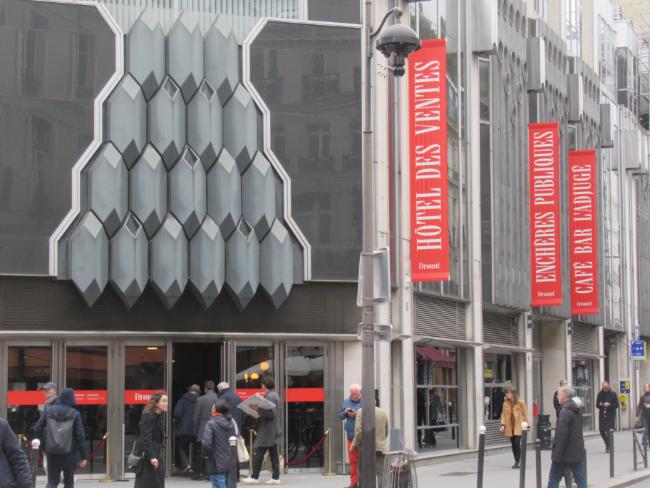
The auction house first opened in 1852, so I was expecting a solid, 19th-century building. But no, this version dates from 1980, its grey façade enlivened by fluttering orange banners advertising its Enchères Publiques (Public Auctions). An information panel in the entrance hall told me I was in the “vibrant heart” of France’s art market, the site of many “historic sales,” involving Degas and Delacroix, Guy de Maupassant and André Breton. In this building, explained the notes, the furniture of kings has been sold, as were some of the first paintings by les impressionistes. The Hôtel Drouot, in short, has an illustrious past. Today, its aim, stated here in print, is to be the “world’s top auction house.”

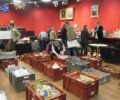
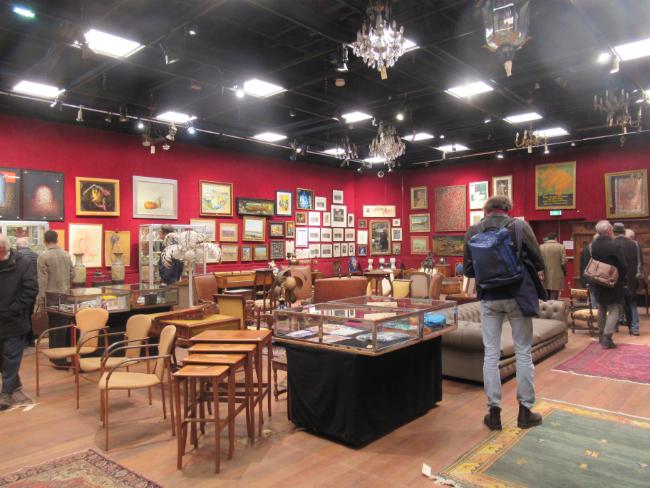
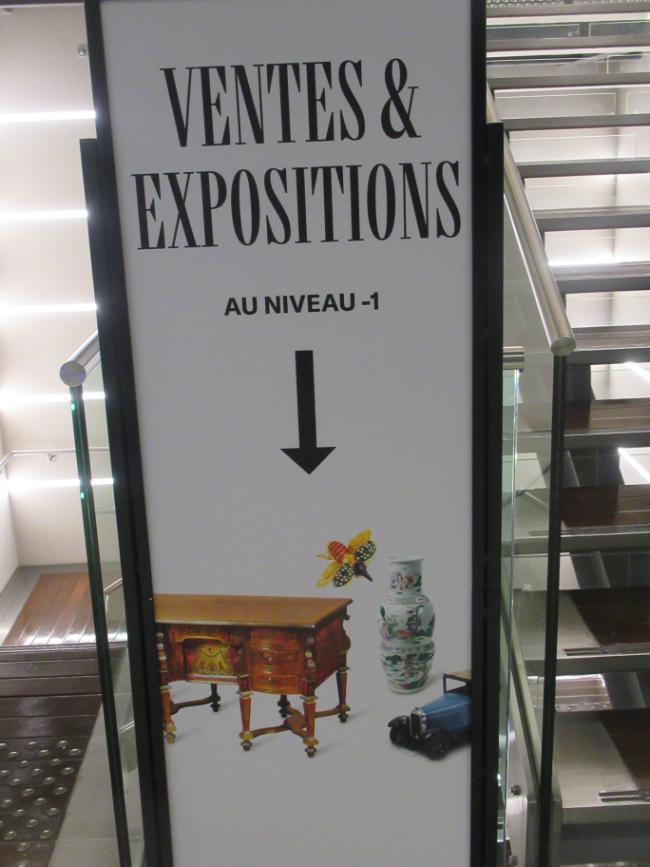
A sign posted downstairs to Ventes et Expositions (Sales and Exhibitions) and what a treasure trove opened up when I went to explore! Room after room of antiquités, free for anyone to browse. In some, the walls were painted deep red to better show off the many paintings and sketches displayed. All around the edges of the room, stood cabinets, grandfather clocks and piles of old trunks, while the center was full of sofas, little tables of ornaments and random items: a birdcage on a fancy stand, weather-worn statues, mismatched rugs, assorted candelabras.
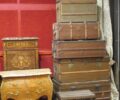
It was not a place, I thought, to go in search of something specific. It was more an overflowing fount of inspiration for anyone with a note or two to spend, or a newly-cleared corner of their house to fill. While I wandered a little dazed, questioning my need for a feather boa and wondering if I could do with a large metal trunk on which the word incombustible was decoratively embossed, I noticed that others seemed better informed. A procession of men scouted each room briefly, casting a knowledgeable eye here and there, presumably preparing their action plan for the next auction, advertised, in French and English, for “next Thursday at 2 pm.” It was all completely fascinating.
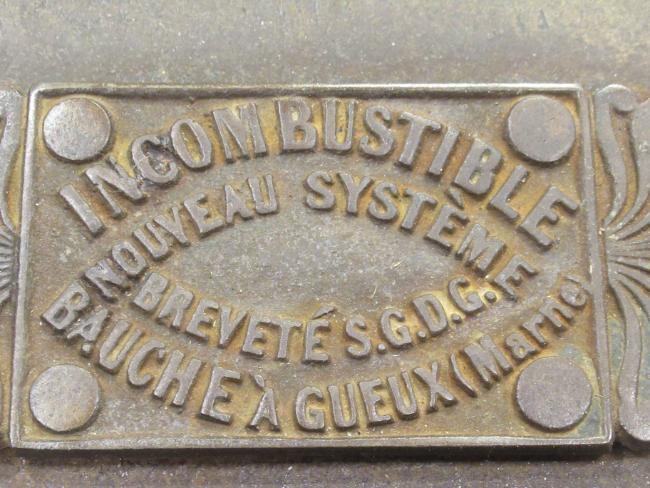
incombustible, Hotel Drouot. Photo: Marian Jones
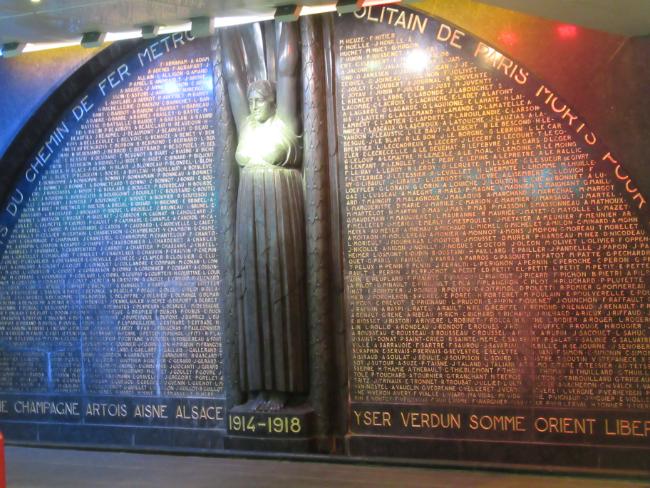
I rounded things off by taking the metro back from Richelieu-Drouot, the station which had inspired this flânerie. As so often, just when thought there was nothing more to see, I noticed something interesting. On the entrance wall inside the station was a large bronze and black marble memorial, the monument aux morts, which listed several hundred names of metro workers who lost their lives in World War I. Golden lettering listed battlefield names I knew from the history books, Marne, Champagne ….. Verdun, Somme and also the word Libération to commemorate those who died liberating Paris in 1944.
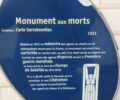
At the start of the day, I had barely been aware of Richelieu-Drouot, except as a word-pairing on Lines 8 and 9 of my metro map. But next time I travel through the station, I’ll have lots of mental images of the surprises I found by taking a little time to go and look.
Bibliothèque Nationale Richelieu
Open Tuesday 10 am – 8 pm, Wednesday – Sunday 10 am – 6 pm
Entry to Salle Ovale free
Museum entry 10€ (concessions 8€)
Hôtel Drouot
Opening times vary, but are often Monday – Friday, 10 am – 5 pm, with a late opening until 7 pm on Thursdays.
Check here for current details
Lead photo credit : Hotel Drouot. Photo: Marian Jones
More in BNF, Drouot, Flâneries in Paris, Richelieu-Drouot
Related Articles

By Marian Jones