
Paris Celebrates 200 Years of Photography

- SUBSCRIBE
- ALREADY SUBSCRIBED?
BECOME A BONJOUR PARIS MEMBER
Gain full access to our collection of over 5,000 articles and bring the City of Light into your life. Just 80 USD per year.
Find out why you should become a member here.
Sign in
Fill in your credentials below.
Did you know that it was a Frenchman who took the very first photograph ever? That was in 1826, or maybe 1827, making this autumn an excellent moment to begin marking the bicentennial. Minister of Culture Rachida Dati has called for a “great and popular festive celebration” to honor the evolution of photography “from daguerrotypes to selfies.” There’ll be plenty of events and exhibitions to look out for, many of them detailed below.
France’s connection with the art of photography dates back to the artform’s earliest beginnings. It was a Frenchman, Joseph Nicéphore Niépce, who took the oldest surviving image, a picture of his courtyard, shot in about 1826. He had to give it eight hours of exposure in bright sunshine before a picture emerged, but it was a pioneering moment. Niépce died in obscurity, but fortunately, he had shared his knowledge with his business partner, Louis Daguerre, who went on to develop the photographic process still named after him and to invent the earliest versions of a camera.
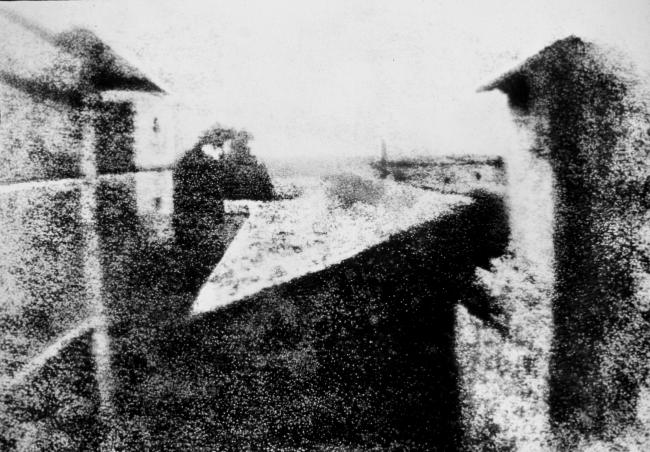
Point de vue du Gras, the oldest conserved photograph. Credit: Nicéphore Niépce in 1827. Public domain, via Wikimedia Commons
In addition, some of the 20th century’s most famous photographers were French: Henri Cartier-Bresson, seen as the father of modern photojournalism, Robert Doisneau who documented everyday life in the streets of Paris, and Robert Capa, the Hungarian exile who settled in Paris and became a legendary war photographer. Today, Paris finds numerous ways to celebrate photography, through museums and outdoor exhibitions, many of which will be playing their part in the bicentennial celebrations. Whether you want to catch one of the major historical retrospectives, enjoy a new contemporary exhibition or simply visit one of the city’s permanent photography galleries, here are some ideas.
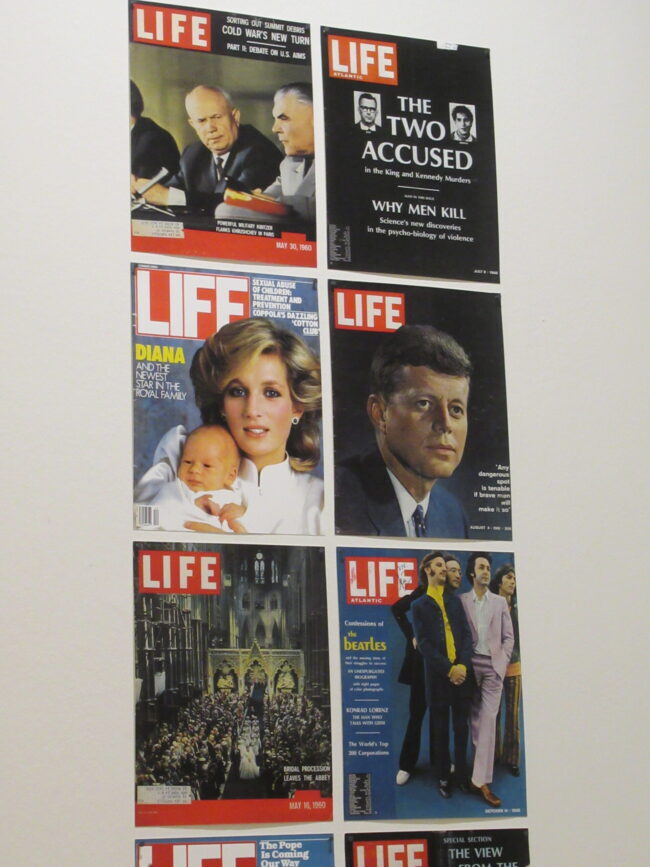
Maison Européenne de la Photographie (MEP), Paris Match covers. Photo: Marian Jones
3 central Paris galleries always worth visiting
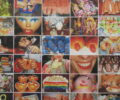
The Maison Européenne de la Photographie in the Marais hosts many different exhibitions each year, often more than one at a time. Until September 13th this year, you can visit the exhibition Photography from A to Z, which is a playful homage to photography, displaying images connected to each letter of the alphabet, weaving in many references and highlighting both contrasts and unexpected connections. J stands for Journal, a section which includes some memorable images from Paris Match front covers, while K allows for some reminiscences on Kodak. N stands for noctambule, a chance to feature some joyful shots of nightlife in 1960s Mali taken by the photographer Malick Sidibé. In short, there’s a whole host of material, spanning history, technical aspects and individual artists.
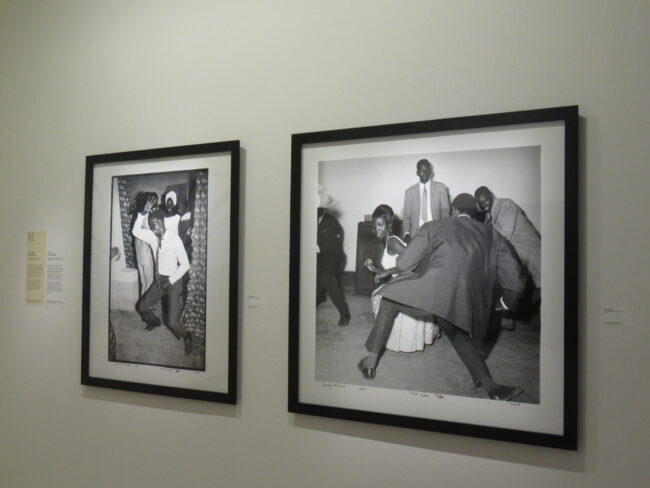
Malick Sidibe photos, Maison Européenne de la Photographie. Photo: Marian Jones
The Jeu de Paume gallery in the Tuileries Gardens also offers a varied programme each year, a recent highlight being the Global Warning exhibition featuring Martin Parr’s quirky and colorful takes on overtourism and mass consumption. It’s an elegant building, commissioned by Emperor Napoleon III in the 1860s as a venue for jeu de paume, the forerunner of modern tennis, but turned into a gallery as the latter became a much more popular sport. Visiting it is a cultural highlight if you are in the Tuileries and Place de la Concorde area, and in addition to the exhibitions, you will find a shop stocking an extensive range of photography books and a branch of the Rose Bakery where you can enjoy organic treats on a shady terrace alongside the Rue de Rivoli.
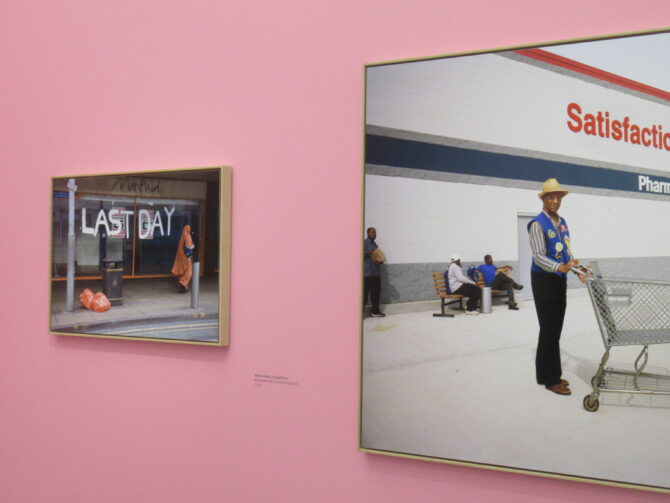
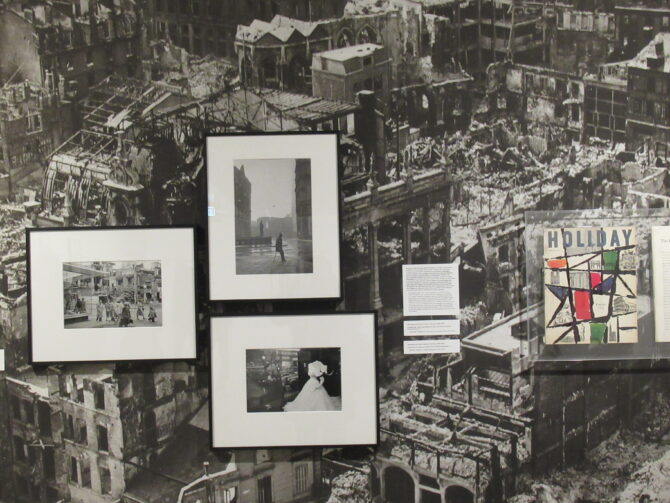
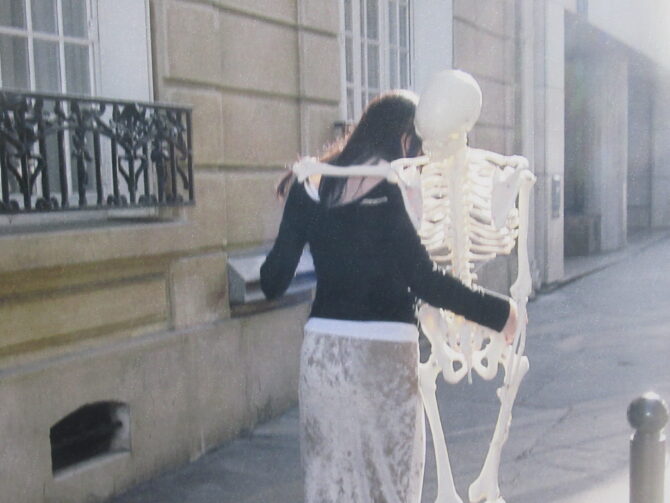
There’s also always something of interest at the Henri Cartier-Bresson Foundation, in Rue des Archives, where three exhibition cycles run each year, some based around Cartier-Bresson’s own work and others featuring artists from around the world. Earlier this year, the exhibition ‘The Europeans’ showcased photographs he had taken when travelling through 1950s Europe, featuring haunting images of German cities in ruins and poverty in post-war London. The pictures were originally published in a book and did much to make his reputation for documenting upheaval and social change through photojournalism.
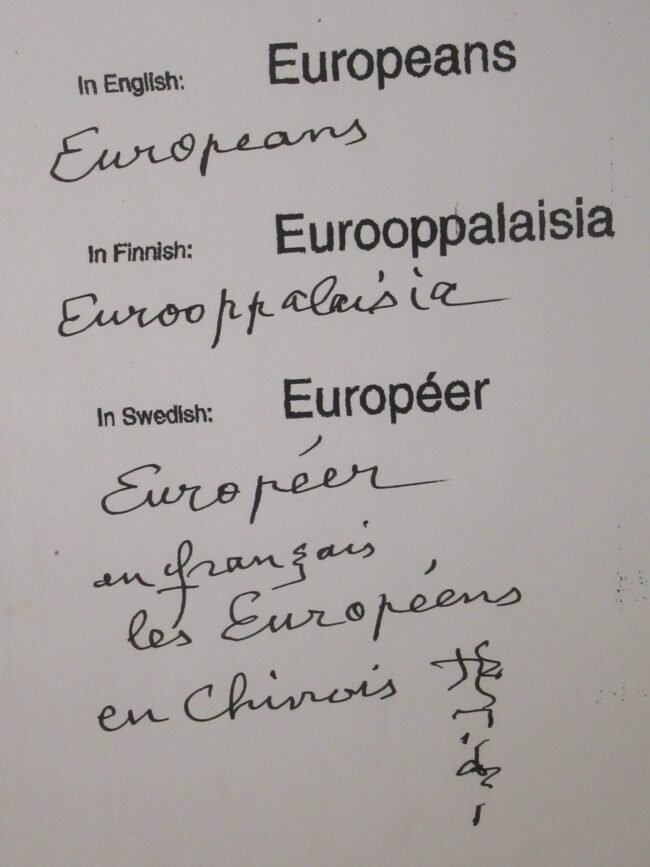
From “The Europeans” at the Cartier-Bresson gallery. Photo: Marian Jones
The French Museum of Photography
This museum, located in Bièvres (Essonne), less than an hour’s journey from central Paris, is the place to visit if it’s the history of photography itself that interests you and the development of techniques associated with it. There’s a vast collection of photographic equipment on display – camera obscuras, magic lanterns, developing equipment, spy cameras and lots more. The museum is currently closed, so keep an eye on their website where the reopening date will be announced
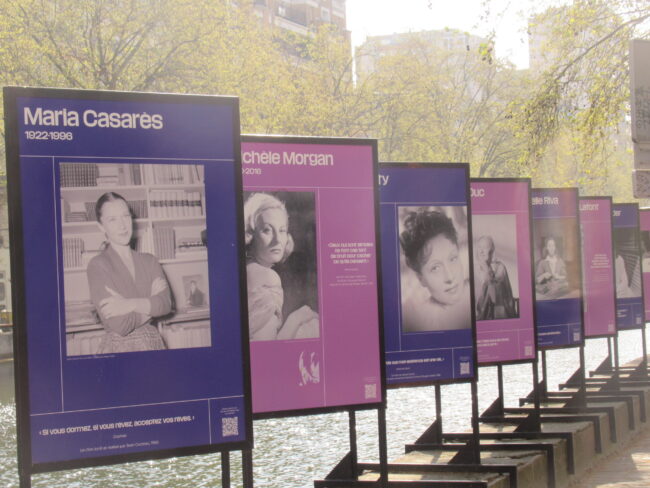
Comediennes des Passerelles exhibition. Photo: Marian Jones
3 Open-Air Exhibition Spaces
Paris excels at these. Don’t be surprised if you happen across a temporary mini exhibition on the side of a building or in a garden square. The recent Cómédiennes des Passerelles exhibition is a good example, when large photos of the actresses associated with the Canal St Martin area popped up along the canal for a few weeks. There are other outdoor areas where a number of free exhibitions are commissioned each year, all definitely worth seeking out when you are nearby.
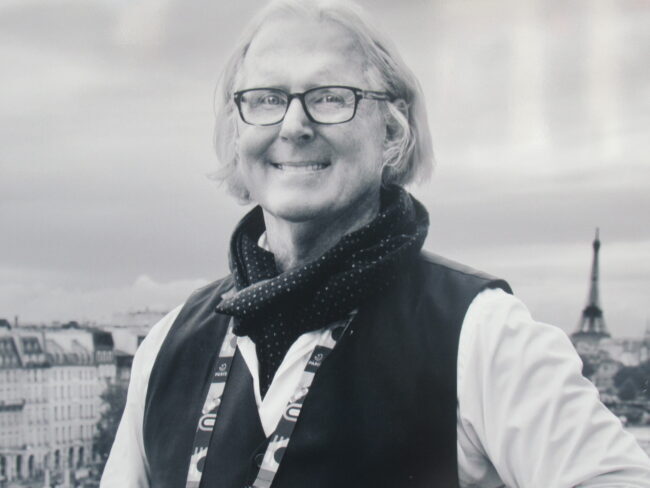
David Turnley exhibition. Photo: Marian Jones
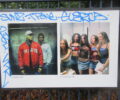
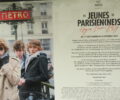
The railings along the Rue de Rivoli near the Hôtel de Ville often become a temporary free gallery. One day last year I unexpectedly found 30 photos of Paris taken by the Pulitzer Prize-winning photographer David Turnley, a long-time resident of the city. More recently, I’ve seen Paris en Vues, a selection of highly individual takes on Paris by different photographers and an exhibition of Hugues Lawson-Body’s pictures of young Parisians. Similarly, the railings outside the Jardin du Luxembourg host temporary exhibitions and recent themes have included “The Living Ocean” and “Resilience and Fragilities.” You can find out more about what’s on currently here. Free, open-access exhibitions are also on offer at the Quai de la Photo, a floating gallery in the 13th arrondissement with 1 000 m² of space for exhibits.
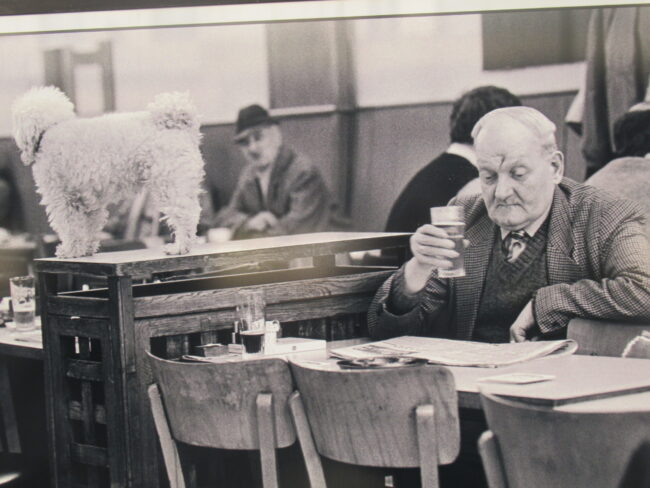
David Turnley exhibition. Photo: Marian Jones
The Paris Photography Year
The main events in the city’s photographic calendar take place in November. Paris Photo is a four-day photography event, scheduled this year to run from November 12th to 15th at the Grand Palais. Over 200 exhibitors will be present and visitors will have a chance to attend book-signings and meet some of the photographers, all of which will serve to launch the bicentennial celebrations. Meanwhile on the left bank, the Photo Saint-Germain festival will comprise a whole series of events held in the area’s museums, galleries and bookstores, running from November 5th-28th.
2 studios to visit
The legendary Studio Harcourt in the 16th arrondissement, where stars like Marilyn Monroe and Salvador Dali had their portraits taken, welcomes visitors. There’s an exhibition to visit and you can even make an appointment to have your own photograph taken in their studio. Alternatively, at Un Jour Dans le Temps on the Viaduc des Arts in the 12th arrondissement, you can have a vintage-style photograph taken of yourself. They will help you with period costumes, hair styling and make up, then invite you to take part in a photo shoot and take away the result.
There really is no shortage of ways to celebrate photography in Paris this year. Here, to finish, are five more photography exhibitions which you can enjoy over the next few months.
70 Years of Paris-Rome twinning (1956-2026)
Hôtel de Ville
Until December 31st, 2026
The Great Ages
Musée de l’Homme
A photographic exhibition at the crossroads of art and science
Until January 3rd, 2027
Photoclimat
A free exhibition on contemporary social and ecological issues various venues including Place de la Concorde, Quais de Seine and Place Saint-Sulpice
From September 12th – October 12th, 2026
Remember Me
700 works by over 70 artists, heritage and contemporary
Bourse de Commerce
from October 7th, 2026
Robert Capa, War Photographer
Musée de la Libération de Paris, Place Denfert-Rochereau
Until December 20th, 2026
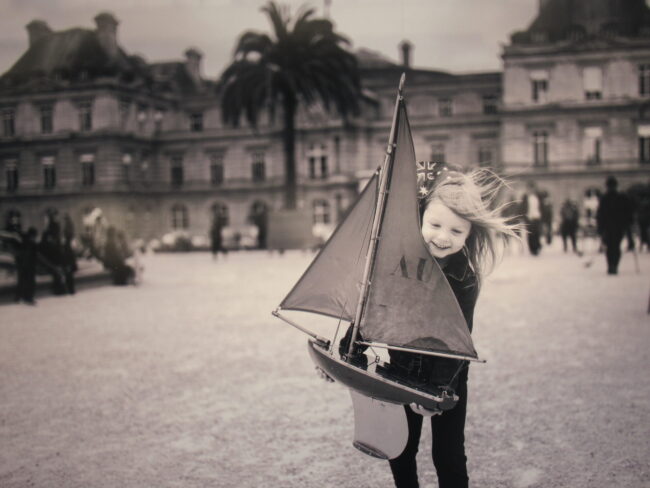
David Turnley exhibition. Photo: Marian Jones
And finally, if you want to delve into history, the National Archives will be staging a free, immersive exhibition (November 25th, 2026 – February 22nd, 2027) which will take you back to the Universal Exhibition held in Paris in 1867, the very first to be documented extensively through photographs. Thanks to 3D glasses, you’ll be able to wander the historic exhibition virtually, learning how the ground-breaking new art of photography was a major feature thanks to original documents and realia, archive photographs and an immersive soundscape. It’s bound to be an innovative way to celebrate the bicentennial.
The French Ministry of Culture will be overseeing this major bicentennial celebration, which is to include exhibitions, festivals, conferences, workshops, publications and collaborative projects. Full details will be announced on their website in September. The anniversary will be celebrated all over France and also internationally, but in Paris especially, there will be a whole host of ways to mark the occasion. And that’s fitting. Paris has always taken photography seriously and is – n’est-ce pas? – the most photogenic of cities.
Lead photo credit : From "The Europeans" at the Cartier Bresson galleries. Photo: Marian Jones
Related Articles
By Marian Jones