Through the Lens of War: Robert Capa’s Photography
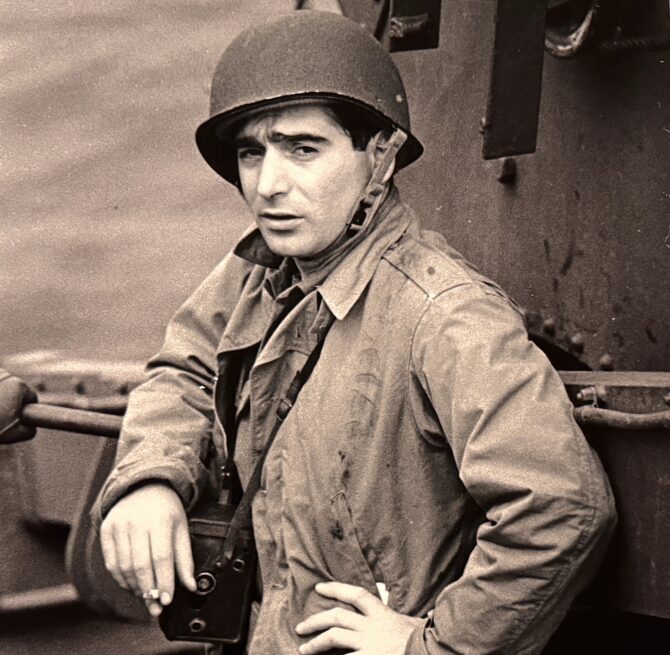
You have likely seen his photographs taken on D-Day, among the chaos of Omaha Beach. American troops wading through chest-high surf, bullets whistling overhead. What we often overlook is that the man who took them was in that very same water, battling the same implacable conditions. This was Robert Capa, and he changed photojournalism forever.

[R to L] Sylvie Zaidman, Director, Musée de la Libération de Paris, and journalist Michel Lefebvre, co-curator of the exhibition © S. Edwards Davis
The touchstone image is among 160 items exceptionally brought together for a landmark exhibition at the Musée de la Libération de Paris in collaboration with renowned photo cooperative Magnum Photos (which Capa himself spearheaded in 1947), and endorsed by France’s Ministry of Culture as part of this year’s Bicentenary of Photography program.
Original press prints, personal documents, audio recordings, and artifacts retrace the arc of a remarkable life cut short — a young Hungarian immigrant born Endre Friedmann, who remade himself to escape persecution in Paris, adopting an American persona. Capa went on to document five wars, from the Spanish Civil War, during which his partner Gerda Taro died in an accident while on assignment, to Indochina, where he was killed by a landmine in 1954. He was 40 years old.
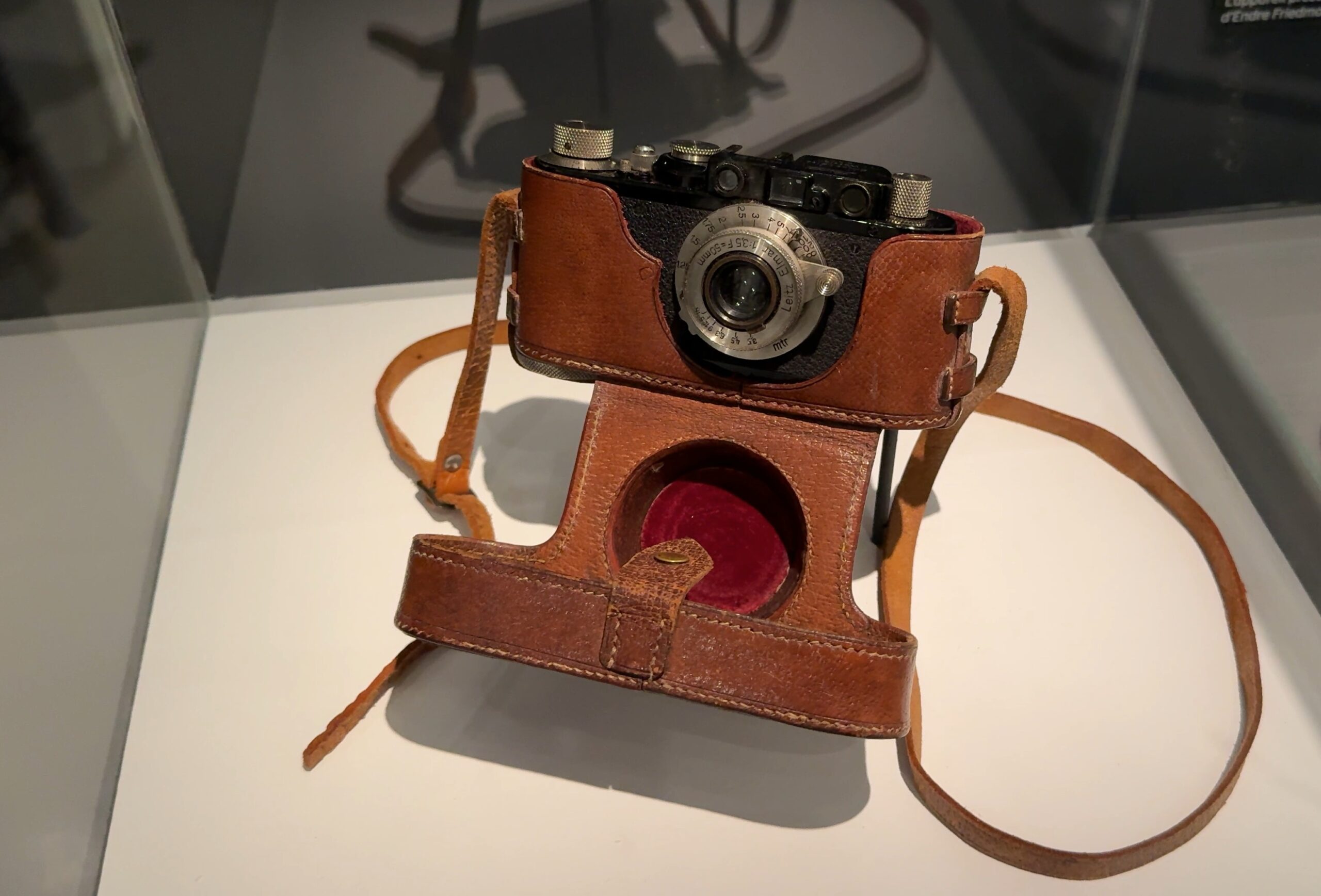
Robert Capa’s trusted Leica [view of the exhibition] ©S. Edwards Davis
The exhibition doesn’t shy away from difficult questions. Capa is often quoted as saying that “If your photographs aren’t good enough, you’re not close enough.” This approach earned him both recognition and controversy. The photo that he described as “probably the best picture I ever took” captured the moment of death of a man in combat during the Spanish War in 1936.
The “Capa style” — close, visceral, immediate — remains both a model and a conundrum. As the curators pose it: “What is the line beyond which the war correspondent’s role as a witness ends? What is the line beyond which the image becomes degrading to the people photographed?”
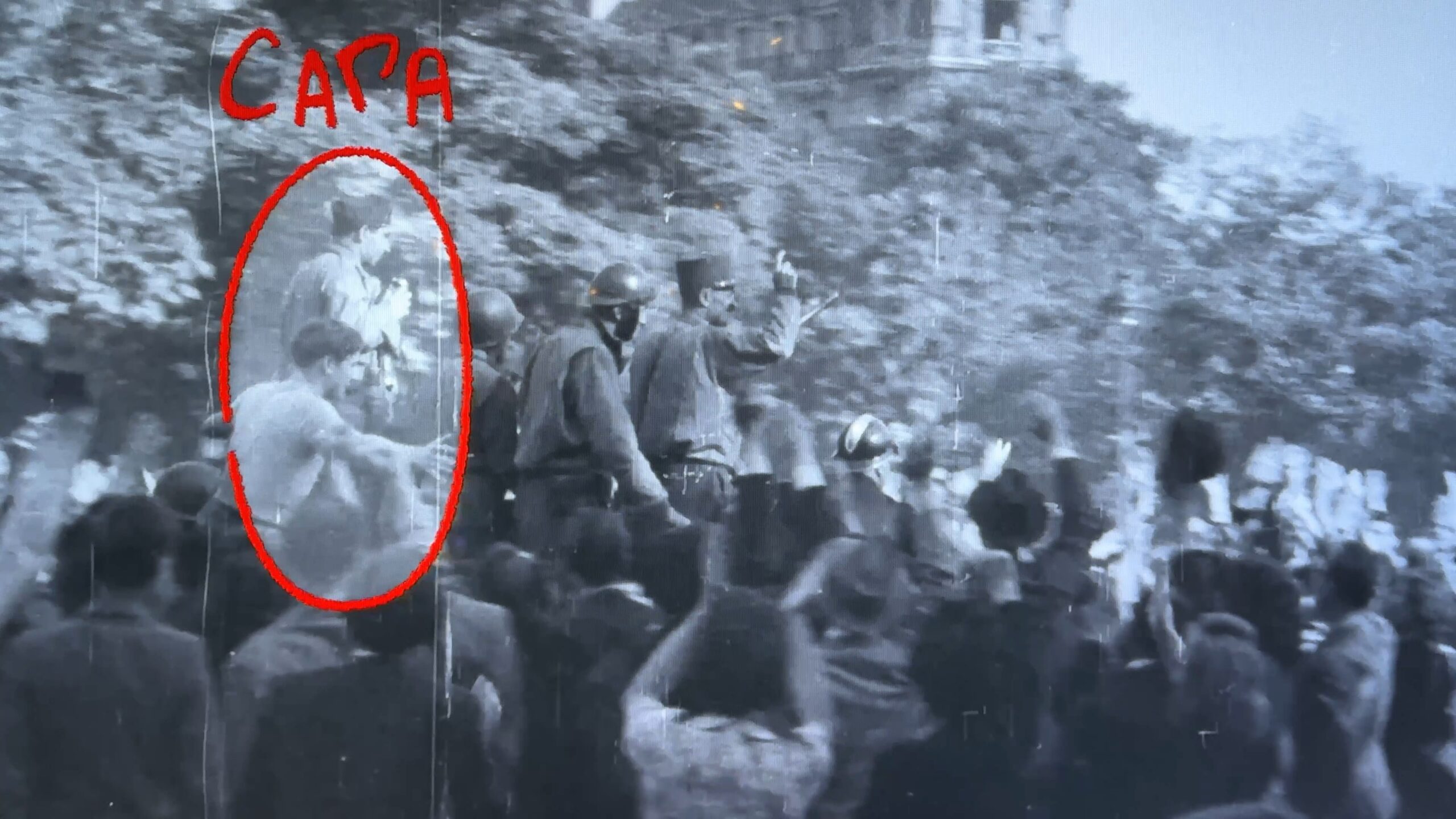
Robert Capa in Paris during the liberation in the summer of 1944 [screenshot] © S. Edwards Davis
The setting of this sobering retrospective could scarcely be more fitting. The Musée de la Libération occupies an elegant neoclassical pavilion in the 14th arrondissement, home to a permanent collection of 300 original objects and documents charting the stories of two towering figures of the French Resistance — General Philippe Leclerc de Hauteclocque, who led the 2nd Armored Division into Paris on Aug. 25, 1944, and Jean Moulin, the civil servant-turned-resistance-hero who unified the clandestine networks of the Resistance before being tortured to death by the Gestapo in 1943.
The visit culminates in something unforgettable: a descent of more than one hundred steps into a wartime underground command post, 20 meters (66 feet) below street level, where Colonel Rol-Tanguy directed the Paris insurrection in August 1944 – an eerie, real place that no amount of scenography could manufacture.
DETAILS
Robert Capa. Photographe de Guerre
Until Dec. 20, 2026
Musée de la Libération de Paris – musée du général Leclerc – musée Jean Moulin
4 Avenue du Colonel Henri Rol-Tanguy, Place Denfert-Rochereau, 14th
Open Tue-Sun from 10 am to 6 pm.
Full-price ticket is 11 euros.
Access to the permanent collections is free.
Lead photo credit : Robert Capa on D-Day, view of the exhibition © Sylvia Edwards Davis
More in Americans in paris, exhibition, exhibitions in Paris, history, history museum, museum exhibitions, War photography
Related Articles