What Exactly is the School of Paris?
- SUBSCRIBE
- ALREADY SUBSCRIBED?
BECOME A BONJOUR PARIS MEMBER
Gain full access to our collection of over 5,000 articles and bring the City of Light into your life. Just 80 USD per year.
Find out why you should become a member here.
Sign in
Fill in your credentials below.
What is the École de Paris, the School of Paris? In brief, it is a community of French and foreign artists who studied the late 19th and early 20th-century French modernist movements (Impressionism, Post-Impressionism, Fauvism, Cubist, Expressionism, etc) and usually attended the various alternative art schools in Paris: Académie Matisse, Académie Colarossi, Académie Ranson, Académie de la Palette, Académie Vassilieff, Académie Julien, Académie de la Grande Chaumière (which recently closed its doors at its original location and moved to another). The term School of Paris also distinguishes the artists from the traditional art curriculum offered by the official French Académie, the École Nationale des Beaux–Arts, dedicated to classical training for aspiring young artists.
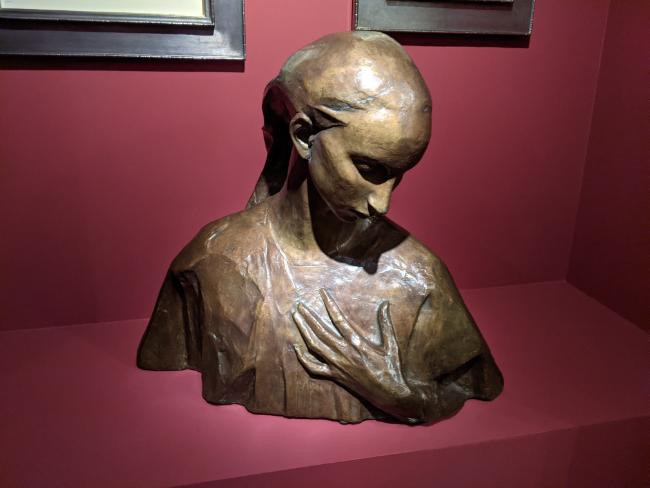
Xawery Dunikowski, Madonna, 1911, bronze. Coll. Marek Roefler/Villa La Fleur. Photo:Beth Gersh-Nesic
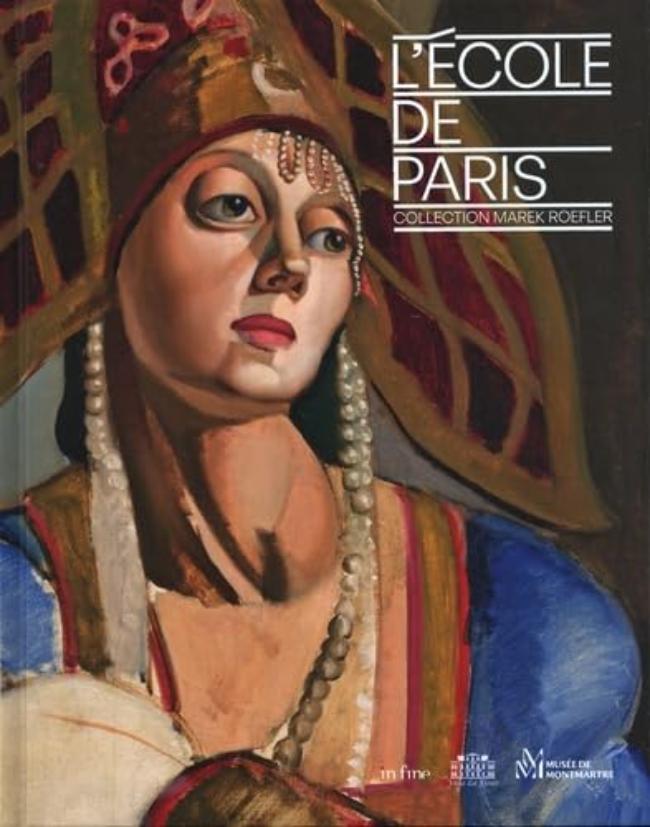
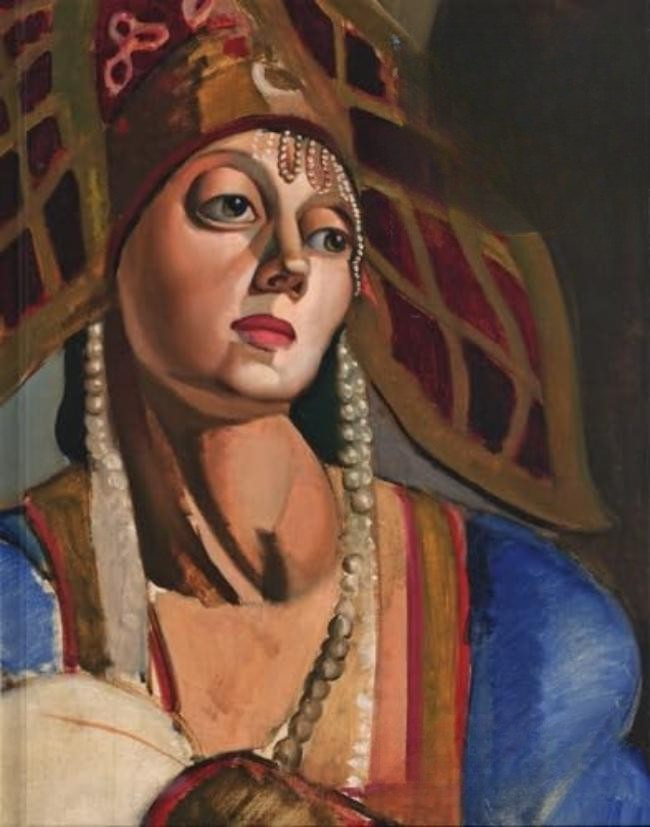
School of Paris modernists also married their avant-garde ideas to regional folk art, exemplified in Tamara de Lempicka’s Russian Dancer, 1924-25 (selected for the exhibition’s poster and catalogue cover), and produced classically inspired portraits and genre pieces, such as Xawery Dunikowski’s sculpture Madonna, 1911.
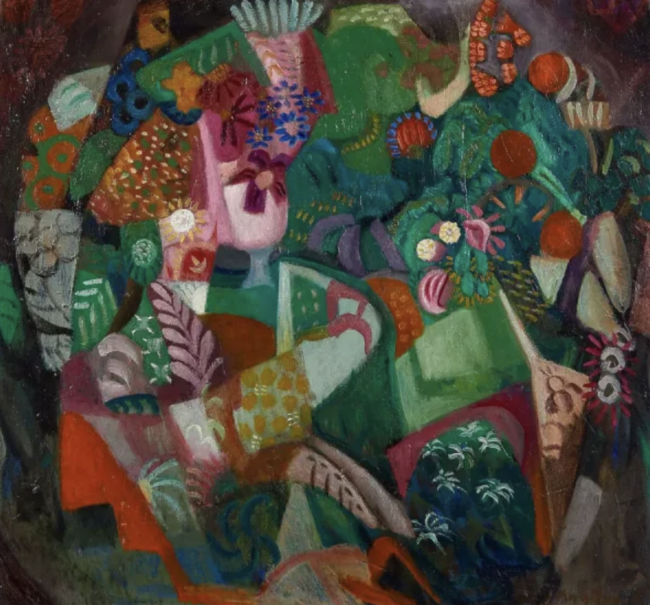
Hélène D’Oettingen (aka François Angiboult), Bouquet, n.d, oil on canvas. Marek Roefler Collection / Villa La Fleur © Villa La Fleur. Photo: Marcin Koniak © Adagp, Paris, 2025.
Most of the artists remained loyal to figuration, although some artists moved on to abstraction or semi-abstraction later in their careers, as we see in Bouquet by Hélène d’Oettingen, aka François Angiboult. And most of the School of Paris artists adhered to conventional art categories: portraits, landscapes, still life, and genre (unidentified people).
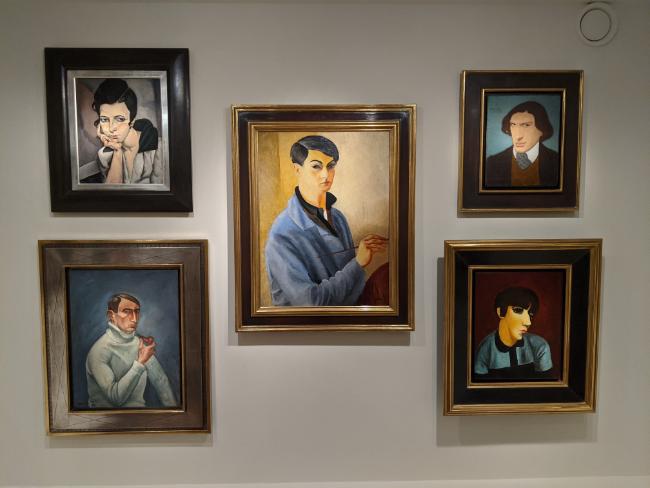
Left: Charels Kvapil, Portrait of a Woman, 1921; Henry Hayden, Self-Portrait, 1911; Center: Moise Kisling, Self-Portrait, c.1920; Right: Eugene Zak, The Poet Boleslaw Lesmain, 1905; Moise Kisling, Mme. Renée Kisling, 1919. Marek Roefler Collection / Villa La Fleur. Photo: Beth Gersh-Nesic
Some artists, like the American Man Ray, whose career is associated with the Dada and Surrealist movements, began their careers with typical School of Paris subject matter. Thus, it’s difficult to pin down what is a common dominator among the artists placed under the umbrella term “School of Paris” in textbooks, exhibitions, and AI. The current exhibitions seem to embrace all the artists who came from or moved to Paris to further their individualistic expressions. Therefore, what unified this concept of the School of Paris artists was their network of mutual support and their exuberant joie-de-vivre!
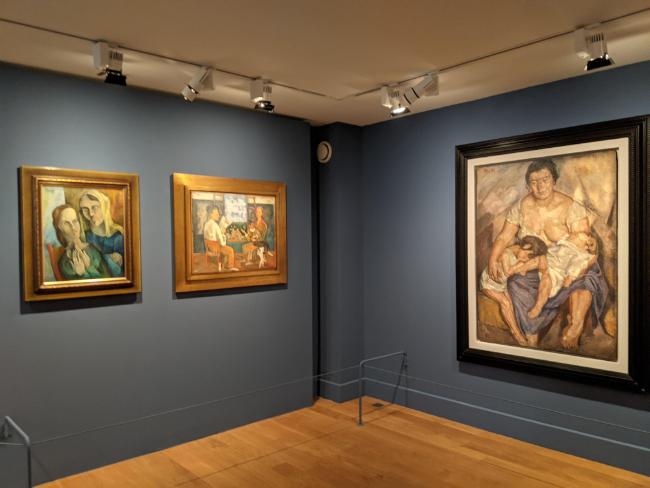
Henri Epstein, Two Women with a Bird, 1916; Joseph Pressmane, The Family, c. 1936-37; Mela Muter, Motherhood, 1924; Marek Roefler Collection / Villa La Fleur. Photo: Beth Gersh-Nesic
One hundred years ago, the French art critic André Warnod popularized the term in an article, “École de Paris,” published in Comoedia, January 27, 1925, and in a book, Le Berceau de la Jeune Peinture: L’École de Paris (The Cradle of Young Painting: The School of Paris, Éditions Albin Michel, 1925). However, according to Sophie Krebs in her catalogue essay for L’École de Paris: Collection Marek Roefler (October 17, 2025 – February 15, 2026) at the Musée de Montmartre, Warnod did not invent this label, which most sources, including AI, claim as fact. Instead, it was the French critic Roger Allard in either 1923 or 1924, during the debates taking place among the organizers of the annual, non-juried Salon des Indépendants. It seems to have been his response to the decision to revise the arrangement of artworks in terms of the artists’ nationalities, rather than stylistic affinities, such as the Fauves in 1906 and the Cubists in 1912.
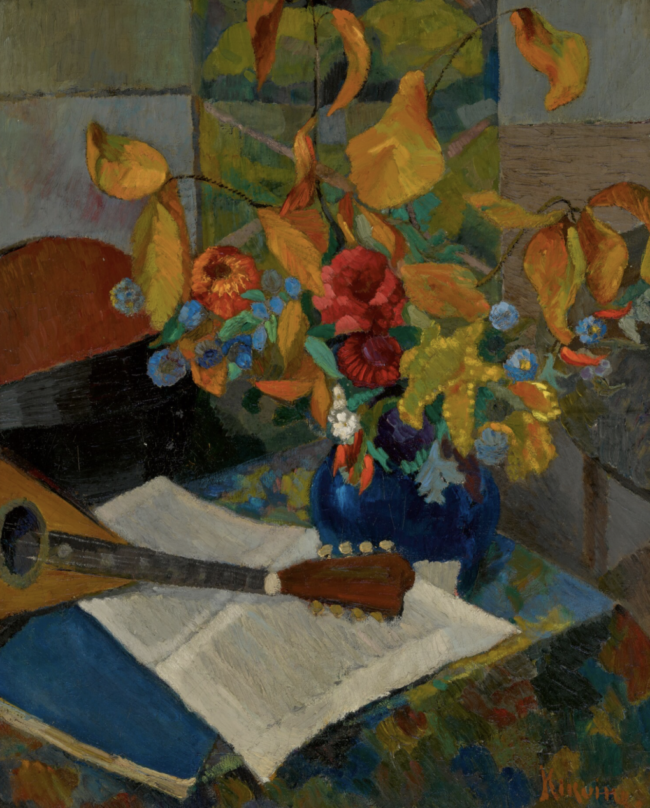
Michel Kikoïne, Flowers and Still Life with a Mandolin, 1910-1915, oil on canvas. Marek Roefler Collection / Villa La Fleur © Villa La Fleur. Photo: Marcin Koniak © Adagp, Paris, 2025.
Sophie Krebs tells us that Louis Vauxcelles (who coined the name “Fauves”) described the “quarrel of the Independants” in an article published in L’Ére Nouvelle, November 17, 1923, referencing Allard’s label meant to distinguish “true” French artists from the immigrant artists in Paris whose free-wheeling, modernist agenda came from their “schooling” in this liberal, cosmopolitan mecca for art. The salon’s president, French artist Paul Signac, who co-founded the Salon des Indépendants in 1884, a pay-to-exhibit opportunity open to all artists, raised the issue with his cronies to introduce an element of “them” vs. “us.” For members of the committee, such as French Cubist André Lhote, the decision was shamefully discriminatory. He published his opposition in Le Bulletin de la vie artistique, January 1, 1924, and vowed to stay on the committee, rather than leave in protest like his friend French Cubist Fernand Léger, in order to steer the committee away from this direction. He reminded his readers that in the past French artists were foreigners too when they went to Rome to complete their art educations.
And yet, the Salon des Indépendants committee voted in 1924 (its 40th anniversary) to accept no more than 30% foreign artists in one given year. However, the statistics published in Sophie Krebs’ article prove there had never been more than 28% in the shows from 1920 through 1926. Nevertheless, the Indépendants’ committee decided that the increasing population of foreign artists participating in the Paris art world was corrupting French art and had to be controlled. To add insult to injury, the negative sentiments aimed at immigrants (les métèques) applied to Jews as well, regardless of their birthplace.
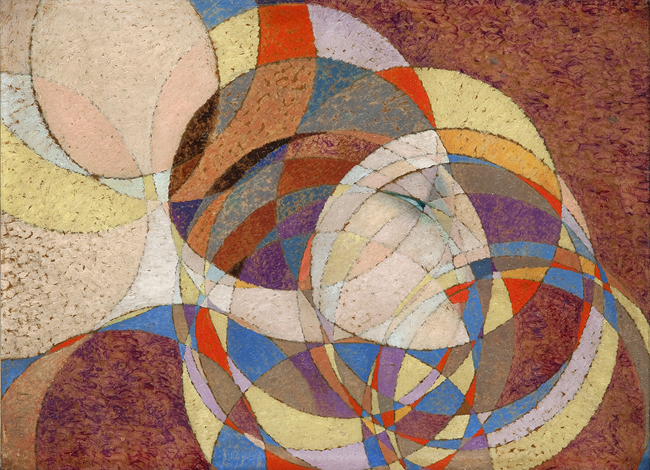
Bolesław (Boleslas) Biegas, Abstract Composition, 1919, oil on panel. Marek Roefler Collection / Villa La Fleur © Villa La Fleur. Photo: Marcin Koniak © Adagp, Paris, 2025.
At the beginning of the following year, André Warnod appropriated the term School of Paris to express the opposite perspective. His article and book about this hodge-podge of stylistic tendencies celebrated scores of foreign artists contributing to France’s art scene. Warnod wanted the public to know that the hegemonic position of Paris in the global artworld came from cultural diversity pouring into its expanding melting pot and salad bowl of styles, techniques, and intellectual orientations. In this respect, invoking the name “Paris” operated as a signifier to emphasize the role this particular city played as an incubator for talent, vision, and professional advancement. Warnod believed French art grew stronger because of the inclusion of non-French contributions. His message expressed gratitude for the “beneficial agitation” of individual School of Paris artists who courageously pushed modernism beyond its present limits toward new directions and unexplored possibilities.
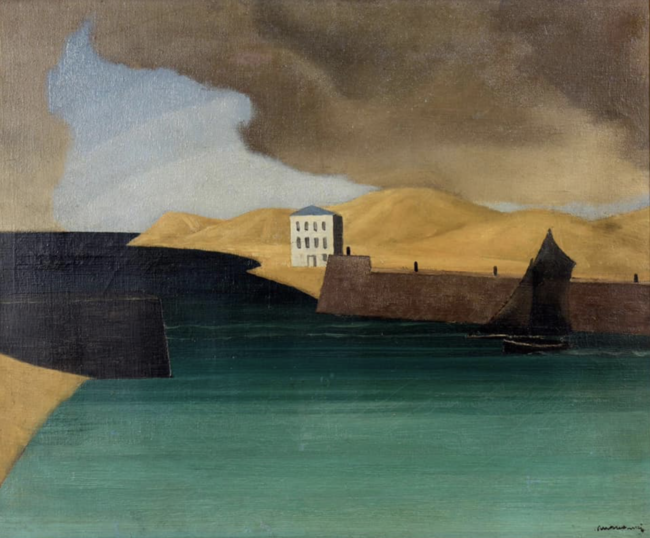
Louis Marcoussis, Kérity Landscape, 1927, oil on canvas. Marek Roefler Collection / Villa La Fleur © Villa La Fleur. Photo: Marcin Koniak © Adagp, Paris, 2025.
The spirit of André Warnod’s positivity rings true in L’École de Paris: Collection Marek Roefler (October 17, 2025 – February 15, 2026) at the Musée de Montmartre. This excellent exhibition was an incomparable opportunity to learn about over 50 artists from Eastern Europe, the former Russian Empire, and Italy, who thrived in the Paris of experimentation and liberation. Impressively large, the exhibition filled the museum’s second floor galleries for temporary shows with scores of paintings, sculptures, drawings, prints, and collages. Many of the names are familiar (Chagall, Modigliani, Soutine, Pascin, Kisling, Foujita, and Tamara de Lempicka). However, most are not. For that reason, this exhibition introduced numerous little-known School of Paris artists whose work flourished in the City of Light. Some artists stayed in France, while others returned to their homelands to share their Parisian training with the younger generations.
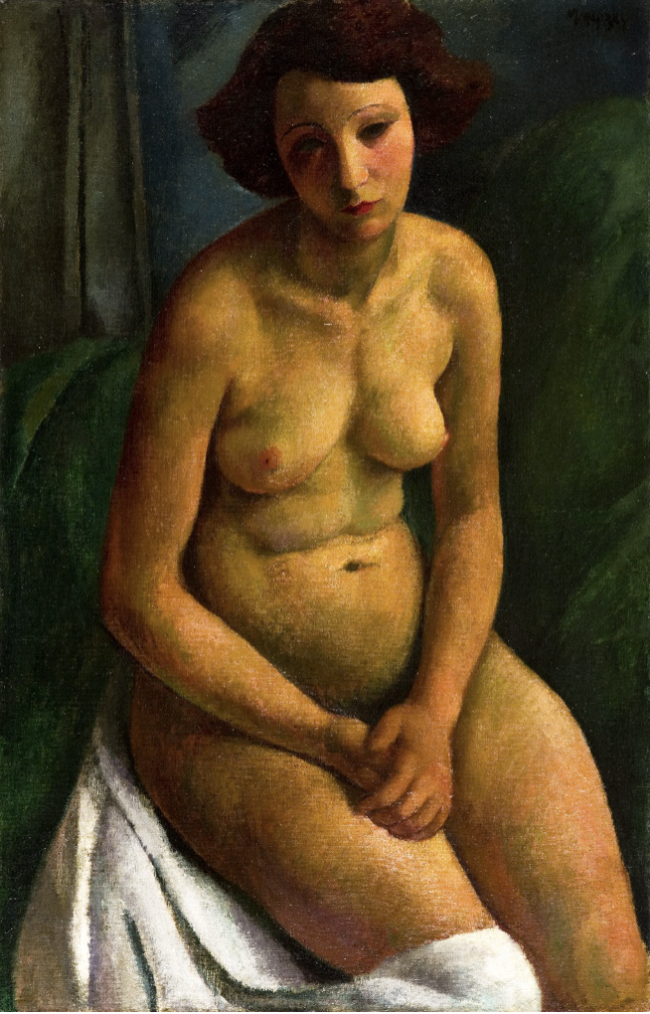
Maurice Mendjizki, Kiki de Montparnasse/ Nude, 1920, oil on canvas. Marek Roefler Collection / Villa La Fleur © Villa La Fleur. Photo: Marcin Koniak © Adagp, Paris, 2025.
Kudos to the curators Arthur Winterski, director of the Villa La Fleur and head curator of the Marek Roefler Collection, and Alice S. Legé, PhD, head curator of the Musée de Montmartre, for their beautiful selection and installation. The museum’s literature tells us this sizable exhibition was only a fraction of Marek Roefler’s vast collection, housed at the Villa La Fleur outside of Warsaw. The sheer quantity confirms there is so much more we need to learn about the School of Paris, especially the artists whose works belong to public and private collections beyond France’s borders.
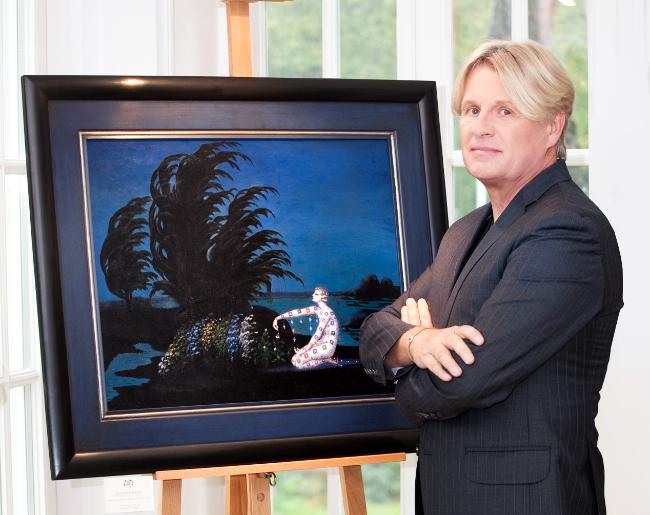
Marek Roefler. Photo: Courtesy of the Musée de Montmartre
Who is Marek Roefler? He is a Polish nuclear physicist, born in Warsaw in 1952, who founded Dantex, which builds and sells residential and office complexes. His success provided the resources to collect art, primarily by Polish and non-Polish Jewish artists influenced by the leading avant-garde movements in Paris. As Roefler’s interest in these artists increased in the 1990s, more scholarly resources became available to inform his judgement and taste. This research broadens our awareness of artists linked to the School of Paris in France and increases our familiarity with its Eastern European contingent.

Musée Villa La Fleur, Konstancin-Jeriorna, Poland. Photo: Courtesy of the Musée de Montmartre
Inspired by Oscar Ghez’s private museum Musée du Petit Palais in Geneva, Roefler bought a rundown villa in Konstancin-Jeriorna, 45 minutes drive south Warsaw City Center, and restored it from 2007 to 2009. The Villa La Fleur opened in May 2010, filled with his collection throughout its three floors. In 2021, the museum expanded into a renovated neighboring villa which houses the permanent collection and displays temporary exhibitions as well. Information about visiting Villa La Fleur is located on its website.
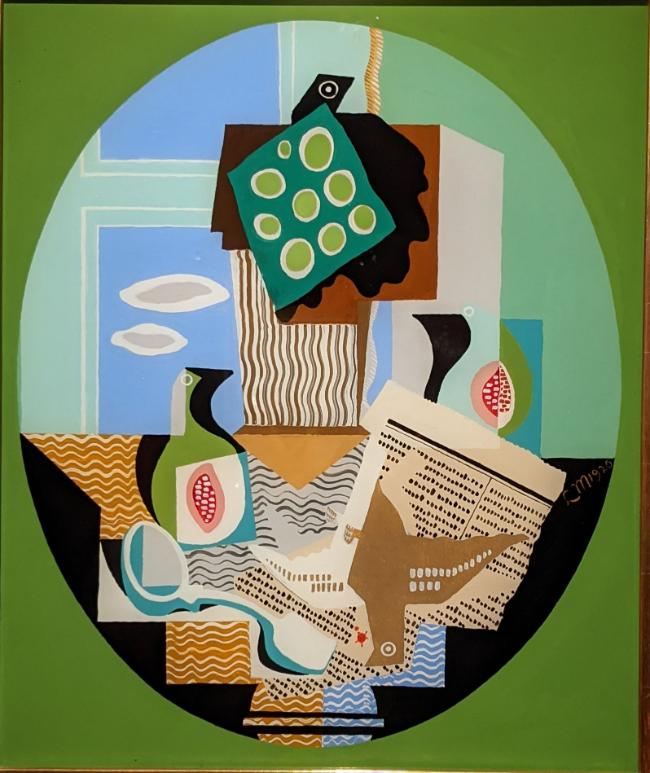
Louis Marcoussis, Bunch of Grapes, 1926, oil painted under glass. Marek Roefler Collection / Villa La Fleur. Photo: Beth Gersh-Nesic
The Musée de Montmartre, located in the heart of the district where many of these School of Paris artists set up their first homes and studios, before migrating to Montparnasse and La Ruche in the 15th arrondissement, served as the first venue in France to welcome Marek Roeble’s collection into its galleries. Moreover, this particular exhibition, which highlighted a collector’s story, complemented the equally rich School of Paris content in Berthe Weill: Art Dealer of the Parisian Avant Garde at the Musée de l’Orangerie (October 8, 2025 – January 26, 2026), Paul Poiret: La Monde en Fête (June 25, 2025 – January 11, 2026) and One Hundred Years of Art Deco: 1925-2025 (October 22, 2025 – April 26, 2026) at the Musée des Arts Décoratifs. Together, these four exhibitions in three venues provide the context in which the School of Paris artists thrived and collaborated with the worlds of fashion, furniture, interior design, architecture, and theater. Additionally, we learn about the significant roles of their art dealers, collectors, art critics, and art magazines.
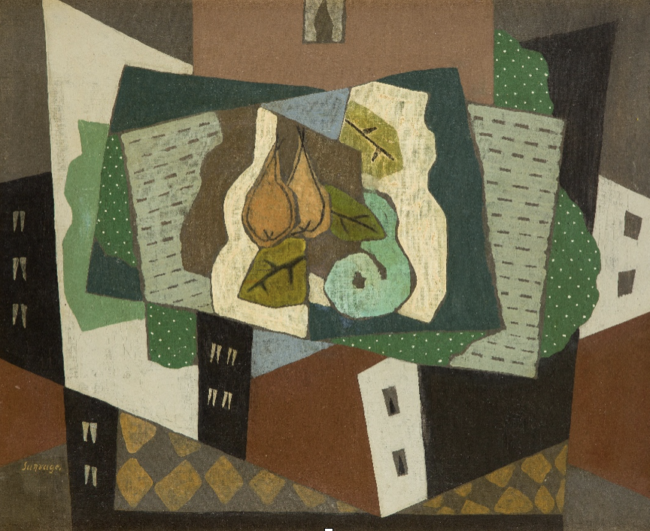
Leopold Survage, Landscape with Pears, 1919-1920, oil on canvas. Marek Roefler Collection / Villa La Fleur © Villa La Fleur. Photo: Marcin Koniak © Adagp, Paris, 2025.
In the beginning of the 1900s, they lived and worked in Montmartre. By the end of the 1910s, they lived and worked in Montparnasse. Their favorite cafés were La Rotonde, Le Dôme, Le Select, Le Coupole, Chez Rosalie, Chez Baty, and the legendary La Closerie des Lilas, all located on or near the Carrefour Vavin, in the heart of Montparnasse. (Our tour of Picasso’s Gang provides a series of haunts from Montmartre to Montparnasse, where the School of Paris artists met and mingled.)
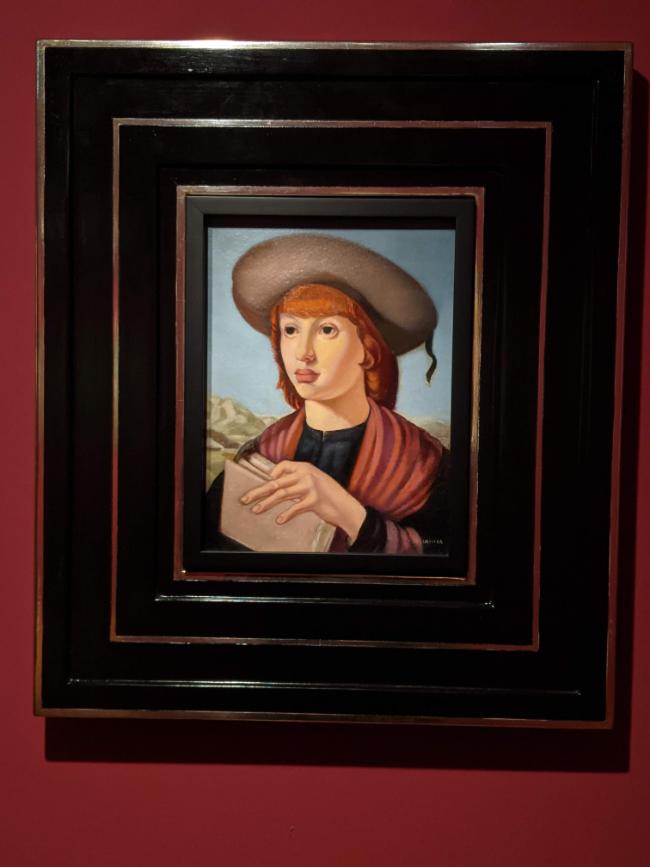
Tamara de Lempicka, Young Man with a Book, 1954, oil on canvas mounted on cardboard. Marek Roefler Collection / Villa La Fleur. Photo: Beth Gersh-Nesic
To the list of exhibitions held in Paris’ Fall-Winter 2025-2026 Art Season, we have to cite Pioneers: Women Artists from the Roaring Twenties at the Musée du Luxembourg, on view from March 2 to July 10, 2022, which promoted the female members associated with the School of Paris. In this show, we learned that Paris’ alternative academies opened their doors to women whose prospectives of studying art in their respective homelands were slim, if not nonexistant. (Ewa Brobowska wrote about this subject in the Marek Roefler Collection catalogue.) And we should remember the exhibition Chagall, Modigliani, Soutine . . . Paris pour école, 1905-1940, at the Musée d’art et d’histoire du Judaïsme, from June 17 to October 30, 2021, which showcased 43 Jewish artists identified with the School of Paris. (Pascale Samuel contributed an article to the Roefler catalogue on this topic.)

Jean Dunand et Jean Lambert-Rucki, Christ en Majesté , 1932, Wood, stucco, polychrome, metal, and inlays, Marek Roefler Collection / Villa La Fleur © Villa La Fleur / Photo: Marcin Koniak © Adagp, Paris, 2025.
Most often, the School of Paris artists depicted secular subjects. However, some produced sacred works. To include this aspect of Marek Roefler’s collection, the Musée de Montmartre partnered with the Basilica du Sacré Coeur to exhibit a monumental model for a mosaic project created by two Art Deco masters, Jean Dunand and Jean Lambert-Rucki’s Christ in Majesty (1932). Lambert-Rucki’s designed the image and Dunand fashioned the work out of various materials. The stylistic blending of Byzantine icon requirements and Art Deco aesthetics reminds us that the School of Paris artists often worked in various media for a wide range of commissions.
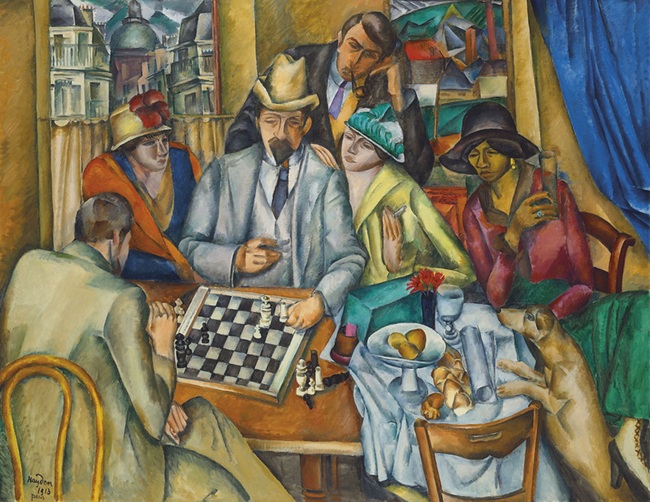
Henri Hayden, The Chess Players, 1913, oil on canvas. Marek Roefler Collection / Villa La Fleur © Gandalf’s Gallery/Flickr
Since L’École de Paris: Collection Marek Roefler was an enormous exhibition, I am going to focus on one work of art which summarizes the School of Paris experience. Here, French-Polish artist Henri Hayden (1883-1970) places himself in the middle of his painting The Chess Players (1913). Visually, we see the artist contemplating his next move on the chessboard. However, this subject represents more than a friendly game of strategy. Hayden, who arrived in Paris in 1907, had reached a point of saturation. He believed he had absorbed everything the Parisian artworld had to offer within those six years, and now he had arrived at a crossroads. Where did he want to go with his art?
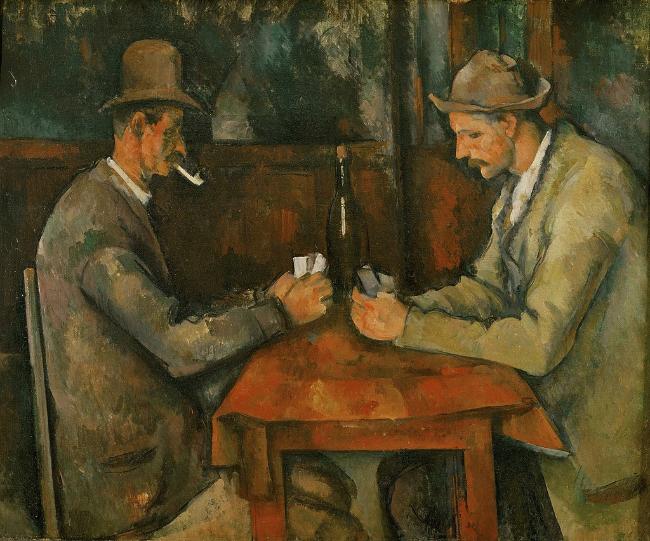
Paul Cézanne, Card Players, 1894-5, oil on canvas. Musee d’Orsay. Photo: Public Domain
As he sits in the center of a well-dressed entourage, his pipe in hand and wearing a hat reminiscent of the figures in Paul Cézanne’s Card Players (1884-6), the arrangement of the items on the table, the tablecloth, and dishware seems to pay homage to the Master of Aix, the father of Cubism. A group of five friends lean in toward the painter, silently offering their support: standing up is the German poet Artaval (Georg Oppenheim) smoking his pipe; Moise Kisling’s wife Renée is to our left in orange and blue wearing a yellow hat decorated with a purple feather; a male figure, his opponent, sits with his back to the viewer; the celebrated “Venus of Montparnasse,” actress and model Aïcha Goblet in alizarin red wears a black hat; and an unidentified woman in yellow wears a white and green hat. They are located in the Café de La Rotonde, according to Tricia Passes, art history lecturer at the University of Bristol. What does this painting mean? The iconography seems to indicate the artist’s contemplation of Cubism as the next move for his career.
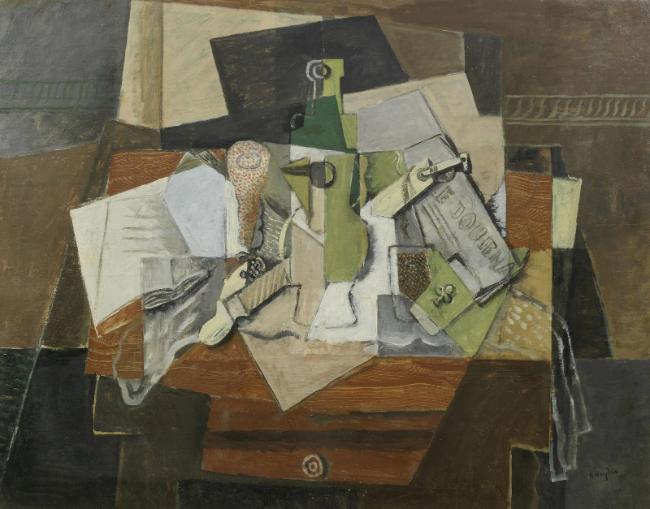
Henri Hayden, Still Life, c. 1919, oil on canvas. Marek Roefler Collection / Villa La Fleur © Villa La Fleur. Photo: Marcin Koniak © Adagp, Paris, 2025.
Hayden admitted as much in an interview, and we see the results in his Cubist Still Life, 1919 in the Marek Roefler exhibition. Hayden’s desire to vary his style wasn’t unusual among his colleagues. This descriptive painting serves as an example of a typical School of Paris artist who was an immigrant at home in Paris, navigating the various stylistic options at his disposal, and operating within a sympathetic social network of fellow creatives and models. What don’t see here is their financial struggles. Most lived on the edge of poverty and shared what they earned to help each other survive hardships and privation.
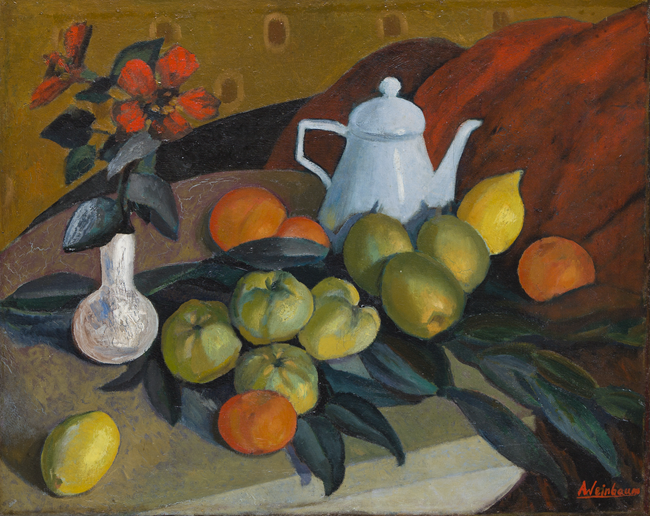
Abraham Weinbaum, Still Life with Fruits, c. 1920, oil on canvas. Marek Roefler Collection / Villa La Fleur © Villa La Fleur. Photo: Marcin Koniak © Adagp, Paris, 2025.
The eclecticism of the School of Paris creates an exciting display of paintings, sculptures and works on paper in the exhibition L’École de Paris: Collection Marek Roefler. Moreover, as we toured the galleries, we realized that stating exactly what was the School of Paris remains slippery. At best, we can agree it was “l’art vivant,” French poet/art critic André Salmon’s catchall category, invented in 1912, for his book La Jeune Peinture française (Young French Painting). It was a dynamic, generative force that stimulated growth in art produced in France, then shared all over the world, thanks to its dedicated squadron of practitioners and educators.
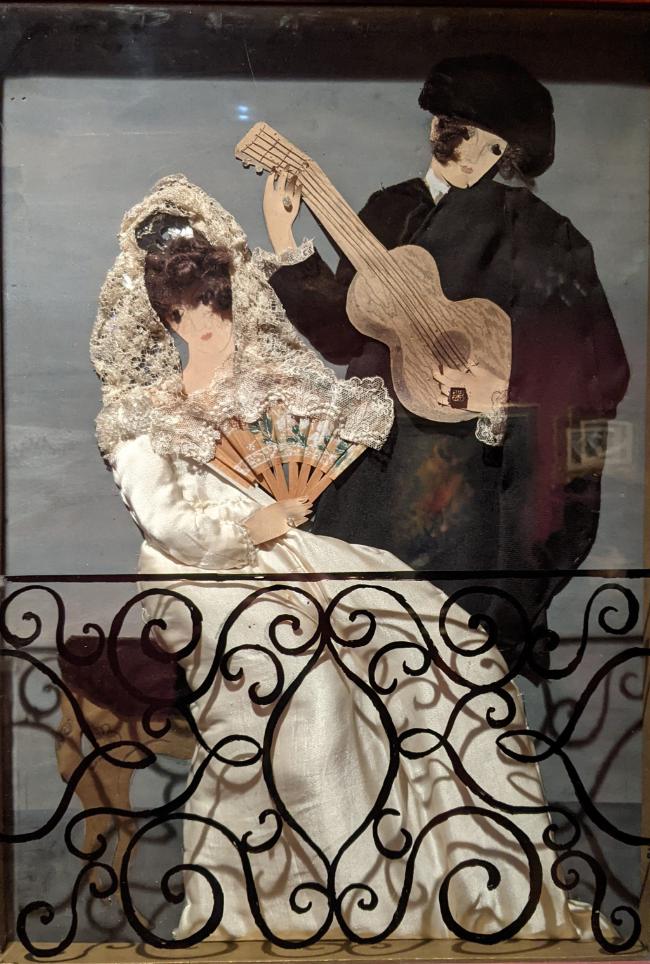
Alice Halicka, On the Balcony, 1934, mixed media. Marek Roefler Collection / Villa La Fleur. Photo: Beth Gersh-Nesic
This vitality is evident throughout the exhibition L’École de Paris: Collection Marek Roefler. Primarily composed of Eastern European artists, we discover here and there the few examples of art created by French people: a rare watercolor sketch of friends sitting outside Le Dôme (1922) by André Salmon, an oil portrait of Chaim Soutine (1926) by French model Kiki de Montparnasse, and an ink sketch of Kisling and his dog (1916-17) by the multi-talented French writer Jean Cocteau.
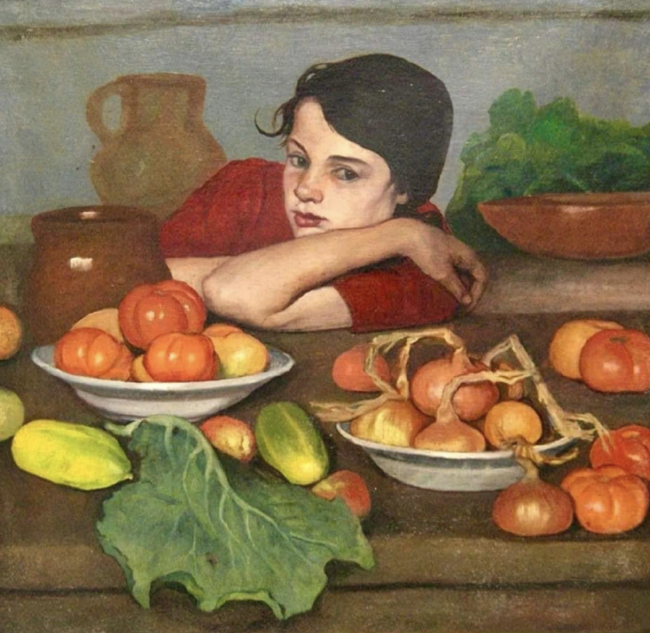
Georges Ascher, Little Girl Behind a Table, c. 1925, oil on canvas. Marek Roefler Collection / Villa La Fleur © Villa La Fleur. Photo: Marcin Koniak © Adagp, Paris, 2025.
Although the exhibition has closed, you can catch a glimpse of the artwork in a lively short video on their museum’s website, where you will also find the excellent press kit on the exhibition’s webpage. And you can watch a tour of the L’École de Paris: Collection Marek Roefler (French with English subtitles) online. Here is the video.
I highly recommend purchasing and reading the exhibition catalogue with essays written in French and translated into English:
Sophie Krebs, Conservatrice générale du patrimoine au musée d’Art moderne de Paris, “About the School of Paris.”
Artur Winiarski, Conservateur de la collection Marekt Roefler et directeur du musée Villa La Fleur, “The Marek Roefler Collection and the Villa La Fleur Museum.”
Alice S. Legé, Docteur en histoire de l’art, responsible de la conservation du musée du Montmartre, “From Montmartre to Montparnasse, A New Parisian Identity.”
Ewa Bobrowska, Docteur en histoire de l’art, chercheuse indépendant et chargée de programmes à la Terra Foundation for American Art, “Paris, A Paradise for Women Artists? The Case for Polish Women.”
Pascale Samuel. Conservatrice du patrimoine, responsible du musée d’art et d’histoire du Judaïsme, ”Paris, the Promised Land for Jewish Artists.”
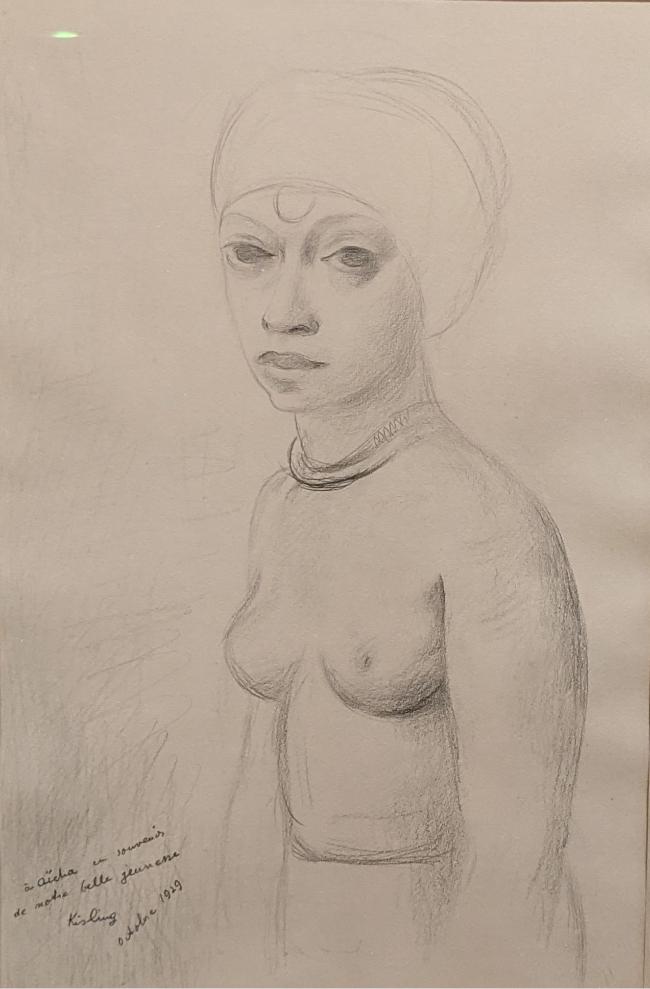
Moise Kisling, Portrait of Aïcha Goblet, 1929, pencil on paper. Marek Roefler Collection / Villa La Fleur. Photo: Beth Gersh-Nesic
Other sources are:
L’École de Paris explained by Anna Hiddleston, coordinator of International Projects, at Centre Pompidou (French with French subtitles) – Video
L’École de Paris explained by Jean Mineraud (French with English subtitles)– Video
My sources for this article, besides the exhibition catalogue, are:
Nadine Neiszawe, Histoires des Artistes Juifs de l’École de Paris, 1905-1939 (Stories of Jewish Artists of the School of Paris), translated into English by Deborah Princ, Les Éditions, 2020. (Bilingual)
Pascale Samuel et al, Chagall, Modigliani, Soutine . . . Paris pour école, 1905-1940, Musée d’art et d’histoire du Judaïsme/Réunion des musées nationaux- Grand Palais, Paris, 2020. (The exhibition took place from April 2 through August 23, 2021, having been postponed during the Covid Luckdown.)
Kate Kangaslahti, “Foreign Artists and the L’École de Paris: Critical and Institutional Ambivalence Between the Wars,” in Academics, Pompiers, Official Artists and the Arrière-garde: Defining Modern and Traditional in France, 1900-1960, edited by Natalie Adamson, Cambridge Scholars Publishing, 2009: 85 – 111.
Jean-Louis Andral et Sophie Krebs, et al, L’École de Paris, 1904-1929, La part de l’Autre, Musée d’Art moderne de la Ville de Paris, November 30, 2000-March 11, 2001, Paris-Musées/Éditions Musée d’Art moderne de la Ville de Paris, 2000.
Kenneth Silver and Romy Golan, et al, The Circle of Montparnasse: Jewish Artists in Paris, 1905-1945, The Jewish Museum, New York, October 22, 1985-February 2, 1986.
Romy Golan, “The ‘École Française’ ou’ École de Paris’: The Debate About the Status of Jewish Artists in Paris Between the Wars,” published in the exhibition catalogue for The Circle of Montparnasse: Jewish Artists in Paris, 1905-1945, at The Jewish Museum, New York, October 22, 1985-February 2, 1986: 80-87; and revised in Modernity and Nostalgia: Art and Politics in France Between the Wars, Yale University Press, 1995.
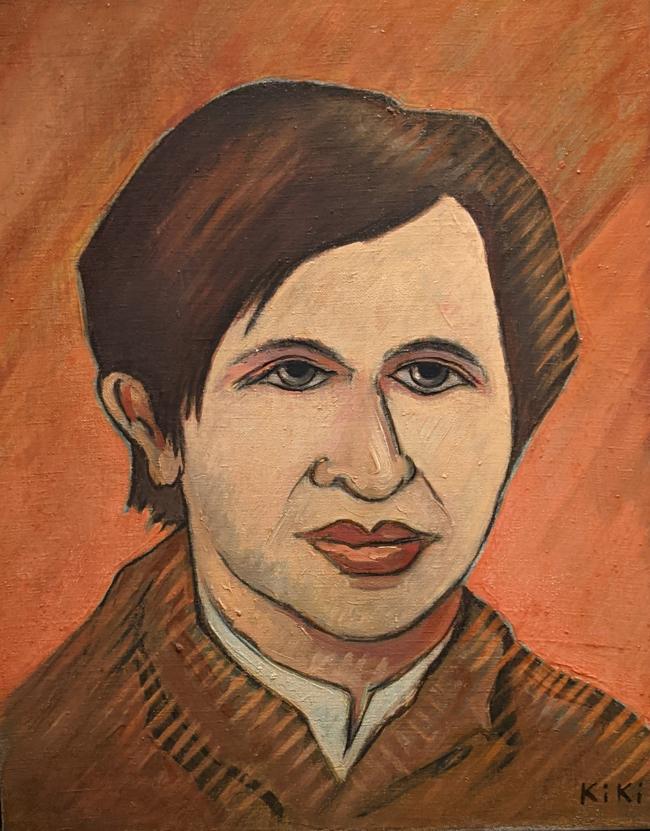
Kiki de Montparnasse (Alice Prin), Chaim Soutine, 1926, oil on canvas. Marek Roefler Collection / Villa La Fleur. Photo: Beth Gersh-Nesic
Lead photo credit : Catalogue Cover: Tamara de Lempicka, Russian Dancer, 1924-25. Coll. Marek Roefler/Villa La Fleur. © Villa La Fleur. Photo: Marcin Koniak © Adagp, Paris, 2025
More in École de Paris, School of Paris
Related Articles