Cutouts and Illusions: A Double-Art Escape at the Grand Palais
While Paris swelters in the ongoing canicule, the city’s grand exhibition spaces transform from cultural hubs into highly coveted, air-conditioned sanctuaries. Desperate to escape the stifling heat, a friend and I headed into the cool embrace of the Grand Palais for a brilliant double-feature: the legendary late-stage work of Henri Matisse, paired with the surreal, mind-bending optical illusions of Leandro Erlich.
It turned out to be the ultimate masterclass in shifting perspectives, making you completely forget about the heat outside.
The Evolution of Matisse: From Brush to Scissors
Having caught an exhibition of Matisse’s early works in San Francisco just a few months prior, I was eager to contrast his radical beginnings with his twilight years. While his early career was defined by thick, expressive paint and a disruptive disregard for realistic color, the Grand Palais focused on his final, triumphant chapter.
Grand Palais – Matisse and Erlich – 2. Photo: Bill O’Such
Following a grueling surgery for abdominal cancer in 1941, Matisse was left physically weakened and largely confined to a wheelchair. Unable to easily stand before a canvas, he entered what he called his seconde vie (second life). He traded his brushes for shears, carving directly into vibrant, pre-painted sheets of paper (gouaches découpées) to “draw with scissors.”
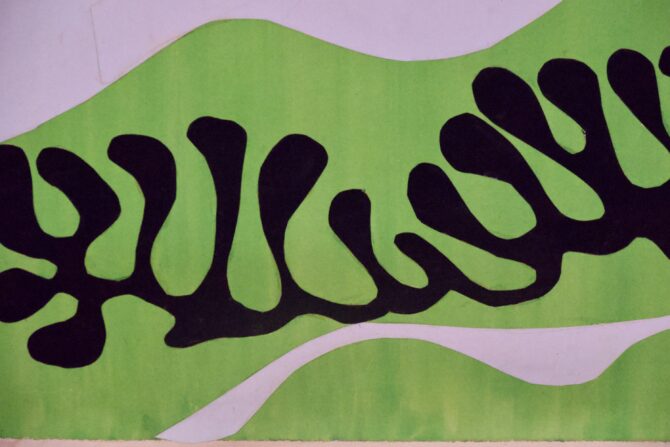
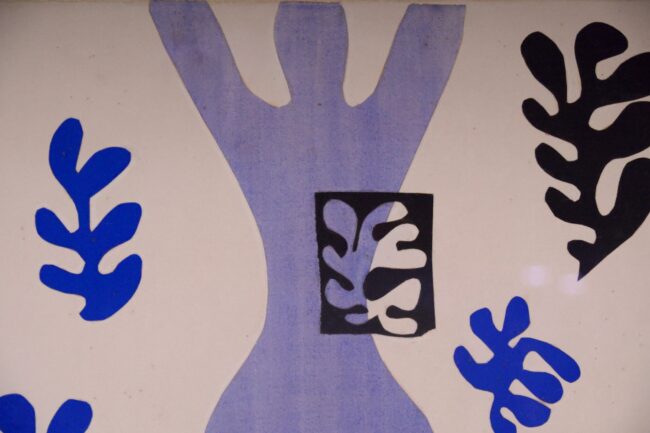
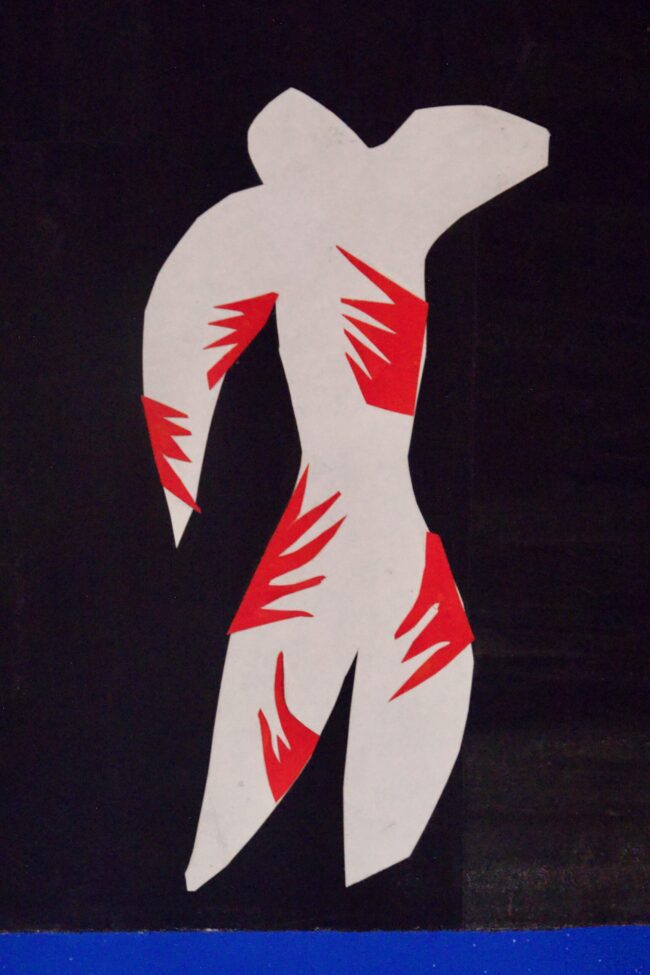
Rather than capturing wide shots of the massive collages alongside the sea of selfie-sticks, I challenged myself to shoot close-up “fragments” of the artwork. I wanted to see if focusing on a single isolated curve, color boundary, or silhouette could tell its own self-contained story.
Like shears, my eye carves out images like a serpentine black vine undulating lazily against a vibrant olive-green hill or a ghostly lilac torso juxtaposed against a bold, negative-space cutout block or a striking white silhouette draped in jagged, bleeding-red slashes, floating defiantly in a black void. Exiting the expo, I enjoyed the joyful, organic dance of his iconic azure, orange, and emerald leaves.
Grand Palais – Matisse and Erlich – 3. Photo: Bill O’Such
Leandro Erlich: Shattering the Ordinary
Leaving Matisse, we stepped directly into the surreal world of Argentine conceptual artist Leandro Erlich. If Matisse was about flattening three-dimensional space into pure, two-dimensional form, Erlich was the exact inverse — using physical spaces to manufacture impossibly deep, three-dimensional lies. Erlich’s genius is in taking incredibly mundane scenarios and using mirrors, lighting, and hidden architecture to completely upend our trust in reality.
Erlich relies heavily on cognitive dissonance. By placing a physical object and its exact inverted duplicate in a space where our brain expects to see a reflection, he tricks us into experiencing an environment that doesn’t actually exist.
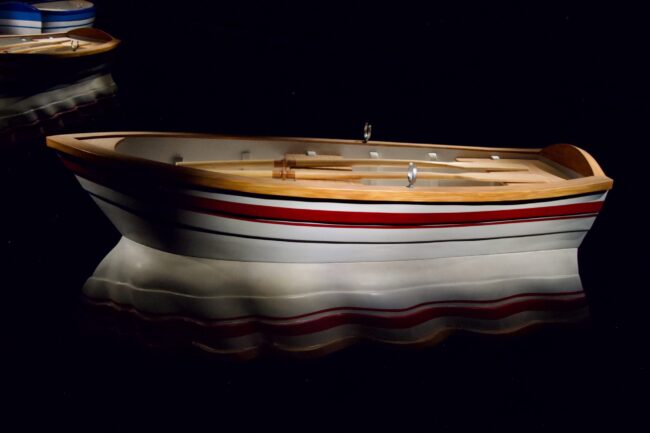
The Phantom Harbour: Emerging from a pitch-black corridor, we came upon a dark dock where rowboats gently bobbed on rippling water with waterly sounds in perfect rhythm. In reality, there was no water at all. The “reflections” beneath the boats were physical, sculptural duplicates, perfectly synchronized to sway and simulate a liquid surface.
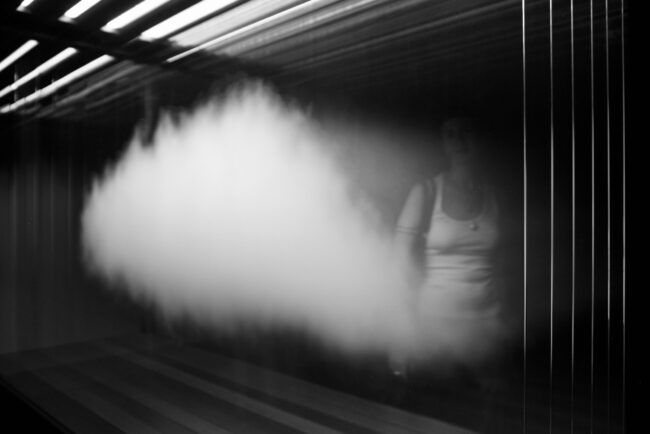
The Suspended Cloud: Next, we stood before a glass tank containing a wispy, perfectly formed cloud. Erlich achieved this ghostly effect by painting precise, microscopic layers of white mist across consecutive, parallel sheets of glass.
Grand Palais – Matisse and Erlich – 6. Photo: Bill O’Such
The Grand Finale: Scaling Parisian Walls
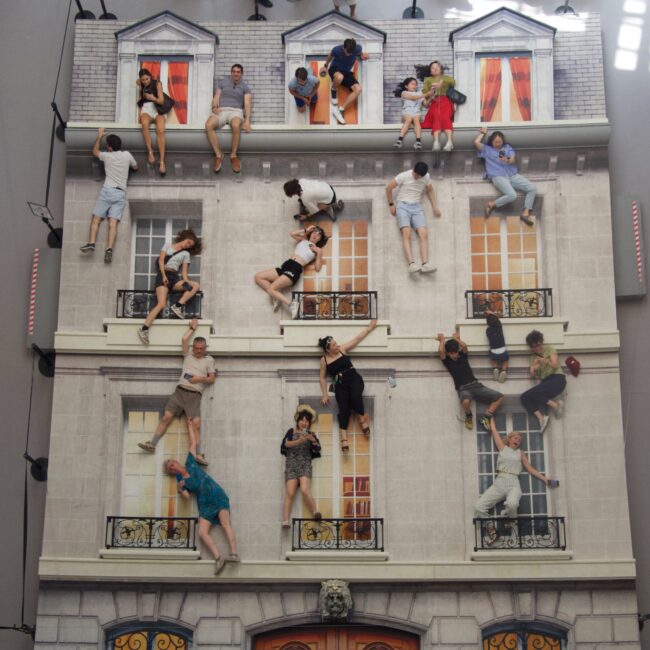
After watching a video, seeing some maquettes of his installation pieces and getting absorbed in several installation pieces, the undisputed highlight of the expo was Erlich’s famous interactive installation, Bâtiment.
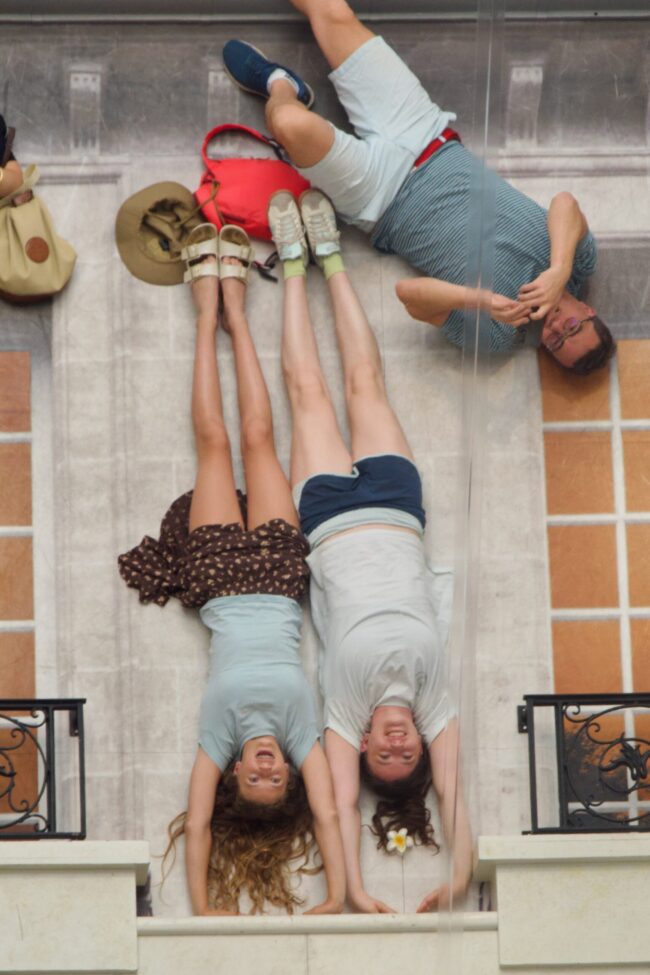
On the museum floor lies a massive, life-sized replica of a Haussmann-style Parisian building facade. Angled at a precise 45 degrees directly above it is a colossal mirror. By simply lying down, crawling, or stretching out across the flat floor, visitors are instantly transformed in the reflection above.
It was an absolute joy to watch people of all ages lose their inhibitions:
A mother and child screaming in mock terror as they “dangled” precariously by their fingertips from a third-story window ledge. Two friends lying upside down, their hair pooling onto the stone trim of a window frame to make it look like they are hanging by their heels. A massive, collective optical illusion of dozens of Parisians casually defying gravity, scaling balconies, and lounging sideways on sheer stone walls.
Grand Palais – Matisse and Erlich – 7. Photo: Bill O’Such
Merging Two Worlds
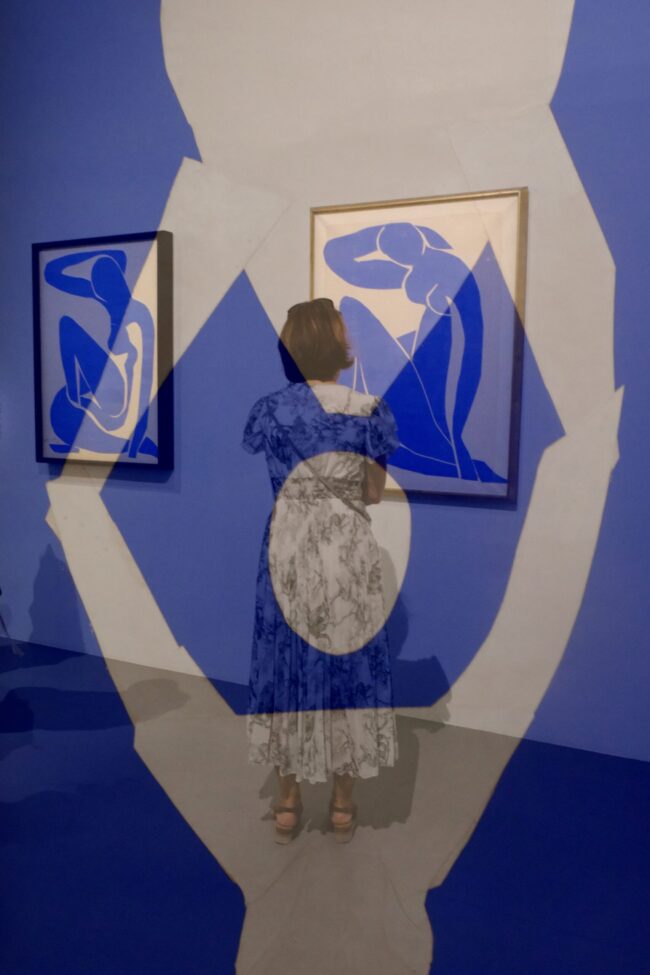
These two exhibits got me thinking about perspective, layering, and how easily the eye can be fooled. Inspired by the visual overlap, I played around with in-camera double exposures. While most of our experimental overlapping shots didn’t quite pan out, one of them captured a bit of the soul of the day.
By layering a shot of a visitor standing in front of Matisse’s famous Blue Nudes (Nu bleu) with a clean silhouette cutout, the final image feels like the art has broken free of its frame to envelop the viewer. It was the perfect visual synthesis of the entire afternoon.
If the Paris summer heat starts getting to you, bypass the crowded shaded parks, grab a ticket to the Grand Palais, and let these two master artists completely transport you to a different way of seeing the world.
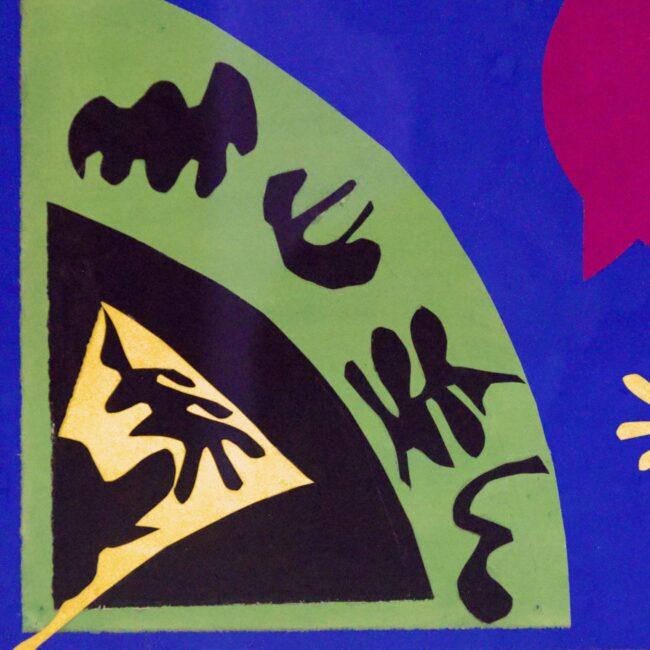
Grand Palais – Matisse and Erlich – 4. Photo: Bill O’Such
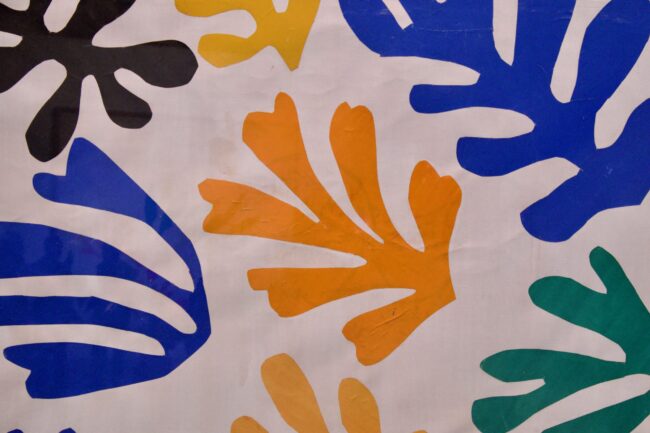
Grand Palais – Matisse and Erlich – 5. Photo: Bill O’Such
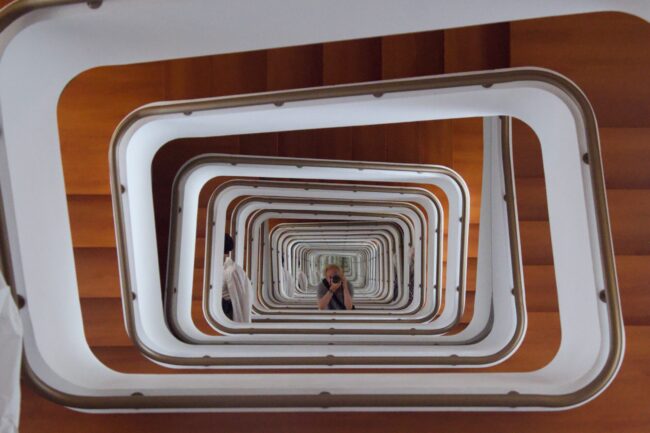
Grand Palais – Matisse and Erlich – 8. Photo: Bill O’Such
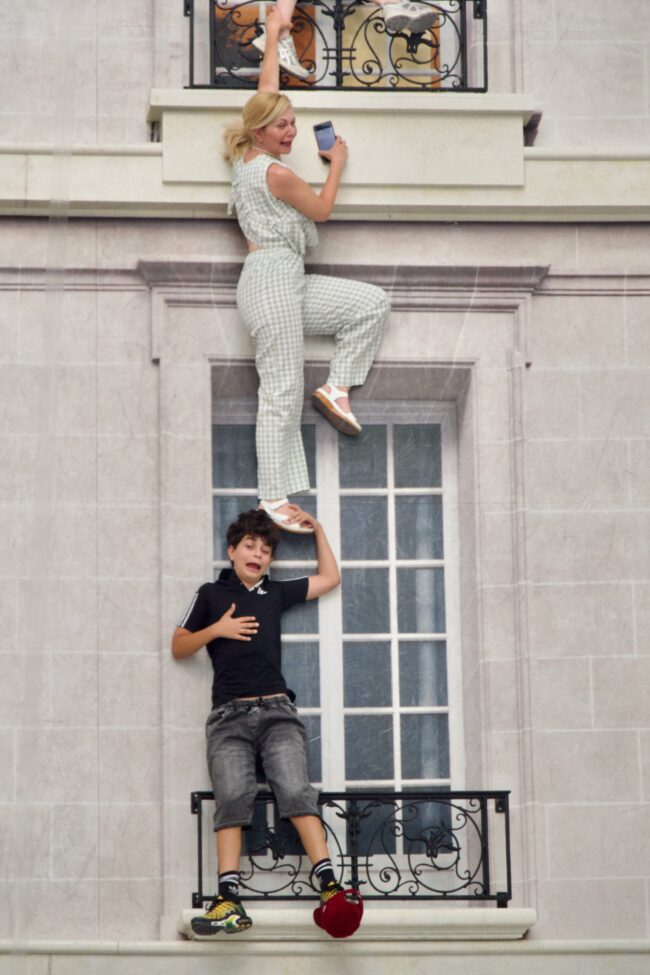
Grand Palais – Matisse and Erlich – 9. Photo: Bill O’Such
Grand Palais – Matisse and Erlich – 10. Photo: Bill O’Such
Grand Palais – Matisse and Erlich – 11. Photo: Bill O’Such
Grand Palais – Matisse and Erlich – 12. Photo: Bill O’Such
Lead photo credit : Grand Palais - Matisse and Erlich - 1. Photo: Bill O'Such
More in Grand Palais, Leandro Erlich, Matisse, Paris Vignettes
Related Articles