How AI Tech Helps Track French Art Looted in WWII
- SUBSCRIBE
- ALREADY SUBSCRIBED?
BECOME A BONJOUR PARIS MEMBER
Gain full access to our collection of over 5,000 articles and bring the City of Light into your life. Just 80 USD per year.
Find out why you should become a member here.
Sign in
Fill in your credentials below.
Of the more than 600,000 works of art looted by the Nazis during World War II, approximately 100,000 were looted from French museums, galleries and private individuals during the war, according to the Louvre Museum. While the Monuments Men and other organizations found a lot of the stolen art, today there are still hundreds that are unaccounted for.
The Louvre Museum has an exhibit of 32 paintings focusing on unclaimed looted artwork recovered in Germany after the war. A group created by the French Ministry of Culture is attempting to track the provenance of these paintings and others so they can be returned to the appropriate beneficiaries, but only 50 artworks have been returned since 1951.
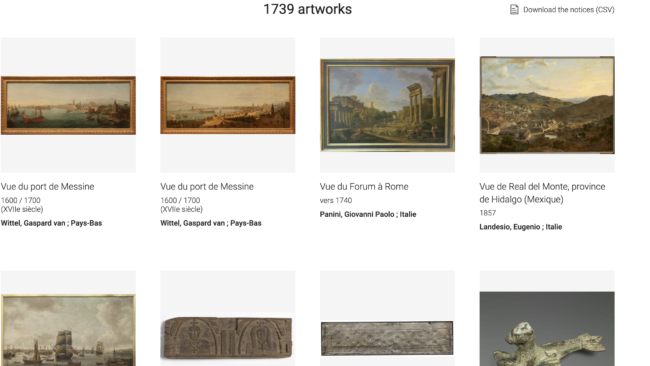
Louvre National Museums Recovery website
One of the problems in finding looted WWII art is that the written information base full of clues is incredibly complex, fragmented and highly flawed. Originally handwritten, much of the information has been digitized, especially in France, but there are many challenges including misspelled names, a variety of languages, personal code terms and clues buried in gigabytes of data. The vast amount and complexity makes the task almost impossible for humans to manually find, decipher and connect all the clues, resulting in long lead times and dead ends for researchers and rightful owners needing to prove art provenance.
Artificial Intelligence (AI) to the rescue. A benefit of AI is that it can read and analyze massive amounts of information incredibly fast. It’s this skill set that inspired professors at the Leavey School of Business at Santa Clara University (SCU) in California to create an AI software program that reads and analyzes error-ridden databases at high speeds. The goal is to overcome flawed data base obstacles and help provenance researchers track and prove the history of looted art.
“This became a topic of interest for us when we realized we could contribute something to the art restitution world,” said Michael A. Santoro, leader of the AI software project; President and CEO of Ardelia, Inc.; and Professor of Management and Entrepreneurship at Leavey School of Business, SCU. “We are trying to help people who don’t have the resources or access to data.”
A partner with Santoro who helped develop the AI software is Michele Samorani, SCU Associate Professor, Information Systems & Analytics; Program Director for Master of Science in Information Systems. The software is now highly capable and was named Ardelia, after US State Department researcher Ardelia Hall.
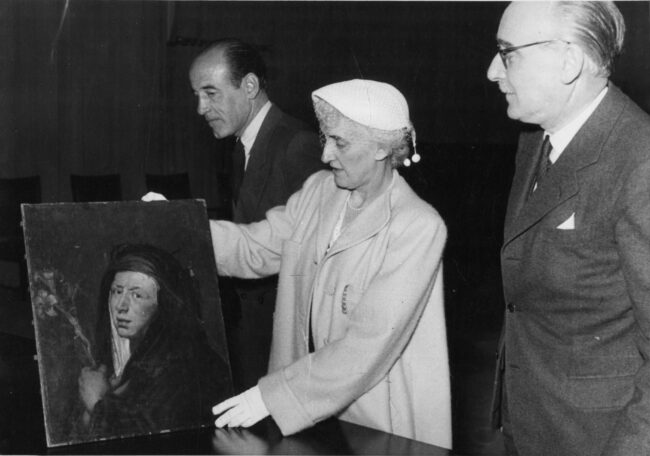
Ardelia Hall. Photo: Classes of 1921-1930 records, Box #15, Smith College Archives, CA-MS-01019, Smith College Special Collections, Northampton, Massachusetts/ Monuments Men and Women Foundation
The inspiration for developing Ardelia, according to Santoro, was a friend who is trying to prove the path of family artwork stolen during WWII. Although his friend has funding to pay for the research and legal fees, many people don’t have access to high level resources.
“The idea at a high level is, as I like to call it, automating investigation, or helping detectives, because it’s going to help provenance researchers be more efficient with their jobs and prioritizing art that has holes in its history,” said Samorani. “We approach it by having examples of art and investigations that were done manually and have AI learn patterns about what makes something suspicious or has a provenance story that needs more investigation.”
The current data that Ardelia analyses is from Cultural Plunder by the Einsatzstab Reichsleiter Rosenberg (ERR) Jeu de Paume records and the Getty Provenance Index’s German-language auction data. These sources contain about 900,000 records.
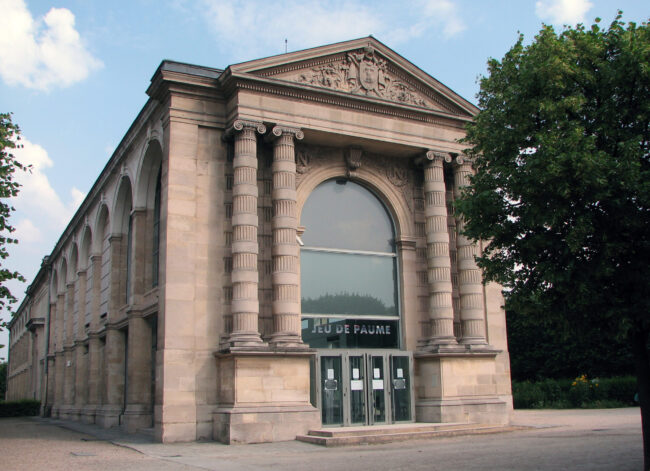
Galerie nationale du Jeu de Paume. Photo: TCY / Wikimedia commons
The Jeu de Paume museum was used by the Nazis as a repository for looted art. The original written data was created by Germans managing the looting, along with museum curators such as Rose Valland who kept a secret list of all the looted art being processed at the Jeu de Paume. After the disbanding of the Monuments Men, Ardelia Hall was appointed in 1946 by the US State Department to use the data to research and find the art owners. Using the non-digital data and correspondence, she spent 18 years searching for looted wartime art. Her result was more that 4,000 objects repatriated to 14 countries.
“Rose kept the record and Ardelia used it,” said Santoro. “Our tool is named for the second half of that story and it runs on the first.”

Rose Valland’s personal effects displayed at the Musée dauphinois in the Isère. Photo credit: Patafisik / Wikimedia commons
Santoro and Samorani programmed Ardelia to quickly search the error-filled and confusing data base in one plain language query. Responding to a request, it looks for patterns, connections, related terms, different spellings and various translations of seemingly indecipherable data and provides a clear response. AI makes it easier and faster to make connections that would take provenance researchers much longer to do manually.
“Before AI, you would have to know which patterns to look for,” said Samorani. “But AI is going to figure out the patterns that will be important to determine if something has been looted or suspected to be looted.”
AI currently has a mixed reputation, but the ability to quickly read and analyze data about stolen and missing artwork and potentially find leads to ownership or location is a positive for AI and its fast data search and analysis. According to the Ardelia team, the key to success is to work alongside provenance researchers and understand the kinds of questions and suspicions they have regarding stolen or missing artworks.
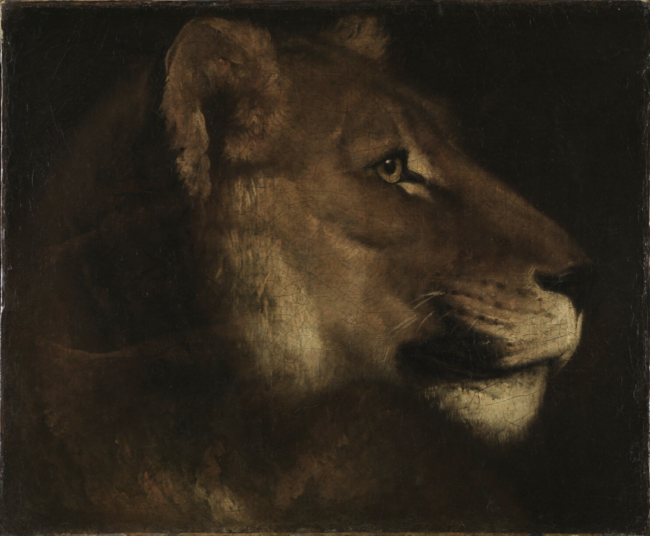
Théodore Géricault, Head of a Lioness, about 1819 – © 2012 GrandPalaisRmn (musée du Louvre) / Philippe Fuzeau. Artwork recovered after World War II, retrieved by the Office des Biens et Intérêts Privés; to be returned to its rightful owner once they have been identified.
Santoro’s next step is to extend the approach to additional archives beyond the Jeu de Paume and Getty records. The same structural data problem appears in other bodies of displaced cultural property, and he believes the AI methods being developed may prove applicable well before and beyond the Nazi era. For example, Santoro would like to expand the database to include information about looted African, Asian and Pre-Columbian art. With this expansion of data, AI software can effectively help identify patterns and provide researchers with leads to bridge data gaps to help identify stolen art’s lost provenance worldwide.
“The goal is to bring good AI technology to enhance the kinds of research and relationships in the art world,” said Santoro. “This is the future and everyone should be along for this ride… With a well-governed and thought out ethical perspective, beautiful things can happen.”
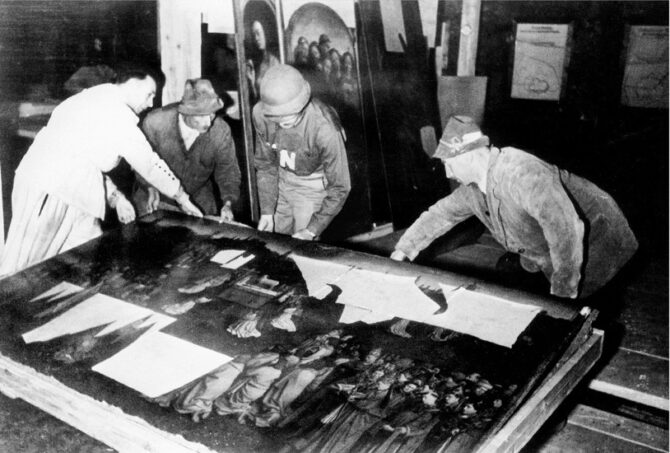
Lead photo credit : The Ghent Altarpiece during recovery from the art depot in the Altaussee salt mine, 1945. Unknown photographer. Public domain.
More in Ardelia Hall, jeu de paume, looted art, Rose Valland, WWII
Related Articles