Batignolles: An Artistic Adventure
The Paris Vignettes series features the inspired work of street photographer William “Bill” O’Such in themed installments
Batignolles is one of those rare, village-like neighborhoods in Paris that I love so much I find myself playing “Greeter” just to introduce friends to its charms. It is the kind of quartier where one visit leaves you tempted to pack up and move there. Beyond its wonderful green spaces — which will certainly get their own vignette later— the area is a captivating blend of historical and contemporary artistry.
Starting a morning walk through the Square des Batignolles, you eventually arrive at a building you might not immediately recognize as a church. The Église Sainte-Marie des Batignolles, built in 1829, presents a strict neoclassical exterior resembling a Greek temple. Stepping inside, however, you are immediately drawn to the highly dimensional, almost theatrical backdrop of the altar, glowing with soft blues and sculpted clouds that offer a truly unique visual experience (Batignolles – Theatrical Altar).
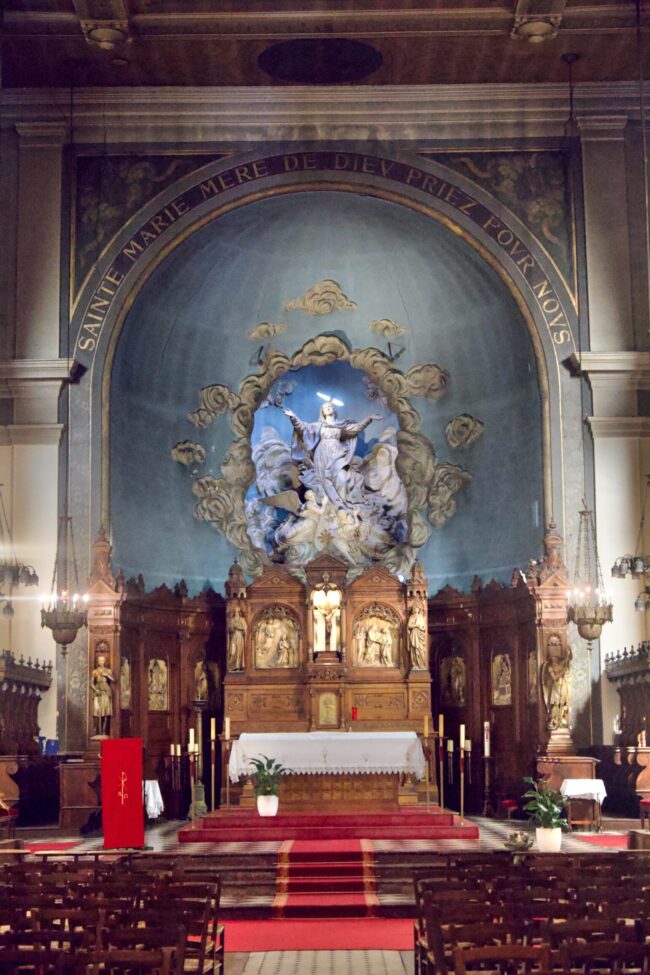
Batignolles – theatrical altar. Photo: Bill O’Such
Heading back out and up the neighborhood’s main artery, rue des Batignolles, the early hour meant the shops were still asleep. However, the closed metal shutters offered their own street-level gallery. I passed a charmingly painted theatrical scene featuring hand-drawn puppets (Batignolles – Mini Theatre) right alongside the perfectly preserved, frozen-in-time typography of a classic photography studio (Batignolles – Vintage Photographie).
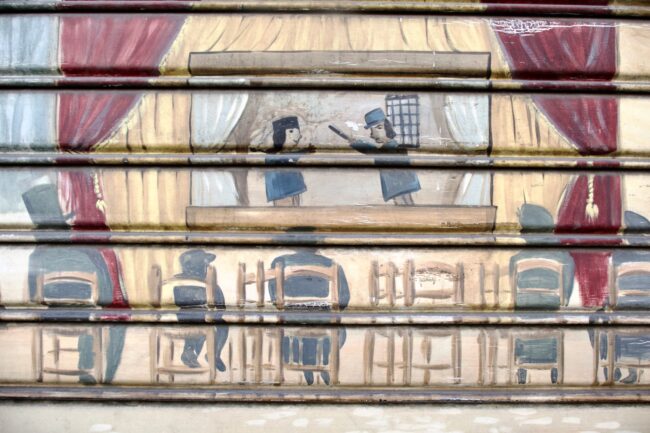
Batignolles – mini theatre. Photo: Bill O’Such
Further up on the left sits the recently renovated Mairie (Batignolles – Town Hall). It is easy to breeze right past, but stepping inside is definitely a must. The entrance hall honors the neighborhood’s deeply ingrained artistic legacy with a gallery of portraits featuring the famous creatives who once called Batignolles home, including Paul Verlaine, Colette, Sarah Bernhardt, and Émile Zola (Batignolles – Wall of Luminaries). Beyond the historical faces, the Mairie frequently hosts local art exhibitions showcasing beautiful sketches and paintings (Batignolles – Watercolor Sketchbook), all housed around a sweeping marble staircase that spirals down toward a lone piano (Batignolles – The Grand Staircase).
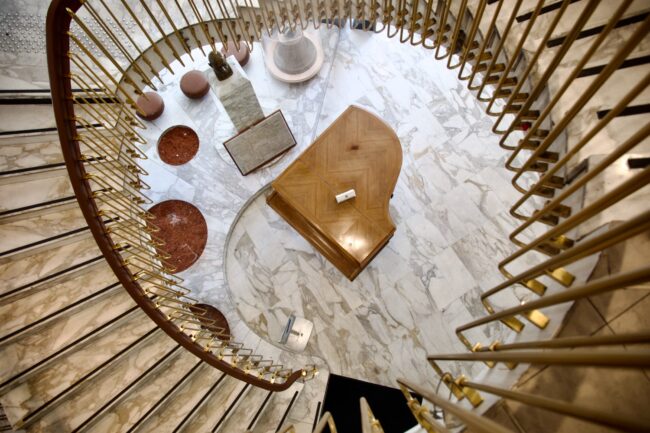
Batignolles – the grand staircase. Photo: Bill O’Such
Leaving the Mairie and taking a left, the neighborhood’s flair for whimsical storefronts continues, highlighted by beautifully painted vintage signs promising retro fashion and jewelry (Batignolles – Miss Sugar Cane). Wandering further toward the Martin Luther King Park, the architecture itself becomes the primary exhibit. The streetscape is dotted with elaborate, sculpted facades featuring elegant wrought-iron balconies (Batignolles – Sculpted Facade) and highly textured, geometric terracotta tiling that catches the morning light (Batignolles – Geometric Terracotta).
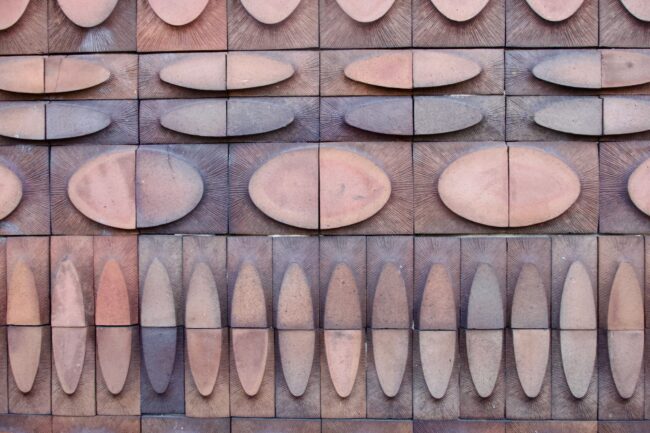
Batignolles – geometric terracotta. Photo: Bill O’Such
Crossing through the nature-filled expanse of the park brings a sudden, dramatic shift in scale and era as you approach the Tribunal de Paris. Designed by Renzo Piano, the massive modern structure creates a striking visual contrast, its wavy, layered glass catching and distorting the reflections of the surrounding skyline (Batignolles – Mirrored Tribunal). Inside, the bright, soaring atrium features sleek geometric staircases crisscrossing beneath a striking ceiling dotted with circular skylights, offering a surprisingly airy atmosphere for a courthouse (Batignolles – Atrium Skylights).
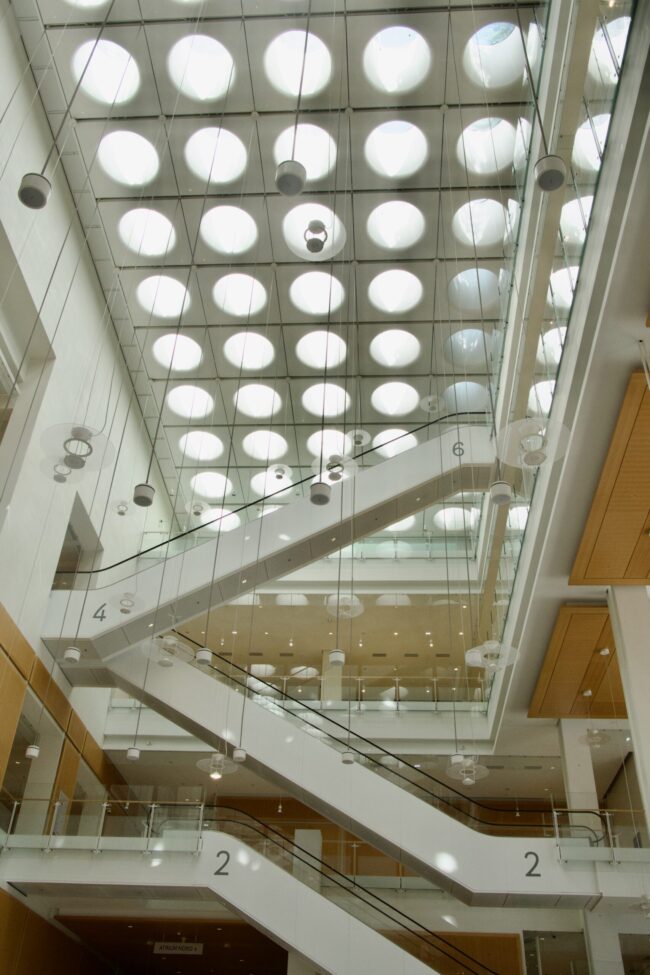
Batignolles – atrium skylights. Photo: Bill O’Such
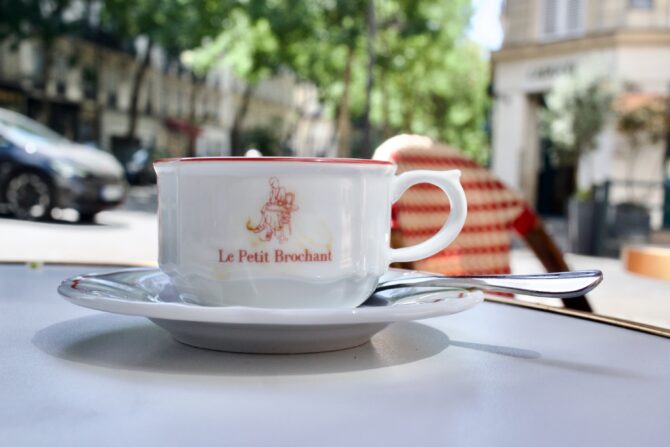
After taking in the modern architecture, we made our way back to rue Brochant for a well-earned lunch and a post-balade coffee at Le Petit Brochant. Staring at our cups, we found ourselves puzzling over a cryptic red illustration of a woman sitting alone at a table with two cups (Batignolles – Two Cups Mystery). We asked the waiter for the meaning behind the design, but he was just as surprised by the question and admitted he’d have to ask his boss. The answer will have to wait for our next trip to Batignolles, right before hopping on the speedy Line 14 to zip back into central Paris.
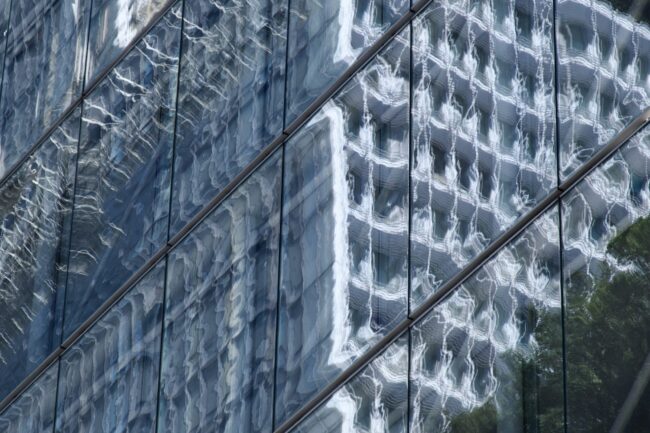
Batignolles – mirrored tribunal. Photo: Bill O’Such
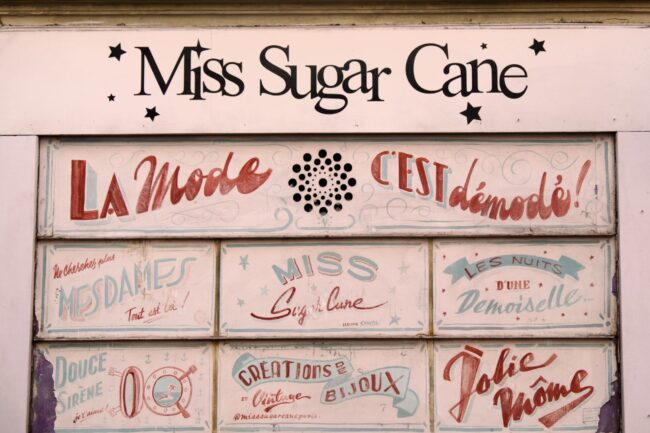
Batignolles – miss sugar cane. Photo: Bill O’Such
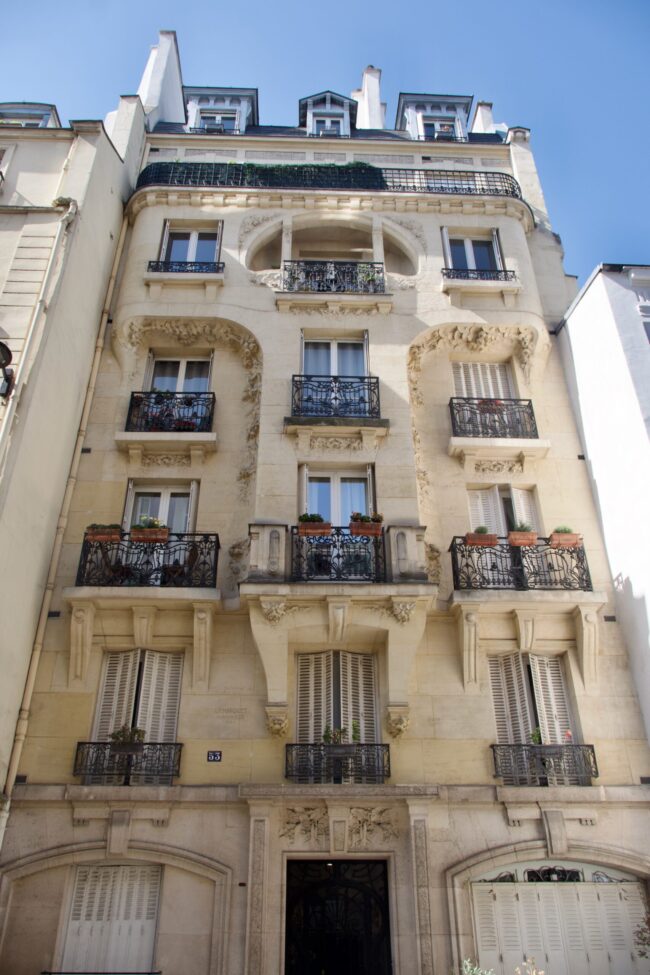
Batignolles – sculpted facade. Photo: Bill O’Such
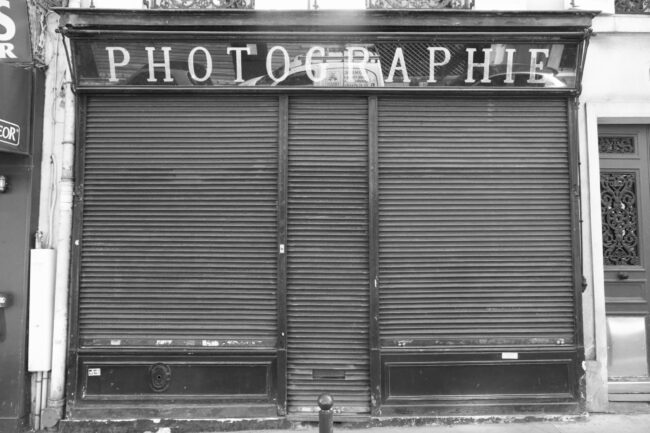
Batignolles – vintage photographie. Photo: Bill O’Such
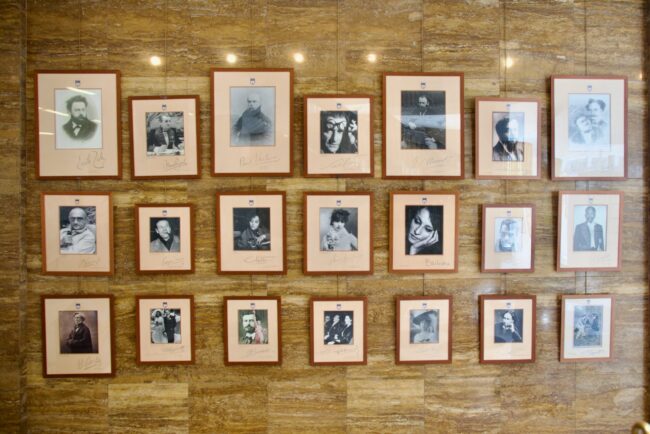
Batignolles – wall of luminaires. Photo: Bill O’Such
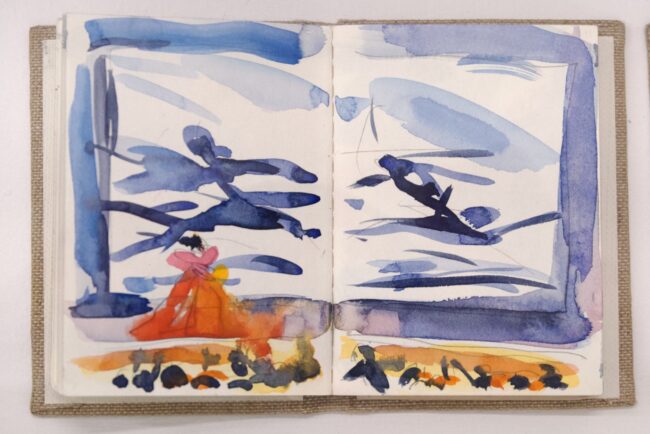
Batignolles – watercolor sketchbook. Photo: Bill O’Such
Lead photo credit : Batignolles - two cups mystery. Photo: Bill O'Such
More in Batignolles, Paris Vignettes
Related Articles