
A Feast of Art Deco in Paris
- SUBSCRIBE
- ALREADY SUBSCRIBED?
BECOME A BONJOUR PARIS MEMBER
Gain full access to our collection of over 5,000 articles and bring the City of Light into your life. Just 80 USD per year.
Find out why you should become a member here.
Sign in
Fill in your credentials below.
Paris is host to an Art Deco renaissance this spring, from the 100 ans d’Art déco exhibit at the Musée des Arts Décoratifs to the Zadkine Art Déco exhibit at the Musée Zadkine. Both shows transport visitors through time to 1920s Paris, highlighting an era of rapid innovation amidst postwar uncertainty.
The International Exhibition of Modern Decorative and Industrial Arts was held in 1925 to celebrate French savoir-faire and exhibit international talents, reflecting the collective desire at the time for radical modernity in art and design. Pavilions mounted by designers, decorators, and manufacturers took over town, stretching from Les Invalides to the Place de la Concorde and the Grand Palais. The Pont Alexandre-III was transformed into a Parisian Rialto, with Sèvres, Sonia Delaunay, and Christofle showcasing wares from textiles to vases. Long hours, an affordable entry fee, and additional attractions like restaurants drew millions of visitors.
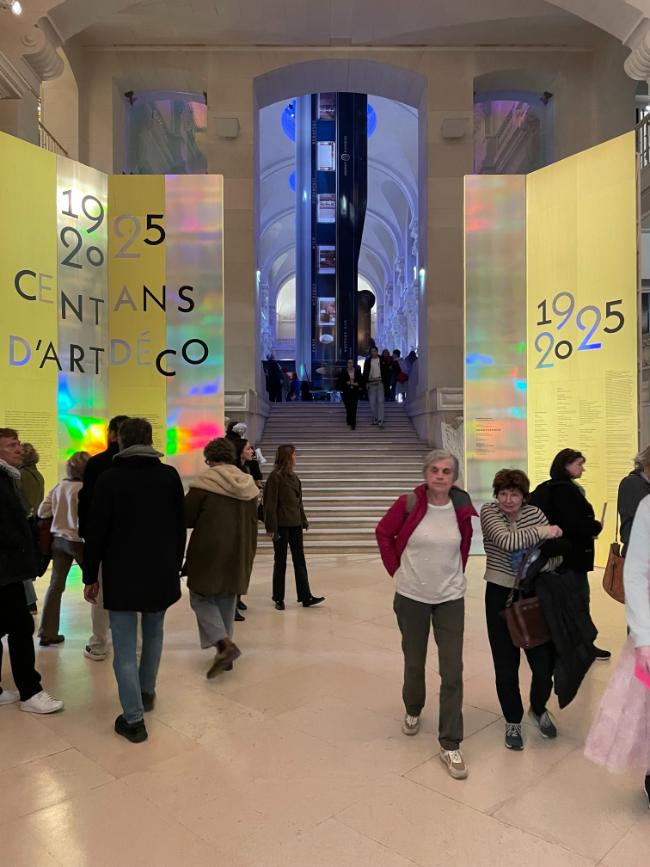
Inside the Musée des Arts décoratifs. Photo: Maria Kern
The Musée des Arts Décoratifs exhibit has been curated as a sort of reconstruction of the original exhibition, and the 2025 edition is vast and varied, featuring ornately illustrated programs from the Ballet Russes, gorgeous Cartier jewels, and room after room of furnishings, stunning feats of design that are also decidedly utilitarian. Despite the splendor of everything on display, somehow nothing looks too precious to sit on, burn toast in, or wear to a game of mahjong.
Opening with an overview of the history of the international expo, the first section features posters, maps, and a mix of furniture, jewelry, and clothing of the era. Major names like Vionnet, Chaumet, and Baccarat all make appearances. Common motifs emerge: florals, vivid colors, geometric shapes, and rare woods. The time travel continues with a section devoted to Cartier’s archive of 1920s masterpieces. Visitors can read up on Cartier’s early evolution: from geometric designs to an injection of color inspired by the East, to the cost-cutting move to yellow gold now emblematic of the Cartier brand. Then there are the pieces themselves — all dazzling — including cigarette cases, nécessaires, clocks, and pocket watches.
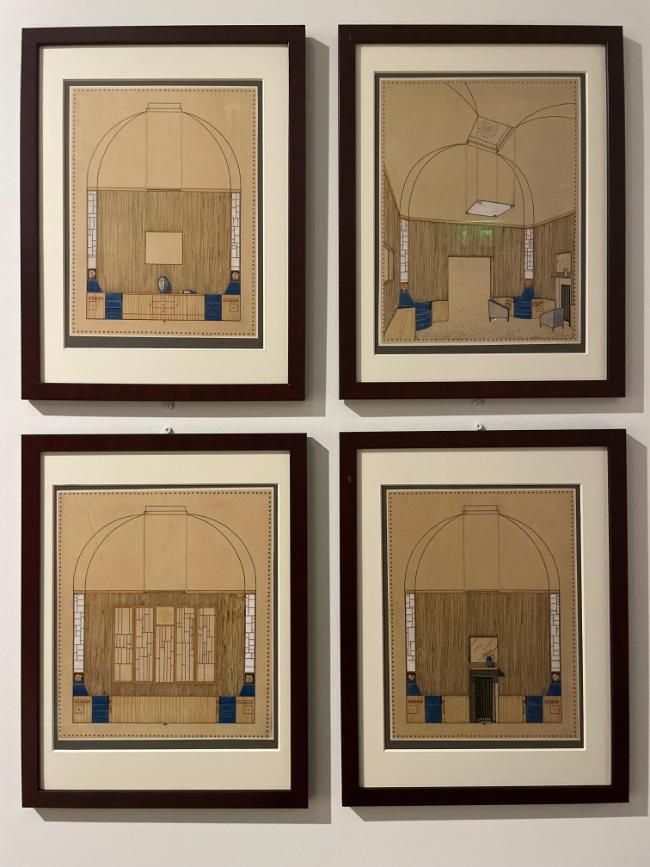
Act two consists of several sections devoted to interior design and the recreation of various influential collectors’ studios and rooms. When Nelly de Rothschild wanted to decorate her boudoir, it was a job for not one but two Cléments: Mère and Rousseau, both considered masters of their craft. Mère’s work was inspired by Art Nouveau, Japan, and cubist abstraction: leather is embossed and lacquered, and no political correctness is observed — there’s plenty of ivory, shagreen and horn on display. A prominent fashion designer in the late 19th and early 20th centuries, Jacques Doucet was another collector and champion of Art Deco. Upon retiring to Neuilly, he outfitted his studio with pieces by Eileen Gray and others, and his collection was subsequently donated to the Musée des Arts Décoratifs, including books he had commissioned by bookbinders Rose Adler and Pierre Legrain.
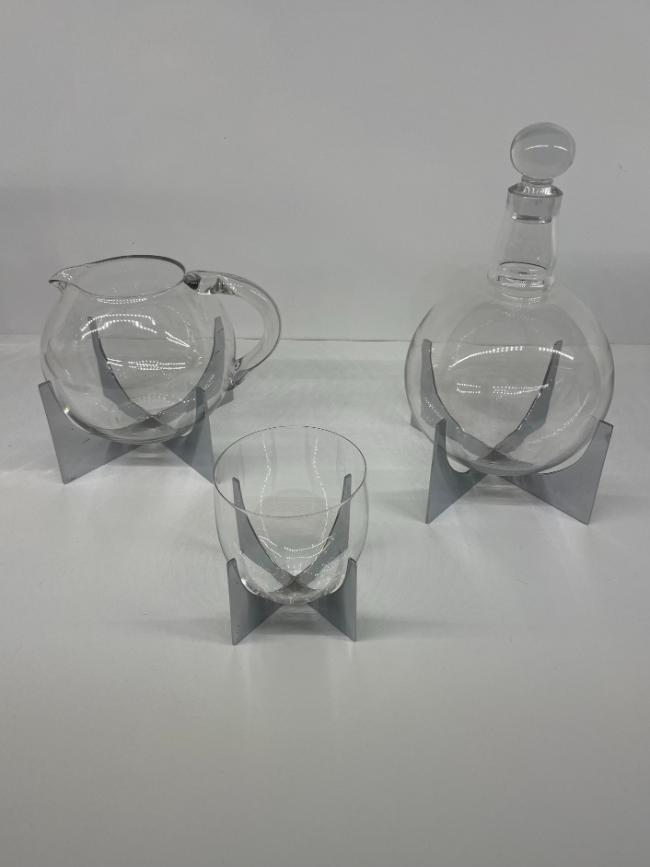

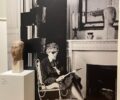
Ms. Gray, a fascinating, enigmatic character of the era, features in both exhibitions. Born in Ireland, she emigrated to Paris for art school and later opened a boutique under a male pseudonym, Jean Désert, on the rue du Faubourg Saint Honoré, where she sold Zadkine’s sculptures. There is an entire room devoted to Gray at the Zadkine exhibit, highlighting her aesthetic contributions to the movement and her significance within the artistic community in Paris at the time. Though little is known about her relationship with Zadkine, his 1924 portrait of Gray was kept on prominent display in her apartment on the rue Bonaparte. Gray is also afforded significant real estate in the Musée des Arts Décoratifs show, where visitors can view Briques, one of her famous folding screens. Composed of modular panels in lacquered wood, the piece is sleek, playful, and well ahead of its time.
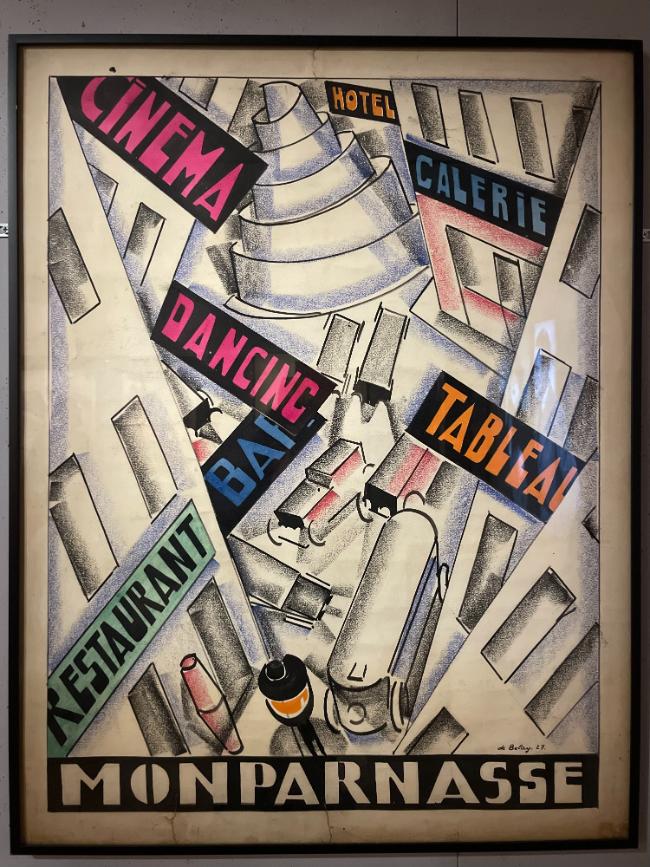
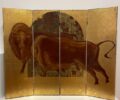
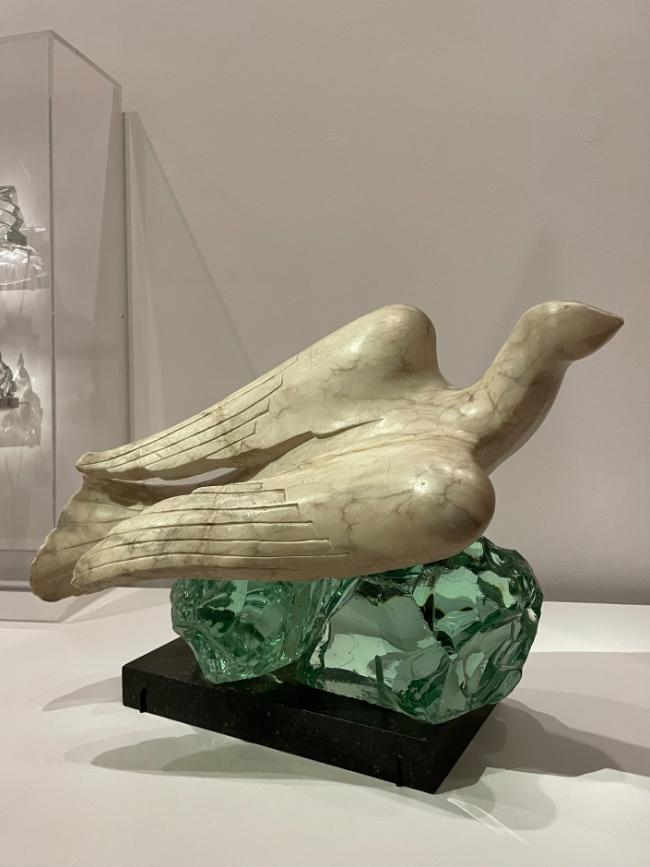
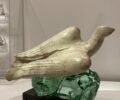
Other artists featured in the Zadkine exhibit include Katsu Hamanaka, who studied under Gray’s lacquer master Seizo Sougawara, and Georges Chevalier, a sculptor who worked with Baccarat. Zadkine’s obsession with torsos and birds is obvious, and both forms repeat throughout the show, rendered in a variety of materials from exotic woods to plaster and gold leaf.
Zadkine had a fondness for cutting his subjects off somewhere — either the head, the arms, or halfway down — regardless, the effect is one of intrigue and fascination. I couldn’t find a satisfying answer for the intention behind this choice, and was reminded that despite all the information on Zadkine’s history and his work, part of the artist’s allure is maintaining something unknowable. As if in keeping with this theme, the museum itself is easily missed, hidden down an alleyway off an unassuming block of the rue d’Assas, across from the Jardin du Luxembourg. It’s a welcome retreat from the larger scale museums in Paris, and everything about it is done with a measure of restraint, a gentle reprieve in our era of overexposure.
In contrast to the unassuming and pared-down, the finale of the MAD exhibit is devoted to a less than subtle marketing campaign to promote the relaunch of the Orient Express, coming in 2027. The contemporary train cabins and artifacts have been reassembled on site, juxtaposed with their original inspirations. Yet the overall effect is disappointing, largely because nothing produced for the current day passenger can hold a candle to the originals. Instead, it’s a kind of flattening — the aesthetic equivalent of visiting Las Vegas, the South Coast Plaza, or some other barren land for a tour through the 21st century monoculture. Still, it’s a treat to see the original artifacts up close, from cutlery to doorknobs, alongside a collection of early editions of Agatha Christie’s Murder on the Orient Express, in various translations.
DETAILS
Musée des Arts Décoratifs: 100 Ans D’Art Déco
Through 26 April 2026
Open Tuesday-Sunday 11 am-6 pm
107, rue de Rivoli, 1st arrondissement
Musée Zadkine: Zadkine Art Déco
Through 12 April 2026
Open Tuesday-Sunday 10 am – 6 pm
100 bis, rue d’Assas, 6th arrondissement
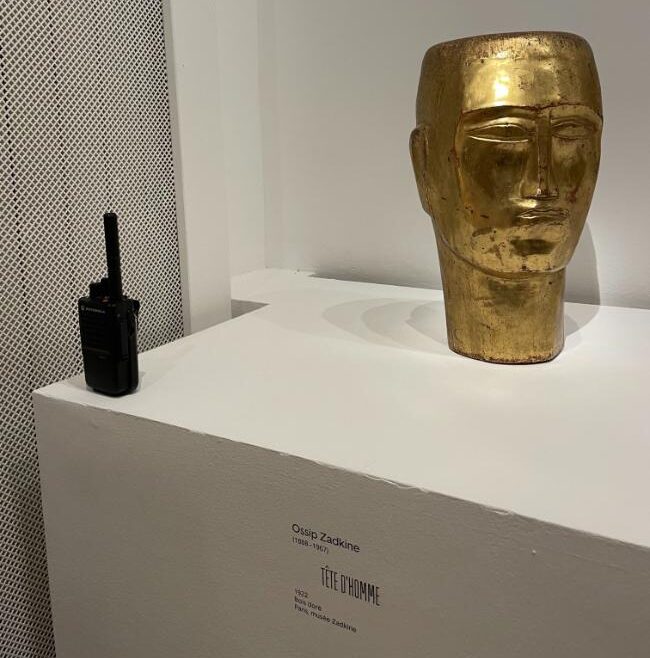
Zadkine sculpture. Photo: Maria Kern
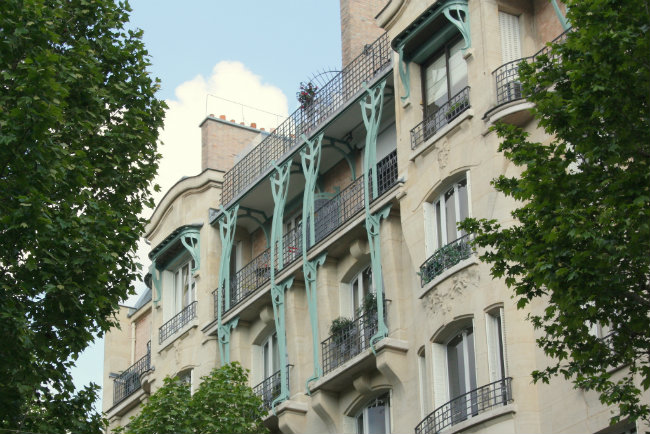
Lead photo credit : Art Deco facade in the Village d'Auteuil by ParisSharing/ Flickr
More in Art Deco, Musée des Arts Décoratifs, Zadkine
Related Articles

By Maria Kern