
Flâneries in Paris: Along the Canal St Martin

- SUBSCRIBE
- ALREADY SUBSCRIBED?
BECOME A BONJOUR PARIS MEMBER
Gain full access to our collection of over 5,000 articles and bring the City of Light into your life. Just 80 USD per year.
Find out why you should become a member here.
Sign in
Fill in your credentials below.
This is the 49th in a series of walking tours highlighting the sites and stories of diverse districts of the Paris region
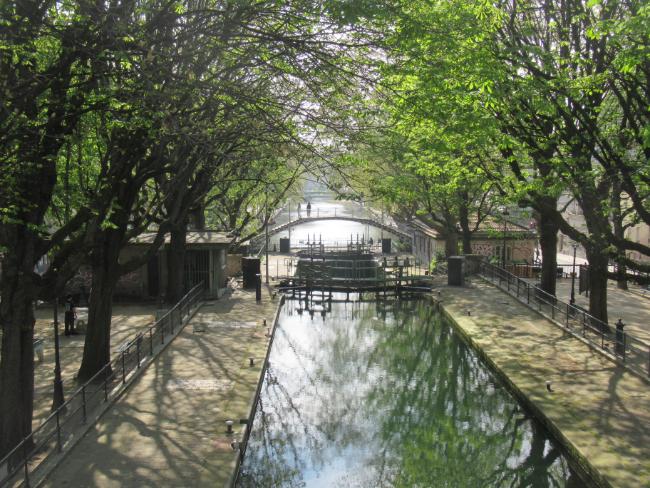
I had so many images in my head as I walked through the 10th arrondissement towards the Canal Saint-Martin. I remembered Alfred Sisley’s luminous painting which used silvery blues to capture the sky’s reflections on the water’s surface on a spring morning. Then I thought of Amélie Poulain in a bright dress, silhouetted against a canopy of green trees, pale sunshine breaking through as she stood on one of its bridges, pinging stones into the water. My own memories of previous visits mingled waterside cameos of groups of people – friends, lovers, workers – against a background of sometimes startling graffiti on the bridges and the buildings lining the Quai de Valmy.
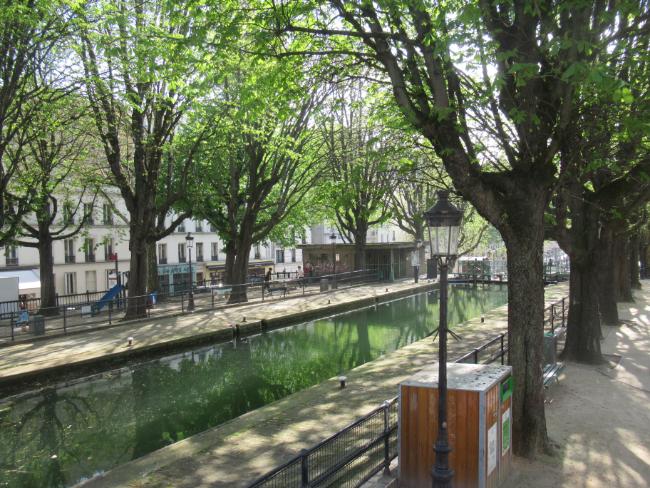
The charms of the Canal Saint Martin. Photo: Marian Jones
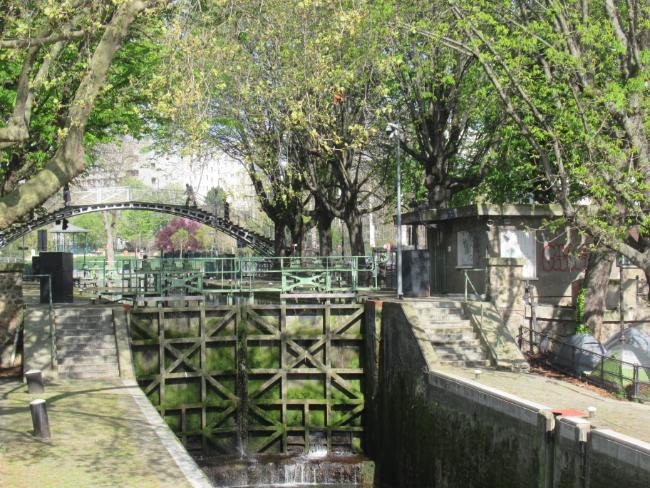
I climbed onto the Michele Morgan footbridge and gazed south along the canal to survey the view. It was beautiful which, given its workaday history, is not what you might expect. The canal was built to transport goods in and out of Paris and supply the city with fresh water, a waterway connecting the port areas of La Villette and the Port de l’Arsenal. It was functional, with its bridges and locks, its wharves and warehouses, and when canal traffic faded in favor of faster forms of transport, it was very nearly paved over. But it was saved by public opposition and today it has a regenerated feel. The view from one of its passerelles (footbridges) of plane trees and pale green bridges, of quirky shops and eateries lining the sides, is captivating.

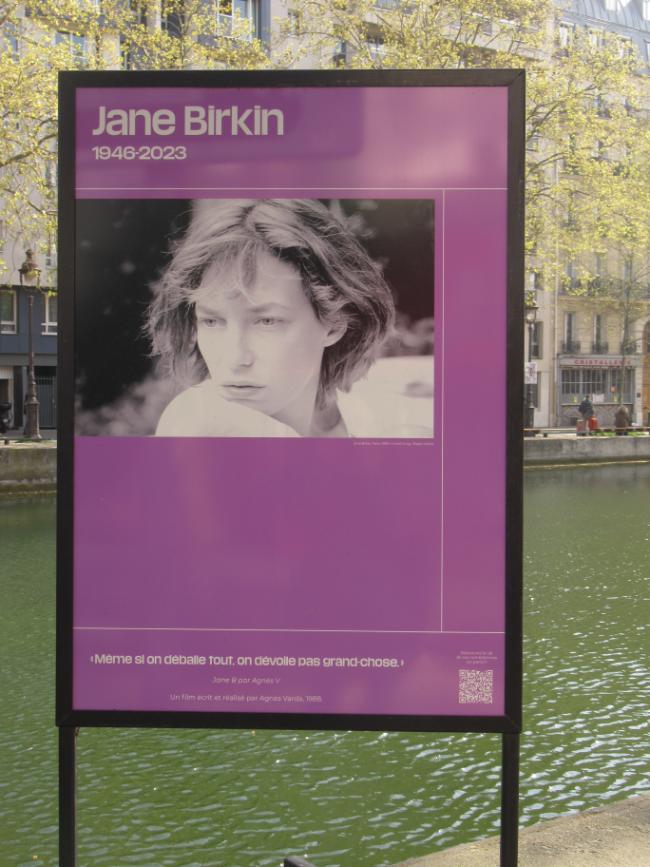
And today, there was an extra surprise. Against the hazy sunshine, the silver ripples on the water and the branches of the plane trees above, nine poster-sized black and white photographs were lined up along the bank to my right. It was a pop-up exhibition, Les comédiennes des passerelles, honoring the actresses after whom the canal’s footbridges have recently been renamed. Zooming in with my camera, I could see their faces, the blonde Michèle Morgan after whom the bridge I stood on was named, Arletty, Emanuelle Riva, Jane Birkin, women who came to mean Paris to cinema audiences world-wide, many of whom featured in scenes shot along the canal.
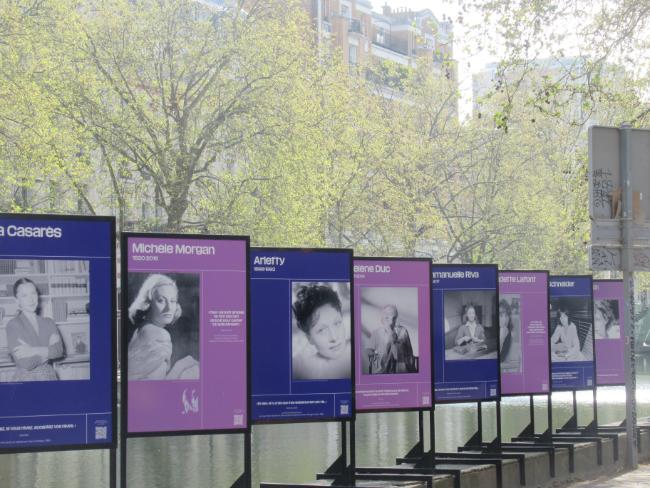
“Les comédiennes des passerelles” exhibit on the Canal St Martin. Photo: Marian Jones
As I took some pictures, a dapper elderly haired gent waited politely for me to finish. When I thanked him, he smiled and said he assumed I’d prefer not to have him in my shots, even though he knew he was photogenic. I laughed, which immediately seemed rude. Sorry, I said, I don’t know why I laughed. Ah Madame, he said, “it’s because you are happy today.” Well, yes. With a little time to explore a corner of my favorite city in the first proper sunshine of the year and a surprise in the shape of the exhibition I’d just discovered, things did indeed seem to be going rather well. He had reminded me to savor the moment.
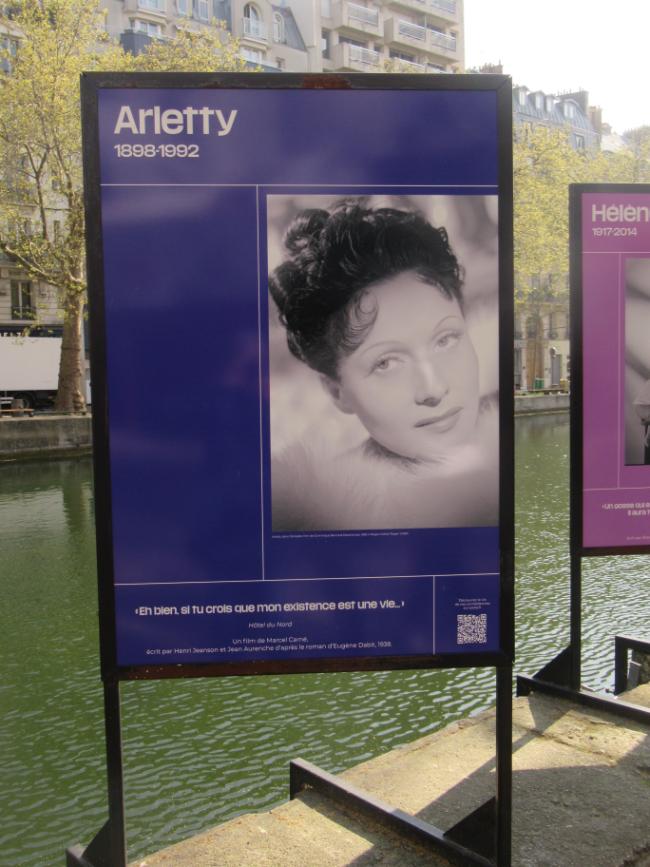


I went down to the quai and walked along just past the next footbridge, named after Arletty, to have a closer look at the photos. I looked at her image, admiring her flawless skin, yet also finding in her knowing look and tousled hair glimpses of the actress who played gritty characters with such conviction in films like Hotel du Nord and Les Enfants du Paradis. My musings about rewatching the films were interrupted by a lady who wondered why I was taking notes. “Are you interested in Arletty? Do you know that the hotel is just across the bridge? Shall I show you?”
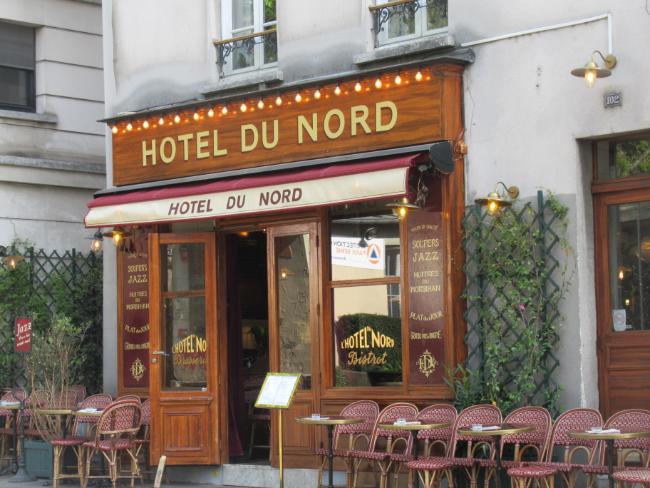
Hotel du Nord on the Canal St Martin. Photo: Marian Jones
And so I found myself standing outside it, a dapper little bar advertising oysters from Morbihan and jazz evenings. The film, I discovered later, was based on a book whose author lived in this building as a child and who set his tale of shady goings on here. It’s been spruced up, I remarked to my new companion. She nodded wistfully. Ah, mais oui! For there is definitely a gritty edge to this area, despite the images of tall trees and wrought-iron bridges which unfold into the middle distance. Walking further down, past bridges, named after Bernadette Lafont and Emmanuele Riva, I saw traces of it.
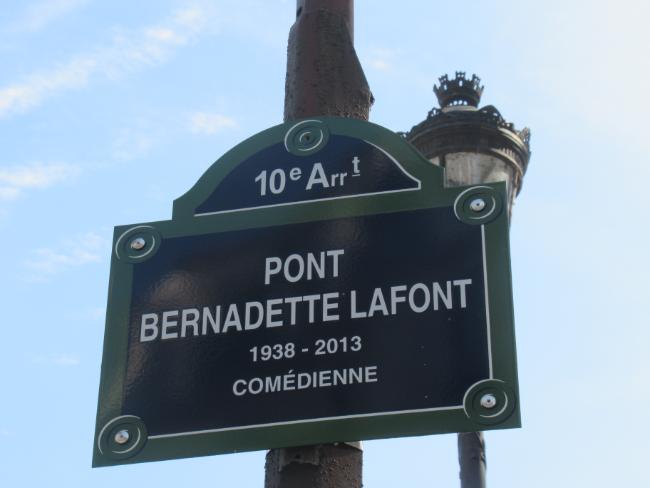
Pont Bernadette Lafont over the Canal Saint Martin. Photo: Marian Jones
One wall was covered in a huge poster noting the number of lives saved by a recent evacuation in Gaza. Graffiti in favour of les ouvriers (the workers) and feminist causes – ‘patriarchy is deadly’ – popped up a number of times. Someone had it in for Rachida Dati, who was standing as a right-wing candidate to be elected mayor of Paris. When I looked up her manifesto it stressed her desire to “Change Paris” focussing on ‘security, cleanliness, and budgetary responsibility’, but the Emmanuelle Riva bridge was plastered in posters accusing her of wanting to ‘turn 1000 women, 700 children, 200 minors onto the streets’. I wondered where the truth lay.
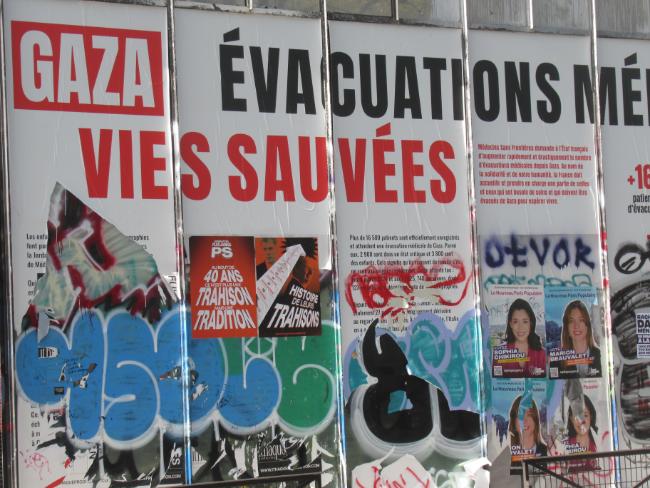



The Canal Saint-Martin has retained some of its earlier rough edges, but it was designated a monument historique in the 1990s and that set off a process of gentrification. Now it has an atmosphere of urban renewal and has become a place to linger, to socialize. In today’s sunshine, young people sat cross-legged or dangling their legs over the edge, coffees in hand. Two smartly besuited office workers leaned towards each other in earnest conversation. A bit later, I imagined, more people would bring their lunchtime sandwich here and in the evenings it’s popular with the after-work crowd too, somewhere to unwind a little.
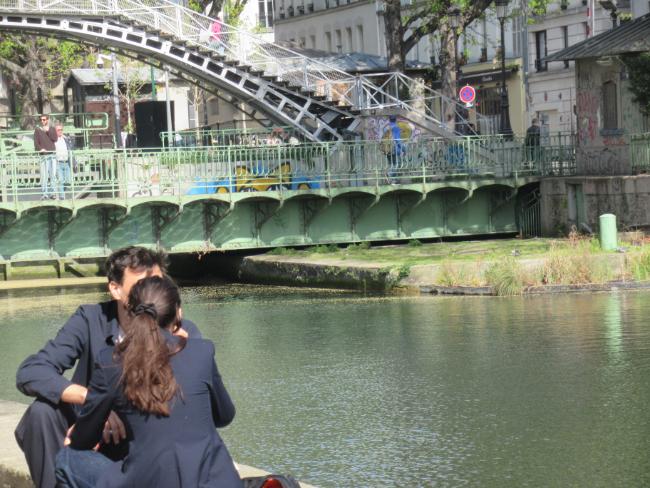
A couple linger along the Canal St Martin. Photo: Marian Jones
The shops and cafés lean towards the trendy these days. Babel advertised itself as a concept store, somewhere to rummage for some “vintage upcycling,” while Nin et Laur offered the sort of colorful-yet-quirky clothing you have to snap up when you see it. I passed a whole range of eateries which were a little out of the ordinary, from the “fine Lebanese cuisine” on offer at Kara to the Cidrerie du Canal, where I could choose from any of 50 different ciders and order a croque-monsieur or a camembert rôti (roasted camembert). It was easy to imagine a pleasant itinerant meal one evening, perhaps an apéritif at a traditional café terrace where flowers spill out above the terrace, followed by a wander along the quai in search of a savory plat and then finishing up with an artisanal ice cream from Sucre Glace at number 61. The romance of the idea was interrupted by spying a kerbside urinoir, but hey, that’s practical!
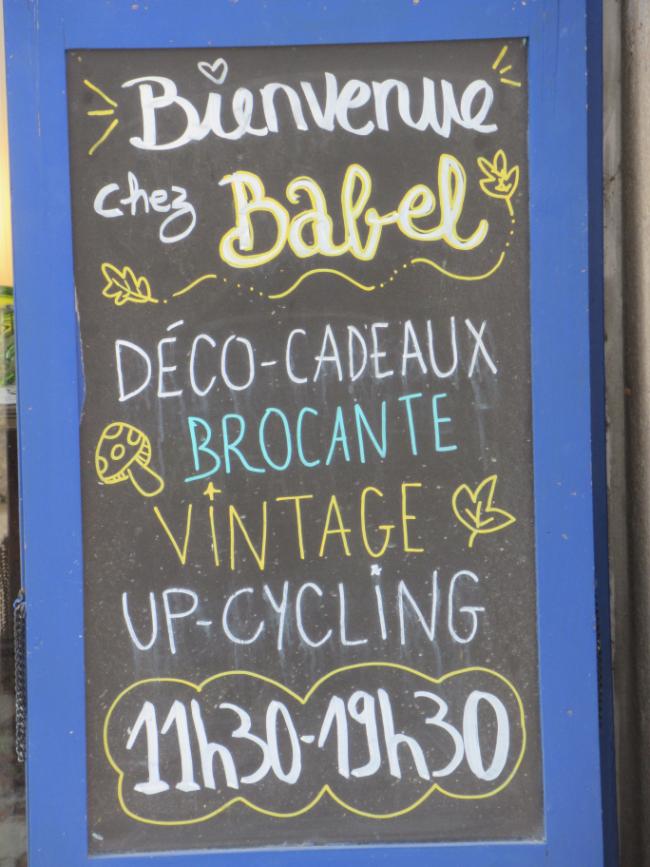
Babel store, Canal St. Martin. Photo: Marian Jones
The last bridge before the canal disappeared underground was the Passerelle Jane Birkin. Formerly the Passerelle des Douanes (Customs Footbridge), it is the canal’s oldest bridge, erected in 1860, a cast-iron beauty built when the canal was central to commerce and trade. It was renamed following Jane Birkin’s death in tribute to the British actress, model and singer who made Paris her adopted home and became the world’s most quintessentially “French” English woman. Known for her bohemian chic and effortless style, her name makes a perfect addition to today’s Canal Saint Martin where cool is the word which keeps springing to mind.



The photos I took remind me that there is nowhere in Paris quite like the Canal Saint-Martin. The place where the street kids congregated in Edith Piaf’s Les mômes de la cloche now has a new, edgier feel. Here, the natural and the urban mix as sunshine glints through the plane tree branches which frame this once industrial environment. The architecture styles mingle unexpectedly too. I spotted a concrete apartment block through the iron railings of one of the bridges and the backdrop to a set of street signs pointing to feisty-sounding places like République and Bastille was a lovely Haussmannian balcony. It’s a commercial area, but one where people in suits dangle their legs over the canalside and linger a while over a coffee. It’s a place I will certainly go back to.
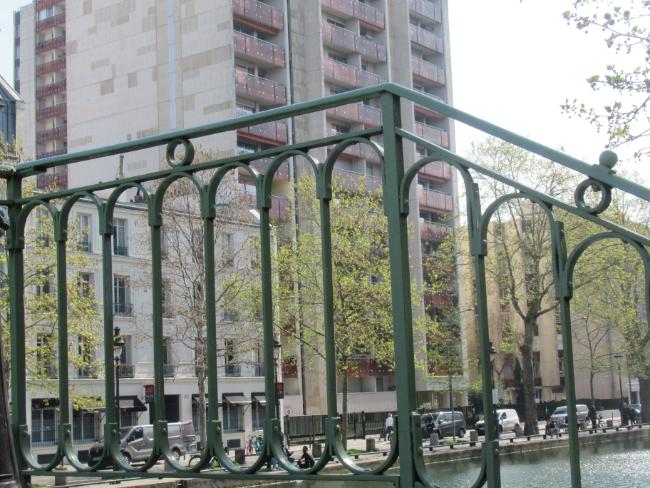
Apartment building beyond the Canal St Martin. Photo: Marian Jones
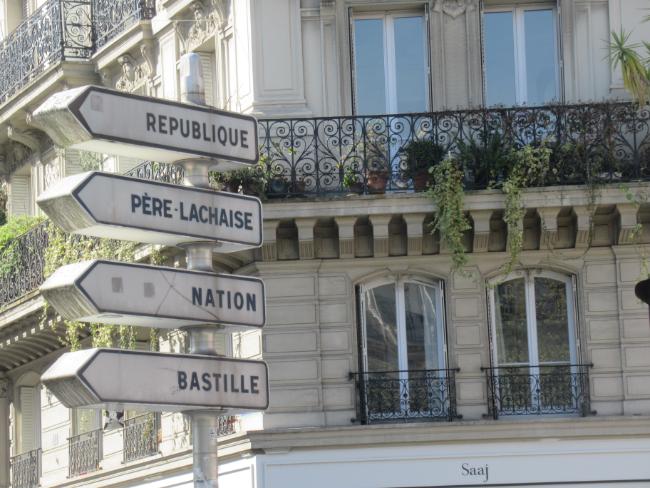
Street signs near Canal St Martin. Photo: Marian Jones
Lead photo credit : Canal Saint Martin. Photo: Marian Jones
More in Amélie, Canal Saint Martin, Flâneries in Paris, jane birkin
Related Articles


By Marian Jones