
The Eiffel Tower Will Honor Female Scientists
- SUBSCRIBE
- ALREADY SUBSCRIBED?
BECOME A BONJOUR PARIS MEMBER
Gain full access to our collection of over 5,000 articles and bring the City of Light into your life. Just 80 USD per year.
Find out why you should become a member here.
Sign in
Fill in your credentials below.
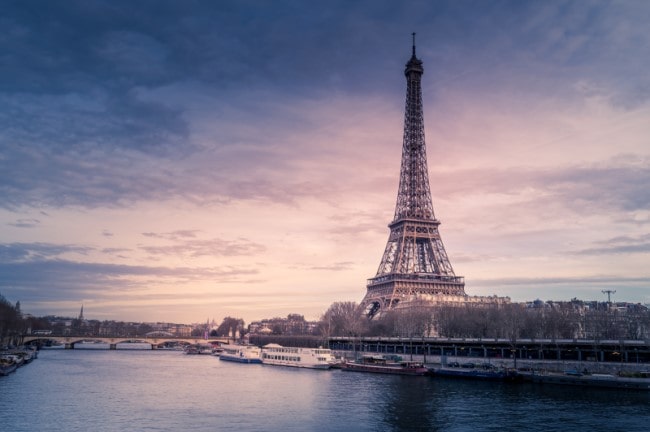
Perhaps on International Women’s Day, March 8th, you will take a look at the Eiffel Tower and wonder – again! – why there are no women among the names of 72 top scientists and engineers written in gold lettering around its first-floor balcony. But things are finally about to change. The names of 72 women who led their field in math, the sciences, and engineering have just been published and Mayor Anne Hidalgo has promised that they too will be inscribed in gold onto the Tower before the end of 2027.
When the Eiffel Tower was built, it was an exciting showcase for the best engineering techniques of its day. Gustave Eiffel himself said that he saw it as a tribute to science and had decided to inscribe in gold, on a frieze of honor around the first floor, the names of les plus grands savants (the most learned men) “to have honored France between 1789 and the present day.” At the end of the 19th century, faith in science and technology was high and the tower was to be a “hymn to human genius,” a tribute to the scientists, engineers, and inventors whose work had benefitted mankind.
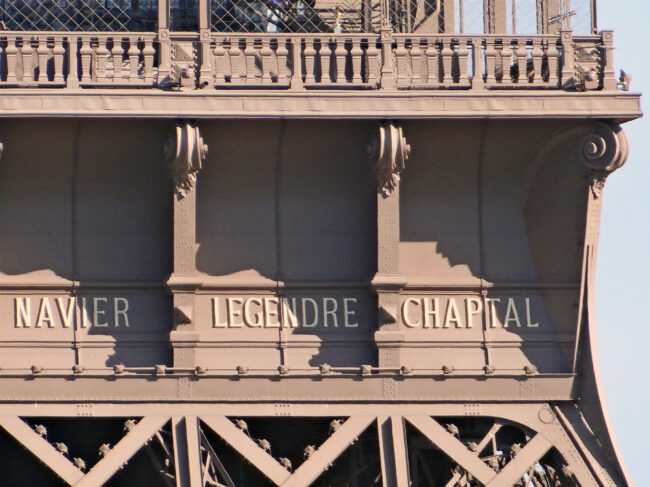
Names engraved on the tower. Photo: Jean-Pierre Dalbéra / Wikimedia commons
Except, of course, that it only honored half of humankind. And now, for the 21st century, a range of organizations including the City of Paris and Femmes et Sciences (Women and Science) have joined forces to make sure equality is finally achieved on this most visible of monuments. The committee set up to select the 72 names included Olivier Berthelot-Eiffel, President of the Association of Gustave Eiffel’s Descendants and a range of eminent scientists and has been supported by such illustrious institutions as the Sorbonne, Sciences Po, and the Paris Observatory.
They intend to honor Gustave Eiffel’s original aim of paying tribute to those who have led scientific and technical progress, but this time to recognize the women who were forgotten the first time round. As Isabelle Vauglin, President of Femmes et Sciences (Women and Science) puts it, the idea is to restore visibility to “the exceptional women who have made their mark on science in France, but whose memory has been erased.” It is, says Anne Hidalgo – herself a pioneer as the first female mayor of Paris – “a way of repairing history and sending a message to our youth, especially to our daughters and girls.”
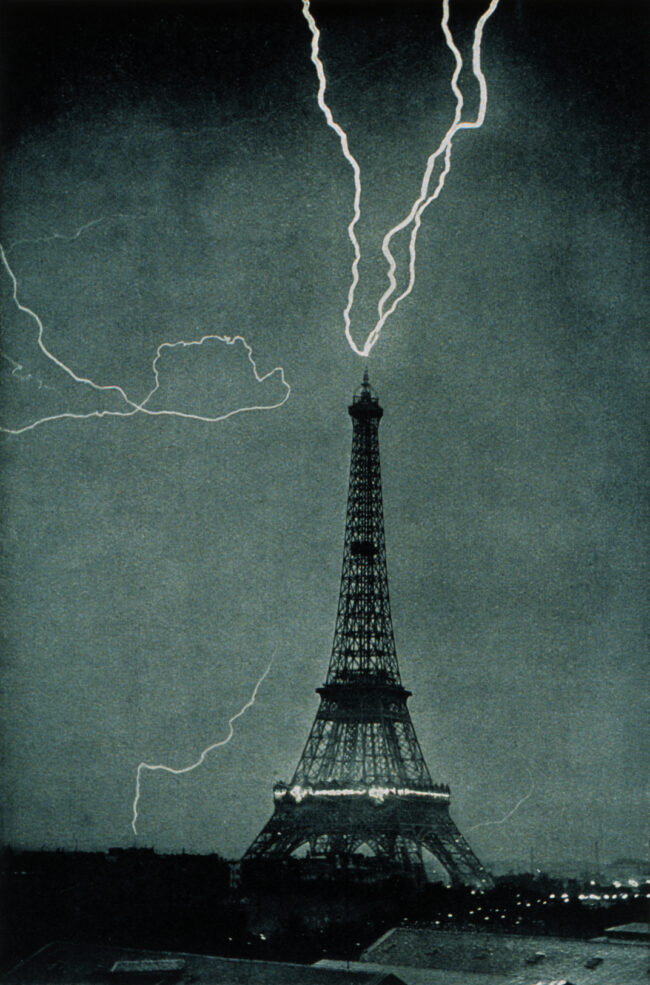
Lightning striking the Eiffel Tower in 1902. Photo: Gabriel Loppé / Public domain
The 72 names have been chosen from women who were alive at any time between 1789 and the present day, and who have made a significant impact in their field. Care has been taken to represent many different areas of science, including mathematics, physical, earth and space sciences, engineering, digital technology, medicine and ecology. All the women were either French, or had a close connection to France, so they can all be said to have “honored France,” just as those on Gustave Eiffel’s list did.
The most instantly recognizable name on the list is Marie Curie, born Maria Sklowsowska in Warsaw in 1867. She came to France to study and went on to become globally famous, the first woman to win the Nobel Prize in Physics, an honor she shared in 1903 with her husband for their groundbreaking research on radiation. Soon she became the first woman to teach at the Sorbonne and the first appointed to a university professorship. When awarded a second Nobel Prize for Chemistry in 1911, she became the first person ever to have won this prestigious award in two different fields.
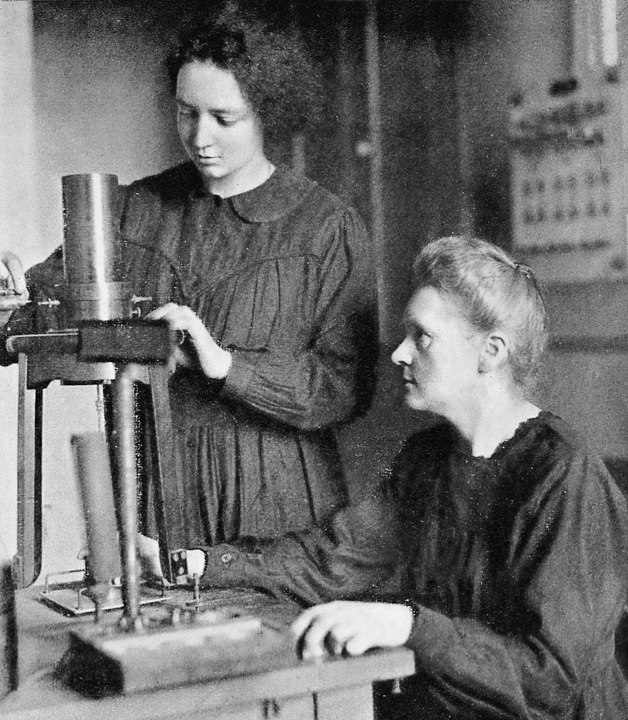
Marie and daughter Irène, 1925. Wikimedia Commons
Marie Curie’s legacy remains seminal. Her work in radiology led to the possibility of medical imaging, still so important in cancer treatments today. She was behind the creation of the Institut du Radium which opened in Paris in 1914 and is still operating today as the Institut Curie. All of this she achieved despite the formidable difficulties facing women of her time and alongside being the mother of two daughters, one of whom, Irène, went on to be a Nobel Prize Winner herself. She died in 1934 and was buried alongside her husband in a cemetery in Sceaux, but made history once again in 1995 when she became the first woman to be honored in her own right at the Pantheon.
Perusing the remaining 71 names, I found that not a single one was familiar to me. I’m not French and I don’t have much science in my background, but that’s still pretty shocking. So, I did a little digging into the background of 10 of the other women, finding – bien sûr! – a fascinating range of groundbreaking scientists from many varied fields, ranging from one born at the beginning of the 18th century to another who died as recently as 2022. Here are brief details on those 10. A link to the full list of 72 is given at the end of the piece.
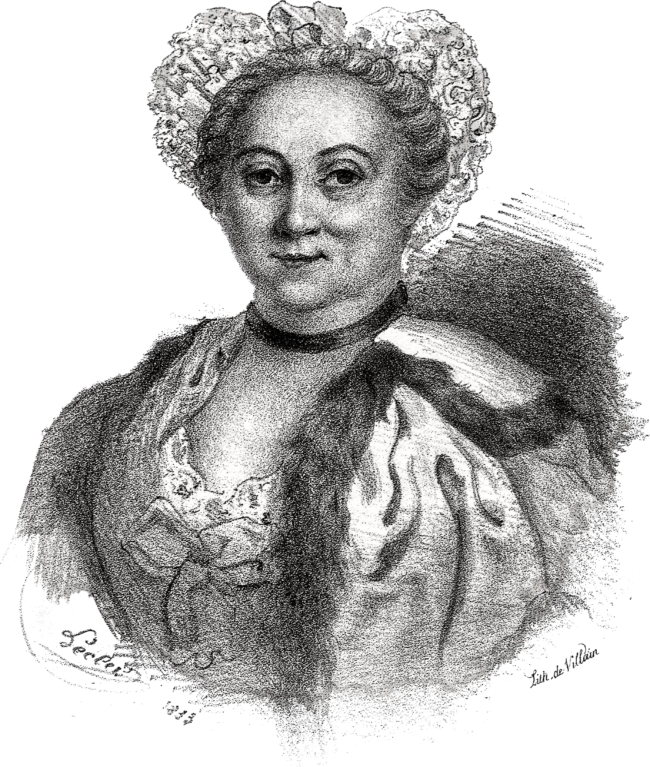
Angélique du Coudray, royal midwife. Image: François le Villain / Auguste Toussaint Lecler. Public domain
Angélique du Coudray (c1712-1794) Pioneering Obstetrician
Angélique was a midwife whose full-size model of a female body, devised as a training aid, was approved by the Académie de Chirurgie (Acadamy of Surgery) in 1756. She was paid an allowance by Louis XV to travel throughout France, training others in safer childbirth. Her book, An Abridged Treatise on the Art of Midwifery, and the maternity homes she helped to open also did much to reduce the 18th-century scourge of infant mortality.
Jeanne Barret (1740-1807) Botanist and Explorer
Jeanne had to disguise herself as a man and change her name to Jean to be able to join a three-year botanical expedition because no women were allowed on French naval ships. She and the botanist Philibert Commerçon collected and categorized more than 6000 plant specimens on their journey around the world. Many of her contributions were overlooked or attributed to Commerçon, but in 2012 a species of vine was named after her: solanum baretiae. She was, incidentally, also the first woman to have circumnavigated the globe.
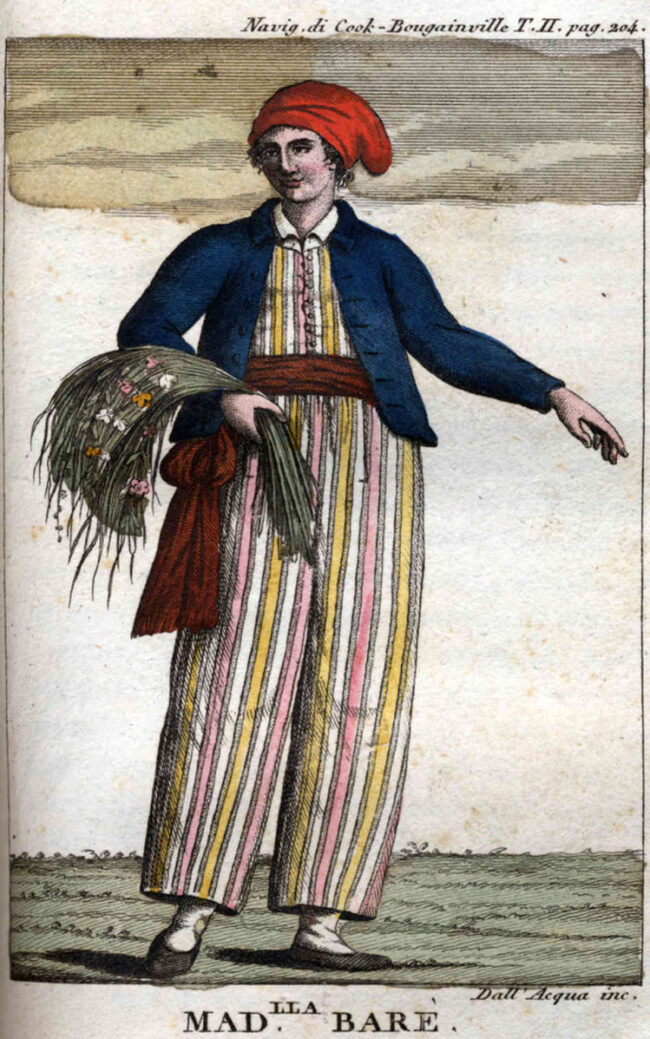
Portrait of Jeanne Barret, by Cristoforo Dall’Acqua (1734-1787). Public domain
Suzanne Noël (1878-1954) Surgeon
Dr. Suzanne Noël was the world’s first female plastic surgeon, especially known for her innovative petite opération, which minimized scarring and recovery time. Often restricted from working in hospitals, she opened her own practice and was known for her feminist principles, advocating for women’s economic independence and, in 1923, leading a protest against taxing working women because they did not have the right to vote.
Irène Joliot-Curie (1897-1956) Scientist
The daughter of Pierre and Marie Curie, Irène also worked in the field of radioactivity and was, jointly with her husband, awarded the Nobel Prize for Chemistry in 1935. She also became Undersecretary of State for Scientific Research and was instrumental in the creation of the National Center for Scientific Research which has become Europe’s largest research body and manages over a thousand laboratories, both in France and across the world.
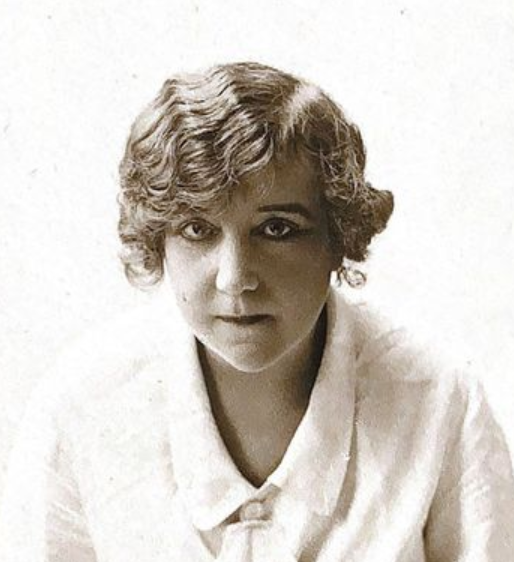
Suzanne Noël. Unknown author. Public domain
Marie-Louise Dubreil-Jacotin (1905–1972) Mathematician
Marie-Louise worked in the fields of fluid mechanics and abstract algebra, becoming the first woman professor of mathematics in France and serving as president of the French Mathematical Society. Her textbooks and scientific papers are still studied in universities today and she also wrote a history book, Portraits of Women Mathematicians.
Andrée Hoppilliard (1909-1995) Aeronautical Engineer
Andrée was one of the first female engineers to work for the innovative Rémy-Gaucher aeronautical company in the 1930s and rose to be their Director of Light Aircraft, working alongside the renowned pilot Hélène Boucher who set the speed record for 1000 km in 1935.
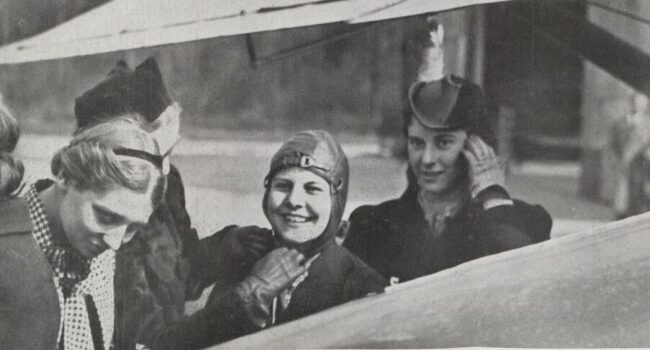
Hélène Boucher promotion in Villacoublay. L’Air: monthly review: National Popular Aviation League, May 1, 1937. Credit: BnF Gallica
Denise Albe-Fessard (1916-2003) Neurophysiologist
Denise carried out groundbreaking research into how the central nervous system processes pain and her findings led to important changes in the treatment of diseases such as Parkinson’s and Huntington’s. She was doubly honored, first with an Ordre National du Mérite and then a Légion d’Honneur.
Rosalind Franklin (1920-1958) Physical Chemist
British by birth, Rosalind studied X-ray crystallography in Paris, enabling her to work alongside the Nobel prize-winning scientists Crick and Watson on proving the double helix structure of DNA. It was her famous “Photograph 51” which revealed the structure, but her two male colleagues used it in their work without her permission and it is only more recently that her crucial role has been recognized.
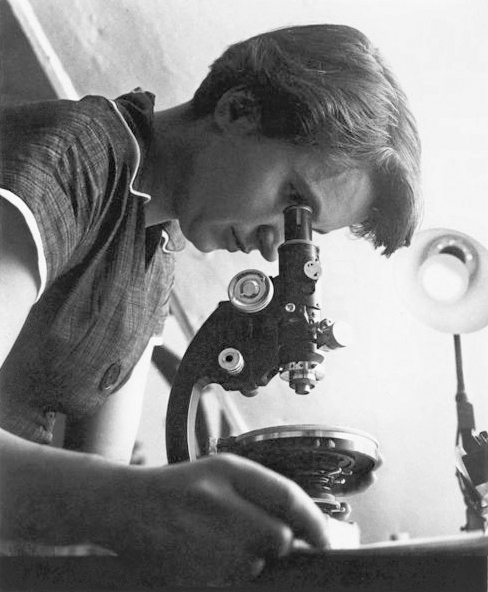
Rosalind Franklin with a microscope in 1955. Photo: MRC Laboratory of Molecular Biology/ Wikimedia commons
Marthe Gautier (1925-2022) Médical Biologist
Marthe’s pioneering research led to the realization that children with Down’s syndrome have an extra chromosome, so 47 instead of the standard 46. She was another female scientist whose work was largely credited to a male colleague, Jérôme Lejeune, to whom she had showed her work as it developed. Her crucial role was finally recognized in 2019 when she was appointed Commander of the French National Order of Merit.
Rose Dieng-Kuntz (1956-2008) Computer Scientist
Rose, born in Senegal, was the first African woman to study at the École Polytechnique. Her field was artificial intelligence and her work helped create the “semantic web,” making it easier for both people and computers to find and use knowledge. In 2005, she won the Irène Joliot-Curie Prize, awarded to women who have made an outstanding contribution to scientific or technological research.
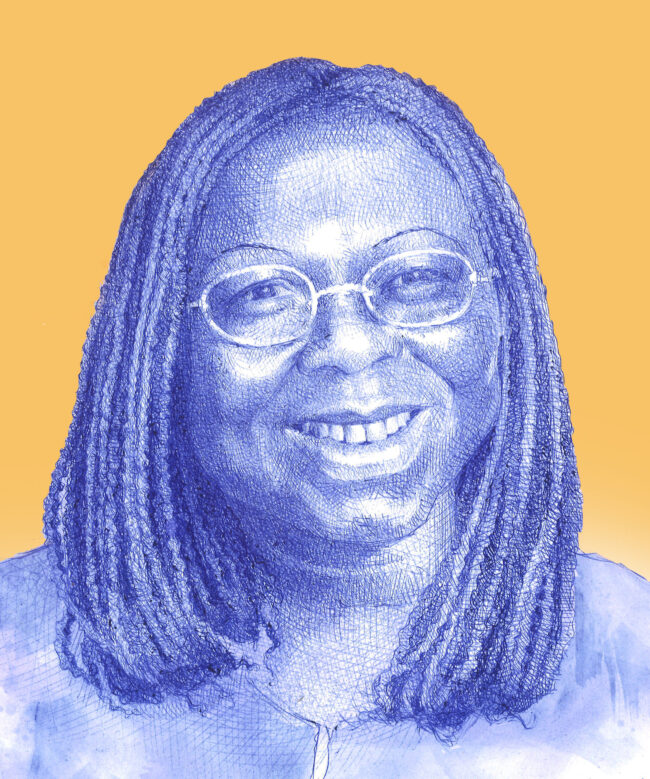
Portrait of Rose Dieng-Kuntz for Wiki Unseen by Enam Bosokah.
These stories highlight themes we should all reflect on as International Women’s Day approaches: the knowledge-advancing achievements of so many female scientists, the barriers they had to overcome and those which still need to be addressed. The 72 women included in the Eiffel Tower project should, as Anne Hidalgo has said, ‘inspire and excite us all’. When the second frieze, listing their names, takes its place just above Gustave Eiffel’s original selection, the 60cm gold letters will be visible from the ground below. So, everyone who passes by will be able to take a moment to remember them and their uplifting achievements.
The full list of 72 women can be found here.
Lead photo credit : Eiffel Tower, Paris, France. Credit: Chris Karidis, Unsplash
More in Eiffel Tower, Gustave Eiffel, International Women's Day, marie curie, scientists
Related Articles

By Marian Jones