
The Magic of Galerie Vivienne

- SUBSCRIBE
- ALREADY SUBSCRIBED?
BECOME A BONJOUR PARIS MEMBER
Gain full access to our collection of over 5,000 articles and bring the City of Light into your life. Just 80 USD per year.
Find out why you should become a member here.
Sign in
Fill in your credentials below.
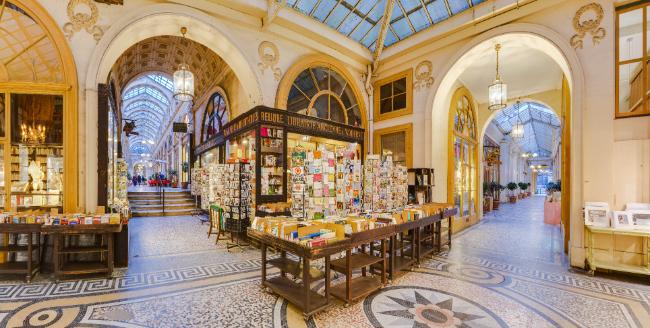
The 25 or so covered passages of Paris are a must-see for anyone visiting the City of Light, and Galerie Vivienne in the 2nd arrondissement is perhaps the best-known. Opened in 1826, when covered passages began to dominate Paris’s landscape, Galerie Vivienne remains a go-to spot to dine, purchase gifts, and explore artisanal and historical shops.
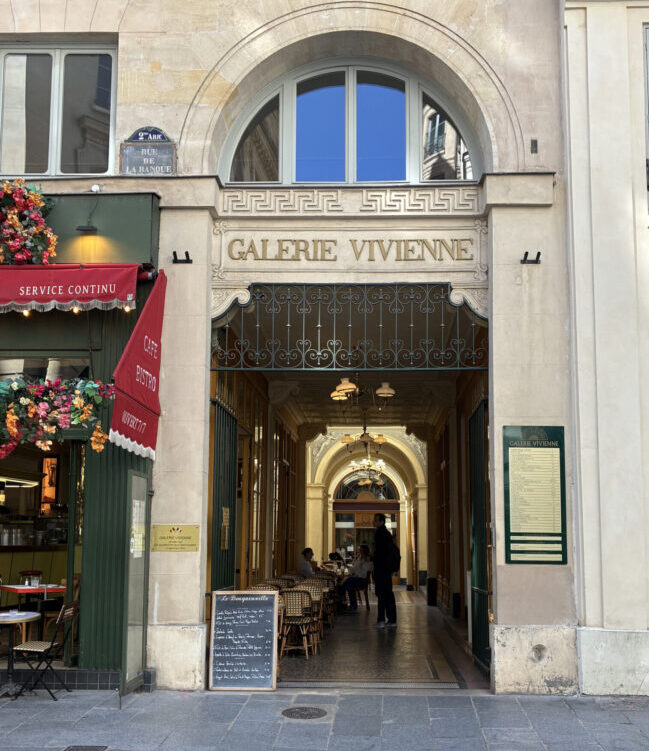
Galerie Vivienne. Photo: Jill Amari
History of Galerie Vivienne
As covered passages entered a golden era in the early 19th century, with over 150 passages constructed by the time of the Second Empire (1852-1870), they turned from industrial and practical to aesthetically appealing places to shop, stroll, and catch up with friends. Galerie Vivienne is no exception: its mosaic floor designed by Giandomenico Facchina, breathtaking window displays, and high-end shopping and dining have made it a top spot for locals and tourists alike. In fact, Vivienne was designed to be the most beautiful of all the covered passages, and it certainly doesn’t disappoint in this regard.
Generations of Parisians and tourists have visited Galerie Vivienne to browse the artisanal boutiques selling perfume, wine, jewelry, art, books, toys, and more. Practically speaking, like many other covered passages, Vivienne provides a perfect escape from the rainy and cold winter weather, so it’s particularly crowded during this season. It’s also a hot spot for holiday shopping and is always decked out in strings of lights and fir trees by the time December rolls around.
Galerie Vivienne was briefly locked in a rivalry with the neighboring Galerie Colbert, built in 1827. Colbert once held similar shops to Vivienne and featured a unique architectural design, but was left neglected until its reconstruction in the 1980s —leaving Vivienne as the metaphorical victor. But Vivienne wasn’t always so popular: several covered passages, Vivienne included, lost their appeal once bigger shopping centers were built during the Second Empire. It wasn’t until the 1960s that Vivienne became active and trendy once again.
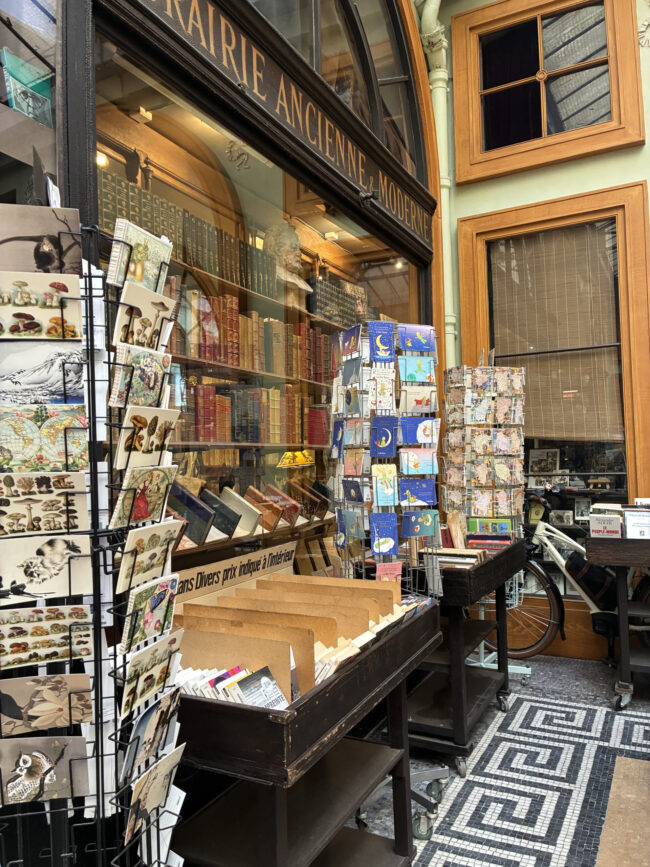
Librairie Jousseaume, Galerie Vivienne. Photo: Jill Amari
Restaurants and Shops in Galerie Vivienne
The general theme of Galerie Vivienne’s boutiques is quality over quantity. Handcrafted jewelry, toys, and decorations adorn several of the window displays —my personal favorite being the paper flower store L’Aparté, which also sells vases, candles, and other home décor. Art galleries also boast impressive displays, and you won’t want to miss the free exhibition run by the Académie des Beaux-Arts. If you’re looking for high-end gifts, the bar à vins Legrand Filles et Fils or perfumers Binet-Papillon and Spoturno are the perfect places to look. For the little ones, toy shop Si Tu Veux or sweets shop Boissier are sure to delight.
For book lovers, the best place to wander around is the used bookstore Jousseaume, which was founded in 1826 and has been a staple of Galerie Vivienne since its inauguration. They offer a wide selection of cheap, secondhand books and stunning postcards. On the other end of the spectrum, you can find preserved works of photography, literature, poetry, and more from the 19th and 20th centuries. I always like to peruse the selection of secondhand English books; there’s something magical about finding a book I’ve always wanted to buy, or discovering an entirely new work, for only a euro or two. This vestige of the original Vivienne is truly a must-see.
All that walking can work up an appetite, and luckily, there’s no lack of dining options in the Galerie. For a warm drink or dessert, the café Le Valentin is ideal —they’ve got excellent hot chocolate and pâtisseries, along with ice cream in the summer. For lunch or dinner, restaurants such as Bistrot Vivienne and Le Bougainville offer classic French fare. While the dining options inside Galerie Vivienne are mostly traditional French, there are several other choices in the area, such as the higher-end boulangerie Le Pain Quotidien, coffee shops Café Joyeux and The Coffee, and various Asian restaurants in the neighboring Passage Choiseul.
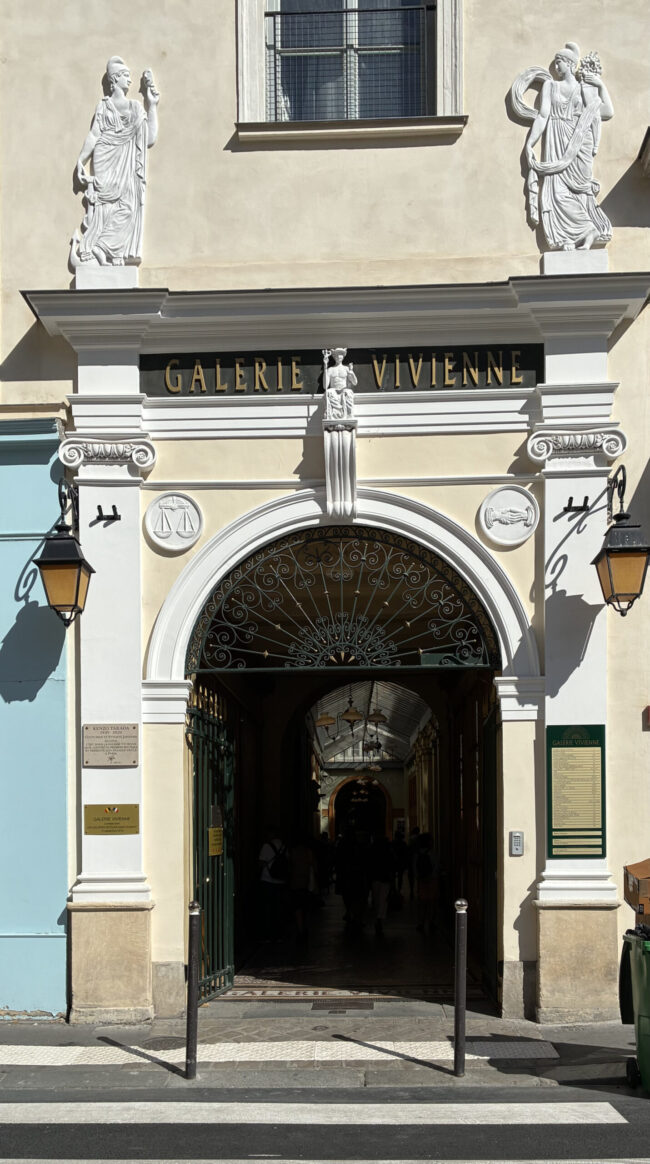
Galerie Vivienne. Photo: Jill Amari
The 2nd arrondissement is the smallest in Paris, yet it’s filled with endless attractions. The neighborhood boasts the most covered passages in the city, and while Galerie Vivienne remains one of the most popular, you can easily spend an hour or two exploring the other passages, like Passage Choiseul, Passage des Panoramas, or Passage du Grand-Cerf.
In addition, Galerie Vivienne is a one-minute walk from the free-to-enter BnF Richelieu (France’s national library) and Palais-Royal, where locals flock during the spring and summer to enjoy the shaded benches, flower gardens, and restaurant terrasses. On the outskirts of the Palais-Royal gardens, catch a show at La Comédie Française, or walk another few minutes to visit the Louvre and Tuileries.
Practical Information
Galerie Vivienne is open from Monday-Saturday, 8:30 am-8:30 pm. There are three entrances:
4 rue des Petits Champs
5-7 rue de La Banque
6 rue Vivienne
Lead photo credit : Galerie Vivienne. Photo credit: Benh LIEU SONG/ Wikimedia Commons
Related Articles

By Jill Amari