
11 Must See Covered Passages in Paris

- SUBSCRIBE
- ALREADY SUBSCRIBED?
BECOME A BONJOUR PARIS MEMBER
Gain full access to our collection of over 5,000 articles and bring the City of Light into your life. Just 80 USD per year.
Find out why you should become a member here.
Sign in
Fill in your credentials below.
Since 1798, covered passages have become a staple of Paris’s architecture. Most were built in the early 1800s, so by the time the Second Empire (1852-1870) was in place, the city boasted about 150 passages and galleries. Originally built as industrial hubs, covered passages quickly became trendy places to walk around, meet up with other locals, and shop. Well-lit and architecturally appealing, these passages provided shelter from bad weather and numerous shopping and entertainment options.
Unfortunately, many passages were demolished or closed down during the Second Empire, when Baron Haussmann nearly rebuilt Paris from scratch and grands magasins popped up near Opéra and other spots. Since then, other passages have been privatized, while new passages, though few and far between, appeared in the 1900s and early 2000s.
Today, about 25 covered passages remain open to the public. The most well-known of these passages hold boutiques, art or jewelry studios, restaurants, bookshops, hair salons, and even hotels and apartments. Eleven covered passages truly stand out, whether for historical, cultural, or aesthetic reasons.
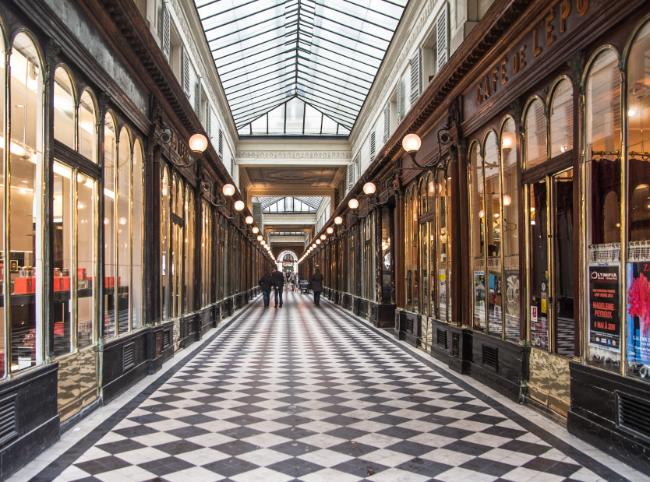
Galerie Vero-Dodat. Photo credit: Jean-François Gornet/ Wikimedia Commons
1. Galerie Véro-Dodat (1st arrt.)
Built in 1826, Galerie Véro-Dodat is known for its high-end boutiques and beauty parlors. Along this short passageway, you can find a Louboutin store, specialized boutiques, and an organic hair salon which recycles all the hair they cut. This gallery is a calm and quiet place to escape the bustle of the surrounding neighborhood, which is often filled with tourists as it’s near the Louvre, Palais Royal, Bourse du Commerce, and Les Halles. Surprisingly, Véro-Dodat remains one of Paris’s best-hidden galleries, despite its central location.
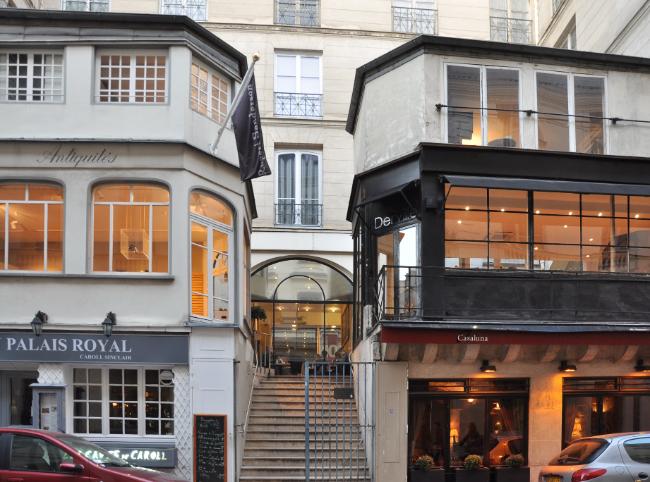
Passage des Deux Pavillons. Photo credit: Moonik / Wikimedia Commons
2. Galerie Colbert and Passage des Deux Pavillons (1st and 2nd arrts.)
Galerie Colbert was built in 1827 to rival its neighbor, Galerie Vivienne. While it holds no restaurants or boutiques, its unique architectural style and notable rotunda make it a must-see. One wing of Galerie Colbert is the Passage des Deux Pavillons, and when you reach the center where the two wings connect, you can find conference rooms and other spots to relax or get some work done. Originally, Galerie Colbert held boutiques, publishers, and reading rooms, not so different from other covered passages of the era. However, it fell into disrepair and the rotunda was destroyed in the 1910s, and the gallery was largely left abandoned until it was reconstructed in the 1980s to be as close to the original as possible. Today, it’s owned by the Bibliothèque Nationale de France (BnF) and is home to the Institut National d’Histoire de l’Art and other institutions related to art and cultural heritage.
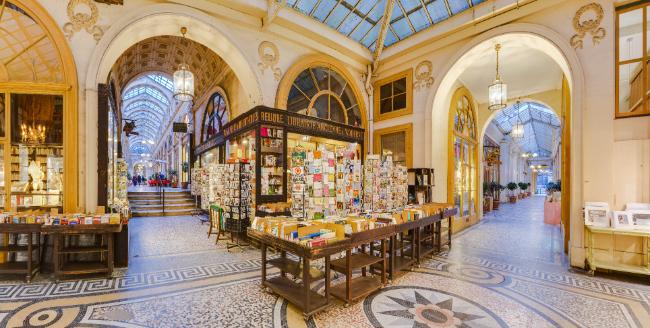
Galerie Vivienne. Photo credit: Benh LIEU SONG/ Wikimedia Commons
3. Galerie Vivienne (2nd arrt.)
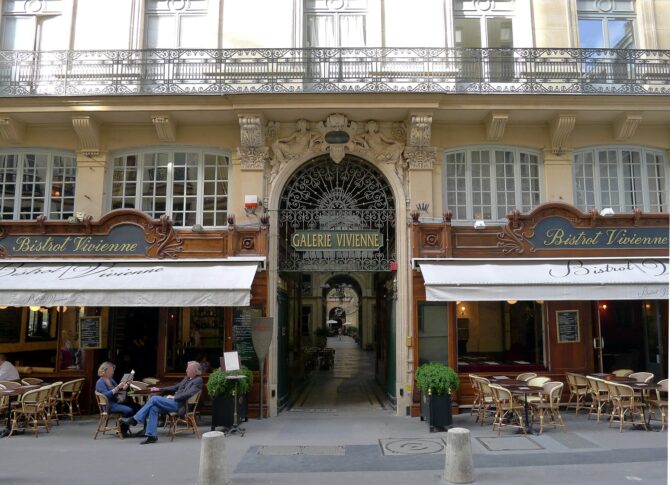
Perhaps one of the most famous covered passages, Galerie Vivienne has been drawing crowds since its opening in 1824. Following the traditional layout of other passages, Vivienne boasts art galleries, various boutiques, bookshops, restaurants, and jewelry studios. It’s a great place to look for gifts or to get your holiday shopping done. In addition, Galerie Vivienne is located across from the BnF Richelieu, known for its garden, museum, and Oval Room. The Palais Royal and its gardens and galleries are also near Vivienne, and the Louvre is only a 10-minute walk away.
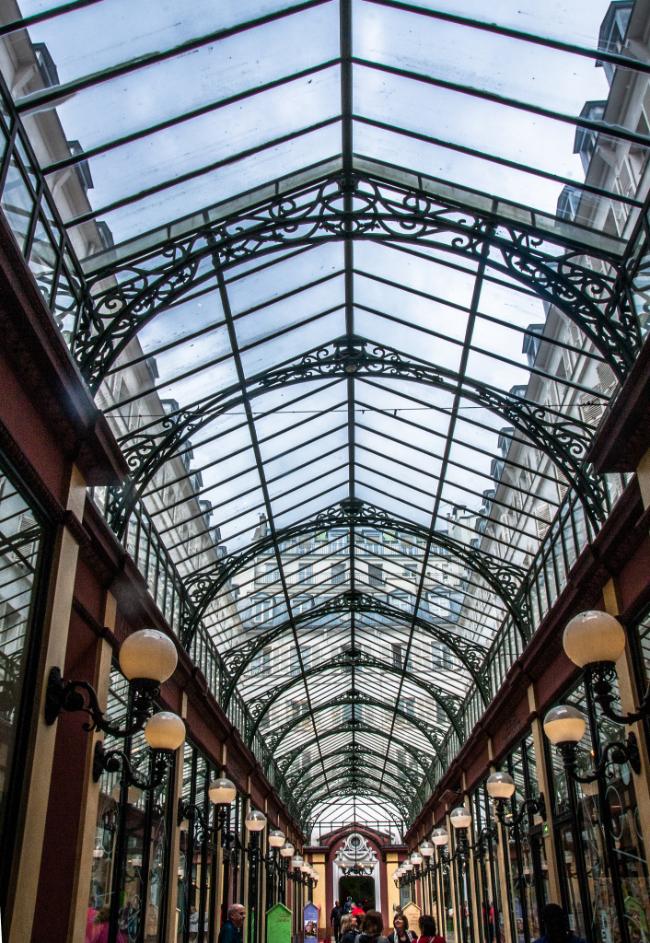
Passage Choiseul. Photo: Jean-François Gornet/ Wikimedia Commons
4. Passage Choiseul (2nd arrt.)
As one of the 20 covered passages erected between 1821 and 1830, Passage Choiseul has had a rich history and is classified as a historical monument. Originally a place for theater and literature, Passage Choiseul is now known for its Asian influence, with a large number of Asian restaurants and other types of gastronomy. In addition, Café Joyeux, whose employees are all people with learning difficulties, sits at one end of the passage, perfect for a quick snack or warm drink. Passage Choiseul is a great spot not only for grabbing a bite to eat, but also for unique shopping options, such as upcycled decorations, art and art supplies, jewelry, and more.
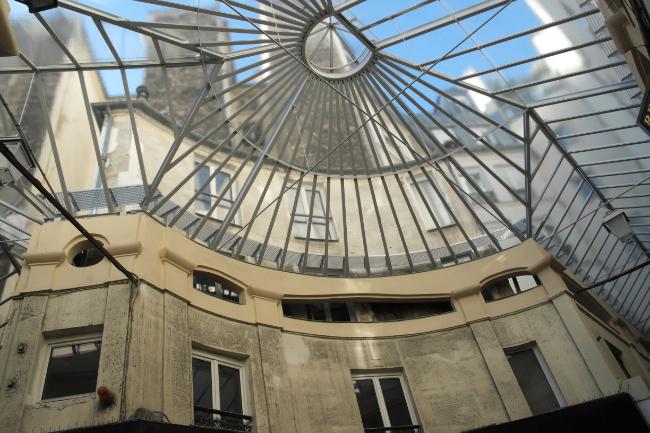
Passage du Caire in the 2nd
5. Passage du Caire (2nd arrt.)
Opened in 1798, Passage du Caire is Paris’s first—and longest—covered passage, which ushered in a new era of industrial expansion. The passage was inspired by Napoleon’s expedition in Egypt, and the Egyptian influence expanded into the rest of the Sentier neighborhood in the 2nd arrondissement. Today, Passage du Caire remains true to its roots as an artisanal and industrial hub, differentiating it from other covered passages which focus more on shopping or gastronomy.

Passage Bourg l’Abbé. Photo: David Pendery / Wikimedia Commons
6. Passage du Grand Cerf and Bourg l’Abbé (2nd arrt.)
The 2nd arrondissement has passages nearly everywhere you look, and the Saint-Denis neighborhood is no different. Along this famous street, you can find two passages facing each other: Passage du Grand Cerf (circa 1825) and its offshoot Passage du Bourg l’Abbé (1828). Grand Cerf is known for having the highest glass ceiling at 11.8 meters, or three floors, high. It was constructed to be spacious enough for shops, warehouses, and residences, as Paris saw an uptick in industrial production around this time of the Restoration.
Both Grand Cerf and Bourg l’Abbé have remained as authentic to their 1820s versions as possible, with some shop signs even being the originals. Several of the businesses remain specialized as they once were in the 19th century, such as furniture repair shops, homemade soap stores, jewelry stores, and embroidery boutiques. Modern designers and antique lovers alike call these two passages home, thanks to major restorations that took place starting in 1990, after the passages were closed due to safety reasons.

Passage Molière. Photo: Mbzt /Wikimedia Commons
7. Passage Molière (3rd arrt.)
Perhaps inspired by the renowned literary figure and playwright from whom the passage takes its name, Passage Molière is home to the Maison de la Poésie, which promotes literary events and supports the literary arts. This passage, which is partially covered, is one of only two in the 3rd arrondissement, tucked away along a tranquil street. In keeping with its literary theme, the passage houses several papeteries, or paper stores, where you can find everything from uniquely designed postcards to art supplies.
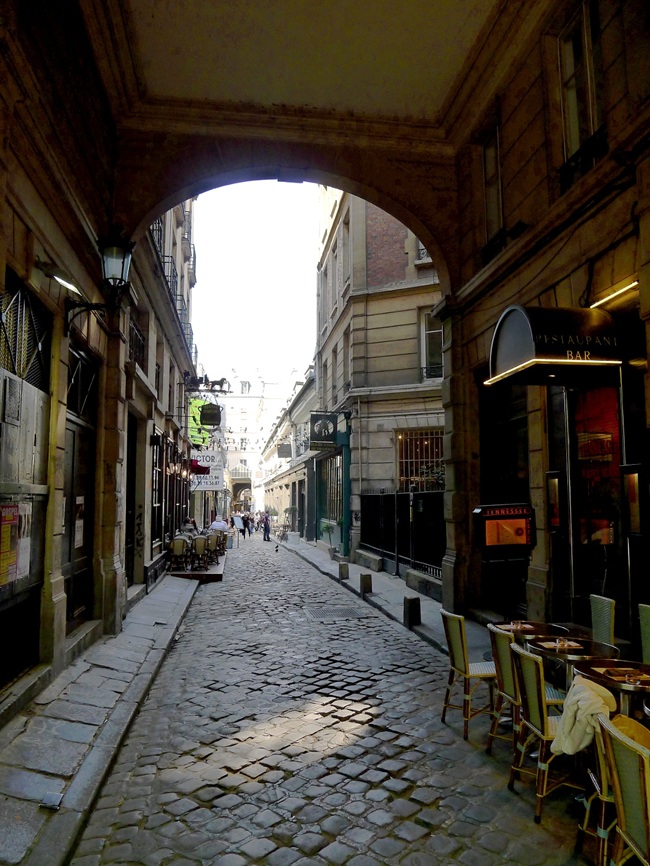
Cour du Commerce-Saint-André. Photo: Mbzt/Wikimedia Commons
8. Cour du Commerce Saint-André (6th arrt.)
Neither a “passage” nor a “galerie,” Cour du Commerce Saint-André is a chic, partially covered lane in the 6th arrondissement. The Right Bank claims nearly all the covered passages in Paris, so finding one in the 6th is a true treasure. In fact, the glass roof was added much later in 1823, when covered passages became a trend. Along the cour, you can find jewelry shops and art stores mixed in with the traditional French restaurants, pubs, and salons de thé. The literary influence of the surrounding Odéon neighborhood is clear, especially thanks to the café Procope, founded in 1686. Procope was a place frequented by important literary, artistic, philosophical, and political figures, and it remains a significant spot for poets and writers today. As an old medieval lane, Cour du Commerce Saint-André offers a glimpse of Paris as it used to be, before the Second Empire.
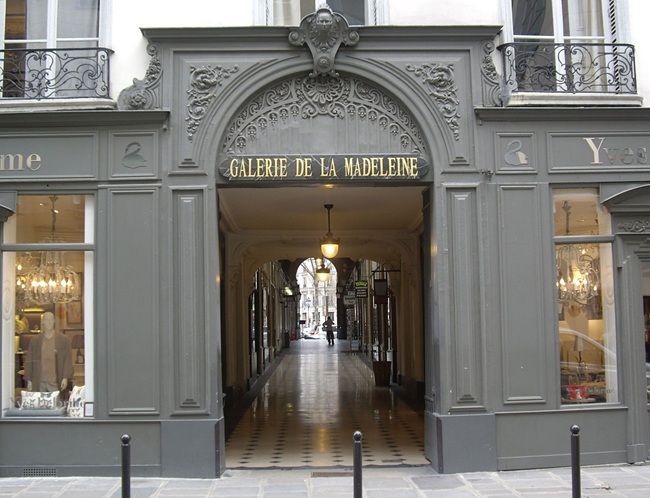
Galerie de la Madeleine. Photo: Mu/ Wikimedia Commons
9. Galerie de la Madeleine (8th arrt.)
Considering its distance from the center of Paris, where covered passages dominate, Galerie de la Madeleine isn’t widely known. Largely overshadowed by the impressive Église de la Madeleine nearby, this quiet passageway is rarely visited by tourists. Along the gallery, you can find luxury shopping options and a sophisticated architectural design, but considering how short this passage is, there are certainly more shopping and restaurant options in the surrounding area rather than in the passage itself. Galerie de la Madeleine was opened in 1846, later than most other covered passages.
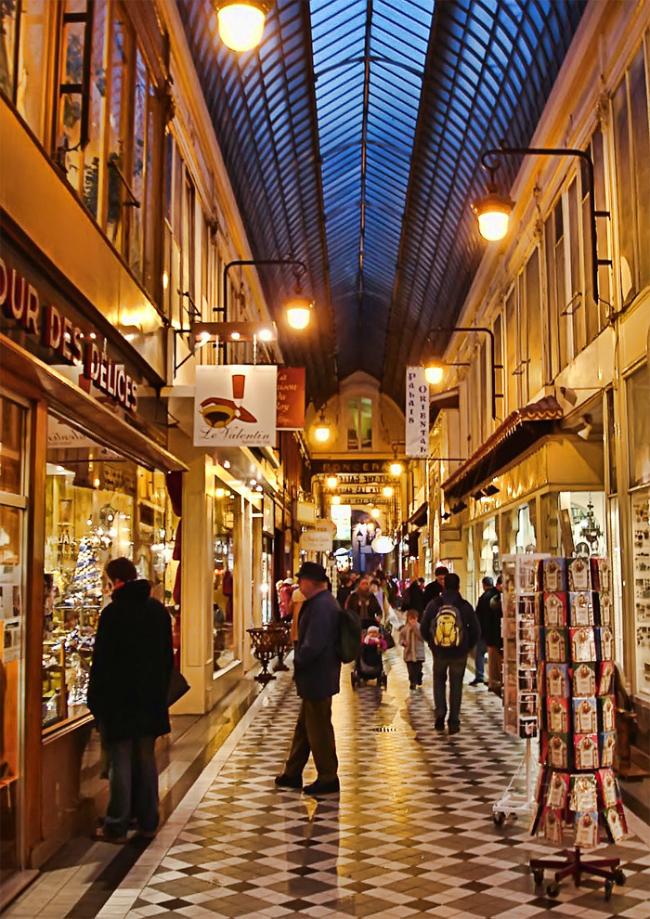
Passage Jouffroy. Photo: Clicsouris/ Wikimedia Commons
10. Passage Jouffroy (9th arrt.)
Also opened in 1846, Passage Jouffroy is one of the most-visited passages in Paris today. This passage was originally built to continue the Passage des Panoramas (2nd arrt.) across the street, and its other neighbor Passage Verdeau (9th arrt.) sits at the opposite end of Jouffroy. Jouffroy is notable for being the first passage built entirely out of iron and glass. With its wide variety of high-quality, handmade shopping choices and organic café options, Jouffroy is frequented by tourists and locals alike. However, it’s largely thanks to the Musée Grévin that Jouffroy has remained popular and well-maintained throughout the decades: when the wax museum opened in 1882, it became the neighborhood’s biggest attraction. Other notable shops dot the passage: Librairie du Passage, which is one of the oldest bookstores in Paris; Hotel Chopin, which was opened the same year as the passage itself; and the popular chain thrift store Kilo Shop.
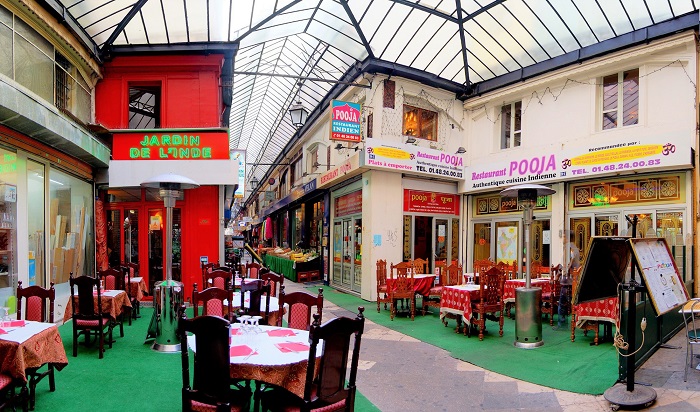
Passage Brady. Photo credit: David Pendery (CC BY-SA 4.0)
11. Passage Brady (10th arrt.)
Passage Brady is located on the cusp of the 2nd and 10th arrondissements and was built in 1828. Heavily influenced by Indian culture, Brady has almost exclusively Indian stores dotting its wings. From Indian foods and spices to clothes and accessories, you can find nearly everything you need in Passage Brady. What also makes this passage interesting is that half the passage is covered, and the other half, located across Boulevard de Strasbourg, is not.
Lead photo credit : Galerie Vivienne. Photo: Mbzt / Wikimedia Commons
More in Galerie Véro-Dodat, galerie vivienne, Passage Choiseul, Passage du Caire, Passage du Grand Cerf
Related Articles

By Jill Amari