
The Essential Guide to the 7th Arrondissement
- SUBSCRIBE
- ALREADY SUBSCRIBED?
BECOME A BONJOUR PARIS MEMBER
Gain full access to our collection of over 5,000 articles and bring the City of Light into your life. Just 80 USD per year.
Find out why you should become a member here.
Sign in
Fill in your credentials below.
Situated at the center of Paris yet a world entirely unto itself, the 7th arrondissement maintains a reputation for exclusivity and elegant restraint. Come here to play politician, pretend you’re a member of the one percent, or simply breathe the rarified air of Paris’s old-money establishment. Although the 7th boasts major landmarks like the Eiffel Tower, les Invalides, and the Assemblée Nationale, and cultural institutions like the Musée d’Orsay and the Musée Rodin, there are still some hidden gems to uncover in this well-heeled ‘hood.
Shopping
To observe the old guard in their native habitat, head to the Bon Marché. As the left bank’s only department store, TBM holds some serious cultural caché. Now owned by LVMH, the value proposition extends beyond retail to encompass cultural events, including a rotating installation of exhibitions spanning art, music, food, and of course, design. Most recently, conceptual artist Song Dong’s brilliant installation, a prismatic hall of mirrors, explored memory via everyday objects. Other recent featured artists include Ernesto Neto and Daniel Buren.
After topping off your cultural capital, clock Lily Rose Depp in line at Rose Bakery, and play it cool as you make your way to the shoe department. Even avid readers and writers aren’t left behind au Bon Marché — head upstairs to the third floor to browse the bookstore and papeterie for Leuchtturm journals from Germany and Le Pens from Japan. And not to worry, the clever minds at LVMH have thought of everything, including seating arrangements for the bored and shopping-averse. Cross the skybridge to the maison section, browse the color-coded stock of Sabre and Le Creuset, and follow the signs to the escalator downstairs to access the Grande Epicerie, Paris’s premier food hall, or the grocery store of dreams.
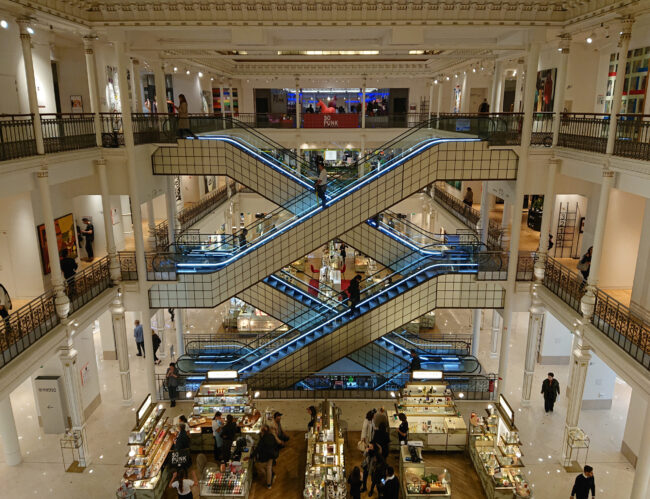
The interior of Le Bon Marché. Photo credit: Cheng-en Cheng/ Wikimedia commons
Although the prices may induce their own sort of vertigo, it’s a great place to find more obscure essentials like champagne mangoes, rosemary cashews, and chestnut honey. There’s an extensive section devoted to international products, including imports from Japan and Italy like organic nori and taralli, and even the illustrious North American shelves, where shoppers can find everything from canned pumpkin to Tabasco.
The basement cave carries an impressive selection of wines from independent producers, as well as a cache of vintages reserved for the sort of client who buys by the case. Lest anyone feel excluded, they host regular tasting events open to the public. I fortuitously happened upon a champagne extravaganza recently, with dozens of varietals on pour, and enthusiastic sales pitches delivered by the vinters themselves. The event was fully catered, with tray after tray of hors d’oeuvres conveniently appearing at every lull in conversation, along with a selection of delectable nuts and sablés, all on the house.
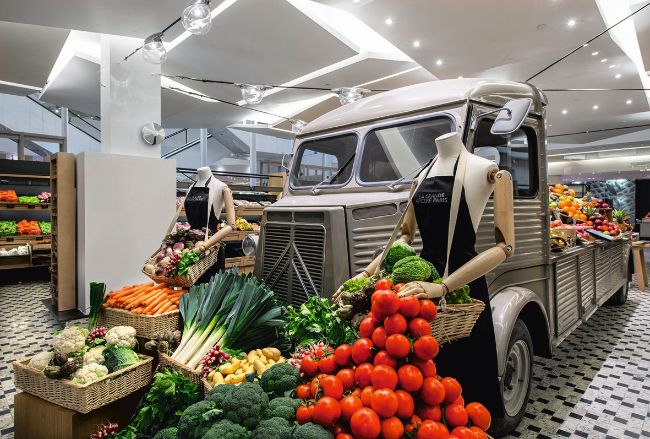
La Grande Epicerie de Paris
To really make like the locals, stroll along the rue du Bac while smoking a cigarette in lieu of lunch. Stop to window shop at Mazet, a family-run jeweler icing the quartier since 1855. Pearls from the Philippines are hand selected to make a pair of baroque earrings, and rings are set with stones loose, so dreamers can superimpose their ideal cut on whatever setting most appeals. The owners are very friendly, happy to chat, and proud of their métier. Even the business cards are a study in refinement.
If the cigarette isn’t cutting it, walk a few blocks to Pane Vivo, Adriano Farano’s low-glycemic bread empire, which has expanded to include several other locations and a pizzeria in the 5th. Using a dough made from a stoneground Sicilian flour and natural yeast, Farano turns out loaves that will last up to a week, and smaller versions more suitable for snacking. And the pain très digeste comes with bona fides— his is apparently the only boulangerie in France endorsed by the Ministère de la Recherche.
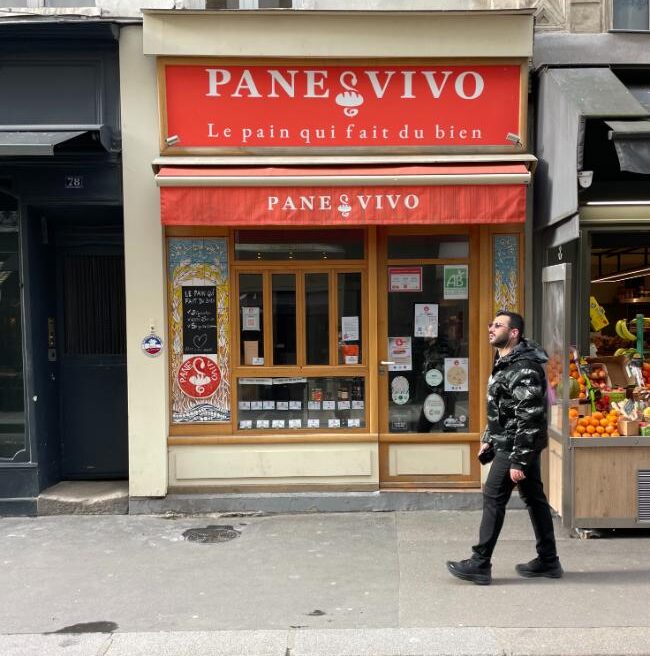
Pane Vivo. Photo: Maria Kern
Once fed, skip over to the rue de Grenelle, one of Paris’s best shopping streets, spanning from Saint Germain des Près to Gros Caillou. Here you’ll find Fifi Chachnil, otherwise known as Mecca for lingerie-seeking gamines, Candice Fauchon, serving up menswear-inspired pajamas and robes, and Rubirosa’s, a hot new shirting shop from jewelry designer Lauren Rubinski. Round it out with a trip to publisher Gallimard’s own bookshop on the corner of Grenelle and the boulevard Raspail.



Sights to see
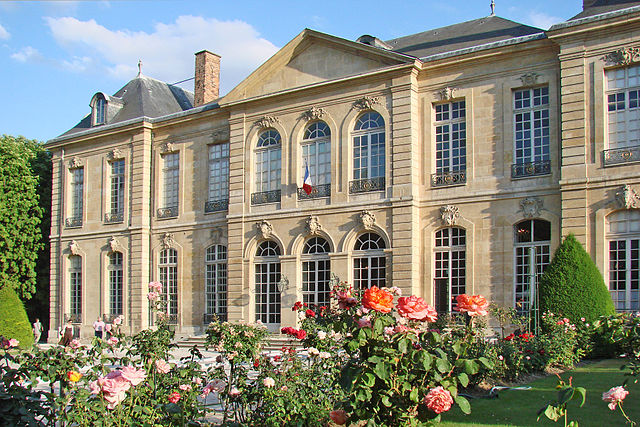
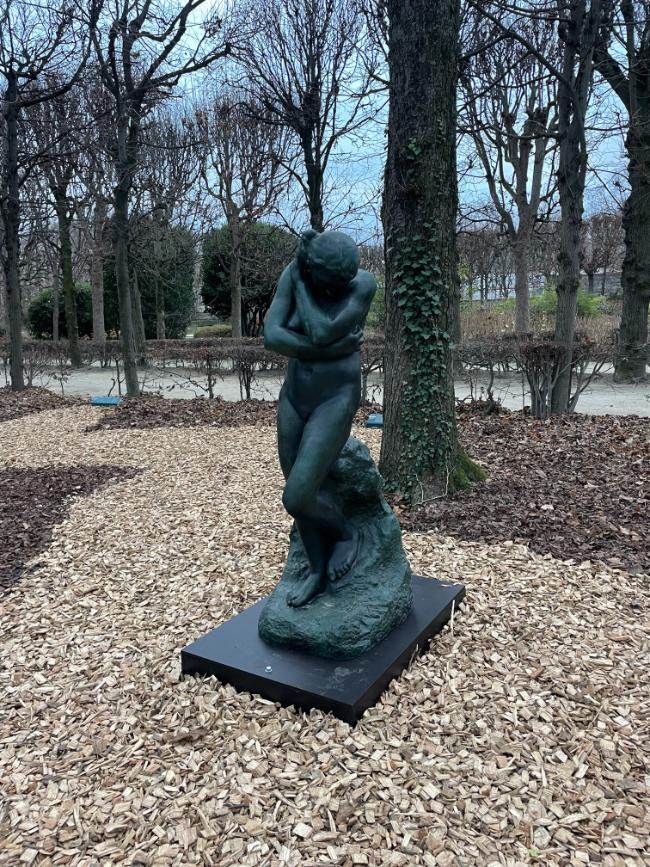
After all the trekking around, head to the Rodin museum to relax among masterpieces nestled in the grass and tour the expansive permanent collection. Easily one of the most romantic settings in town, the gardens are especially glorious in the warmer months. There’s currently a temporary exhibition of Rodin’s drawings up through March 1st, and the museum is also host to one of Paris’s best gift shops.
Meanwhile, the Musée d’Orsay never disappoints. Housed within a former train station, the permanent collection and rotating exhibits offer something for everyone, and it’s an especially fun place for kids to tear around, given the open floor plan. There’s a Renoir exhibit coming in March. Be sure to stop at the restaurant if not to eat, then to at least take in the scene — a bustling chorus of diners from every corner of the earth and a team of balletic servers, whipping around to a cacophony of forks clanging, babies screaming, and glasses clinking.
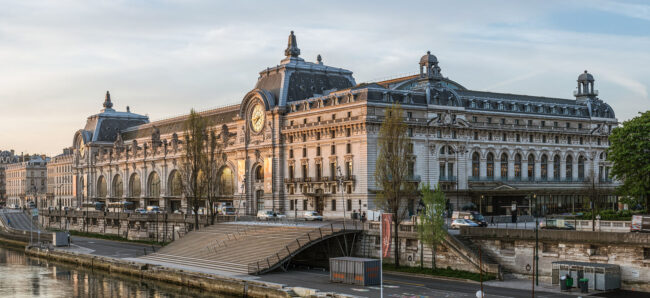
Exterior of the Orsay Museum. Photo credit: Daniel Vorndran/ Wikimedia commons
For those interested in military history, the Musée de l’Armée is worth a trip, along with the rest of les Invalides — you’re likely to catch a motorcade shepherding a VIP someplace important, a late-night protest, or some sort of blockade, given the proximity to the Assemblée Nationale.
Other museums of note in the 7th include the Quai Branly, with an emphasis on art from Asia, Africa, Oceana and the Americas, and the Maison Gainsbourg, Serge Gainsbourg’s former residence, now open to the public and notoriously sold out months in advance.
The American Library of Paris is also located in the 7th, and hosts a fantastic lecture series throughout the year. Recent speakers include Michael Pollan, Rachel Cusk, and Maira Kalman. The library’s special collection is especially enticing, including books once owned by Marlene Dietrich and Nadia Boulanger, and docents offer free library tours for visitors interested in the library’s history.
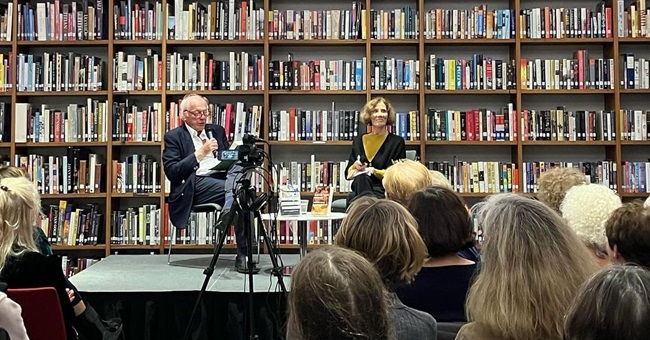
Odile Hellier interviewed by Alan Riding at the American Library in Paris about her book. Photo: oliviasnaije/ Instagram
While strolling through the 7th, you’re bound to see at least half the population wearing a médaille miraculeuse, whose design was channeled by Catherine Labouré in 1830 during a series of Marian apparitions. It simply wouldn’t be a proper visit to the 7th without witnessing where it all went down: La Chapelle Notre Dame de la Médaille Miraculeuse, conveniently located across the street from the Bon Marché. Come to atone for your consumerist sins, or double down and wait in line to buy your own medal from the gift shop. Services are held throughout the day, and if lucky you might be graced by divine timing and stumble upon the Portuguese mass. If the hordes of tourists get to be too much and the nurse’s station is full, prends de l’air at the adjacent Catherine Labouré gardens.
Still in need of spiritual, or just architectural nourishment? Built on the site of a former Carmelite monastery, the neo-gothic Basilique Saint-Clotilde is one of Paris’s most magnificent churches, and the place to hobnob with the who’s who of Parisian society after Sunday mass.
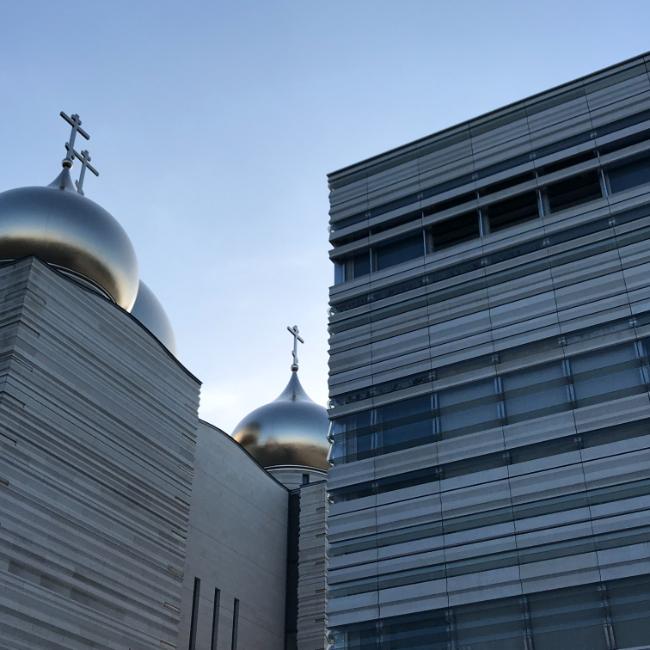
Russian orthodox megachurch. Photo: Maria Kern
The 7th is also home to UNESCO headquarters, and various private tours are available to book online. Aim for a visit in early spring, as the cherry blossoms bloom within Tadao Ando’s meditation garden. Alternatively, head to the Cathédrale de la Sainte Trinité, a Russian orthodox megachurch on the Quai Jacques Chirac. Or stop off at the nearby American Church, which has long served as an important pillar of the expat community—their housing and job boards have historically been the go-to among foreign hopefuls new to town.
Finally, round out the tour with visits to the Champ de Mars, once a plot for market gardens and now an open field with terrific, immediate views of the Eiffel Tower, and the Place du Palais Bourbon, a charming neighborhood square often featured in films and originally commissioned by the Prince of Condé.
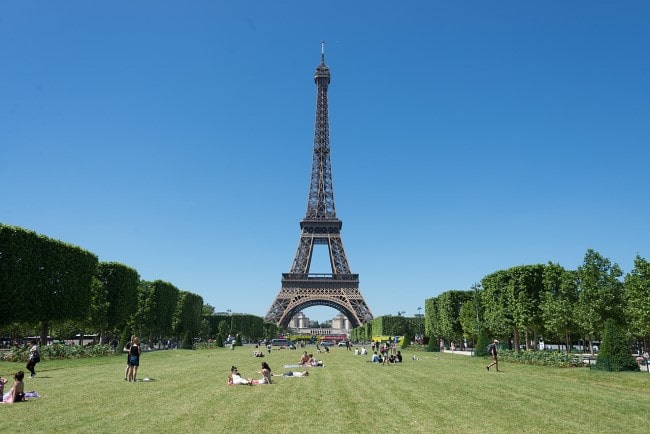
Champ de Mars. Photo: xiquinhosilva/ Wikimedia Commons
Where to eat
Although the 7th is not especially known for its dining scene, aside from a disproportionate number of Michelin-starred restaurants, there are still some worthy (and far less flashy) meals to be found. If you’re looking to splurge, opt for Nakatani or Arpège, both understated by fine dining standards.
If trying to decipher the nonsensical tale behind every étape sounds like a drag, try Le Gentil, a small family-run restaurant on the rue Surcouf. Come at lunchtime for a relaxed, elegant meal at a reasonable price, especially for the neighborhood. The cuisine is seasonal and perfectly executed, blending Japanese flavors with French technique. Service is efficient if a bit brusque, but it’s all part of the charm, and you’ll likely overhear ministerial intel being traded at surrounding tables.
Caffe Toscano is another family-run favorite among locals, serving up generously portioned bowls of pasta and simple, delicious wines. Seemingly everyone through the door is on a kissing basis with the owner, regaling him with tales of their latest and greatest as they slip him a 10. Toscano is also a favorite among restaurant people and minor celebrities, the kind of place where you keep seeing the chef from that bonne addresse and that actor you can’t quite place. Order from the daily specials menu for delights like penne drenched in tallegio and tagliatelle topped with morilles.
If Arpège is hors budget but you’re still in search of something veg-friendly, venture across les Invalides to Apéti, a local vegan, organic, and gluten-free restaurant, the first of its kind in the 7th. Try the beluga lentil and sweet potato parmentier and the no-cheese cake, and sit outside to people watch, weather permitting.
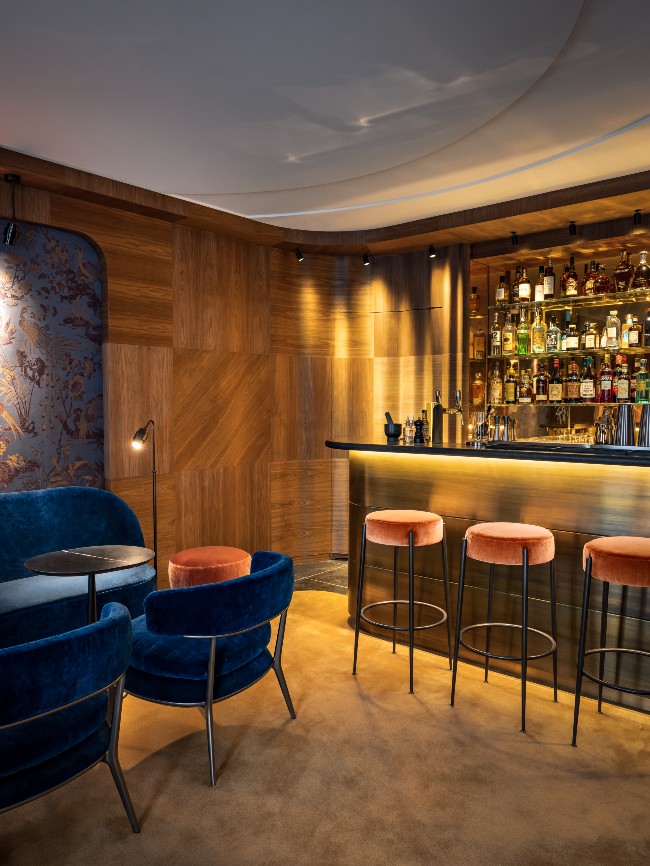
James Joyce Bar at Pavillon Faubourg Saint-Germain
Nightlife
Although not the most happening arrondissement after dark, there are still a couple of viable options for night owls. Try the Bar James Joyce, tucked away inside a hotel on the rue du Près aux Clercs.
For dancing, head to the port du Solférino May through September and board the Concorde Atlantique, a three-story boat catering to those seeking an alternative to stuffy basement clubs.
Many museums also host special events in the evenings, sometimes with DJ sets into the wee hours. Check museum websites for events and dates, or sign up for mailing lists to stay ahead of the calendar.
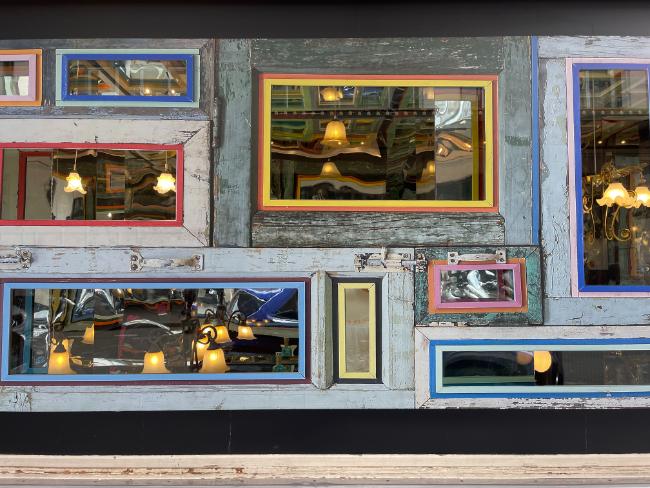
Mirrors in the 7th arrondissement. Photo: Maria Kern
Lead photo credit : Musée Rodin. Photo credit: Dalbera, Flickr
Related Articles

By Maria Kern