In Conversation with Alexandra Stacey of French Family Food
- SUBSCRIBE
- ALREADY SUBSCRIBED?
BECOME A BONJOUR PARIS MEMBER
Gain full access to our collection of over 5,000 articles and bring the City of Light into your life. Just 80 USD per year.
Find out why you should become a member here.
Sign in
Fill in your credentials below.
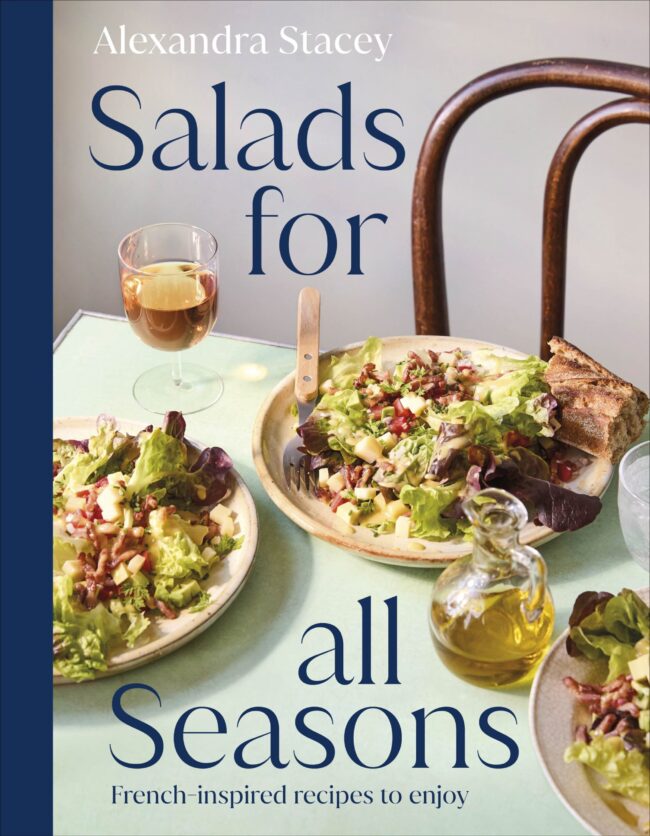
I have been poring over Alexandra Stacey’s new book, Salads For All Seasons, for the last few days, and there is not one recipe I wouldn’t want to try right away. The variety of ingredients, the food combinations – from the familiar to the surprising – and the irresistible visual appeal make each recipe a winner.
This is no surprise, as I have followed Alexandra’s Instagram account (@frenchfamilyfood) for over six years and I watched her consistently show her audience, in her warm and elegant style, how to create healthy and appetizing dishes from everyday ingredients. What started as a small personal project during a summer vacation spent in Corsica has evolved into a strong community of likeminded readers. Salads For All Seasons is not only a gift for them but also a beautiful visual incentive for every home cook to expand their salad repertoire.
Let’s start with a quick introduction. Who is Alexandra Stacey? What would you want our readers to know about you?
I grew up in a village not far from Versailles in a big bilingual family as my mother is British and my father is French. I was lucky to attend an international school in Saint-Germain-en-Laye until the age of 18 and then moved to England to study at university. I’ve lived in London for many years and cooking is my way of maintaining the link back to my French roots.
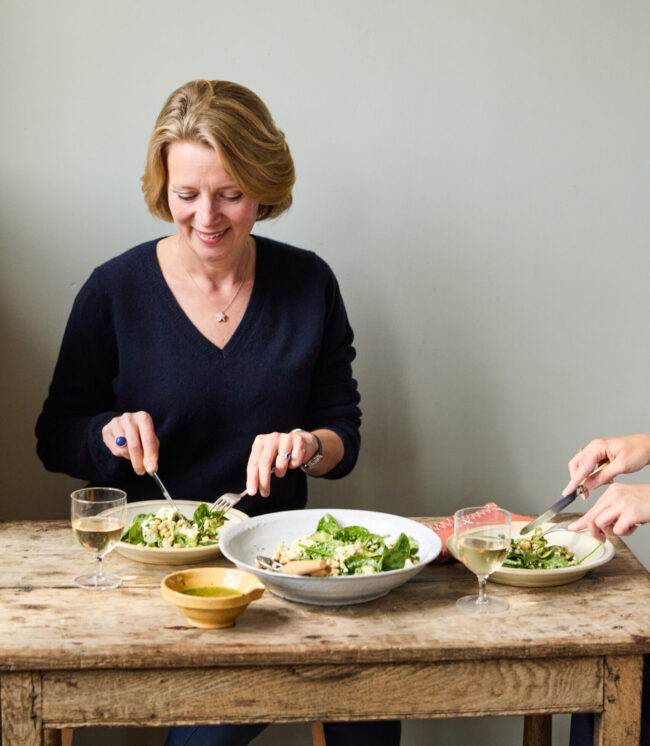
Alexandra Stacey by Ola Smit
Growing up in France, were there early experiences around the family table that shaped the cook you’ve become today?
I grew up in a family that loved to cook and entertain. Some of my earliest memories are of watching my French grandmother in her immaculately tidy, pale yellow Formica kitchen, cooking for her large brood of children and grandchildren. Her kitchen was full of delicious aromas of vegetable soups, hearty roasts and my favorite smell of her incredibly crispy and fluffy fried potatoes, which she cooked in goose fat and served with lots of sea salt and finely chopped parsley. My mother attended the Cordon Bleu cookery school in London before she married and her cooking skills were exceptional. My parents often invited their friends around for beautiful dinner parties. My mum always prepared delicious dishes – from fish mousses to scallop gratin, tender vegetables cooked in her pressure cooker and also her unparalleled crème caramel.
What inspired you to start sharing your recipes on Instagram? Was there a particular moment when you thought, “I think other people might enjoy this too”?
I started my Instagram account when we were holidaying on the island of Corsica and my children were still very small. We visit Corsica every year, and I have a very strong attachment to this beautiful island as my grandparents used to live there for part of the year. I love returning there with my children, and showing them the breathtaking scenery and the stunning beaches as well as the delicious local food. We have several favorite places that we always visit while we are on the island. One is the organic Botanic Garden of Saleccia near L’Ile Rousse.
It is a magical garden brimming with roses, oleanders, olive trees and lavender. There is a cafe near the entrance to the garden which serves delicious seasonal organic food grown on site. I remember vividly ordering the lunch plate of the day which included a variety of foods cooked or freshly harvested that morning. There was the sweetest melon with local cured ham, a creamy courgette gratin, a portion of green salad and the most delicious local bread. My kids loved this colorful meal which also brought back so many happy memories of my French childhood and it made me realize I wanted to document this joyful way of eating.
Did you ever imagine that French Family Food would grow into such a large community? When did you realize that it had become something much bigger than a personal project?
The really special thing about French Family Food is that it has grown organically over a period of 10 years. I’m so grateful for the strong ties I’ve established with followers who’ve been on this journey with me from the outset. Looking back at recent years, I think a turning point was my greater emphasis on salads. I started posting salads on a daily basis and they were a reflection of the shift in our family life as my children had more after-school activities and salads gave us a lot of flexibility as to what time we sat down to eat them. So many of my salads can be prepared ahead and then served when you need them. I love my ongoing conversations with followers and I find their comments and feedback so helpful.
How did the idea for Salads for All Seasons come about? Did the book grow naturally from your Instagram community, or had writing a cookbook always been a dream?
A few years ago I started working with my wonderful agent Emily Sweet and we talked about the possibility of doing a cookbook. A salad-focused book felt like the natural next step, as I was really enjoying creating these colorful seasonal recipes, and posting a photo every day on my Instagram page. Also, my followers were keen for me to share my recipes and step-by-step methods, so it was very exciting to envisage putting all the information in one place and creating a cookbook that would be widely available and accessible.
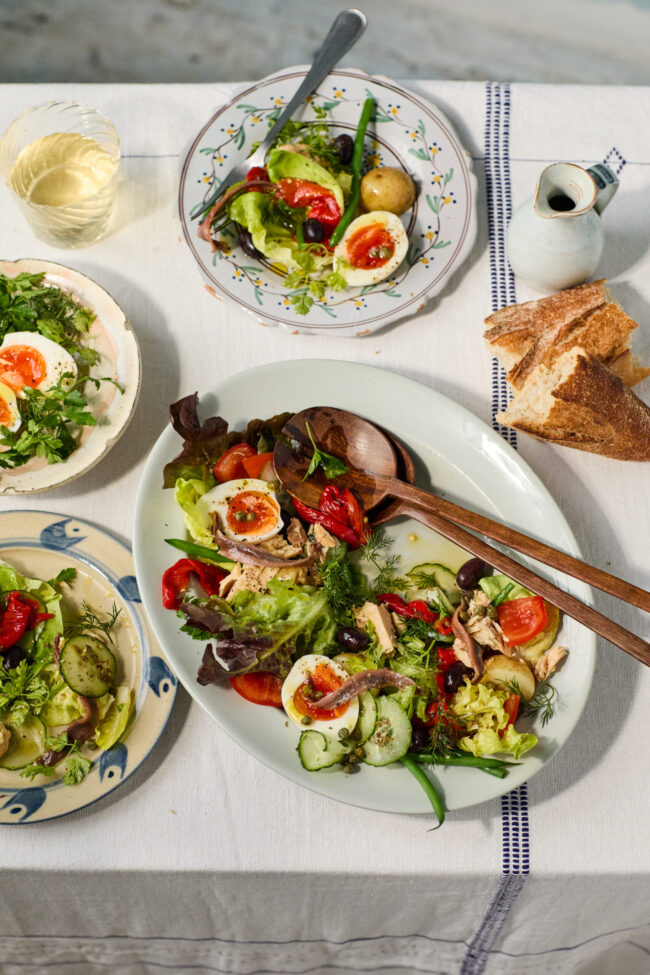
Salade Nicoise, from “Salads for all Seasons.” Photo: Ola Smit
Salads are sometimes dismissed as side dishes or “healthy eating.” Your book makes them feel complete, satisfying and joyful. What do you think defines a memorable salad?
When I was growing up in France, we ate salads every day; they were always colorful, seasonal, and well dressed with a delicious homemade vinaigrette. And they were enjoyed with chunks of freshly baked baguette from our local boulangerie. For me, a memorable salad is made with good ingredients and care. It is important to choose good quality produce, which always tastes better. I love to layer my salads with a variety of textures and flavors. I might start with a beautiful lettuce which I wash and trim removing any hard spines. I will then add fresh herbs, finely sliced shallots, and some toasted nuts such as walnuts or hazelnuts to add crunch and richness. Don’t be scared to use ingredients in your fridge – some cheese cut into cubes, perhaps a boiled egg. And finally the dressing – it is probably the most important element of the salad as it brings all the elements together and helps the flavors to mingle in a most satisfying way.
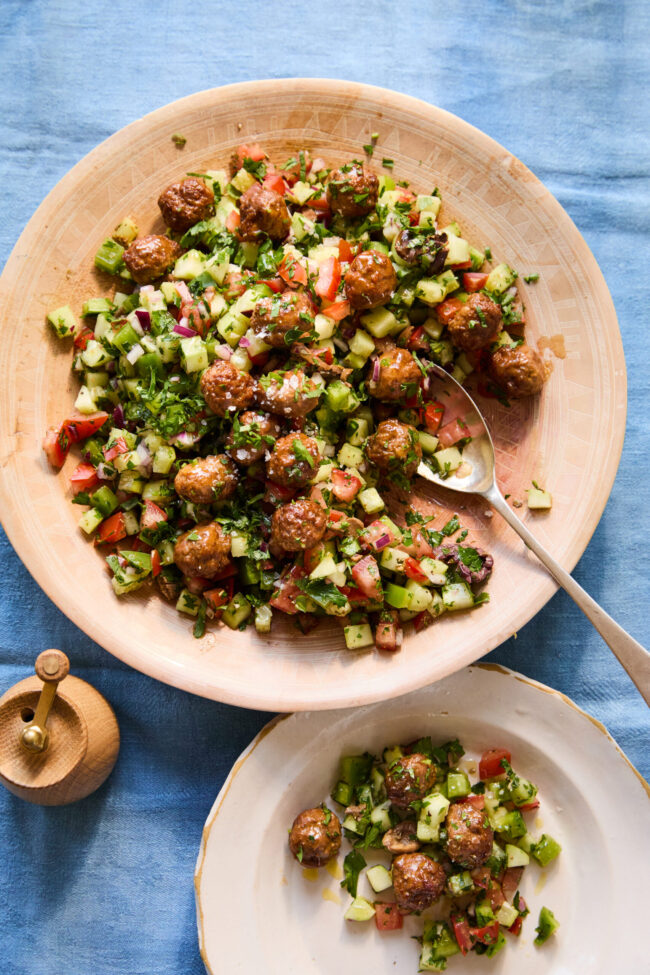
Moroccan Salad with Merguez meatballs, from “Salads for all Seasons.” Photo: Ola Smit
You feature dozens of original combinations. Where does your inspiration come from? Do new recipes begin with a visit to the market, a single seasonal ingredient, or simply curiosity in the kitchen?
I am very fortunate to have a fantastic weekly delivery of organic fruit and vegetables (I think in the US this is called a CSA box). Our produce is delivered every Friday by Riverford, a brilliant farming organization based in Devon. Unpacking the produce fills me with joy every week, and my mind is buzzing with new ideas when I look at the seasonal fruit and vegetables. My recipes are also hugely inspired by the food I ate growing up in France. So much of the food I prepare connects me back to my mother and grandmother’s kitchens. Their wisdom and their guidance are the foundation of my cooking. I love feeling the strong bond to these strong women and brilliant, resourceful cooks when I craft my own salads and seasonal dishes.
Seasonality is at the heart of French cooking. For home cooks who want to shop more like the French, what are your best tips for choosing produce at its peak and letting the ingredients guide the meal?
There is no denying that it is a challenge nowadays to cook seasonally, especially as supermarkets pride themselves in providing their customers with the same fruit and vegetables all year round. Signing up to a CSA box has really helped me stay in sync with the seasons. In recent years I’ve started growing some of my own vegetables and herbs and this has been a complete revelation. I have fresh herbs that I can throw into my salads from May to October. It is so satisfying to grow something from seed and appreciate how flavorful herbs are when they are not wrapped in cellophane and flown in from thousands of miles away. At the height of summer I have courgettes, green beans, and, if the weather permits, juicy little tomatoes. I love the old adage that fruit and vegetables that grow together also pair beautifully on a plate. Being French, I also adore cheese and often add cheese to my salads – very few salads don’t benefit from the addition of a rich, creamy cheese.
One of the pleasures of your recipes is the balance of flavors and textures. Crisp, creamy, acidic, sweet, bitter, and crunchy often appear in the same bowl. Is there a philosophy you follow when pairing ingredients?
A lot of my salads are created during the long, dark, grey English winter and they are on many levels an antidote to the colorless ambience outdoors. I love a salad that is brimming with cheerful colors and punchy flavors, and that will lift my spirits. I think the key to creating successful pairings is to have a good mix of store cupboard ingredients: oil, vinegar, seasonings, dried herbs, nuts, and the freshest produce. Your store cupboard ingredients will elevate your salad from tasty to delicious.
If someone wanted to elevate an everyday salad without making it more complicated, what are a few simple techniques or ingredients that make the biggest difference?
There are a few simple tricks to make a salad more interesting in a straightforward way. I would always recommend adding finely chopped shallot or onion to a simple salad. The piquant notes of alliums combine so well with lettuce and vegetables. Use good seasoning such as sea salt and black pepper, which will instill more character to a simple salad. And if you don’t have vinegar or mustard, a good drizzle of golden olive oil will add flavor and heartiness.
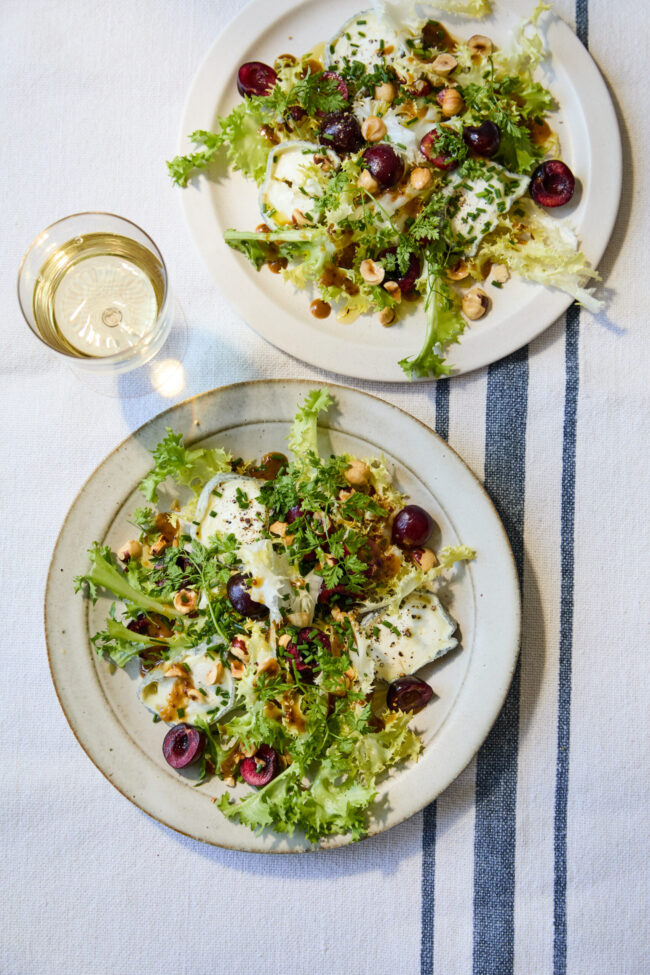
Black cherry, St Maure de Touraine and Frisee lettuce from “Salads for all Seasons.” Photo: Ola Smit
France has a remarkable diversity of regional ingredients and culinary traditions. Are there particular regions or local markets that continue to inspire your cooking, and are there any lesser-known French salads you wish more people outside France would discover?
A region that is really close to my heart is Corsica and I adore visiting the local markets when we are on the island. Corsican cheeses are particularly delicious – I am particularly fond of the Tomme Corse made with ewe’s milk. It is firm yet creamy and it is wonderful eaten with a tomato salad and local cured meats. There is a Corsican salad which I’ve eaten a few times and dream of during the year. It is a combination of finely sliced courgettes with this wonderful fresh Brousse cheese, which is a little like Ricotta; it is combined with fresh mint and fragrant dried herbs from the Maquis.
Bonjour Paris readers are passionate about France, whether they live there or simply dream of visiting. If you could send them to one French market in any season, where would you send them, and what would you hope they’d taste, smell and experience?
If I had the power to teleport myself or one of your readers I would definitely send us to the market in Saint-Cyprien, in the Périgord region of southwest France. We used to spend part of the summer in this picturesque village when I was growing up. The market is situated along the main street and you can buy extraordinary goat’s cheeses – some of them wrapped in chestnut leaves. There are also rotisserie chickens which you smell before you see them cooking in big glass-sided ovens. You can also purchase the local delicacy, gâteau aux noix – a most excellent cake made with walnuts and honey and often topped with chocolate and walnut halves. The Dordogne valley is so fertile and green; you will see walnut groves as you drive past the meandering Dordogne river, and in summer months, through the fields of sunflowers.
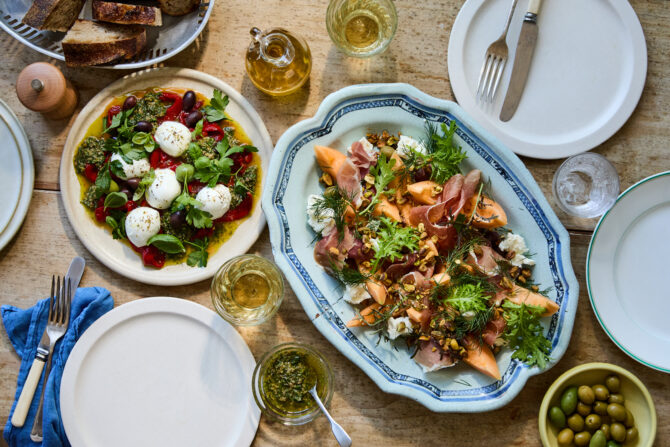
Lead photo credit : Charentais melon with cured ham and feta, from "Summer for all Seasons." Photo: Ola Smit
Related Articles