Inside Festival America, France’s Love Letter to American Books
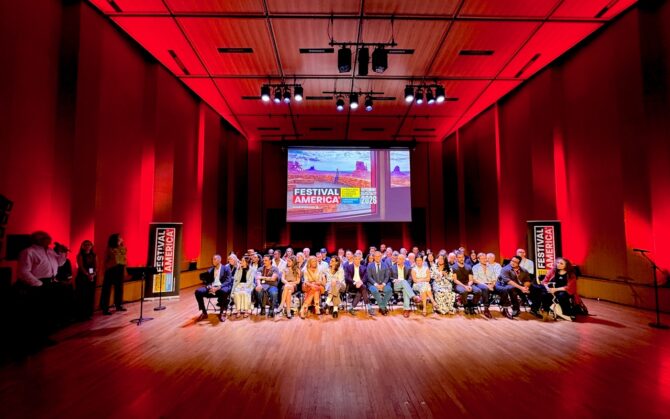
The energy in the room palpably changes when in the presence of writers who, after devoting many solitary years delving deep into a story, crack open a window into the seed of their ideas, their research, their process. Every two years the host city of Vincennes, just across the Paris ring road, becomes a transatlantic salon where American voices such as Joyce Carol Oates, John Grisham, or Ta-Nehisi Coates blend with their French public. Despite its scale, this literary festival manages to feel intimate and universal at the same time. Festival America inhabits large auditoriums and ornate ceremonial halls but also in intimate breakfast and “apéro” settings.
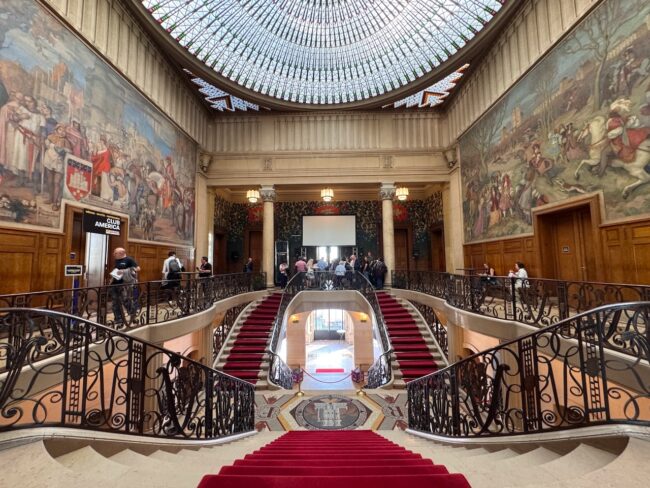
Vincennes City Hall hosts Festival America. © Sylvia Edwards Davis
This year’s edition lands with particular weight, coinciding with the United States’ 250th anniversary of the Declaration of Independence. At a moment when politics signal a drifting apart, Festival America presents itself as a bridge between American and French literary culture. It also provides a snapshot of the long chain that carries stories across that bridge, and who gets to tell them.
“Literature provides a lens through which to look beyond the clichés and toward the enduring relationship between the U.S. and France,” said Festival America founder Francis Geffard as he welcomed the more than 50 authors from the US, Canada, and the Caribbean. “One of the unique aspects of this festival”, he said “is that the whole bookchain actively participates, from the writers, photographers, illustrators, agents, editors, translators, publishers, and booksellers to the ultimate link: the reader.” One such reader, seated next to me, shared his admiration for Geffard’s vision and tenacity, recalling the first festival in 2002, when author Douglas Kennedy gave his talk from a chair in a corridor.
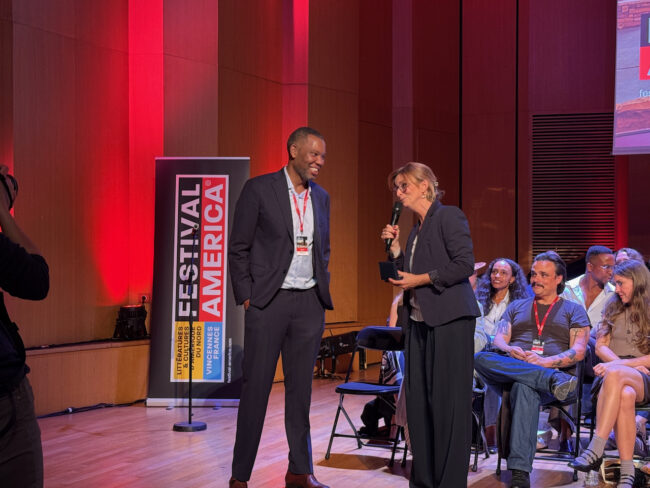
Ta-Nehisi Coates receiving the medal of the City of Vincennes from Mayor Charlotte Libert. © S.E. Davis
The golden thread that keeps this human chain alive is a shared passion for reading. Accepting the medal of the City of Vincennes, award-winning American journalist, activist and France’s adoptive son Ta-Nehisi Coates spoke about the toll that the hectic pace of current events and non-stop crises have on our well-being: “I don’t know that there’s a better technology to fight against this assault on our attention than books”, he said, “and none so peace-giving.”
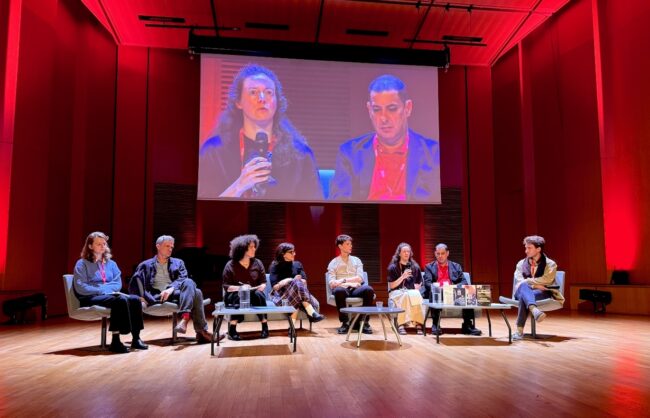
Forum on Journalistic Writing featuring (L-R) Patrick Radden Keefe, Taffy Brodesser-Akner, Cole Stangler and Jake Adelstein. © S.E. Davis
The sentiment was echoed by New Yorker investigative journalist Patrick Radden Keefe during the Writers’ Forum on Journalistic Writing. “I am not as good a reader as I was 10 years ago before the smartphone killed my brain”, said the author of Say Nothing and the latest instant bestseller London Falling. He asked who in the audience felt the same. A sea of hands went up in the large auditorium. “Those of you who didn’t raise your hands are lying,” he said to a ripple of laughter, “but the point is that writers today face a very high bar to persuade the reader that the article is worth their 45 minutes, or several days if a book.”
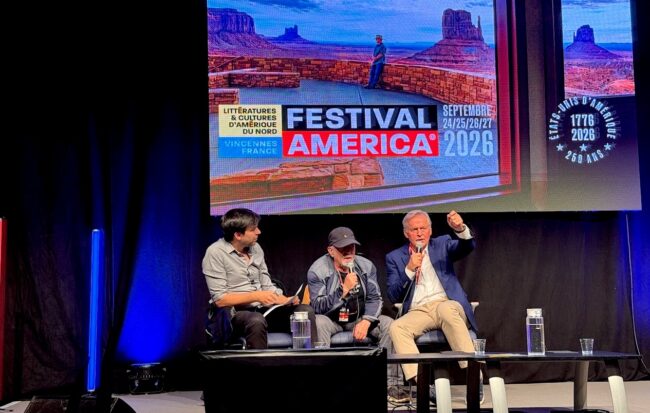
John Grisham’s evening at Festival America. © S.E. Davis
John Grisham spoke to a packed hall about the imminent release of his latest novel, The French Illusion, a departure from the legal-thriller genre. “My wife and I love Paris, we come all the time, and she always said, why don’t you set a book in Paris? I couldn’t think of one until now.” With more than 50 consecutive number one bestsellers to his name, translated into nearly 50 languages, the author is far from resting on his laurels. Taking risks is nothing new for Grisham, who is now working on his third nonfiction book.
“Even as a young lawyer, I had never thought about wrongful convictions,” he said. “I was not aware of the problem. It was through my first nonfiction book, The Innocent Man, that I discovered this whole world.” Then came Framed: Astonishing True Stories of Wrongful Convictions which led him to the book he is writing now. “It involves a man in Texas who’s been on death row for 25 years,” Grisham said. “He even came within 60 minutes of being executed once, and he is completely innocent. As I said in the book, it’s fairly easy to send an innocent man to prison, and almost impossible to get one out.”
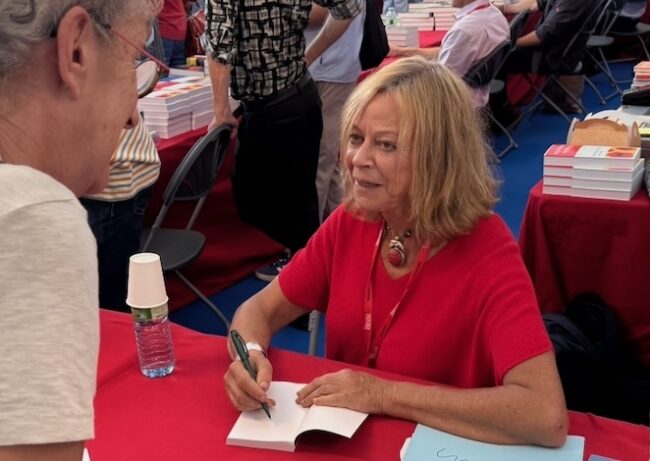
American author Joyce Maynard at the book signing of The Influencer, her psychological suspense novella recently release in French. © S.E. Davis
In the huge marquee publishers and booksellers pile up French translations alongside the originals, where authors hold book signings and have informal chats with their French readers. Accompanying exhibitions, screenings, and Festival Jeunesse all add their buzz to the power of books to spark conversations.
Mayor Charlotte Libert expressed the pride of the City of Vincennes to be a meeting place in such fractured times. “We need these moments, when we take the time to listen to one another, and to be able to express ourselves freely. We need these moments to read, understand, and connect with one another. We need places where we can debate without having to agree.”
If ever there is doubt in the resilience of the organic, human, and authentic written word, Festival America is proof that readers keep turning to books as food for the mind and soul.
Festival America
Littératures et Cultures d’Amérique du Nord
September 24-27, 2026
www.festival-america.com
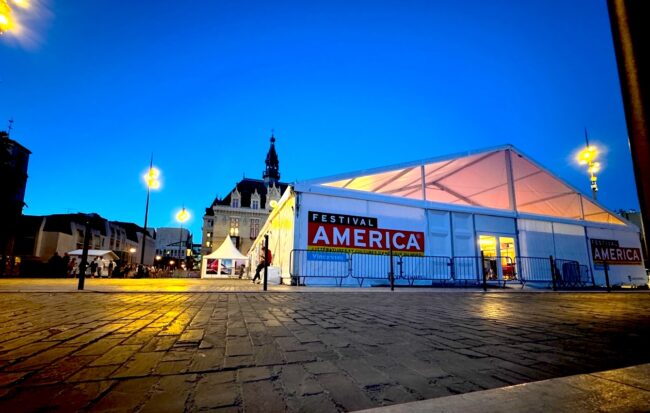
Every two years, Festival America brings together writers, journalists, publishers and readers © Sylvia Edwards Davis
Lead photo credit : Festival America © Sylvia Edwards Davis
More in Americans in paris, author interviews, Authors in Paris, book, cultural events, culture, festival, French influence USA, literary salon, Literature, salon
Related Articles