Celebrate America’s 250th Anniversary in Paris
- SUBSCRIBE
- ALREADY SUBSCRIBED?
BECOME A BONJOUR PARIS MEMBER
Gain full access to our collection of over 5,000 articles and bring the City of Light into your life. Just 80 USD per year.
Find out why you should become a member here.
Sign in
Fill in your credentials below.
On July 4, 2026, the United States will celebrate the 250th anniversary of its independence. From the very beginning, France has played a crucial role in its quest for liberty and has been the United States’ first and most critical ally. By providing troops, ships, loans and supplies, French support was decisive in America winning independence from Britain. The French aristocrat, the Marquis de Lafayette became one of George Washington’s most trusted generals, and French naval power, in particular at the Battle of Yorktown, effectively forced the British surrender.
French Enlightenment thinkers had deeply inspired the American revolutionaries, and documents such as the Declaration of Independence and the Constitution also later inspired the French (the French Revolution followed just a few years later in 1789). Thomas Jefferson, who served as U.S. Minister to France from 1784 to 1789, was in Paris as the Revolution began. The two revolutions cross-pollinated ideas about liberty, democracy and the rights of man.
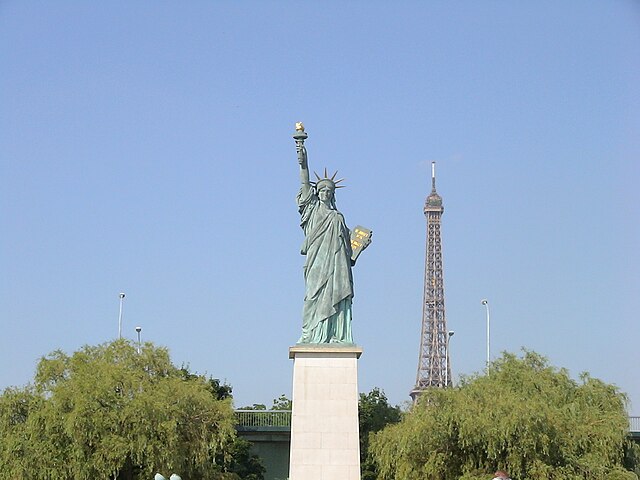
In one of the most powerful symbols of the Franco-American bond and of shared democratic values, France gifted the Statue of Liberty to the United States in 1886. The gesture was conceived by French political thinker Edouard de Laboulaye and sculpted by Frederic Auguste Bartholdi. A much smaller replica was given to Paris by the American community living in France in 1889, to mark the centennial of the French Revolution, and stands on the Île aux Cygnes, a narrow artificial island in the Seine in the 15th arrondissement.
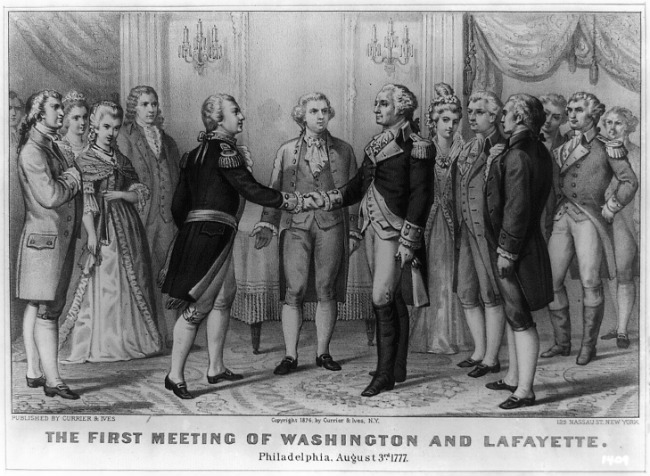
The Marquis de Lafayette first meets George Washington on 5 August 1777. Currier & Ives. Public domain.
There are reminders of the shared history between the two nations scattered throughout the city. In the 16th arrondissement, you will find the former Hotel de Valentinois which was once Benjamin Franklin’s Parisian home, a statue near the Trocadéro as well as Rue Benjamin Franklin. The American Founding Father was sent to Paris in December 1778 at the age of 70 to drum up support from France for the war for independence. Already world famous in Europe as a scientist, Franklin was an established legend among Enlightenment intellectuals. He was mobbed like a rock star in Paris and his face was everywhere – on medallions, snuffboxes, rings, paintings and busts. When he died in 1790, the French National Assembly declared three days of mourning which was an extraordinary honor for a foreign citizen.
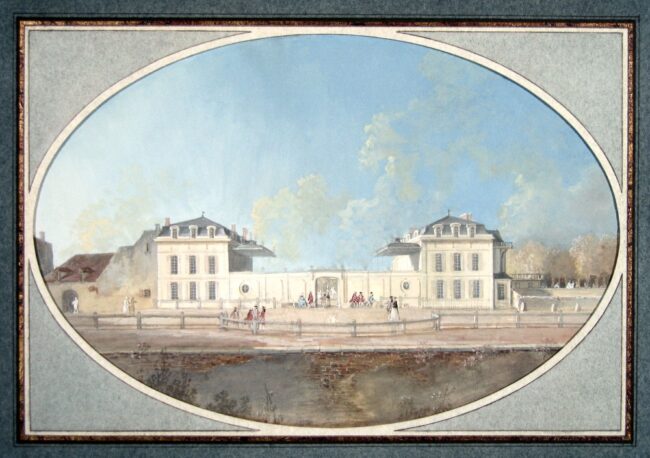
Hôtel de Valentinois, painted in the 1770s by Alexis-Nicolas Pérignon. Public domain
Also in the 16th arrondissement, you’ll find the Thomas Jefferson Square which is a quiet park not too far from the Arc de Triomphe. Though there’s no statue of Jefferson, there’s a bronze statue of George Washington with Marquis de Lafayette commissioned by publisher Joseph Pulitzer and created by sculptor Frédéric Bartholdi, who also designed the Statue of Liberty. The park is not too far from where Jefferson lived on the Champs-Élysées during his five-year stay in Paris. Though the former residence no longer exists – there’s a Monoprix currently in its place there is a commemorative plaque opposite the Laduree shop.
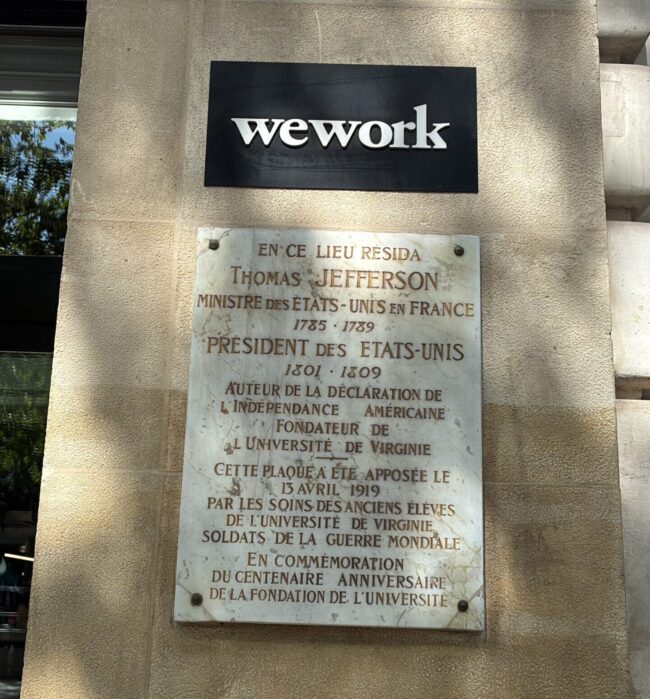
Jefferson plaque on the Champs Élysées. Photo: Joanne Fowler
History buffs wishing to learn more about Marquis de Lafayette, can pay their respects at the Picpus Cemetery in the 12th arrondissement where an American flag flies permanently beside his grave. Every year on the 4th of July, in a highly orchestrated service, dignitaries from the United States and France pay their respect to the revolutionary hero in a changing of the American flag ceremony.
As the 250th anniversary approaches, there are several events being planned throughout Paris, many which are still being finalized. What follows are some of some of the activities and exhibitions that provide greater perspective on the two countries’ rich shared history.
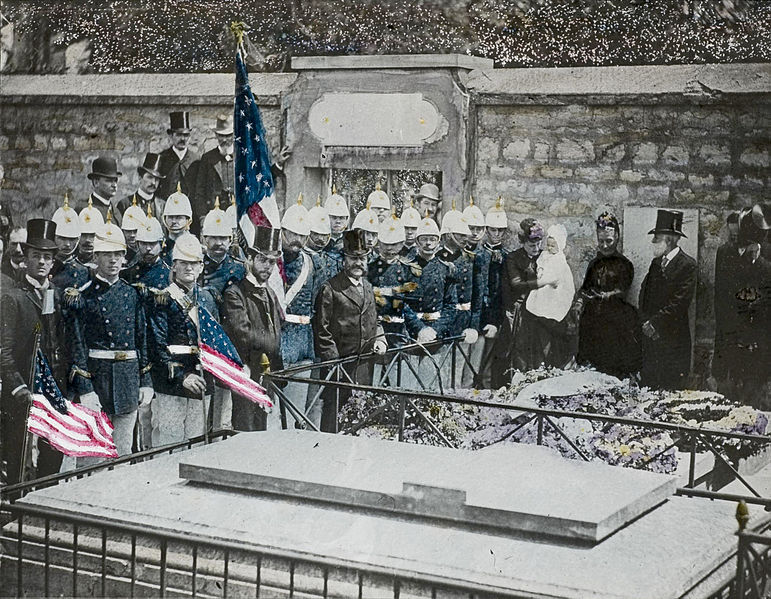
US Marines Decorating Grave of Lafayette, Picpus Cemetery, Paris 1889. USMC Archives. Wikimedia Commons
Exhibit on Marquis de Lafayette: Hero of Two Worlds
From April 1 to July 14, the National Archives of France will host a free exhibition called “The Lafayette Between France and America: History and Legend,” exploring the life of Marquis de Lafayette. The young French aristocrat arrived in America at age 19 to support the war for independence, funding his own expedition after the French crown initially forbade it. After his father was killed during the Seven Years’ War with England – when Lafayette was just two years old – the voraciously ambitious and idealistic Lafayette found his calling in the colonists’ desire for independence.
A pivotal figure in the American Revolution, Lafayette proved himself a capable and loyal general under Washington, commanding troops at Brandywine, Barren Hill, and the crucial Yorktown campaign. He lobbied hard for financial and military support from his birth country, helping convince King Louis XVI to send the Rochambeau expedition – the French forces that tipped the balance at Yorktown and effectively ended the war.
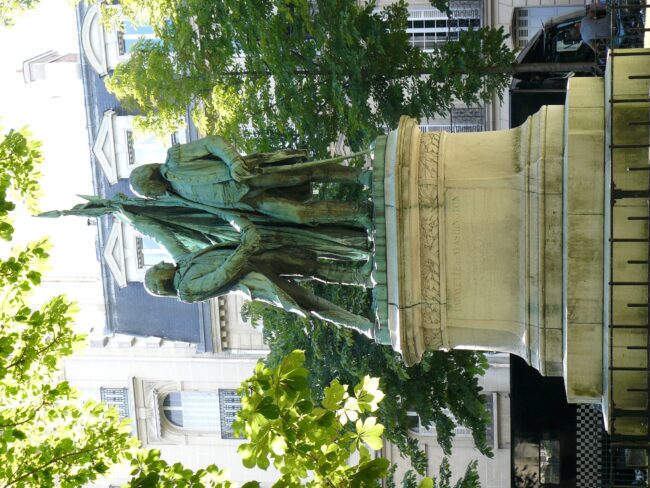
Statue of Lafayette and Washington in Thomas Jefferson Square. Photo: Siren-Com / Wikimedia commons
His experience in America shaped his political vision and he tried to apply it in France. Lafayette embodied the Enlightenment idea that liberty was a universal cause and helped draft the French Revolution’s founding document, the Declaration of the Rights of Man and of the Citizen, with help from Thomas Jefferson. After the fall of the Bastille, he was chosen as Commander-in-Chief of the newly formed National Guard designed to keep order and protect the French Revolution in 1789. Trying to find a middle path between the French monarchy and radical republicanism, he advocated for a constitutional monarchy, yet won little support. He eventually was forced to flee France in 1792 to avoid the guillotine.
The exhibit contains 114 historical items such as caricatures, paintings, model ships and rare documents such as letters written between Lafayette and George Washington. Texts are in both French and English.
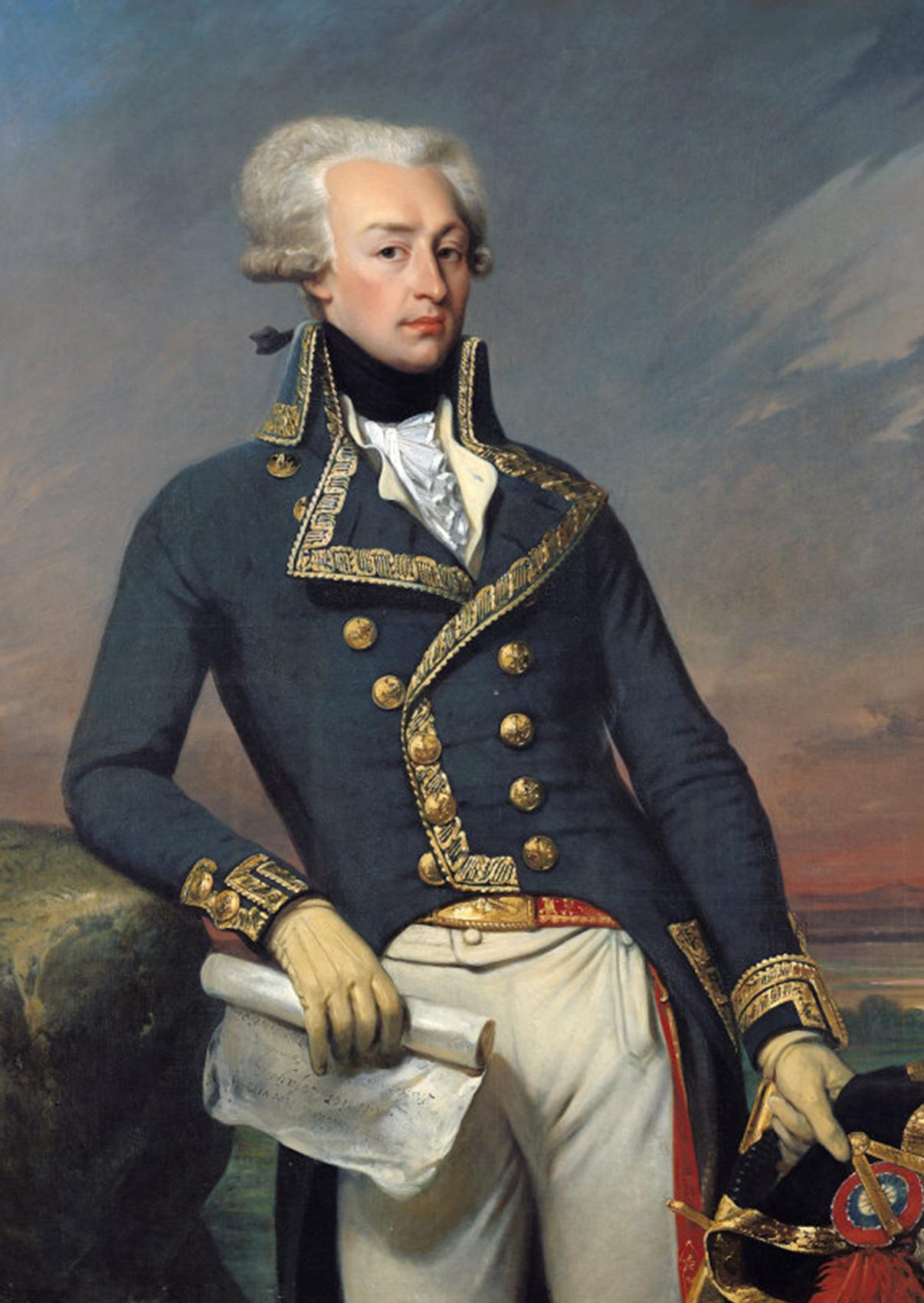
Lafayette as a lieutenant general, in 1791. Portrait by Joseph-Désiré Court. Public Domain.
A Lasting Friendship
Through Sept. 27, 2026, the Carnavalet Museum is hosting a free exhibition “1776-2026: 250 Years of Franco-American Friendship,” exploring France’s central role in American independence, from the reception of Benjamin Franklin in 1778 through the end of the Revolutionary War, signed in Paris in September 1783. The exhibit shows original objects, portraits and documents demonstrating how France, and Paris specifically, was central to American independence. The United States’ entry into WWI in 1917 marked a turning point in the relationship between both countries and led to a lasting renewal of Franco-American friendship. The memory of Lafayette was invoked by the two allies, and Paris proudly displayed banners showing the Stars and Stripes until the end of the conflict.
For more info on the exhibit, visit Musée Carnavalet’s website
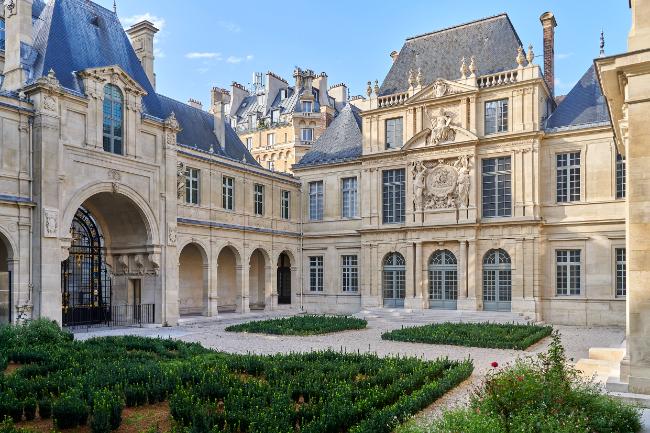
Jardins du Musée Carnavalet – Histoire de Paris (c) Pierre Antoine
A Shared Intellectual Journey
This two-day event on May 20-21, 2026, is organized jointly by two of the most prestigious scientific institutions in the world, the French Academie des Sciences and the U.S. National Academy of Sciences. Held at the Institut de France, this bilateral symposium highlights the historic and enduring scientific ties between France and the United States. From the Enlightenment, which inspired the Founding Fathers, to today’s cutting-edge advances in Al, France and the United States have long fostered one another’s progress, helping to shape the future of research and innovation. The program consists of four half-day sessions, which are offered in French and English.
For more information, go here.
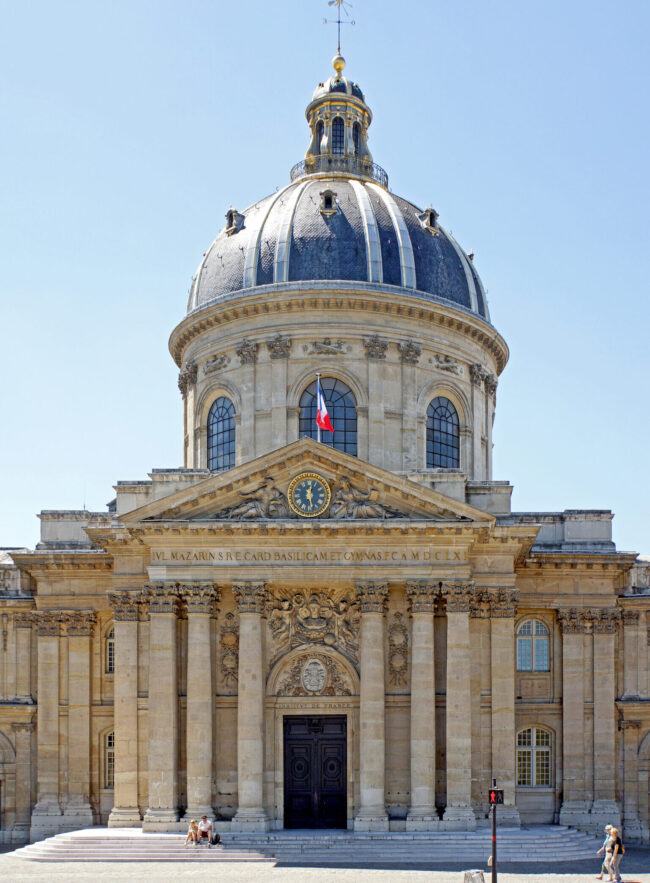
L’Institut de France, the headquarters for L’Académie française. Photo credit: Dennis G. Jarvis / Wikimedia commons
Paris Plages
Every summer, the Paris Plages, or Paris Beaches, transform the riverside into a city resort with beach chairs and umbrellas, gardens, cabanas, swimming pools, and even swimming in the Seine. Pop-up bars, concerts, dancing on the quays, sand-filled pétanque courts, cafes, and ice cream stands add to the festive atmosphere – and all activities are free, including swimming, water sports, games, movies, kayaks, canoes, and art exhibits.
This summer, July 4 kicks off the 250th American Independence anniversary festivities, with the Seine quaysides and the Eiffel Tower decked out in American colors, buzzing with special sporting, musical, and gastronomic events all summer. The full program is currently being developed and will be unveiled in the coming months. For more information, go here.
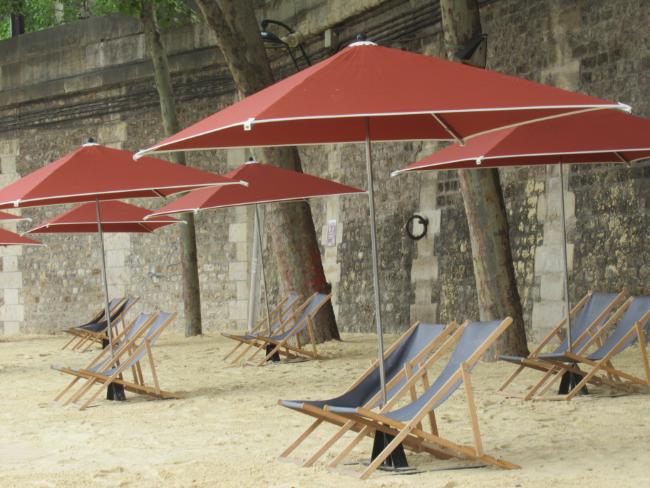
Beach area at Paris Plages. Photo: Marian Jones
History Comes to Life at Versailles
During the 4th of July weekend, the Chateau of Versailles celebrates the 250th anniversary of the United States with historical reenactments and activities planned for all ages. After a troop review on the parade ground of the Château de Trianon, visitors can discover the largest encampment ever recreated in the Trianon gardens, featuring Louis XVI’s royal district, the camp of the American insurgents, and the British bivouac.
Guests can wander through the military camps and meet 500 knowledgeable and passionate reenactors, wearing uniforms reproduced with historical accuracy. There will be equestrian and military demonstrations, as well as the traditional trades from the 18th century. Scottish quadrilles, Boston dances, and period music concerts will also be highlighted, offering the public a true journey through time.
As a climax to the weekend, a grand battle will deliver a breathtaking spectacle, when the insurgents and their allies face off against British troops, recreating the opposing armies at the Battle of Yorktown.
On the night of July 4th from 8:30 p.m. to 11:15 pm, a special Night Fountain Show will be held at the chateau to celebrate the U.S. Independence Day. An aerial show combining drones and pyrotechnics will light up the Versailles sky, showcasing the colors of the American flag.
For more information on hours and ticket prices, go here.
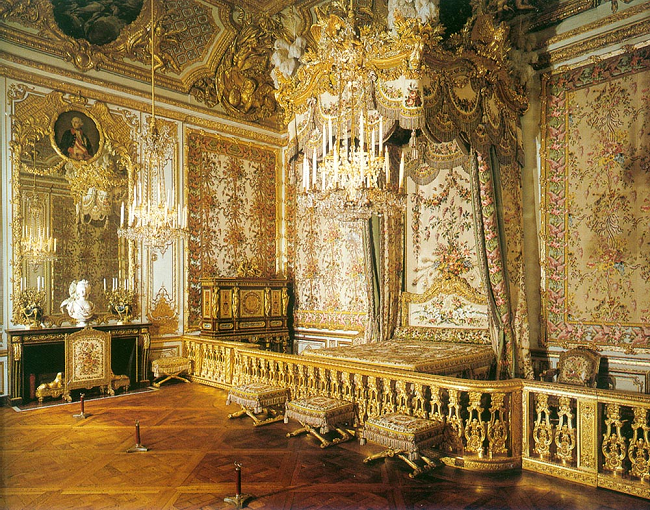
Versailles, the Chateau, Queen’s Chamber, ©Kallgan/ Wikimedia Commons
NFL Football in Paris!
For the first time in history, American football will come to Paris this autumn as part of the NFL International Games calendar. For this grand premiere, the New Orleans Saints will take to the turf at the Stade de France, combining top-level sporting performances, spectacular entertainment and popular fervor in Saint-Denis.
So far, the opponent and exact dates aren’t officially confirmed yet. Expect to learn more in early May 2026, when full details including the date and kickoff time will be announced. Ticket sales are not expected to open until June or July 2026 with details of the sales process to be announced.
For more information, check out the NFL site.
View this post on Instagram
Looking for a Taste of America?
Feeling homesick or nostalgic for the flavors of the States? Look no further. There are lots of American-style restaurants to choose from in Paris:
Joe Allen is the oldest American restaurant in Paris, offering a retro New York brasserie experience with exposed brick walls and red check tablecloths- open since 1972 in Les Halles in the 1st arrondissement. It’s the go-to for classic burgers, onion rings, barbecue ribs, cobb salads, cheesecake and a very American atmosphere. There’s a Sunday brunch and a happy hour from 3 p.m. to 9:30 p.m.
Ralph’s, in the courtyard of a private mansion in Saint-Germain-des-Prés, offers a refined interpretation of American cuisine. The Ralph Lauren restaurant offers lobster rolls, tuna tartar, crab cakes, veggie burgers, chopped salads and Waldorf salads in an upscale, beautiful setting. Ralphs also serves a wide range of cocktails – and nonalcoholic options too – such as a Dirty Martini, Cosmopolitan, Moscow Mule, Daiquiri, Pisco Sour and Espresso Martini.
Sonny’s Deli in the 11th arrondissement has a lineup of sub sandwiches in the Italian-American deli tradition including a meatball, chicken parmesan and buffalo chicken. The sister property Sonny’s Pizza (with a second location in the 12th arrondissement) serves up thin, wood-fired pizza perfect for anyone craving a New York slice.
With several locations throughout the French capital, the Texas barbecue chain Melt -considered by some to be the best BBQ in Europe – has made its mark in Paris with its authenticity. Meats are cooked low and slow in a wood-burning smoker for up to 18 hours. The smoked beef cheeks are especially popular, slow-cooked in beef fat until they melt apart. Expect lines especially on weekends at the original Oberkampf location which has outdoor seating.
View this post on Instagram
PNY (Paris New York) offers a range of gourmet burgers with names such as The Return of the Cowboy (a grilled burger with onion, cheese, bacon and BBQ sauce) or the Goodbye California (a burger with cheddar cheese, avocado, lettuce, and chimichurri mayo) in addition to fried chicken, onion rings, guacamole and chips, and jalapeno poppers. There are multiple locations across Paris.
Breakfast in America is a longtime expat favorite offering a true American diner experience with retro decor, red vinyl booths, checkered floors, and an all-day menu of pancakes, waffles, cheeseburgers, milkshakes, and club sandwiches. With three locations around the city, diners can choose from classics such as eggs benedict or french toast for brunch or chicken burgers, caesar salads or BLTs for lunch.
View this post on Instagram
A favorite watering hole for Americans in the capital, Harry’s New York Bar, hidden away on a small street between the Opéra Garnier and Place Vendôme, has become one of the most famous cocktail bars in the world. Created in 1911 by an American fleeing Prohibition, it’s the oldest cocktail bar in Europe and has attracted regulars like Ernest Hemingway, F. Scott Fitzgerald, Rita Hayworth, Humphrey Bogart, George Gershwin and lan Fleming. Classic cocktails like the Bloody Mary, the Sidecar and the French 75 were invented here. Hotdogs are served for 6.50 euros. Live music is available downstairs.
Regarded by many as the benchmark for American-style breakfast in Paris, HolyBelly in the 10th arrondissement serves up stacks of fluffy buttermilk pancakes, perfectly cooked eggs, crispy bacon, hash browns and huevos rancheros. They also serve chia seed pudding, kombucha, iced tea and iced coffee. There’s no reservation system, so arrive early. Wait times can be long on weekends.
Lead photo credit : The Statue of Liberty on the l'île aux Cygnes. Photo credit: V. Gubina / Wikimedia Commons
More in America in Paris, Benjamin Franklin, Lafayette, Picpus
Related Articles