
The 18th Century Comes to Paris

- SUBSCRIBE
- ALREADY SUBSCRIBED?
BECOME A BONJOUR PARIS MEMBER
Gain full access to our collection of over 5,000 articles and bring the City of Light into your life. Just 80 USD per year.
Find out why you should become a member here.
Sign in
Fill in your credentials below.
Paris is having an 18th-century moment. Three concurrent exhibitions are exploring different aspects of what you might term the first modern century, from its fashion to daily life and how the image of women was created and depicted.
The 18th century was the century when Paris first gained its reputation for luxury. The long reign of Louis XV, combined with an expanding empire and a relatively stable economy for most of the time, meant that wealthy people were able to dress themselves and furnish their homes to a level of luxury completely unknown to their predecessors. Silk and, later, cotton from India, tea, coffee and chocolate, exotic woods like mahogany, technological innovations in everything from porcelain manufacture to wallpaper, all created an appetite and a market for comfortable, not to say outright luxurious, living.
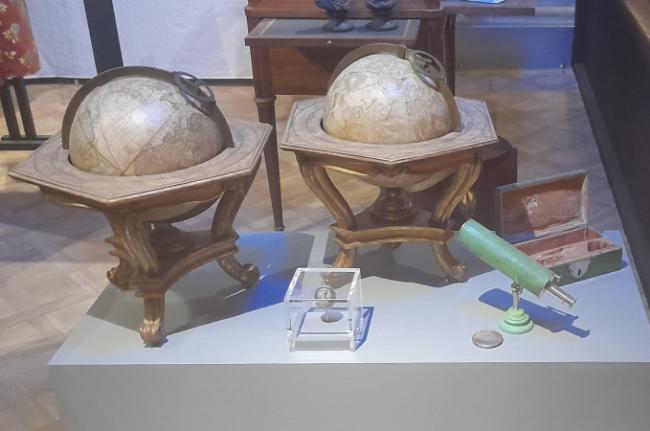
Globes and telescope – the educated man’s pastimes in the 1780s. Exhibit at MAD. Photo: Pat Hallam
And there was a change not just in material wealth. From the mid-century onwards, exploration of the furthest corners of the Earth, the rationalist philosophies and scientific discoveries of the Enlightenment, and new ideas about political and social systems that were at the intellectual heart of the American and French Revolutions: all these herald the beginnings of our modern world. The beliefs and attitudes of an educated person of 1780 probably had more in common with ours than those of that person’s grandparents just a hundred years earlier.
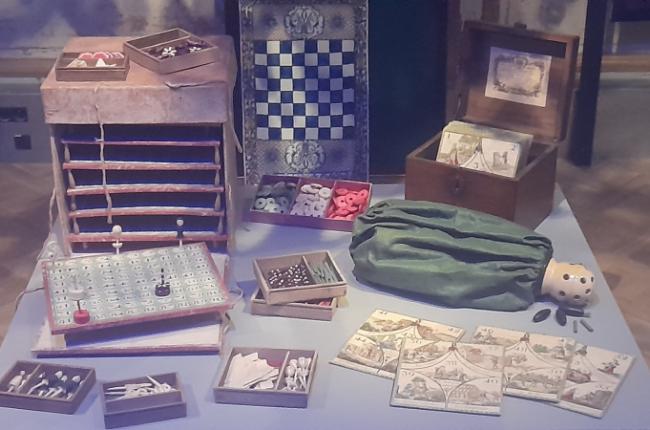
Social games for after dinner entertainment. MAD exhibit. Photo: Pat Hallam
These three exhibitions, at the Palais Galliera, Musée des Arts Décoratifs and Musée Cognacq-Jay, capture the spirit of the times perfectly. Each focusing on a different aspect of the 18th century, together they create a detailed portrait of the golden decades between around 1730-1789. To be sure, the exhibitions reflect the lives of a fortunate elite — the haute bourgeoisie and the aristocracy — but these people were the tastemakers and political and intellectual changemakers who shaped 18th-century French society.
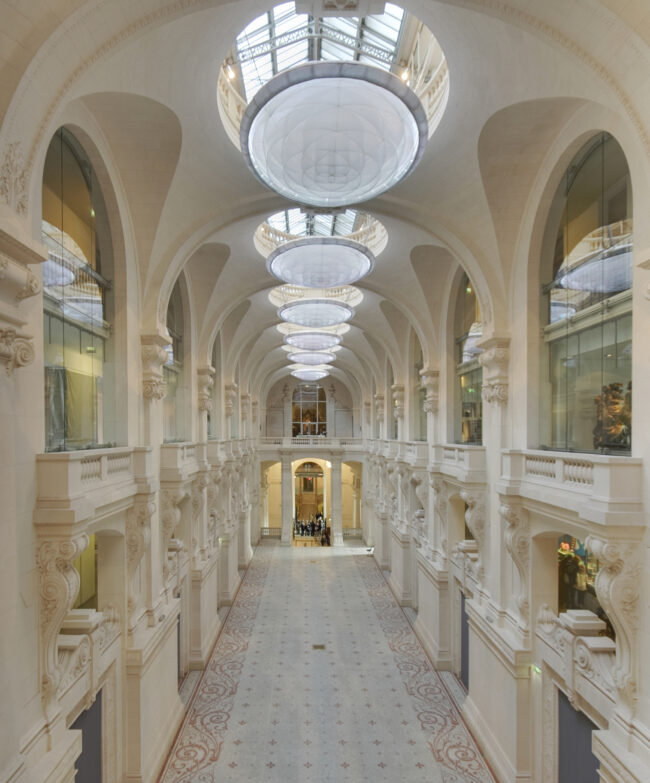
Musée des Arts Décoratifs, main gallery. Photo credit: D4m1en/ Wikimedia commons
A good place to start is the Musée des Arts Décoratifs. The exhibition “A Day in the 18th Century” takes the visitor on a multi-sensory tour of a typical hôtel particulier of around 1780. The multi-sensory bit is very well done: as soon as you exit the elevator you are assailed by typical street noises and smells: horses’ hooves clopping on the cobbled roads, street cries, construction work (always construction going on in Paris, especially in the 18th century! The smells have probably been sanitized though.) In your imagination you pass through the porte cochère and walk to the garden where all is bird song and fragrant flowers. Further into the exhibition you inhale that peculiar mix of snuff and leather bookbindings that you associate with a man’s study.
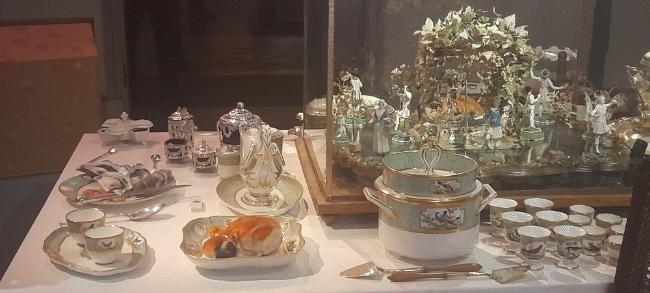


The exhibition is a series of room sets following a typical day in the life of an upper middle-class family in 1780. You have Madame’s bedroom and bathroom, complete with a bathtub and its own water heater, and numerous toiletries and cosmetics. There is Monsieur’s library where he would work, managing his country estate or, if he was middle class, his legal practice or merchant business. His interest in the latest explorations and geography is evidenced by the pair of globes which, for the first time, accurately depicted the Earth thanks to new cartographic techniques. The dining room is laid out for a typical dinner or supper, after which Monsieur and Madame would retire with their guests to the petit salon to make music, play cards (for money) or board games until late into the night. Throughout, the explanatory panels put the displays into context so you get a real sense of life at the time.
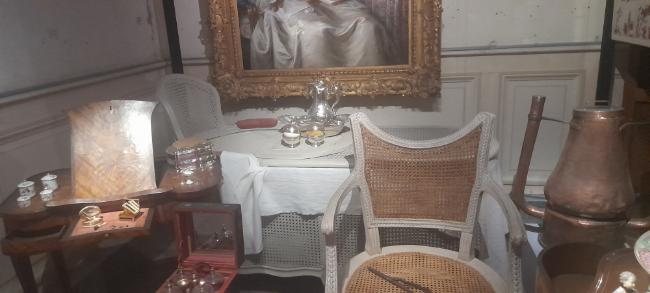
Madame’s bathroom c. 1780. MAD exhibit. Photo: Pat Hallam
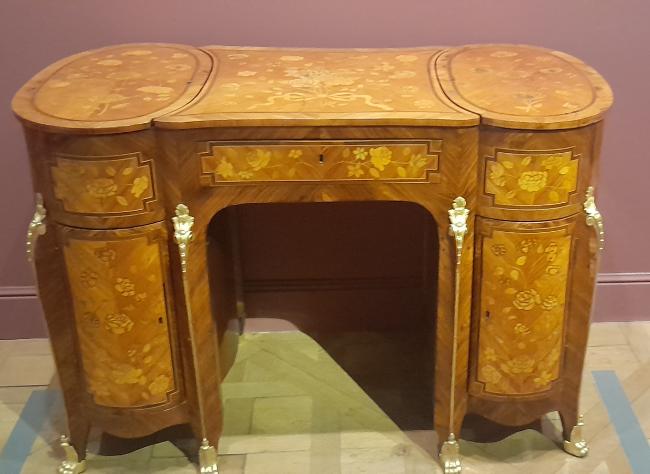
But the most wonderful thing about the exhibition is the wealth of artifacts. Apart from anything else, you realize just how much is conserved by the museum: most of what you see is rarely or never actually on display. There are around 550 items on show, each one with its unique link to the century. It’s the everyday details that captivate: a bourdeloue – a small chamber pot that allowed a lady to answer the call of nature discreetly by hiding it under her skirts; the box of mouches, or beauty spots, the placing of which spoke an arcane language of seduction and love; a guitar and flute, or a little chauffetière which, when filled with a hot brick, could be used as a footwarmer or a means of keeping bedtime drinks hot.
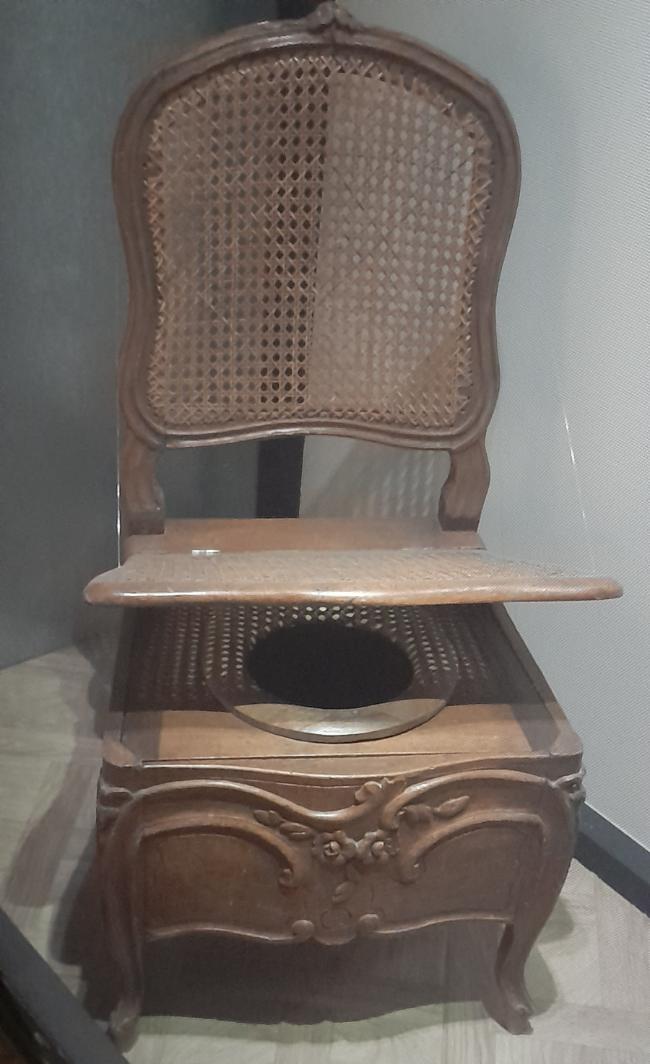
18th century commode. MAD exhibit. Photo: Pat Hallam
The wider world is touched on as well. A painting of a Black servant highlights the fact that in 1770 around four to five thousand Black people lived in mainland France, usually employed as valets, nannies and maids. A painting of a man pasting a theater poster including the detail of a ladder — to enable him to paste his posters high enough not to be torn down — is a glimpse into everyday street life at the time.
A few representative costumes are displayed but to get a real sense of what people wore in the 18th century you should go to the Palais Galliera. The exhibition “Fashion in the 18th Century: a Fantasized Legacy” starts with a fabulous display of costumes from the museum’s permanent collection. The exhibition then juxtaposes period costumes with depictions of the ways in which the 18th century has been co-opted and manipulated by later generations, from the 19th century right down to today’s fashion designers and photographers.
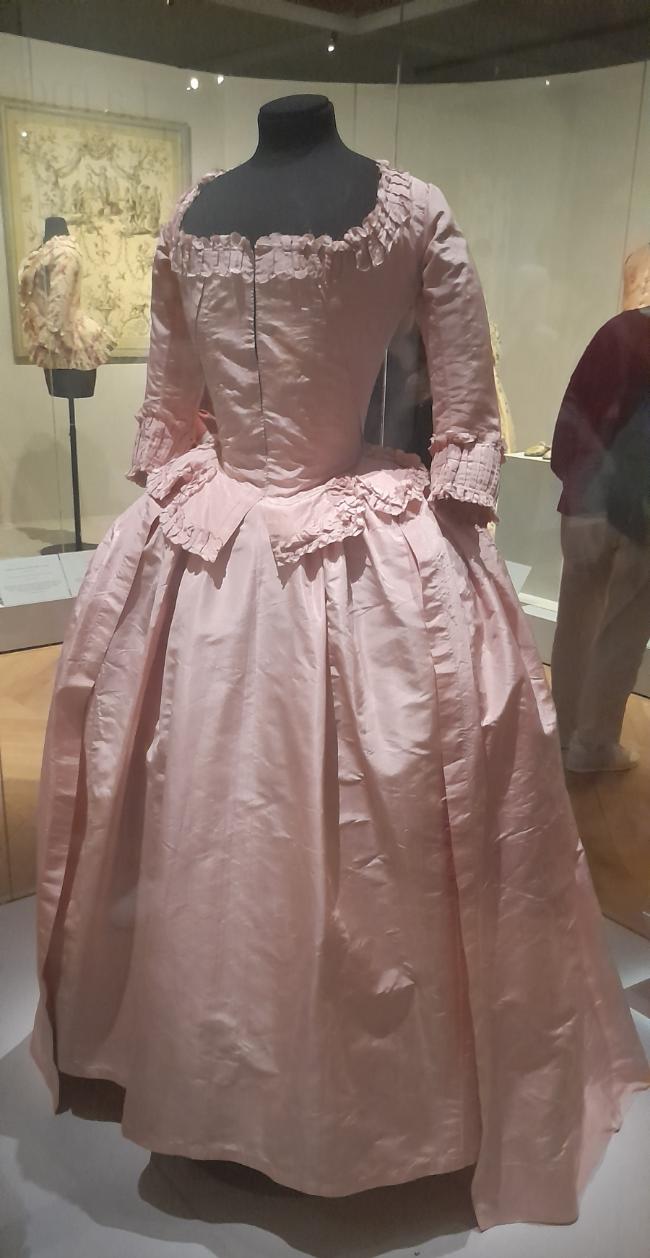
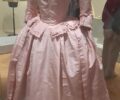
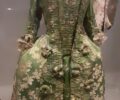

It is the depth and breadth of the Palais Galliera’s collection that is staggering. Robes à la française (aka sack back gowns on account of the long pleat falling from the shoulders and down the back) juxtaposed with the more close-fitting robes à l’anglaise; men’s breeches, waistcoat and coat suits — literally the ancestor of today’s three-piece suit; stays and hoops that you rarely see because they are hidden under dresses.
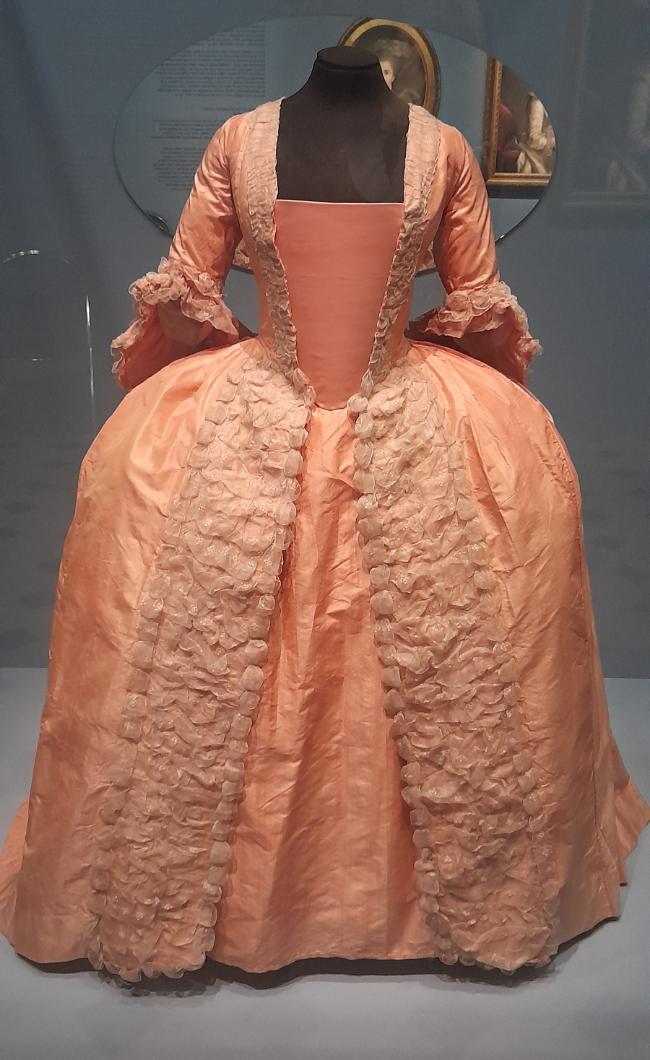
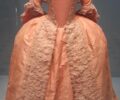



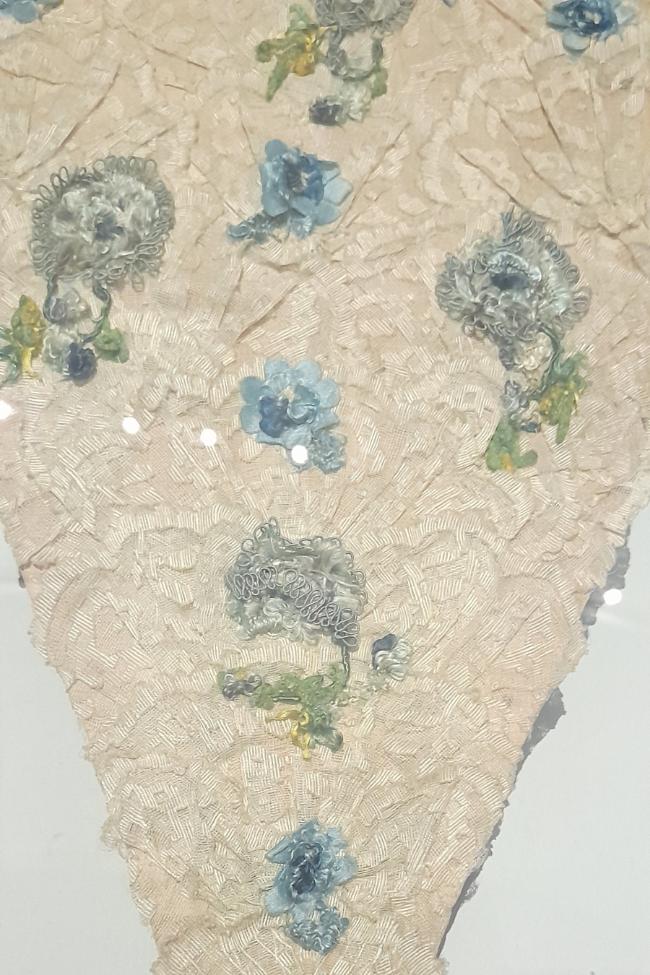
There is so much to see. Again, it’s the details that demand poring over: the exquisite embroidery that covers a whole coat or gown and was all hand-sewn, the delicate handmade lace, or even the carefully scalloped sleeves that were deliberately left unhemmed and miraculously have scarcely frayed in nearly 300 years. Of course, these were the clothes of the wealthy; it’s probable that some were hardly worn (what historians call “survivor bias”) and they were preserved down the generations. Even so, for anyone with an interest in costume history, this is a feast for the eyes.
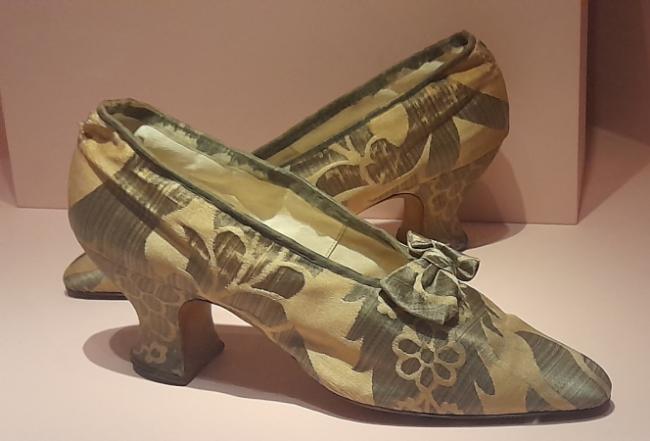


Accessories are equally well-represented and it is a delight to see rolls of lace and an assortment of fans and perfume bottles, and to realize that the frilled cuffs on sleeves were actually detachable (which makes sense — they could be easily washed). There are brocade shoes that date from the 1870s and 1910s illustrating how the Louis XV style was appropriated, as well as a single brown leather shoe which, according to legend, was worn by Marie Antoinette on her way to the guillotine (she is supposed to have lost the other one en route). You also see her stays — but don’t be fooled. Marie Antoinette arrived in France aged 14 and this unboned, flat-chested “corset” looks like it belongs to a girl of that age, not a grown woman.
And a gallery of illustrations and engravings of the exaggerated hairstyles of the 1770s reminds you that women’s fashion has always been satirized.
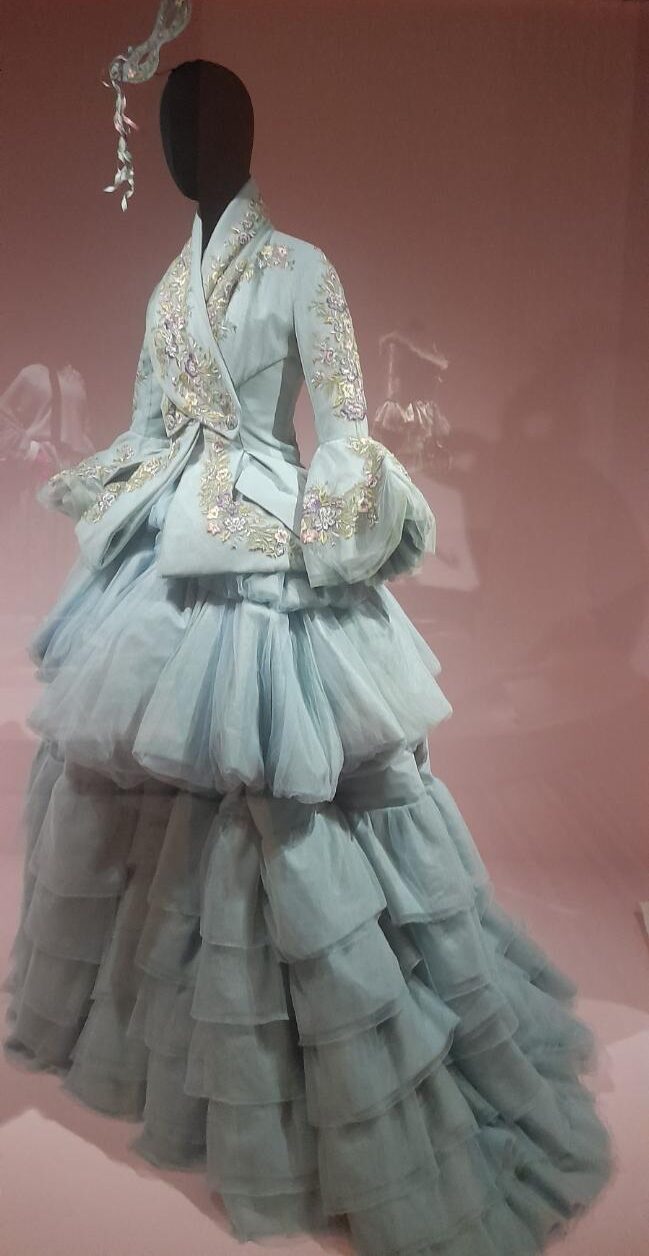
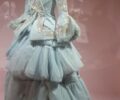
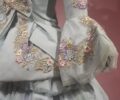
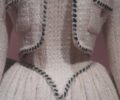
It’s not just about the 18th century, though. The objective of the exhibition is to show how the depiction of 18th-century fashion has been adopted and changed over the last two and a half centuries. The crinoline of the 1850s and 60s was an exaggeration of the round hoops of the 1750s, while a man’s coat clearly dating from the 18th century has been adapted into a woman’s jacket to fit over a bustle in around 1882. A pink velvet bodice of 1889 and evening gowns from around the same time show clearly the influence of open-fronted gowns and stomachers.
Towards the end of the exhibition, period costumes are juxtaposed with 20th century and contemporary designer gowns that illustrate the enduring influence of the period. In particular, Karl Lagerfeld, who was very knowledgeable and a great collector of 18th-century fashion, incorporated its shapes and styles into numerous Chanel creations. Jean-Paul Gaultier, John Galliano and Jeanne Lanvin did the same.
The exterior of the Cognacq-Jay museum, Paris. © Isogood/ Wikimedia Commons
The third exhibition is the smallest, but your ticket does include entry to the permanent collection of the Musée Cognacq-Jay and you can buy a joint ticket with the Palais Galliera for a reduced price.
“Revealing the Feminine: Fashion and Appearances in the 18th Century” specifically looks at the construction of a feminine ideal and how this was depicted through fashion and art. While there are some costumes on display as well as furniture, these serve as a background. The emphasis is on paintings which offers a nice counterpoint to the real artifacts in the other two exhibitions. Portraiture became increasingly popular in the 18th century; it was the means by which the wealthy could display their affluence and affirm their place in society. In particular, the rising middle classes could mark out a position that rivaled the aristocracy. Portraits of women, especially, were used to depict both an idealized femininity and to project the sitters’ own views of themselves.
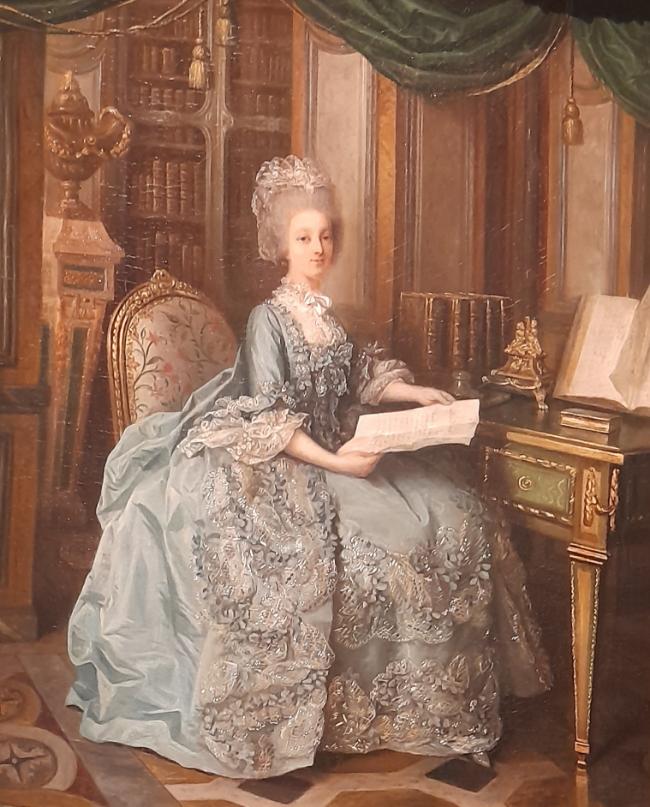
Lié Louis-Périn Salbreux, Portrait de Mme Sophie ‘La Petite Reine’. Musée Cognacq-Jay. Photo: Pat Hallam
This exhibition displays a collection of portraits by some of the leading painters of the age, including Jean-Marc Nattier, painter to the Court of Louis XV, and Élisabeth Vigée le Brun, close friend and favorite painter of Marie Antoinette. Le Brun, in particular, excelled in detailed painting of shimmering silk and minute details of lace to project the wealth and social standing of her subjects.



Conversely, the other two great names of 18th century French art — François Boucher and Antoine Watteau — place women in fantasized bucolic settings, on swings or playing shepherdess, or taking part in picnics alongside gently flowing streams. The third strand of female depiction is that of the mother and family-maker, with paintings of cute toddlers and mother-in-arms conveying an idealized image of family life. Altogether, you come away with a greater understanding of how women in the 18th century were perceived by others and also how they perceived themselves.
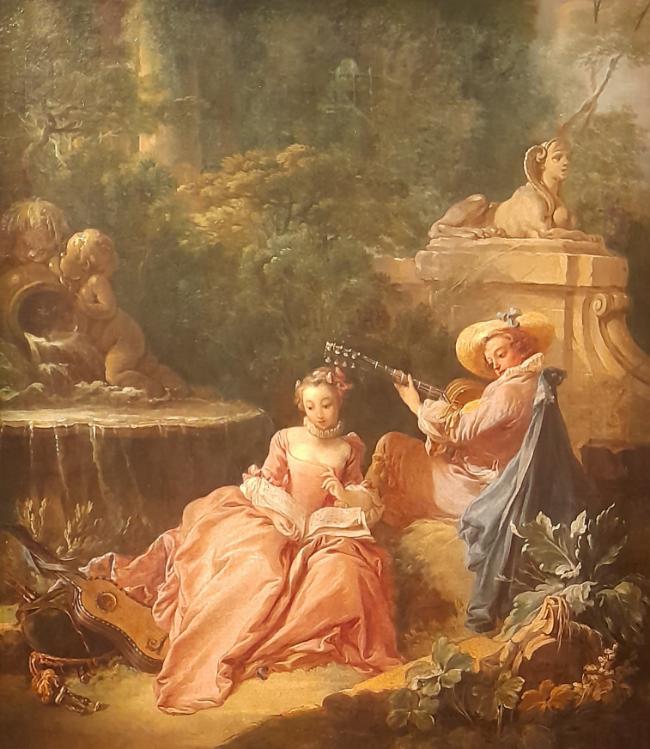
François Boucher (attrib.) La leçon de musique. Musée Cognacq-Jay. Photo: Pat Hallam
Three exhibitions, three interpretations of the same century. Any one of them is a joy to visit but if you have the time (and stamina!) to visit them all, they provide a deep dive into an extraordinary period of history.
DETAILS
Musee des Arts Décoratifs, Une Journée au XVIII Siècle: Chronique d’un Hôtel Particulier until 5th July 2026
Palais Galliera, La Mode du 18e Siècle: un Héritage Fantasmé until 12th July 2026
Musée Cognacq-Jay, Révéler le Féminin until 20th September 2026


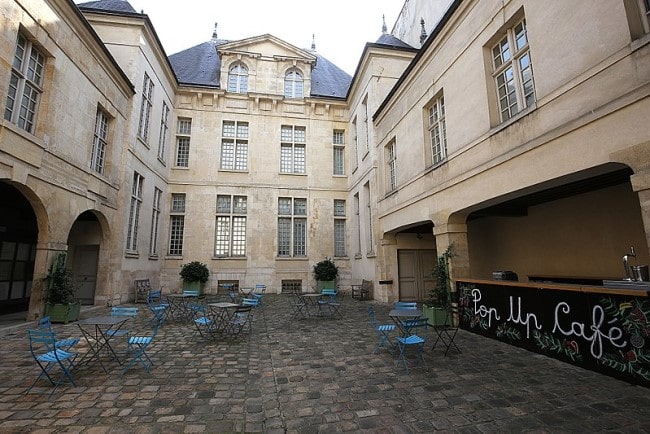
Lead photo credit : The exterior of the Cognacq-Jay museum, Paris. © Isogood/ Wikimedia Commons
Related Articles

By Pat Hallam
REPLY