
Explore Leonora Carrington’s Extraordinary Artistic World
- SUBSCRIBE
- ALREADY SUBSCRIBED?
BECOME A BONJOUR PARIS MEMBER
Gain full access to our collection of over 5,000 articles and bring the City of Light into your life. Just 80 USD per year.
Find out why you should become a member here.
Sign in
Fill in your credentials below.
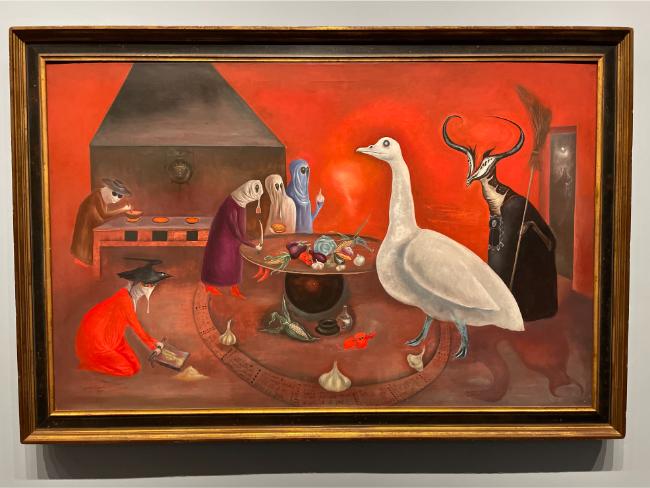
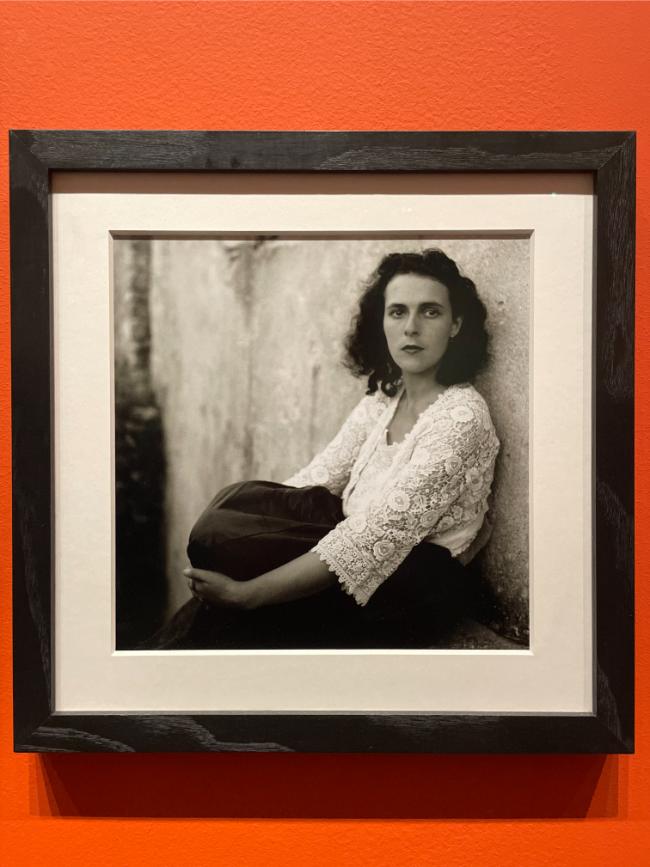
To visit the Leonora Carrington exhibit at the Musée du Luxembourg is to enter the phantasmagoric world of a born artist, one too busy creating to be anyone’s muse — as Carrington herself once declared. Although Carrington’s oeuvre is full of celestial influences: alchemy, magic, and the imaginal all permeate her work, her life was grounded by the physical realities of violence, exile, and the perennial quest for healing.
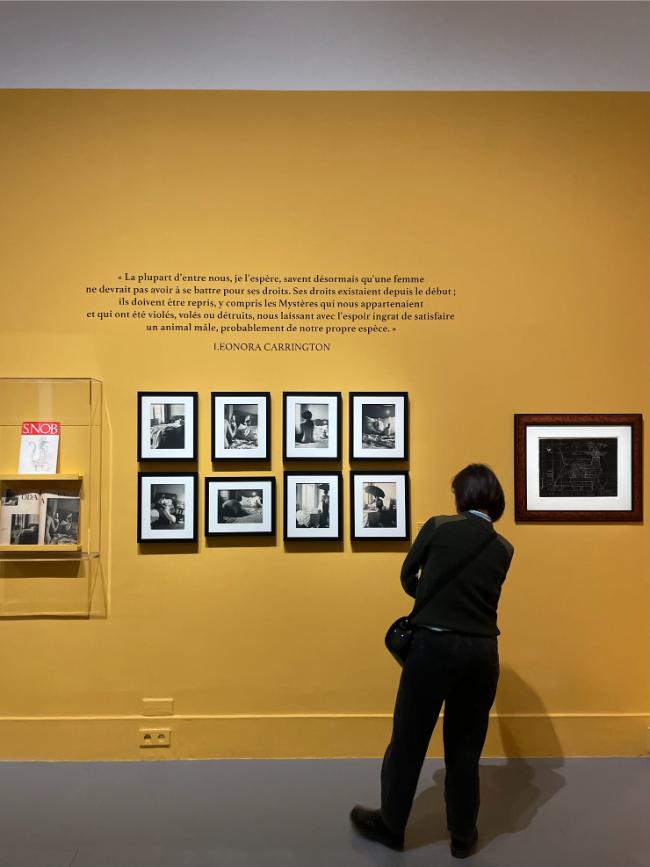
Leonora Carrington at the Musée du Luxembourg. Photo: Maria Kern
In contrast to the serpentine nature of surrealism, the show is organized chronologically, offering visitors a helpful framework for the ideas and feelings Carrington’s art and era evoke. Born in Lancashire in 1917, Carrington lived between France, Spain, and New York and eventually settled in Mexico, where she died in 2011. She belonged to a vibrant group of original thinkers, sandwiched between the great wars, exiles who were subject to the injustices and violence of their era. Her entourage included Lee Miller, Remedios Varo, and Max Ernst, her lover and frequent collaborator.
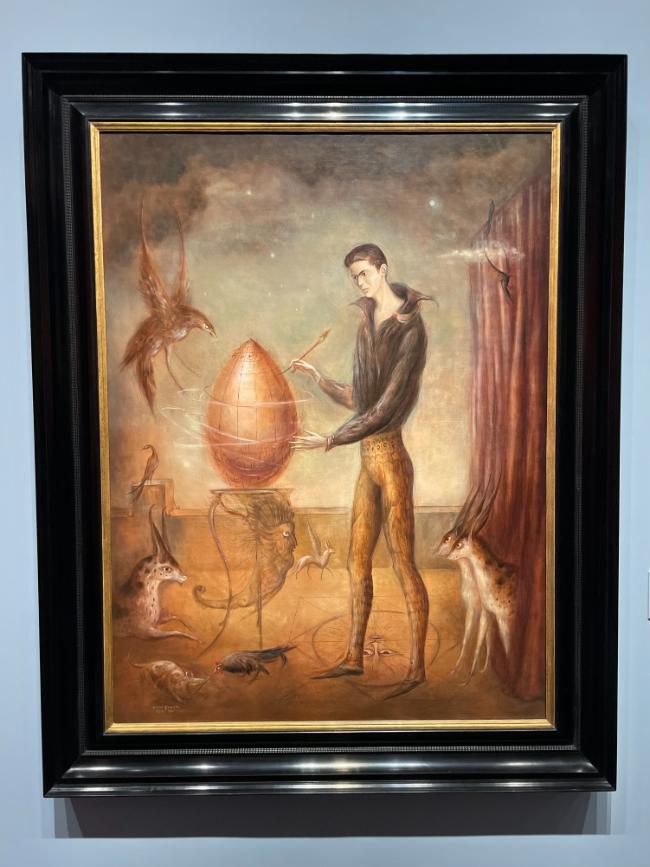
Leonora Carrington at the Musée du Luxembourg. Photo: Maria Kern
Visitors will encounter Carrington’s genius right off the bat, with her brilliant early book Animals of a Different Planet. Written at 10, Animals acts as a kind of oracle for the work to come, where the scientific and imaginal converge. Carrington’s expulsions from school set her on an itinerant trajectory early on, and she endured what the show’s curators Tere Arcq and Carlos Martin term a failed experiment studying in Florence in the 1930s. Carrington’s other early works include a series of female icons created at 15, reflecting the influences of her Irish mother and paralleling the eventual unfolding of her personal myth as an artist, lover, mother, and survivor.
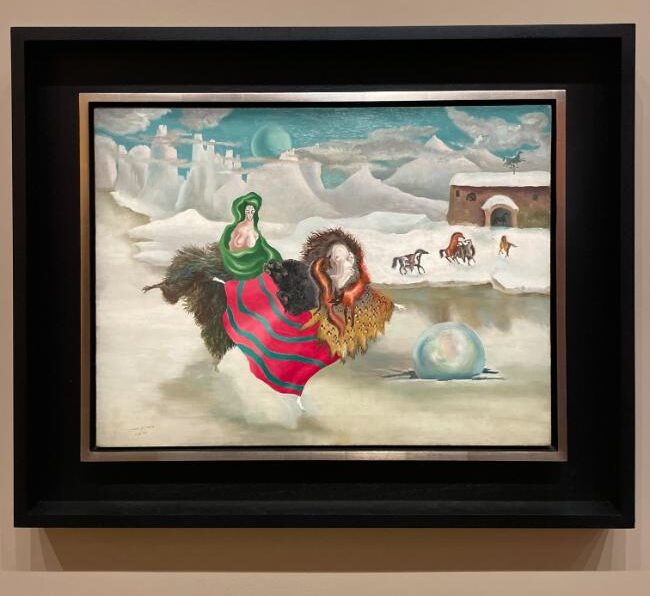
Moving beyond self-expression and an exploration of the imagination, Carrington’s art progressed as a landscape for processing trauma. Separated from Ernst after his arrest and internment, Carrington eventually traveled to Spain where she was subsequently raped and institutionalized against her will, enduring cruel and rudimentary psychiatric treatment. These experiences became central to her art, as travel, violence, and alchemy emerged as recurring themes and built a cohesiveness bridging the eras of her otherwise fragmented life.
Leonora Carrington at the Musée du Luxembourg. Photo: Maria Kern
She found community among fellow exiles once in Mexico, and settled there in 1942. Her work transformed as she did, through domesticity and motherhood, and her paintings took inspiration from childhood references, a desire to reconnect with her roots, and the Italian renaissance, perhaps a reflection on her early Florentine days. Standouts of the show include “Crookley Hall”, a haunting, Edward Gorey-esque lithograph, and “Arcanes Majeurs”, a digital representation of Carrington’s take on the tarot, consisting exclusively of the major arcana.
A writer from an early age, Carrington went on to publish several books and is quoted throughout the exhibit, adding to the narrative quality of the show. For those craving more Carringtonisms, a compilation of noteworthy thoughts and assertions is available at the bookstore, full of typos in an appropriately surreal twist.
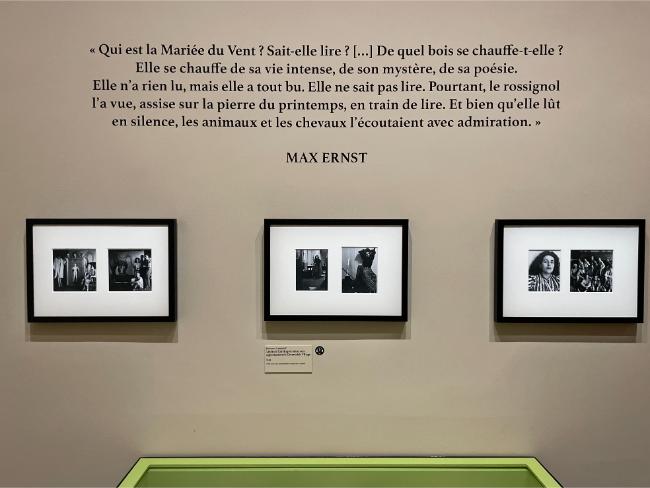
Leonora Carrington at the Musée du Luxembourg. Photo: Maria Kern
For those taken with the legend of Carrington and Ernst’s relationship, detour over to the rue Jacob, a roughly 20-minute walk from the museum, to see the apartment where they once lived. Standing outside, one can project any number of scenes onto the building’s facade, conjuring various episodes of their lives together from the inspired to the banal.
Despite its prime location in the Jardin, the Musée de Luxembourg is one of Paris’s least inviting exhibition spaces, though Carrington’s art manages to overcome its environs. They do offer exciting parallel programming: lectures, ateliers, and a number of events geared specifically toward children. Check the schedule for upcoming dates through the summer.
Leonora Carrington at the Musée du Luxembourg. Photo: Maria Kern
After all the trippiness of the exhibit, consider grounding in the gardens — wander through the trees to process what you’ve just seen, glimpse the future with an impromptu tarot reading at the chess tables, or observe the parrots and relish the freedom of being alive and uncaged. “You may not believe in magic but something very strange is happening at this very moment. Your head has dissolved into thin air and can see the rhododendrons through your stomach. It’s not that you are dead or anything dramatic like that, it’s simply that you are fading away and I can’t even remember your name.”
DETAILS
Leonora Carrington at the Musée de Luxembourg
9 rue de Vaugirard, 6th
Runs until July 19th, 2026
Open daily from 10:30 am to 7 pm
Open late on Mondays until 10 pm
Tickets: 14 Euro
Free for under 16
Lead photo credit : Leonora Carrington at the Musée du Luxembourg. Photo: Maria Kern
More in Jardin du Luxembourg, Leonora Carrington, Max Ernst, Musée du Luxembourg
Related Articles

By Maria Kern