The Essential Guide to the 15th Arrondissement
- SUBSCRIBE
- ALREADY SUBSCRIBED?
BECOME A BONJOUR PARIS MEMBER
Gain full access to our collection of over 5,000 articles and bring the City of Light into your life. Just 80 USD per year.
Find out why you should become a member here.
Sign in
Fill in your credentials below.
One should feel sorry for the 15th arrondissement. As a mostly residential area, it isn’t as celebrated as other arrondissements full of popular tourist spots. The 15th has many peaceful green paths and uniquely designed parks but they are far from Luxembourg Gardens. The Montparnasse Tower rises tall among Paris’s elegant shorter buildings but it started a controversy. And while full of industrial, architectural and artistic history that influenced its annexation to Paris in 1860, the 15th doesn’t host a Notre Dame, Louvre, or popular Marais district.
But the 15th is full of things to explore for those who want to look deeper into what Paris is about. With a mix of artistic and industrial areas that have changed to meet our modern times, this residential and family-friendly quarter honors its past and present with cultural venues, shopping areas, major parks, and historical reminders that add to the Paris story.
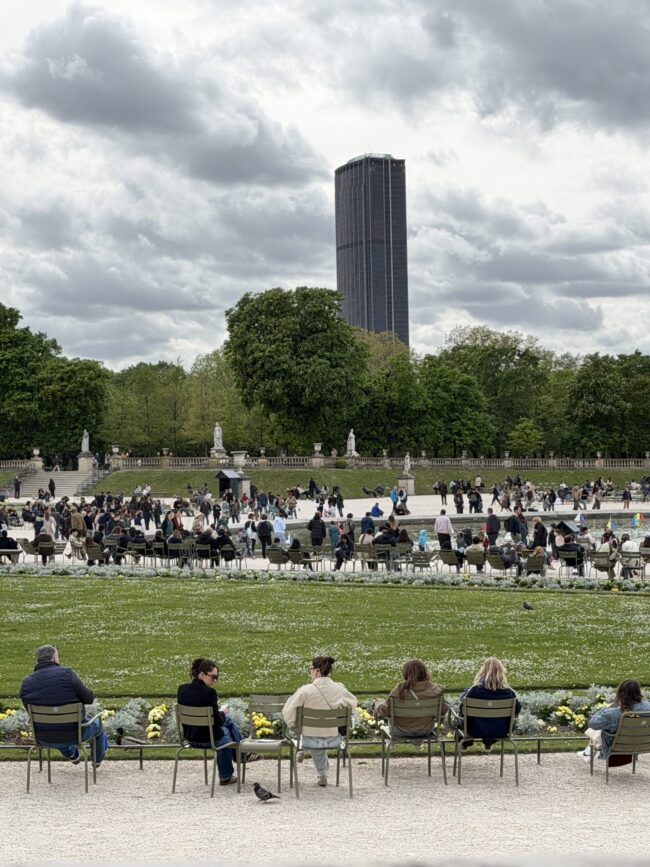
The Tour Montparnasse seen from the Luxembourg Gardens. Photo: Martha Sessums
Located in the southwest of Paris, the 15th touches the left bank of the Seine and includes the long island Île aux Cygnes where stands a 16-meter high replica of Frédéric Auguste Bartholdi’s Statue of Liberty. The southern boundary includes the Paris Expo Porte de Versailles convention center with the modern and controversial Tour Triangle and then turns to follow the trainline to Gare Montparnasse and the equally controversial Tour Montparnasse. The northern boundary is along Avenue de Suffren that is adjacent to the Tour Eiffel and Champ-de-Mars. It’s the third largest arrondisement in Paris and the most populated.
The 15th has more than 40 parks, gardens and squares to walk and explore including Parc Georges Brassens, the Petite Ceinture, and Parc André Citroën which features a tethered helium balloon ride. Shopping ranges from small friendly shops and special markets – including an ancient book market – to a huge shopping center that offers French and international brands. The arrondissement hosts 10 Michelin restaurants and there are plenty of excellent neighborhood eateries. The museums focus on artists and scientists who worked and lived in the arrondissement including sculptor Antoine Bourdelle and Louis Pasteur. And there are rarely long lines.
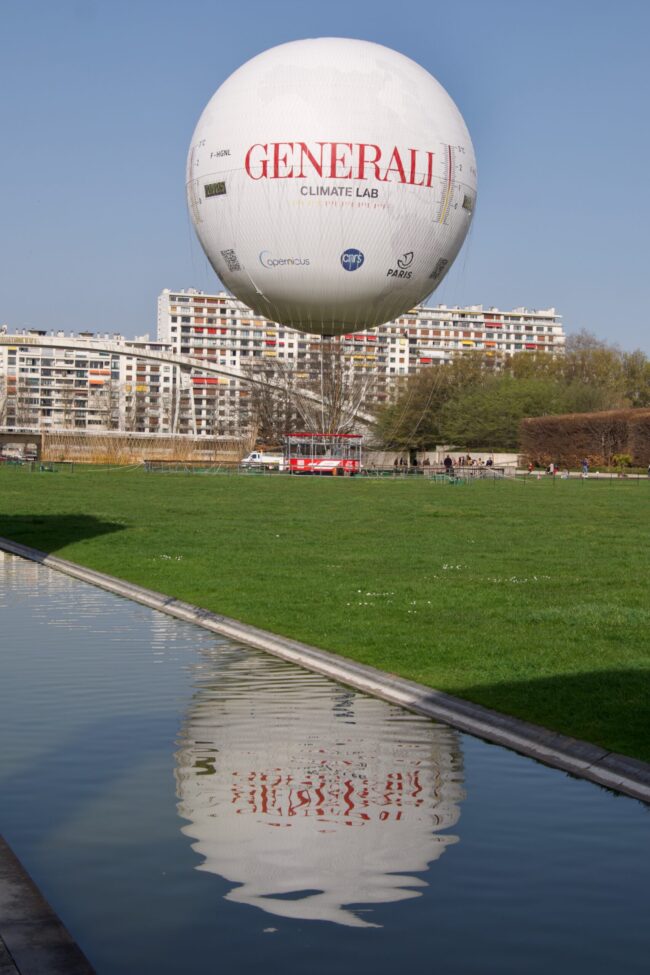
The Ballon de Paris – 3. Photo: Bill O’Such
Here’s some history about the 15th arrondissement. The ancient village of Vaugirard was suited to winemaking and stone quarries and was considered an agreeable suburb to Parisians in the 1800s. The Javel area along the Seine was industrial with chemical factories including eau de Javel bleach. Both the Necker and Grenelle quarters, ranging from the Seine next to the Tour Eiffel area to the Montparnasse train station, were of poor farming status and uninhabited. But the 1859 decree annexed the areas between old Paris walls into Paris proper. In 1860, the 15th arrondisement became official.
Today the arrondissement is the location for many businesses including car company Citroën, Orange S.A., publisher Hachette Livre, the Institute Français, the European Space Agency, French satellite operator Eutelsat and several France television stations. It is also full of residential homes from Paris traditional to high-rises. It is full of modern Paris energy.
So don’t feel sorry for the 15th for not being on the many “to do” lists for Paris. Feel sorry for yourself if you haven’t explored this arrondissement full of French history but without the crowds.
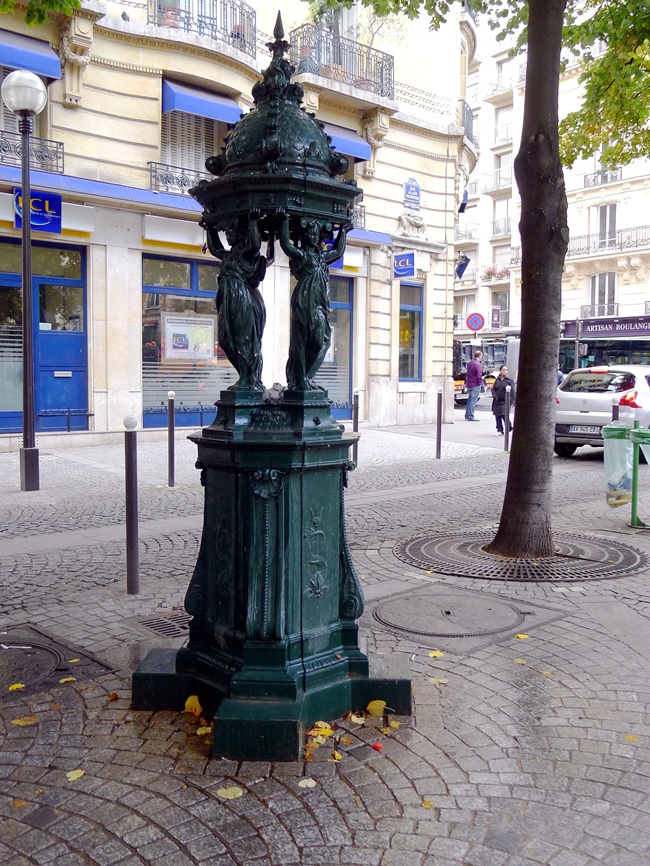
Wallace fountain on rue Alain Chartier in the 15th. Photo credit: Mbzt / Wikimedia Commons
What to See and Do
Parc Georges-Brassens
The park opened in 1984 on the site of former fish and horse markets and a slaughterhouse. Several of the old structures have been kept including the marketplace, the fish market bell tower and the iron-framed horse market shelter. It features a large pond and winding stream, gardens for roses and medicinal plants, a vineyard, a climbing area for kids and beehives atop the highest park hill. It was named for French singer, songwriter and poet Georges Charles Brassens who lived in the neighborhood. Park artwork includes a bust of Brassens by sculptor André Greck, along with sculptures of bulls by Isidore Bonheur (brother of Rosa Bonheur) who is considered a distinguished sculptor of animals. The former horse market shelter is used on weekends as a market for old books. (More on that below.) The park is located between rue des Morillons and rue de Périchaux.
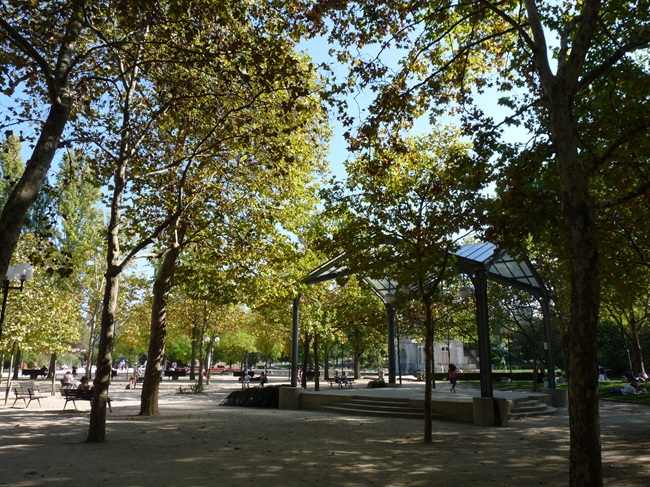
Parc Georges Brassens. Photo credit: Ralf.treinen / Wikimedia Commons
Parc André Citroën and Ballon de Paris
The Citroën munitions and then car factory was built on the 59-acre site in 1915 and operated until the 1982. The park opened in the mid-1990s built by a team of modern French landscape designers and features canals, pavilions, exotic gardens, water fountains and suspended walkways. Starting from the side adjoining the Seine, it features a large rectangular lawn that hosts two greenhouse pavilions for exotic and Mediterranean plants and the dancing fountains of Colonnes d’eau.
The lawn is surrounded by canals with the Jardin des Métamorphoses canal on the south edge featuring an elevated reflecting pool lined by a suspended walkway. On the north side are two sets of uniquely designed gardens. One is a set is the Serial Gardens that reflect a different metal, planet, day of the week, state of water and a sense. The other is the Garden in Movement where diverse types of grass move differently in the wind. The park is located on the left bank of the Seine between Rue Leblanc and Rue Balard.
At one end of the rectangular garden is the Ballon de Paris, a tethered helium balloon that takes passengers 490 feet (150m) above Paris to see the city from Notre Dame to the Seine. It changes color depending on the city’s air quality with green for good, orange for poor and red for bad.
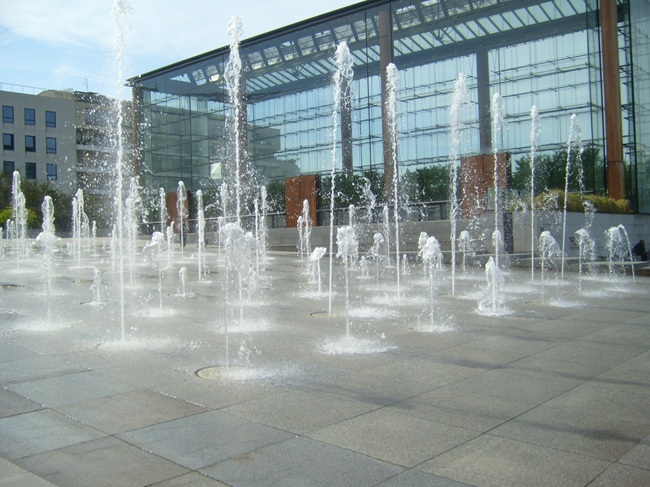
Colonnes d’eau in the Parc André Citroën. Photo credit: SiefkinDR / Wikimedia Commons
The Petite Ceinture
In 1852, Paris used to have a railway that ran along much of the city’s perimeter to deliver supplies to the fortification walls and eventually transported passengers. The popularity of the Metro system and options to deliver freight ultimately closed the train services in 1993 but sections of the train track areas became urban gardens and walkways. The locally popular Petite Ceinture in the 15th is a path running alongside residential blocks lined with trees, vegetation and graffiti on some walls. It’s an offbeat spot to explore that is quiet, photogenic and reveals a different side of Paris. The Petite Ceinture runs parallel to the Boulevards de Maréchaux from Rue Olivier de Serres in the east to Place Balard in the west.
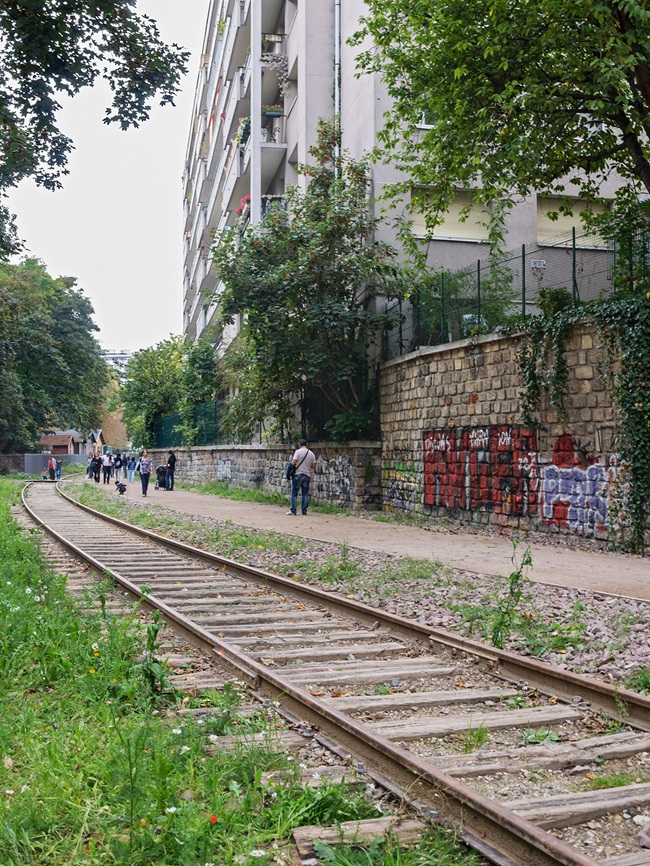
Promenade de la Petite Ceinture dans le 15e arrondissement. Photo credit: Myrabella / Wikimedia Commons.
Île aux Cygnes
The Island of the Swans is a long, skinny artificial island created in 1827 between Pont de Grenelle and Pont de Bir-Hakeim before the Tour Eiffel. The island is mostly full of walkers/runners along the treelined walkway that brings together the replica of Bartholdi’s Statue of Liberty at the Pont de Grenelle end of the island and the La France Renaissante statue at the other end. After France gave Bartholdi’s statue to the U.S. in 1886, French people in the U.S. offered a 16-foot replica for the 100th anniversary of the French Revolution. It was inaugurated on July 4, 1889. When Pont de Grenelle crosses the island, there’s a stairway down to see the Statue of Liberty.
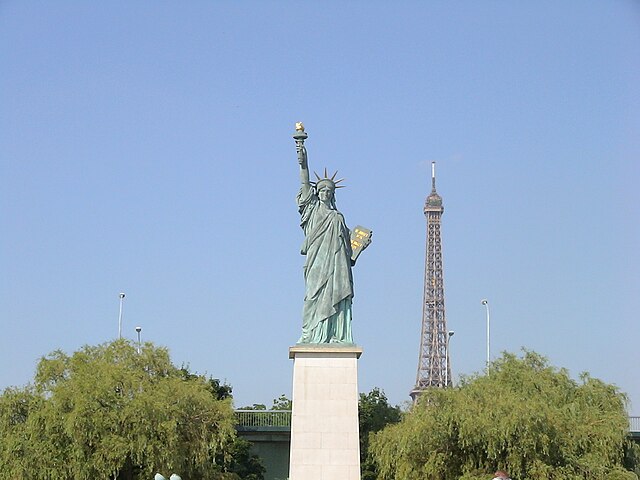
The Statue of Liberty on the l’île aux Cygnes. Photo credit: V. Gubina / Wikimedia Commons
Musée Bourdelle
French sculptor Antoine Bourdelle was a student of Auguste Rodin and became an important influencer in the Art Deco movement as it transitioned to modern sculpture. He was a teacher of major artists including Chagall, Giacometti and Matisse. The building was his studio from 1885 to 1929 and became his museum in 1949. It contains more than 500 of his pieces along with sculptures by Eugène Delacroix, Rodin and many others. The museum is located at 18 rue Antoine Bourdelle.
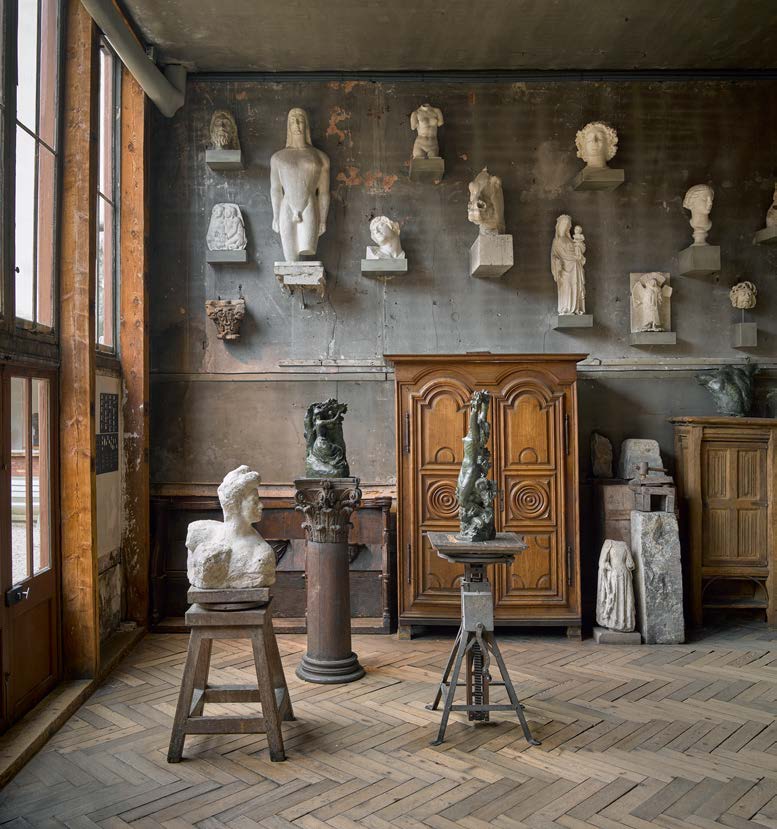
courtesy of the Musée Bourdelle
Musée Pasteur
Louis Pasteur was a French chemist who discovered the principals of vaccination, pasteurization and understanding of how germs worked which was a breakthrough in understanding the causes and preventions of diseases. The museum is his apartment and includes a room of 1,000 scientific instruments of the era. However, the museum is undergoing a restoration and will be closed until November 2028 but it still plays a part of the history of the 15th.
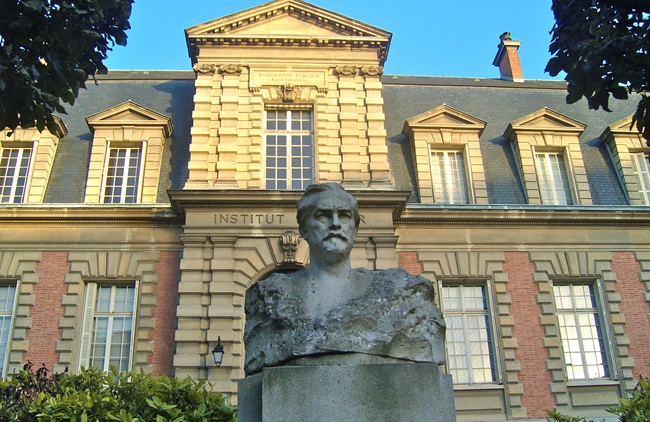
Musée Pasteur. Photo credit: Ab2804 / Wikimedia Commons
Tour Montparnasse
The tallest building in Paris proper, it is located on top of the Montparnasse Metro station. It was completed in 1973 and was widely criticized for being out of place with Paris’s Haussmann architectural style. The result was a ban on buildings over seven stories tall in Paris. Visitors could ascend to the observatory and rooftop to get an amazing view of Paris, but as of March 31, 2026 the Tour is closed for renovations. However, the Tour can be seen from many places in Paris as it rises high above the city and indicates the western side of the 15th arrondissement.
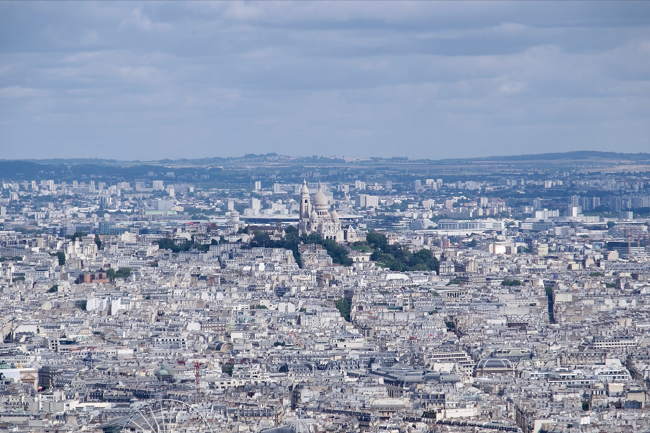
View of Montmartre from Tour Montparnasse. Photo credit: William O’Such
Tour Triangle
The building height ban was lifted in 2015 and the result was the construction of Tour Triangle, located at the Porte de Versailles near the Parc des Expositions. It is also controversial because of its height and design. The tall, skinny triangle will include a hotel, an observation deck, a shopping avenue, cultural and health centers. It will open in the second half of 2026.
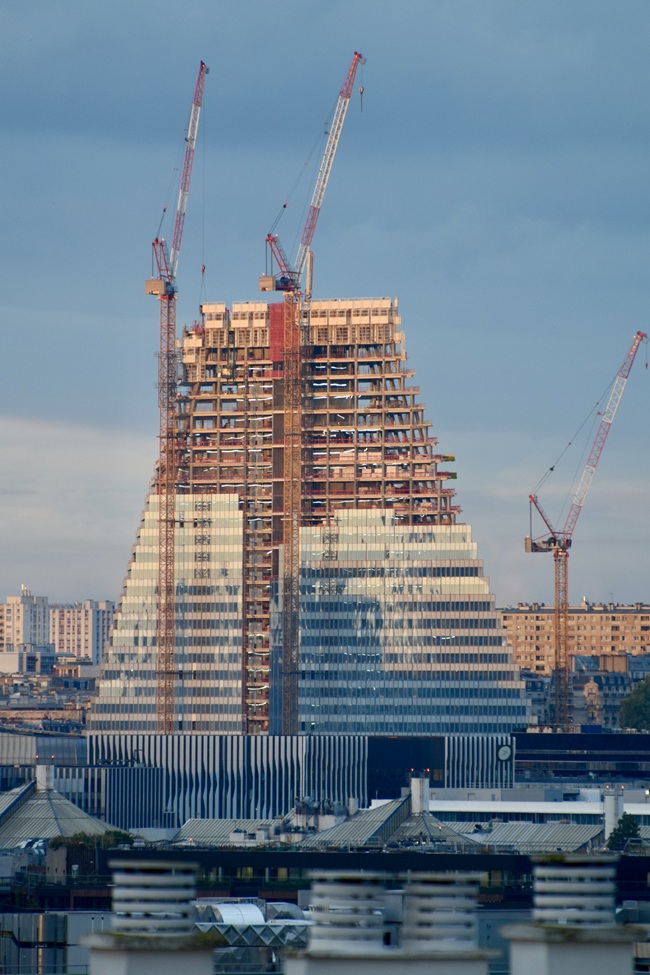
Construction of the Tour Triangle. Photo credit: Vincevinss / Wikimedia Commons
Parc des Expositions at Porte de Versailles
The exhibition center hosts over 120 trade shows annually along with conventions and major marketing events. Many of them are business oriented but there are popular expositions to explore for anyone who enjoys France. The Foire de Paris (April 30 – May 11, 2026) is a shopping event for French fashion, beauty products, crafts, cars, home and much more. Le Salon du Made in France (November 12 – 15, 2026) features French products from each region including fashion, beauty, wellness, home décor, food, health and crafts. The Parc des Expositions is easy to locate via metro and bus.
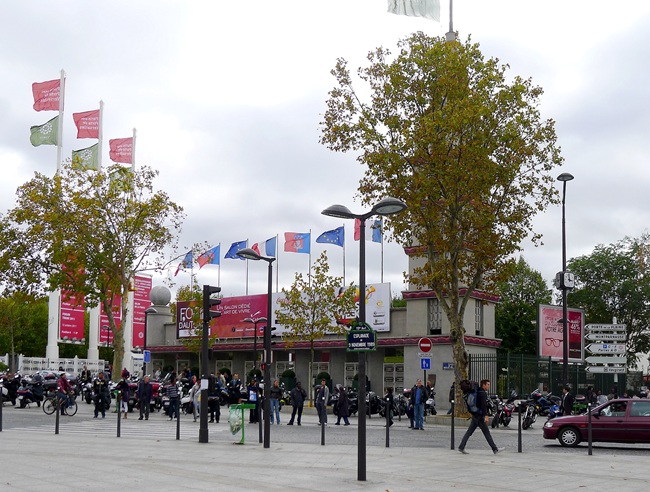
Entrance to the Parc des Expositions. Photo credit: Mbzt / Wikimedia Commons
Where to Shop
There are a wide selection of places to shop in the 15th and they range from small local shops to major brands and a huge shopping center. Let’s start big.
Beaugrenelle
This is one of the biggest shopping malls in Paris. There are 120 stores and restaurants in three buildings linked by pedestrian bridges and a gateway to the Seine river. All the major brands are here including Galleries Lafayette, H&M, Lacoste, Maisons du Monde, Petit Bateau, Sephora, Zara and many more. It is located where the Pont de Grenelle and Quai de Grenelle cross.
Local stores
Many parts of the 15th arrondissement have a village feel with small neighborhood shops, antique stores and food markets. The streets of Rue de Convention, Rue de Vaugirard, and Rue de Commerce are full of local shops. To explore antiques, arts and crafts, visit Village Suisse Paris located at the west end of the Champs-de-Mars along Avenue de Suffern.
View this post on Instagram
Marché du Livre Paris
The former horse market shelter in the Parc Georges Brassens hosts an antique book market every Saturday and Sunday from 9 am to 6 pm. The Marché du Livre sells second-hand and old books, postcards, posters, comics, photographs, vinyl records and curiosities. Started in 1987, the cultural heritage site is a must explore for book and literature fans.
View this post on Instagram
Where to Eat and Drink
In Paris, restaurants are often chosen by serendipity. So while exploring the stores along Rue de Vaugirard and suddenly it’s lunch, apéro or dinner time, look around to find the many local bars and restaurants that are family friendly and serve tasteful food. Restaurants in the 15th run the gamut from Korean and bistros to a Michelin-starred tea ceremony restaurant. The Fork is a popular place to find restaurants and they have a top 10 list of the best gourmet restaurants in the 15th arrondissement and there are 10 Michelin selected restaurants.
A friend recommends Café du Commerce, a brasserie that has a history starting in 1921 when it fed the employees from industries in the area such as the Javel and Citroën plant. Today it is considered one of the grand Paris brasseries.
Between the towers of Montparnasse and Triangle, the 15th arrondissement offers a variety of explorations in a very real part of Paris that blends old, today and the future. Explore it.
View this post on Instagram
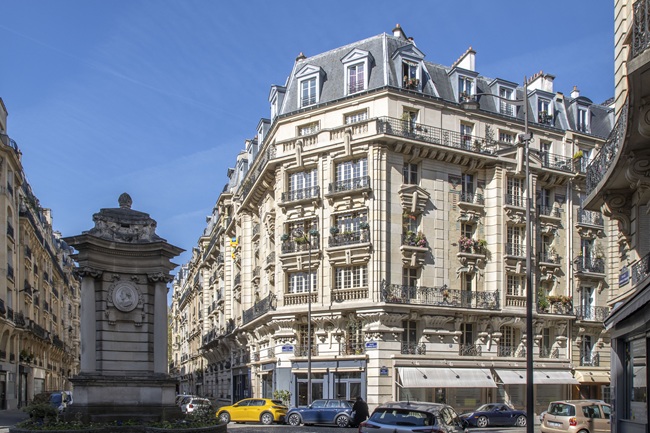
Lead photo credit : 8 rue Valentin-Haüy, Paris 15e. Photo: Arthur Weidmann / Wikimedia Commons
Related Articles