Wolves in Paris
- SUBSCRIBE
- ALREADY SUBSCRIBED?
BECOME A BONJOUR PARIS MEMBER
Gain full access to our collection of over 5,000 articles and bring the City of Light into your life. Just 80 USD per year.
Find out why you should become a member here.
Sign in
Fill in your credentials below.
In the glittering history of Paris, there lurks a darker tale; one of fierce wolves prowling the city streets, bringing terror to the City of Light. While modern tourists worry about pickpockets and metro strikes, medieval Parisians faced a far more primal fear: the haunting howl of wolves at their very doorstep.
For centuries, wolves prowled the forests and countryside surrounding Paris, occasionally venturing into the city in search of food. War, famine and disease could make these encounters particularly dangerous, with abandoned land and food shortages drawing hungry animals closer to human settlements.
By the early 15th century, the problem had become severe. In 1421, starving wolves were reportedly seen digging up recently buried bodies around Paris, while by 1423 they were entering the city regularly at night.

Eurasian wolf. Photo: Daniel Mott / Wikimedia commons/ Kolmården Wildlife Park, Sweden
The most notorious period came in the late 1430s. In December 1438, wolves reportedly entered Paris by the Seine, carrying off dogs and killing a child near Les Halles. The following year was worse, during the final week of September 1439, wolves were said to have killed 14 people between Montmartre and the Porte Saint-Antoine.
One animal became particularly infamous. Nicknamed “Courtaud”, meaning roughly “short-tail” or “bobtail”, the wolf was so feared that Parisians reportedly warned one another to “beware of Courtaud”.
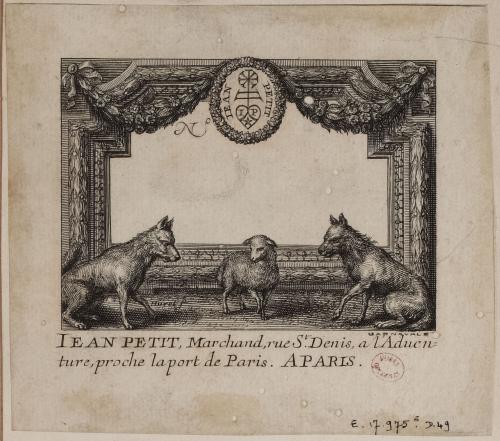
Gravure au nom de Jean Petit, marchand : deux loups guettant un agneau. Musée Carnavalet
On the 10th of November 1439, Courtaud was finally hunted down and captured. His body was placed in a wheelbarrow, its jaws held open and paraded through Paris as crowds gathered to see the predator that had terrorized the city.
Yet his death did not immediately end the danger. The following month, wolves reportedly killed four women around Paris, while another outbreak left 17 people injured, 11 of whom died.
The threat continued for generations. In 1461, organized hunts resulted in 227 wolves being killed in the wider Paris area in just six months. More than a century later, in 1595, a wolf was recorded entering Paris and killing a child at the Place de Grève, today’s Place de l’Hôtel-de-Ville.
The wider region also suffered serious attacks. Between 1677 and 1683, more than 150 victims were recorded in the countryside between Versailles and Rambouillet, prompting Louis XIV to order further wolf hunts.
By the late 18th century, France may have been home to around 15,000 to 20,000 wolves. Some attacks involved rabid animals, while others appear to have been carried out by hungry, non-rabid wolves, particularly during periods of war and upheaval.
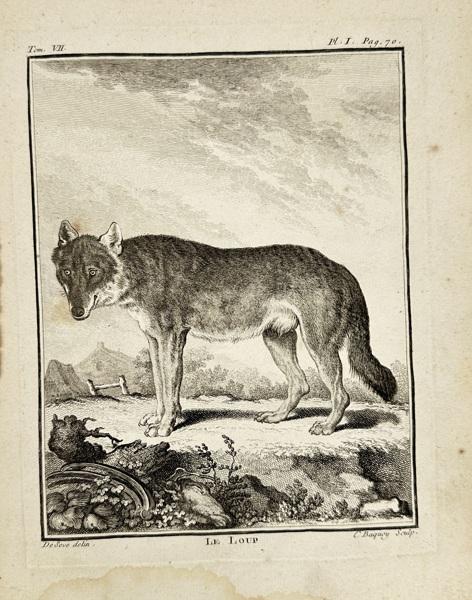
Le Loup (The Wolf), copperplate engraving by Jacques de Sève for Buffon’s “Histoire Naturelle”
Medieval attacks were very real, but they took place in a world shaped by war, famine, disease and outbreaks of rabies. Over the centuries, folklore helped cast the wolf as a bloodthirsty predator, but biologists stress that it also plays an important role in healthy ecosystems. By helping to regulate populations of large herbivores such as deer, wolves can reduce pressure on forests and vegetation. They also tend to prey on more vulnerable animals, including the old, weak or sick, which in some circumstances may help limit the spread of disease within herds. Modern wild wolves are generally wary of humans, and France’s Office français de la biodiversité says there has been no recorded attack on a person since wolves naturally returned to the country more than 30 years ago.
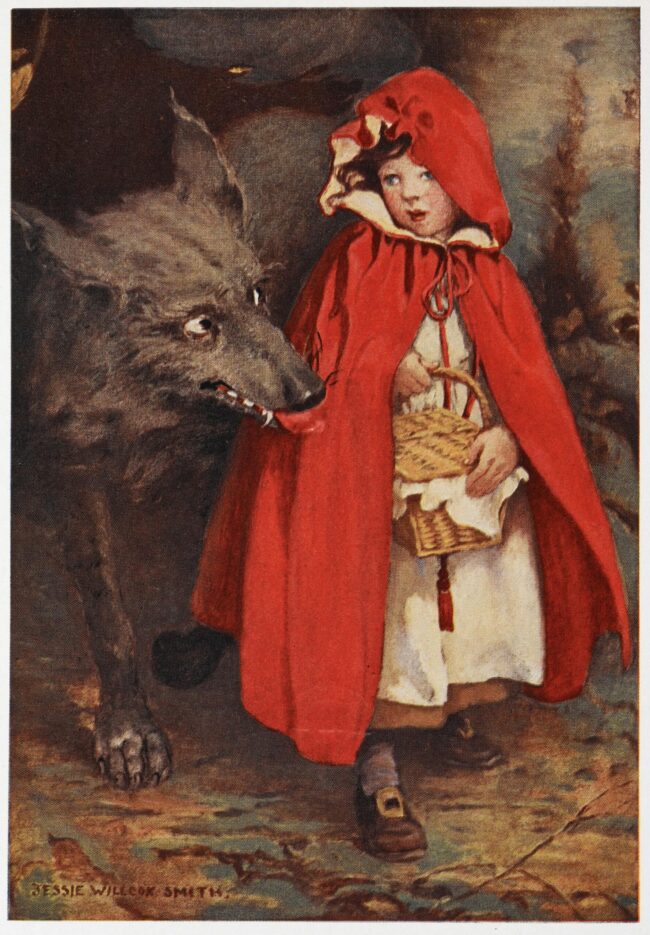
Le Petit Chaperon rouge by Jessie Willcox Smith, 1911. Public domain
Their fearsome reputation also left its mark on French culture. Charles Perrault published Little Red Riding Hood in 1697, at a time when the danger posed by wolves would have been far more than a fairy-tale invention for many readers.
Ultimately, intensive hunting and habitat loss drove wolves to near-extinction in France by the early 20th century. They began naturally returning from Italy in the 1990s and have since spread across parts of the country.
One trace of this lupine past still survives in Paris today. In the 12th arrondissement, Rue de la Brèche-aux-Loups, the “Street of the Wolf Gap”, takes its name from an old locality where wolves were said to appear during especially harsh winters. The route appears on maps as early as 1730, a lingering reminder that wolves were once a very real presence on the edges of the capital.

Rue de la Brèche-aux-Loups. Photo credit: Chabe01/ Wikimedia Commons
In November 2025, a lone wolf was spotted in Seine-et-Marne, east of Paris, with its presence later confirmed by wildlife officials. Rather than prompting the panic familiar to medieval Parisians, authorities stressed that there was no cause for alarm; a striking reminder of how much our relationship with the wolf has changed.
Today, it is almost impossible to imagine wolves roaming Paris. But for medieval Parisians, the wolf was not simply the villain of a bedtime story, it was a very real predator capable of appearing at the city gates, and sometimes even within the streets themselves.
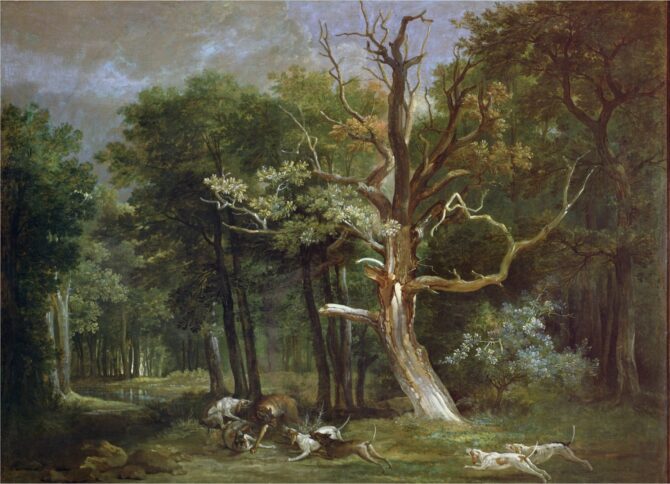
Lead photo credit : XNT208528 Wolf Hunt in the Forest of Saint-Germain, 1748 (oil on canvas) by Oudry, Jean-Baptiste (1686-1755); Musee des Beaux-Arts, Nantes, France; (add.info.: Paysage avec une Chasse aux Loups;); Giraudon; French, out of copyright
Related Articles