
Museuming in Paris, Part III: Amis du Louvre Membership
- SUBSCRIBE
- ALREADY SUBSCRIBED?
BECOME A BONJOUR PARIS MEMBER
Gain full access to our collection of over 5,000 articles and bring the City of Light into your life. Just 80 USD per year.
Find out why you should become a member here.
Sign in
Fill in your credentials below.
This is the third article in a series on Museuming in Paris. For Part I, click here. Part II is here.
When my husband Dusan and I planned our L’Art du Crime-inspired trip to Paris last summer, I advocated for a Paris Museum Pass and my daughter advocated for à la carte museuming. However, our avid Art of Crime fan had other ideas for his first trip to Paris. After doing his own research, he decided that the best choice for his needs would be a museum membership with unlimited access and no reservations required. He chose membership with the Société des Amis du Louvre, one of the oldest museum membership societies in the world. This option never occurred to me, and yet it made sense for both of us. In fact, this museum’s membership organized our vacation in Paris beautifully: every day (except Tuesday, when the Louvre is closed), we spent an hour or two roaming a specific period of art in the permanent collection or the temporary exhibition, staying as long as we felt comfortable, hence avoiding museum fatigue.
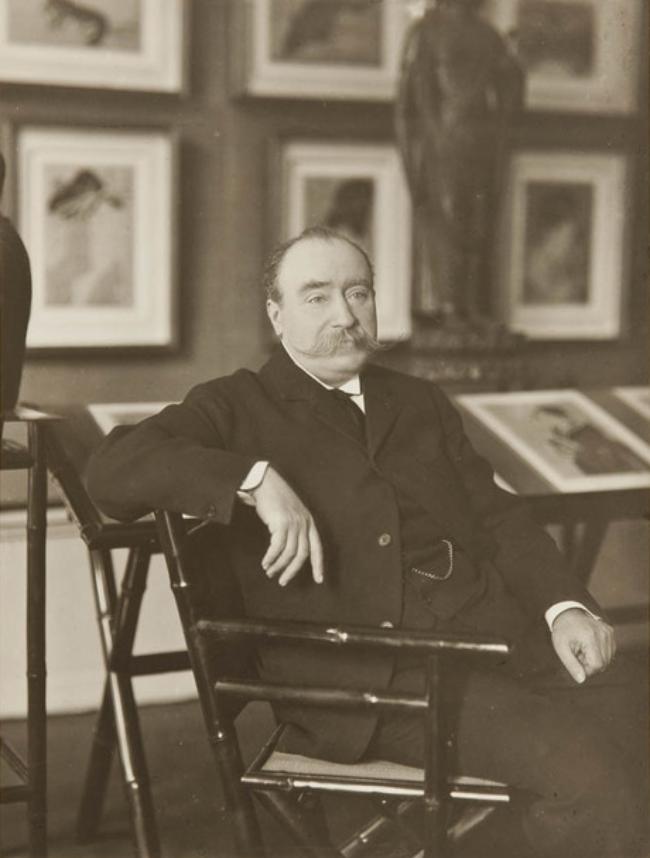
Isaac de Camondo, 1908
What is the Société des Amis du Louvre? Founded in 1897 by six wealthy patrons of the arts (Prince Roland Bonaparte, Count Isaac de Camondo, Count Henry Greffulhe, Camille Groult, Baron Abraham Edmond James de Rothschild, and Victor Martin Le Roy), the Society of Friends of the Louvre purchases masterpieces of artistic, historical and cultural merit with the funds collected from its members, now over 65,000 and counting. Entirely independent of the museum itself, the Society of Friends of the Louvre has donated 700 pieces to the Louvre, some of which belong to the Musée d’Orsay and Musée Guimet, which specializes in Asian Art. To witness the vitality and generosity of Les Amis du Louvre, visit their Facebook page, which offers hours of educational videos, scores of digital images, recorded lectures, and much more. You don’t have to be a member to benefit from this rich resource.
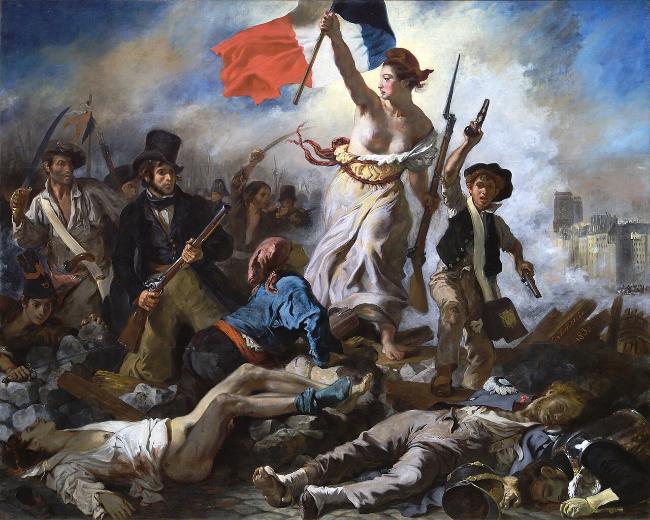
Eugène Delacroix, Liberty Leading the People, 1830. Public Domain (featured in Season 5, Episode 2 of L’Art du Crime)
Please note that The American Friends of the Louvre is another, completely separate organization from Les Amis du Louvre. Founded in 2002, their membership dues are considerably more expensive. Located in Paris and Manhattan, donations to the AFL support the museum and this organization’s projects. Dusan and I joined the Société des Amis du Louvre in their main office located between the museum’s busy admissions center under the Pyramid and the Carrousel du Louvre shopping mall. You can also join online.
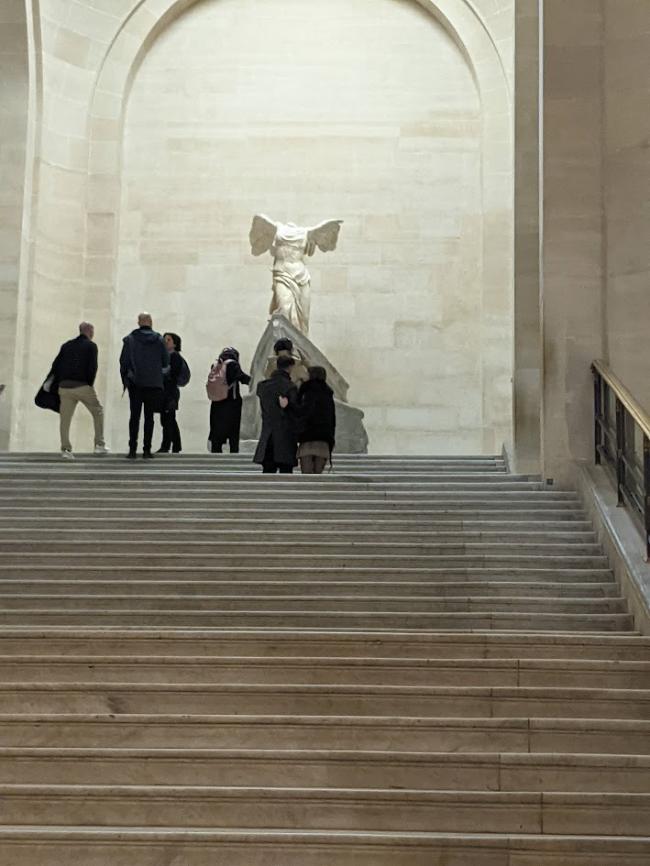
Victory of Samothrace, c. 150 BC, Daru Staircase, Denon Wing. Photo: Beth Gersh-Nesic
At first, Dusan’s desire to become a member of Les Amis du Louvre sounded crazy for a short visit of only seven days, not counting our arrival and departure. Nevertheless, it was his first visit to Paris, and I felt this trip belonged to him. Plus, I knew he would love the Louvre. In 2011, I took 15 women to Paris for nine days to tour numerous museums in Paris using the Paris Museum Pass. It was a great success! We visited one section of the Louvre every morning and another museum included in the PMP after lunch. At that time, the PMP offered unlimited visits to all the museums on the pass, including the Louvre; no reservations were required. Today’s PMP would not accommodate the ease of going to the Louvre on a daily basis for a focused visit, which was Dusan’s number one goal for this trip.
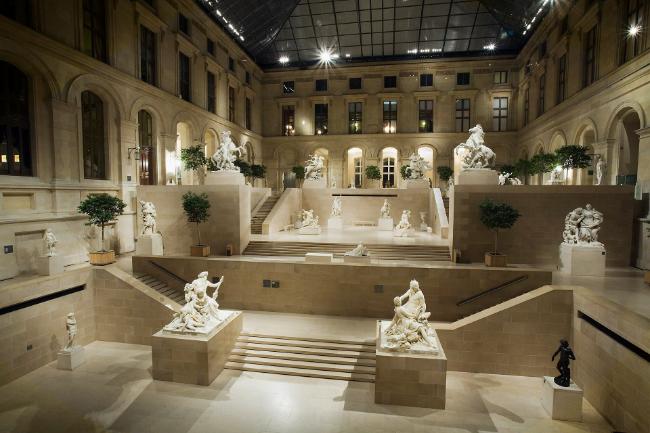
Marly Court of French Sculpture, Richelieu Wing, Musée du Louvre. Photo: Jorge Royan / Wikipedia
Louvre membership provides three excellent advantages: unlimited visits, no reservations required, and the privilege of entering through the Passage de Richelieu, instead of waiting in the long queue outside the Pyramid. When we became members in January 2025, the fee was 80 euros for an individual and 120 euros for a couple. For the two of us, our six visits cost 10 euros per person. However, on July 1st, the fees increased to 95 euros for an individual membership and 150 euros for a couple.
Hopefully, we will return to Paris in October for the Jacques-Louis David exhibition (October 15, 2025 – January 26, 2026), which will make our 2025 membership even more cost–effective, and we won’t have to wait in the long lines that this historic exhibition will surely attract.
Les Amis du Louvre membership also includes discount privileges to other museums in Paris (such as the Musée d’art et d’histoire du Judaïsme), plus free and unlimited admission to the Musée Eugène Delacroix on the Left Bank.
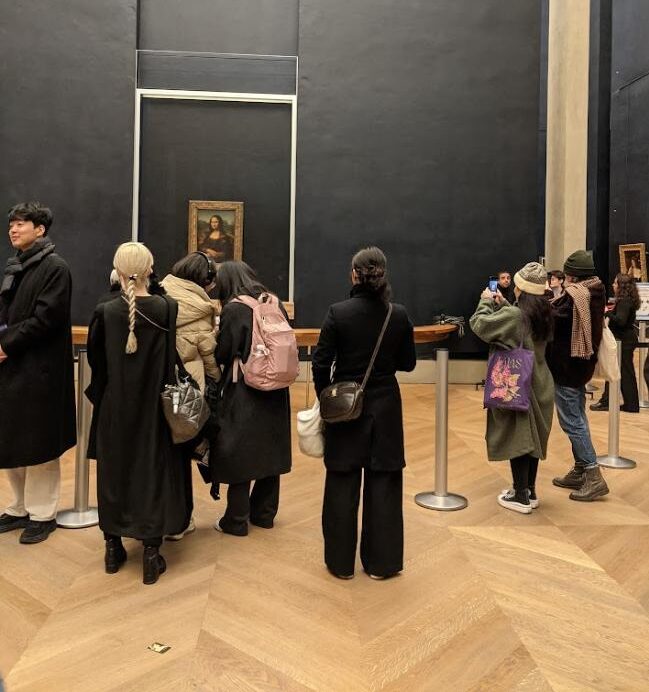
Visitors in front of the Mona Lisa, Friday, January 16, 2025, at 7 pm. Photo: Beth S. Gersh-Nesic (NB: the gallery was almost empty.)
Here is a sample of how we used our membership with Les Amis du Louvre as an anchor to our museuming in Paris. We purchased the membership on Thursday, January 15th and spent the afternoon in the Cours Marly and Cours Puget admiring French Baroque sculptures from the residences of King Louis XIV in Marly and Versailles. On Friday evening, we visited the Italian galleries to see La Gioconda, known to the English-speaking world as Mona Lisa (1503-1517). To our great surprise, we walked right up to the guardrail and stood with a few people gazing at Leonardo’s incomparably famous portrait of Lisa Gherardini, wife of Francesco del Giocondo. No crowds, no pushing, no urgency to move out of the way for someone else. We all had plenty of room to test whether her eyes follow you from side to side. (They do.)
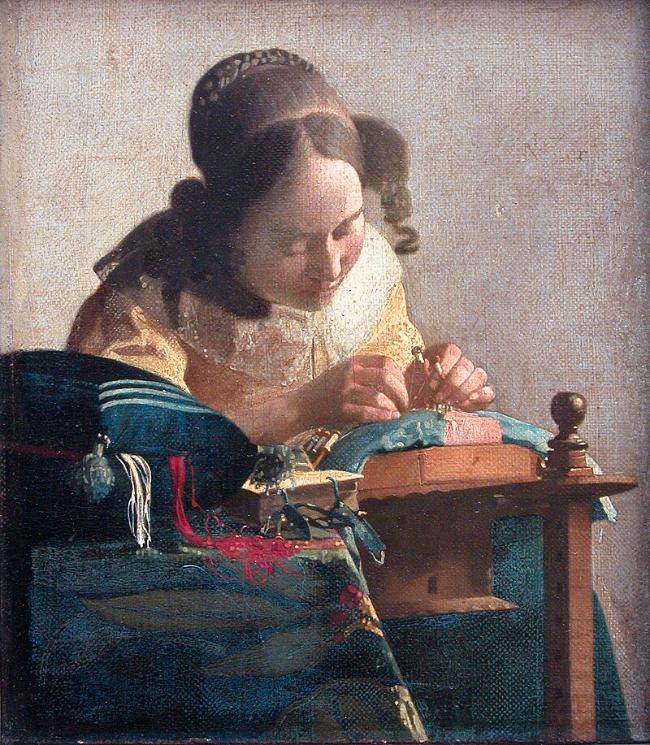
Johannes Vermeer, The Lacemaker, 1669-1671. Wikipedia. Public Domain
On Saturday, one of the busiest days for the museum, we concentrated on the quiet, less popular galleries of Dutch and Flemish masters: Peter Paul Rubens, Rembrandt van Rijn, and Johannes Vermeer, Frans Hals, and so forth. On Sunday, we took a deep dive into the Louvre’s enormous collection of antiquities from Egypt, the Ancient Middle East, Greece, and Rome, saving the glorious Venus de Milo for “dessert.”
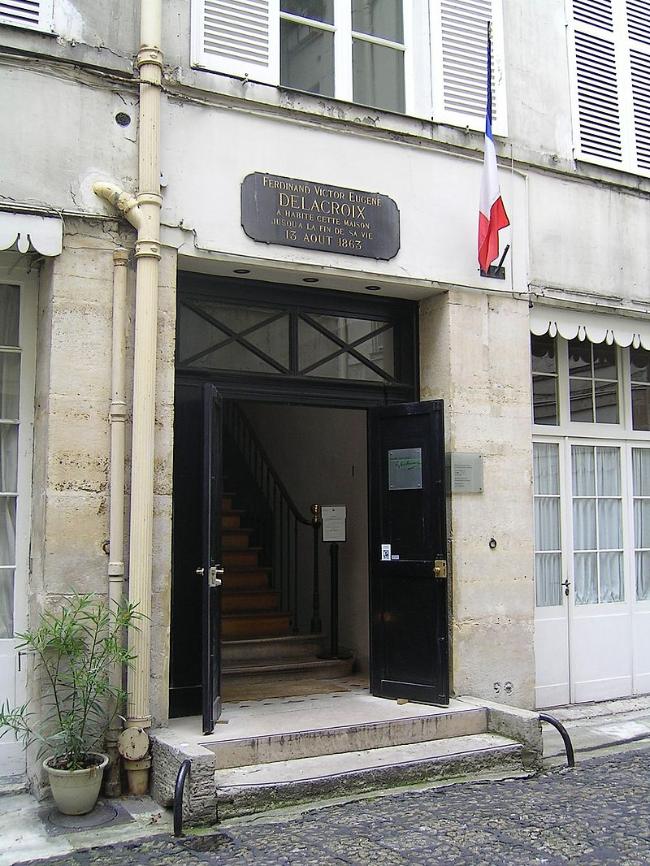
Musée Eugene Delacroix’s front door. Photo: Marianna/ Wikipedia commons. Public Domain
On Monday, we began our day in Notre Dame, having waited only 15 minutes on the no-reservations line in the dead of winter to enter this miraculously restored cathedral. (The lines may be much longer during the high tourist seasons.) Then we crossed the Seine to the Left Bank to browse in the legendary bookstore Shakespeare and Company, followed by a leisurely stroll through the Latin Quarter, from Boulevard Saint Michel to Boulevard Saint Germain, in search of the Musée Eugène Delacroix, tucked away at 6 rue de Furstemberg. We spent about an hour and a half in this 19th-century Romantic artist’s home and studio.
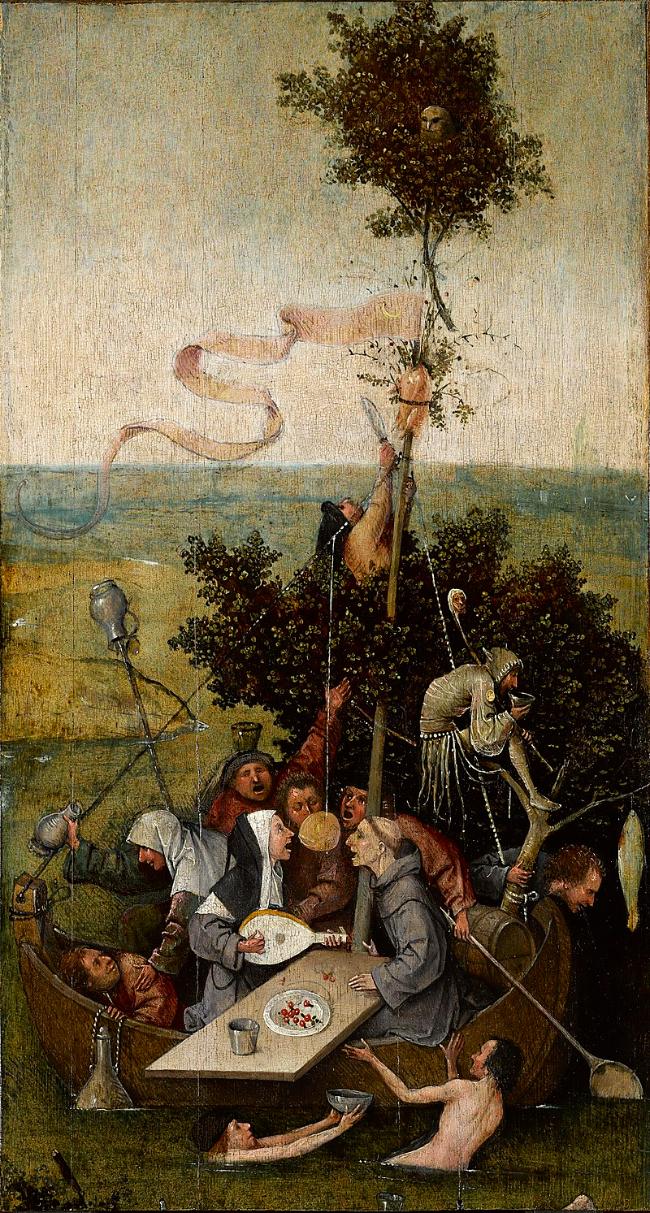
Hieronymus Bosch, Ship of Fools, c.1505-1515, in the exhibition Le Fou (The Fool in Art). Wikipedia
As we left the Musée Delacroix, we consulted our GPS apps to find our way to the Pont du Carrousel, which we crossed to return to the Louvre. Once inside the museum, we found the outstanding temporary exhibition The Fool in Art History, which took about an hour and a half to complete. We put in a full day of looking, browsing, and people watching, refreshed by long walks between the venues, and breathing in the bracing Parisian air.
On Tuesday, when the Louvre was closed, we spent the day in the Musée Carnavalet, a 16th-century private urban mansion (hôtel), once owned by the celebrated 17th-century writer Marie de Rabutin-Chantal, the Marquise de Sévigné (from 1677 to 1696). The museum features furnished rooms, artwork, and various artefacts to illustrate the history of Paris from prehistory to the modern era.
On Wednesday, we returned to the Grande Galerie of late 18th-early 19th century masterpieces for a fond farewell to the Louvre, and then we split up to see two different exhibitions outside the Louvre: I chose Suzanne Valadon at Centre Pompidou (excellent) and Dusan chose an exhibition of clay artworks at the Serbian Cultural Center, at 123 rue Saint Martin, right behind Centre Pompidou (as he was curious to see his native country’s contribution to the City of Light). On Thursday, we left Paris feeling satisfied that we had explored the Louvre to our hearts’ content.
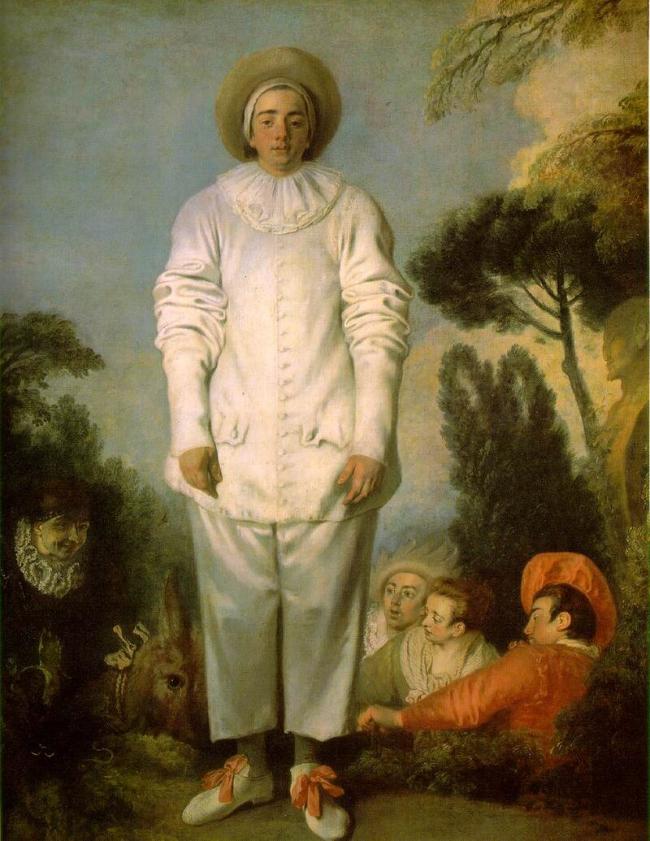
Jean-Antoine Watteau, Pierrot, 1717, Musée du Louvre. Public domain. (Season 1 : Episode 2 ; L’Art du Crime)
Did we fulfill our quest to find all the art and galleries featured in L’Art du Crime? No. Six visits to the Louvre for a few hours each day covered about a third of the museum. We missed Pierrot by Jean-Antoine Watteau, the star of the third episode of L’Art du Crime. Oh, well, next time… Plus, we didn’t visit the Musée d’Orsay, featured in many episodes of L’Art du Crime. Membership with the Musée d’Orsay and the Musée de l’Orangerie (two for one) is 52 euros for an individual and 79 euros for an individual and any guest. Les Amis du Louvre seems to restrict dual membership to the cardholders, which is good for us. We don’t have to go to the Louvre together. For more information about the Musée d’Orsay/Musée de l’Orangerie membership, please click on the link provided here.
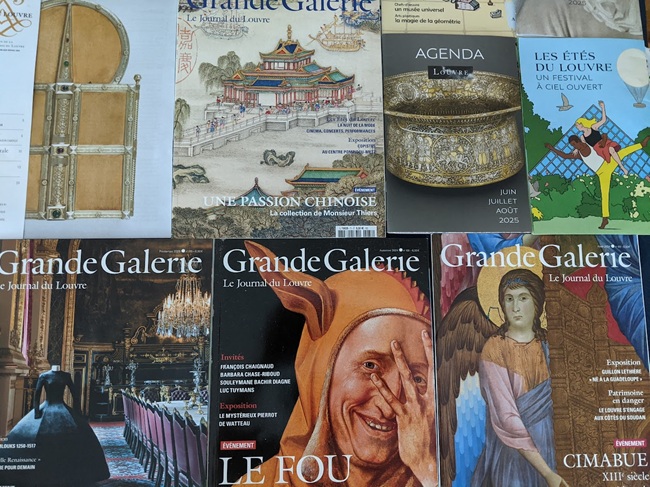
Louvre magazines – Les Ami du Louvre Grande Galerie, etc
What did we learn from our choice? Membership with the Société des Amis du Louvre offers unlimited access to the permanent collection and the special temporary exhibitions. We appreciated the comfort of a leisurely pace during each visit, unhurried by the limits of a one-day reservation. Plus, after we returned home, we discovered the joys of receiving email notices from the Louvre almost every week. These newsletters highlight artworks and artists in the Louvre as well as their numerous programs for children and adults.
We also receive in our snail mail the Grande Galerie: Le Journal du Louvre, an exquisite glossy magazine that describes new acquisitions, works already in the collection, special exhibitions, and brilliantly illustrated essays (in French). The spring 2025 issue featured Louvre Couture, January 25 through August 24, 2025, and S’habiller en artiste. L’Artiste et le vêtement, at the Louvre-Lens, March 26 through July 21, 2025. As members of Les Amis du Louvre, we also belong to the Louvre-Lens and the Louvre Abu-Dhabi.
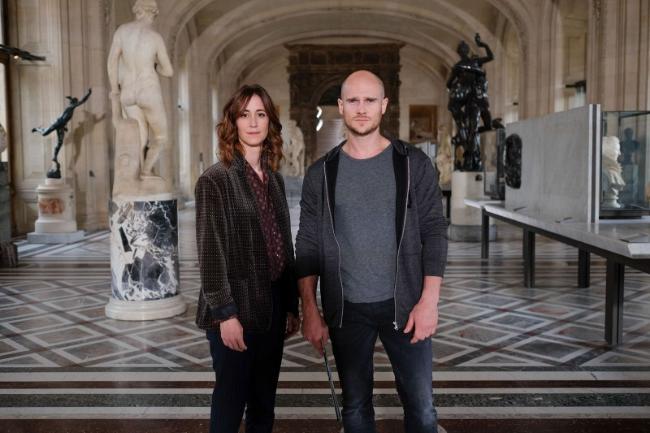
Actors Eléonore Bernheim as Madame Florence Chassagne, PhD, and Nicolas Gob as Captain Antoine Verlay in L’Art du Crime (France 2, in 2017). Courtesy of MHz Choice/ Doncomm PR
After our first visit to the Louvre, Dusan confessed: “The Louvre is much bigger than I expected! And, I have to say – it took my breath away at first. Literally. I had to stop and collect myself for a moment to take it all in.” That happens to me every time I visit the Louvre. It’s not from the adrenaline rush climbing the Daru stairs to reach the magnificent Victory of Samothrace at the top. It’s a physical surge of exhilaration as I arrive, once again, in this space that has brought me years of pleasure just wandering through its vast galleries filled to the brim with paintings, sculpture, decorative objects, and architectural ornamentation. All its thousands of years of human expression – its grandeur, its spirituality, and its beauty – ignites a specific kind of energy in my body from the desire to endlessly explore. Plus, the Louvre feels comfortably familiar now after numerous visits. It’s still challenging, but not intimidating or overwhelming.
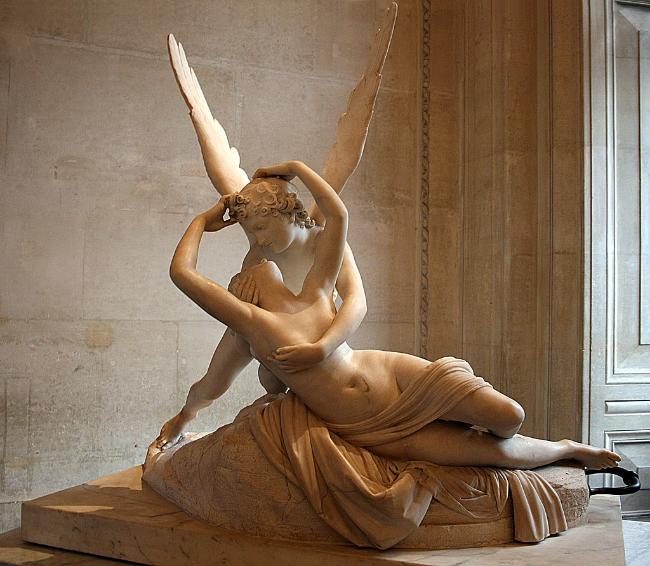
Antonia Canova, Cupid Reviving Pysche with a Kiss, 1787-1793, Louvre. Wikipedia, public domain (featured in L’Art du Crime)
“I really admire France’s dedication to preserving cultural history,” Dusan remarked as we exited the Louvre for the last time. There and then, we agreed that membership with Les Amis du Louvre feels just right for us. We are actively participating in this effort to support the care and growth of this museum’s collection for posterity.
Perhaps becoming a member of Les Amis du Louvre (and/or the Musée d’Orsay and the Musée de l’Orangerie) feels right for you, too. At the very least, it may introduce you to an entirely new way of museuming in Paris.
ICOM (International Council of Museums) Membership
One last option for museuming in Paris is ICOM membership. Card-carrying members of the International Council of Museums usually do not pay for museum admission. Sometimes they pay a reduced rate for admission, or they only pay for a special temporary exhibition. Additionally, ICOM members do not have to make reservations, including for the Louvre. It’s tremendously liberating in countless ways.
Who is eligible for ICOM membership? Employees of museums and volunteers who work in museums can belong to ICOM. Do you give private tours of museums in your area? If so, you may be eligible for ICOM membership. Check the ICOM website and follow the application process. ICOM will respond to your application in about six weeks. They will let you know if they recognize your contribution to the museum community worldwide and, therefore, qualify for ICOM membership. Art dealers and auction house employees are not eligible for ICOM membership. ICOM membership fees vary among the categories and national branches. For a US citizen, the fee for a working person is $135, for a retired person $75, for a student $60, and for a non-voting supporter $500. Click on the link above to find your local chapter.
One last note, Fellow Museumers:
Please remember that the Musée de l’art moderne, Centre Pompidou will close to the public on September 22, 2025, and reopen in 2030.
And the Musée de la Vie Romantique is closed for renovation until March 2026.
* * *
For more information about the Louvre, please read these wonderful essays in Bonjour Paris:
Claudine Hemingway, “Skip the Mona Lisa and See these Paintings Instead at the Louvre”
Claudine Hemingway, “Love in the Louvre”
Marian Jones, “The Louvre: Fortress, Palace, Museum”
Hazel Smith, “The Louvre Renaissance and Louvre Couture: News from the Palace of Art”
Bonjour Paris Editors, “Elaine Sciolino Brings the Louvre to Life.” An overview of Elaine Sciolino’s excellent new book Adventures in the Louvre: How to Fall in Love with the World’s Greatest Museum (W.W. Norton, 2025).
Also, I highly recommend the French art historian Thomas Schlesser’s illuminating novel Les Yeux de Mona (2024), which takes us through the Louvre with a 10-year-old girl and her grandfather, providing thought-provoking lessons about life and art. The English translation, Mona’s Eyes, will be available at the end of August 2025.
Lead photo credit : Les Amis du Louvre business card. From Les Amis du Louvre Facebook
More in L’Art du Crime, Louvre, museum membership, Museuming in Paris, Société des Amis du Louvre
Related Articles


REPLY
REPLY