
Why You Have to Visit the Carnavalet Museum in Paris
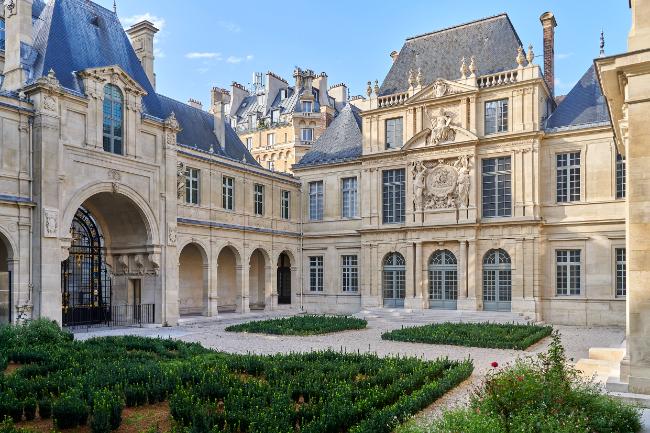

The Marais, stretching across the 3rd and 4th arrondissements, attracts shoppers, foodies, history nerds and culture vultures. So, it’s quite a statement to say that one of the absolute must-visit highlights is the Carnavalet Museum, whose thousands of exhibits tell the story of Paris from prehistoric times to the Covid lockdowns. But maybe you find that a little daunting if you don’t already know your Enlightenment from your Second Empire? Worry not! A little planning will ensure that a visit to this pillar of Parisian culture leaves you inspired rather than overwhelmed.
The first thing to appreciate is that the site itself is idyllic. The 16th-century courtyard and elegant facades of the building, the precisely marked out flower beds and the central statue of Louis XIV on horseback are all signs of a site which Parisians have cherished for centuries. Madame de Sévigné, celebrity gossip and letter-writer who lived there for more than a decade in the 17th century, praised the air, the courtyard and garden and the surrounding streets when she wrote of “un bel air, une belle cour, un beau jardin, un beau quartier.” In the 1860s this was the site which Baron Haussmann, busy enlarging and embellishing Paris, chose for a new museum about the history of Paris itself.
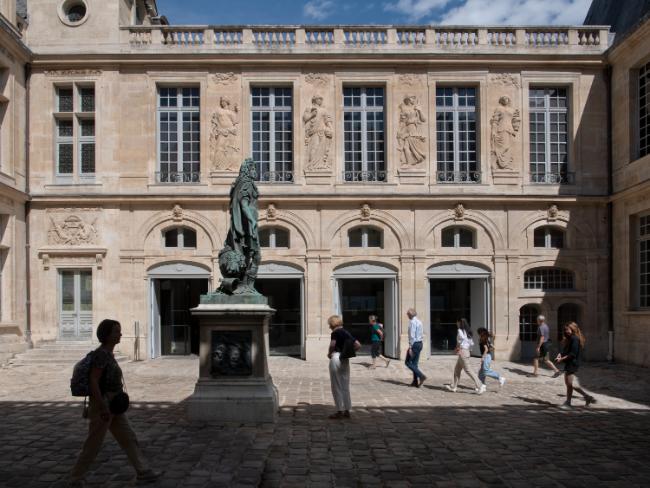

Before venturing inside, decide on your strategy. Entry to all the permanent galleries is free, so the option of a quick first visit, maybe with the idea of returning on other occasions, makes perfect sense. As everything is laid out in chronological order it’s easy to target a particular period of history rather than trying to take in several millennia in one visit. Either make your own choice or download the Musée Carnavalet app where you’ll find a range of options. Other possibilities include focusing on one of the temporary exhibitions or joining a guided exploratory visit in English, both available for a small charge. Here’s a little more detail on each of these game plans.
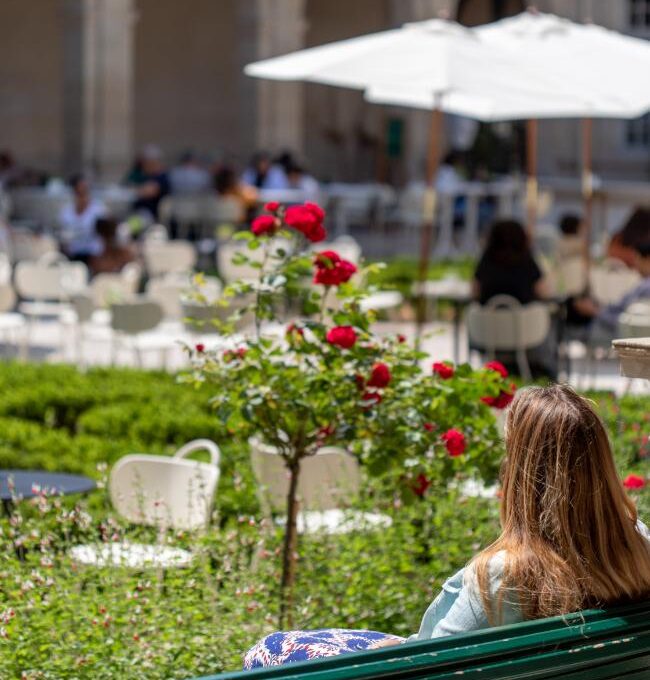
Jardins du Musée Carnavalet – Histoire de Paris. Photo: Sophie Robichon
An introductory visit
The very first few rooms on the ground floor serve as an introduction to the museum. Rooms 1 and 2, the Salles des Enseignes, are designed like a Parisian street from the past, hung with signs from the shops and inns of old, some carved in wood, others forged in iron, all colorful and unique. The likes of a cheerful, painted cow, once suspended above a butcher’s shop and a wrought-iron bookshop sign decorated with a white plume hang alongside plaques with street names from old Paris and make you feel you are stepping back into former times. Rooms 3 and 4 introduce the history of Paris through paintings, models and maps, along with some eye-catching exhibits including a heavily scorched door from the Hôtel de Ville, saved from the fire which destroyed the building in the Communards uprising of 1871.
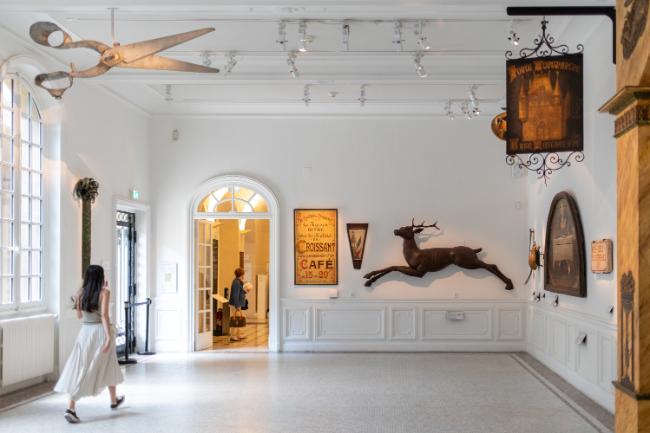
Salle des enseignes – Musée Carnavalet – Histoire de Paris (c) Sophie Robichon
Focus on a particular period
If you try to see everything, starting with Préhistoire and Antiquité on the lower ground floor and then moving on through every subsequent era, your eyes will glaze over and you will surely never make it to the end. Why not pick just one period and target that? Here are just a few of the many possibilities.
– Medieval and Renaissance Paris (Lower Ground Floor)
A large model shows the Île de France when it was the heart of medieval Paris and the centre of both political and religious power. Exhibits explain how royalty lived in the Palais de la Cité where the Conciergerie and Palais de Justice now stand, how the great centers of religion, la Sainte Chapelle and Notre Dame, came into being and how the religious foundations of the 12th century were the forerunners of university life in the city, centered on today’s Latin Quarter and the Sorbonne. Among the artworks on display, you’ll find stunning sculptures, including a gargoyle from Notre Dame and beautiful stained glass window panels.
– The 17th and 18th centuries (First Floor)
The rooms which once formed Madame de Sévigné’s apartment make a good introduction to 17th century Paris and among the items on display around her portrait is her exquisite chinoiserie writing desk, its black lacquered background decorated with golden fruits, flowers and birds. As for the 18th century, a number of rooms are dedicated to the Enlightenment and you can peruse, for example, a range of objects once owned by Rousseau and Voltaire, including an armchair once favored by the latter. Nearby is a sequence of sumptuous “period rooms,” showcasing the décor favored by the Parisian elite at this time.
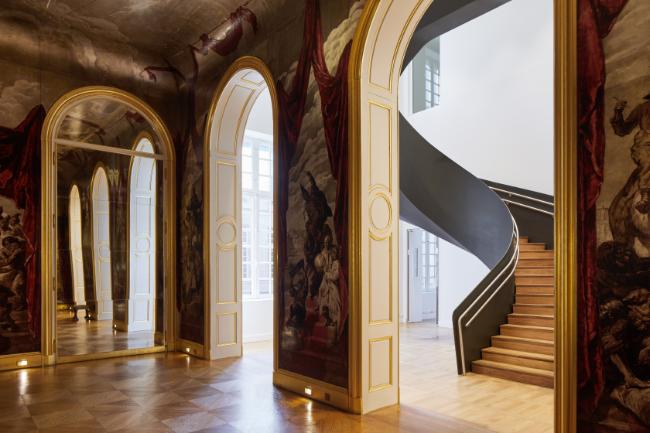
Salle de bal Wendel, vue sur l’escalier monumental, musée Carnavalet – Histoire de Paris © Antoine Mercusot
– The French Revolution (Second Floor)
The Carnavalet has the world’s biggest collection of objects relating to the French Revolution. There are fascinating exhibits from all its many phases, including items from the Bastille prison itself – keys, handcuffs, fragments of stone – and poignant mementoes of the king and queen: a coin said to have been in Louis’ pocket on the night he was captured when trying to escape Paris and one of Marie-Antoinette’s shoes, snatched from her by a member of the National Guard as they stormed the Tuileries Palace and took the royal family prisoner. Among the extensive collection you will see paintings of key events, copies of speeches and a reconstruction of the Temple Prison where the royal family were held captive, including some of the original furniture.
– La Belle Époque (Second Floor)
Among the many items representing this heady period of Parisian history, a number of set piece rooms are particularly memorable. Among them is the Bijouterie Fouquet, a jeweler’s shop whose interior was designed in 1901 by the Art Nouveau artist Alphonse Mucha. Nearby, Marcel Proust’s bedroom is recreated from items he owned, the place where this reclusive writer spent the last 15 years of his life writing his seven-volume masterpiece A la Recherche du Temps Perdu. The sombre lighting, the simple furniture and the walls he lined with cork to shut out the sounds of the outside world all combine to take you into his world.
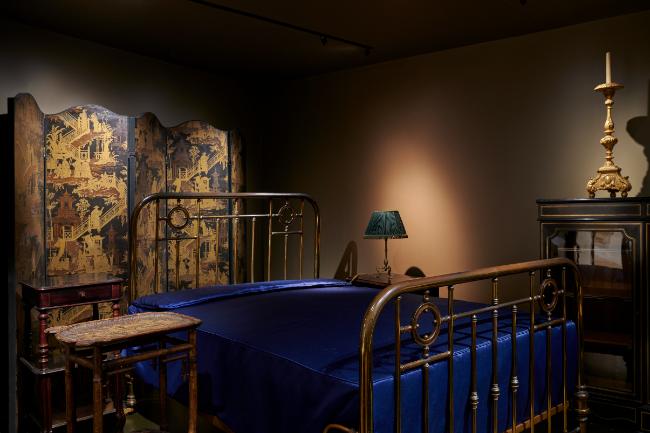
Mobilier ayant appartenu à Marcel Proust, musée Carnavalet – Histoire de Paris © Pierre Antoine
Use the app
It’s easy to download the Musée Carnavalet app from the App Store or Google Play and it’s a winner. The 10 sections, available in French, English and five other languages, include “Masterpieces” from throughout the museum and various time periods. Each has separate versions for adults and children, picking out a number of exhibits to look out for, with a picture, brief written notes and a short audio text giving the background and interesting details. The adult version of “Signs Rooms and Introduction” includes mascarons from the Pont Neuf and the Hôtel de Ville, while the children’s version highlights a 19th-century board game on Parisian monuments and some of the most picturesque shop signs.
Do a Highlights Tour in English
A guided tour of the museum’s highlights called “Key Pieces for a Parisian History” is on offer in English several times a month. It lasts an hour and a half and a guide will take you on a “discovery visit” to see some of the unmissable exhibits, ranging from period rooms like those detailed above to some of the most popular individual items. It would make an excellent first visit to the Carnavalet and provide, as the website says, “a chance to immerse yourself in the history of Paris through a selection of emblematic works from our collections.”
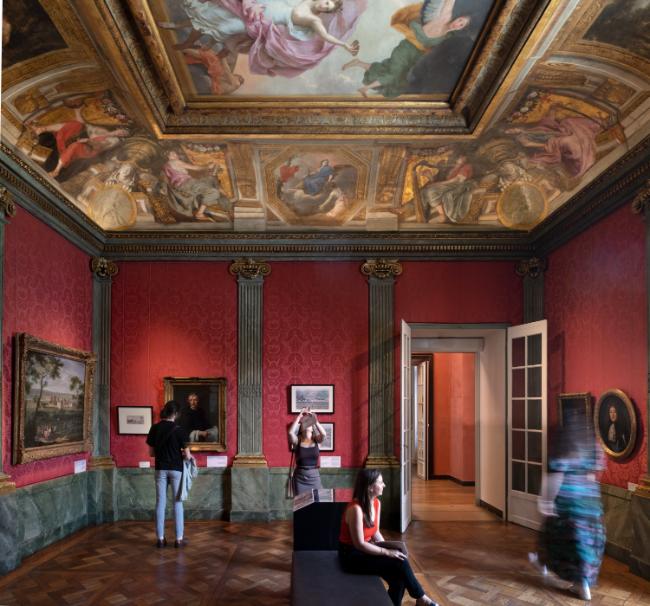
Salons La Rivière, musée Carnavalet – Histoire de Paris (c) Ambroise Tézenas
Look out for temporary exhibitions
Recent temporary exhibitions have covered such varied topics as the Revolutionary Year of 1793-4, Marcel Proust and the Parisian novel, and an in-depth look at the development of feminism in Paris, entitled Parisiennes citoyennes.
The current exhibition, Paris by Agnès Varda, running until August 24th, focuses on the link between the quirky photographer and her home city, taking you into her studio in Rue Daguerre in the 14th arrondissement and to many of the places she captured in the photographs she took over six decades. Her films are referenced too, for example Cléo de 5 à 7, her 1962 masterpiece which follows a young woman walking through Paris one early evening as she waits nervously for the results of a medical test. It breezes from street corner to café to taxi ride, capturing the Paris of the 1960s in every frame.
However you decide to visit the Carnavalet, two outcomes are likely. You will learn some fascinating things about the history of Paris and you will realize that one visit is not enough. There’s always a reason to revisit the Marais and the same is true of the Carnavalet, the city’s oldest museum which sits at its heart.
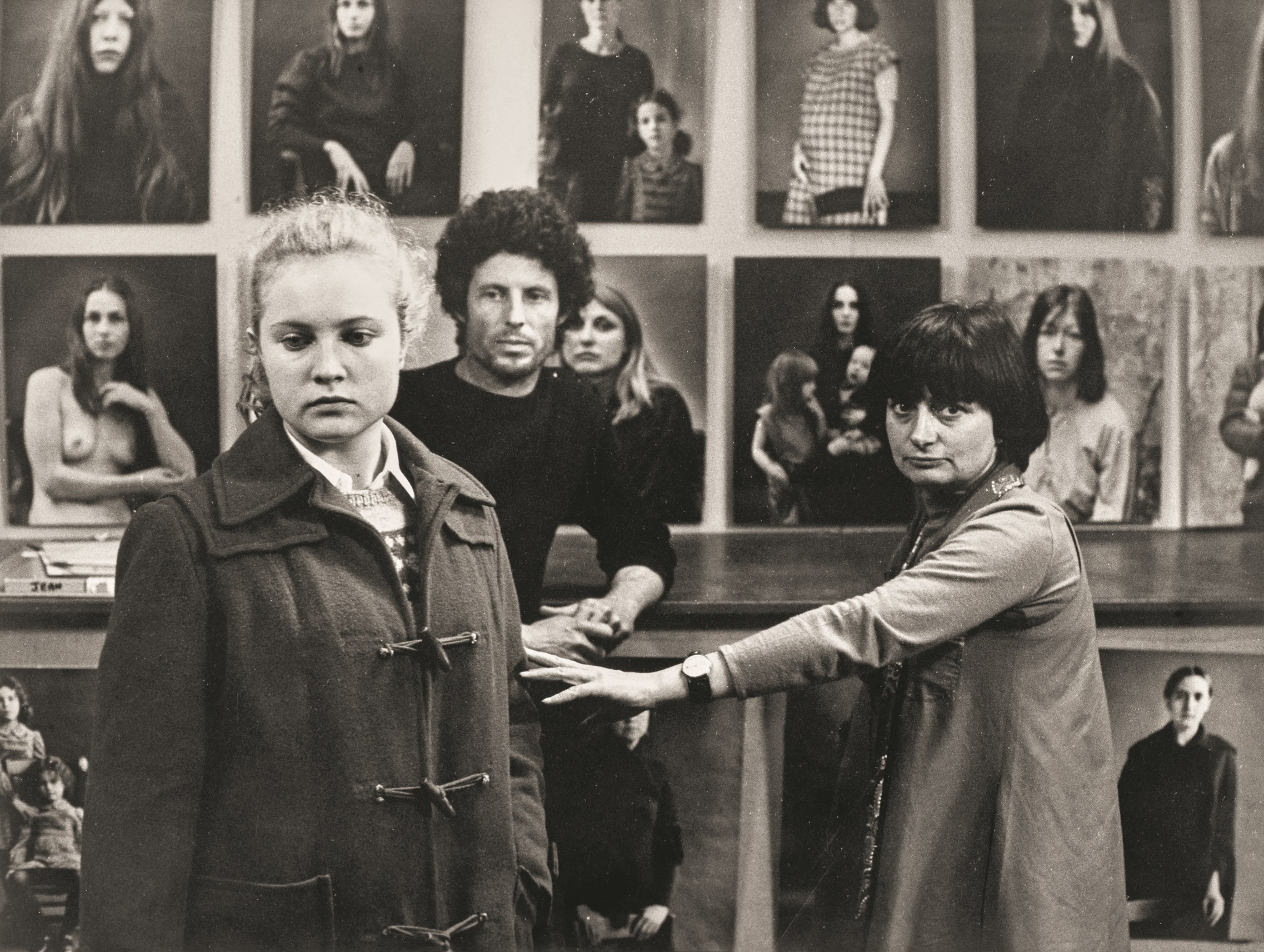
Tournage du film “L’une Chante l’autre pas”. Courtesy of the Carnavalet
DETAILS
Musée Carnavalet
23, Rue de Sévigné, 3rd
Nearest Metro: Saint-Paul (Line 1)
Open 10 am – 6 pm (closed on Mondays)
Free entry to the permanent exhibition
Highlights Tour in English, priced at
€7: July 22nd, August 5th, 12th, and 26th
More dates available on the website
Agnès Varda exhibition
Until August 24th, 2025
Full-price ticket:
€15
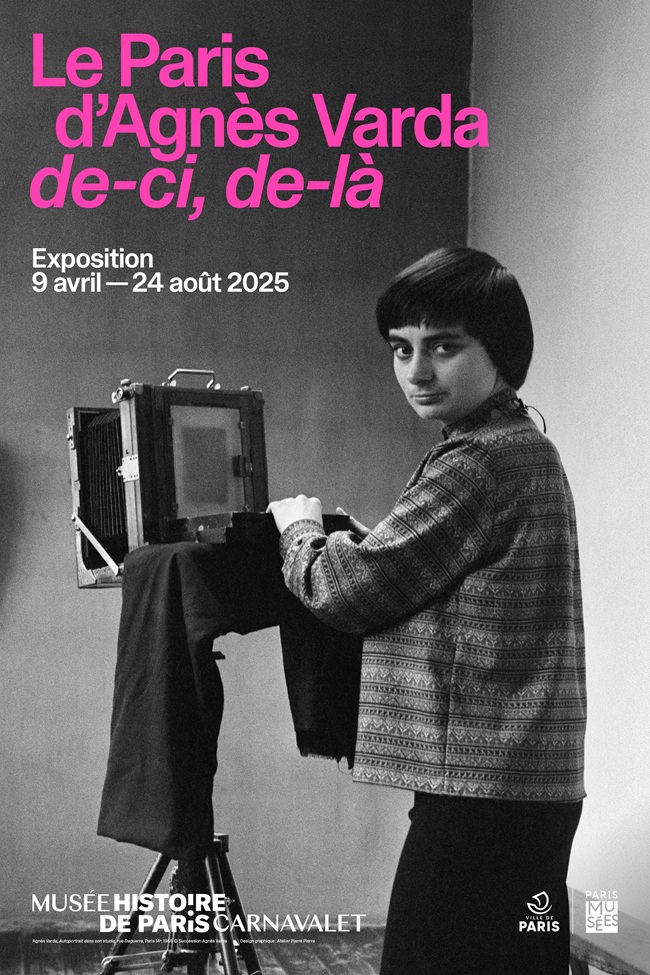
“Le Paris d’Agnes Varda” exhibit at the Carnavalet
Lead photo credit : Jardins du Musée Carnavalet - Histoire de Paris (c) Pierre Antoine
More in Agnès Varda, Carnavalet, Marais, Marais museums, Paris history
Related Articles
By Marian Jones
REPLY
REPLY