The Wild Side of Paris
- SUBSCRIBE
- ALREADY SUBSCRIBED?
BECOME A BONJOUR PARIS MEMBER
Gain full access to our collection of over 5,000 articles and bring the City of Light into your life. Just 80 USD per year.
Find out why you should become a member here.
Sign in
Fill in your credentials below.
There are more than 150 species of birds in Paris. Wild animals roam the woods and walkways and cemeteries, rare moths hatch in Montmartre, 32 species of fish can be found in the once polluted Seine. Insects, beetles, butterflies and bees are in abundance and even the shy pipistrelle bat has taken up residence.
But it wasn’t always like this.
We have to go back through history to discover how fashion, the nobility, a revolution, and urban planning turned Paris into the wildlife mecca we find today.
Five thousand years ago, Paris was just a hill, a swamp, and a forest, with only the river flowing around its island to commend it for human habitation. Between 250-225 BC the Parisii settled on the banks of the Seine, later in 52BC, this fishing village was conquered by the Romans and named Lutetia. It wasn’t until the fourth century that Paris became Paris.
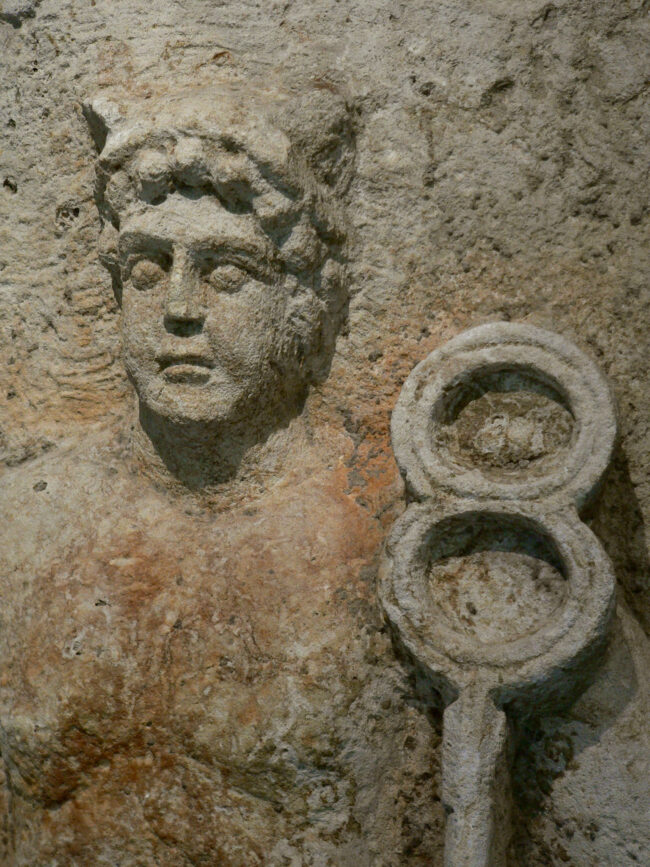
A Gallo-Roman stele of Mercury, from Lutetia. The people of Lutetia worshipped both Roman and Celtic gods. (Carnavalet Museum). Wikimedia commons
All these inhabitants had something in common. The last thing they wanted to welcome into their village was any form of wildlife, especially the wolves that roamed freely and were a danger to livestock. And so walls and fortresses were built, and nature was deliberately repelled. Without trees or plants or natural spaces, there was no place for animals, no sustenance or shelter for birds.
It was the unlikely event of Catherine de Medici marrying King Henry II in 1547 that was the catalyst for a profound change, a new concept of humanism, that led to an understanding of gardens and open spaces, replacing the established medieval limitations that concentrated on castles and fortifications.
Catherine de Medici, accustomed to Renaissance parks and gardens in Italy, wanted the same in Paris. (Emperor Nero’s Vas Domus Aurea complex was a vast hundred hectares of meadows, arable land, vineyards, orchards, artificial lakes, fountains, sculptures and water features, combining architecture and nature in one harmonious whole.)
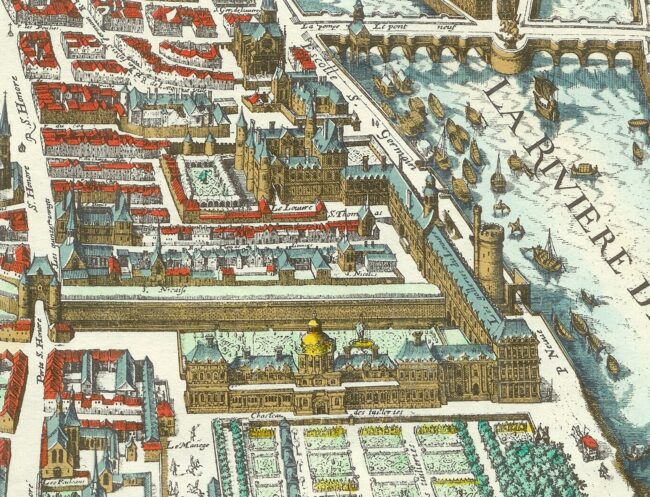
Les Tuileries, le Louvre et la Grande Galerie en 1615. Plan de Merian. Public domain
De Medici commissioned the Tuileries gardens assuaging her nostalgia for the Renaissance gardens of her youth. In 1724, the Champs-Élysées was transformed from a barren avenue to a grand promenade by the addition of hundreds of chestnut and plane trees that had replaced the diseased elms. (The mid-18th century Place de la Concorde leading to the Tuileries gardens was initially planted with flower beds before trees replaced them. The square is currently undergoing a green transformation.)
Marie de Medici (a distant relative of Catherine’s) became queen of France in 1600 when she married Henry IV. Imitating her predecessor’s passion for Italian gardens, she began work in 1611 on the Luxembourg palace and commissioned a team of gardeners to begin work on the gardens. Some 2,000 elm trees were planted; hedges and flower beds were added later in 1630 when additional land was acquired and the basin and fountain constructed. (Later still, in the late 19th century, greenhouses, an apiary, a fruit orchard, a rose garden and an orangerie completed the gardens.)
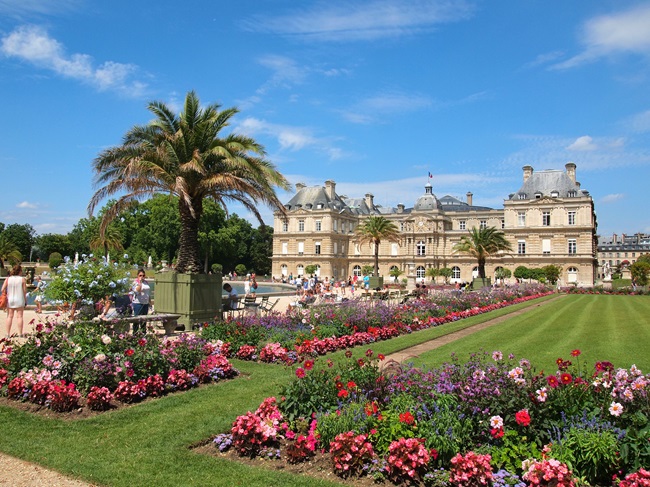
Jardin du Luxembourg. Photo: Amanda/ Flickr
And so, the greening of Paris began. Of course, these large, often ornate parks were usually private sanctuaries only accessible to the nobility; the the general public were not admitted. But things were about to change dramatically.
Revolution does that.
The 1848 Revolution saw Louis-Napoleon Bonaparte III become president of France and then emperor from 1852 to 1870.
He was acutely aware of the power of the people, a people who had revolution in their blood, and who now demanded public parks and green spaces of their own, improvements to their standards of living, decent housing and clean water.
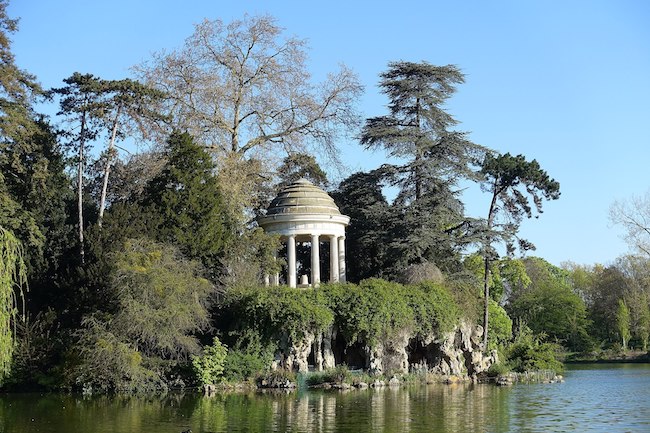
Temple at Lake Daumesnil at Bois de Vincennes. Photo credit: Guilhem Vellut /Wikimedia Commons
Inspired by Hyde Park in London, Napoleon III ordered the construction of four large new parks in the outer neighborhoods of Paris. The 2,000-acre Bois de Boulogne to the west was planted with 40,000 trees, and decorated with lakes and waterfalls. Exotic birds, swans and peacocks were imported to populate it.
To the east, there was the Bois de Vincennes, the Parc des Buttes Chaumont to the north and Parc Montsouris to the south. All had water features, trees and shrubs, and walkways. Smaller parks and gardens were created across Paris so that no neighborhood was more than a 10-minute walk from a green space.
Nature became suddenly fashionable for Parisians.
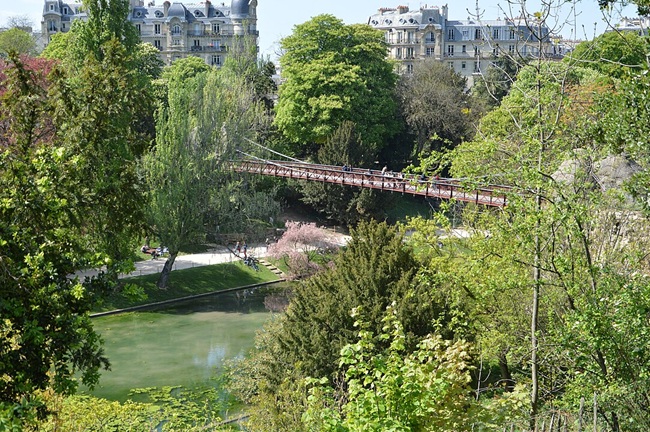
Suspended bridge in the Parc des Buttes Chaumont. Photo: Clem/ Wikimedia commons
In 1853, Haussmann was directed to launch a gigantic works program to bring clean water and light to the center of Paris. (It was also an opportunity to put unemployed Parisians to work.) The narrow, unsanitary streets were demolished and replaced with wide, tree lined boulevards. The Canal St Martin, built by Napoleon to bring fresh water to Paris in 1825, was significantly altered by Haussmann, lowering it by some five meters in parts. This hasn’t deterred coypu (beaver-like animals) from making it their home. Coypu were introduced to Europe in the 19th century from South America for fur farming and subsequent escapes from these farms led to the establishment of wild populations. Coypu live in the same area all their lives so as long as the Canal St Martin exists, so will the coypu.
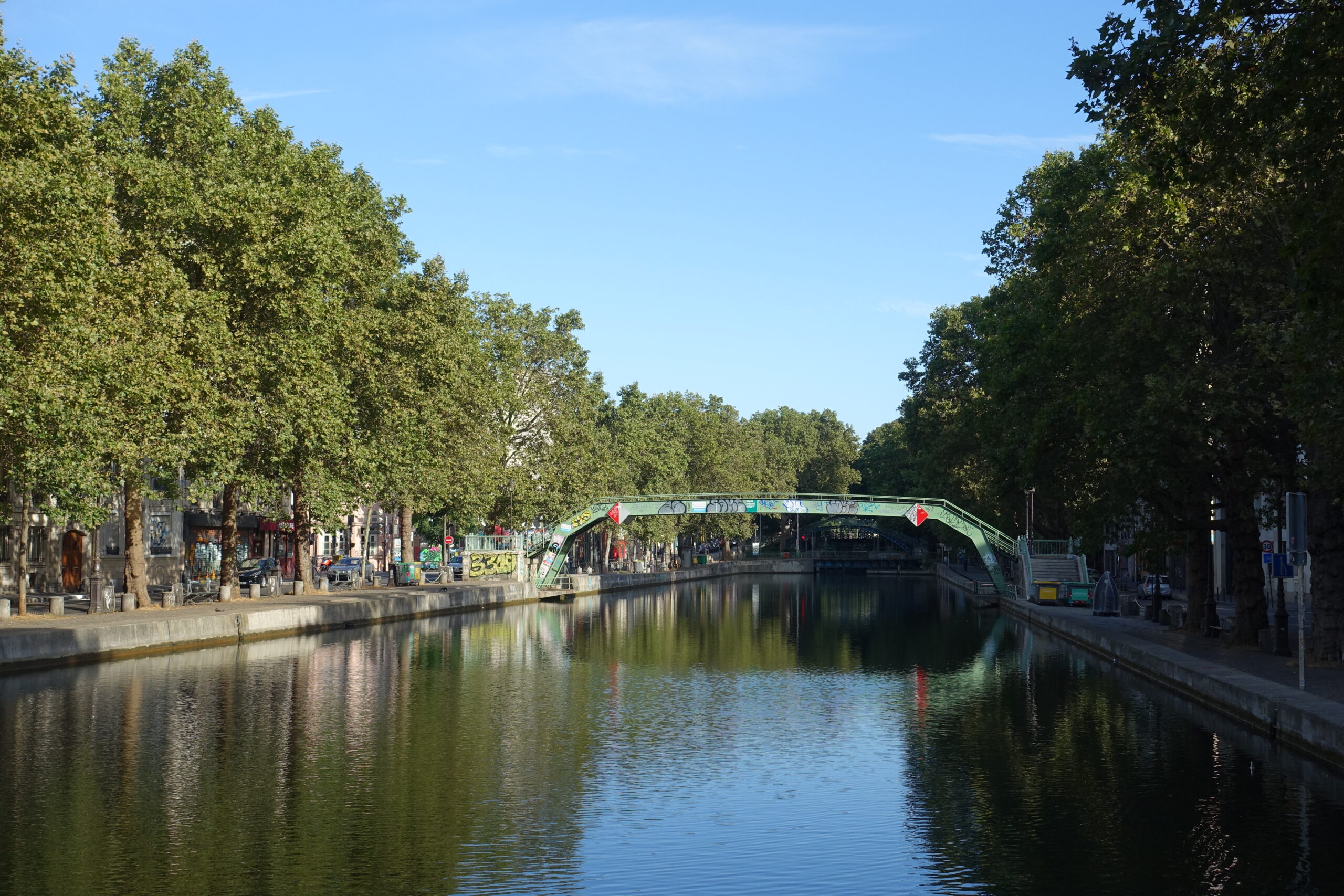
Canal Saint Martin. Photo: Guilhem Vellut / Wikimedia Commons
But how did all these new parks, trees, open spaces, and clean water affect the wildlife accustomed to living outside the city? Perversely, as the countryside became more dangerous to their natural habitat, the city became a place of refuge.
Foxes, long considered vermin, poisoned and shot by farmers, made their way through disused tunnels into Paris. But nowhere was kinder to foxes than La Petite Ceinture. Beloved now by Parisians for leisurely strolls, described as a quiet, natural, garden space within Paris, La Petite Ceinture was originally a 32.5 km circular railway around Paris built between 1852-1859 to transport goods and merchandise. By 1990, La Petite Ceinture had come to the end of its commercial life and nature has taken over many sections of the disused line.
Foxes, rabbits and squirrels can roam and live there in safety. Likewise, in a section of a tunnel in the 14th arrondissement, a large colony of pipistrelle bats have taken up residence.
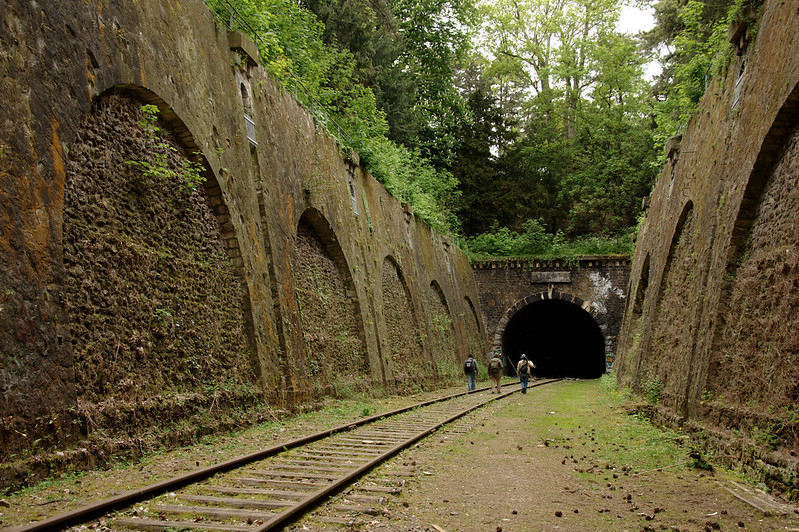
La Petite Ceinture. Photo: Céline Harrand / Flickr
Grey geese migrate twice yearly and Paris is a popular stopping over point. (Some geese like Paris so much they decided to stay, much like tourists who never leave.) Their first resting point is Longchamps stadium in the Bois de Boulogne. The well-fed turf, full of nutrients, perfect for horse racing, is also exactly what they need after a long flight. After replenishing their stomachs, they head off to St James’s Pond in the Bois de Boulogne to join the swans, Canada geese, ducks, grey herons and the odd bar-headed goose, a native of India or China, who probably made their escape from a private collection. They all live in relative harmony, apart from the bad-tempered swans who resent any other birds using their pond.
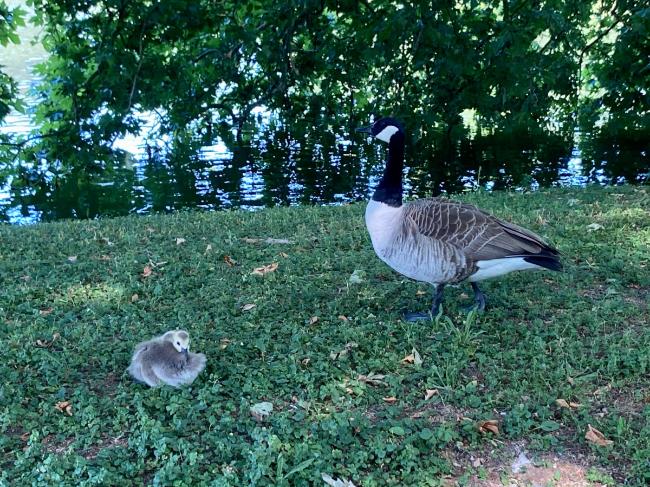
Geese next to the Lac Inférieur, Bois de Boulogne. Photo: Joy Anderson
Established in the 19th century, Paris cemeteries were revolutionary in their design. No longer the sterile, bleak resting places where greenery was frowned upon and weeds and grass an anathema, Père-Lachaise cemetery, for example, which opened in 1804, covers 110 acres with winding paths, trees and plants. It’s a place not only of peaceful remembrance, but also a tranquil haven for wildlife and birds. Foxes and squirrels live in safety, and thousands of crows return from their forays in Paris to roost there each evening. (The much maligned crow may well get a bad press for their scavenging, but they clear a third of Paris’s jettisoned leftovers each day from streets and parks.)
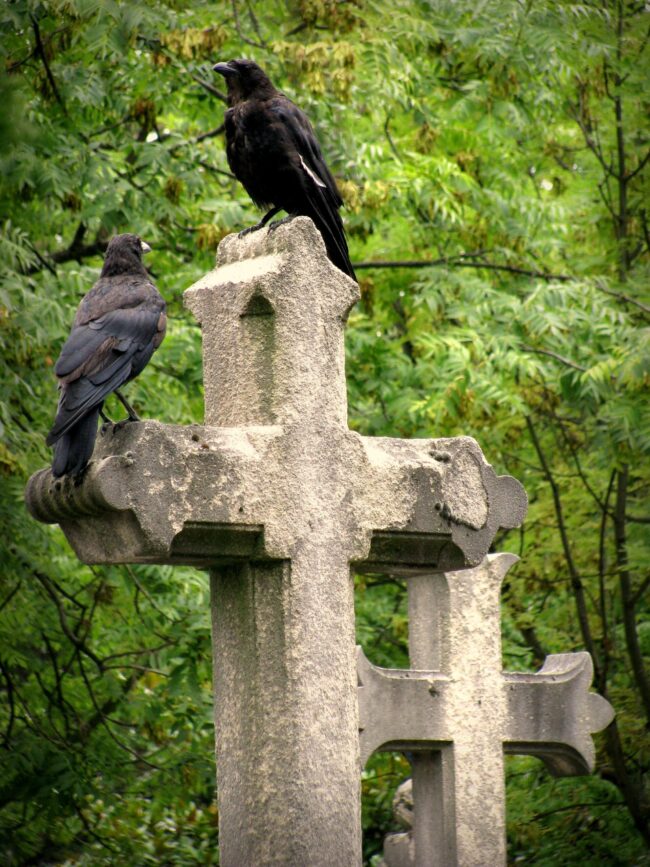
Two birds on a cross at Père-Lachaise Cemetery. Photo credit: jphilipg / Wikimedia commons
Le Champ de Mars, once planted with potatoes, is now lined with imported Turkish hazel trees and Indian lilacs, all looked down on by not just the Eiffel Tower, but the Tower’s very own vigilantes.
The peregrine falcon, the fastest bird in the world, nests at the very top of the Eiffel Tower. It has a clear, unimpeded view down the Seine, perfect for spotting its prey and without any obstacles to get in its way. Owls and kestrels have the same idea and nest happily in the monumental iron structure, an unlikely manmade tree.
In the 19th century in Montmartre, Japanese silk moths were imported and nurseries were constructed with Atlantis trees, the silk worms’ habitat, to satisfy the latest fashion for silk garments. When artificial silk was produced, the need for these nurseries became redundant and nearly all were abandoned. Only in Paris where the Atlantis trees grow in abundance, the silk worms still thrive. The female (who only lives a few days, and must reproduce) sends pheromone signals across Paris for a mate, often as far as Parc Montsouris. The male moth, often exhausted from its journey across Paris, mates for several hours on the leaf where she will lay her eggs, and then dies.
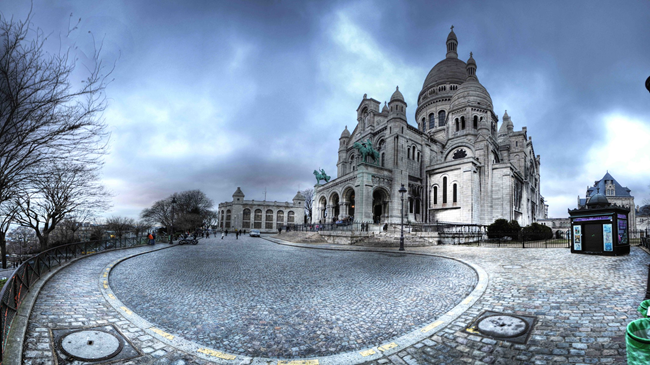
Montmartre, Paris, Photo Credit: Nezar Kadhem/ Flickr
The Seine, once so polluted and dirty that fish could not survive, now has more than 30 species of fish happily swimming in its Paris waters including carp, roach and pike, but perhaps the most remarkable, and a little chilling, is the Hungarian catfish. A monster of a fish, known to eat baby ducks and even pigeons, it can grow up to two meters long. Swimming in the Seine takes on a whole new perspective…
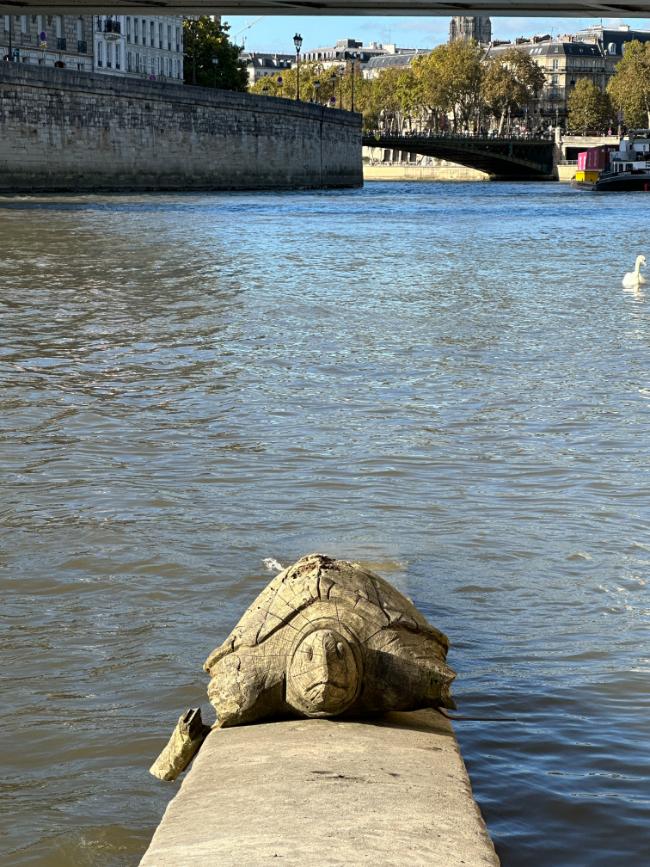
Wooden turtle on the Seine. Photo: Martha Sessums
In 2006, a seemingly small, but profound change occurred in Paris when the use of pesticides was banned. Insects returned in abundance and bees, previously under threat, began to thrive. The flower-filled parks and gardens, the terraces and window boxes of city dwellers became a mecca for bees. The exotic, imported trees imparted honey with a variation of scents and flavors that proved to be irresistible. There are some 400 beehives in Paris. Many on the tops of famous buildings. Notre Dame has about 200,000 bees – they even survived the disastrous fire in 2019, the Mayor’s office at St Denis at the foot of the Basilica, boasts 20 hives, the Grand Palais and the Opera Garnier and the Louis Vuitton headquarters near Pont Neuf now all have their own hives. Restaurants such as the Tour d’Argent have had hives on their roof since 2010.
But it is the Luxembourg Gardens, where the hives are grouped together in the southwest corner of the park, that offers courses in beekeeping. In September a honey festival is held where beekeepers and students sell their honey in a city where beekeeping has become a craze that is unlikely to buzz off anytime in the near future.
Mayor Hidalgo’s aim to cut emissions, plant as many trees as possible, combined with the existing vast areas of parks and green spaces, ensures living on the wild side of Paris will only become even wilder in the future.
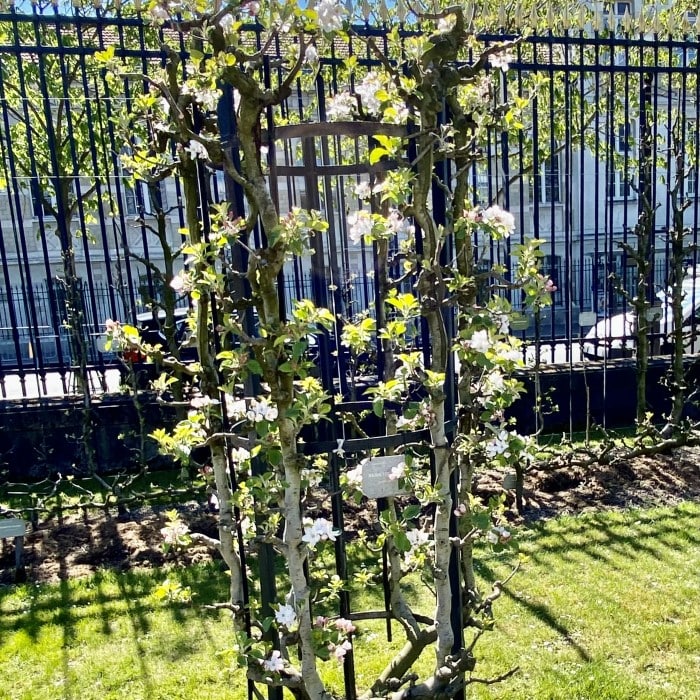
Luxembourg Gardens © Amy Kupec Larue
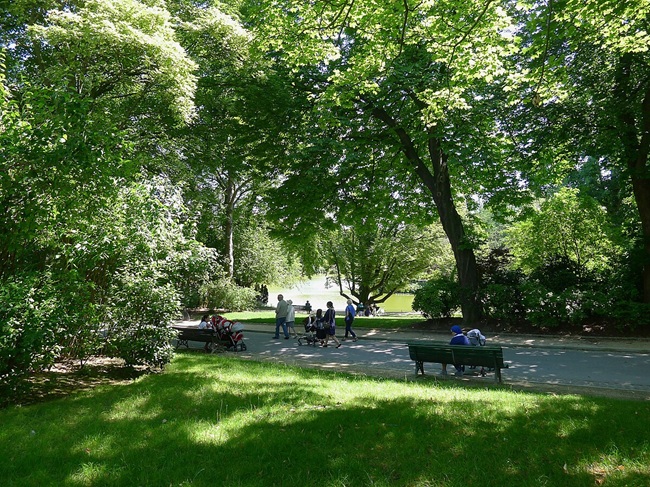
Lead photo credit : Parc Montsouris (allée de la Vanne). Photo: Mbzt/ Wikimedia Commons
More in Jardin des Tuileries, Jardin du Luxembourg, nature in Paris, Seine, wildlife, wildlife in Paris
Related Articles