The Essential Guide to the 5th Arrondissement

- SUBSCRIBE
- ALREADY SUBSCRIBED?
BECOME A BONJOUR PARIS MEMBER
Gain full access to our collection of over 5,000 articles and bring the City of Light into your life. Just 80 USD per year.
Find out why you should become a member here.
Sign in
Fill in your credentials below.
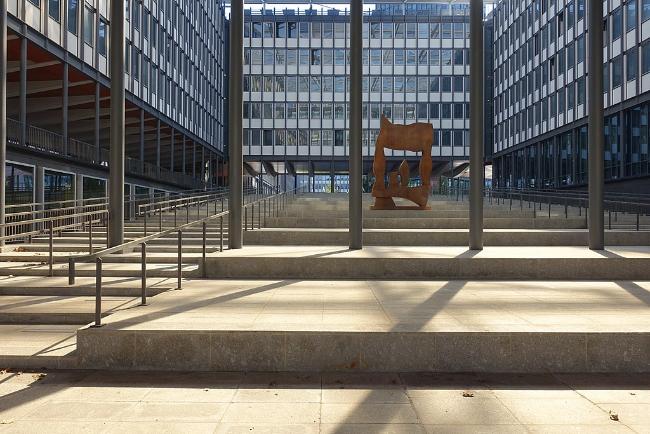
Walking through Paris’ 5th arrondissement is strolling through a condensed history of the city’s greatest architectural moments. In this iconic Parisian quartier, you can explore Roman-era Lutèce, immerse yourself in the Middle Ages at the Musée Cluny, and admire fine examples of 17th–19th century classical architecture including the Panthéon. The architectural journey continues into modernity with the Jussieu University Campus (from the 1970s) and the Institut du Monde Arabe designed by Jean Nouvel in the 1980s.


Things to see and do
Among the must-see landmarks is the Panthéon, final resting place of many of France’s grands noms, or distinguished citizens. Nearby stands the Saint-Étienne-du-Mont Church, whose porch is the filming spot where Owen Wilson’s character in Midnight in Paris awaited his magical 1920s car ride. Speaking of filming, right nearby is the pop culture curiosity: the filming location of Emily Cooper’s apartment from Emily in Paris, on the Place de l’Estrapade — much to the amusement (and annoyance) of locals.
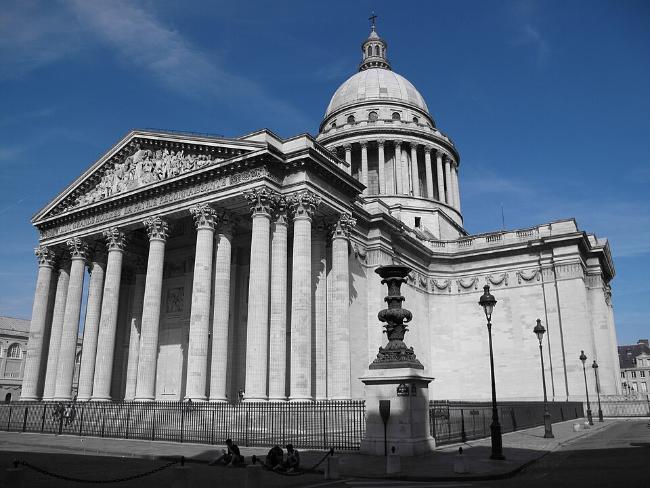
Paris Pantheon. Photo: Velual/ Wikimedia commons
For a breath of fresh air, wander through the Jardin du Luxembourg, originally laid out by Marie de Medici in the 17th century, and later redesigned in the mid-19th century into its current form. Or head to the Jardin des Plantes, home to several of France’s officially designated “remarkable” trees, including the celebrated Jussieu cedars.
Two other important historical sites in the 5th are the medieval art museum, Musée de Cluny, and the ancient Roman amphitheater, Arènes de Lutèce. The Cluny Museum’s site features both Gallo Roman baths and a 15th-century abbot’s house, and it houses treasures like the Lady and the Unicorn tapestries, architectural fragments from the nearby Saint-Germain-des-Près church, and much more. While the Cluny Museum tends to be right in the thick of things on the tourist beat, far fewer visit the Arènes de Lutèce, accessed from rue Monge, just above the Place Monge metro. You could walk right past the entrance and not know it, and visiting is easily coupled with a trip to the Jardin des Plantes.
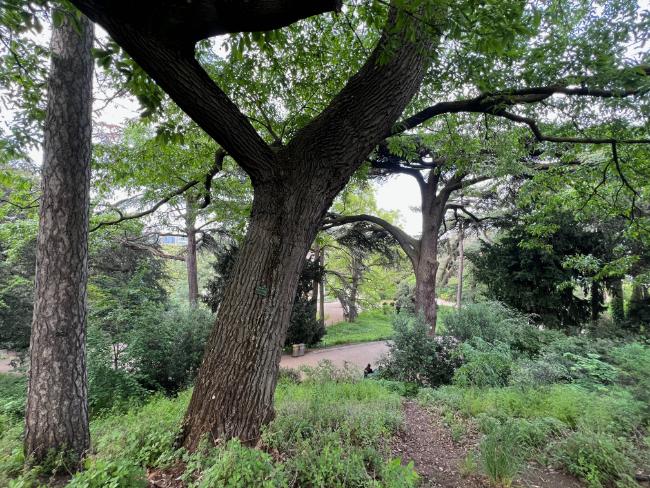
Jussieu Cedars of Lebanon, planted in 1734. Photo: Elizabeth Cummings
Where to Eat
The 5th boasts some of Paris’s most celebrated dining. The legendary Tour d’Argent, said to be founded in the 16th century (although not documented until the mid-19th) is an historic restaurant where guests can enjoy the famed “numbered duck.”
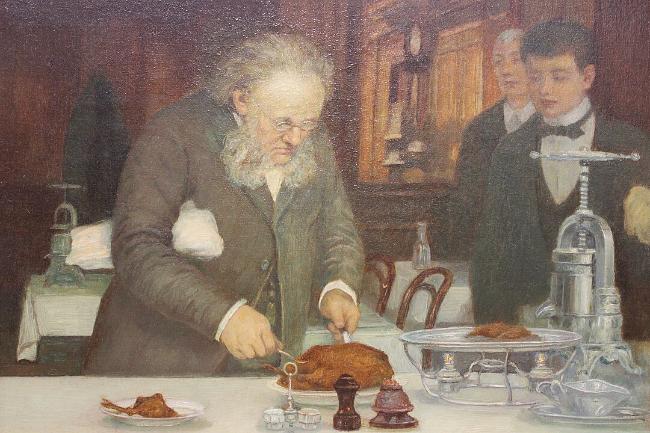
Maitre d’Hotel and eventual owner Frederic Delair, cutting a duck in the 1890s. Image: Pascal Radigue/ Wikimedia Commons
Across the street, its more casual sister restaurant, La Rôtisserie d’Argent offers classic fare and terrace seating on the Pont de la Tournelle, plus a boulangerie next door.
Near the Jardin des Plantes, the Michelin Bib Gourmand–rated Baca’v serves refined yet approachable dishes in a warm atmosphere. For something sweet, try Glaces Glazed, where inventive ice cream flavors — like popcorn or pistachio black sesame —are made fresh each morning.
Back on Rue Mouffetard, Otto by chef Eric Trochon serves small plates bursting with flavor. Surrounding Square Saint-Médard, you’ll also find an array of food shops that keep the market tradition alive: two primeurs (produce stands), a poissonnier (fish stand), an Italian épicerie, a chocolate shop, two fromageries (cheese shop), and two boulangeries (bakery).
Bars/Nightlife
At the base of the historic market street Rue Mouffetard lies the charming Square Saint-Médard, with its central fountain and flowerbeds surrounded by cafés perfect for watching the world go by. A favorite is Cave la Bourgogne.
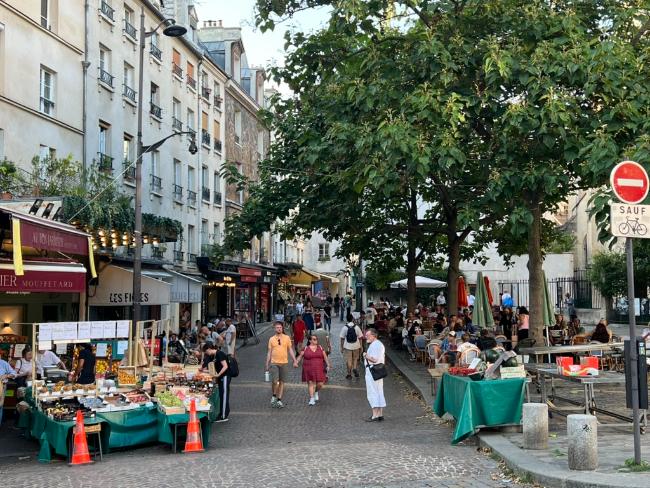
Base of the Rue Mouffetard. Photo: Elizabeth Cummings
A bit down from the square is Bar 1802 at the Hotel Monte Cristo, which boasts over 1,500 types of rum from around the globe, with equally eclectic decor, and a bartender from the French island La Réunion, the source of some of the rums on offer.
If you still have energy, dance it away at the nightly salsa, tango, and bachata gatherings along the Quai Saint-Bernard – a hotspot for dancing and people-watching.
Thanks to the Sorbonne’s presence, the 5th is also dotted with student-friendly bars, especially near the Seine, on the upper Rue Mouffetard by the Panthéon, and around Jussieu University.
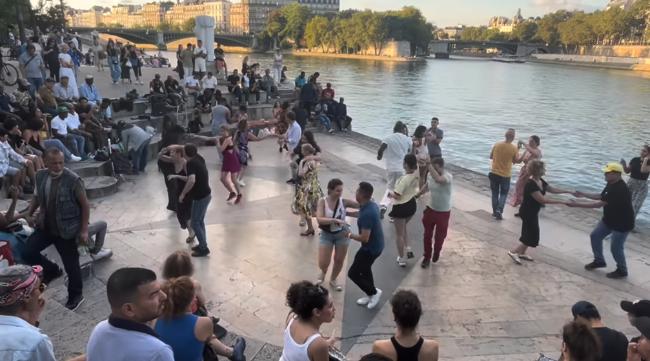
Still image from the Youtube video, Salsa aux quais de Seine 2024
Shopping
True to its intellectual heritage, the 5th is a paradise for book lovers. The legendary Shakespeare and Company sells English-language titles in a cozy, literary setting. Another favorite is the Abbey Bookshop. Strolling along rue Monge near the Arènes de Lutece, there are a handful of used book sellers.
Outdoor enthusiasts will appreciate Au Vieux Campeur — a “village” of 25 specialty shops around Rue des Écoles, with a store-by-store guide to help you find exactly what you need.
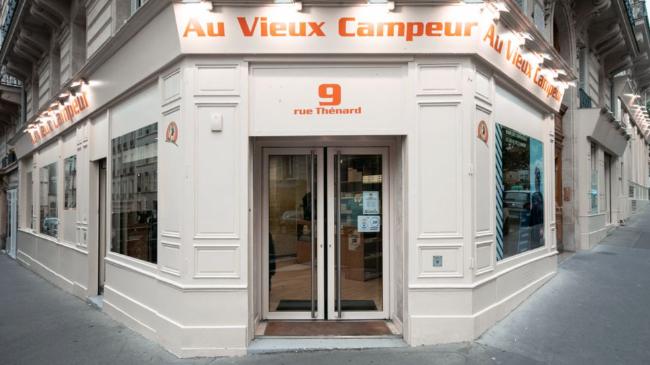
courtesy of Au Vieux Campeur
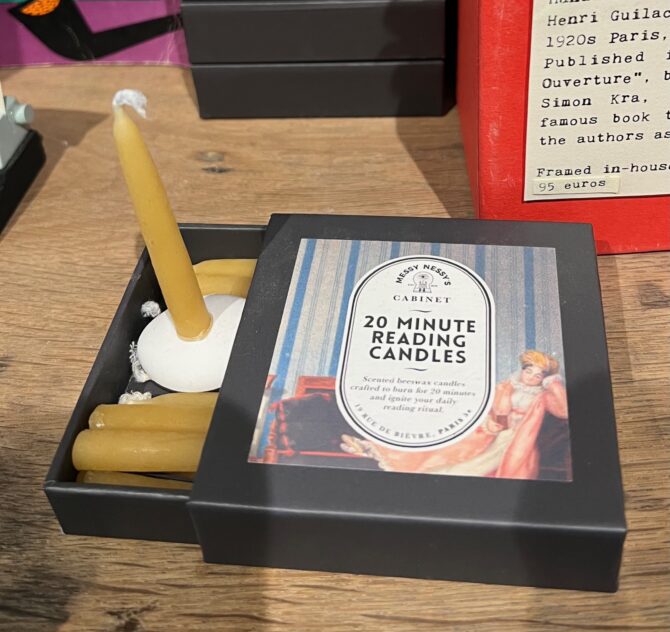
For an atmospheric browsing experience and to discover unique mementos of Paris, head to Messy Nessy’s Cabinet of Curiosities, opened in 2024 by Vanessa Grall, the French-American author behind several travel guides, as well as the blog and Instagram account Messy Nessy Chic. The boutique offers an assortment of whimsical treasures: “Eau de Seine” (billed as the souvenir nobody asked for), 20-minute reading candles, and miniature replicas Parisian streetscapes, including one of a bouquiniste stall – the iconic booksellers that line the riverbanks near Notre-Dame.



Beauty lovers should stop at Pharmacie Monge Notre Dame, known for competitive pricing and frequent discounts, often rivaling the well-known and very crowded City Pharma. (Note that Bonjour Paris members get an exclusive discount (up to 30% off). Click here to access the coupon.)
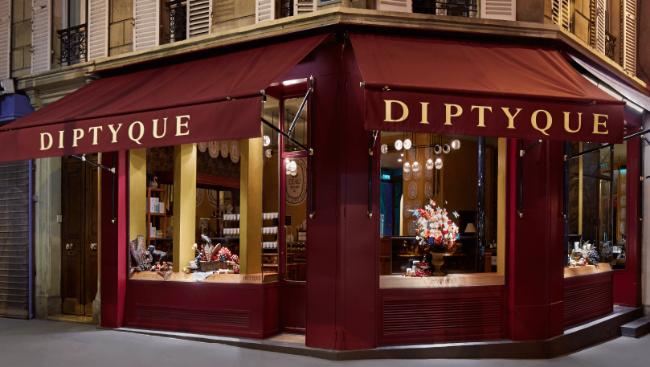
courtesy of Diptyque
Lead photo credit : Arènes de Lutèce, remains from the Gallo-Roman era in Paris. Wikimedia commons
Related Articles