
Exploring André Le Nôtre’s Gardens at Versailles

- SUBSCRIBE
- ALREADY SUBSCRIBED?
BECOME A BONJOUR PARIS MEMBER
Gain full access to our collection of over 5,000 articles and bring the City of Light into your life. Just 80 USD per year.
Find out why you should become a member here.
Sign in
Fill in your credentials below.
Perhaps you have been to the Palace of Versailles, but not had time to see and fully appreciate everything? On a second or subsequent visit it can be good to narrow your focus and do a little specializing, and this autumn there’s an innovative way to learn more about the palace gardens. A visit to the virtual exhibition, The Lost Gardens of the Sun King, followed by an exploration of the gardens themselves would make an excellent outing, packed with horticultural beauty and laced with a little history and art.
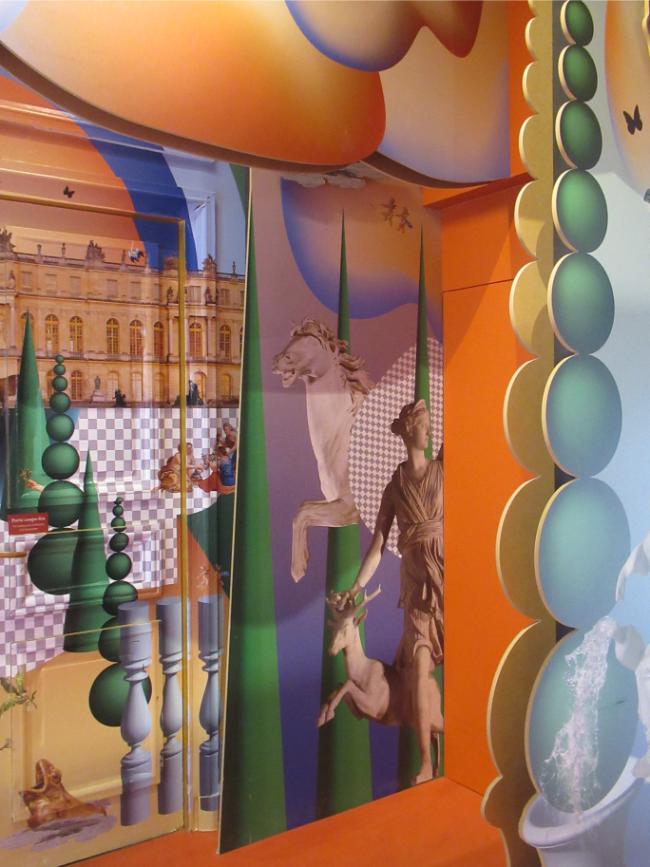
Don a VR headset and you can whizz back to 1682 for a tour of the gardens led by André Le Nôtre himself, gardener extraordinaire to Louis XIV and still respected as one of Europe’s most influential garden designers. He will take you around three areas of the garden which have disappeared over time but been reconstructed virtually using palace archives and archaeological research. Surrounded, for instance, by pink flamingos from the Royal Menagerie, you’ll be whisked back over three centuries to experience the Versailles gardens as Louis’ subjects did, gaining a historical perspective and an insight into the design features from the château’s heyday which still influence the gardens today.



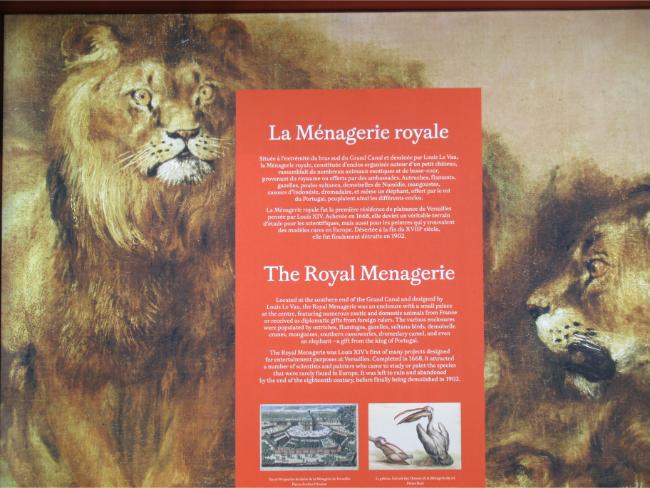
In the Royal Menagerie, farmyard animals lived alongside exotic creatures, some brought to France from her colonies, others, like the elephant which was a present from the king of Portugal, diplomatic gifts. The menagerie was certainly a way for Louis to show off his power and influence, but it also became a site of scientific study where rare or unknown species could be seen. It was abandoned after the revolution. Next, you’ll explore the Grotto of Thetis, a hidden marvel decorated with shells, pearls and coral, where you can admire marble sculptures of Apollo and underwater creatures – nymphs, tritons, nereids – installed there in 1675, but abandoned 100 years later by Louis XVI as too expensive to maintain.
The third site you’ll explore, the Bosquet du labyrinthe, or Labyrinth Grove, has also disappeared, but it was the forerunner of a design feature you will still see all over the gardens of Versailles, namely secret spaces, hidden among trees, which open up and surprise you as you wander the pathways. You’ll make a virtual visit to this clearing where you can admire rockeries and fountains illustrating the Fables of Aesop. Le Nôtre designed it and filled it with lead models, painted to resemble many of Aesop’s characters, just some of the many whimsical curiosities he designed to delight visitors.

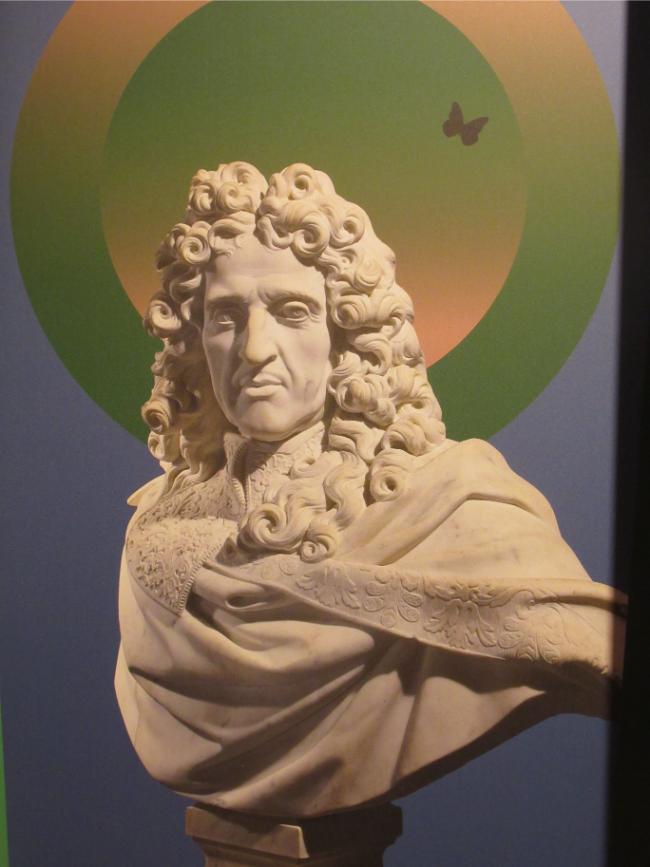
It was the collaboration of two men, Louis XIV and André Le Nôtre, both singularly driven characters, which made the grounds at Versailles the blueprint for spectacular gardens all over Europe and beyond.
André Le Nôtre, born in 1613 into a family of royal gardeners, worked for the French court for over 60 years, most of them during the long reign of Louis XIV. He was still in his 20s when he took over the position of Head Gardener at Les Tuileries from his father, eventually modifying the design and extending the central pathway into the distance, creating the wide, elegant avenue we know today as the Champs Élysées. His legacy can be seen in many of the other châteaux around Paris, most notably Fontainebleau, Saint-Germain-en-Laye, Vaux-le-Vicomte and Chantilly, but it is for his design at Versailles that he is most famous. He enjoyed the king’s favor and friendship, not given freely to many, right up until his death in 1700.

Louis XIV certainly saw his gardens as a chance to prove his wealth and power, but he was also passionate about creating the most beautiful landscapes he, or his trusted designer Le Nôtre, could imagine. They both rose to the challenge of creating beauty and harmony from what had been marshland, a feat much admired by the Duke of Saint-Simon, author of a chronicle on life at Louis’ court. The king, he wrote, “delighted in subduing nature and taming it with art and treasures.” Louis was so proud of his gardens at Versailles that he wrote a guide to them in 1689 and had it updated and republished several times after that.
Le Nôtre spent the two decades from 1660 to 1680 re-landscaping the gardens and it was a monumental project, beginning with the transfer of many tons of soil to level the ground, the digging out of the Grand Canal, the creation of parterres, walkways, symmetrical pathways and hidden groves. Trees were brought from different regions of France, thousands of workers, sometimes whole regiments, were employed to do the hard graft, artists and architects were commissioned to add embellishments including fountains, pools, grottos and statues.
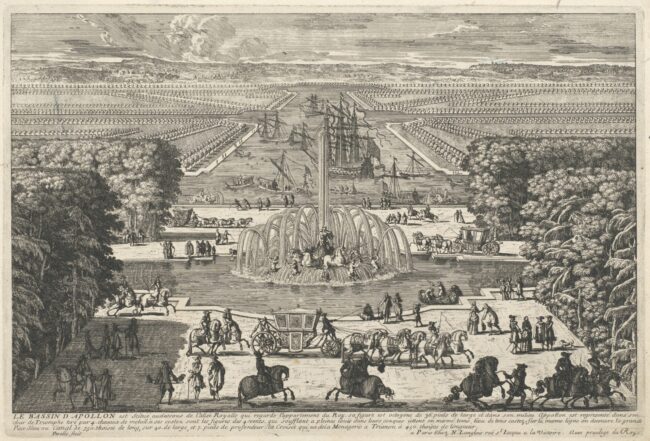
Adam Perelle, Le Bassin d’Apollon (The Fountain of Apollo, Versailles), 1680s. Public domain
6 signs of Le Nôtre’s influence at Versailles today.
1. The grand design: one of Le Nôtre’s signature features is his eye for design on a large scale, creating big, impressive vistas, sometimes stretching as far as the eye can see. Looking down the gardens from the back of the palace, your eye will be drawn along the Grande Perspective, which bisects the gardens right down the middle and reaches to the Grand Canal in the distance.
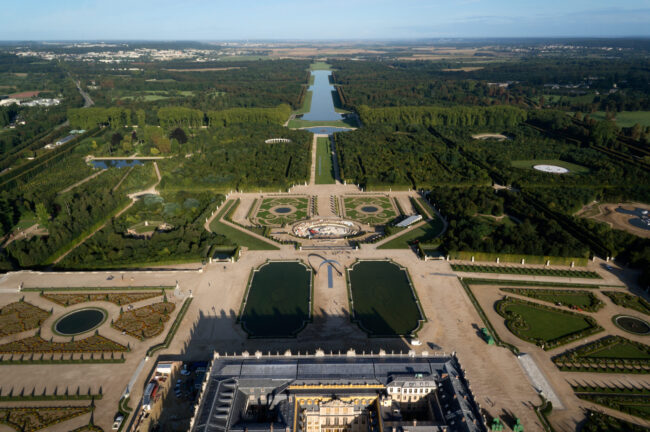
Aerial view of the Palace of Versailles. Photo: ToucanWings/ Wikimedia Commons
2. Symmetry and surprise: at first glance, a map of the gardens reveals an orderly design where straight paths bisect each other at right angles, creating square spaces where groves are planted and seemingly matching parterres lead off right and left directly behind the château. But each grove is unique, reached by a winding path until a clearing opens up and reveals unexpected statues or fountains. Each parterre has its own spectacular feature, one being dominated by the grandiose Bassin de Neptune and the other by the Orangerie.
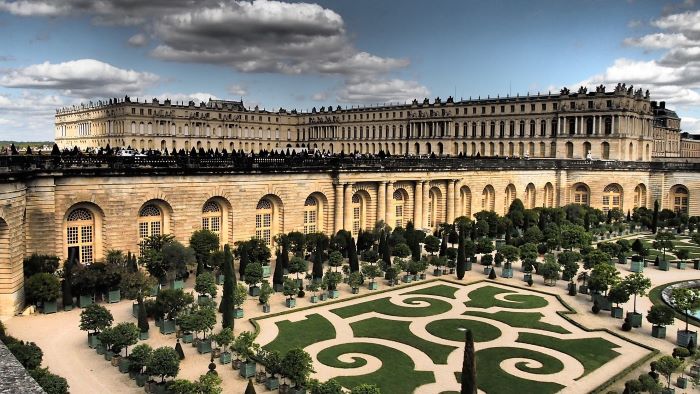
The Palace of Versailles. Photo: Andreas H./ Pixabay
3. The groves: there were 15 in the time of Louis XIV, each a different shape, designed as little havens for lingering in, perhaps to dine al fresco, sometimes to enjoy a little music and theater. In the Ballroom Grove, for instance, musicians sat above an artificial waterfall, a marble island was created for guests to dance on and the whole was surrounded by the grassy terraces of an amphitheatre where spectators could sit.
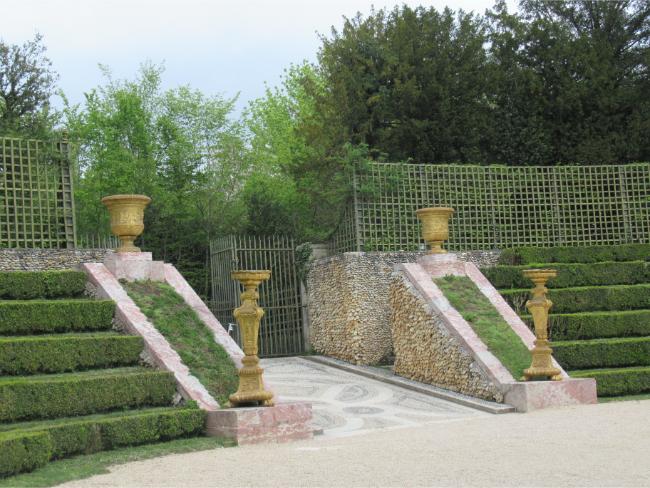
Ballroom Grove. Photo: Marian Jones
4. Water: Louis commissioned hydraulics experts to drain the marshland and create stunning water features, most notably the grand Canal, a mile-long waterway which took 11 years to build. It was often the setting for water festivals, sometimes featuring two gondolas which had been gifted to him from the Republic of Venice. Clever tricks were devised for the many pools and ponds, for example Louis himself prompted the Three Fountains Grove where the water jets spurt out in a fleur-de-lys pattern.
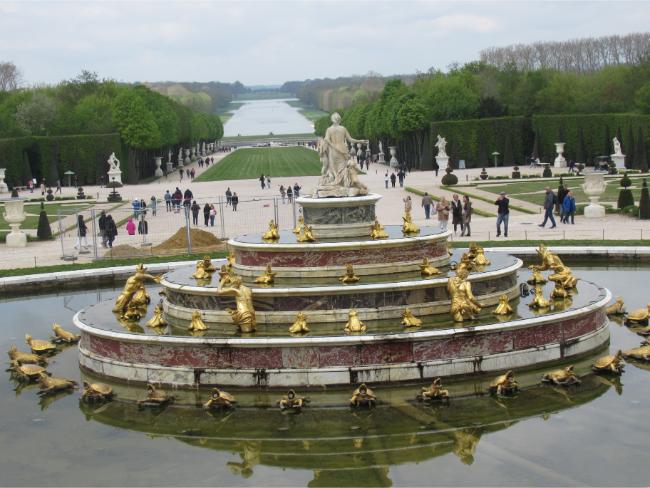
Latona Fountain. Photo: Marian Jones
5. Artwork: formal statues, often in pairs, punctuate the main alleyways and gilded figures adorn the ponds and pools. You won’t forget the golden frogs, turtles and lizards on the Latona Fountain, designed by Le Nôtre to depict the story of the Roman goddess who turned peasants into animals to punish them. Le Nôtre used topiary as a design feature too and you will still see many clipped hedges separating the spaces and artistically sculpted trees as decorative features.
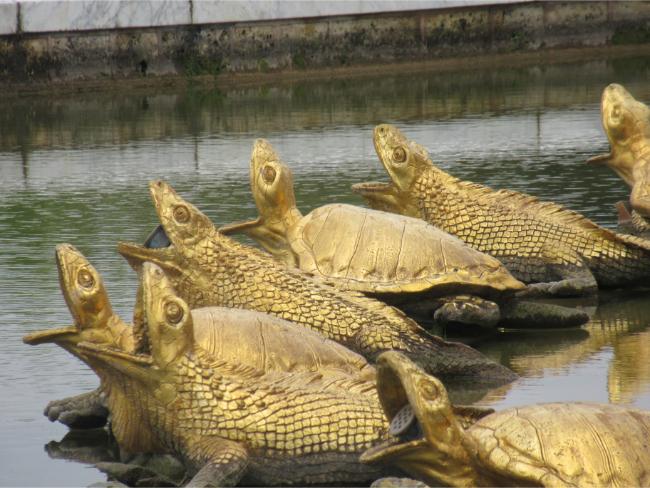
Latona Fountain detail. Photo: Marian Jones
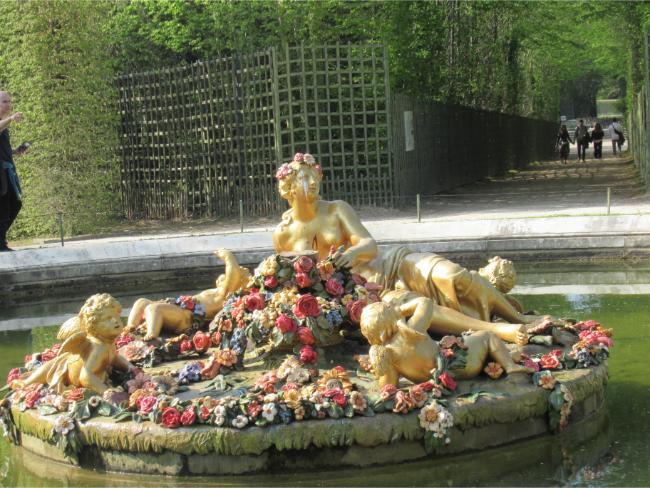
6. Classical references: many of the statues relate to stories from Greek and Roman mythology. Look out for the beautiful Flora and Four Cupids, a golden statue of the goddess of spring, surrounded by colorful flowers and reclining on an island in the middle of a pond or for Bacchus, the god of wine, relaxing amid tumbling piles of succulent grapes. And, of course, the greatest reverence is reserved for Apollo, the sun god on whom Louis styled himself. Le Nôtre sited the Apollo Fountain prominently on the Grand Perspective and the majestic sight of him rising up from his golden, horse-drawn chariot is one of the unforgettable sights of Versailles.
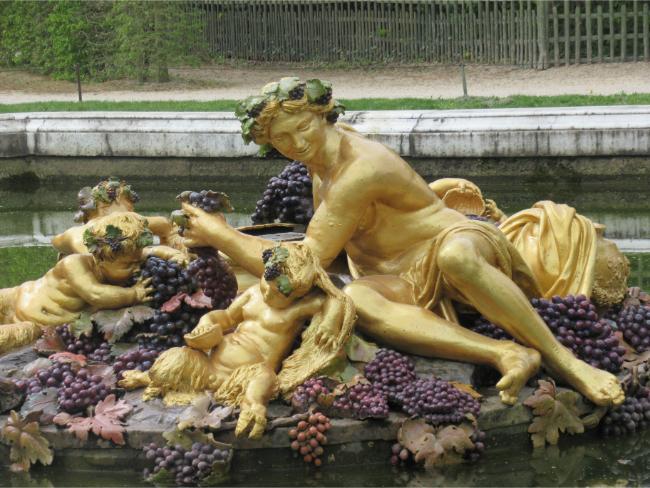
Bacchus. Photo: Marian Jones
Allow at least half a day to visit the Lost Garden of the Sun King exhibition and then look around the gardens. A map of the gardens is available at their entrance, so you can plan a route to take in all the main sights. Ideas for extending your visit to a full day include taking the time to visit the Trianon area where highlights include Marie-Antoinette’s favourite retreat, the Petit Trianon and, just nearby, the Queen’s Hamlet where she had cottages and a working farm set up so she could retreat into rural life, far from the demands of the court. Alternatively, opt for one of the guided tours available or cross the road opposite the main château entrance and visit the Gallery of Coaches.
DETAILS
The Lost Gardens of the Sun King
Palace of Versailles
Until January 4, 2026 (closed on Mondays)
9 am to 5 pm
Full price €15 (available in English)
Further information on visiting the gardens at Versailles
The Petit Trianon
The Queen’s Hamlet
Guided tours of the Palace of Versailles
The Gallery of Coaches
Lead photo credit : Flora fountain. Photo: Marian Jones
More in André Le Nôtre, Versailles
Related Articles


By Marian Jones