
Vaux-le-Vicomte: Christmas Splendor and a Catastrophic Party
- SUBSCRIBE
- ALREADY SUBSCRIBED?
BECOME A BONJOUR PARIS MEMBER
Gain full access to our collection of over 5,000 articles and bring the City of Light into your life. Just 80 USD per year.
Find out why you should become a member here.
Sign in
Fill in your credentials below.
They really know how to throw a party at the Vaux-le-Vicomte château, especially at Christmas when their displays and events are famed throughout the Île de France. It’s all very fitting because history tells us that it hosted one of the most extravagant soirées ever held, although in fact it was an event which went disastrously wrong and cost the host, Nicolas Fouquet, Controller of the King’s Finances, very dearly indeed. If you take an audio tour on your visit, you will hear the story, although not over the Christmas period when it’s not available because the various seasonal events take over the whole site.
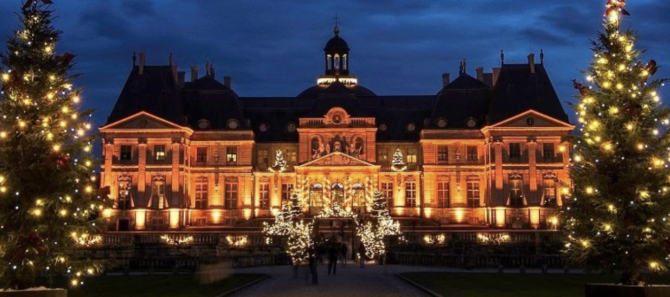
2025 marks the 20th season of Vaux-le Vicomte’s Grand Noel, a whole series of activities staged in the château and its spectacular grounds. Inside, explains the website, you will find un décor somptueux, where blazing fires warm rooms full of Christmas decorations and you can sign up for an hour-long immersive spectacle called Noël sans fin (“Perpetual Christmas”) based on Charles Dickens A Christmas Carol. Outside there’ll be ice skating on the Grande Allée and at dusk the château’s façade will light up and show a 1000-square-meter presentation of a dream world. Further into the idyllic grounds, there’ll be marshmallow toasting, a children’s treasure hunt, and a chance to write your Christmas wish and hang it on a tree.
The lavish approach seems fitting in a château whose first owner went all out to impress his guests for a party thrown in August 1661. Nicolas Fouquet laid on many courses of rich food alongside lavish entertainments including music, theater, ballet and fireworks, all designed to show off the splendid grounds. Hundreds of courtiers were to attend and, most importantly the king himself, Louis XIV was coming. Hosting the monarch, thought Nicolas Fouquet, would be “mon apothéose,” the absolute pinnacle of his rise in society. In fact, the evening marked the beginning of his end.
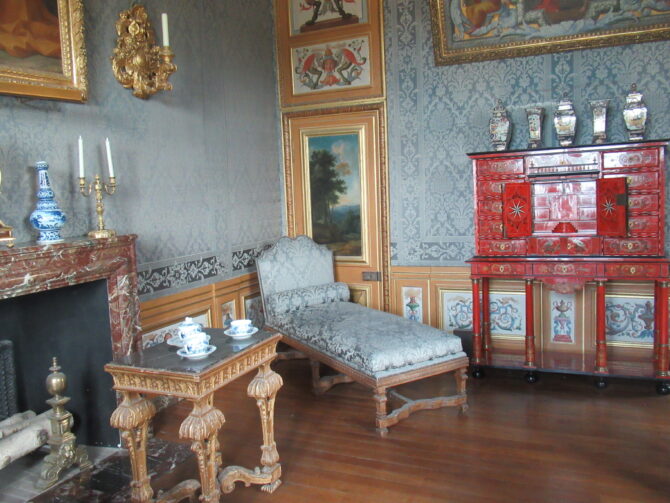
It’s important to stress the grandeur of the château, which was more elaborate than any built before it anywhere in France. Fouquet, as controller of the King’s finances, had achieved wealth and reputation and ploughed both into the design of Vaux-le-Vicomte. He wanted, he said, something which would be du jamais vu (something never seen before), un ravissement pour les yeux (a delight to behold), and he commissioned a trio of creative talents to fulfill his dream. The architect Louis Le Vau designed the château itself and André Le Nôtre landscaped its surroundings. It was the first major project on which they collaborated and they so impressed the king that he snapped them up to work on his new project, Versailles. The artist Charles le Brun masterminded the sumptuous interior decoration.
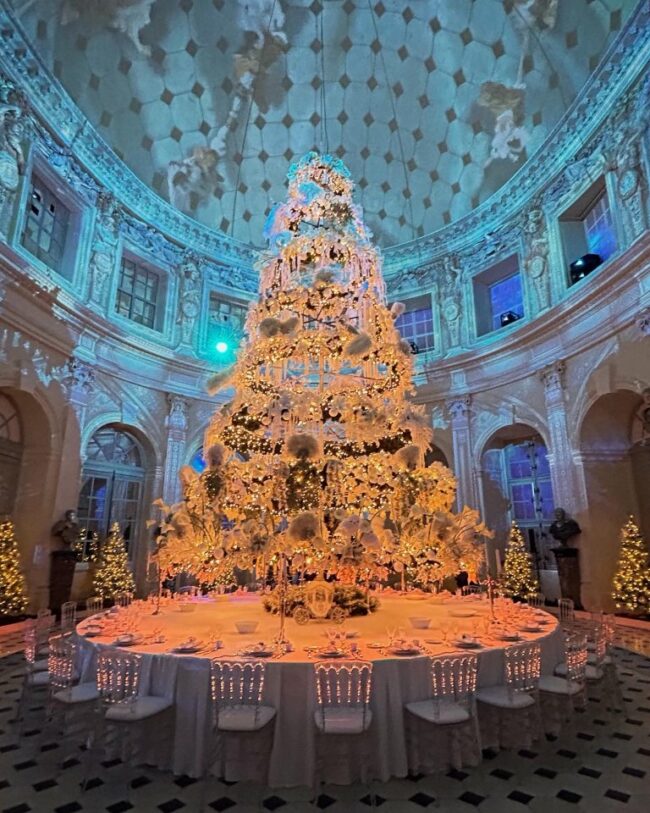
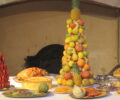
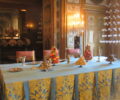
Christmas at the chateau. courtesy of Château de Vaux-le-Vicomte
The audio guide account of the party opens, as you stand in the main entrance hall, with the excited whispering of household members telling each other that the king is just about to arrive: “le roi va venir, le roi va venir.” It was high summer, August 17th, 1661 and the weather was perfect, so the royal party were taken on a tour of the grounds, their coach rattling down the central Grande Allée so that they could admire the pools and fountains, all in full flow, as they passed and then stop for a look back at “the most beautiful perspective in the world.”
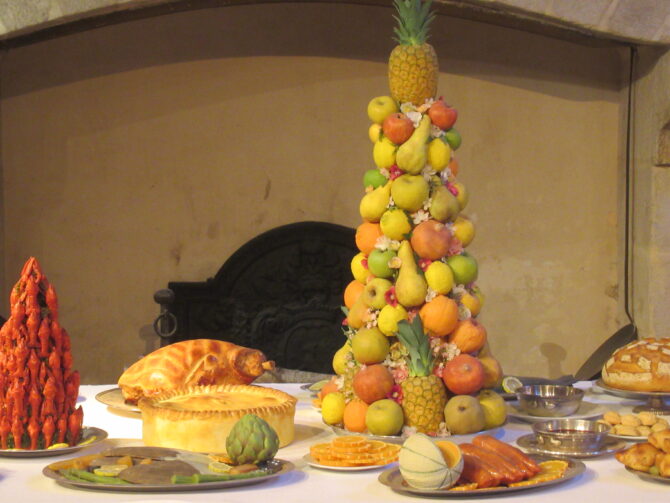
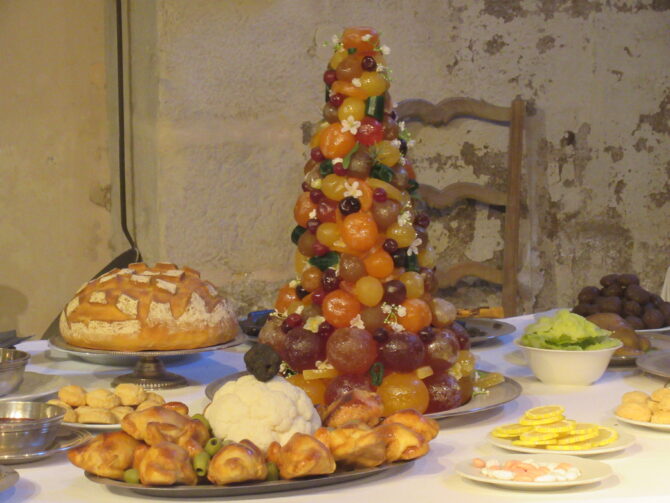
Next, the party swept back into the château where the chef François Vatel, another member of Le Fouquet’s staff who so impressed the king that he employed him, had prepared an extravagant feast. Vatel had been tasked with dazzling the king with the setting, the table decoration, and “the audacity, harmony, rarity, opulence and richness of the food served.” The guests dined to a musical entertainment performed by 24 violinists and were served an array of dishes: pheasants, ortolans and quails, alongside bisques (creamy soups made from lobster and crab), the choicest meats and finely crafted desserts.
More entertainment followed. A performance of Molière’s Les Fâcheux, a ballet-comédie specially written for the occasion, was given in a theater set up in the gardens and followed by a firework extravaganza. The grottos and statues were lit up by the soaring fireworks, all accompanied by music provided by the Mousquetaires du Roi. Really, Nicolas Fouquet spared no expense to fulfill his aim of impressing everyone from the monarch downwards and the writer Jean de la Fontaine, one of the many, many guests, wrote afterwards that “Vaux never looked more beautiful than it did on that evening.”
There was just one problem. Louis, himself no stranger to ostentation, was jealous. He summoned Le Fouquet to his suite late that night and berated him for trying to outshine his monarch. “As far as I’m aware,” intoned the voice of Louis on the audioguide, “it is I who am king.” Fouquet, fearing for his future, immediately offered to hand the château over to Louis, but the king was enraged. What, he thundered, would anyone think of him if he accepted such a gift from a subject? It was several more weeks until Fouquet was arrested, but this was the moment of his undoing, as the writer Voltaire later noted. He wrote that “at 6 in the evening on the 17th August, Fouquet was king of France; at 2 the next morning, he was a nobody.”
The king’s envy was not the only cause of Fouquet’s demise. Another influential courtier, Jean-Baptiste Colbert, also had reasons to bring him down because he and Fouquet were rivals for the position of finance minister. Colbert had taken pains to suggest to Louis that Fouquet’s great wealth was due in part to embezzling royal funds and the staging of such lavish entertainment can only have deepened the king’s suspicion. Sure enough, three weeks later Fouquet was arrested and put on trial for maladministration and the catch-all crime of lese-majesté, which can mean anything from insulting the monarch to full-blown treason. He spent three years in prison, awaiting the verdict, while Colbert took over his role as superintendent of finances and became the king’s indispensable adviser.
Three years of legal wrangling followed, during which time some important people such as La Fontaine and Mme de Sévigné wrote letters of support for Fouquet. In the end, although nine members of the Chambre de Justice voted for the death penalty, the majority opted for banishment abroad. Louis, furious at the leniency of the outcome, changed the sentence to life imprisonment and Nicolas Fouquet was locked away in the prison of Pignerol in the Alps, where he died in 1680, 19 years after his ill-fated party. Louis immediately seized Vaux-le-Vicomte and emptied it of many of its fine furnishings and artworks, although Madame Fouquet was able to move back into the château a few years later. Colbert served as the minister of finance to the king for over 20 years, until he died in 1683.
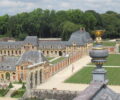
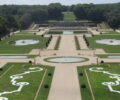
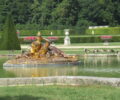
History suggests that Fouquet had indeed built up personal wealth while overseeing the royal finances, but also that his dramatic fall from grace was partly due to the intrigues of others. What is certain is that the grand fête he staged was the final trigger which prompted Louis to take action against him. So, Nicolas Flouquet spent his last two decades as a prisoner on the order of the king he had served and the audio guide retelling of his story describes him spending that time reminiscing about his beautiful Vaux-le-Vicomte, proud of the harmony he had created between “l’art et la nature.”
Fouquet’s friend La Fontaine wrote a long poem pleading with Louis to show clemency. Louis may have remained deaf to the pleas expressed in the Elegy to the Nymphs of Vaux, but it is a moving tribute to Fouquet and his sad story. The opening lines invite the nymphs at the château to fill the air with their cries and let their tears flow through its beautiful fountains. A visit to Vaux-le-Vicomte is a treat in any season and especially so during its Christmas program. If you are able to visit, take a moment to recall the splendors of the party held there more than three centuries ago and the catastrophe it unleashed for Nicolas Fouquet, the château’s proud creator.
Details for booking a Grand Noël event at Vaux-le-Vicomte can be found here
The 2025-6 Christmas season runs through January 4th, 2026.
Lead photo credit : courtesy of Château de Vaux-le-Vicomte
More in Chateau Vaux le Vicomte, Christmas
Related Articles

By Marian Jones