
On the Hunt for International Christmas Baked Treats in Paris

For many, the Christmas season is the most festive time of the year. For those living abroad, it’s a highly nostalgic moment when people naturally long to celebrate and indulge in the traditions of their home countries, especially when it comes to holiday breads, cakes, cookies/biscuits, and anything else in the sugar-and-spice category.
In Paris, finding sources for non-French Christmas baked goods presents a challenge but, if undertaken in the spirit of a treasure hunt, can definitely be part of the season’s fun. A few country-specific bakeries and cafes do offer freshly-baked holiday treats from their respective homelands, but there is not an abundance of choices and seemingly likely candidates close all the time.
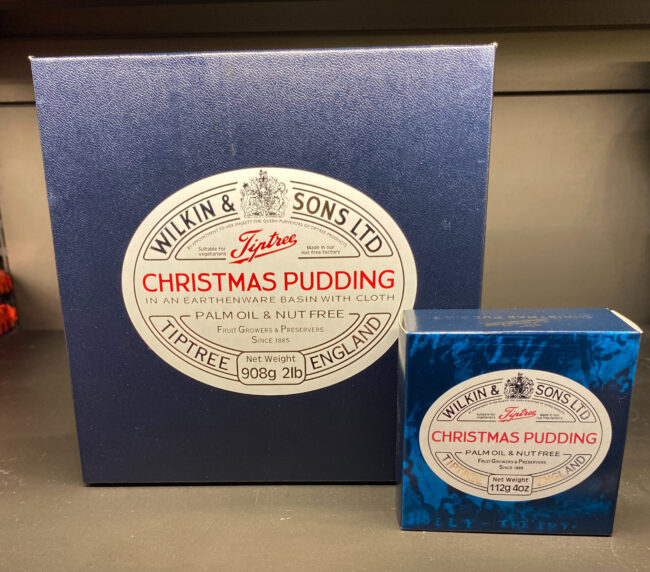
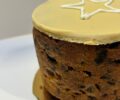
Christmas pudding. Photo: Joy Anderson
On the other hand, many traditional Christmas cakes and breads are baked to last from Advent to Epiphany, frequently aided by the liberal use of spices, coatings such as marzipan and, in many cases, booze. Such baked goods tend to travel well, and an impressive variety can reliably be found in the aisles and specialty stands of the grandest Parisian épiceries: La Grande Epicerie (Bon Marché Rive Gauche and Passy) and Galeries Lafayette Le Gourmet. Shopping this way means no need to pretend something is as good as the real thing: it is the real thing.
If none of the suggestions above seem to fit the bill, there remains the do-your-own-baking option, especially fun for a family project. International ingredients can be found at la Grande Epicerie, et al., as well as at the weekly outdoor and covered food markets in every arrondissement, especially Marché Bastille and Marché d’Aligre. There are also quite a few smaller, country-specific grocery shops scattered all over Paris, while the dazzling array of international foods, spices and spirits at Izraël, Epicerie du Monde (Marais district) puts it in a category of its own.
If in need of cake tins, pudding molds, cookie cutters, piping tools, decorative candies and the like, an in-person visit to professional pastry-equipment supplier, Mora, in the Montorgueil district, is a top choice.
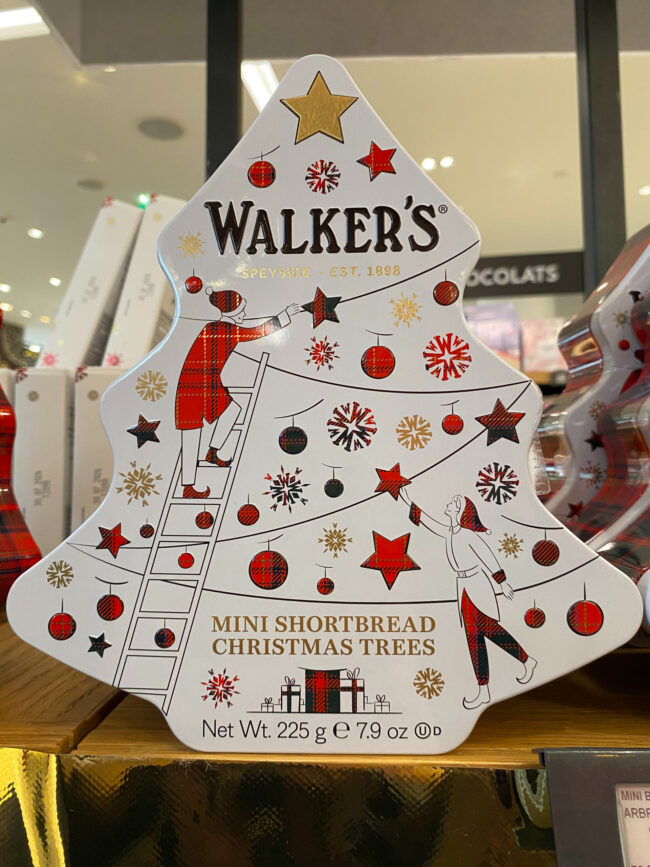
Walker’s shortbread. Photo: Joy Anderson
UK and Ireland
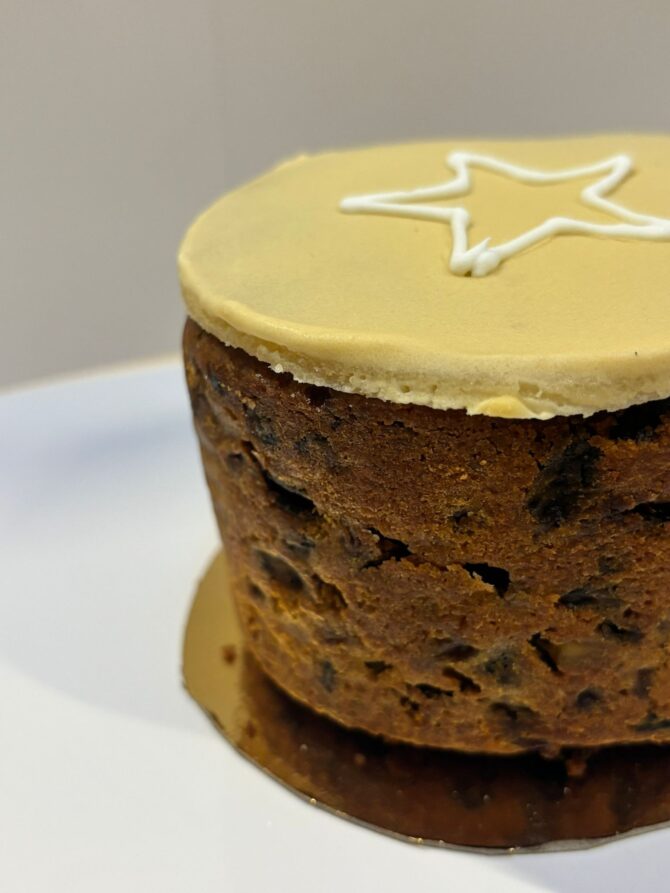
The traditional Christmas fruitcake enjoyed throughout the British Isles and Ireland today can trace its heritage back to medieval times, appearing first as a savory porridge, then a stodgy but delicious steamed pudding. During the reign of Queen Victoria, trade with the imperial colonies reached a new peak. Indian spices, South African dried fruits, Mediterranean citrus and Caribbean sugar all became more readily available, resulting in the creation of the spicy, fruit-laden Christmas cake now a fixture on holiday tables. Typically, the cake is baked in November and doused with brandy or rum over regular intervals to develop its flavors more fully.
Another seasonal staple is mince pie or tart. No longer made with minced beef, the filling now consists of dried and candied fruits, apples, nuts, and spices — typically cinnamon and nutmeg — baked in a rich short crust dough, either as a double-crust pie or an open-face tart topped with a pastry star.
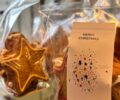
While not exclusively British, iced shortbread and gingerbread biscuits cut into festive shapes are widely available and extremely popular.
Rose Bakery, in the foodie-heaven rue des Martyrs (plus a few tea shops around town), is officially a British and American bakery. For all of the above, it’s the top pick in Paris for products baked on site.
Though Marks & Spencer has long departed, many of the resources listed in the introduction dependably stock their Christmas shelves with the same items, generally in festive holiday packing.
Rose Bakery, 46 bis rue des Martyrs, 9th
US and Canada
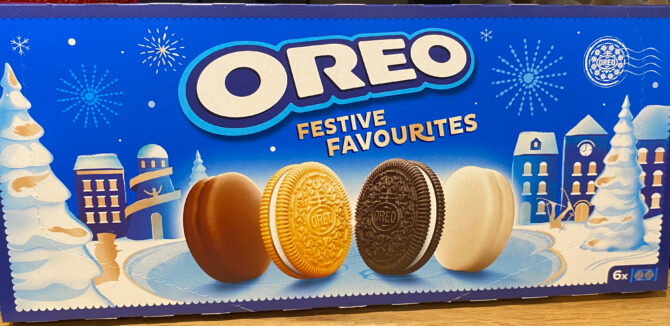
Now it gets complicated, because it’s well-nigh impossible to declare a clearcut favorite Christmas cake, cookie or pie in either of these historically multicultural, continent-spanning nations.
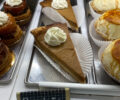
A 2024 US study in Newsweek ranked the top Christmas favorites by state: 1. pumpkin pie (20 states), 2. sugar cookies (15 states), 3. red velvet cake (6 states). Also-rans were pecan pie, carrot cake, and apparently tiramisu and rice pudding — their list, not ours!
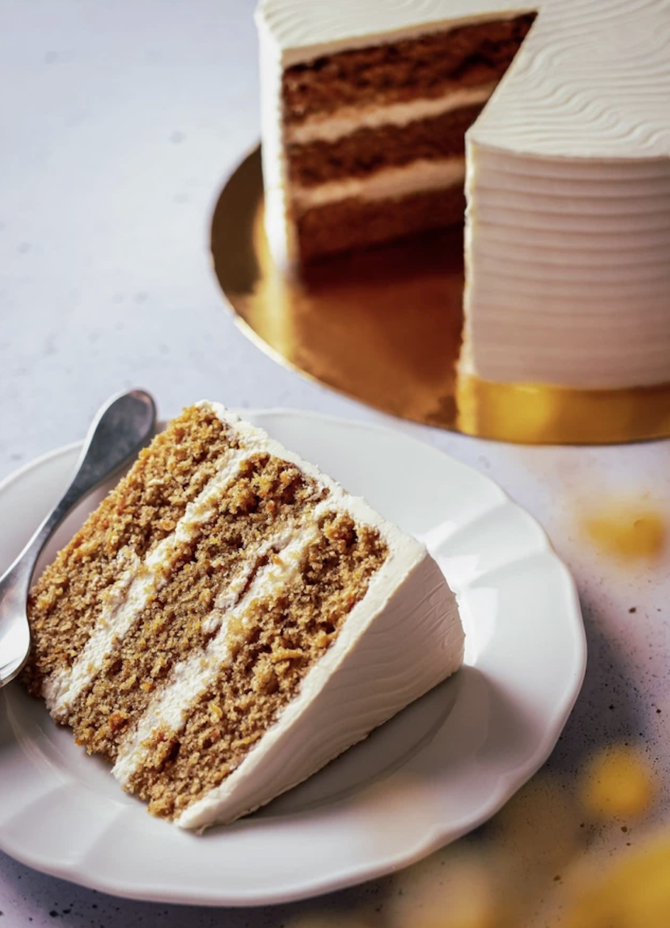
L’Enclos de Ninon near the Panthéon is a neighborhood bakery and café, named after the scandalous 17th-century courtesan and distinguished literary salon hostess, Ninon de Lenclos. Intriguingly, its pastry chef is Japanese, and he is more than adept at reproducing very traditional pumpkin and pecan pies and carrot cakes.
In the case of Canada, alas, there appears to be nowhere specific offering its Christmas favorite, butter tart. However, for traditional fruit cake or decorated shortbread and gingerbread cookies, the outlook is rosier at Rose Bakery.
Again, don’t hesitate to check the holiday aisles of the markets suggested above for packaged goods.
L’Enclos de Ninon, 68 rue du Cardinal Lemoine, 5th
Germany
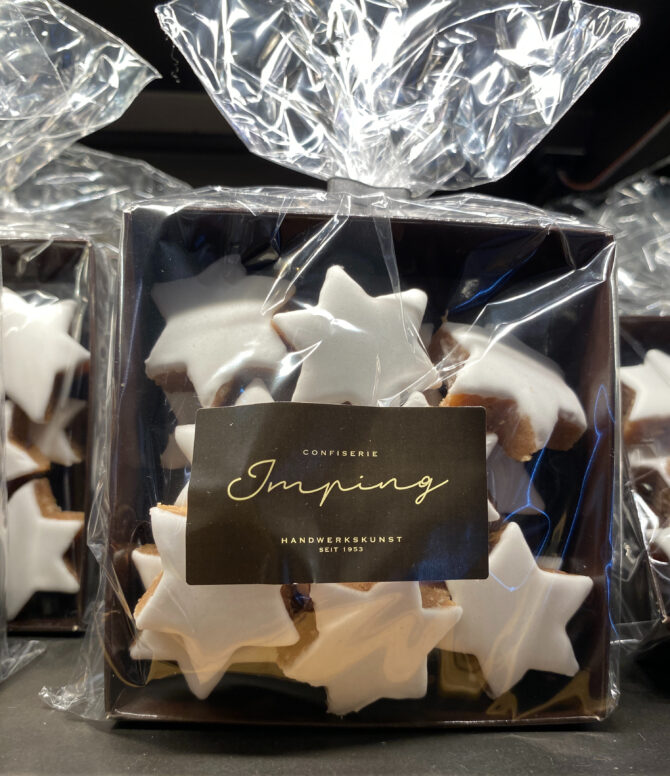
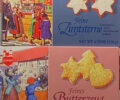
Lebkuchen (German gingerbread) and Stollen, or Christstollen, are two of Germany’s best beloved Christmas treats and have been staples of the season for centuries.
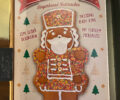
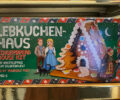
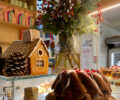
Lebkuchen can trace its roots to the baking guilds of 13th-century Nuremberg where, from the beginning, it was pressed into decorative wooden molds before baking. Over time, the soft, spiced honey cake evolved into a highly ornamented edible Christmas ornament — most commonly a heart or a gingerbread man —a nd after the Brothers Grimm wrote their childhood classic, Hansel and Gretel, gingerbread houses became a thing as well.
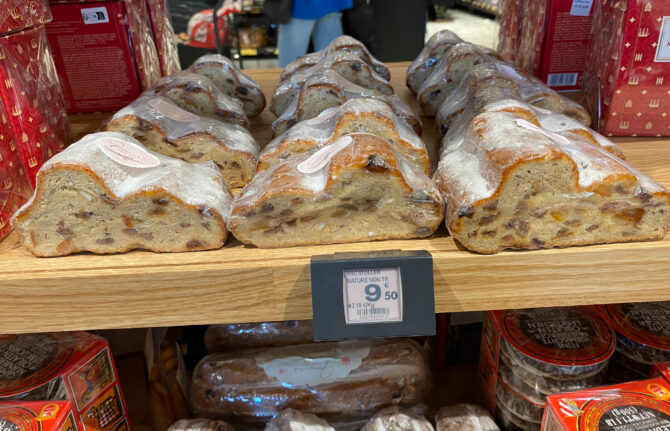
Christstollen made its first appearance in Dresden, home of the oldest Christmas market in Germany, in the early 1400s. The elongated, buttery-sweet loaf, dotted with candied fruit and sprinkled with powdered sugar, is baked to resemble the Christ child wrapped in swaddling clothes. While it’s not uncommon to find Stollen in specialty markets here, some French patisseries such as Pierre Hermé, Gilles Marchal in Montmartre, and Brigat bake their own fresh versions. But, if only an authentic and original Dresdner Christstollen will do, it is readily available online.
Not to be forgotten are Zimmtsterne (cinnamon stars) and Pfeffernüsse (pepper-nut cookies). Christmas in Germany is a BIG deal.
Pierre Hermé, Various locations in Paris
Gilles Marchal, 9 rue de Ravignan, 18th
Brigat, 6 Rue du Pas de la Mule, 3rd
Sweden
In Swedish, Fika means “snack time” and Fika Café at the Swedish Institute/Institut Suédois in the Marais is the ideal spot to sample Scandinavian winter holiday pastries, and to order them. Top of the list are lussekatter, spiced saffron and cardamom buns twisted into the shape of a double cat tail and dotted with a raisin at each end.
They are available throughout the season, though officially they are baked for Lucia Day on December 13, the shortest day of the year on the old Julian calendar. In Sweden, a young girl in white robes dressed as Saint Lucy dons a wreath of lighted candles and leads a procession that includes her handmaidens and young boys costumed as gingerbread men and elves. The custom has been celebrated in Sweden for 400 years in remembrance of the martyred 4th-century saint who, according to legend, descended into the darkness of the Roman catacombs to bring food to Christians hiding there, lighting the way with a crown of candles on her head.
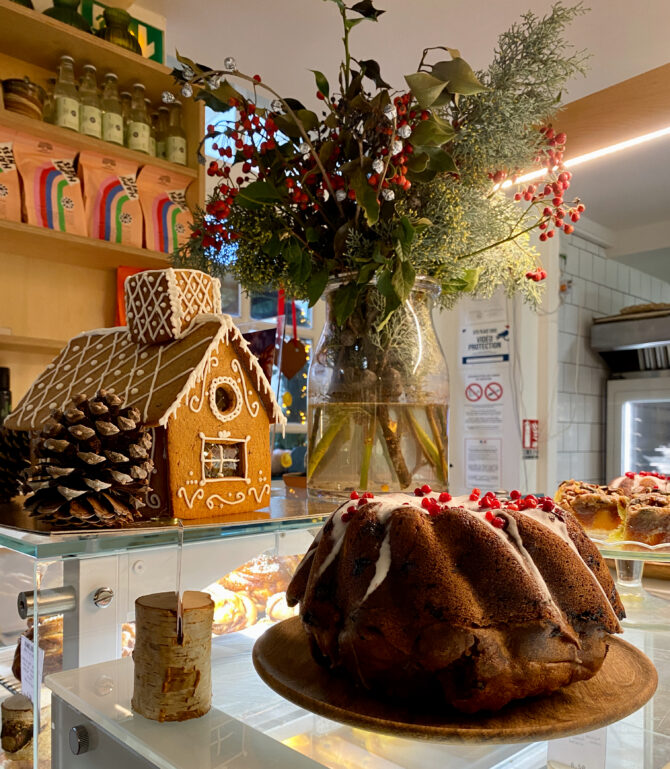
Also on Fika’s menu are mjuk pepparakaka, a crown-shaped gingerbread spice cake with white icing and lingonberries, and pepparkakor, crisp gingerbread cookies cut into hearts and stars. These are frequently strung on ribbons and hung on trees.
Fika Café, Institut Suédois, 11 rue Payenne, 3rd
Italy
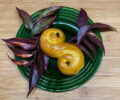
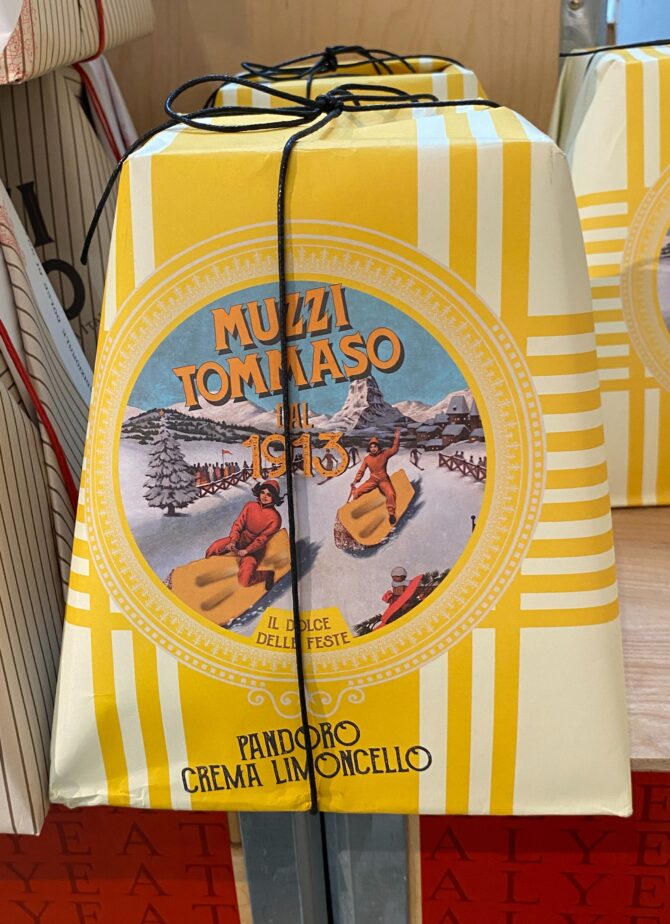
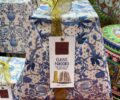
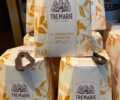
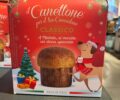
Unlike the majority of the international Christmas pastries in this mini-guide, Italian panettone and pandoro could not be easier to track down in Paris; they are everywhere! Here the challenge is where to shop, which to choose. The first choice is between panettone and pandoro, though “both” is a good choice too.
Panettone is a sweet, yeasted loaf with a domed top. Flavors include crema di pistachio, chocolate and pear, apricot and salted caramel, Limoncello, and many more. True artisanal panettone is not something to be whipped up at home. Starting with a natural sourdough base, over the course of three days butter and fruit are delicately mixed in until the dough has risen enough to be turned into a paper mold before baking. And then, once baked, the finished bread is hung upside down with skewers to keep it from collapsing while it cools.

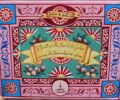
Pandoro (golden bread) is a far simpler proposition, and many prefer it for just that reason. Baked in an eight-pointed star mold, the recipe includes lots of butter and eggs and restrained flavorings such as vanilla and lemon. The final result is also very pretty.
At Christophe Louis in addition to sweet panettone, the bakery also offers savory interpretations such as cacio e pepe, black truffle, and za’atar and preserved lemons. Due to high demand, the only guaranteed way to score one is to visit the bakery in person, the earlier in the day the better.
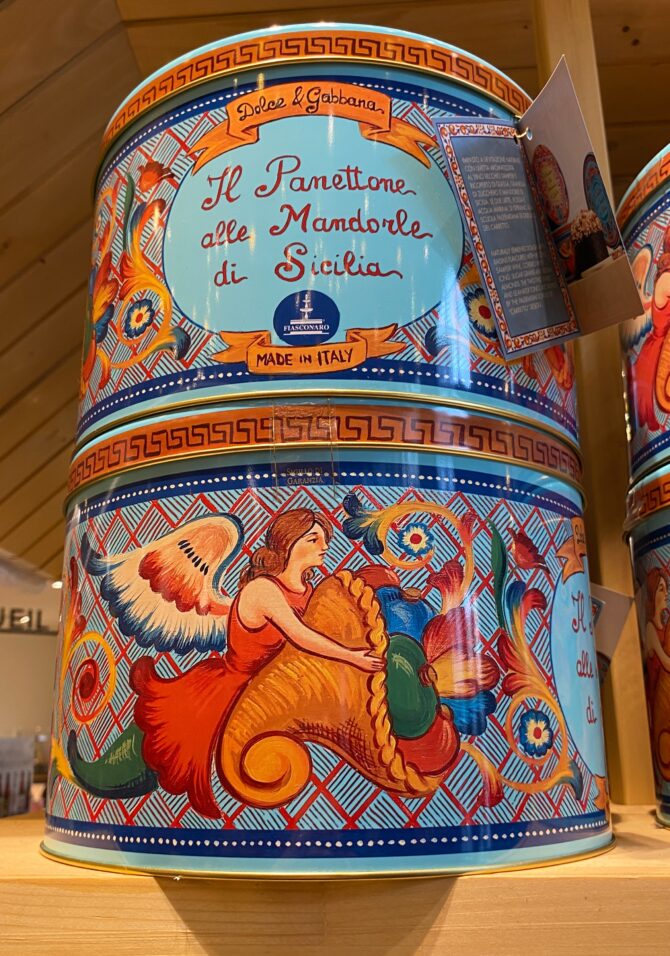
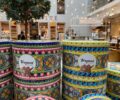
For panettone and pandoro from Italy, on the Right Bank, Eataly is the place to go. It stocks at least 20 kinds of panettone in small, medium and large sizes, and many varieties of pandoro as well. Plus, for the canine crowd, there is canettone, made with lard in lieu of butter. Over on the Left Bank, la Grande Epicerie, has a different but equally attractive range of panettoni and pandori, including some in Dolce & Gabanna tins.
Christophe Louis, 12 rue Dupetit-Thouars, 3rd
Eataly, 37 rue Sainte-Croix de la Bretonnerie, 4th
Portugal
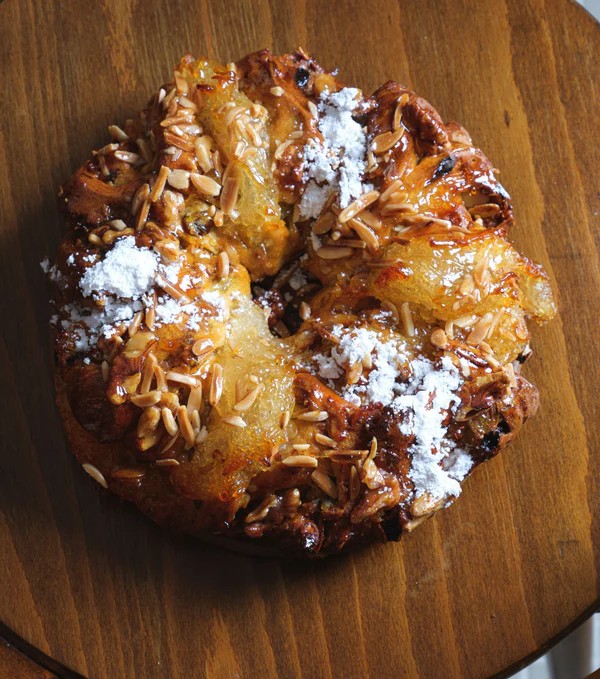
In Portugal, for well over 100 years, the crown-shaped bolo rei (king cake), bolo rainha (queen cake) and bolo escangalhado (mangled-up cake) have been highlights of the holiday table. They’re staples on Christmas Eve and Christmas Day, although they typically appear in bakeries around December 1.
Canelas (cinnamon in Portuguese), near the Canal Saint Martin, specializes in all three. In actuality, the cakes are more like a soft brioche with different mixtures of candied and/or dried fruits. According to Canelas, each ingredient symbolizes one of the gifts of the Three Kings: the candied fruits = gold, the dried fruits = myrrh, and the fragrant aroma = frankincense.
The bolo rei feels abundant and celebratory, containing both candied and dried fruits and anointed with Porto and brandy. The bolo rainha is bit more restrained, substituting nuts for the candied fruits. The bolo escangalhado owes its distinctive flavor and sweetness to the addition of doce de gila, a traditional Portuguese squash jam. Choosing a favorite is a real conundrum.
8 rue de la Granges aux Belles, 10th
Additional resources
La Grande Epicerie, 38 rue de Sevres, 7th ; 80 rue de Passy, 16th
Galeries Lafayette Le Gourmet, 40 boulevard Haussmann, 9th
Izraël, 30 rue François Miron, 4th
Mora, 13 rue Montmartre, 1st
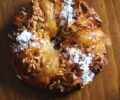
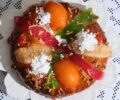
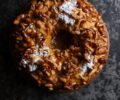
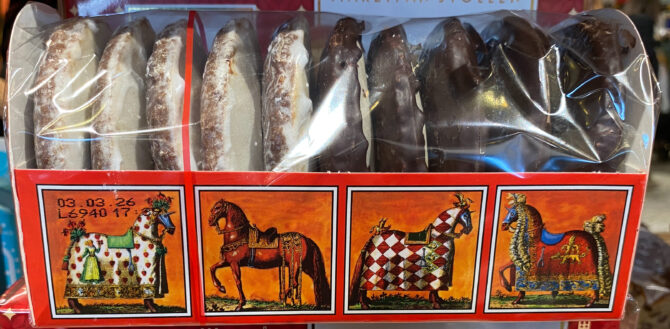
Lead photo credit : German Christmas treats. Photo: Joy Anderson
More in Christmas
Related Articles

By Joy Anderson