
Flâneries in Paris: A Bastille Triangle

- SUBSCRIBE
- ALREADY SUBSCRIBED?
BECOME A BONJOUR PARIS MEMBER
Gain full access to our collection of over 5,000 articles and bring the City of Light into your life. Just 80 USD per year.
Find out why you should become a member here.
Sign in
Fill in your credentials below.
This is the 50th in a series of walking tours highlighting the sites and stories of diverse districts of the Paris region
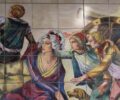
The tiled mural on platform 1 at the Bastille metro station is curiously picture-book in style yet it depicts one of the bloodiest chapters in the city’s history. A worker in a symbolic red cap sets about the brickwork of the hated Bastille prison with a pickaxe. Others rush forward to help, some wielding sticks as weapons, soldiers advance, although whether they’re the Swiss mercenaries the king had summoned or the royal guard who’d decided to mutiny, I’m not sure. But I can guess whose side the men in whigs and cravats are on, arms raised in horror in an attempt to stem the tide which would prove futile.
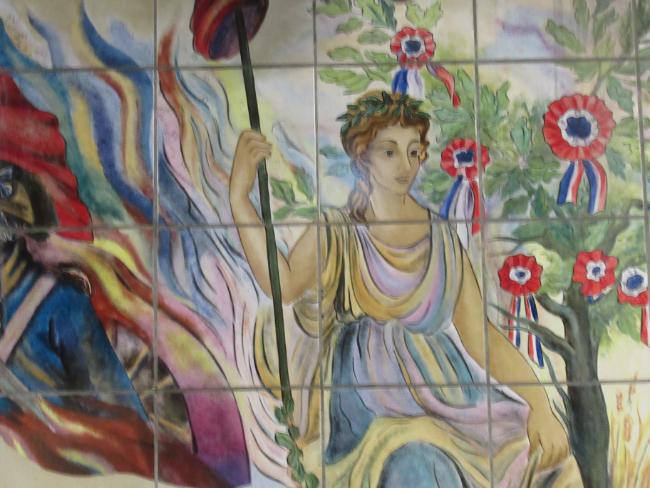



The very name Bastille unleashes a torrent of ideas. It represents the place where the people said non to the ancient régime, smashing down the hated prison where unfortunates who’d displeased the monarch could be locked up without trial. It’s where Marianne, represented here against a background of tricolore rosettes, first became the symbol of liberty and of the French Republic. But frankly, apart from the mural which was installed for the 200th anniversary of the revolution, there’s not much to see. I did spot a metal thread running across the platform floor, showing the outline of the moat which ran around the prison, but if you didn’t go looking, I think you’d miss it.
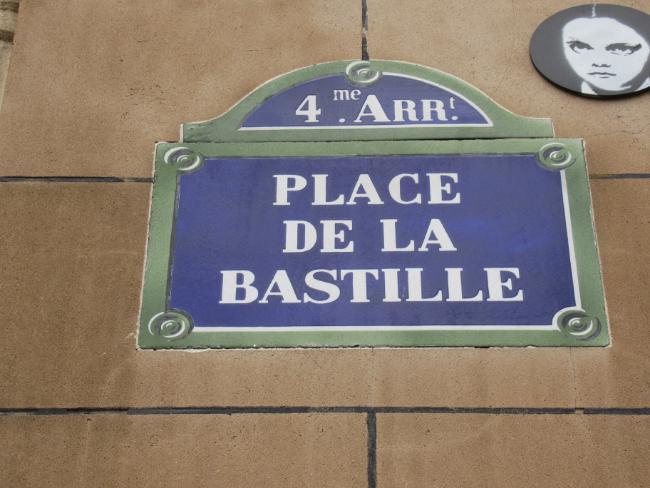

It was the same story above ground. Of the 8–towered construction which once stood here, there was nothing to be seen. I might have arrived when one of the many marches which start here was setting off and thus been reminded that the Place de la Bastille is still a hub for protest. If I’d chosen the 14th of July to visit, I imagine there’d have been flags and festivities, even if the main celebrations centre around the Champs Élysees. But on the day I actually went, it was traffic and restaurants which greeted me as I emerged up the steps from the station.
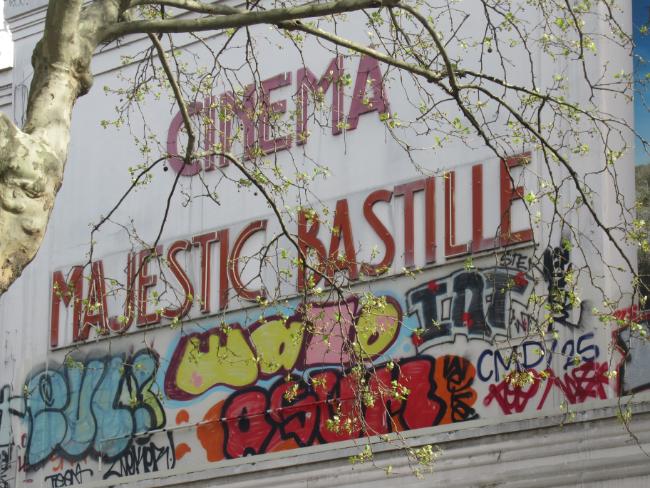

The Cinéma Majestic Bastille beckoned for entertainment, the graffiti on its frontage a fitting show of defiance for this formerly revolutionary site. The Opéra Bastille, opened for the bicentennial of the revolution in 1989, was designed to say “opera for the people” with its modernistic granite and glass façade and its carefully designed auditorium where every seat offers an unrestricted view of the stage. Filmed clips of current shows played across the screen over the entrance and I paused to watch ballerinas gliding across the stage. The moment was interrupted by two sapeurs-pompiers vans coming to a halt on the pavement directly behind me so half a dozen first responders could jump out and hold an impromptu conference. La Bastille is hectic!
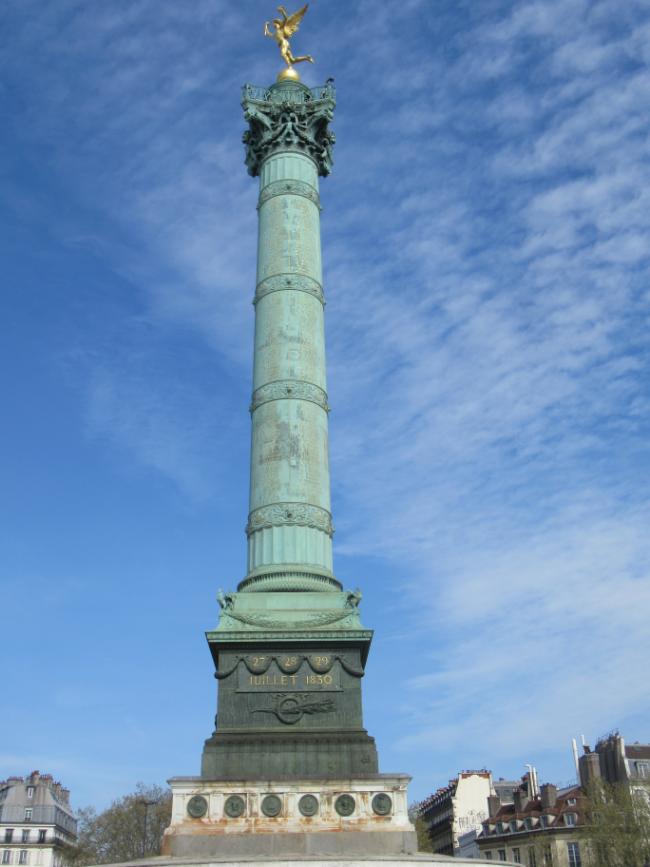
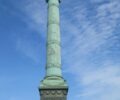
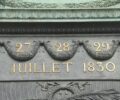
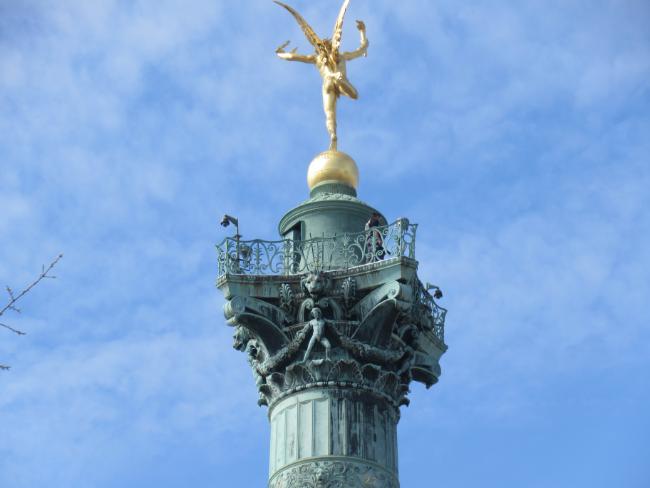
It’s confusing that the square’s most unmissable feature, an enormous central column, is not a reference to the uprising of 1789, but to a later one, known as les trois glorieuses of July 1830. A restrictive king, Charles X, was replaced by a more liberal one, Louis-Philippe, in just three days whose dates shine out in gold on the side of the monument: 27, 28, 29 July 1830. At 50 meters in height, it makes quite a statement, especially if you crane your neck up towards the golden figure of Liberty which sits right on top. Inside is a necropolis containing the remains of the revolutionaries who lost their lives in the struggles of 1830 and 1848, a reminder that la liberté had to be fought for.
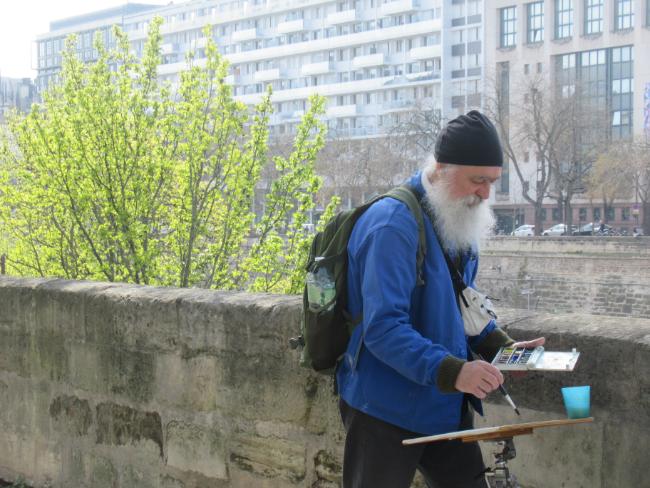
An artist set up his easel by the Seine. Photo: Marian Jones
At the far end of the square, I found steps down to the Port de l’Arsenal, originally dug to take water from the Seine to the Bastille complex. Today it’s a delightful port de plaisance where dozens of little boats are moored and a waterside garden offers somewhere restful to pause and pretend you have left the city for a fishing village. Office workers were enjoying a lunchtime sandwich, an artist had set up his easel, I passed boats named Blue Note and l’Air du Temps, it was all very relaxed. At least it was until I rounded the end and saw plaques on the wall listing the dates when the river had flooded, placed to show how high the water had risen. In the Great Flood of 1910, for example, the water reached a terrifying 8m 62cm.
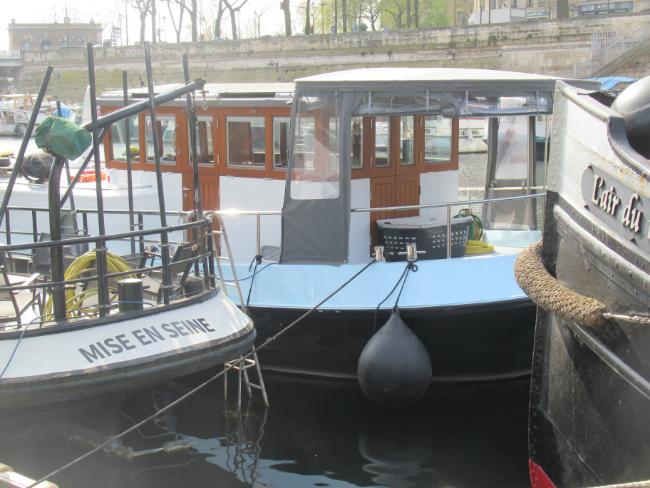

I followed the signposts labeled Rives de Seine under a bridge and, sure enough, the Seine came into view, wide and imperious and, in the distance off to the right, was an unexpected view of Notre Dame. I was so surprised I checked with the workmen I passed and when one shrugged his shoulders and said he didn’t know, the others mocked him in chorus: je sais pas, moi, moi je sais pas. It was ok for a tourist to hesitate, but really, they laughed, what Parisian wouldn’t know la belle Notre Dame from any angle? As I walked along the river, flags fluttered atop passing boats and the cathedral formed a backdrop, all in all a quintessentially Parisian scene.
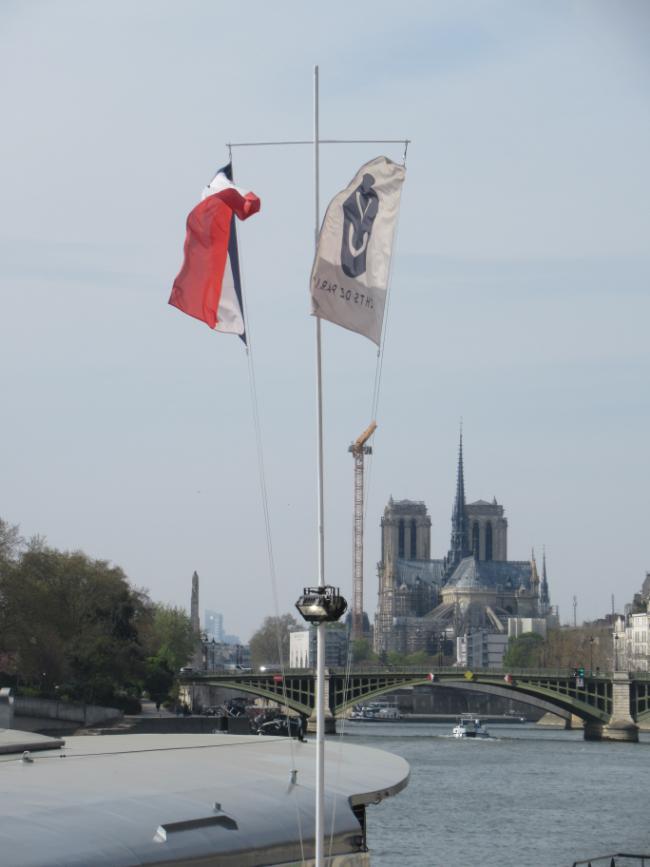
View of Notre Dame. Photo: Marian Jones
At the eastern end of the Île Saint Louis, some of the city’s most exclusive residences rose up over the lapping water and the plane trees along the quay. At the Sully-Morland bridge, I followed the path back up towards the majestic Boulevard Henri IV. There, a photographic display and a clutch of tricolore flags drew my eye to the impressive headquarters of the Garde Républicaine. The all-action photo reportage aimed, said the text alongside, to highlight the work of this elite force. Pictures showed them guarding the Assemblée Nationale, patrolling the streets on horseback, flying drones, providing armed cover for ceremonies from rooftop viewpoints. The captions referenced their skills as “elite shooters, bomb disposal experts, surveillance professionals.” It all made Paris seem a safer place.
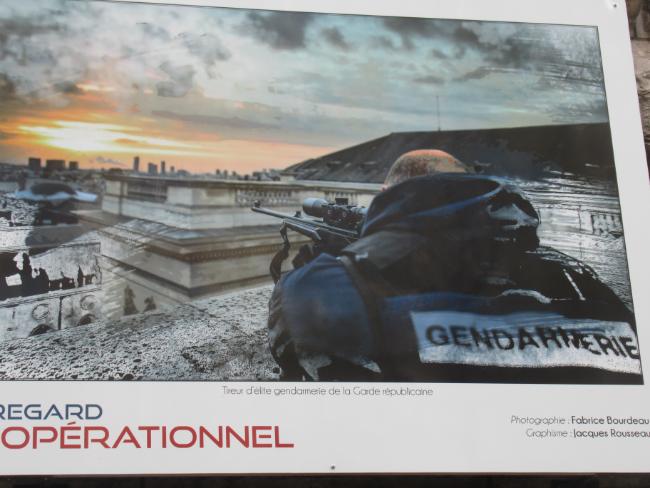

The sight of the July Column at the end of the boulevard signaled that I had come back to my starting point at Place de la Bastille. My route had been triangular, taking in the quiet haven of the Port de l’Arsenal, a classic stretch of the Seine and one of those Parisian boulevards which exude permanence and reassurance. Maybe the best-known thing on the route, the Place de la Bastille, had not lived up to its spectacular past, but everything else had yielded quiet surprises. I crossed the square back to the metro station, keeping an eye out for the paving stones I’d read about which show the outline of the infamous Bastille prison, site of the most famous moment in the city’s history.
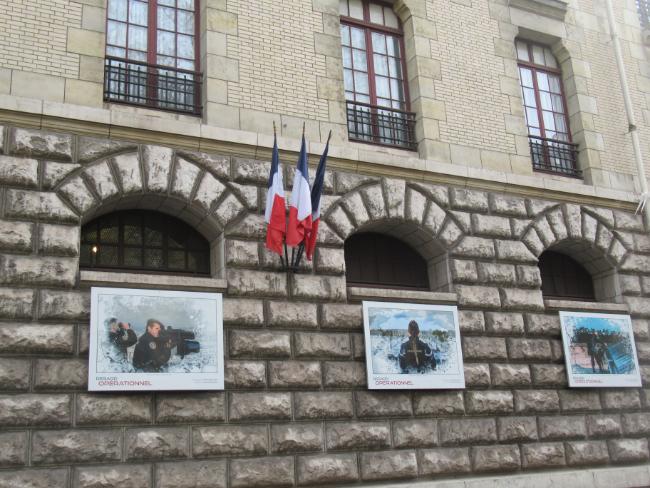
Headquarters of the Republican Guard. Photo: Marian Jones
Lead photo credit : The July Column, Bastille. Photo: Marian Jones
More in Bastille, Flâneries in Paris, Île Saint Louis, July Column, notre dame, Port de l’Arsenal, Seine
Related Articles

By Marian Jones