‘La Vénus électrique’ Showcases 1920s Paris

- SUBSCRIBE
- ALREADY SUBSCRIBED?
BECOME A BONJOUR PARIS MEMBER
Gain full access to our collection of over 5,000 articles and bring the City of Light into your life. Just 80 USD per year.
Find out why you should become a member here.
Sign in
Fill in your credentials below.
It’s 1928 in Paris, and a curious circus has arrived in the City of Light. Days-of-yore circus acts like the super-strong man, a ventriloquist, high divers, knife throwers, and clairvoyants fill this traveling circus, which has arrived in Paris. Among the bizarre acts is “Venus électrique,” the electric woman who has lightning bolts shooting out of her fingers and offers – “for a mere 30 centimes!” – a life-changing “electric kiss.”
Director Pierre Salvadori’s La Vénus électrique (in English, The Electric Kiss) is a romantic comedy that opened the 79th Cannes Film Festival. Although the film is not in competition at Cannes, the screening was attended by the entire Cannes jury and its president, Park Chan-wook, as it was the festival’s first screening. The glamorous jurors, who include Ruth Negga, Demi Moore, Stellan Skarsgård, Chloé Zhao, and more, walked le tapis rouge (the red carpet) as they entered the grand théâtre Lumière, followed by the cast of La Vénus électrique.
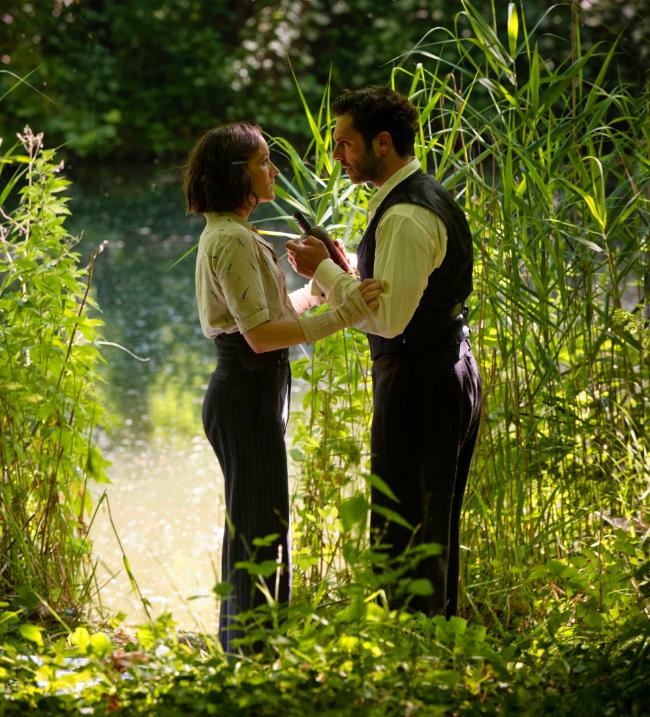
Pierre Salvadori’s La Vénus électrique. courtesy of the Cannes press office
In the film, the circus compère tells the growing crowd, “Love is pain! Love is ecstasy! Let the thrill of love pass through you.” Suzanne (Anaïs Demoustier) is the “electric woman” who, for 30 cents, gives an electric kiss to paying customers as she is effectively electrocuted every day for her job as a circus act. “This is Paris – people want to see something new!” the compère says to her before she assumes her place onstage.
Life is hard and expensive for Suzanne. The compère fines and charges her for everything. She has to pay him lateness fines (for arriving late), she barely makes any money for being manhandled and electrocuted, and she spends each night soaking her feet. She is not far off from being an indentured servant (one who wears a fabulous bejeweled red cape with a fur collar, but still). She smokes cigarettes relentlessly, often looks forlorn, and seems to have lost her spark. The fairgrounds are not far from the Paris monument Sacré-Cœur, which can be spotted in the distance. (The film was shot in the Paris region and in the Chartreuse park in Liège, Belgium.)
When an out-of-work painter and grieving widower named Antoine (Pio Marmaï) stumbles drunkenly into the clairvoyant Claudia’s tent, where Suzanne happens to be, he assumes she is the medium. He is desperate to communicate with his deceased wife, Irène. Suzanne seizes the moment; she’s desperate, too – but for money and sustenance. She tells Antoine to close his eyes as she pretends to channel his late wife. All the while, handily nicking his wallet from his trousers. She assumes, rightly so, that she will never see him again. He calls her Claudia when he leaves, still thinking he’s speaking to the medium whose name – Claudia––is scrawled in huge letters across the outside of the tent.
Antoine begs to come back tomorrow so he can commune once more with his wife in the spiritual realm. Suzanne says no, but he insists. Fearing he will return the next day and find the real Claudia, not her, she tells him she will come to him. In his home.
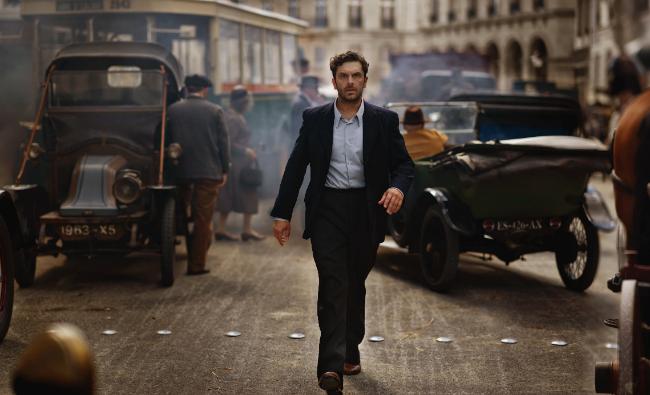
Pierre Salvadori’s La Vénus électrique. courtesy of the Cannes press office
But deception breeds deception, and it’s a tricky road to walk. When Antoine’s friend and art dealer, Armand (Gilles Lellouche) observes this faux psychic reading inside Antoine’s home, he chases off Suzanne after the session and tells her never to return. But that’s before he sees the effect the fake psychic session had on his cash cow: for the first time in years, Antoine begins painting again. He believes he is in contact with his late wife, and he feels inspired to pick up a paintbrush again.
Armand tracks down Suzanne and begs her to continue with the phony sessions. He says he will even sweeten the deal for her. He waves cash at her and offers a tempting arrangement, saying that a portion of the proceeds of each painting sold will be paid to Suzanne. How can a desperate woman who is confined to the circus life resist such a tempting offer? She sees a way out, and she agrees to continue the paper-thin ruse. She tells Antoine she wants him to “paint night and day,” she asks him to paint “cities and countrysides,” and even “fruits and vegetables.” Meanwhile, Armand feeds her details that only Antoine’s late wife (and their inner circle, like Armand) would have known, like the nickname she called him, and details from their vacation to Lake Como.
Anyone familiar with Shakespearean plots, Jane Austen storylines, and 90s rom-com tropes will be able to predict the course of the film. Still, though, it’s fun, romantic, silly, and good for some hearty laughs. Not all films are Oscar or César nominees – some are just good, plain fun, and there’s value in that, too.
La Vénus électrique reflects the nature of grief, art, and new beginnings – all against a beautiful Paris backdrop with a delightful cast. While the film did not break the mold or shatter glass, it’s the kind of film that viewers will delight in – a blissful escape with a storyline that reminds the audience that love is the highest, most profound art one can create in life.
Lead photo credit : Pierre Salvadori’s La Vénus électrique. courtesy of the Cannes press office
More in Cannes Film Festival 2026
Related Articles