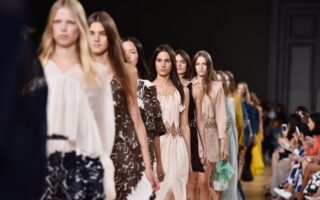
Who Makes Paris Fashion? ‘Fabric’ Turns the Camera on Refugee Workers
- SUBSCRIBE
- ALREADY SUBSCRIBED?
BECOME A BONJOUR PARIS MEMBER
Gain full access to our collection of over 5,000 articles and bring the City of Light into your life. Just 80 USD per year.
Find out why you should become a member here.
Sign in
Fill in your credentials below.
Maya Persaud founded ESPERO France out of a need – she wanted to help the growing number of refugees arriving in Paris who needed help integrating into the culture.
Persaud, a Texas-born former model who grew up in Hawaii and had worked in Paris, London, Milan, and New York, was living in Paris. She created a fruitful partnership between fashion and refugee support through ESPERO, which trains refugees so they can work at fashion companies in Paris or start their own businesses. It also provides them with support in learning French, getting their documents in order, and securing housing.
Bonjour Paris spoke with Persaud about ESPERO and FABRIC – a documentary film about ESPERO, which has its premiere this month and also made a splash at the Cannes Film Festival in May.
View this post on Instagram
This conversation has been edited for length and clarity.
What first drew you to working with refugees in the fashion industry, and why did this work become important to you?
I first became aware of the refugee crisis in 2014, when the war in Syria was dominating the news, and there was widespread media coverage of people traveling along refugee routes into Europe. My initial reaction was that it would be a shame if these talented and resilient people couldn’t find their place in French society.
At the time, I had volunteered with NGOs, helping translate asylum seekers’ stories from French to English. I remember thinking, “If I can do something, why not?” That led me to become more involved. Around the makeshift refugee camps in the Paris area, a group of us started a beekeeping project. We realized that while many refugees were lawyers or social workers, there were also practical skills that France needed, such as farming and agriculture, and we wanted to create opportunities around those skills.
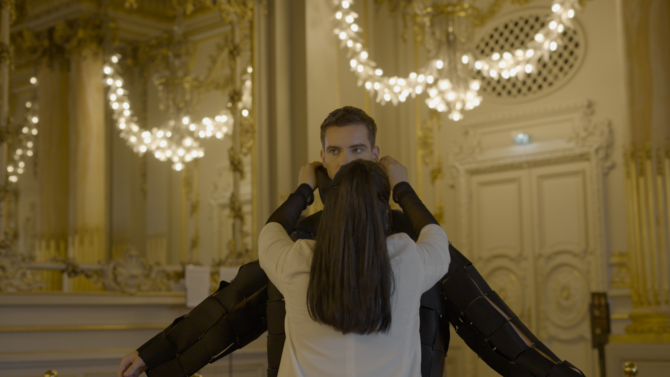
Still from “Fabric”
In October 2020, a friend who worked in the fashion industry told me that a designer was looking for two seamstresses. I didn’t know anyone immediately, but I began searching through my networks. When people heard there might be an opportunity to sew and work in fashion, they lit up. Many had professional skills but lacked access to the industry. From there, support came from all directions. Friends and industry contacts wanted to help. My friend Annabelle from Condé Nast got involved. Balmain donated deadstock fabrics. KCD Worldwide [the fashion PR company] supported us. One friend even donated an industrial sewing machine. It quickly became clear that there was both a need and a willingness across the fashion industry to create opportunities for refugees.
How has Espero grown since 2020?
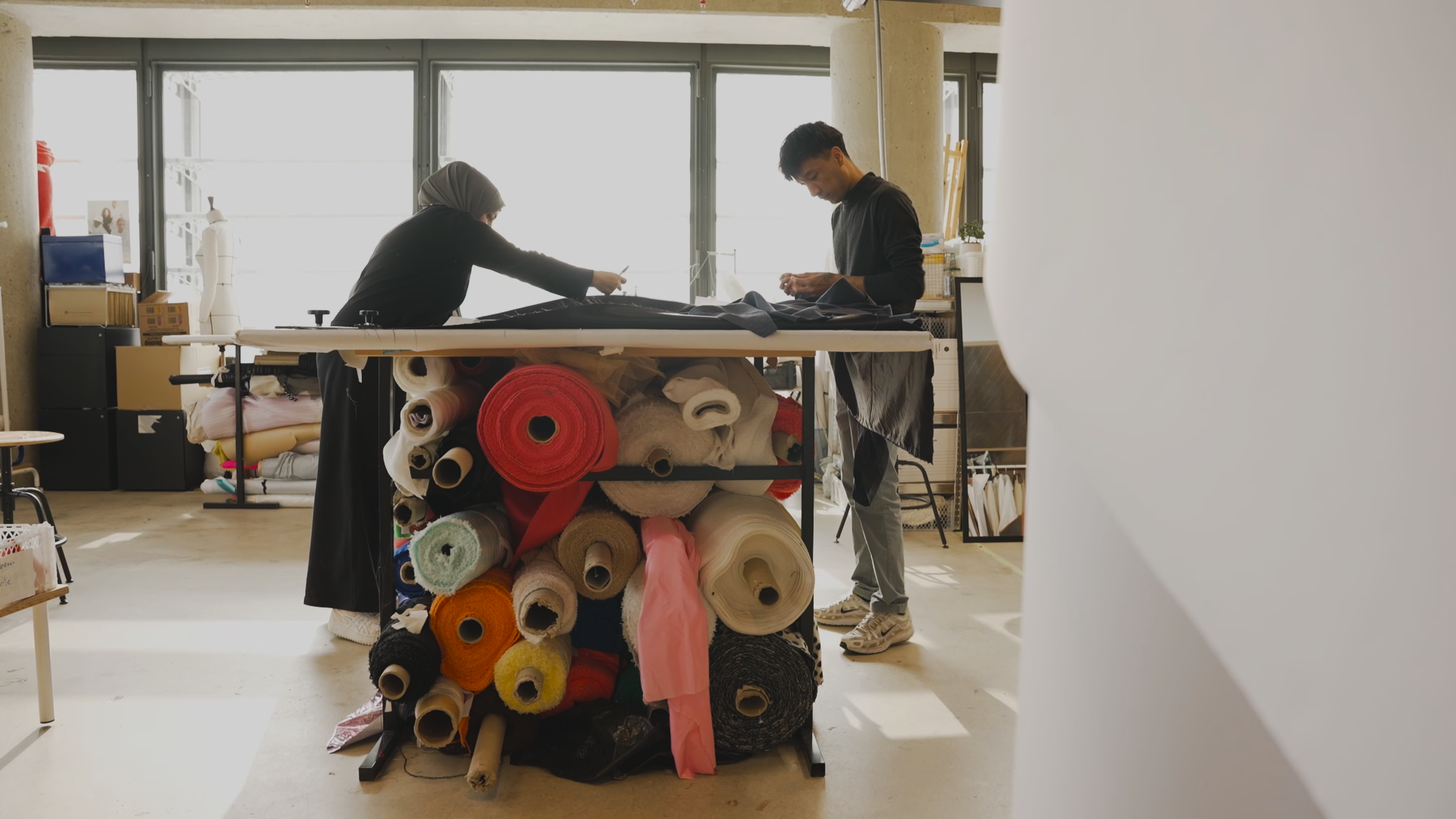
Today, we employ 30 people, and more than 60 individuals have gone through our program. We operate ateliers where participants work while receiving training and support. We are supported by the French government and operate through a hybrid model that combines public support with private funding.
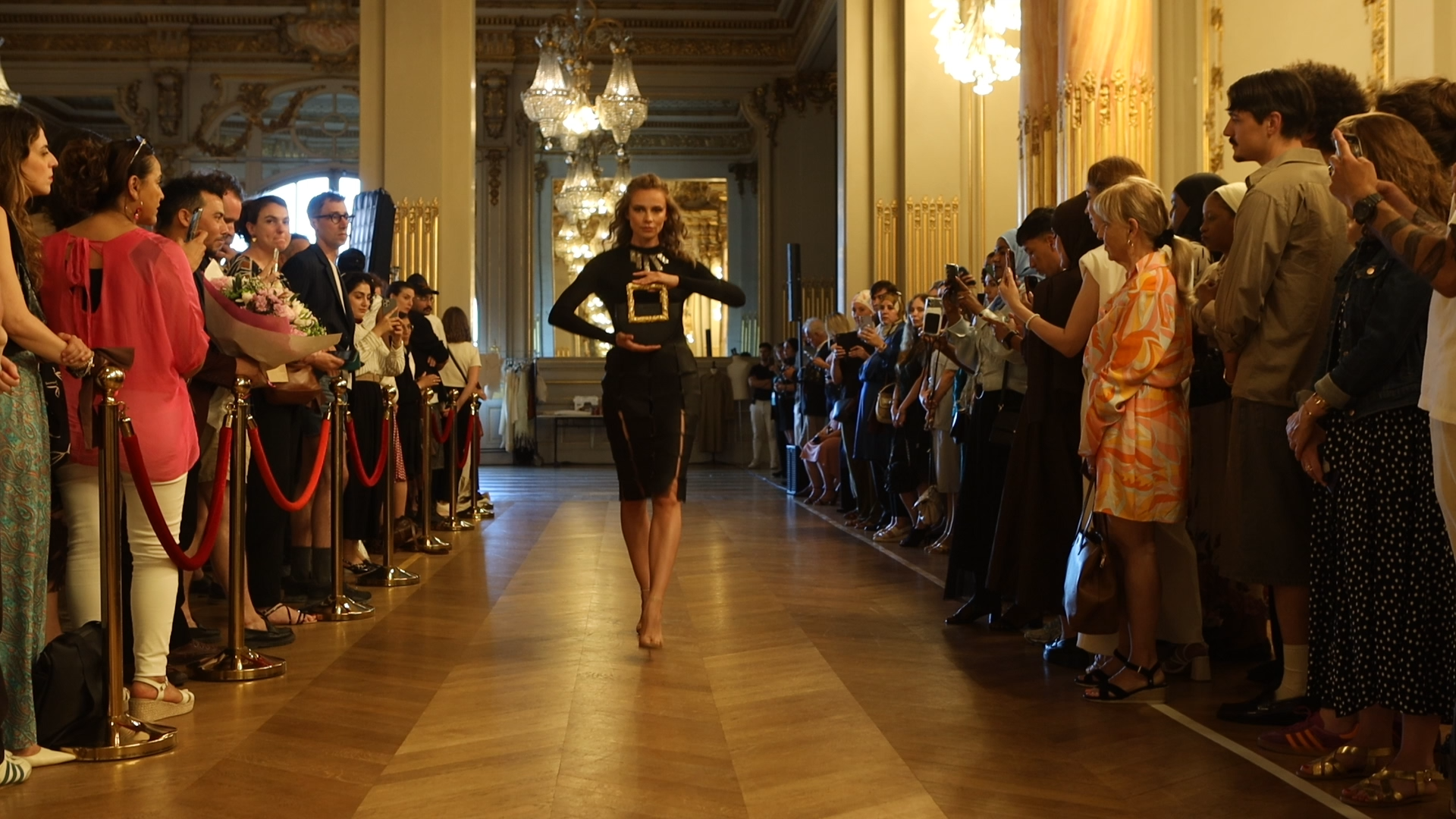
Still from “Fabric”
Our team includes three teachers who are pattern makers and designers. We recruit and employ refugees through a training program that lasts from six months to two years. Beyond technical training, we help participants navigate administrative processes, secure long-term housing, and build stable lives. The training combines classroom instruction with hands-on project work, allowing participants to develop both their technical and professional skills.
One example is Alain. When we first met him, he didn’t have stable housing and needed significant support with administrative procedures and documentation. We worked closely with him, including coordinating with government agencies on matters such as renewing his identification documents. After working with us for nine months, he was hired by one of France’s largest luxury fashion houses.
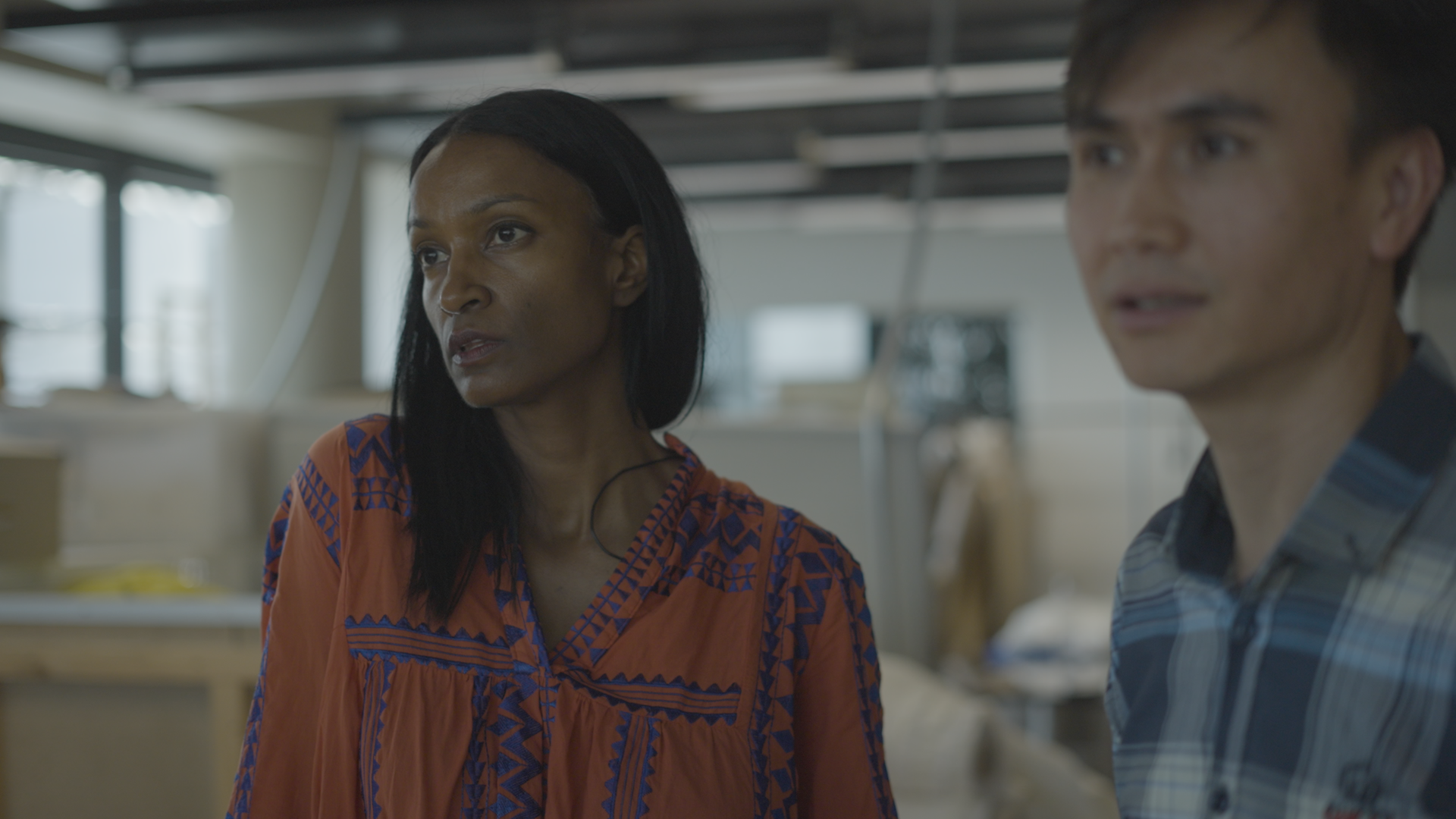
Still from “Fabric”
Can you tell us about a refugee colleague or collaborator whose story has had a lasting impact on you?
One story that has stayed with me is that of a Syrian beekeeper I met through a friend who ran an NGO connecting refugees with employers. He had arrived in France at the age of 65. Back in Syria, he was an electrical engineer, but he also had a lifelong passion for beekeeping. When I met him, he was getting by doing small construction jobs.
At the time, we were looking to start a beekeeping project, and when I told him about the idea, he said it was one of the most magical moments of his life because he had dreamed of working with bees again.
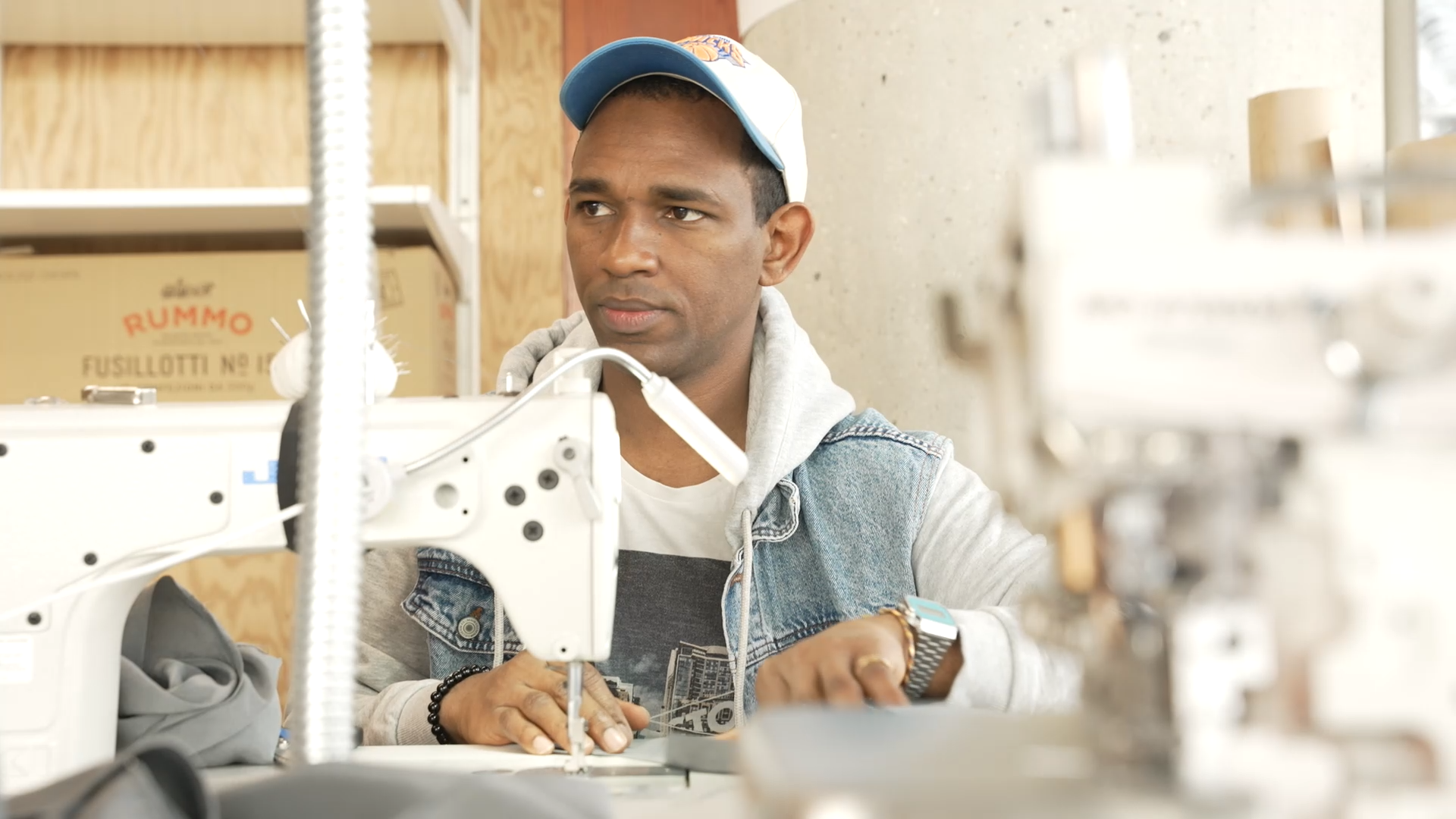
Still from “Fabric”
It wasn’t easy. We would wake up very early in the morning to travel to the hives, far from public transportation. There were moments when I felt exhausted and questioned whether we could keep going. Then one morning, while we were checking the bees, he turned to me and said, “For the first time in my life since leaving Syria, I feel the way I felt back home.” In that moment, I realized I could never give up on this work.
What misconceptions do people in the fashion world and beyond have about refugees?
I’m lucky to be surrounded by angels. There have maybe been moments with my employees where they get stopped and asked for their papers for verification. But overall, there was a lot of love around this project. So much help from so many people; we don’t always see the good-hearted people in fashion, but there are a lot of good-hearted people. People like at KCD who really pour their heart and soul into our projects and really care. DPA lounge who gave us a space during the Oscars to present our project to Oscar nominees. We’ve received so much love.
What has working with refugees taught you?
They say that you become like the people you spend the most time with, and I think there’s a lot of truth in that. My right-hand colleague is from Afghanistan, and Haider is one of the kindest, most dedicated people I know. Like many people, I had my own preconceived ideas before doing this work. But getting to know him made me realize that I have more in common with him than with many people I’ve known my whole life.
He cares deeply about his work and about the people around him. Whether he’s helping someone find housing or supporting a colleague through a difficult administrative process, he always goes above and beyond. Watching that level of commitment and compassion every day has had a profound impact on me.
What other insights have emerged from the creation of ESPERO?
More than anything, this work has made me much more grateful. It’s easy to get caught up in small frustrations and take things for granted, like complaining that the coffee machine isn’t working, for example. But when you’re surrounded by people who have lost so much and yet remain hopeful, positive, and determined, it puts everything into perspective.
What continues to amaze me is their generosity. I’ve met people who have had to rebuild their lives from nothing, who arrived in a new country with almost no possessions, and yet they are often the first to offer help, share what they have, or support someone else. That completely changed my understanding of generosity. I didn’t realize people could be so giving when they themselves have so little.
Seeing people start from less than zero and still believe in a better future has been one of the most inspiring lessons of my life.
How do you balance the business goals of fashion companies with the social mission of creating opportunities for refugees?
It’s a constant juggling act because we have financial objectives that we have to meet. At the same time, we’re trying to stay true to our social mission. There’s nothing I love more than a challenge.
I’m the salesperson, so a big part of my job is bringing in projects and building relationships with clients. They love coming to the atelier and meeting the team. On one big-budget project, they met everyone, spent time with the team, and even filmed a little for storytelling.
What do you hope audiences take away from this documentary?
There’s a quote by Oscar Wilde: “We’re all in the gutter, but some of us are looking at the stars.” I think we’re all the same in many ways, even though we’re all different. I hope people see the humanity in all of us. At the end of the day, we all want many of the same things.
I hope people recognize that shared humanity. The world is so beautiful and magical, and I’ve learned that from the people I’ve worked with. More than anything, I hope people see the beauty in humanity through the people on my team.
Lead photo credit : Still from "Fabric"
Related Articles