
A Tale of Two Queens

- SUBSCRIBE
- ALREADY SUBSCRIBED?
BECOME A BONJOUR PARIS MEMBER
Gain full access to our collection of over 5,000 articles and bring the City of Light into your life. Just 80 USD per year.
Find out why you should become a member here.
Sign in
Fill in your credentials below.
One family, two queens. For around 60 years France was dominated by two distantly related women who left their mark not only on French history but on Paris itself: Catherine and Marie de Medici. Both have been vilified down the centuries for the dubious decisions they made – but how much of this is justified, and how much is plain misogyny?
By the early 16th century, the Florentine Medici banking dynasty was one of Europe’s leading powerbrokers. They financed royal wars and in return expected to play a role in the continent’s geopolitics, often through strategic marriages. One such marriage was the union of Catherine de Medici to the second son of the king of France in 1533.
Born in 1519, Catherine was orphaned as a baby and grew up in the care of various relatives. There were periods of happiness but overall it was an unsettled childhood. She grew up to be a slim and moderately pretty girl but suffered from the prominent eyes that ran in the family. At the age of 14 she married Henri, the second son of King François I of France.
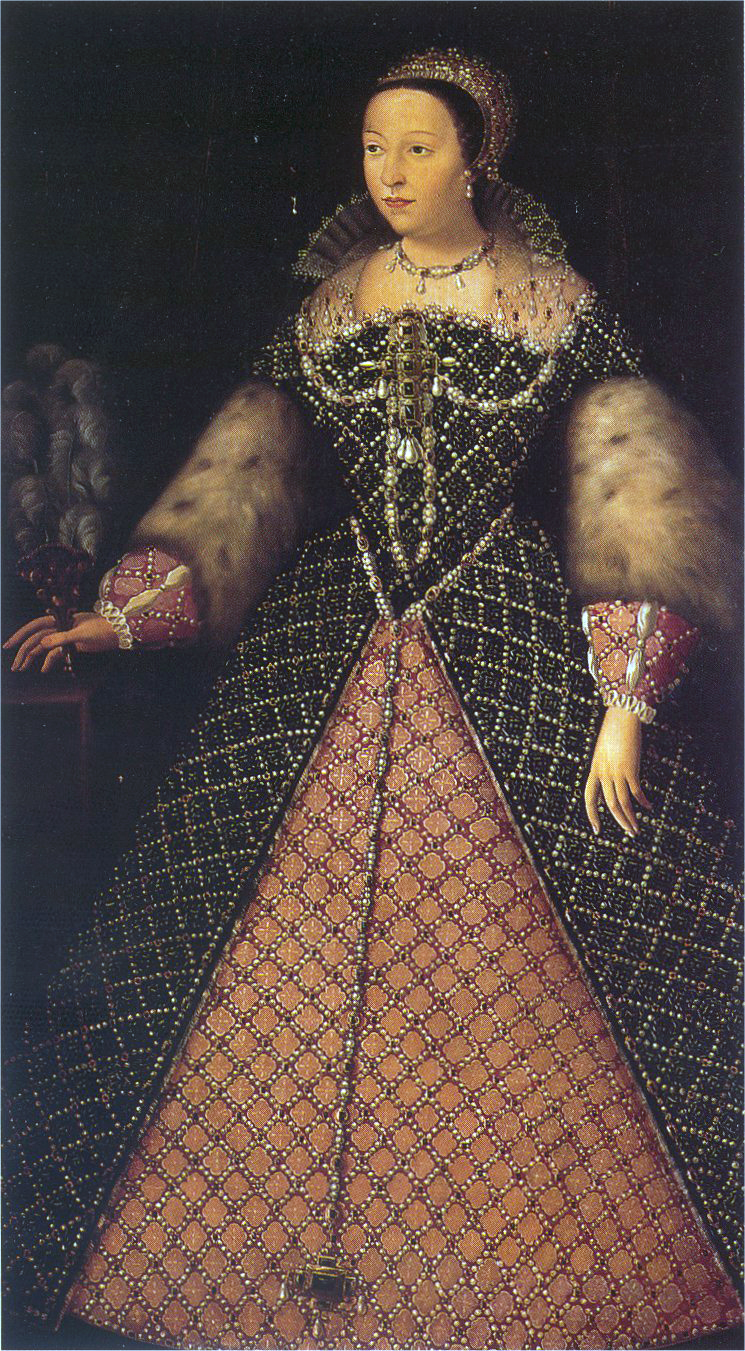
Catherine de Médicis, Chaumont copie d’un original se trouvant à la Galerie des Offices. Attributed to Germain Le Mannier. Public domain
The marriage started well enough, but Catherine’s purpose was to give birth to a healthy male heir, and this she signally failed to do. She couldn’t even get pregnant; it took 10 years for the long-awaited son to appear. Not only that; she was constantly playing second fiddle to Henri’s longtime mistress, Diane de Poitiers. Diane was some 20 years older than Henri and had known him since his childhood. She meant far more to him than a mere sexual diversion and potentially posed a real threat to Catherine’s authority. Henri blatantly treated Diane as his favorite and only Catherine’s devoted love for him enabled her to cope. It was only when Henri came to the throne in 1547, as Henri II, that he started to show real affection towards Catherine (producing a new baby every year at this point probably helped).
Now Catherine felt confident enough in her position as queen to tackle Diane. And here she showed the shrewdness and psychological insight (some would say cunning) that would carry her through numerous crises in her life. Instead of trying to sideline or banish Diane, Catherine welcomed her promotion to the inner circle of court, however unwillingly, and she was even appointed as tutor to the royal children. A case of “keep your friends close but your enemies closer.”
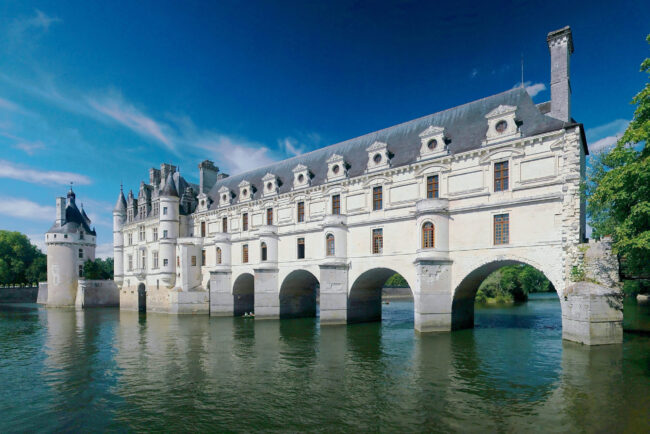
Château de Chenonceau in the Loire Valley- given to Diane by Henri, later seized by Catherine. Photo: Taxiarchos228/ Wikimedia commons
Henri II unfortunately died after an horrific jousting accident in 1559. The Dauphin took the throne as François II but he also died after about 18 months, leaving his younger brothers who were too young to take the throne. Despite her grief, this was when Catherine really came into her own. She was appointed regent and for the next 30 years she ruled France, either directly until her sons grew up, or as “the power behind the throne.”
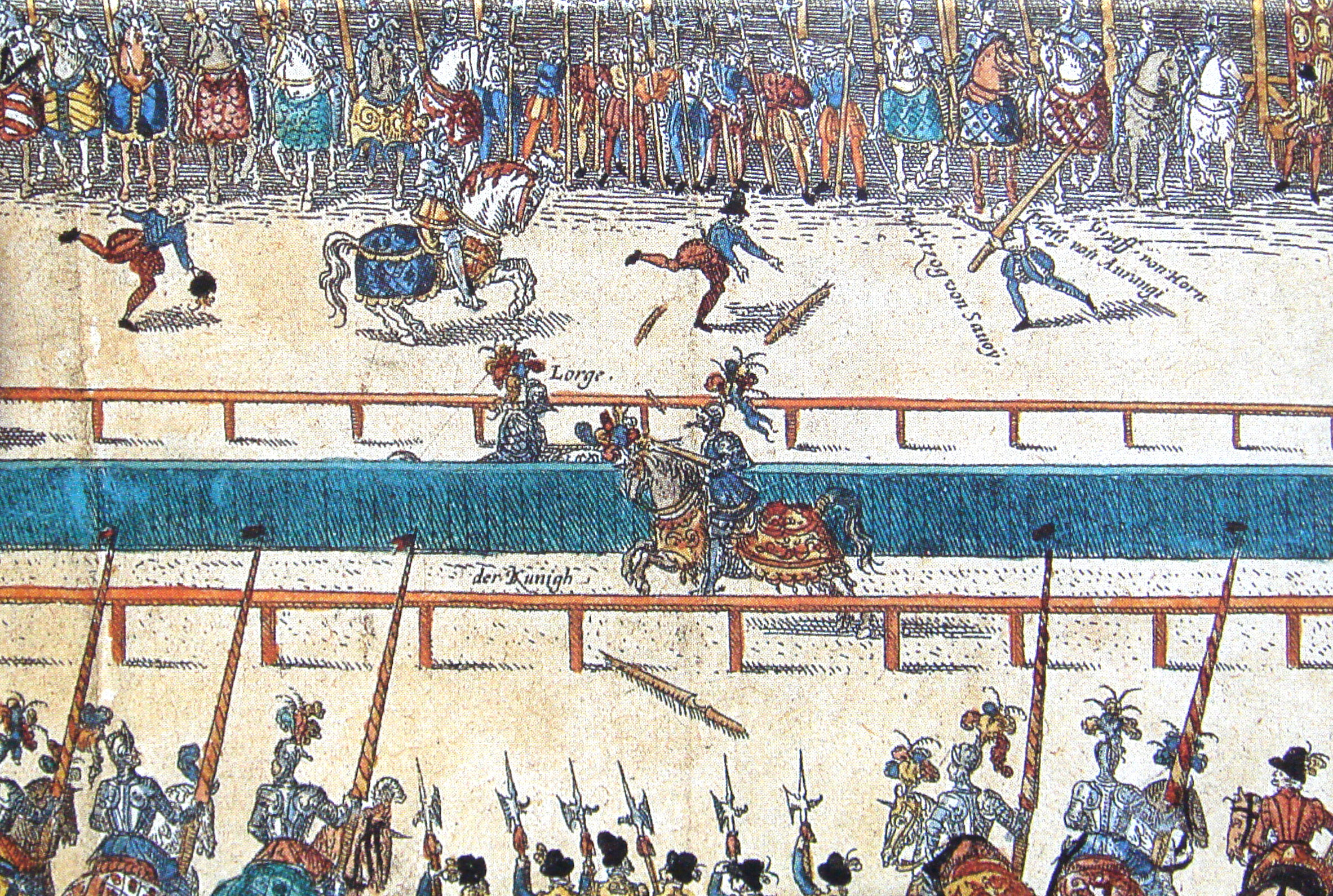
Tournament between Henry II and Lorges, 16th-century German print, public domain
Her driving force throughout this period was to protect the throne of France for her sons, at almost any cost. As well as dynastic feuds there were the Wars of Religion pitting Protestants against Catholics which regularly flared up across the country. Essentially tolerant towards the Protestants, Catherine dealt with these wars by negotiating a series of treaties, each of which lasted a few years before disintegrating, necessitating more peace talks and another treaty. It was a constant juggling act, on top of which she was trying to marry her children to important crowned heads around Europe, notably her daughter Elizabeth to the king of Spain. It was a remarkable achievement that she managed to keep France in one piece at all.

Catherine de Medici depicted in mourning attire, at approximately 40 years of age. Atelier de François Clouet. Public domain
Her obsession with protecting her sons’ inheritance and doing whatever was necessary – which she also saw as an act of posthumous devotion to her late husband – led to her growing reputation as the “Black Queen”: ruthless, merciless and wily. She had a “Flying Squad” of exceptionally pretty and charming ladies-in-waiting whose job was to seduce diplomats and courtiers who might be useful to the Crown.
Her nemesis came in the bloodbath known as the Saint Bartholomew’s Day Massacre. In August 1572 Paris was full of France’s leading aristocratic families, both Catholic and Protestant. They were there to celebrate the marriage of Princess Marguerite to Prince Henri of Navarre, a last-ditch attempt to bridge the religious divide. There had already been a failed assassination attempt on the head of the leading Protestant family, Gaspard de Coligny, and King Charles IX in cahoots with the powerful Guise family, decided to clinch the matter by disposing of the rest of the Protestant aristocracy. The killing started during the 23rd-24th of August. Although conceived as a manageable, contained operation, the Paris mob quickly took over and the result was indeed a massacre, killing up to 3,000 people over the course of a few days. In the weeks that followed the violence spread across France with a final death toll of possibly 20,000-30,000 people.

St Bartholomew’s day massacre of 1572, François Dubois,1576-84. Public domain
The extent of Catherine’s complicity is open to question. She was undoubtedly involved in the murder plot of Coligny and famously shouted, “Kill them all! Kill them all!” which is about as damning as you can get. On the other hand, it was perhaps a plea of frustration at the absolute intractability of both sides. Her reputation never recovered though, and ever since she has been known as the “Black Queen.” It is relatively recently that historians have applied some nuance to her actions and begun to acknowledge that actually she did a reasonable job of governing France in the face of unsurmountable challenges. She died in 1589, exhausted by the thankless task of governing France and handling her ineffectual sons.
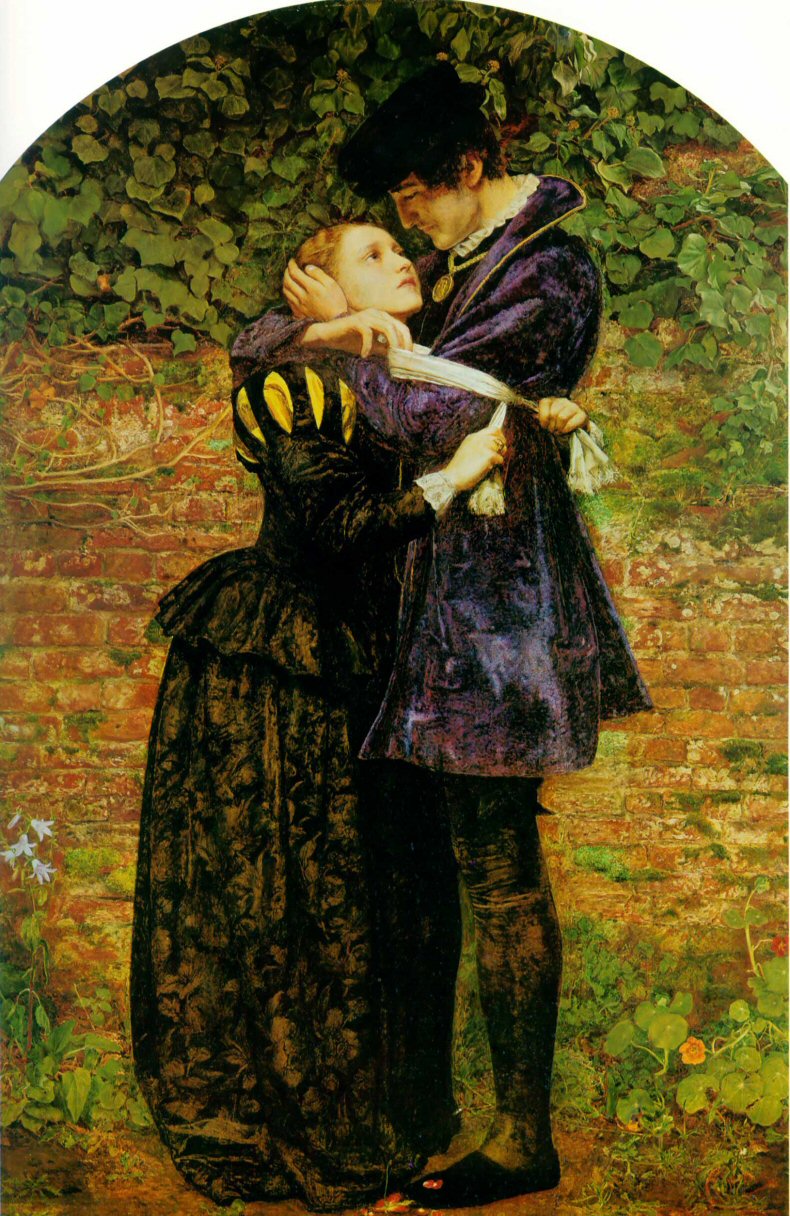
A Huguenot, on St. Bartholomew’s Day. John Everett Millais, 1851–52, Oil on canvas, The Makins Collection. Public domain
Privately, she was obsessed with astrology and necromancy. She regularly consulted Nostradamus and she often attributed both good and bad events to the horoscope. Despite her somber appearance dressed all in black, she could be humorous and good company and loved dancing. Legend says that she wore poison-impregnated gloves to kill her enemies but it is true that she had long, slender fingers and liked wearing elaborate gloves. These were impregnated, certainly, with perfume, although whether to hide the smell of poison we don’t know. She did bring her Italian perfumers to France who started the French perfume industry. She also introduced the table fork and thus civilized French eating habits. Her lasting mark on Paris was the building of the Tuileries Palace, blocking off the bottom of the Louvre, which stood until 1871 when the Communards burnt it down.
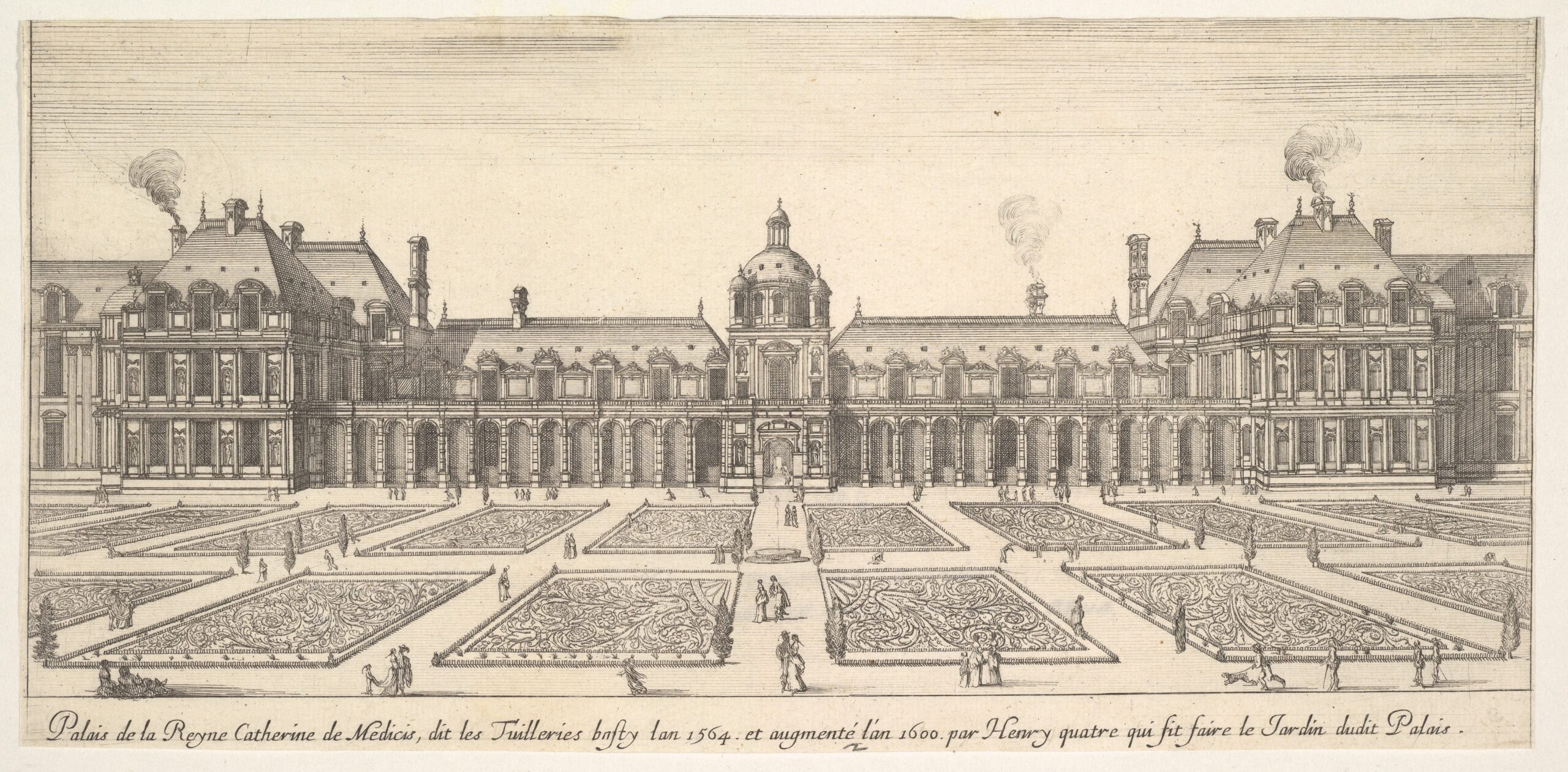
Garden facade of the former Tuileries Palace in Paris, before the modifications begun by Louis Le Vau in 1659. Etching by Israel Silvestre. Metropolitan Museum of Art

Sculpted toms of Henri II et Catherine de Médicis at Saint Denis. Photo: Roi Boshi/ Wikimedia commons
Marie de Medici was nothing like as competent as Catherine. She also had an unhappy childhood, losing her mother at the age of three and a brother and a sister a few years later. Although, as an adult, she lacked the political instincts of her cousin, Marie was intelligent and well-educated, interested in science, mathematics and astronomy. But like Catherine, she was a political pawn in the dynastic ambitions of her family.

Marie de Médici by Frans Pourbus the Younger. Art Institute of Chicago. Public domain.
She arrived in France in 1600 at the age of 28; her purpose, again, was to provide a male heir, but also to prop up the royal finances. Her husband-to-be, Henri IV, was notorious for his many mistresses and an extravagant lifestyle. This was not helped by the continuing wars of religion he was engaged in. Marie, the richest princess in Europe, came with a dowry of 600,000 crowns, or écus, part of which was meant to pay off Henri’s banking debts.
It was never a happy marriage. Despite giving Henri his required heir, he insisted on parading his mistresses at court, especially his favourite, Catherine Henriette d’Entragues who had replaced the real love of Henri’s life, Gabrielle d’Estrées after her death. He would not even have Marie crowned queen of France, which would have made her position official. Finally he relented and the coronation took place on 14th May 1610.
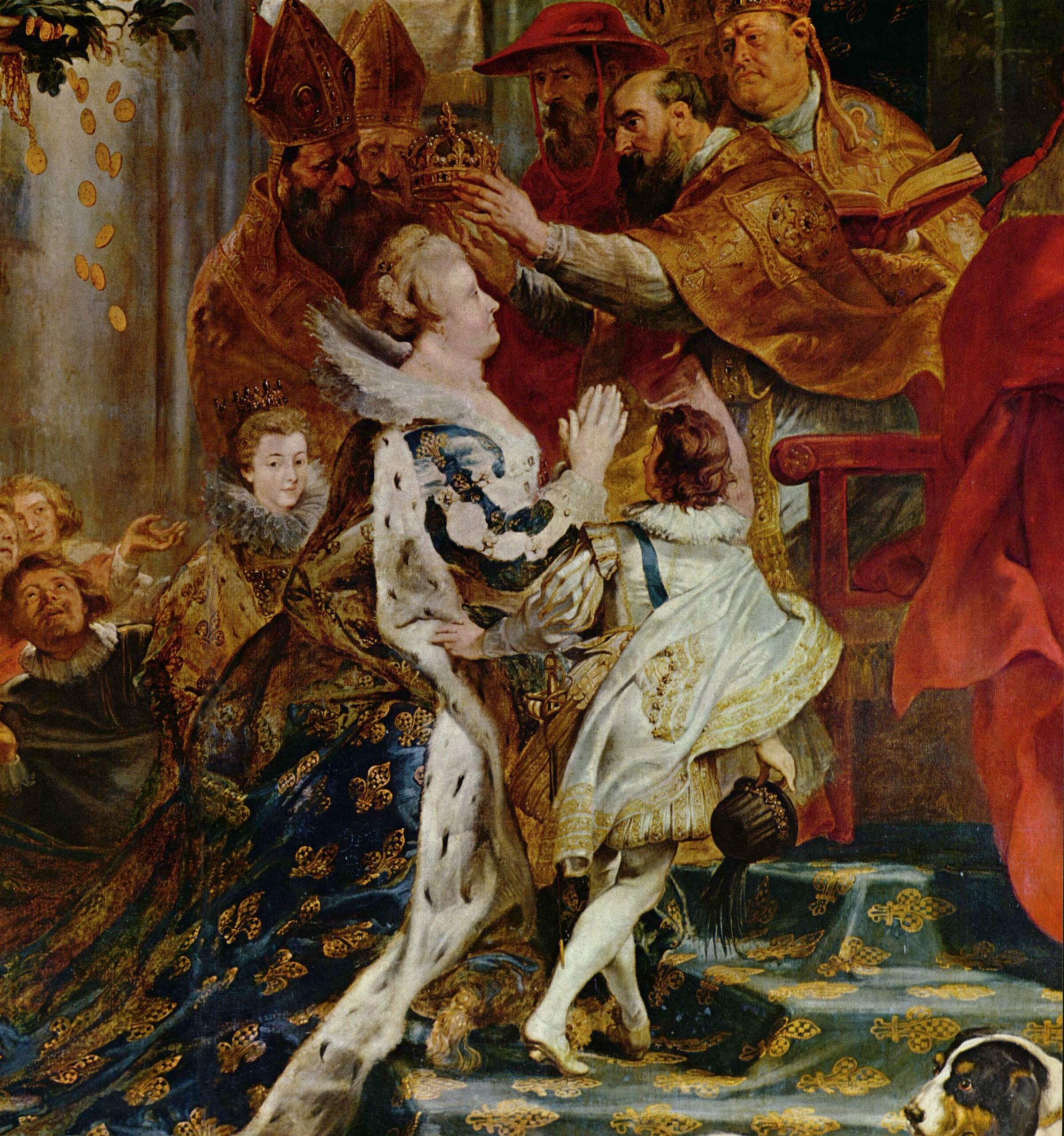
Coronation of Marie de Medicis by Peter Paul Rubens, 1622-1625, musée du Louvre, public domain
Not before time. Henri was brutally assassinated the following day, leaving France effectively without a ruler. His son Louis was only eight years old but now she was Queen, Marie could be made Regent just as Catherine had been. She took to the role enthusiastically but unfortunately she lacked Catherine’s shrewdness, psychological insight, and charm. From the start she was suspect as a foreigner. She didn’t help herself by relying on her Italian advisors and her Regency was marked by favoritism on the one hand and rebellions on the other. Even when Louis, as King Louis XIII, took over, she still didn’t stop meddling and conspiring against her son and eventually he banished her from Paris to live at Blois. After a temporary reconciliation, he banished her a second time, this time to Compiègne and also stopped her pensions.
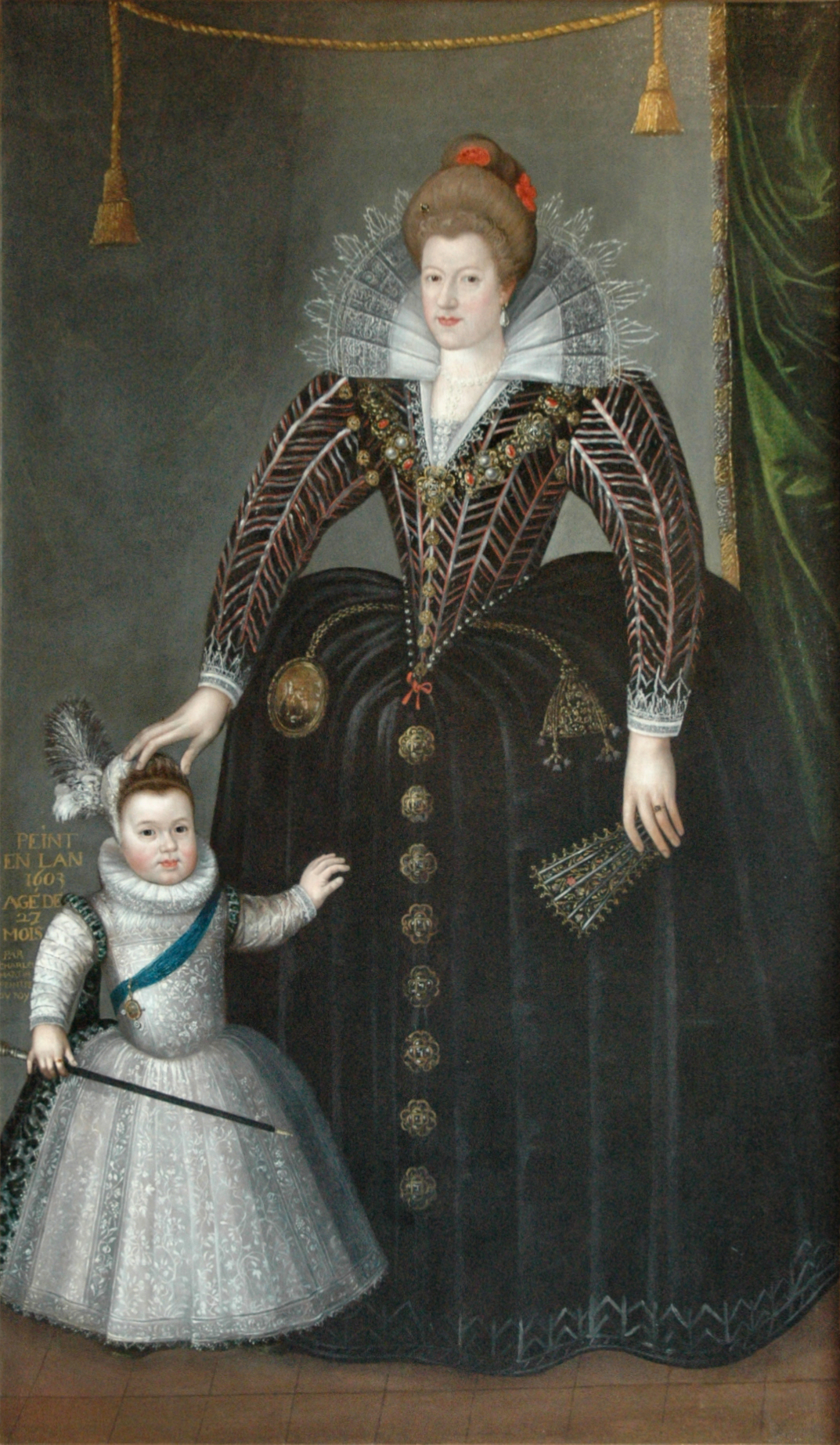
Marie de’ Medici and her son Louis XIII by Charles Martin, 1603, Fine Arts Museum of Blois, public domain
But Marie left her mark on Paris. During her reconciliation with Louis, she set about building the Luxembourg Palace and laying out the Luxembourg Gardens, which are her main legacies to the city. Built between 1612-1615 and designed by Salomon de Brosse, the idea was to replicate the Pitti Palace in Florence where Marie had lived as a child. It didn’t really turn out that way and the Luxembourg Palace is a very French palais. Of course, the palace now houses the French Senate. It is open to the public during the weekend of Journées du Patrimoine in September where you can also see the imposing debating chamber, known in French as l’Hémicycle, as well as the senatorial library and office of the Senate President.
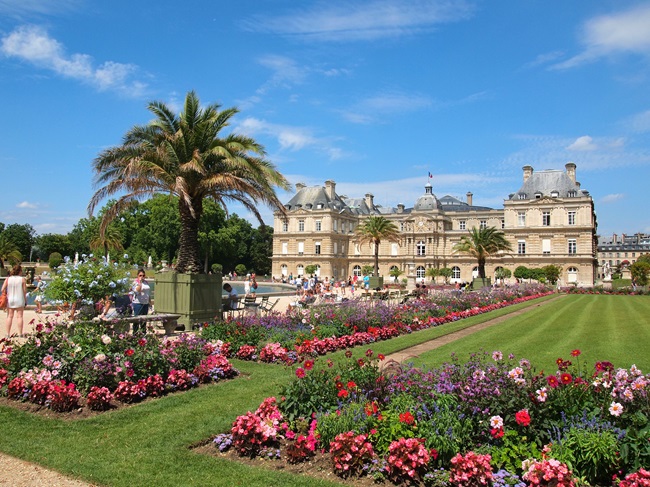
Jardin du Luxembourg. Photo: Amanda/ Flickr
The Luxembourg Gardens were laid out shortly after the palace and are typical of a formal French garden with its parterres, octagonal pond and fountain, and horse chestnut trees geometrically pruned to within an inch of their life (the “English” Garden on the western side and the ring of statues are later additions). It remains one of Parisians’ favorite parks, and when the sun is shining the green metal chairs are filled with people reading and talking. Two children’s traditions endure: the pony rides, and sailing boats on the pond. The boats are still constructed from wood with cotton sails and for over 100 years, generations of young Parisians have pushed them in the pond with long sticks.
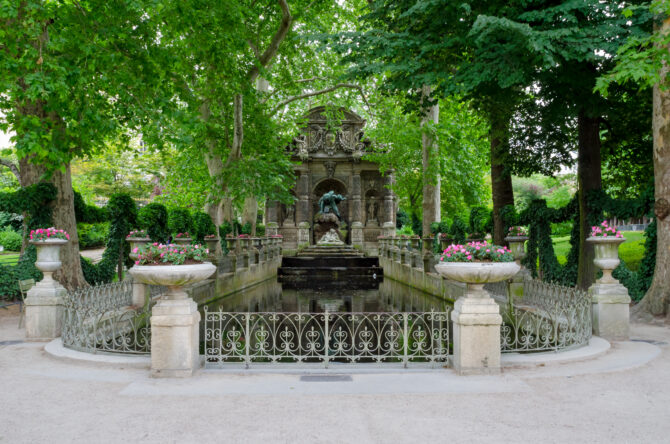
On the eastern side of the palace, Marie commissioned the Medici Fountain in around 1630. There are actually two fountains: “round the back” facing the street is a statue of Leda and the Swan while the main fountain facing the Senate depicts the giant Polyphemus discovering the lovers Acis and Galatea. The bassin is edged with urns that in summer overflow with seasonal flowers. At that time of year the fountain is always surrounded by tourists taking photos.
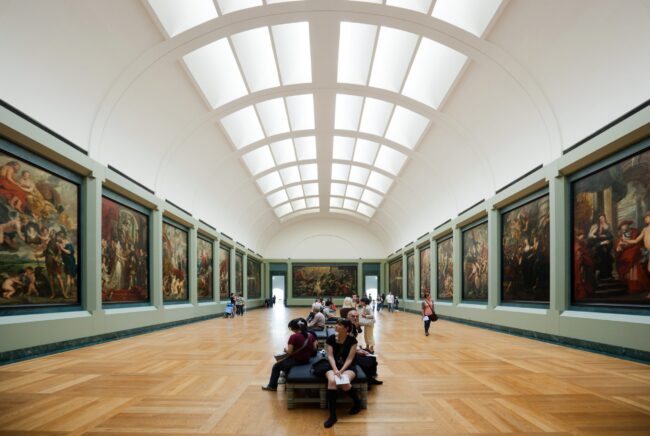
Galerie Médicis at the Louvre. Photo: Matt Biddulph / Flickr
Marie liked to be known as a great patron of artists. Her greatest coup was to invite Peter Paul Rubens to Paris where he painted a series of canvases depicting scenes from her life. These massive pictures, along with three portraits, portray the Royal Family as the reincarnation of the Roman gods Jupiter and Juno and still hang in their own room in the Louvre.
Sadly, Marie’s life did not end well. Deprived of an income, she spent her final years traveling around Europe living at the courts of other royal families. When she died, in 1642, in Cologne, Germany, she was destitute. It was a sad end for a woman who had arrived in France over 40 years earlier as a fabulously wealthy princess. And ironically, her son Louis did not have long to enjoy the absence of his hated mother; in May 1643 he also died, paving the way for the reign of Louis XIV, the Sun King, and everything that followed.
Two women fighting for recognition and power in a world dominated by powerful men. They made many decisions which, with modern hindsight, seem problematic but their actions were no worse than those carried out by male rulers who did not have to endure the same vilification. Most definitely a case of double standards at work.
Lead photo credit : Fontaine de Médicis. Photo: Shepard4711/ Wikimedia commons
More in Catherine de Medici, French royalty, Henri II, Henri VI, Jardin du Luxembourg, Marie de Medici, Palais des Tuileries
Related Articles



By Pat Hallam