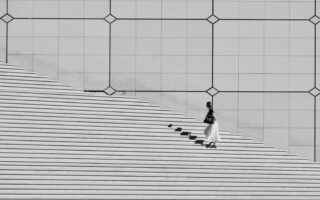
Explore Art Deco Architecture and Hidden Gems in Passy Village
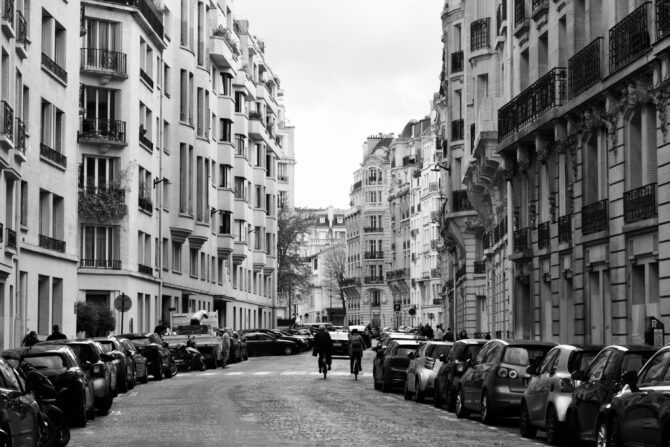
The Paris Vignettes series features the inspired work of street photographer William “Bill” O’Such in themed installments
After my photographic walk from Parc André Citroën to the Trocadéro, I decided to swap my usual solo wander for a more professional deep-dive into the area. I booked a guided tour via Explore Paris with Guillaume from Le Vrai Paris for me and a friend. Guillaume was fantastic — his French was incredibly clear (though he offers English tours as well), and he pulled back the curtain on a side of the 16th arrondissement most people walk right past.
We began at Trocadéro with an in-depth history of the site, where he pointed out that the massive wall across the street isn’t just a barrier — it’s the Cimetière de Passy. It’s one of those hidden-in-plain-sight sites that reminds you how much history is tucked behind the limestone. Teaser for a future vignette.
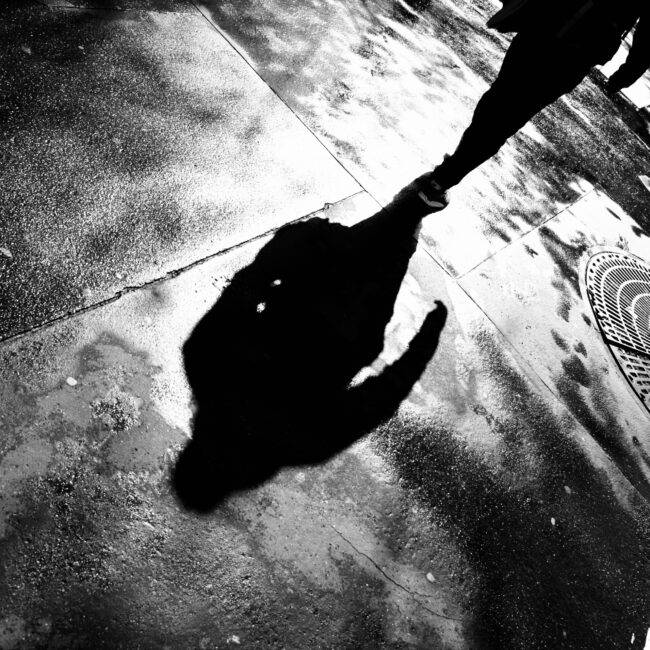
Passy Deep-Dive – 1. Photo: Bill O’Such
The Masters of Art Deco
Our walk officially kicked off at the statue of Benjamin Franklin. The corner buildings here are an Art Deco masterclass, having hosted stylish residents like Marlène Dietrich over the years. Even the door handles and light fixtures are works of art.
As we moved down Rue Benjamin-Franklin, we reached the iconic 1920s building by Auguste Perret. Perret was a pioneer of reinforced concrete, and this specific building is where the legendary designer Philippe Starck once lived and kept a studio. The geometric details and the way the structure plays with light are captivating, making even the beautiful surrounding buildings feel a bit “standard” by comparison.
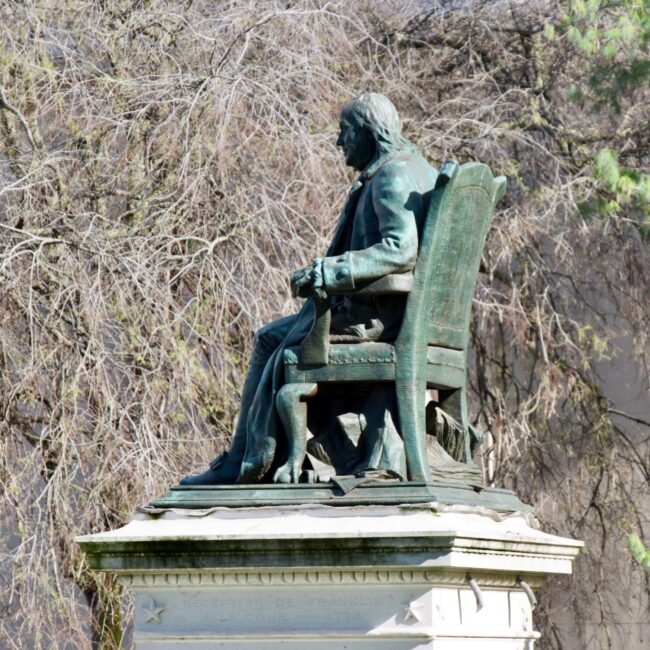
Passy Deep-Dive – 2. Photo: Bill O’Such
Hidden Waters and Street Luck
We eventually walked past the Rue des Eaux, a hidden gem squeezed between two towering buildings. This narrow passage was once famous for its two mineral healing springs. As if on cue, a lone figure started walking down the passage just as I raised my lens — a perfect “street photography gift” that captured the scale and the slightly mysterious, old-world vibe of the alley.
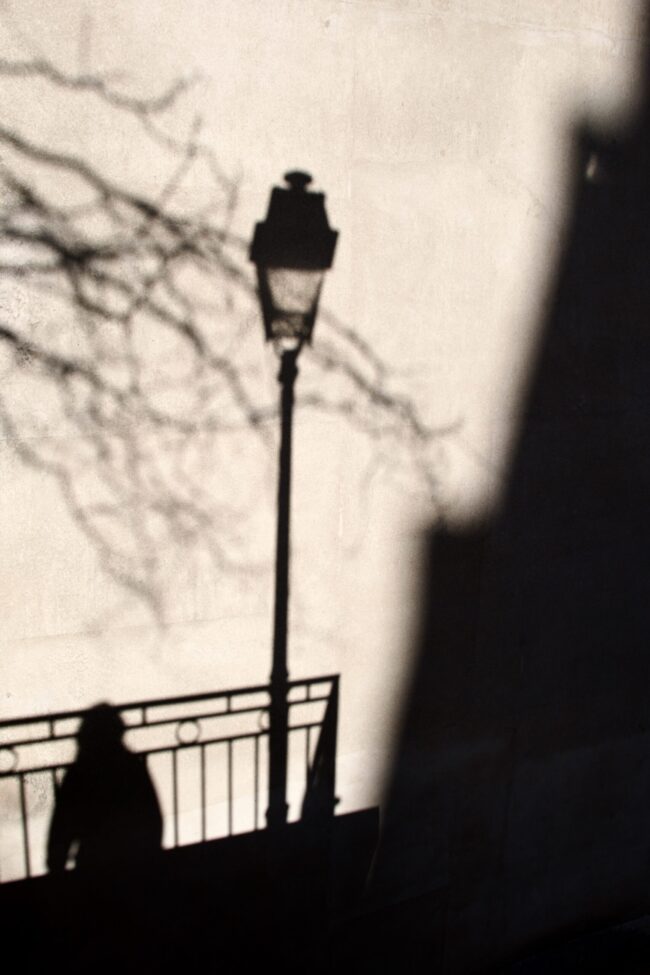
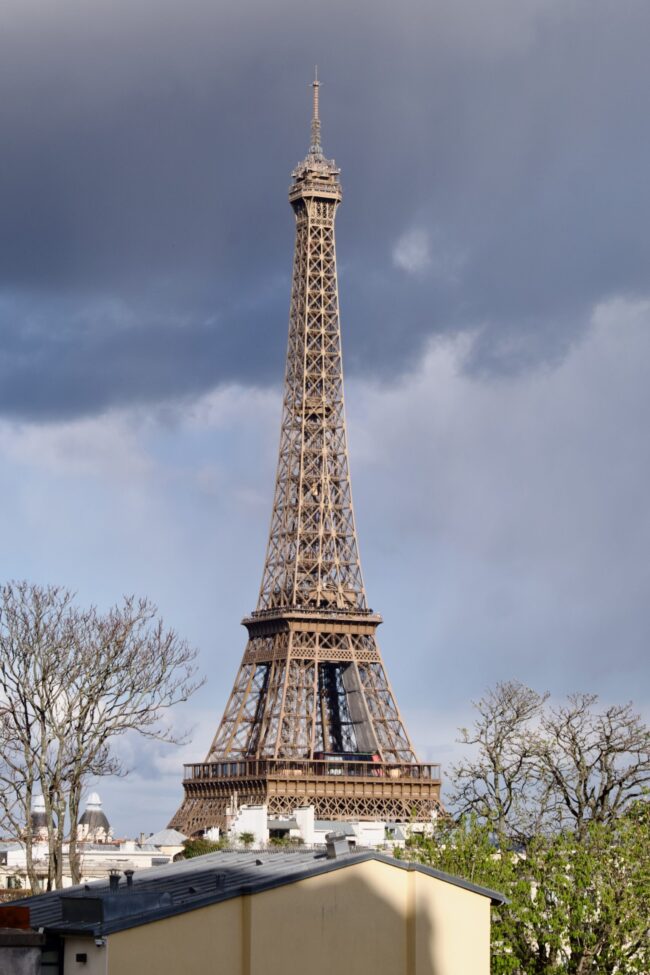
Eventually we took a left and descended toward the Parc de Passy, and the character of the neighborhood shifts again. After turning right on the Avenue Marcel Proust, we discovered, tucked between the Maison de Balzac and the Turkish Embassy, a narrow, cobblestone path (Rue Berton) that feels like it’s been preserved in time. With shadowy silhouettes on the garden walls and a sudden, sublime view of the Eiffel Tower peeking through the buildings, it was a total escape from the modern city.
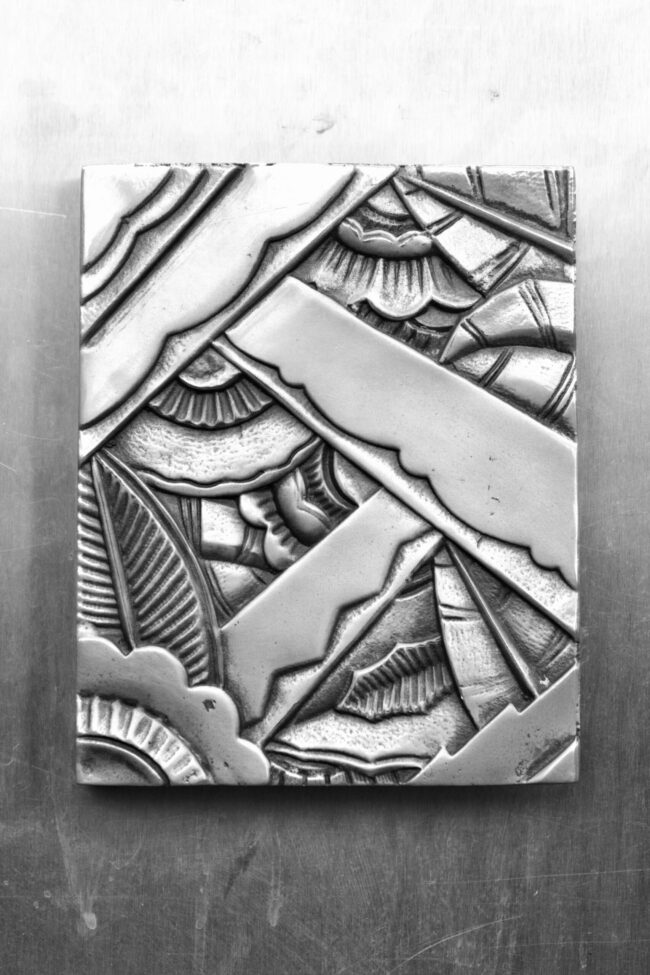
Passy Deep-Dive – 3. Photo: Bill O’Such
The Final Act: Radio France
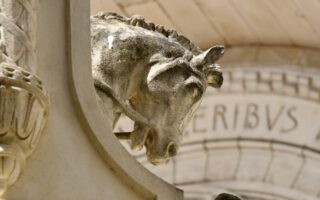
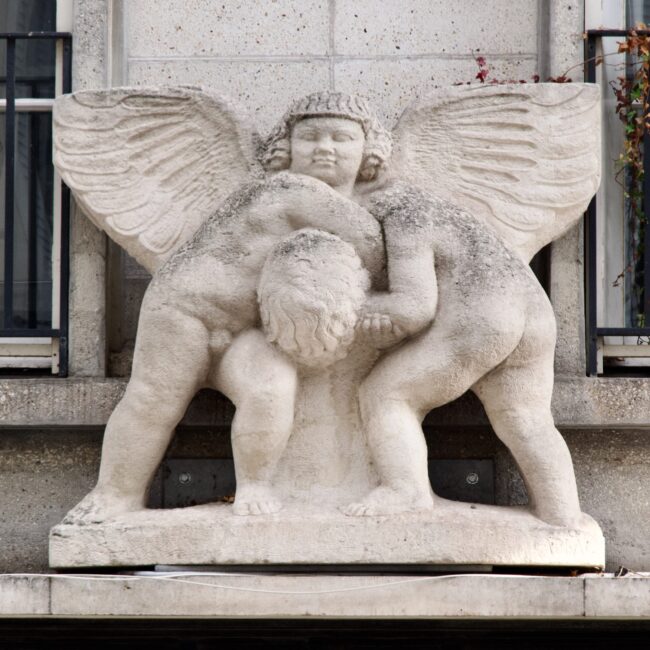
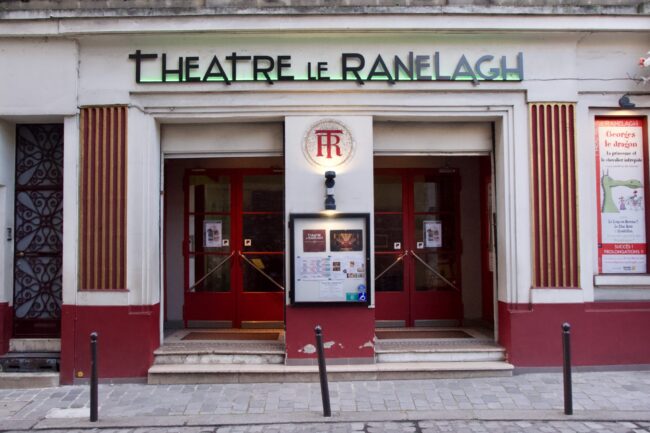
Toward the end of our journey, the architecture continued to surprise us with unique statues guarding facades and a hidden theatrical history. We discovered the Théâtre du Ranelagh, originally built in 1755 as a private music room for a local castle. It was later converted by the industrialist Louis Mors into a luxurious hall for theater, classical music, opera, and even family-friendly puppet shows.
A few blocks later, we arrived at the massive, circular Radio France building. After a morning of steep steps and informative deep-dives by Guillaume, it was finally time for a well-earned tea at a neighborhood café. If you take this walk, you’ll have a much deeper appreciation for the “quiet” side of Passy.
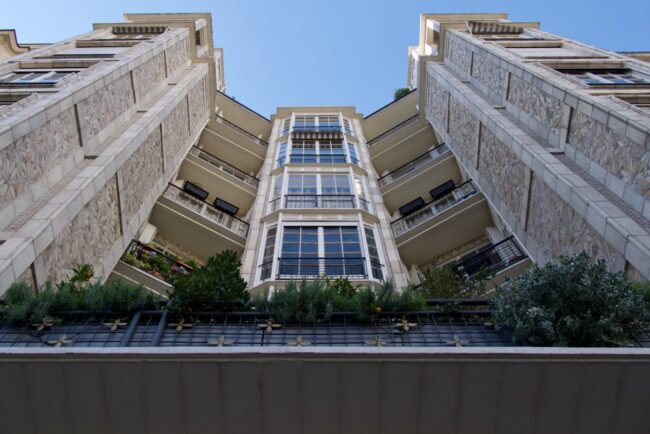
Passy Deep-Dive – 4. Photo: Bill O’Such
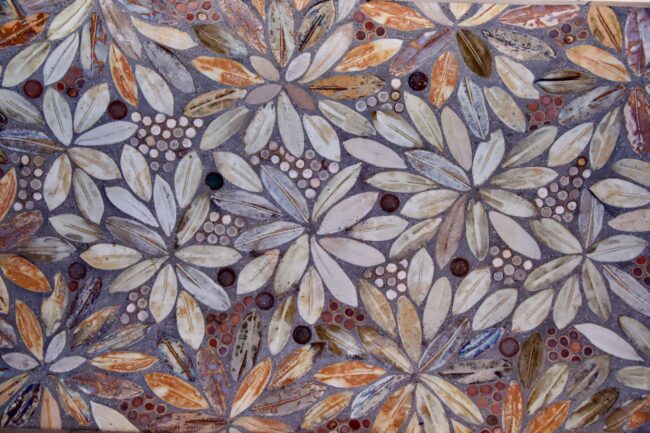
Passy Deep-Dive – 5. Photo: Bill O’Such
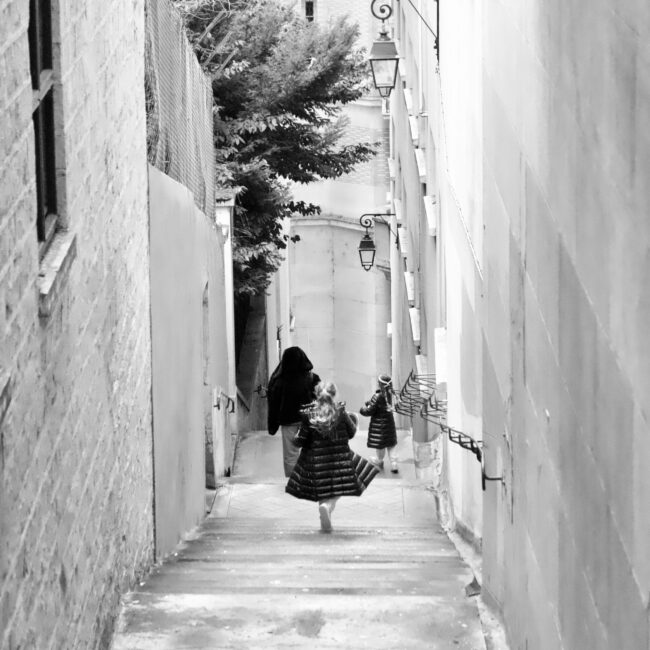
Passy Deep-Dive – 6. Photo: Bill O’Such
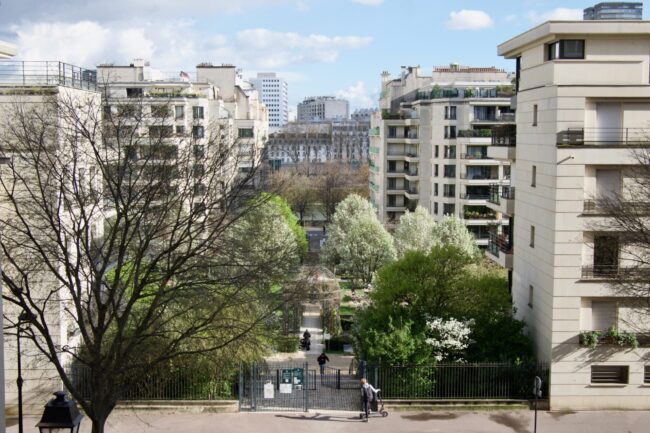
Passy Deep-Dive – 8. Photo: Bill O’Such
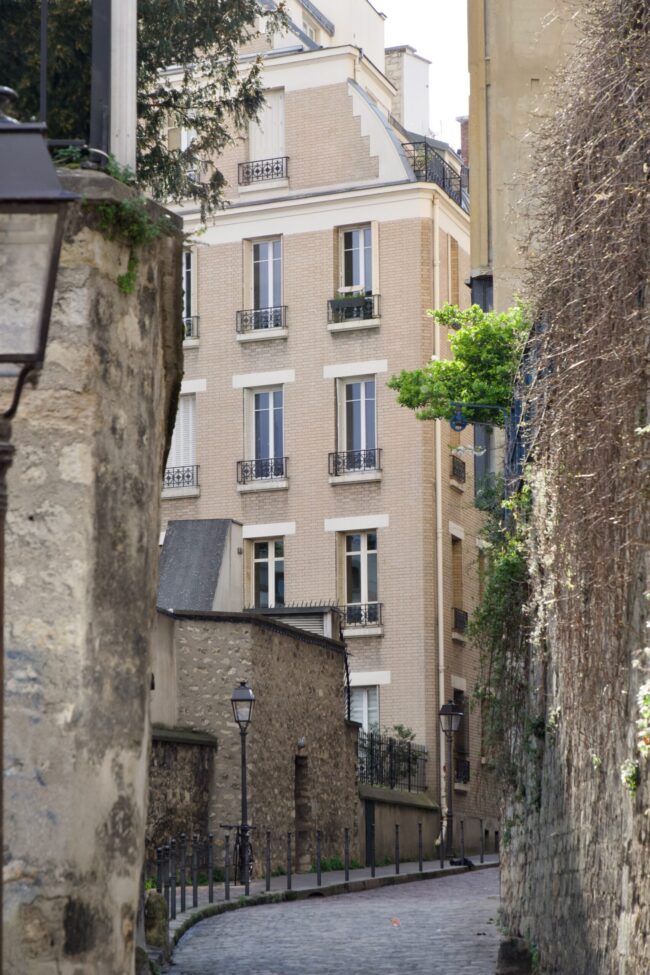
Passy Deep-Dive – 9. Photo: Bill O’Such
Passy Deep-Dive – 10. Photo: Bill O’Such
Passy Deep-Dive – 11. Photo: Bill O’Such
Passy Deep-Dive – 12. Photo: Bill O’Such
Passy Deep-Dive – 13. Photo: Bill O’Such
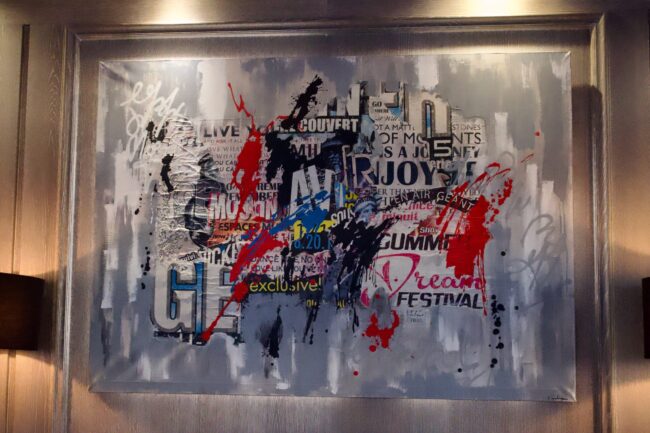
Passy Deep-Dive – 14. Photo: Bill O’Such
Lead photo credit : Passy Deep-Dive - 7. Photo: Bill O'Such
More in 16th arrondissement, Art Deco, Paris Vignettes, passy
Related Articles