
Notre Dame’s New Windows: Shock or Awe?
- SUBSCRIBE
- ALREADY SUBSCRIBED?
BECOME A BONJOUR PARIS MEMBER
Gain full access to our collection of over 5,000 articles and bring the City of Light into your life. Just 80 USD per year.
Find out why you should become a member here.
Sign in
Fill in your credentials below.
After the devastating fire of 2019, an optimistic and forward-looking President Macron ordered the cathedral to be rebuilt within five years.
He also suggested adding “a contemporary gesture” to the renovation, which inspired a flood of boundary-pushing creative ideas from far and wide. How about a glass spire to replace the fallen Viollet-le-Duc spire?
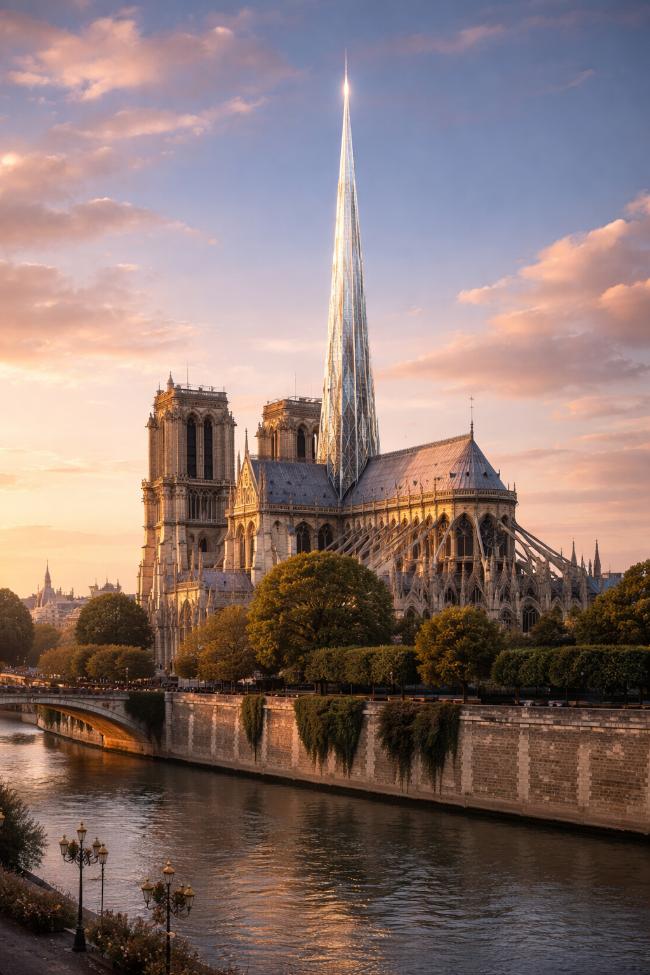
Thumbs down to the crystal spire idea, but AI can give you a picture of “what might have been.”
Or a swimming pool or greenhouse between the towers and the spire? Or a roof covered in solar panels or recycled ocean plastic (vive l‘environnement!)?
The debates began. But change does not come easily to the classical and elegant soul of Paris.
The 1889 Eiffel Tower was called a monstrous eyesore, an odious column of bolted metal, and a gigantic smokestack.
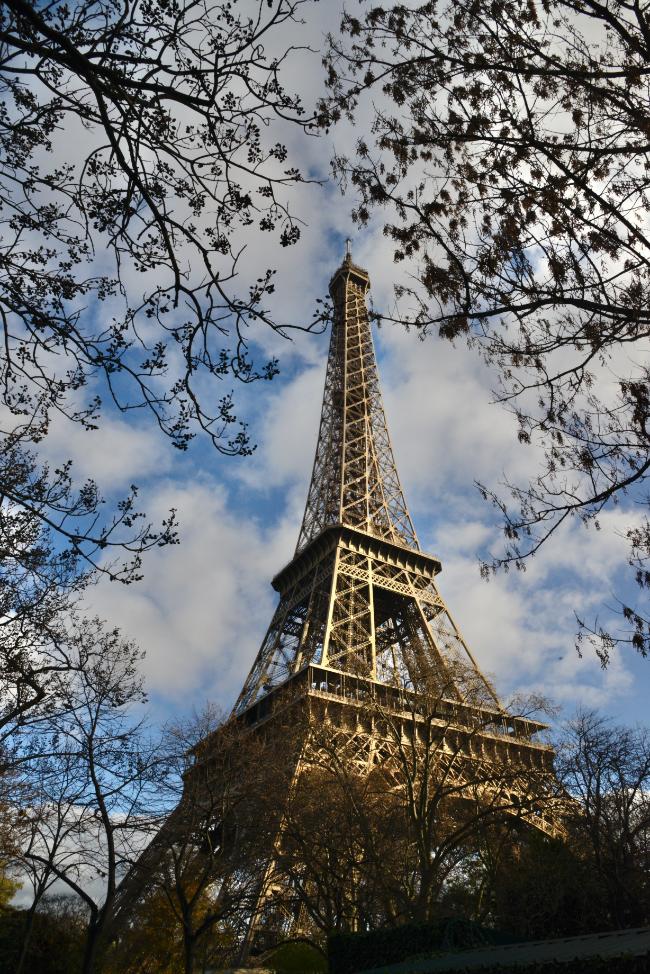
An odious column of bolted metal. © Meredith Mullins.
The 1977 Pompidou Center was called an inside-out factory, a giant radiator, a power plant, and an architectural joke.
The 1989 Louvre Pyramid was described as a shopping mall entrance, a modern intrusion into a historic palace, and a Pharaoh’s folly. Now, the elegant pyramid appears in more selfies than the palace itself.
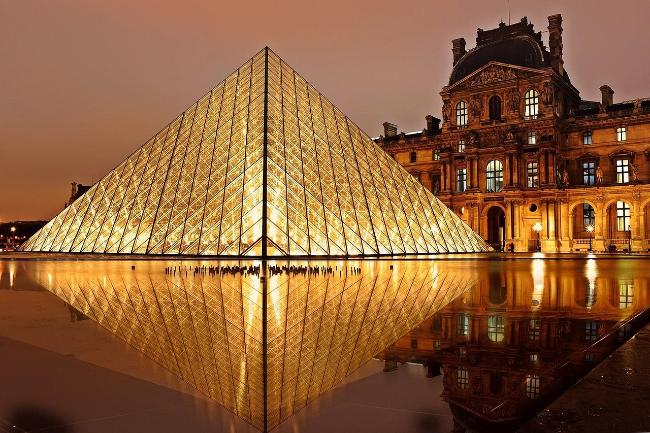
The Louvre Pyramid by I.M. Pei. Photo credit: Edi Nugraha / Pixabay.
I could go on … but the point is that few in France hold back their opinions. The good news is that these former “eyesores” have now evolved into beloved icons of Paris — an integral part of the city’s personality and a testament to innovation.
The pattern is familiar. The attempted change shocks. Backlash rages. And then, the icon becomes a symbol of modernization, evolution, and the courage to keep Paris from becoming a “living museum.”
Notre-Dame’s New Stained Glass: Beauty and Backlash
The ultimate “contemporary gesture” and touch of modernization for Notre-Dame turned out to be a gentle proposal for new stained-glass windows for six chapels along the south side of Notre-Dame (The Way of the Pentecost).
However, not everyone agreed that change was needed. After all, the original windows by Viollet-le-Duc had not been damaged in the fire. They needed cleaning, but they had survived intact.
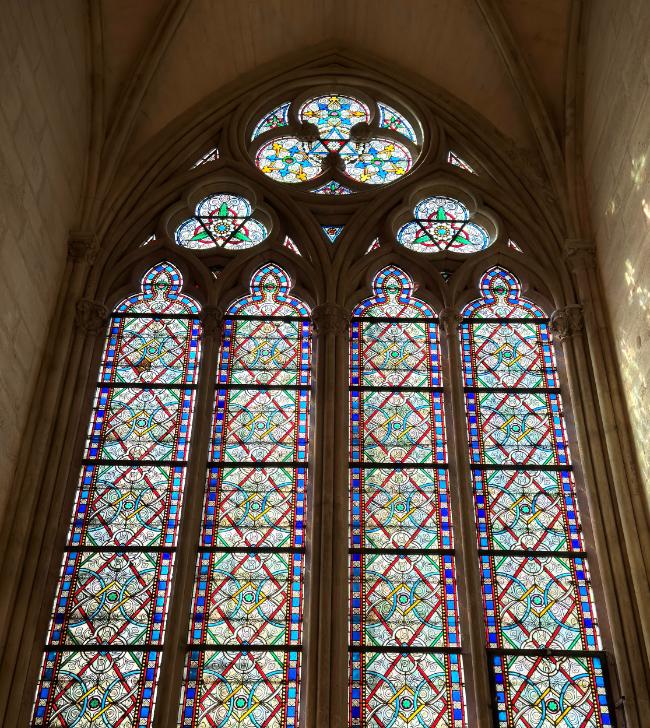
The 1844 Viollet-le-Duc window in one of the south side chapels. Photo by Meredith Mullins
The committee of the culture ministry, the Académie des Beaux-Arts, and more than 300,000 signatories on a petition opposed the replacement plan. They lost their first court case and, although an appeal has been filed, the window project continues.
Fast-forward to the finished designs by the 44-year-old artist, Claire Tabouret, who won the commission in 2024 from among more than 100 entrants, including some famous names in French art, such as Daniel Buren, Philippe Parreno, and Yan Pei-Ming. The dramatic full-size window maquettes were recently displayed in the Grand Palais — a visual progress report and, hopefully, a way to garner more public support.
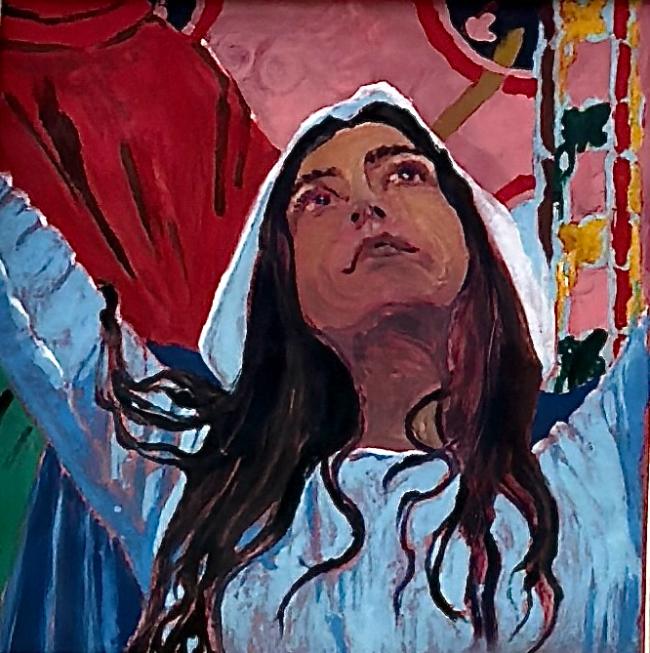
Tabouret’s Virgin Mary, with strength and determination. Photo by Meredith Mullins.
The Tabouret Vision
Tabouret usually doesn’t vie for commissions because she prefers the freedom to work on her own personal projects. However, she decided to enter the window competition because she understood that France has a special relationship with its history, but is sometimes too tied to it. She said that she wanted to bring the heritage alive. She wanted to be sure there was a harmonious dialogue between the ongoing layers of history.
She was also inspired by the vision of the Archbishop of Paris to honor the idea of living in harmony despite our differences, a message particularly resonant in these times of global conflicts.
She submitted her application just before the deadline and won the respect of the jury with her dramatic figurative designs.
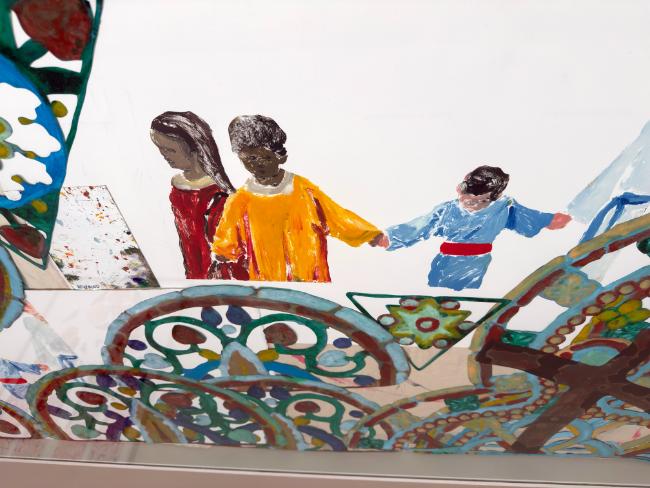
Tabouret’s drawing focuses on unity despite differences. Photo by Meredith Mullins.
Certain restrictions constrained the artistic approach. The competition required a figurative approach rather than abstraction. It was also required that the total colored segments of each window, if superimposed, had to create white light (similar to the existing windows) — a challenge of physics as well as artistic vision. Tabouret had to maintain this balance and restrain her usually broader palette.
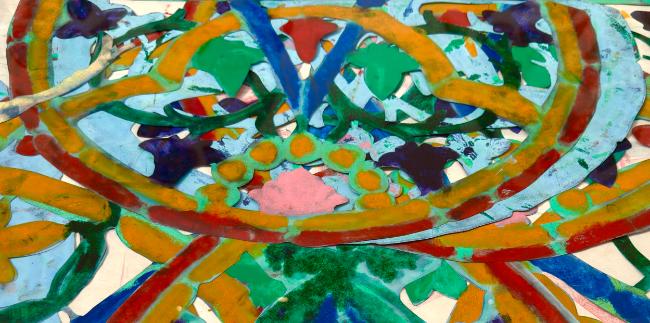
One of Tabouret’s models to work out a color palette that met the “white light” challenge. Photo by Meredith Mullins.
Each window is inspired by a specific verse and story of the Pentecost and guides the visitor on a spiritual path. As Tabouret has said, she does not want the windows to impose but merely accompany a visitor who wishes to take the path.
The windows are now in production at the Atelier Simon-Marq in Reims, a studio that has worked in this art form for hundreds of years and with notables such as Chagall and Miró for their stained-glass projects.
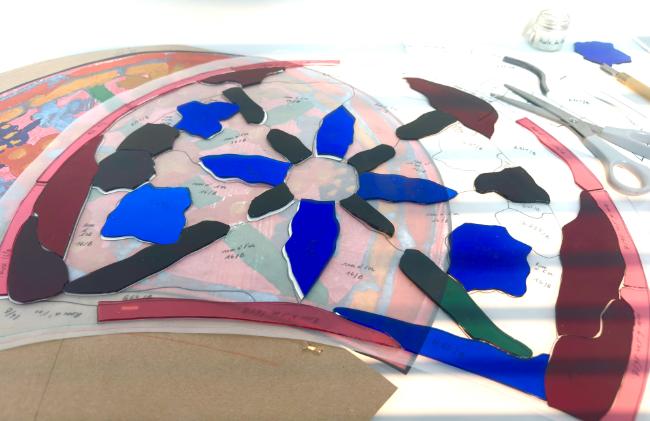
Each window panel is made up of about 50 pieces of stained glass. Photo by Meredith Mullins.
The descriptions that follow for each chapel are what Tabouret has said in interviews about the meaning of her work.
Saint-Joseph Chapel
“And they were all together in the same place.”
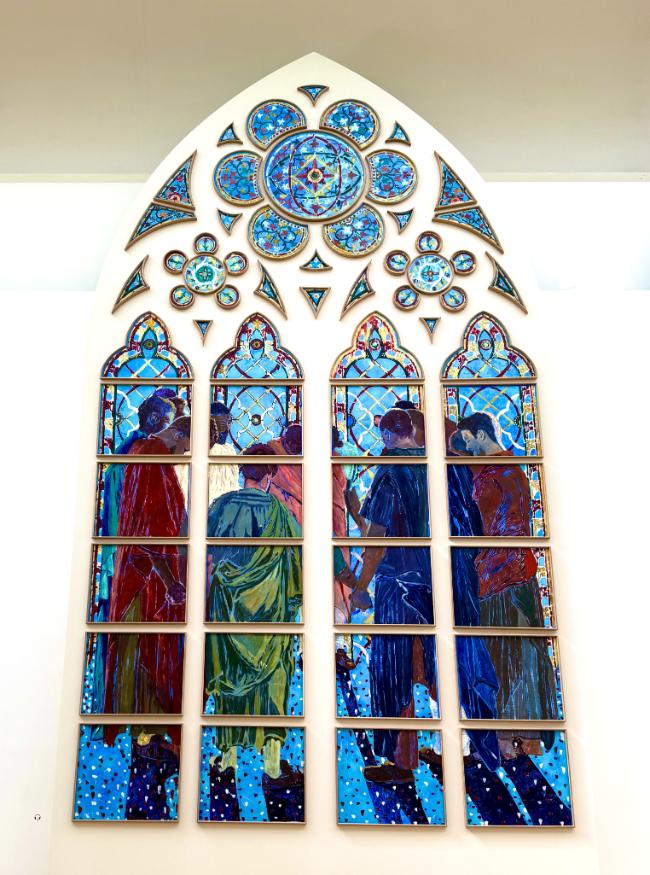
Caption: Window design for the Saint-Joseph Chapel. Photo by Meredith Mullins.
The window for the chapel of Saint-Joseph presents a circle of contemplation, of silent unity. As the robed disciples bow their heads, they seem to invite the viewer into universal prayer.
It is interesting that this chapel was included in the commission since the window, usually hidden behind the confessional doors, will be hard to view.
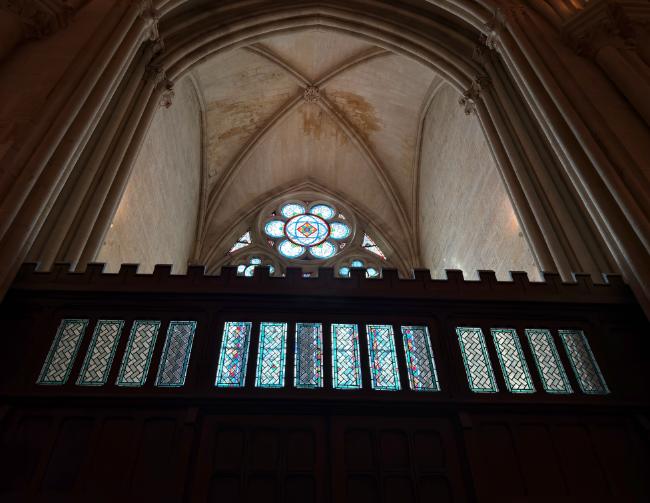
The window in the Saint-Joseph Chapel is hidden behind the confessional doors. Photo by Meredith Mullins.
The budget could have been significantly reduced (by about half a million euros if my math is correct) if the work had been limited to five windows rather than six. Also, between the Chapel of Saint-Joseph and the Chapel of Sainte-Clothilde (where the next Tabouret window will be installed) is the Chapel of Saint–Thomas–Aquinas, which will keep its colorful window — very different from Tabouret’s style.
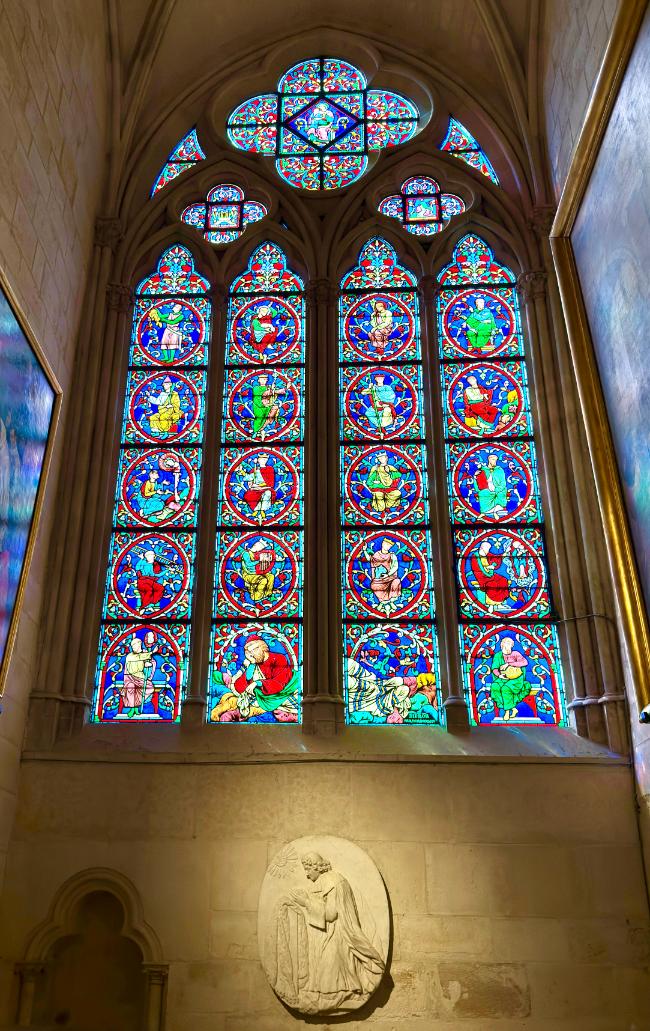
The Saint-Thomas-Aquinas Chapel sits between two of Tabouret’s chapels, with a very different stained-glass style.
Sainte-Clothilde Chapel
There came from heaven a sound.
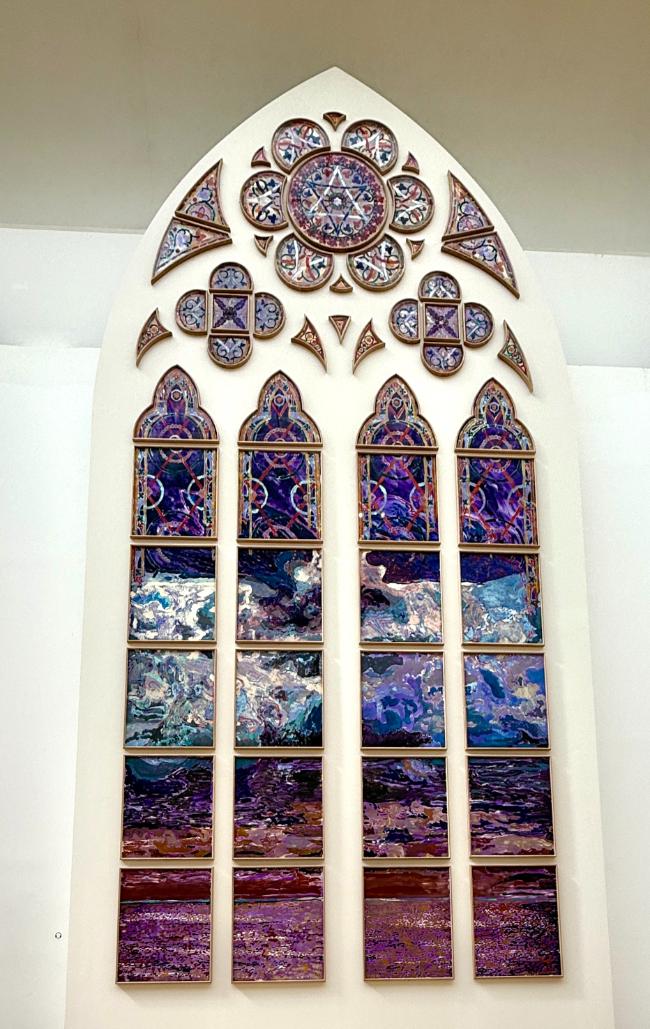
Window design for the Sainte-Clothilde Chapel. Photo by Meredith Mullins.
In this rich abstraction of sound and light, Tabouret offers a metaphor for transcendence from turmoil, as if a wave of light emerges from a sea of vibrations —shocking one into action on a spiritual path.
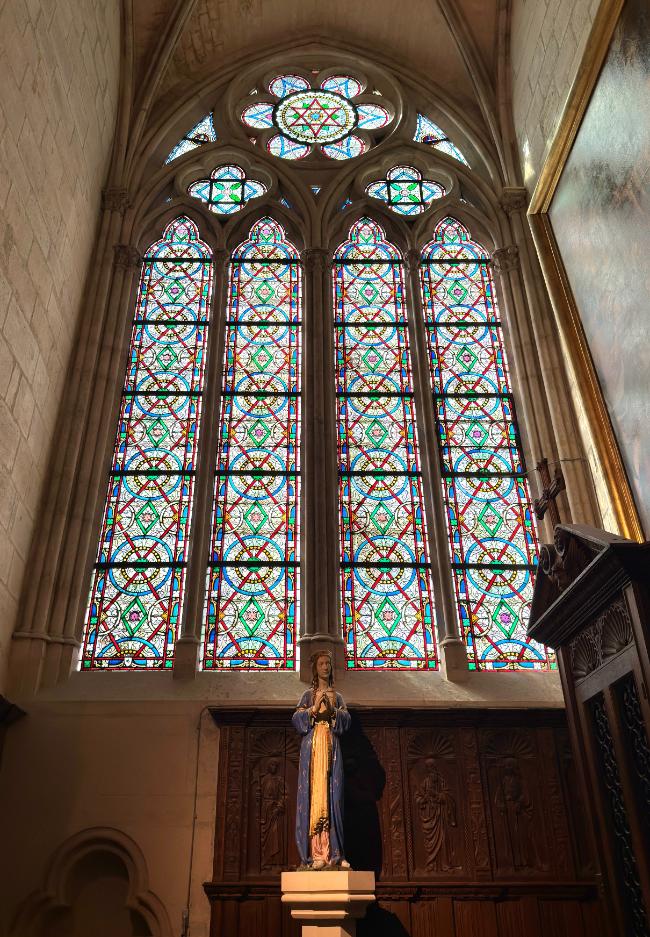
The current Sainte-Clothilde Chapel. Photo by Meredith Mullins.
Saint-Vincent-de-Paul Chapel
Like a violent rush of wind.
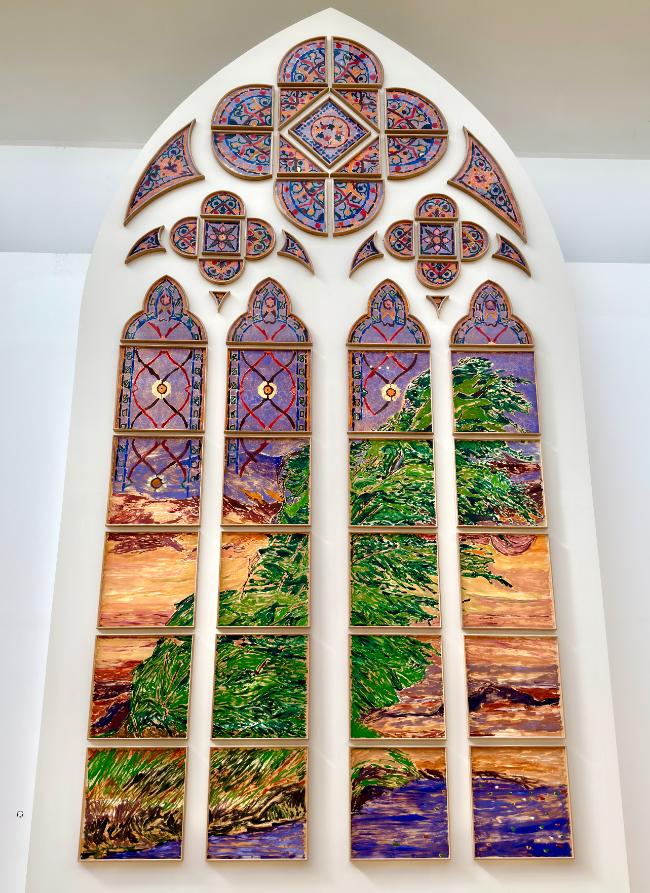
Window design for the Saint-Vincent-de-Paul Chapel. Photo by Meredith Mullins.
This image is not just a movement of the wind; it represents a movement of the mind. Tabouret sought a balance between strength and flexibility in the tree and shows the wind blowing in the direction of the viewers, helping them toward their spiritual journey. The angled tree also leads toward the next chapel and window.
The wind is a symbol of the Holy Spirit, a breath of air and grace that comes and goes from a place of mystery.
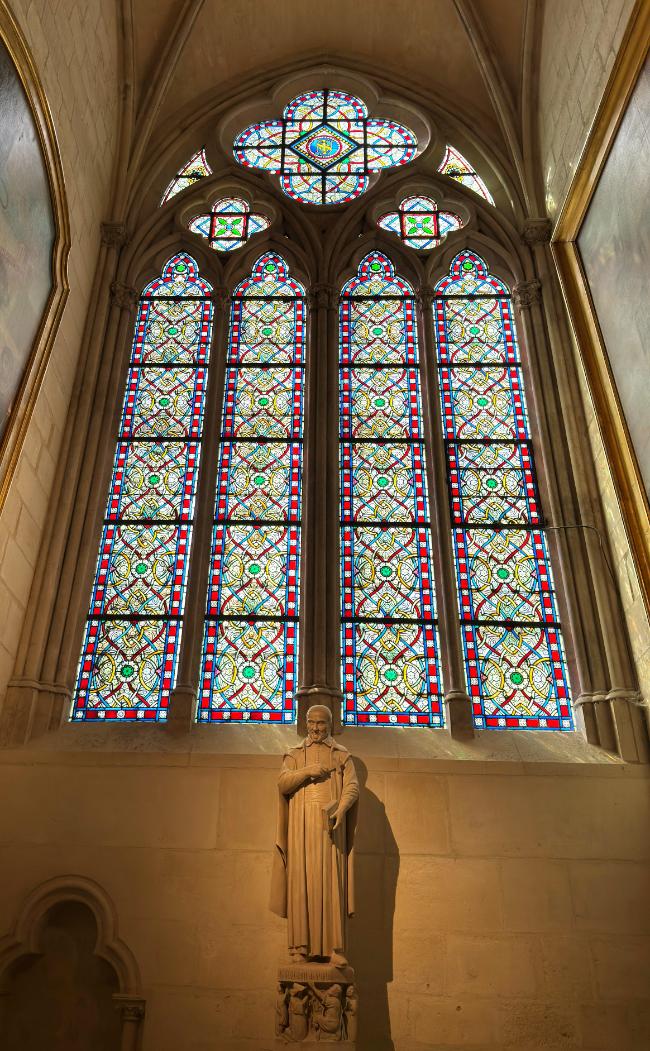
The current Saint-Vincent-de-Paul Chapel. Photo by Meredith Mullins.
Sainte-Geneviève Chapel
And divided tongues as of fire appeared to them.
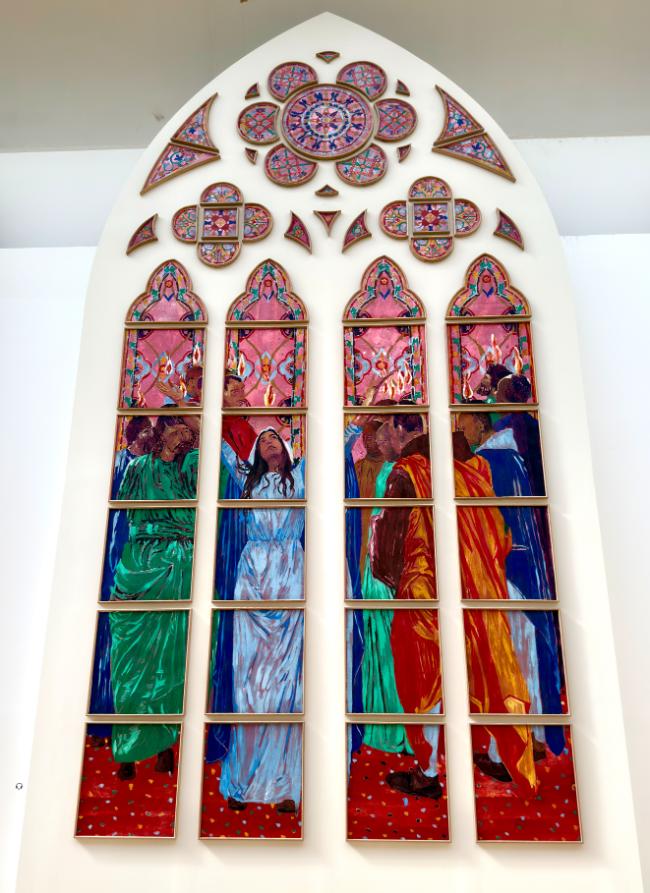
Window design for the Sainte-Geneviève Chapel. Photo by Meredith Mullins.
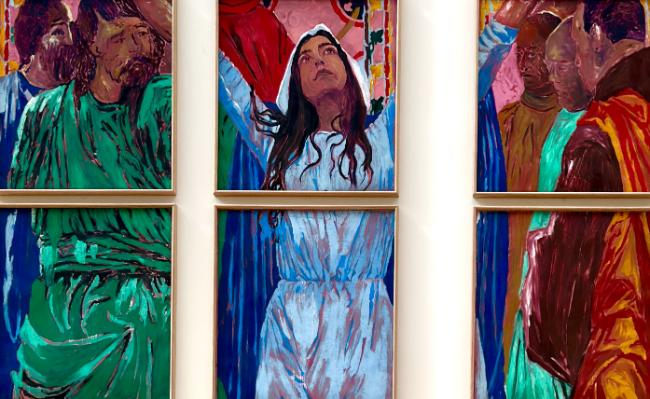
The Virgin Mary appears here for the first time in the windows, as an expressive, strong woman, but tormented by the death of her son. Her outstretched arms toward heaven are like wings of spiritual liberation. The 12 flames refer to the tongues of fire in the Pentecost.
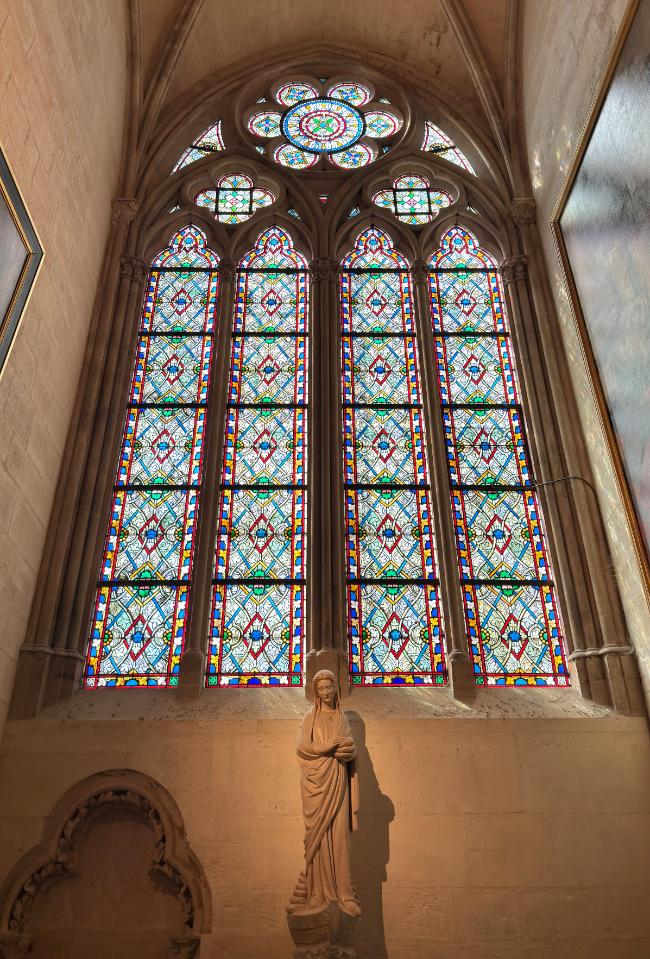
The current Sainte-Geneviève Chapel. Photo by Meredith Mullins.
Saint-Denys Chapel
They were all filled with the Holy Spirit.
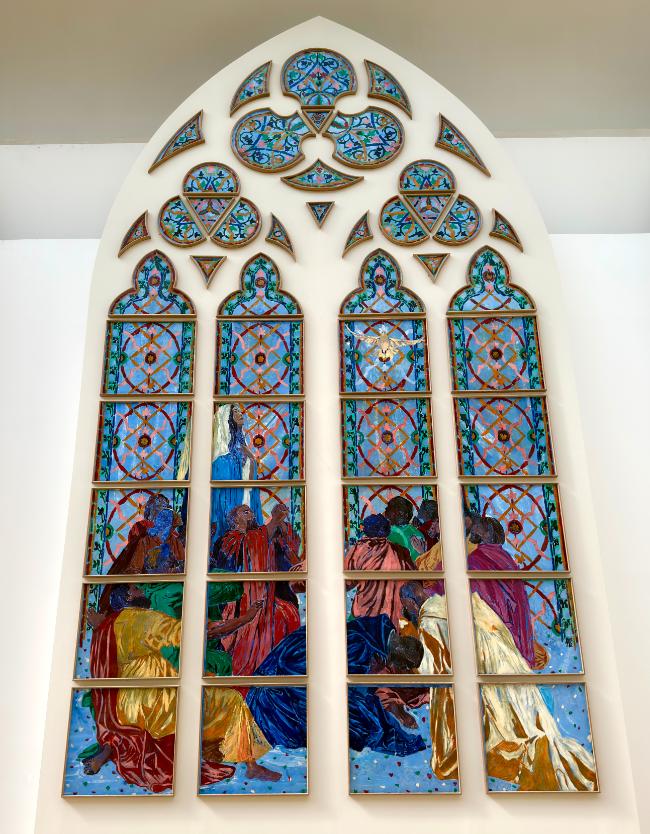
Window design for the Saint-Denys Chapel. Photo by Meredith Mullins.
The Holy Spirit (the white dove) appears to the Virgin Mary and the apostles in divine light creating a connection and tension between pain and light. The doves outstretched wings mirror the Virgin Mary’s arms in the previous window.
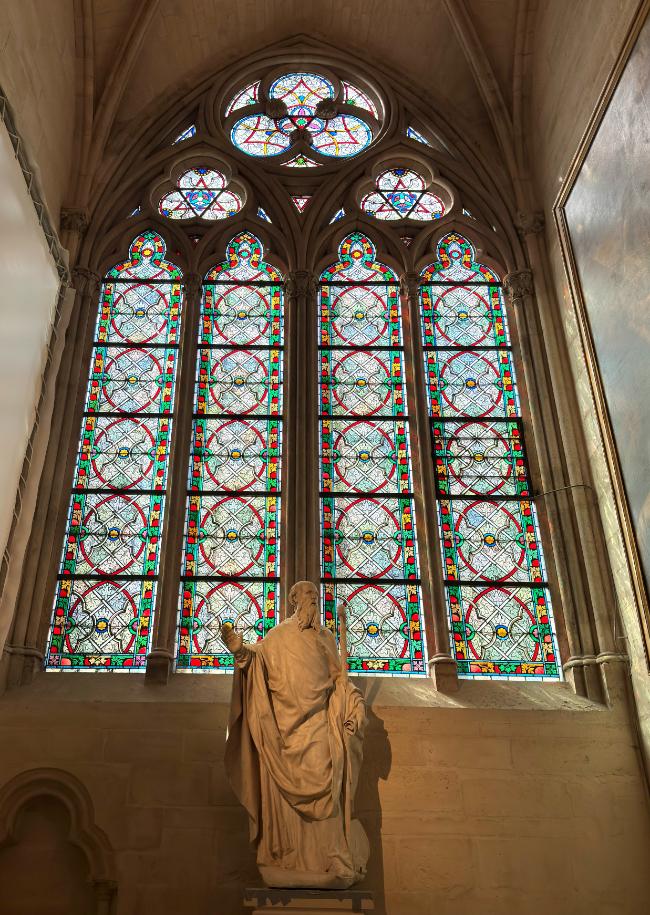
The current Saint-Denys Chapel. Photo by Meredith Mullins.
Saint-Paul-Chen Chapel
And they began to speak in other tongues as the Spirit gave them utterance.
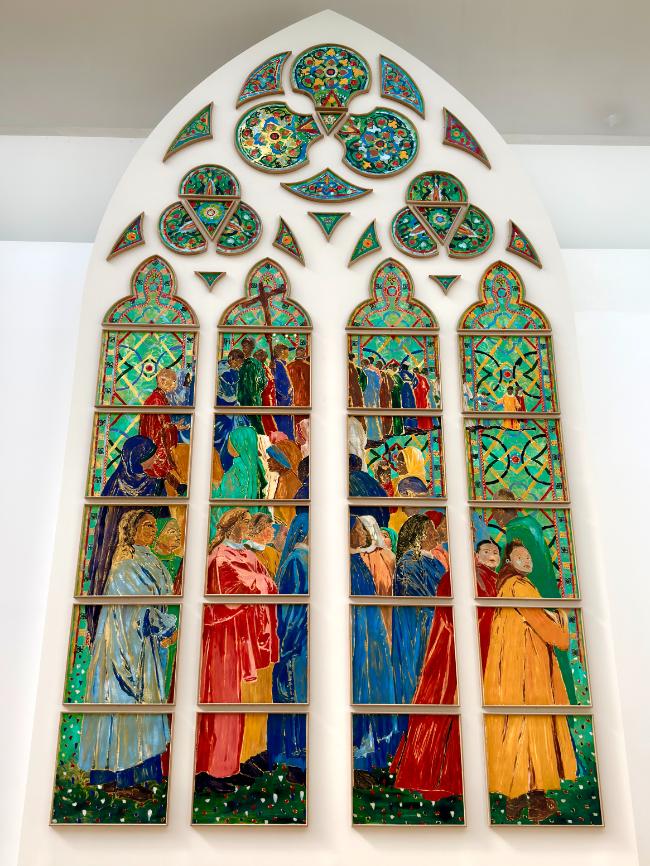
Window design for the Saint-Paul-Chen Chapel. Photo by Meredith Mullins.
The powerful processional in this window is led by children from different eras and cultures — symbols of faith, hope, and charity. This final window delivers a vision of harmony and a collective movement toward the light.
The window also reflects the message of the Saint-Paul-Chen Chapel, a saint who was martyred at age 22 and who had been a messenger of peace, love, and unity throughout the world.
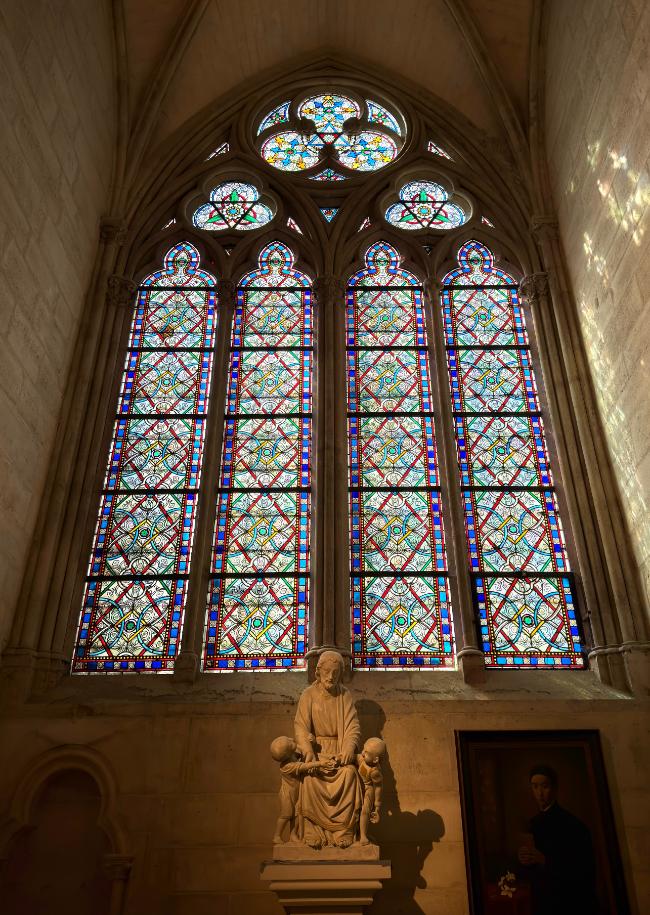
The current Saint-Paul-Chen Chapel. Photo by Meredith Mullins.
At the end of the procession, two girls face the viewer as if urging the spread of a message of peace.
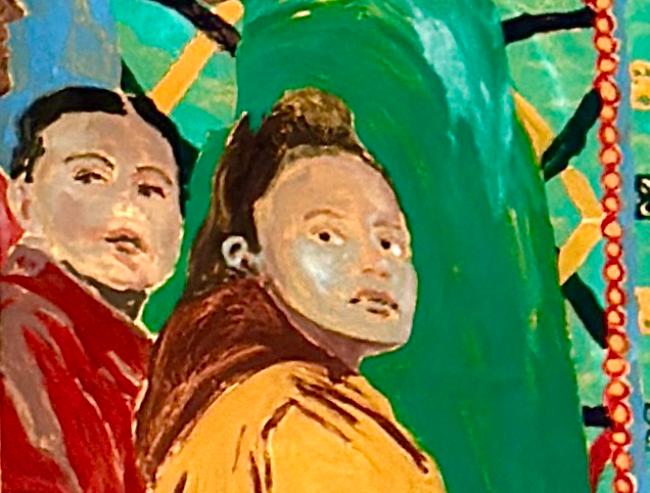
Detail of the new Saint-Paul-Chen window delivering a message of peace. Photo by Meredith Mullins.
Windows of History
The stained-glass window story is still being written.
My guess is that, despite the backlash, we will see the new windows in place on schedule by the end of the year.
Some people will be shocked, some will be critical, and some will be transported by the windows’ contemplative, contemporary beauty and message. However the controversy plays out, these are clearly windows to the future.
And, as French heritage has proven, in 10 years’ time, Tabouret’s windows will seem like they were always a part of history.
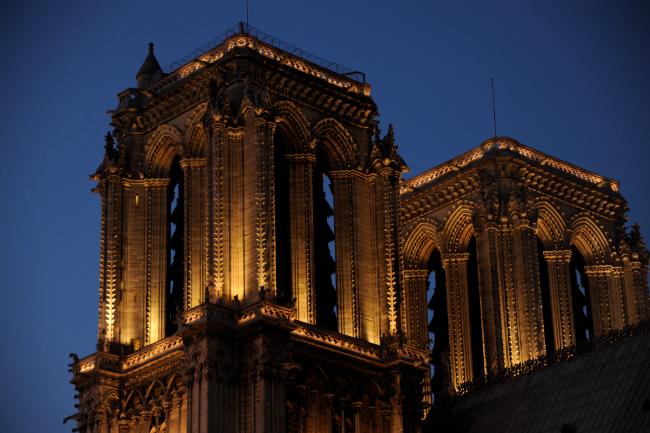
Notre-Dame. © Meredith Mullins
Lead photo credit : Detail of Claire Tabouret’s new stained-glass window design. Photo by Meredith Mullins.
More in Claire Tabouret, notre dame, stained glass
Related Articles
REPLY
REPLY