
10 Moments in History at the Hôtel de la Marine

- SUBSCRIBE
- ALREADY SUBSCRIBED?
BECOME A BONJOUR PARIS MEMBER
Gain full access to our collection of over 5,000 articles and bring the City of Light into your life. Just 80 USD per year.
Find out why you should become a member here.
Sign in
Fill in your credentials below.
The splendid Hôtel de la Marine, overlooking the Place de la Concorde, is one of France’s most popular tourist sites, attracting nearly 350,000 visitors in 2025. It offers a heady combination of luxury and history. You can wander rooms decorated for glittering Second Empire balls, but you can also see where France’s key document abolishing slavery was signed and hear tales of the building’s occupation by the Nazis and subsequent liberation in August 1944. To get the most from a visit, a little knowledge of the building’s momentous past is key. Here is a rundown of 10 of the most significant moments.
1. The Royal Furniture Store
When the grand square we know as Place de la Concorde was first laid out, it was named the Place Louis XV after the reigning monarch. Louis chose an impressive building overlooking it as the new home for his Grand Meuble de la Couronne, a place to store the furnishings, tapestries and jewels of the royal collection not in use in one of the royal residences. Louis must have been proud of these new symbols of his magnificence, opened in the late 1750s, but what he did not know what that just 30 years later, his successor and grandson, Louis XVI, would be executed by his revolutionary subjects on this very square.
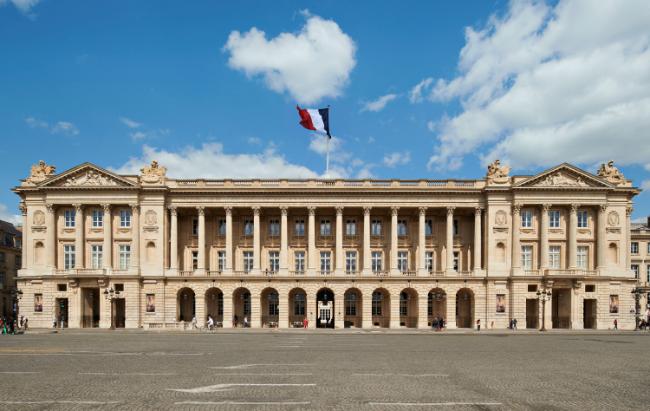
courtesy of the Hôtel de la Marine
The garde-meuble (furniture store) was expensively fitted out by its first superintendent, Pierre-Elisabeth de Fontanieu, who spent huge sums on fittings said to have “stupefied” the public, such as a table-volante, a rope-and-pulleys contraption to bring food from the kitchens up to the dining room. The cabinet des glaces (mirror room), set up just next to his bedroom, has captured imaginations ever since. Mirrors and paintings of naked women lined the walls surrounding the silken couch on which he liked to entertain visiting opera singers. The raunchier decorations were removed by the wife of his successor, but you can still visit the cabinet today and be reminded of the atmosphere of entitlement which prevailed in these pre-revolutionary times.
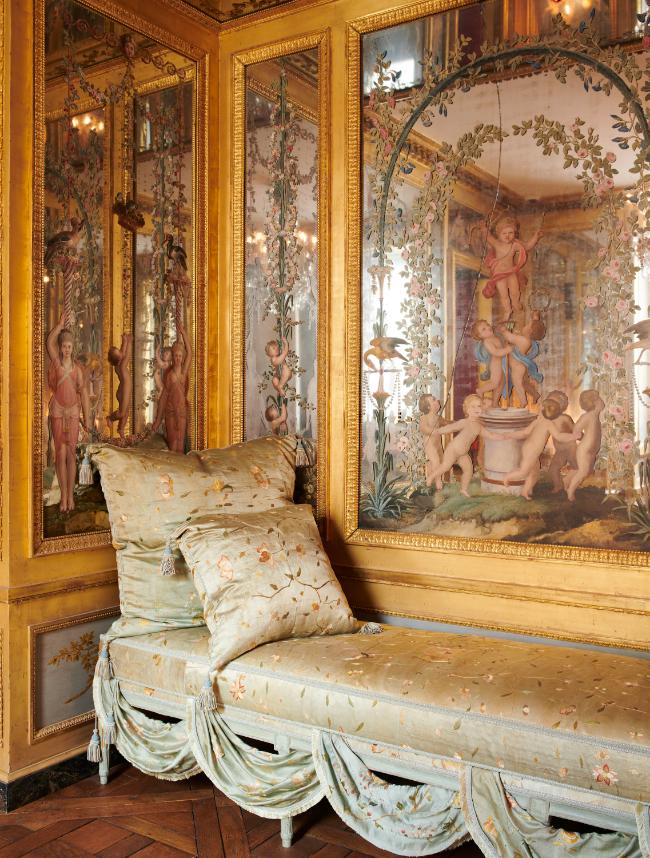
Cabinet des glaces, Hotel de la Marine. Photo: © Benjamin Gavaudo / Centre des monuments nationaux
2. Public opening: a mistake?
It was Fontanieu, perhaps aware that the times were changing, who made the bold decision to open the royal furniture store to the public. From 1787 he decreed that four exhibition rooms would open on the first Tuesday of every month so that ordinary citizens could see the opulence enjoyed by royalty. In the Furniture Gallery, portraits of Louis XIV and XV hung over the entrance, welcoming their subjects in to see their treasured tapestries and furniture. In the Jewellery Room, the public could now marvel at the glistening diamonds from the Crown Jewel collection. What happened next reveals how admitting the public to these hitherto private places went badly wrong.
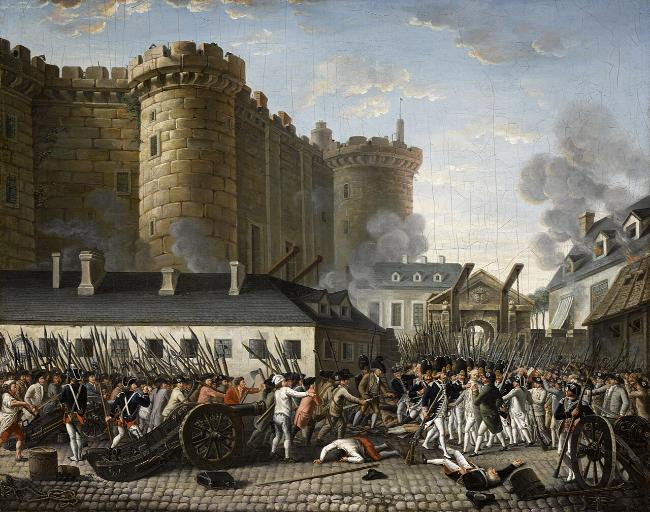
Ceremonial cannon taken from the Hôtel de la Marine fired the first shots in the taking of the Bastille, 14 July 1789. Anonymous. Wikimedia Commons
3. Revolution!
On July 13th 1789, the eve of the most important date in French history, revolutionaries broke into the Garde-Meuble. They must surely have already staked out the Salle des Armes (Weapons Room), for they stole a whole collection of items which they put to use the very next day when storming the Bastille. It’s said that some of the first shots were fired from canons mounted on silver which had been gifted to Louis XIV by the King of Siam. The mob looked so unstoppable that the Garde Meuble’s second-in-command, who had the misfortune to be in charge that day, told them to help themselves to weapons, but please, please, to spare the fine furniture.
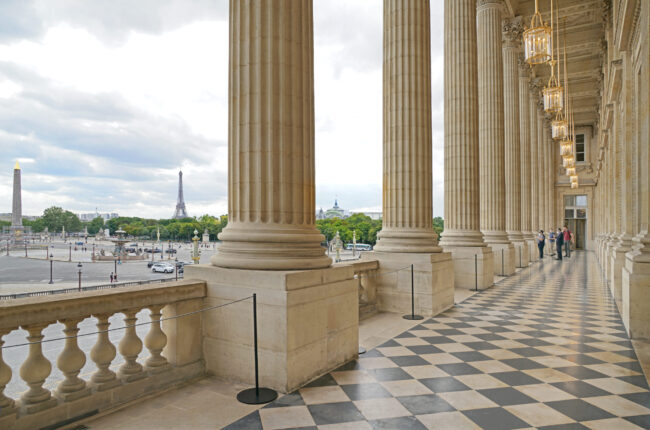
The loggia of the Hôtel de la Marine. Photo: Jean-Pierre Dalbéra / Wikimedia commons
4. Stolen Jewelry!
Another outrage soon followed, namely the theft of the Crown Jewels in September 1792. Up to 40 thieves are thought to have accessed the building on several successive nights, leading to the suspicion that they must have help from someone inside. Loot worth 30 million francs was taken, although many of the jewels were subsequently recovered. Two suspects were caught and executed in the square outside the building, itself a moment of history because this was the first year the guillotine came into use in Paris.
5. Out with royalty, in with the navy
After the Revolution, the royal possessions housed in the Garde-Meuble were declared to be the property the nation. Some of the finer pieces were taken to the Louvre nearby where a Central Museum of the Arts was opened, more items were sold at auction, many of the metallic pieces were melted down to be reused. In fact, a descendant of the royal Garde-Meuble still exists, the Mobilier National which manages and conserves many thousands of items of furniture in public buildings and places like the Élysée Palace, official residence of the President of France.
It was too stunning a building to waste and, renamed l’Hôtel de la Marine, it became the HQ of the French Navy, a role it played until 2015. Some of the most impressive rooms you can still see today date from this period, for example the beautiful Golden Gallery, where gilded wall panelling and chandeliers were installed to make an impressive museum of French naval history. The Galerie des Grands Ports de Guerre was installed to pay tribute to France’s major port cities and in the Bureau du Chef d’État-Major, still set up as an office, an interactive display board explains some of the major decisions taken in this room over more than two centuries.
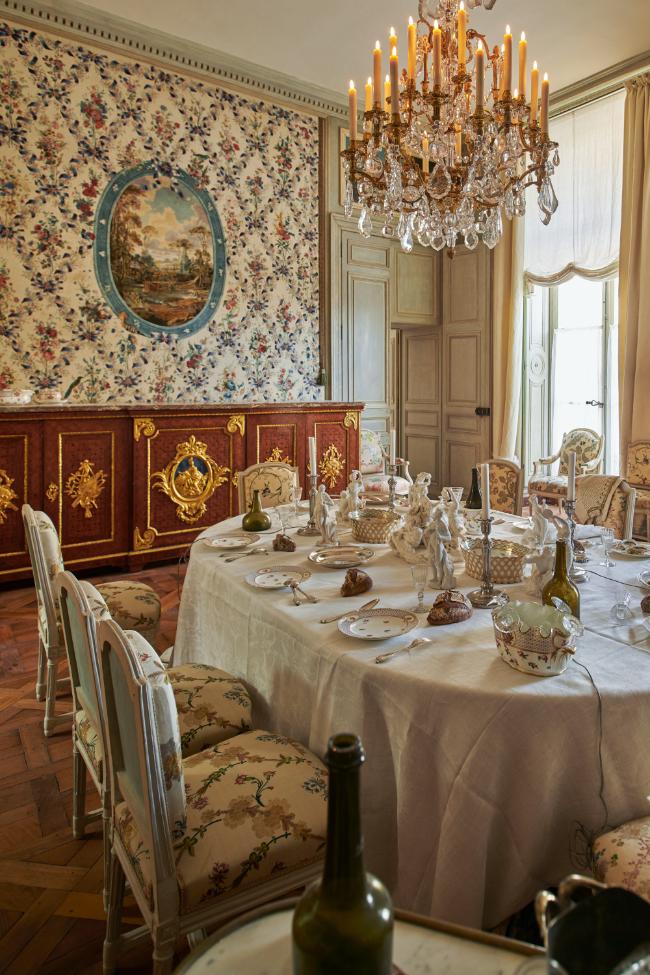
The dining room at the Hotel de la Marine. Photo: Benjamin Gavaudo / Centre des monuments nationaux
6. Napoleon’s Grand Receptions
Napoleon, following just a decade after the revolution, was quick to commandeer the Hôtel de la Marine when he wanted to impress. In 1802, the year he declared himself First Consul for Life, he laid on the grand Ball of Europe, attended by nobles from all over the continent. Further glittering balls were held to mark his coronation in 1804 and his marriage to Marie-Louise, Archduchess of Austria, in 1810.
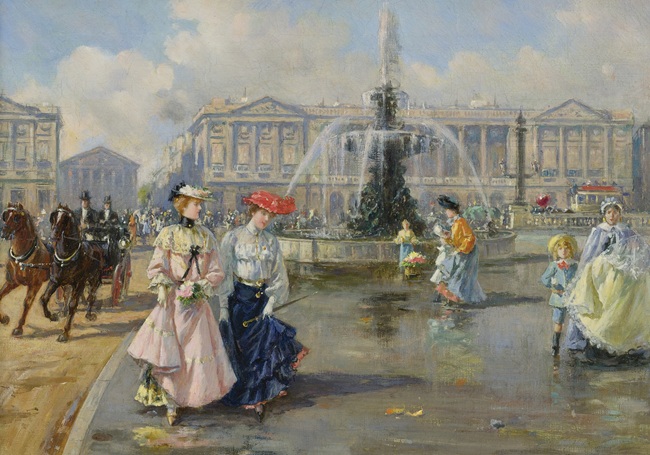
Place de la Concorde, Joaquín Pallarés Allustante, around 1872. Photo: Sotheby’s, Public Domain, Wikimedia Commons
7. Abolition of slavery in the colonies
In the Salon diplomatique sits a desk where, in 1848, a document was signed which abolished slavery in all French colonies. Its 12 articles, largely negotiated by François Arago, Minister of War, the Navy and the Colonies, cited slavery as une injure à l’humanité (an insult to humanity) and un attentat contre la dignité humaine (an attack on human dignity). Some 250,000 people were freed and granted citizenship status, a huge step towards the abolition of slavery, although it did not solve everything and further laws were needed. It was as recently as 2013, for instance, that French law recognized modern-day slavery as a crime.
8. A glittering Second Empire
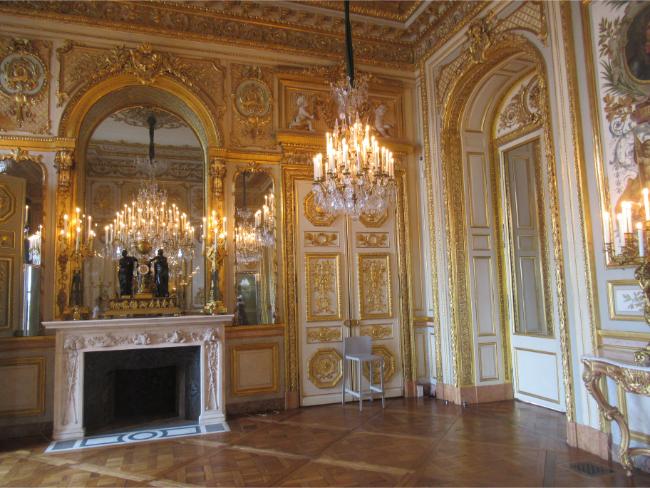
In 1843 the Hôtel de la Marine’s grandest room was refurbished as the Salon des Amiraux (Admirals’ Hall) and it is definitely the room which will make the biggest impression when you visit. Think numerous crystal chandeliers, polished wooden flooring, and lavish golden inlays all over the walls and ceiling. Portraits of famous admirals line the sides and digital displays show finely dressed couples dancing, a reminder that this room – actually two rooms knocked together – was the scene of glamorous receptions and balls during the Second Empire, the period from 1852 to 1870 when Emperor Napoleon III and the Empress Eugenie ruled France.
Some 3000 guests would be invited and displays in the nearby Salle à Manger explain the fine foods they enjoyed between dances. Each event underscored the magnificence of France and her emperor and many were staged for political reasons. A Bal Franco-Russe, for example, was an opportunity to bring France and Russia, bitter enemies during the Crimean War, closer together, a rapprochement which might pay dividends in their joint struggles against other powers such as Britain and the newly emerging Austro-Hungarian Empire.
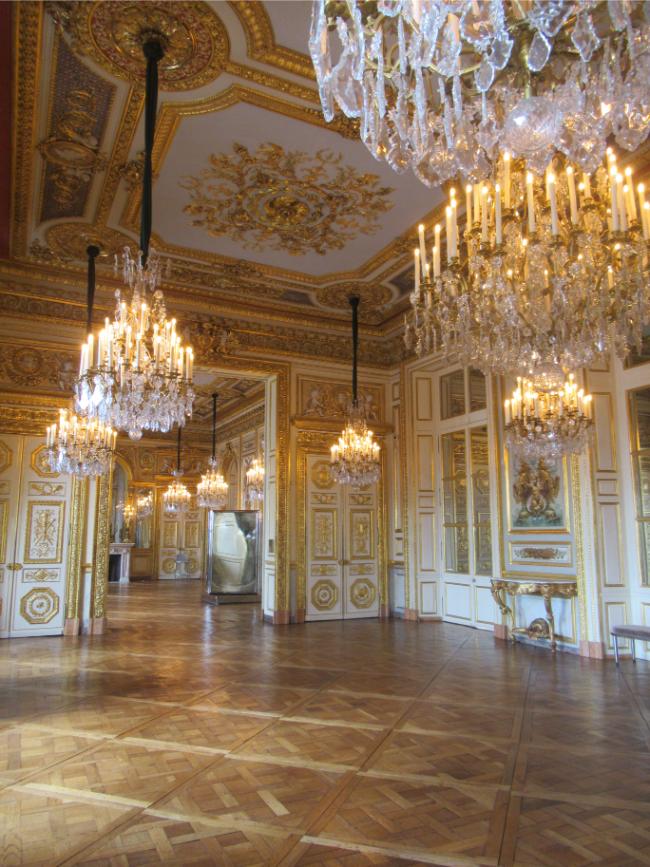
Salon des Amiraux at the Hôtel de la Marine. Photo: Marian Jones
9. Under attack by the Communards
The Hôtel de la Marine was one of many government buildings which came under attack during the dreadful “Bloody Week” in May 1871. The communards succeeded in destroying the Tuileries Palace and the Hôtel de Ville, but despite a fierce battle around the Hôtel de la Marine, they failed to burn it down. The navy had more or less evacuated the building, fearing trouble, but the quick-thinking Chef du matériel (Head of Equipment) who remained managed to persuade the communards who gained entry that Versailles troops were fast approaching “and will shoot you.” They agreed to let him lead them out to safety and the building was saved.
10. Occupied by the Germans
During the German Occupation of Paris from 1940-44, the Kriegsmarine, the German wartime navy, made their Paris headquarters here. Today, the audio-guide helps visitors spot an eyehole through which Nazi officers looked out over the Place de la Concorde to keep watch over this key area of the city. It also recounts the triumphant moment in August 1944 when American and Free French forces liberated Paris and members of the Résistance hoisted the tricolore back on top of the Hotel de la Marine.
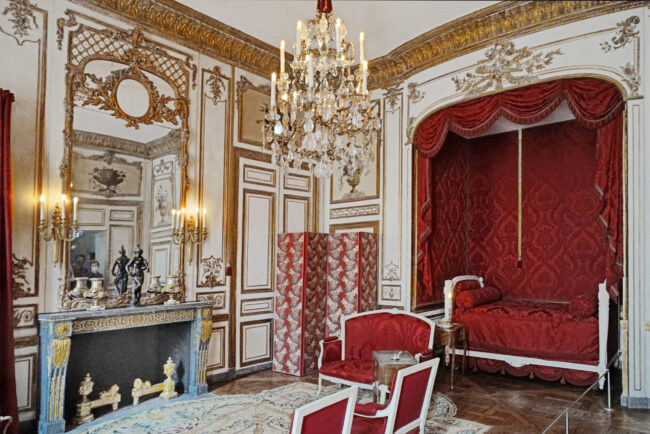
The room of Pierre-Élisabeth de Fontanieu at the Hotel de la Marine. Photo: Jean-Pierre Dalbéra / Wikimedia commons
Today, a tourist attraction
The French Navy HQ as at the Hôtel de la Marine until as recently as 2015, when they moved to new, modern facilities in the 15th arrondissement. The Hôtel was taken over by the Centre of National Monuments, closed for restoration and opened to the public in 2021. Spectacular costume balls, held in the courtyard and open to the public, are themed to recall significant moments of history. This year they include a Bal révolutionaire and others recalling the Second Empire and the Liberation of Paris. They are reminders of key moments in the past when this glamorous building played an all-important role in French history.
DETAILS
Hôtel de la Marine
2, Place de la Concorde, 8th
Open every day 10:30 am – 7 pm (Fridays until 9:30 pm)
Entry 17 € (under 18s free)
Nearest metro Concorde (Lines 1, 8, 12)
Information on themed costume balls at the Hôtel de la Marine
Lead photo credit : Salon des Amiraux. Photo: Marian Jones
More in hotel de la marine, place de la concorde
Related Articles


By Marian Jones