Napoleon’s Fortune Teller: How Eerie Predictions Came True
- SUBSCRIBE
- ALREADY SUBSCRIBED?
BECOME A BONJOUR PARIS MEMBER
Gain full access to our collection of over 5,000 articles and bring the City of Light into your life. Just 80 USD per year.
Find out why you should become a member here.
Sign in
Fill in your credentials below.
During the Napoleonic era in Paris, there lived a fortune teller of considerable fame. Marie Anne Adelaide Lenormand cast horoscopes, read palms, and was highly skilled in cartomancy – the art of reading fortunes through playing cards. She advised the leaders of the French Revolution and predicted their ever-so bloody deaths. She was consulted by Napoleon and later, his Empress, Josephine du Beauharnais, sought Lenormand’s professional services.
Lenormand was born in 1772 in Alençon, Normandy. Her twice-widowed stepfather sent her to a convent school, where, at the age of seven, she stirred things up. Legend has it that little Marie Anne predicted the downfall and the destitution of the Mother Superior at her convent, and even named her successor. She was punished for her insolence, yet all came true. This first prediction set her on the path to be France’s most famous fortune teller.
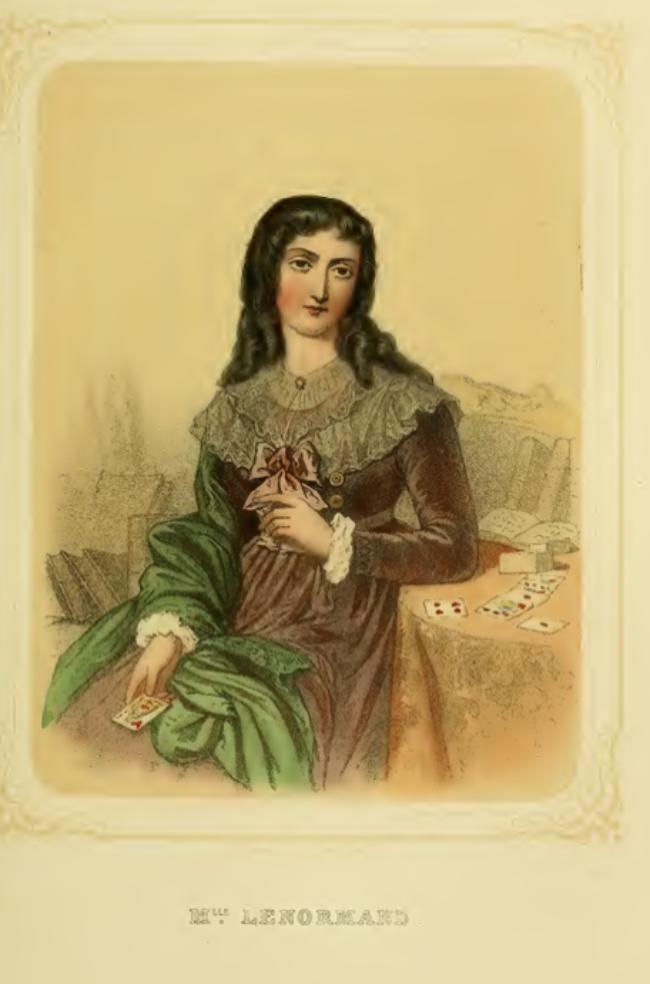
Depiction of Lenormand
At 14, Marie Anne moved to Paris with the clothes on her back and a few francs in her pocket. She quickly grasped the fundamentals of bookkeeping while serving in a shop. By 17, she was reading fortunes professionally. Under the guise of a bookseller – fortune telling was illegal in her day – she set up her “cabinet,” an office at 5 rue du Tournon.
She saw the downfall of the monarchy and was in Paris during the storming of the Bastille in 1789. Apocryphal though it seems, in 1793 three men came to Lenormand for their fortunes: Saint Just, Robespierre, and Marat. They thought she had failed in her prediction – it was laughable to think they could all die at the same time. Despite their derision, they did in fact all die within the year.
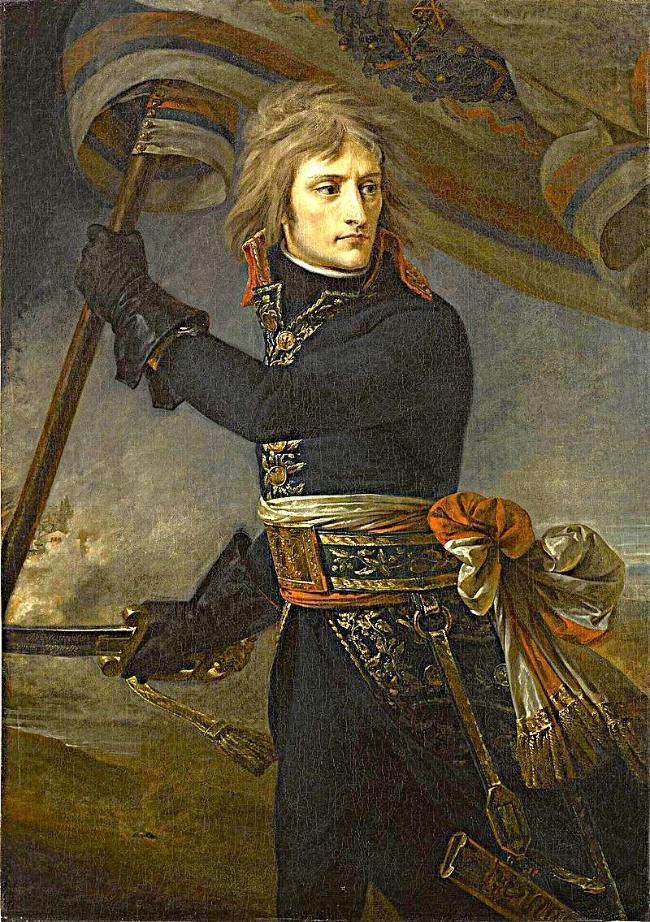
Antoine-Jean Gros, Bonaparte on the Bridge at Arcole, 1801.
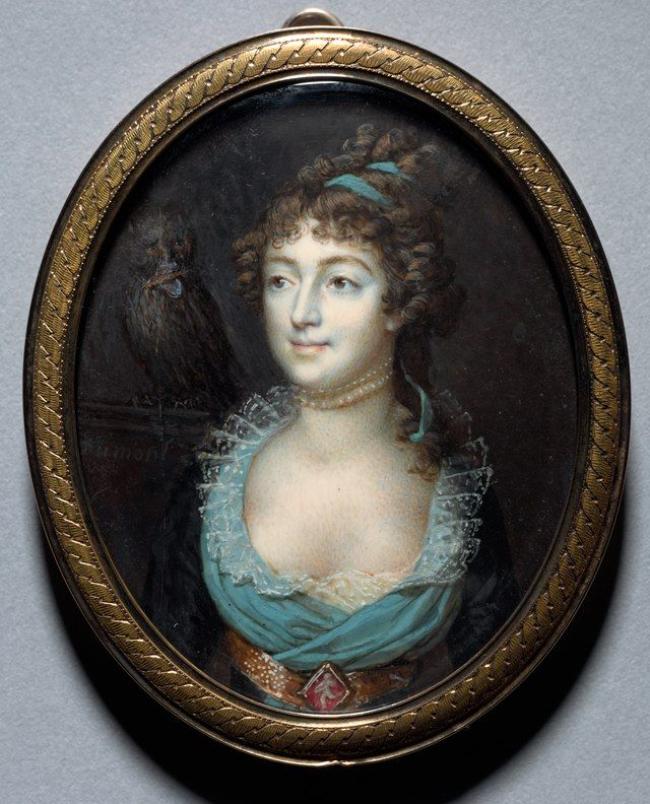
At this time Mademoiselle Lenormand was a bonny 21-year-old. The Cleveland Museum of Art has in its collections a minature of Lenormand painted in 1793. In the style of Marie-Antoinette, François Dumont depicted her with a wise owl in the background. The owl in ancient times was seen as a harbinger of death. Perhaps a fitting icon for one who predicted so many of them.
Lenormand welcomed Napoleon Bonaparte into her parlor between 1791 and1793 when the young Corsican was still an officer in the French army. She read the lines on his hand and predicted he would win battles, marry a widow, conquer a kingdom and would die in exile. In Mademoiselle Lenormand’s own book, The Historical and Secret Memoirs of the Empress Josephine, published in 1820, she reveals that she told Napoleon that he would be equal to Alexander the Great, and would soon feel like the mythical Atlas who carried the weight of the world on his shoulders.
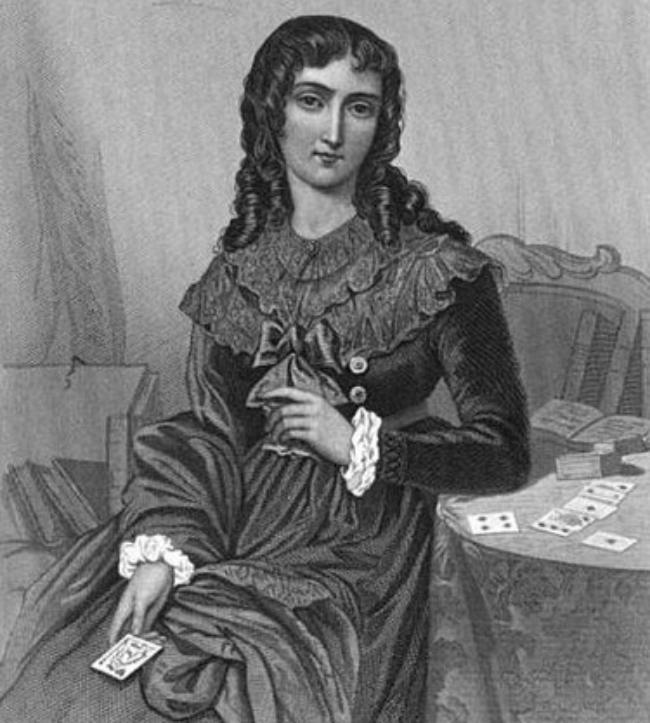
Portrait of Marie Anne Lenormand from The Court of Napoleon by Frank Boott Goodrich. Public domain
He visited her again in 1803, a few years after her initial predictions, but Napoleon became disillusioned with Lenormand because she foretold his disastrous Russian campaign. Dictators don’t like receiving bad news. Lenormande was much more popular with his wife, Empress Josephine.
Josephine du Beauharnais was Napoleon’s wife from 1796-1810, but during the Reign of Terror, she was in prison alongside her first husband Alexandre. She wrote to Mademoiselle Lenormand from behind bars, asking her to draw up her horoscope. Before she could begin, Lenormand collected information on her clients like a questionaire: date of birth, first letter of their birthplace, favorite – and least favorite – colors, flowers, animals, and numbers.
Lenormand told Josephine how she would suffer great calamities – most likely the execution of her first husband – but that she would survive and marry a man who was destined to astound the world. Even at that early juncture, the horoscope was already hinting at the possibility of divorce.

Baron François Gérard, Joséphine in coronation costume. (1807 – 1808). Musée national du Château de Fontainebleau. Wikimedia commons
As soon as she was released from prison, a disguised and eager Josephine appeared at rue Tournon with more questions about her fate. The novelist Alexandre Dumas describes the meeting in exquisite detail in his 1867 book, The Whites and the Blues, telling how Lenormand, when taking Josephine’s hand, sank to her knees and said, “Madame I know neither your name or rank, but I can read your future. Remember me when you are Empress.”
Alexandre de Beauharnais was guillotined in 1794. Napoleon and Josephine were married in 1796, and all the remaining predictions came to pass.
In 1801, before Napoleon crowned her Empress, Josephine summoned Lenormand to the couples’ address, the Chateau Malmaison. From Frank Goodrich’s 1857 book, The Court of Napoleon, he recounts how Lenormand was worried about the advancement of Josephine’s husband and said that if his hand ever “grasped the sceptre,” as it would it 1804, then her days as his wife would be numbered. “He would abandon you, for he is ambitious.”

François Gérard, Portrait of Josephine, 1801. Hermitage Museum
Lenormand predicted a number of things for Josephine, and her husband’s career, that cut a little too close to the bone. Goodrich quotes Napoleon as saying, “Oh, ho, so you seek to penetrate my designs, do you, and for this purpose you consult oracles? Learn ladies, that I do not like to be divined. Never speak to me of her again,” and threatened to have Lenormand arrested. One of Josephine’s ladies in waiting ran to warn the fortune teller. But Lenormand knew she was safe.
She was arrested however, in 1809 when she predicted the date of Josephine’s divorce. The still-close couple divorced because Josephine could not provide Napoleon with a male heir. Josephine’s support for Lenormand had withered and Napoleon was able to have her arrested and the contents of her apartment seized. The fortune teller was kept in solitary confinement for 12 days and released seven days after Josephine’s decree nisi was granted.
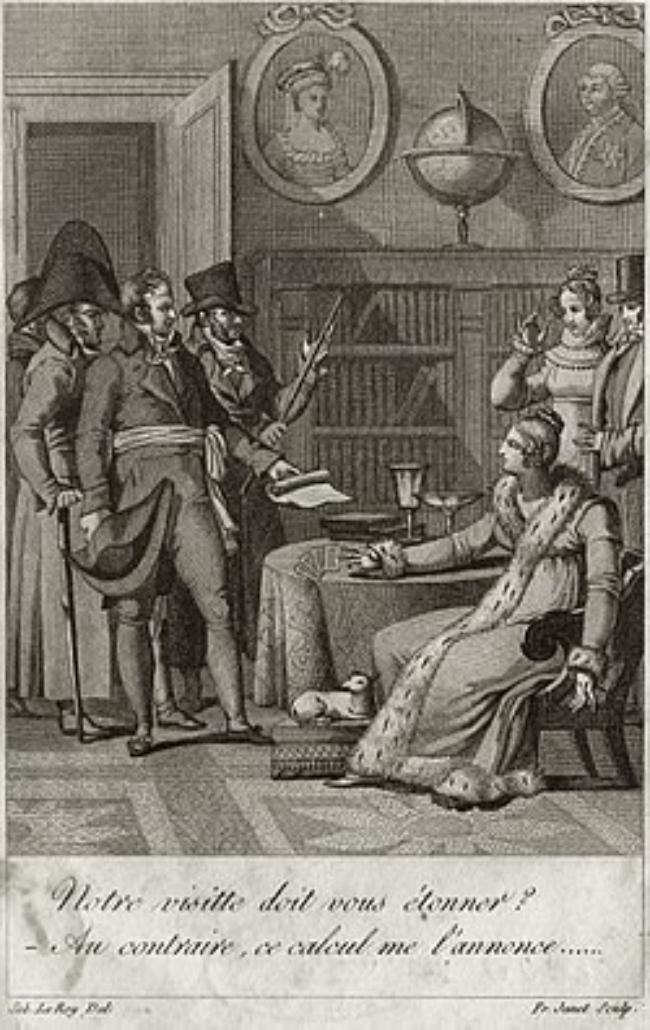
Engraving of the frontispiece of the “The Prophetic Memories of a Sibyl on the Secret Causes of Her Arrest.” Public domain
To prove her case before the court she made all sorts of seemingly rash predictions. Lenormand predicted the 1814 fall of Paris – unbelievable to the judge as it was five years hence. Other predictions of future careers and lottery winnings came to pass too. Authorities feared her influence and tried to banish her from France. She was saved, in 1811 when she was attached to the secret police department in the capacity of detective. She thought the police to be an immoral force and turned them down.
During Napoleon’s exile on Saint Helena, he said if one needed to believe in the marvelous, it was better to believe in God than Lenormand. It was here where Napoleon revealed why Lenormand got his hackles up. In conversation with his loyal companion, Count de Montholon, Napoleon confided that Lenormand sketched in chalk a map of Longwood, his prison-residence on Saint-Helena, on her office walls. Napoleon knew of his final exile when he was still at the height of his powers.
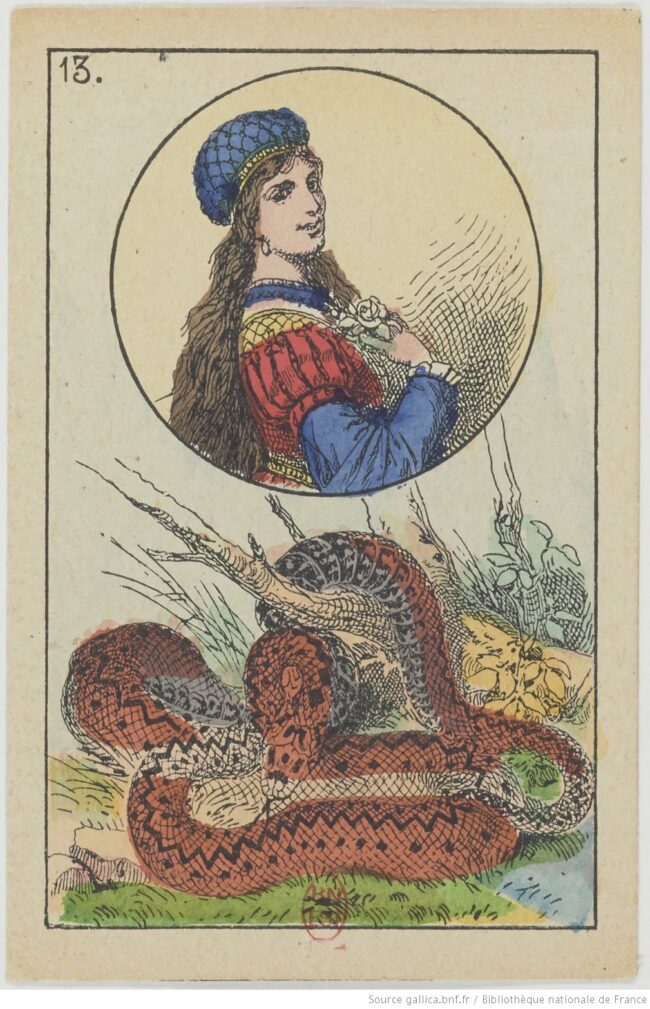
Carte n°13 d’un jeu divinatoire attribuée à Marie-Anne Lenormand. BNF/ public domain
After 1814, when most of her predictions had come true, Lenormand’s salons were filled with government officials, magistrates, and soldiers. Her rooms were a mysterious collection of oddities. Shelves of books and prints competed with a jumble of mounted animals, bats tacked to the rafters, stuffed owls, and snakes preserved in alcohol – everything that would make the superstitious quake in their shoes.
Descriptions of her mythical ugliness were almost as outlandish as some of her predictions. In her later years she is described as the prototype for an all-seeing witch. Captain Rees Howell Gronow visited the oracle between 1814 and 1830 and published his account in a book of recollections in 1865: “It was impossible for imagination to conceive a more hideous being. She looked like a monstrous toad, bloated and venomous. She had one walleye, but the other was a piercer. She wore a fur cap upon her head, from beneath which she glared out upon her horrified visitors.” Despite this she possessed a certain vivacity.

View of the Château de la Coudraie, at Poissy, possibly the residence Lenormand was able to buy with her earnings. Photo: Pititnatole/ Wikimedia commons
In George Augustus Sala’s 1879 memoir Paris Herself Again, a book in my collection, he describes seeing Lenormand in England. He colorfully describes her as being “ a squat, fubsy old woman with a gnarled and knotted visage and an imperturbable ‘Eye.’ She wore her hair cut short, parted on one side, like a man’s. She dressed in an odd-looking casaquin, embroidered and frogged liked unto the jacket of a hussar, and she snuffed constantly. This was the little old woman whom Napoleon I regularly consulted before setting out on a campaign; who had foretold to Josephine her divorce.”
On the same page, Sala recounts how the handsome Joachim Murat visited Lenormand in disguise. Once the commander of Napoleon’s cavalry, Murat was promoted to the lofty position of the king of Naples. Sala said, “She simply looked at him: shuffled the cards, dealt him the knave of clubs; rose and said. ‘The séance is terminated, it’s ten louis for the king.’ She pocketed her fee and then left the room snuffing terribly.”
In cartomancy the knave or jack of clubs was called the Grand Pendu, Whoever drew that fateful card was destined to die at the hands of the executioner. Joachim Murat fell out of favor and was executed by firing squad in 1815.
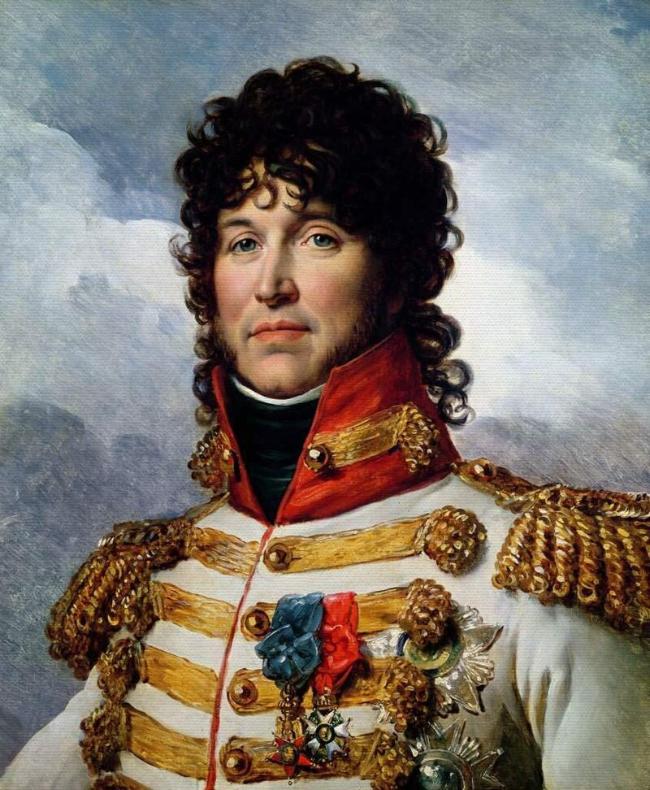
Portrait of Joachim Murat by François Gérard, 1804. Public domain
Lenormand authored many books, the most famous written in 1814, Les Souvenirs Prophetiques d’une Sybille, and the two volumes of anecdotes about the once royal couple published in 1820. Hiding from the bad press, Lenormand moved to Brussels where she was arrested for fraud, and narrowly escaped incarceration in the Belgian city.
Mademoiselle Lenormand was active for over 40 years. She never married and with her sizeable fortune was able to buy lands in her home town of Alençon, a house in the rue de la Santé in Paris, and a Chateau in Poissy, most likely the Chateau de la Coudraie. Her nephew was her only heir. Completely disinterested in her area of expertise, he pocketed her money but destroyed her cards and her fortune-telling equipment.
The Lenormand deck of cards are still available. Published after her death, the deck of 36 is used for divination and apparently gives more clarity than the Tarot. Beth Gersh Nesic’s interview with tarot expert Ronan Farrow can be read here: French Tarot, Anyone?
Lenormand died in 1843. Those seeking her counsel still meet at her tomb at Père Lachaise for advice beyond the grave.

Grave of Lenormand at Père-Lachaise, Division 3. Photo: Pierre-Yves Beaudouin/ Wikimedia commons
Lead photo credit : François Dumont, Portrait of Mademoiselle Marie-Anne Adelaide Le Normand, 1793. The Cleveland Museum of Art.
More in Napoleon
Related Articles