
Fernande Olivier: Picasso’s First Muse
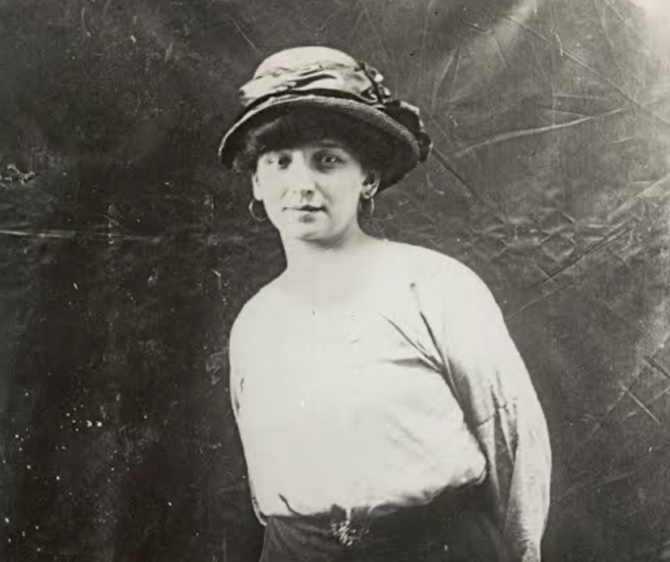

- SUBSCRIBE
- ALREADY SUBSCRIBED?
BECOME A BONJOUR PARIS MEMBER
Gain full access to our collection of over 5,000 articles and bring the City of Light into your life. Just 80 USD per year.
Find out why you should become a member here.
Sign in
Fill in your credentials below.
The year is 1904. Pablo Picasso, aged 23, is back in Paris for the second time and looking for a place to live and work. A friend from his native Catalonia offers him a space in a ramshackle building in Montmartre called the Bateau Lavoir – a former piano factory so-called because it was shaped like a laundry boat. Picasso takes a studio and the rundown building enters art history.
In some ways, the Bateau Lavoir was like a proto-squat, although the residents did pay a nominal rent. It was an absolute slum, hardly more than a stack of shacks piled on top of one another comprising 12 artists’ studios and around 30 rooms altogether. The windows were broken, the walls oozed mildew and damp. There was no running water, no heating, no lighting. The only toilet was a communal hole in the ground in a cubbyhole. There was a concierge – of sorts – who kept a pan of soup on the go to feed her penniless tenants. But over the next few years it was home to some of the 20th century’s greatest artists: Max Jacob, Maurice de Vlaminck, and, of course Picasso.
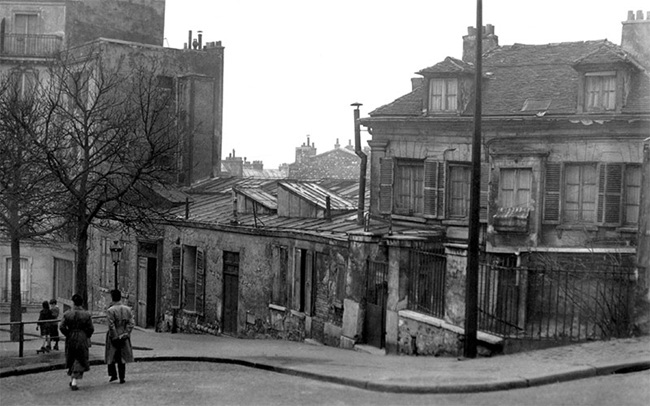
Le Bateau-Lavoir, c. 1910. Wikimedia Commons
When Picasso moved in there was already a young woman living there going by the name of Fernande Olivier. This was not her real name but Fernande was hiding from her husband.
Fernande was already a survivor. Her real name was Amélie Lang and she had been brought up in a respectable bourgeois family and was quite well educated. But she was illegitimate and was raised by an uncaring aunt. It’s possible she was sexually abused by an uncle who, at any rate, took an unusually close interest in her. Either way, she was later seduced and made pregnant by a family friend called Paul Percheron. To avoid shaming the family, Fernande was reluctantly persuaded to marry him.
This was a terrible move. Percheron raped her regularly and was physically violent in other ways. He kept her locked in at home during the day. Finally, in 1900 she left him. She was only 19 years old, with not a penny in her pocket. It must have taken a huge force of will to leave her husband – however abusive he was – to seize her independence in that day and age. She knew nothing about life – she admitted that she didn’t even know how to comb her own hair, which is probably an exaggeration but she was undoubtedly very naïve.
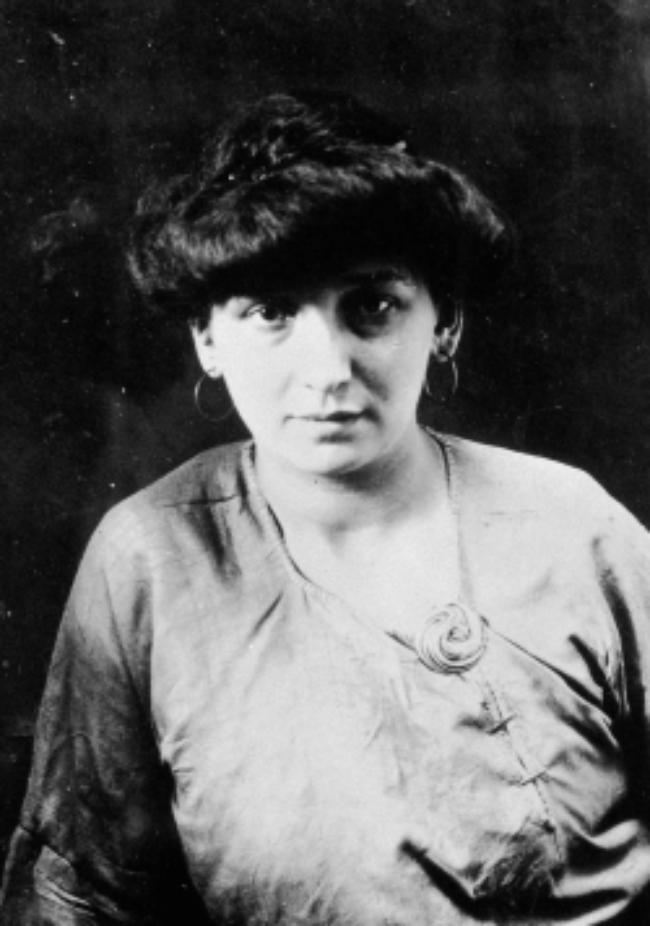
Fernande Olivier, photographed by Pablo Picasso in 1906. Wikimedia Commons
While waiting in a queue at the employment office, she started a conversation with a sculptor called Laurent Dubienne. At his suggestion she moved in with him in one of the rooms at the Bateau Lavoir and started to work as an artists’ model. She became well-known around Montmartre, mainly because of her striking red hair. When she discovered Dubienne stealing her wages and sleeping with another girl, this time she had the confidence to leave him straightaway.
She continued to live at the Bateau Lavoir and one day struck up a conversation with Picasso at the communal faucet in the courtyard. Unbelievable though it may seem, in those days Picasso was incredibly shy and it took a great deal of courage for him to speak to her. A few days later, he brought a kitten home and gave it to her. He took her up to his studio where she was astonished by the extraordinary paintings scattered everywhere. The painters she sat for were academicians, specializing in historical and mythological scenes and painting in a very traditional style. She had never seen modernist paintings like these before. This was Picasso’s “Rose” period so his art was still very figurative but beginning to hint at the revolutionary change that was to come.
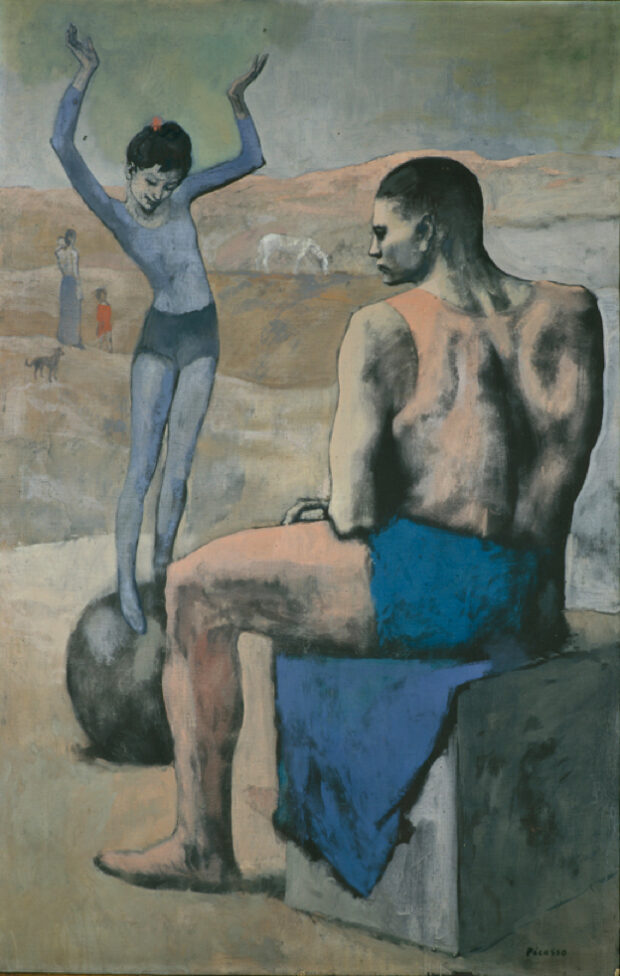
Pablo Picasso, 1905, Girl on a Ball, oil on canvas, 147 × 95 cm, Pushkin Museum, Moscow
There was an instant attraction between the two people. Picasso definitely had a charisma and intensity that women found very attractive. But despite being lovers, for several months Fernande refused to move in with him. She was unwilling to give up her independence. She wrote, “Must you live with a man just because he loves you?” Eventually, after an opium session, she agreed to move in with him.
Their relationship was passionate and tempestuous. Picasso was a jealous man, refusing to let her pose for other artists apart from a couple of close friends and keeping her locked inside their room (until she complained and he gave her the keys). But he was also very attentive and tender and showed none of the cruelty and aggression that his later women accused him of.
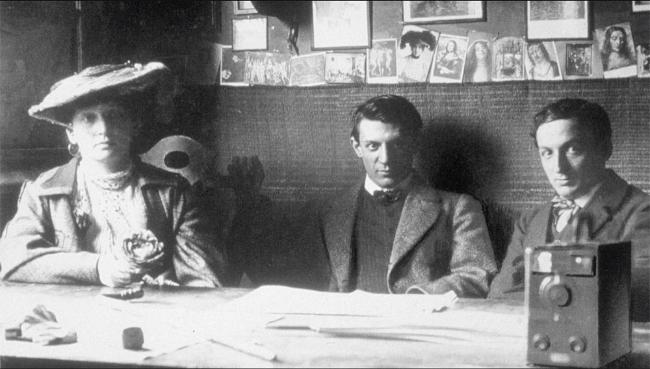
Pablo Picasso and Fernande Olivier, Paris, 1906. Unknown photographer.
In any event, Fernande was happy. She spent her days in the room at the Bateau Lavoir reading and amusing herself buying hats, stockings and perfumes – she adored perfume, especially rose and an exotic musky perfume called chypre. She got on well with Picasso’s friends and became a fixture in the group of avant garde artists that centred around him. Through him, she became acquainted with the influential American art collectors Leo and Gertrude Stein, and later Gertrude’s companion Alice B Toklas. She traveled to Spain with Picasso, where she was shocked by the archaic practice of women eating separately from the men. She wrote, “How is it that women accept this archaic practice, whatever their social status, in town or in the country?” She herself reveled in being a liberated woman.
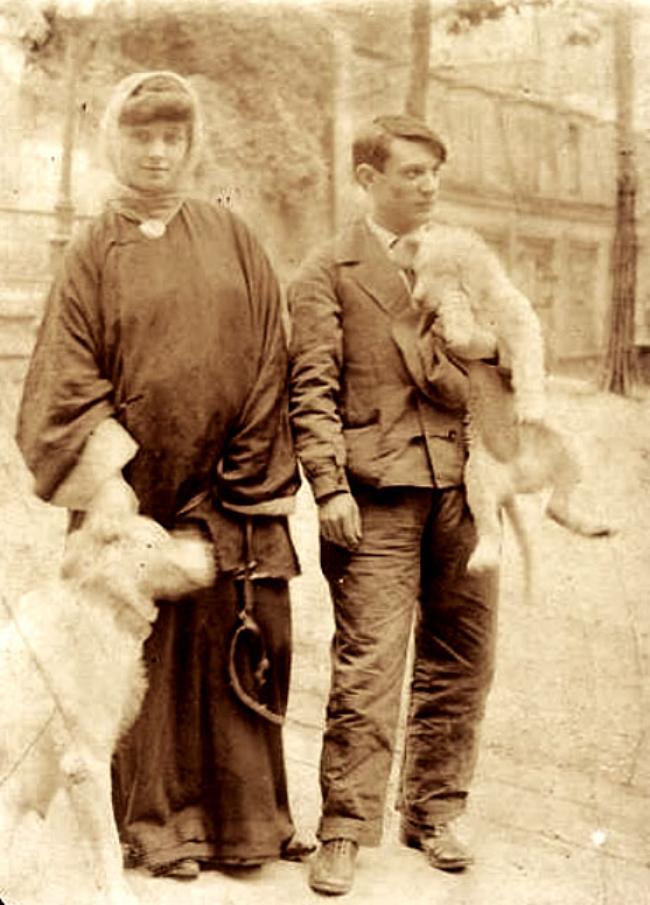
Pablo Picasso and Fernande Olivier with their dogs, Féo et Frika, Montmartre, Paris, vers 1904-06. Anonymous. Credit: RMN-Grand Palais (Musée national Picasso-Paris) / image RMN-GP
She and Picasso stayed together until 1912, eight years in total. During this time, Picasso flourished. He met fellow artist Georges Braque and the pair of them developed the style known as Cubism. One of the first Cubist works was a sculpture of Fernande, Tête d’une Femme, which was put up for auction in 2022 for $30m. In 1907 Picasso completed his first Cubist painting, Les Demoiselles d’Avignon, one of whom is modeled by Fernande.
In recent years it has been attacked for “cultural appropriation”; Picasso was fascinated by African art and in Les Demoiselles the geometric planes of the women’s faces recall African masks. Is Picasso guilty? At the time, France, Germany, Italy and Britain were all carving out colonial territories in Africa and in the process bringing its cultural artifacts to the attention of Western Europeans. Looking back we can agree that the colonization of these countries was wrong, and their cultures were poorly understood, but in the context of their time, artists were genuinely curious and inspired by notions of art and aesthetics that were completely outside their own frames of reference.
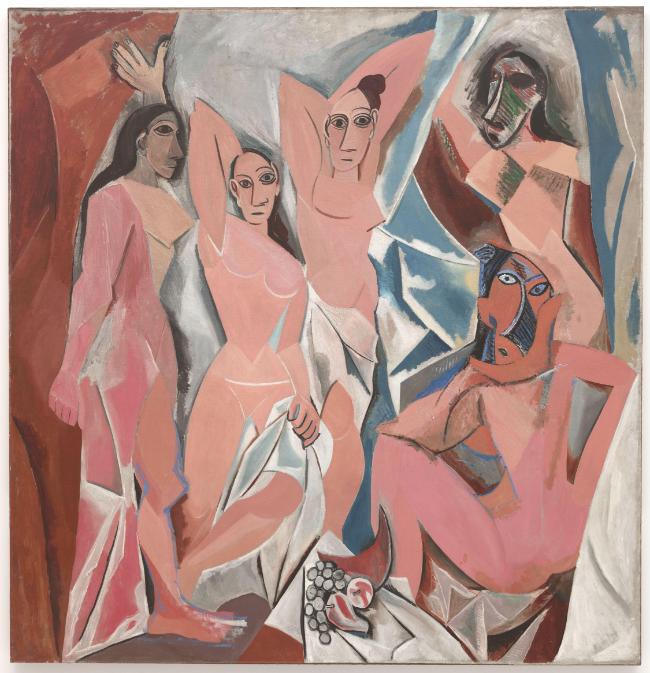
Pablo Picasso, Les Demoiselles d’Avignon, 1907.
Picasso’s career started to take off when the Parisian art dealer Daniel-Henry Kahnweiler took him on. With his patronage Picasso started to sell his paintings and become accepted in the Parisian art world. For Fernande, it was the beginning of the end of an era. They moved to a nicer, proper apartment in the Boulevard de Clichy and Picasso started to lose interest in Fernande. She reminded him too much of his years of poverty and was not suitable, perhaps, as the companion of an ambitious rising artist. When Fernande discovered he was having an affair with a woman called Eva Gouel, she left him. Only two women ever walked out on Picasso – Fernande and a much later lover, Françoise Gilot. All the others were abandoned by him.
Once again, Fernande had nothing. She had never told Picasso she was already married, and she had no claim on Picasso’s earnings or belongings. Tragically, she never discovered that Percheron had died in 1904; she never sought a divorce and throughout her life believed she was still married. How might her life have been different if she had felt able to remarry someone else?
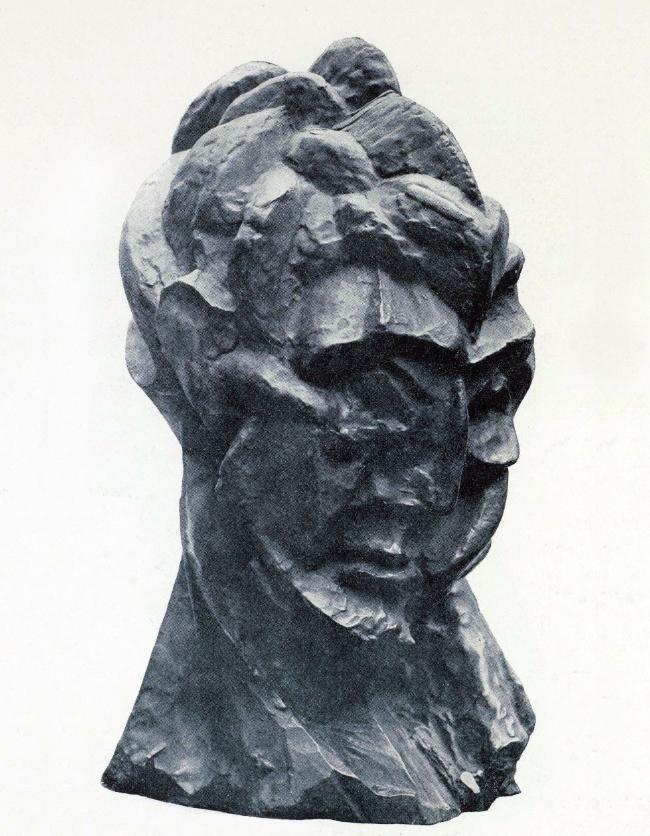
Pablo Picasso, 1909–10, Head of a Woman (Fernande), modeled on Fernande Olivier. Wikimedia Commons
She made ends meet by working variously as a cashier, a butcher and selling antiques. She carried on for a while as an artist’s model and also gave drawing lessons. But she was still recognized in artistic circles and gained a modest reputation as a painter herself. In 1930 she wrote a memoir of her life with Picasso entitled Picasso and his Friends. By now the artist was world-famous and he brought his lawyers out to prevent the book’s publication. In the end, only six chapters were published in a Belgian evening newspaper. In later years, Fernande asked Picasso to give her a pension with the promise that she wouldn’t publish anything else about their life together while they both lived. He agreed and Fernande’s later years were reasonably comfortable. She died in 1966 at the age of 84.
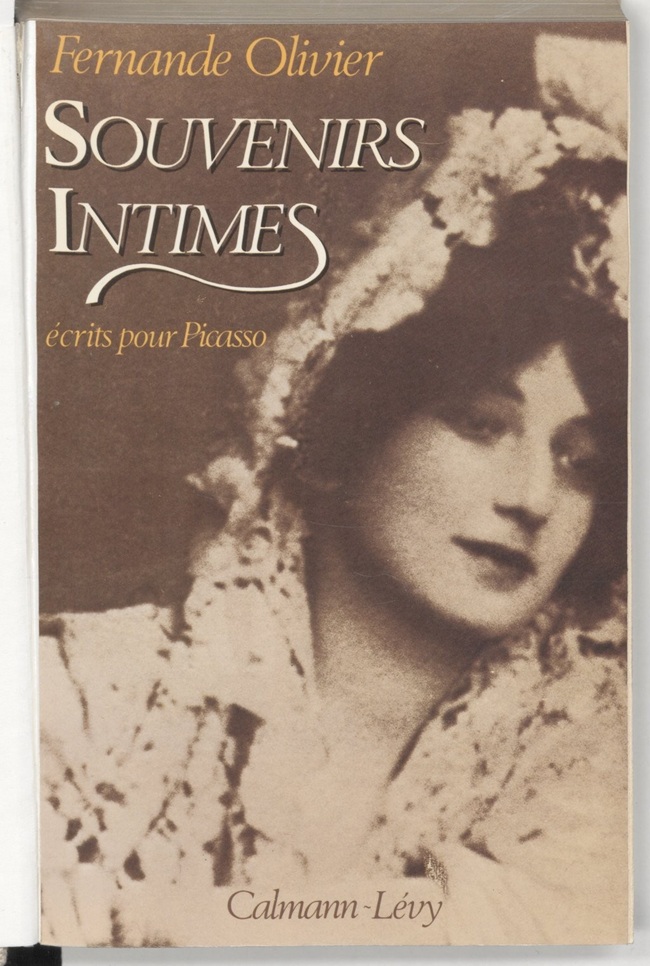
Fernande Olivier’s memoir. Credit: Bibliothèque nationale de France
Picasso died in 1973 but it was another 15 years before Fernande’s last work, Souvenirs Intimes, or Loving Picasso, was published in 1988. This included the rest of the book that was obstructed in 1930 and chapters based on the journal she had written for many years. They give an insight to her younger life, neglected by her aunt and abused by Percheron. In it she comes across as intelligent with a clear eye on the activities of her artist friends and independent, even acerbic, opinions about them and their works. She was very much the equal to Picasso and to his credit, despite his jealousy, he appreciated that. She managed to forge her own path in life despite having no social advantages and usually very little money. After years in the shadows she is now acknowledged to have been a formative influence on Picasso’s development of Cubism. Yet there is still no commemorative plaque or street name in her honor. Time for the Ville de Paris to put that right?
Lead photo credit : Fernande Olivier. Credit: Musée de Montmartre
More in picasso
Related Articles
By Pat Hallam