Salpêtrière’s Hysteria Ward and The Mad Women’s Ball

- SUBSCRIBE
- ALREADY SUBSCRIBED?
BECOME A BONJOUR PARIS MEMBER
Gain full access to our collection of over 5,000 articles and bring the City of Light into your life. Just 80 USD per year.
Find out why you should become a member here.
Sign in
Fill in your credentials below.
The current Pitié-Salpêtrière University Hospital takes up 33 hectors (81.5 acres) of the 13th arrondissement behind the Gare d’Austerlitz. Since 1656, the hospital has had a long and sometimes disturbing history of dealing with women who were sent there by family, courts or society because they were seen as different. The Mad Women’s Ball, by French author Victoria Mas, highlights this issue when, in 1885, the father of 19-year-old Eugénie decides that her connections with spirits of the dead (along with her intelligence) are inappropriate for his bourgeoise Parisian family’s status and sends her to the Hysteria Ward at Salpêtrière.
The historical thriller illustrates what happens to the women in Salpêtrière who are considered inconvenient to society while being a story of fighting for women’s strength, independent thought, and liberation. It also takes a tough look at family and its roles defined by society and love.

At the time, the Salpêtrière was a celebrated neuropsychiatric teaching hospital led by controversial Jean-Martin Charcot who led the way for modern clinical neurology and dealing with hysteria. For years, Eugénie had connected with spirits, including her dead grandfather whose spirit gives her loving advice. She keeps her visions to herself as seeing dead people is considered a sign of madness, but then she reads The Spirits’ Book by Allan Kardec. The book helps her define herself as it claims souls survive the death of the body and guide and watch over mankind. Just as her grandfather guides and watches over her.
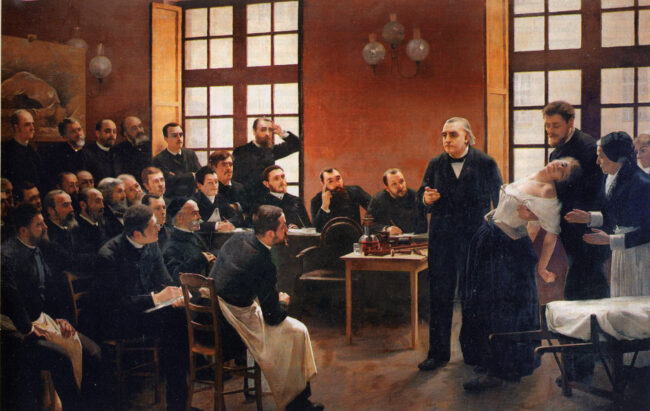
“A Clinical Lesson at the Salpêtrière” by Pierre Aristide André Brouillet. This painting shows Charcot demonstrating hypnosis on a “hysterical” patient, “Blanche”, who is supported by Dr. Joseph Babiński (rear). Public domain/ Wikimedia commons
She gets into trouble when her grandfather’s spirit tells her where to find a long lost pendant in front of her grandmother. Despite the joy of finding the pendant, the grandmother tells Eugénie’s father about the spirit visit and he has Eugènie committed to the Salpêtrière. Her loving brother is heartbroken but he can’t go against their dad or he too will lose everything.
Eugènie enters Salpêtrière a few weeks before the popular annual soiree of the title. The “mad women” will be put on display at the ball as the people of Paris sip wine and watch the actions of Charcot who uses the women as circus performers to illustrate his hysteria theories. In particular, he will highlight a young woman named Louise (modeled after his real patient Louise Augustine Gleizes) to perform seizures displayed in a variety of contortions once he hypnotizes her.
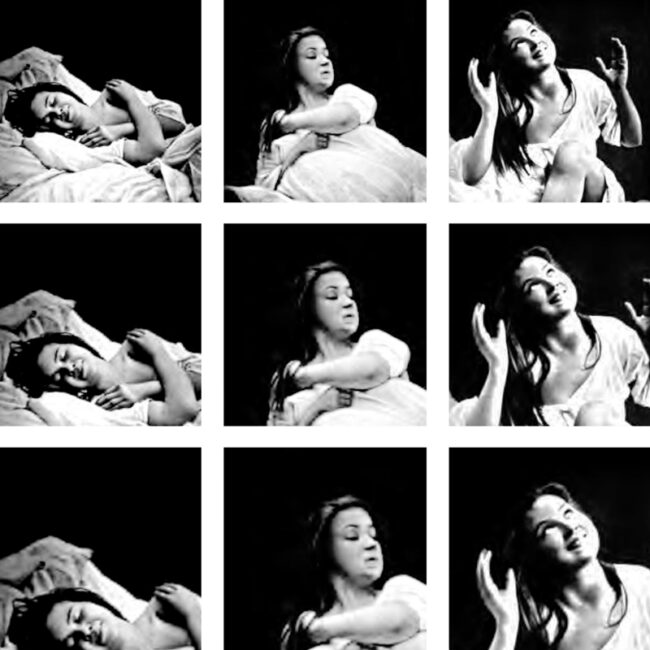
Charcot uses hypnotism to treat hysteria and other abnormal mental conditions. All materials from Iconographie photographique de la Salpêtrière (Jean Martin Charcot, 1878). Public domain
Geneviève is a senior nurse at Salpêtrière who admires Charcot and his science. She has long worked in the Hysteria Ward and leads a life focused on her work. Her beloved younger sister died years before and Geneviève writes letters to her about her work but they are more like diary entries than letters from a loving sister. Then Eugènie starts talking with Geneviève’s sister’s spirit and delivers life-changing messages to the nurse. Their two fates collide the evening of the Mad Women’s Ball and professional and family connections change for both women.

Original stone arched Mazarin entry to the Pitié-Salpêtrière Hospital. Photo: Martha Sessums
A major part – almost a character – of The Mad Women’s Ball is the Salpêtrière which began as a gunpowder factory. It was named after saltpeter which is a constituent of gunpowder. In 1656, Louis XIV chose to convert it into a hospice for the poor women of Paris including those who were learning disabled, mentally ill, and epileptic.
Research and treatment about the mentally ill began at the Salpêtrière in the early 1800s by Chief Physician Philippe Pinel. He is considered an innovative, humane leader and worked for eliminating keeping mental patients in chains and for the humanization of their treatment. Succeeding doctors led research on psychiatry and the understanding of bipolar and delusional disorders. When Charcot took over the Hysteria Department in the 1860s, his work on studying psychological issues was well known. His studies influenced others such as Sigmund Freud.

Emergency helicopter landing at the Pitié-Salpêtrière Hospital. Photo: Martha Sessums
Charcot’s personal focus was on hypnosis and hysteria and his work was considered groundbreaking. In The Mad Woman’s Ball, Eugènie both observes and is a part of his research. She makes friends with Louise who works with Charcot to demonstrate her hysteria to an audience of students every Friday (along with at the ball). However, his ideas about hysteria were later refuted by modern experts and the forced actions by the “hypnotized” women were considered cruel and inaccurate. After his death in 1893, the practice of hypnotism declined in medical circles.
Today, the Pitié-Salpêtrière is one of Paris’s important hospitals. Merged with the Hôpital de la Pitié in 1964, it is now a general teaching hospital with departments focusing on medical specialties including Institutes of Cardiology, Brain and Spinal Cord, Neurology, medical clinics, a maternity ward and emergency services including a helicopter landing pad. The different ancient and new buildings are connected with walkways cutting through park areas full of trees and grass with overflowing flower boxes at the base of windows. Doctors, visitors and patients enjoy the big grounds while the ancient hospital chapel bell tower stands above everything.
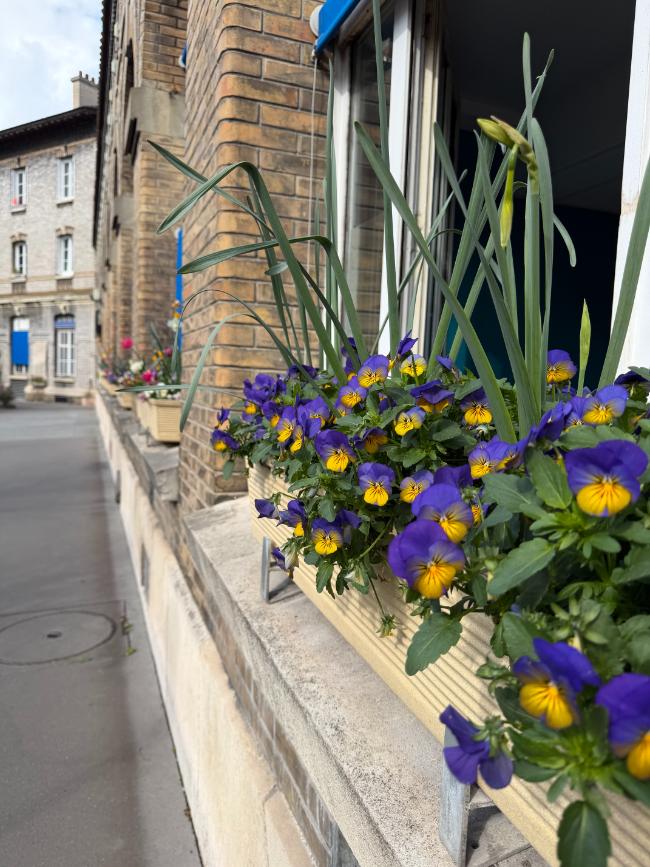
Flower boxes along the paths between buildings at the Pitié-Salpêtrière Hospital. Photo: Martha Sessums
It’s easy to imagine the setting of The Mad Women’s Ball by walking the hospital campus. Starting from the original stone arched Mazarin entry, seeing the old buildings makes the characters come alive as they lived on their beds, moved around the hospital grounds, attended morning chapel services and visited doctor’s offices. Today’s Salpêtrière looks to the future but its old buildings don’t let anyone forget the past and to keep learning from it. Both Eugènie and Geneviève look to their future but it arrives with different dance steps for each.
The Mad Women’s Ball has won several literature prizes, is translated into many languages including English, and was made into a film, Le Bal des Folles, in 2021.
Lead photo credit : Pitié-Salpêtrièer Hospital chapel. Photo: Martha Sessums
More in Salpêtrière
Related Articles