Ink and Light: A Symphony of Shadows and Silhouettes
The Paris Vignettes series features the inspired work of street photographer William “Bill” O’Such in themed installments
As a photographer, I find myself increasingly drawn to the city in the “entre-deux”—those transitional hours at the start or end of the day when Paris is draped in dramatic, elongated ink. I’ve suddenly become a hunter of shadows, looking for the way the low morning or evening sun can transform a mundane sidewalk into an art piece.
While waiting for the Jérôme Seydoux-Pathé Foundation to open its doors in the 13eme, I stumbled upon the hidden Square René Le Gall. Just as the morning light hit the cobblestones, a quintessential figure appeared: a Parisian strolling home with a fresh loaf under his arm (“le rituel parisien”). It was a moment of pure but unhurried timing.
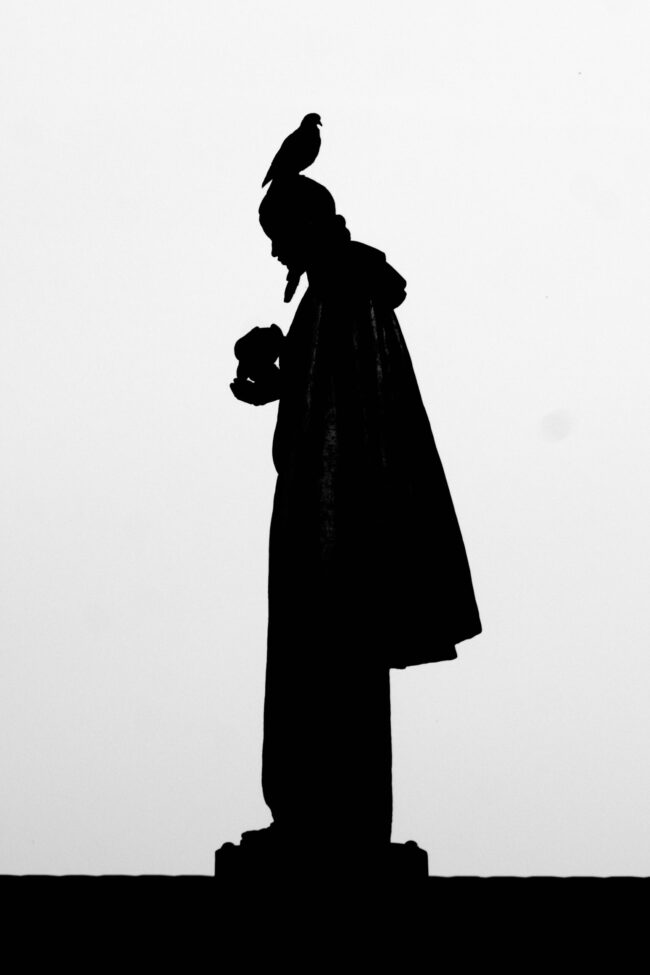
dialogue silencieux. Photo: Bill O’Such
The Architecture of the Void
Shadows have a way of magnifying the world, giving weight to the small and dominating the grand. Along the Seine, I watched as a simple bicycle was stretched into a titan (“grand vélo”) that seemed to claim the entire quai. On another day, moving along boulevard Montparnasse, near the iconic Coupole, the harsh morning sun turned a crosswalk into a rhythmic battle of dark and light (“l’écho du Boulevard”).
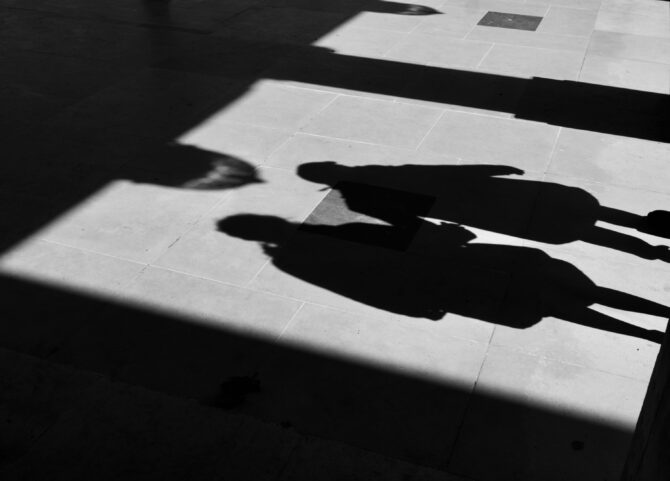
These distortions do more than just change shape; they emphasize intention. A shadow can turn a simple hand movement into a mystery (“l’invitation au detour”) or highlight the quiet connection of a couple walking hand-in-hand through the Palais Royal (“complicité”). Even the observer isn’t exempt; crossing the Pont de Sully on my way back to Le Marais, I caught my own silhouette painting the stone wall on the island (“l’œil du photographe”). The next day, in the Place des Vosges, I found a different kind of geometry: as our group from Street Photography France created a rhythmic pattern of observers (“six regards croisés”) getting ready to capture those elusive street stories.
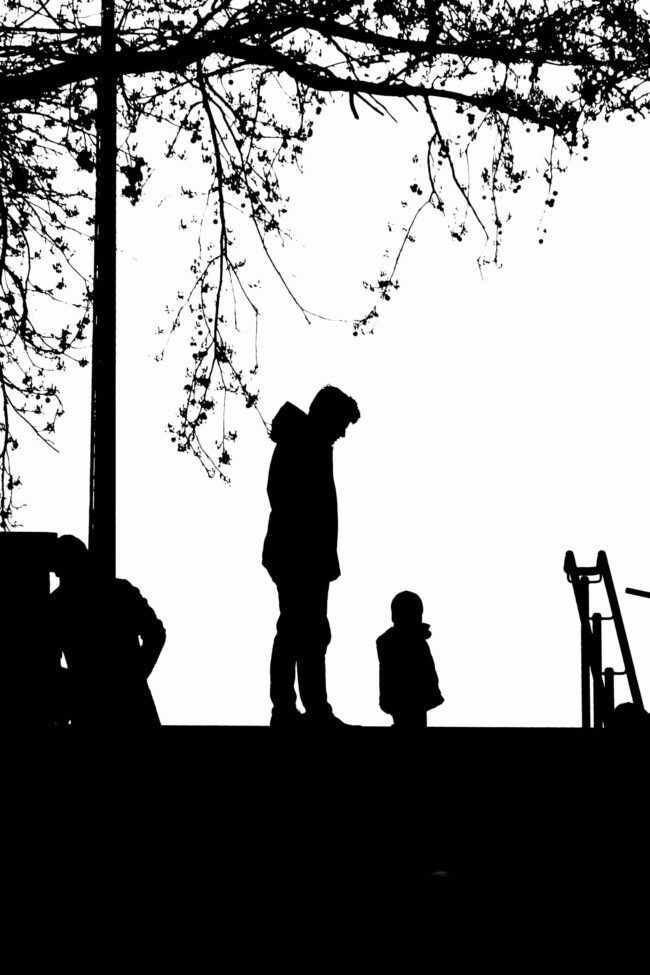
douceur printanière. Photo: Bill O’Such
The Silent Dialogue
Complementing these shadows are the silhouettes — the art of subtraction. By stripping away the “noisy” details of a face or fabric or buildings, the eye focuses purely on the soul of the action. I find this silencieux dialogue everywhere: in the tender exchange between a parent and child over a simple task (“voici tes billets”, “douceur printanière”), or the heavy, contemplative stillness of a visitor at the Fondation Cartier (“regard plongeant”) looking down into the art.
This extreme contrast brings a new dimension to the most basic Parisian experiences. It can turn a sudden shower on a bridge into a cinematic event (“la pluie”), where the world is reduced to silver and gray. But my favorite moments are when the boundaries blur — when shadows, silhouettes, and reflections harmonize into a form of photographic music (“rêverie sur le pont”).
I’m still triaging a “zillion” photos from the last trip, but this specific melody of light and dark is still echoing in my eyes as I wander around San Francisco until my next trip to Paris.
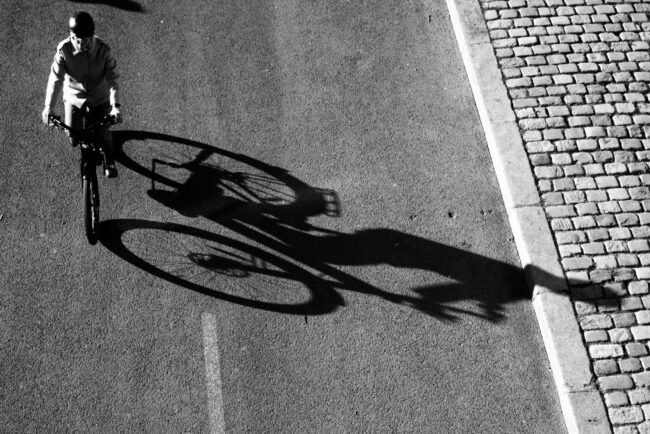
grand vélo. Photo: Bill O’Such
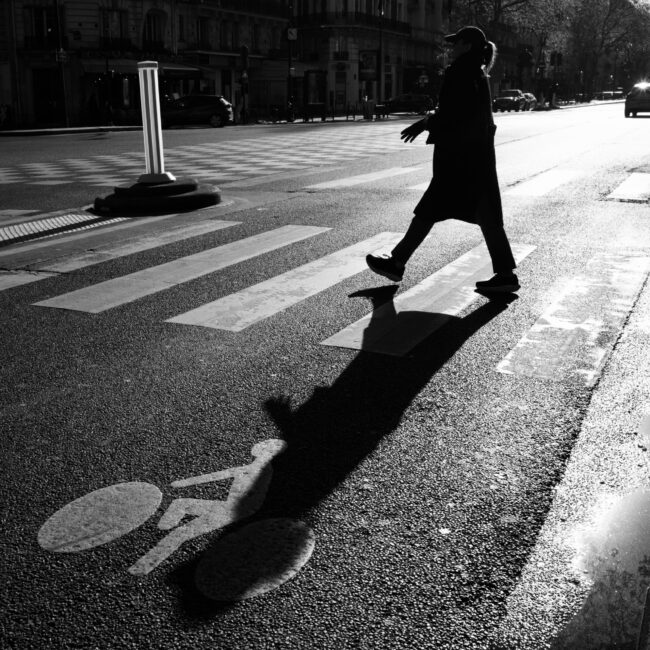
l’écho du Boulevard. Photo: Bill O’Such
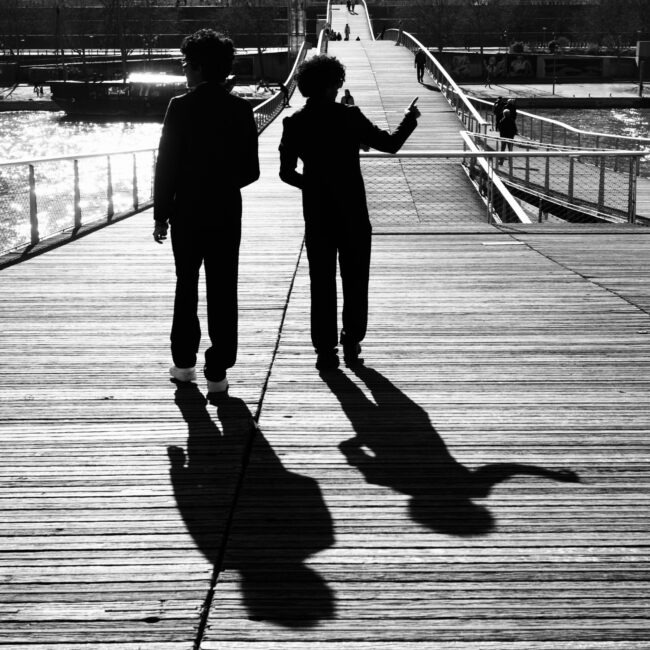
l’invitation au détour. Photo: Bill O’Such
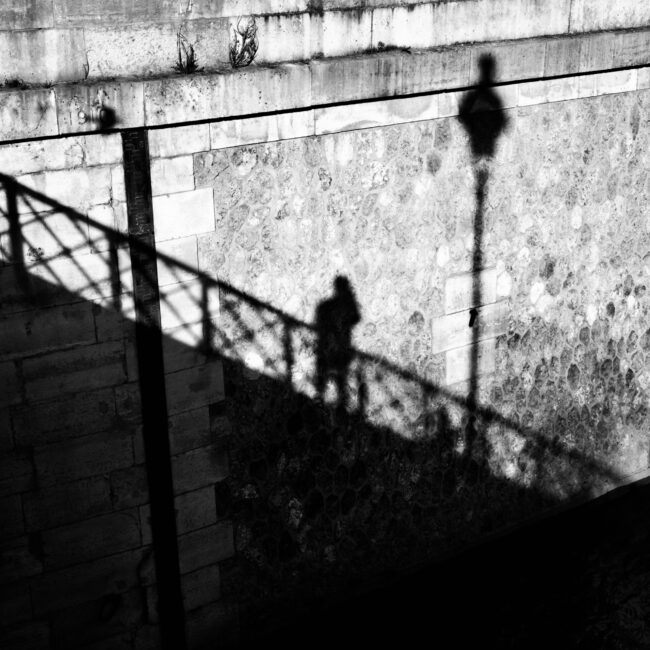
l’œil du photographe. Photo: Bill O’Such
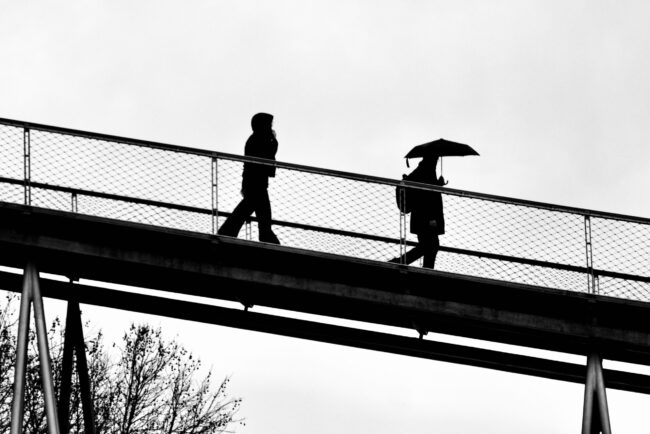
la pluie. Photo: Bill O’Such
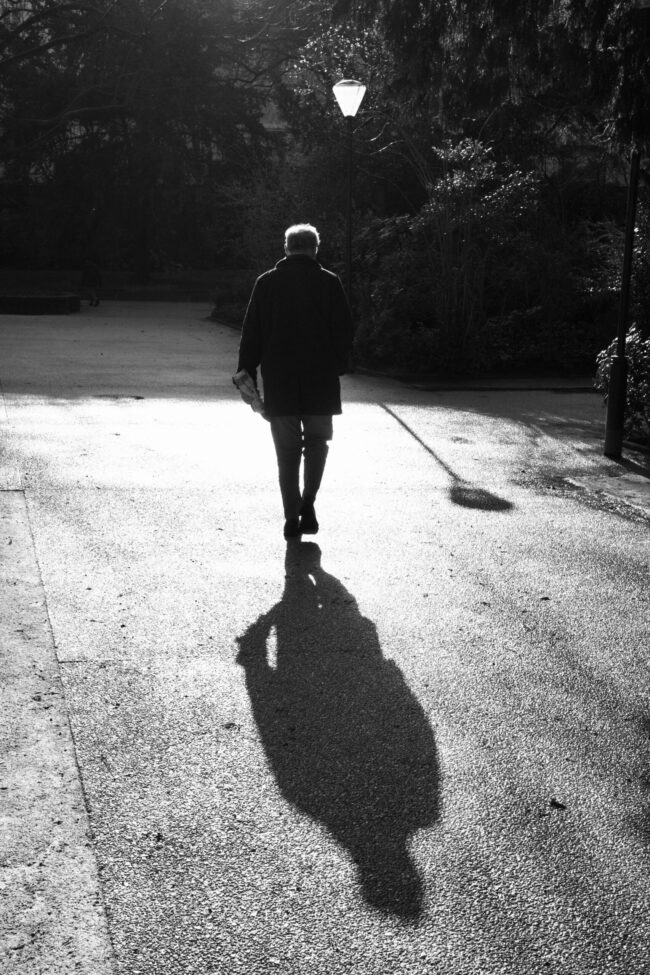
le rituel parisien. Photo: Bill O’Such
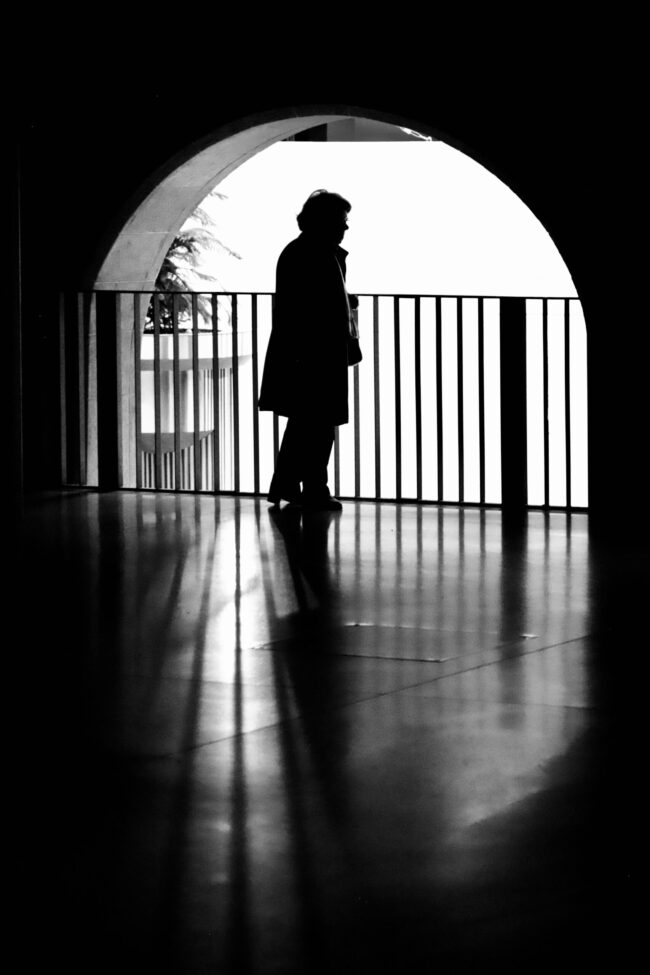
regard plongeant. Photo: Bill O’Such
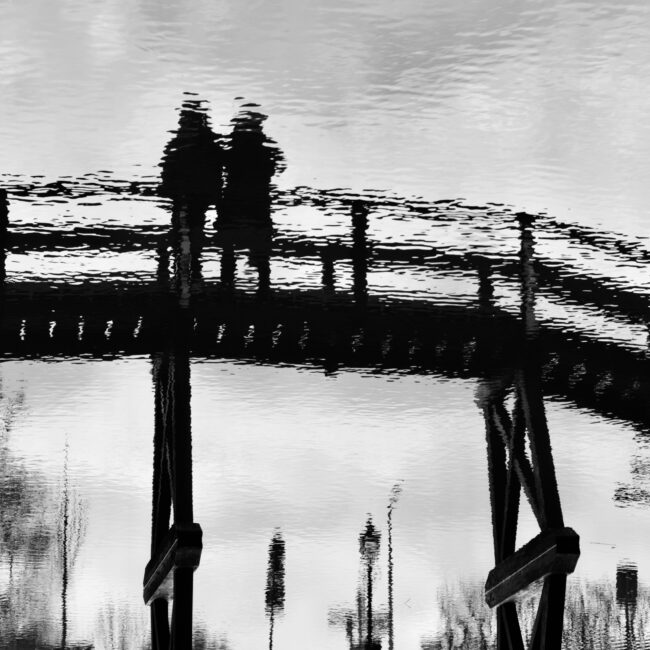
rêverie sur le pont. Photo: Bill O’Such
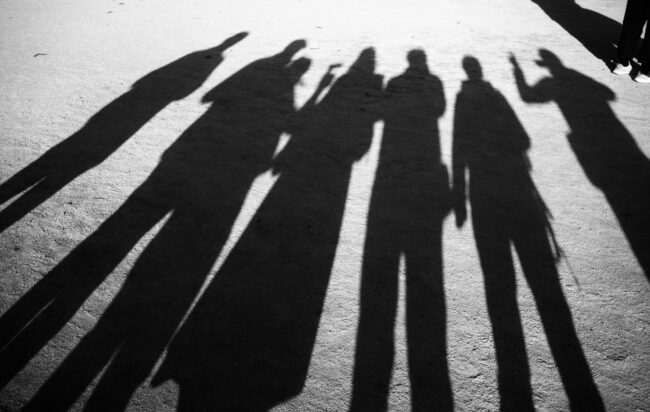
six regards croisés. Photo: Bill O’Such
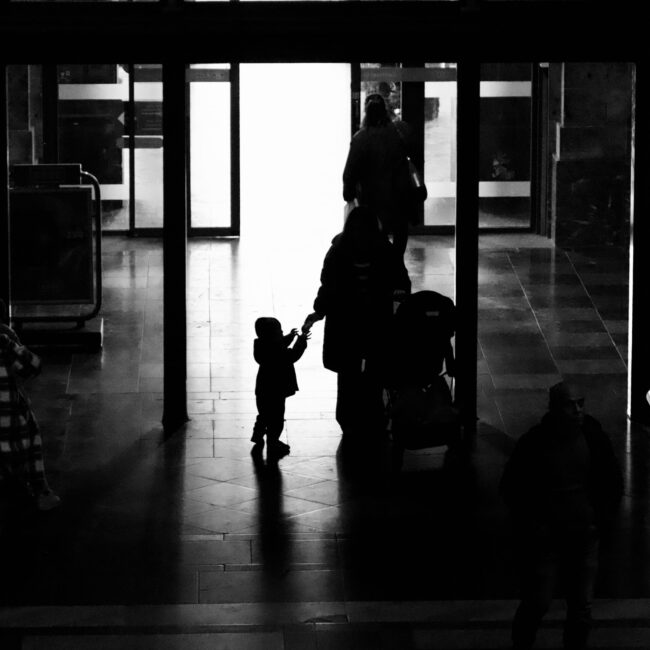
voici tes billets. Photo: Bill O’Such
Lead photo credit : complicité. Photo: Bill O'Such
More in Paris Vignettes
Related Articles