
The Grand Reopening of the Paris Catacombs
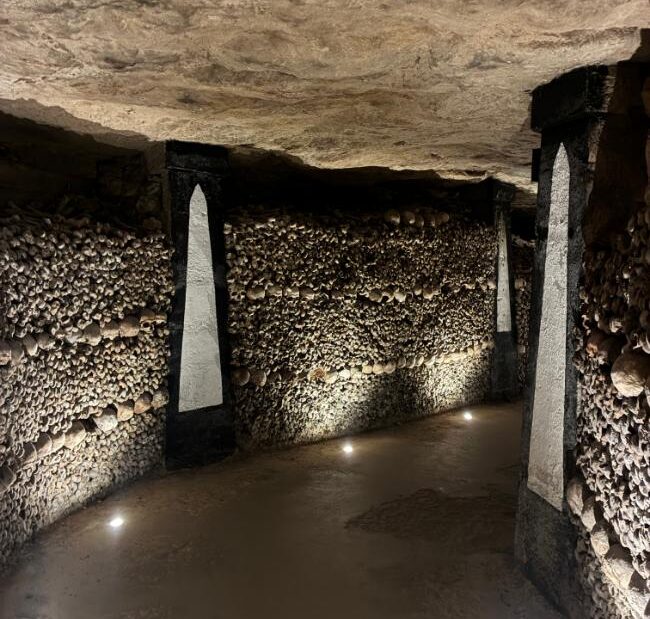

First open to the public in 1809, the Catacombs have attracted everyone from locals, to tourists, to clandestine party-goers. After three years of restoration work and a complete closure in November 2025, this labyrinthine ossuary, holding the bones of millions of Parisians, reopened on April 8.
A limestone quarry turned ossuary
The Catacombs were built in the former limestone quarries of the 14th arrondissement, 20 meters underground. Since ancient times, when Paris was a Roman city called Lutetia, limestone has been an important building material. In fact, most buildings constructed before the 18th century used limestone, including famous places like the Louvre and Notre-Dame.
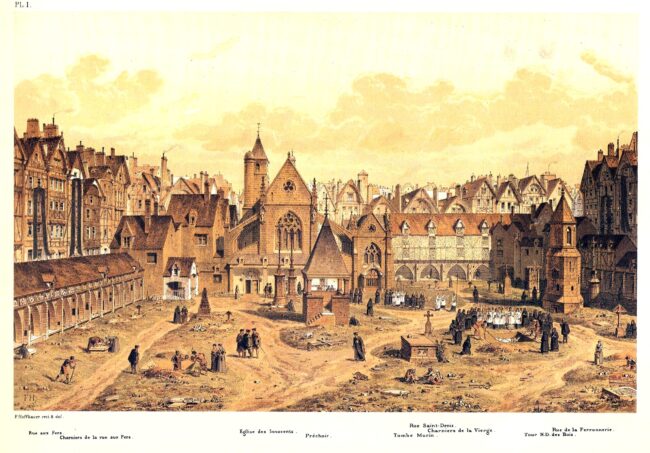
Les Innocents cemetery in 1550. Theodor Josef Hubert Hoffbauer. Public domain
By the time the mid-1700s rolled around, these quarries had been largely abandoned or fallen into disrepair. As a result, people worried that Paris would collapse, and these worries weren’t unfounded. Quarries did begin to crumble, leading to the creation of the Quarry General Inspection in 1777. Their main task was to prevent the city streets from collapsing and to maintain the safety of the tunnels, which they did by installing pillars to reinforce the tunnel walls. This same institution continues to ensure the safety of the 300 kilometers of tunnels that run under Paris.
It’s largely thanks to Quarry Inspector General Louis-Etienne Héricart de Thury that we have the Catacombs as we see them today. In 1809, he was in charge of reassembling the bones from different cemeteries into the Catacombs, in a way that was respectful but also educational and safe for visitors. These bones used to be stacked in haphazard piles but were reorganized, with skulls and longer bones in the front and all other bones hidden in the back. As part of de Thury’s redesign, plaques featuring poems and philosophical quotes invite visitors to reflect on death.
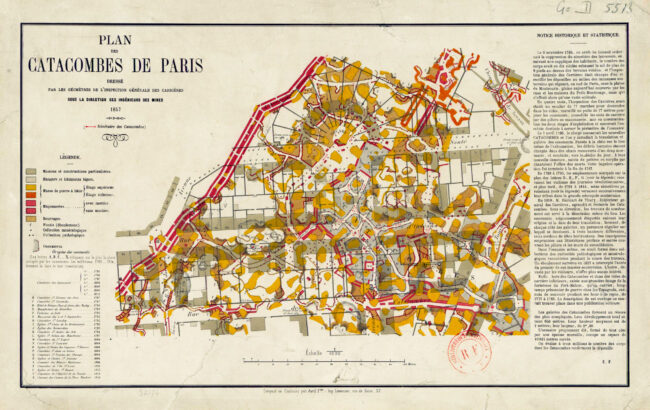
Plan of the visitable Catacombes, drawn by the IGC (Inspection Générale des Carrières) during 1858. Public domain
Inside the ossuary
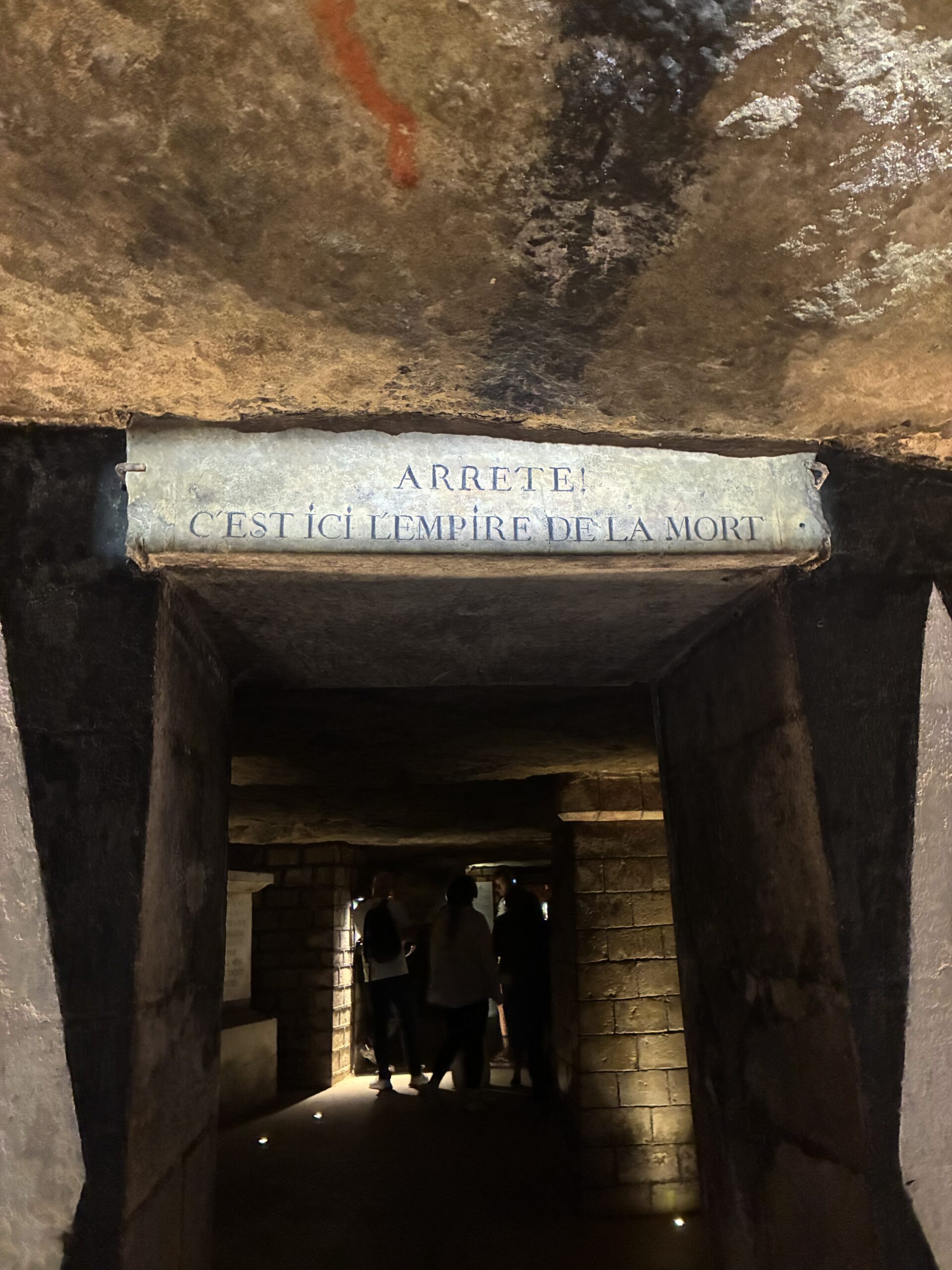
The ossuary is located about halfway through the visitor route and is heralded by an inscription reading Arrête! C’est ici l’empire de la mort (Stop! This is the empire of death). Before entering the ossuary, however, visitors can learn more about why the Catacombs were created. In summary, cemeteries across the city became overcrowded and posed significant health risks to the surrounding dwellings: infection spread, as did air pollution.
The most problematic of these cemeteries was Les Innocents Cemetery, which was the largest in Paris. It was closed in 1780 after bodies from a mass grave spilled into people’s cellars. The transfer of these bones occurred from 1785-1787, and they were the first to be moved to the Catacombs. Transfers continued throughout the French Revolution (and some sections of the ossuary are dedicated to the remains of revolutionaries) until 1814. When the Haussmannian redesign of Paris began, more remains were moved, until the final transfer in 1860.
The Paris Catacombs. Photo: Jill Amari
Once inside the ossuary, stop by the plaques around different groupings of bones to see where they came from and when they were transferred to the Catacombs. You’ll also find mini-exhibitions showcasing short films and descriptions that shed light upon some of the people whose bones are interred in the tunnels.
At the end of the tour, as you exit the ossuary, look up to see one of the shafts that builders used to first extract limestone and later move bones into the Catacombs. And don’t forget to take a peek at the interactive register listing names of some illustrious guests who once visited these same tunnels. You can leave a comment and sign your own name, too, for future generations to see.
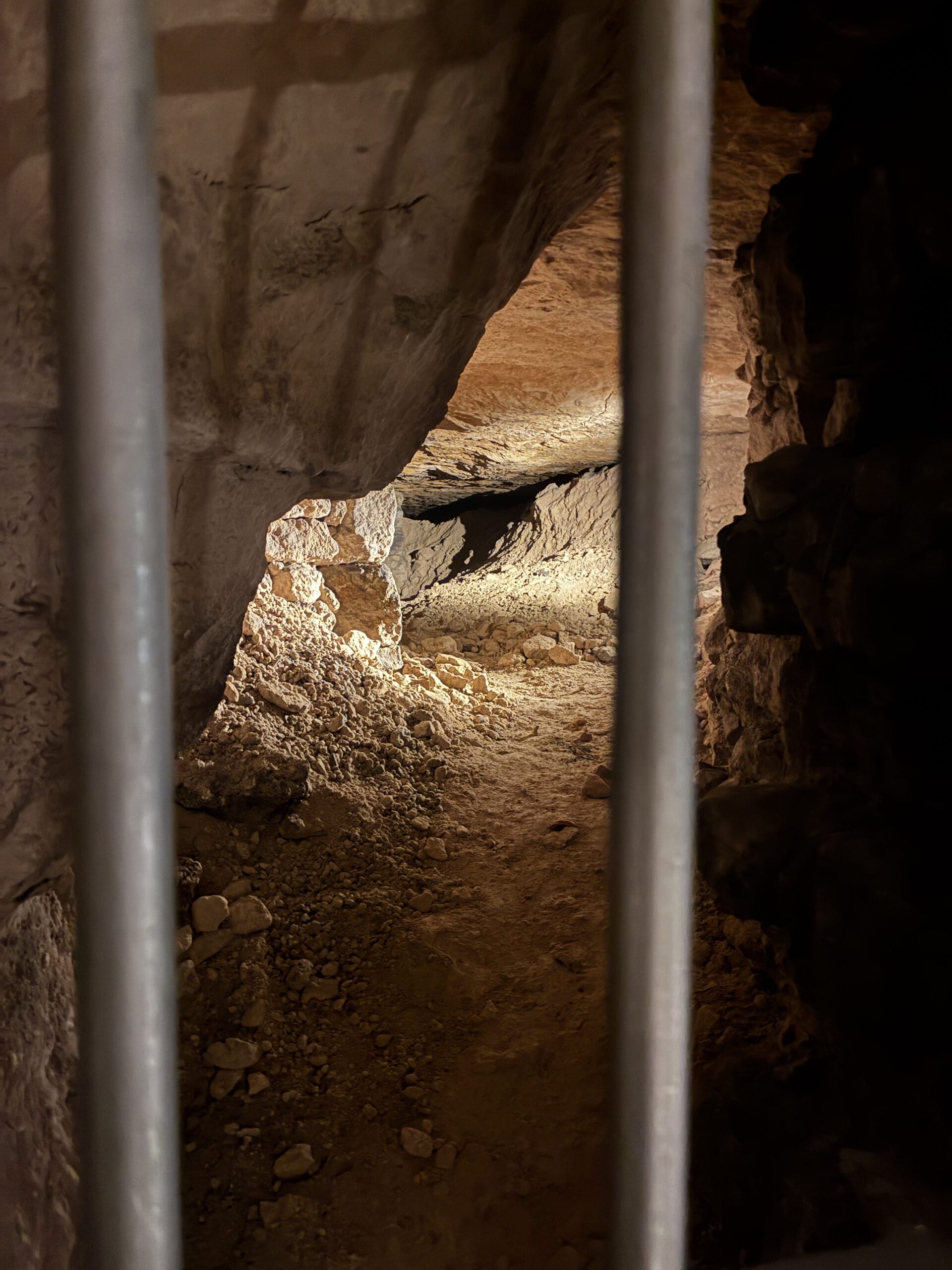
The Paris Catacombs. Photo: Jill Amari
Improvements after three years of restoration work
As an extremely fragile site, the Catacombs require regular renovations, particularly as humidity and other natural causes degrade the bones and tunnel walls. Sadly, some bones have been stolen over the years, leading to unstable walls and an even greater need for repair.
With 2,000 daily visitors, safety is a priority. New lighting allows for easier passage through the tunnels, as well as better preserves the bones. Improved air quality and air flow systems also serve to protect the bones and make the air more breathable for workers and visitors. In addition, fire safety measures and other security systems have been updated.
The new visitor path guides you through different galleries, where the updated audio guide, narrated by Inspector General de Thury himself, will regale you with stories. Reflective music and theatrical readings immerse you more fully in the Catacombs. For those with hearing or visual impairments, interactive tools allow for better accessibility, such as magnifying glasses, tactile exhibits, and tours in different Sign Languages.
At the end of the visit, a renovated bookstore and gift shop are set to open soon, inviting visitors back to the world of the living (and to buy a souvenir or two). With the tunnels reopened, there’s no better time to discover — or rediscover — the Catacombs of Paris.
Practical information
Although many new elements have been added to the Catacombs, some things haven’t changed. Touching the bones is forbidden, and the humidity causes wet spots and leaks, so visitors are advised to dress accordingly. Because the Catacombs are underground, they are not wheelchair accessible, nor are they recommended for people with reduced mobility, claustrophobia, or cardiac or respiratory problems. Stairs are the only way to access the tunnels, with 131 steps to enter and 112 steps to exit. As the one-way circuit is 1.5km long, each visit takes an hour or so, and the temperature stays at about 14 degrees Celsius year-round. The visitors’ entrance can be found near Métro Denfert-Rochereau at 1 Avenue du Colonel Henri Rol-Tanguy, and the exit is located at 21 bis Avenue René-Coty.
For more details, including opening hours and ticket prices, please visit the official Catacombs website.
Lead photo credit : The Paris Catacombs. Photo: Jill Amari
More in catacombs
Related Articles


By Jill Amari