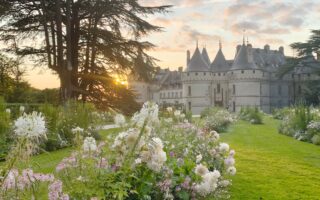
Beautiful New Garden Honors the Paris Terrorist Attack Victims
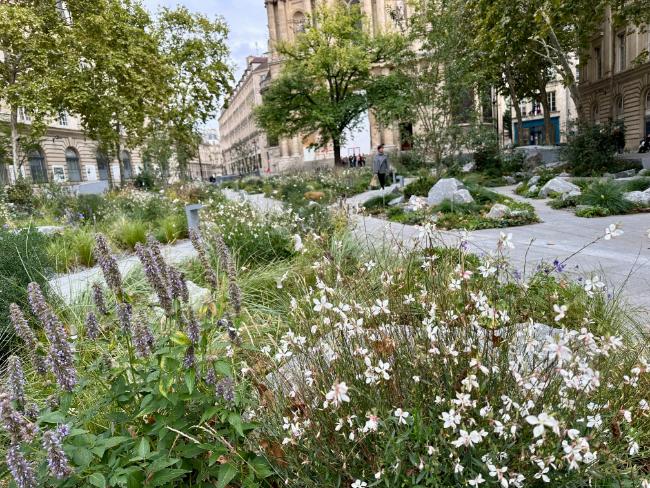
Just as everyone remembers exactly where they were when they first learned of the 9/11 terrorist attacks in the United States in 2001, French memories are similarly scarred by the November 13th atrocities that took place in Paris in 2015.
While the attack at the Stade de France aimed at the then-president of France, François Hollande, was the least destructive, the other attacks, which took place at the Bataclan theater and cafés and restaurants in the 10th and 11th arrondissements, killed 130 people, and severely injured and traumatized many more.
Ten years after this terrible tragedy, the city of Paris is inaugurating a small garden that is as beautiful and peaceful as it is touching and meaningful. This collaborative effort has been evolving since 2016, with a multidisciplinary team including Wagon Landscaping, the landscape architect Gilles Clement, lighting specialists, historians, sociologists, ecologists as well as the two victim associations created following the terrorist attacks, 13Eleven15 Fraternity and Truth and Life for Paris.
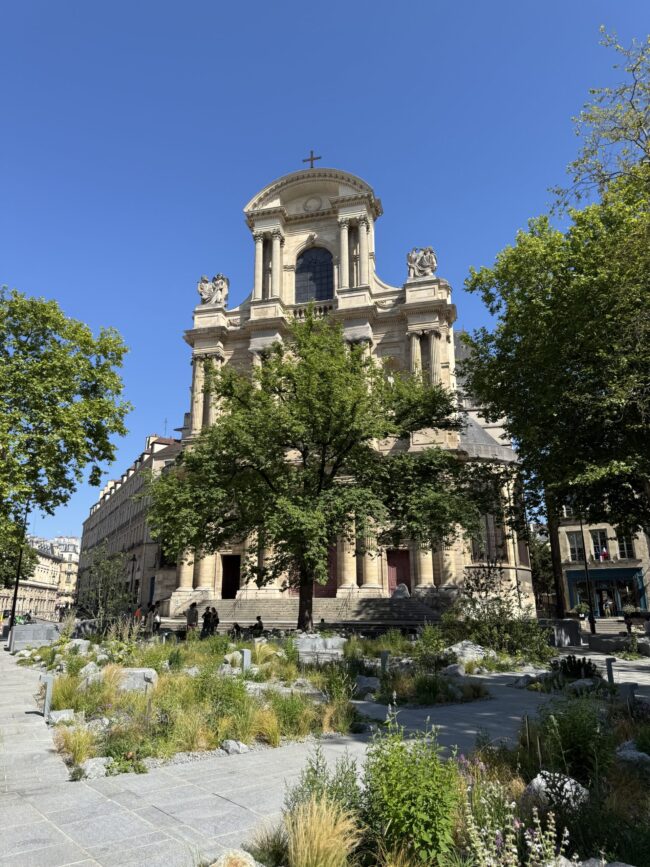
Jardin du 13 novembre 2015. Photo: Wino89 / Wikimedia commons
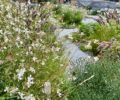
I first learned of this project by accident, in the fall of 2023 while visiting the grounds of the Ecole de Breuil. This horticultural school is run by the city of Paris to train future gardeners as well as offering continuing education courses. It is tucked into the back corner of the Bois de Vincennes and is all too often overlooked. The Ecole de Breuil is replete with display gardens, which include a Japanese garden, a landscaped park and pond, an orchard with beehives along with mixed borders worthy of the Cotswolds. Two years ago, l fell upon a small patch of dirt, several young plants and some rocks…
It was only when I read the accompanying panels that I was moved to tears. The small garden was a prototype created by the students with Wagon Landscaping to allowed the landscapers to study selected plants and their evolution ensemble as well as sizes and shades of granite to be used for the memorial garden. I knew then that I wanted to follow its evolution, and share the story.
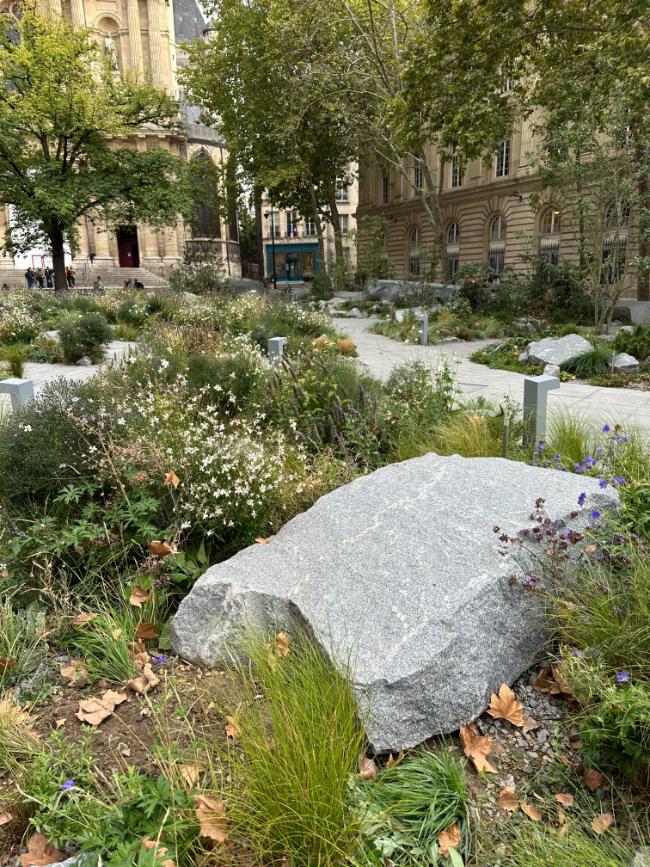
Memorial garden. Photo: Amy Kupec Larue
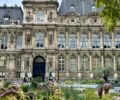
This honorary garden is placed in the heart of Paris. It offers a contemplative space that is open to all, in quiet reverence to the memory of those who lost their lives and those whose lives were forever changed that night. Perfectly nestled between the eastern facade of City Hall and the beautiful St Gervais church, the garden is anchored by two symbolic trees. Since the Middle Ages, an elm tree has stood in front of the church and while the present tree is merely 100 years old, it has already been classified as a “Remarkable Tree” for its historical importance. On the other end of the garden stands a stout, evergreen olive tree, an eternal symbol of peace, purity, wisdom, resilience and healing.
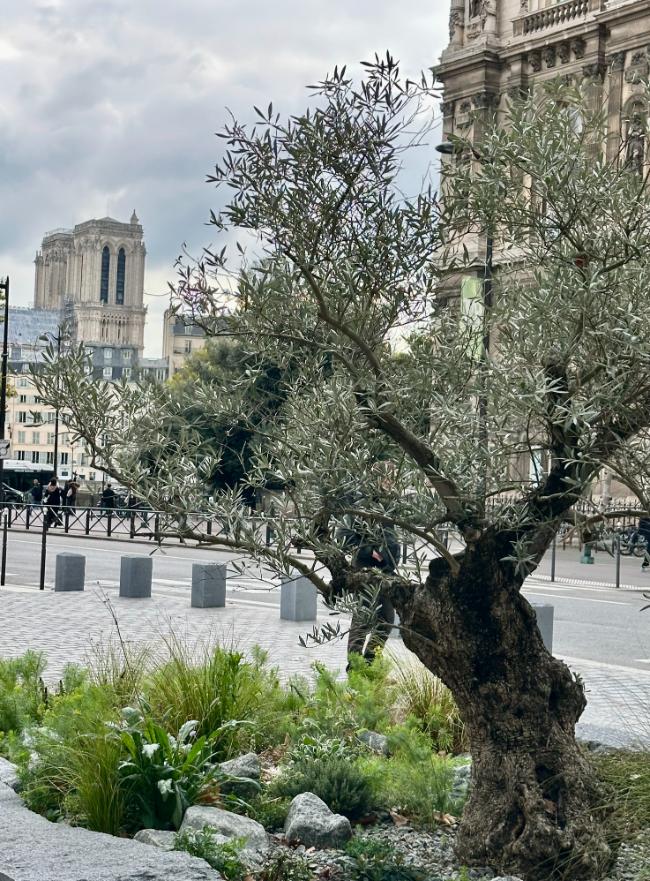
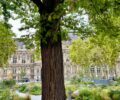
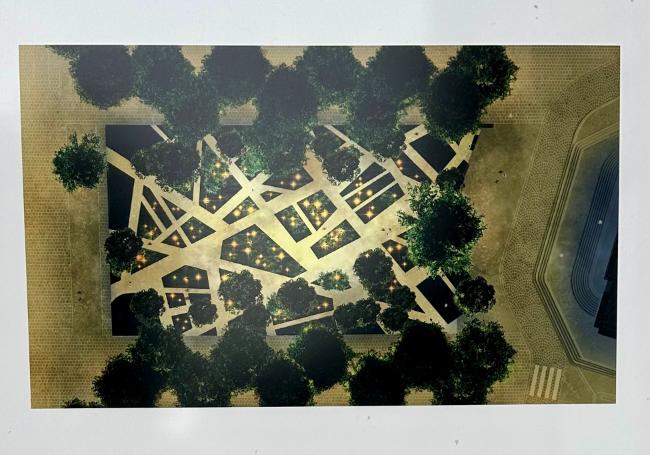
This former parking lot has been divided into six zones, uniting the eight locations that were targeted on November 13th into a winding promenade. Small trees and shrubs encircle the garden, acting as a protective green cushion and transition from the surrounding buildings towards the central oasis. To foster more biodiversity and encourage birds to visit the garden, shrubs were selected for their beauty and scent as well as the ability to produce fruit and include juneberries, privets, mock orange, elderflower, cherry dogwoods and Oregon grape.
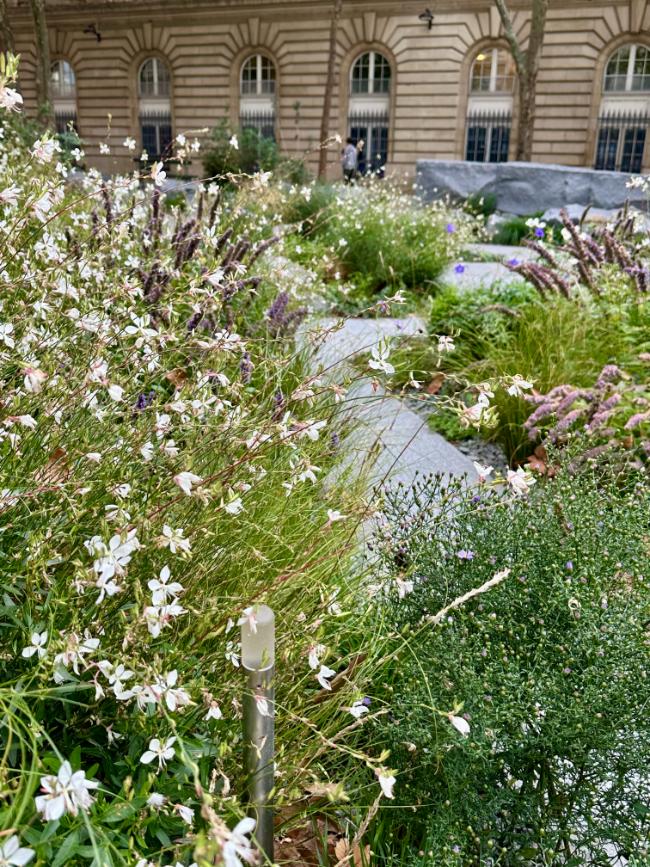
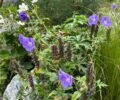
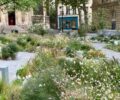
Within this grid there are six large steles, engraved with a small map of the neighborhood affected and the names of the restaurants and cafés. The base of each stele is encircled with the street names, while the victim’s names are written vertically, opposite a stone bench. Small rock gardens behind the benches are intermingled with plants and grasses. The perennials were also selected with much care, providing seasonal interest throughout the year with additional beauty in the fall and winter months. Like the Tuileries and Bercy gardens also along the Seine on the right bank, the November 13th, 2015 Memorial Garden has an east-west perspective.

It must be noted that the extensive use of stone here is intentional and not only to delimit and structure the garden. The raw, blue granite blocks from the Lanhélin quarry in Brittany symbolize the severity and the hardships caused by these attacks. The plants skillfully inserted into this space have achieved a disarming and delicate balance whose graceful contrast reminds us of the restorative power of nature.
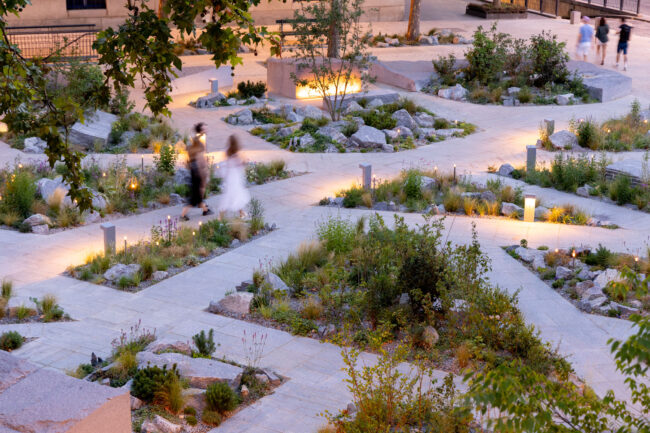
Jardin mémoriel des attentats du 13 novembre, as night falls. Photo: Jean-Baptiste Gurliat / Ville de Paris/ Wikimedia commons
As this garden is open 24/7, lighting was another important facet of its creation. The double row of London plane trees that edge the garden have been illuminated at their bases. The pathways and mineral spaces at either end are lined with luminaries lit from above and below, and a warm glow radiates from the ground up towards the 130 names on the steles. The creators went a step further to beautify this space by linking it to the celestial sky. While the positioning of all these small lights looks rather arbitrary, their placement is an exact replica of the astral vault on November 13, 2015. The stars that shimmered over Paris that fateful evening now glow and illuminate this garden for visitors through the darkness.
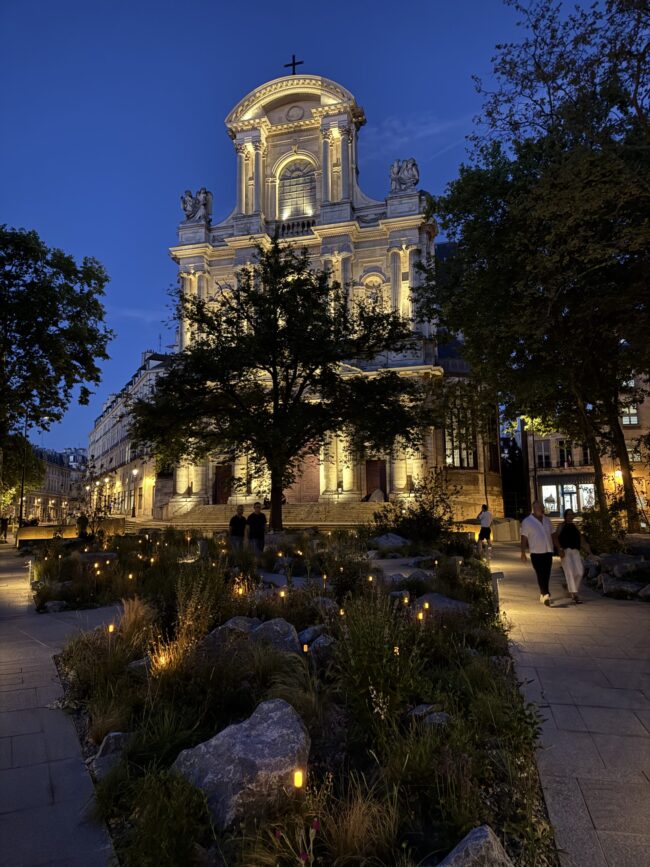
The memorial garden at night. Photo: Wino89 / Wikimedia commons
Lead photo credit : New memorial garden in Paris. Photo: Amy Kupec Larue
More in Bataclan, Hotel de Ville, Jardin du 13 Novembre 2015, November 13, Paris terrorist attacks
Related Articles