
The New Fondation Cartier Opens Near the Louvre
- SUBSCRIBE
- ALREADY SUBSCRIBED?
BECOME A BONJOUR PARIS MEMBER
Gain full access to our collection of over 5,000 articles and bring the City of Light into your life. Just 80 USD per year.
Find out why you should become a member here.
Sign in
Fill in your credentials below.
The Fondation Cartier has moved across the Seine to a dazzling new home designed by renowned architect Jean Nouvel. Arguably the Paris art world’s biggest event of the year, the new location occupies what was once the Grands Magasins du Louvre department store. Founded by the Maison Cartier in 1984 to expand public access to contemporary art, the Fondation was originally located outside of Paris in Jouy-en-Josas.
This is the foundation’s third location, after vacating a beloved building also designed by Nouvel on the Boulevard Raspail. The latest move is intended to accommodate both larger-scale installations and increasing numbers of visitors. Counting the Louvre, Comédie Française, and Bourse de Commerce among its new neighbors, the Fondation now occupies a stretch of prime cultural real estate.
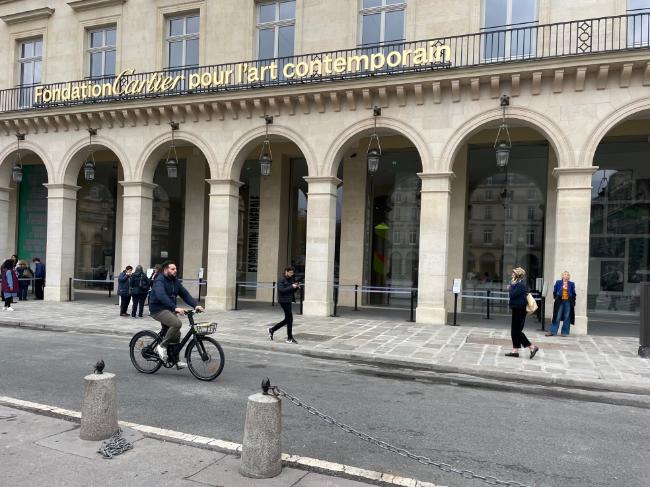
Exterior of the Fondatin Cartier. Photo: Maria Kern
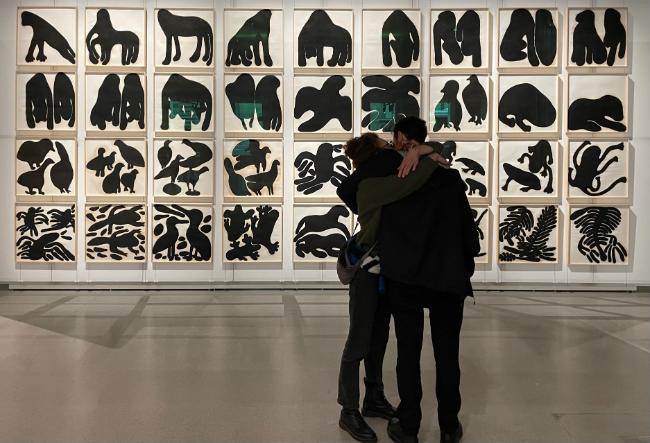
The inaugural Exposition Générale brings back highlights from previous expositions and showcases a diverse range of contemporary artists, organized around four principal themes: Machines d’architecture, Être nature, Making Things, and Un monde réel. Climate change, migration, the body, and our increasing disconnection from the natural world are all emphasized throughout the exhibition, and attempting to navigate the open layout is a bit of a choose your own adventure scenario, like wandering into the unknown. If that all sounds too existential, you can join a guided tour (departing every hour) and be encouraged by your guide to take up a creative act at any age à la Sally Gabori, who began painting in her 80s and is now among the artists on display.
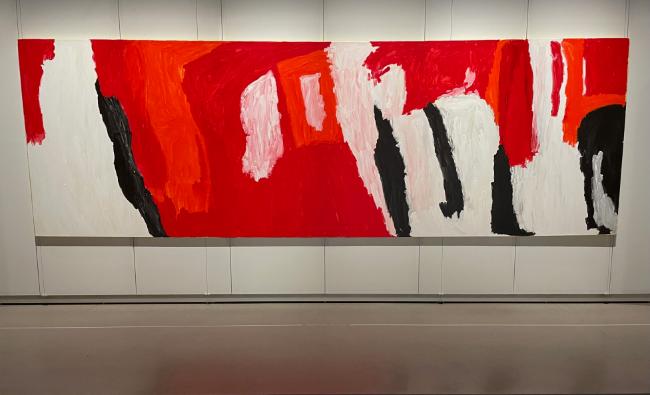
Art inside the Fondation Cartier. Photo: Maria Kern
While technically three stories, Nouvel has designed each level of the building to be adjustable and customizable, with platforms that can be raised and lowered to accommodate even the most demanding visionary. Bay windows run along the perimeter, giving view to the runway of the rue de Rivoli and softening the boundary between institutionalized art and the living, breathing life of the street.
The natural world is considered in architectural choices like skylights, where piles of leaves gather, creating their own contributions to the aesthetic experience, while sonic installations broadcast birdsong, crashing waves, and pebbles crunching underfoot. Despite the volume of art on display and the streams of people circulating through, the interior feels airy and spacious, without the claustrophobic sense endemic to so many museums. Although technically the Fondation does not qualify for museum status—it is a self-described philanthropic project.
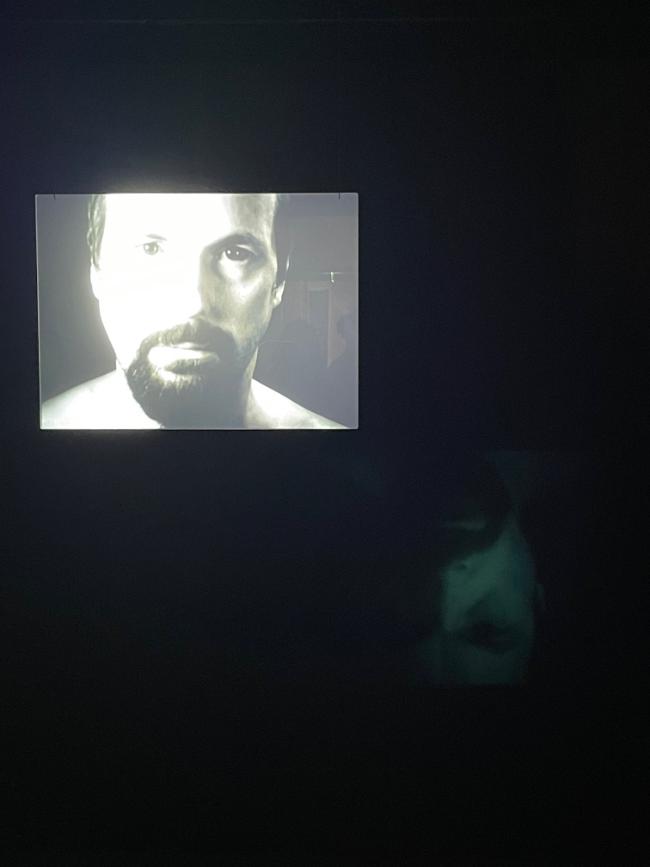
Inside the Fondation Cartier. Photo: Maria Kern
Staff are easily identified by their uniform of blue vestes de travail, and are friendly and helpful, guiding the weary to bathrooms and food and directing the confused towards signage, which can be elusive, especially for larger works. There’s a small cafe serving espresso drinks, pastries, and light lunch options, and a bookshop, neither of which are truly separate from the exhibition area, subtle encouragement to keep visitors weaving in and out of commercial spaces. Come 2026, a restaurant, bar, and dedicated espace pédagogique will join the fold.
Contrary to the often blasé attitudes of Parisian art aficionados, there was an excited energy of discovery among visitors. Perhaps it was the sense of immediacy reflected in projects like Exit, a video collaboration on mass migration, displacement and our collective future, backed by startling data on population shifts. Or grief, as explored in Bernie Krause’s collaboration with Soundwalk Collective, as the artist laments his personal loss of hearing along with the ongoing loss of diversity in sound. The thematic proximity to our everyday lives is inescapable, and one feels an uneasy tension, standing in a haven of art funded by a luxury jewelry house contemplating the destruction of our planet and the likelihood of survival for generations to come. Outside, the crowds continued to stream past, laden with shopping bags, babies in prams.
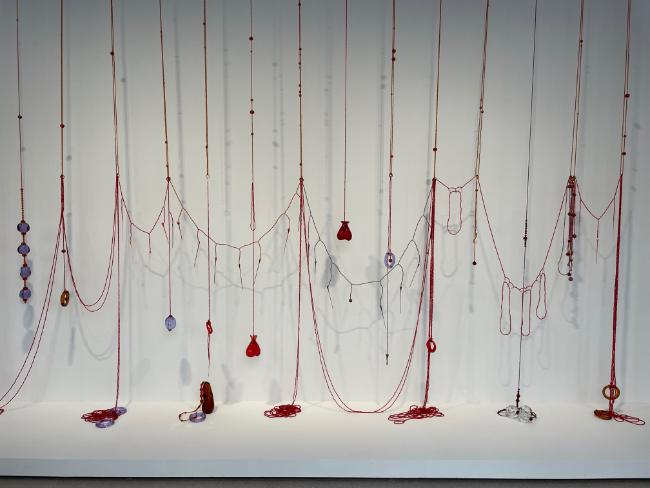
Art inside the Fondation Cartier. Photo: Maria Kern
The emphasis on collaboration continued with a series of portraits by Tadanori Yokoo, painted over the course of a decade. Aptly titled The Inhabitants, Yokoo’s subjects include the artists and minds featured in the Exposition Générale, including a self-portrait of Yokoo himself.
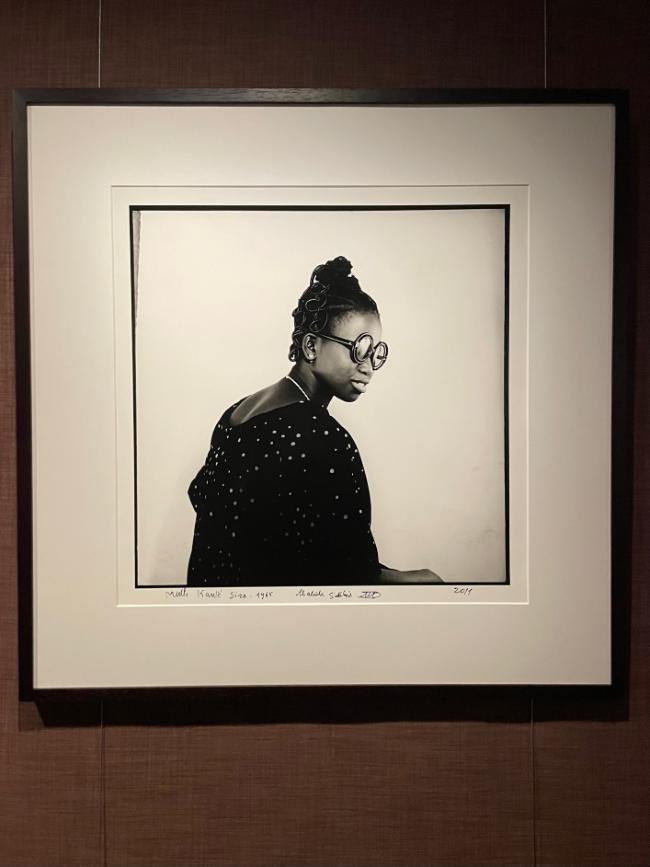
A corridor along a far wall contains a collection of David Lynch ephemera that should impress even his most saturated fan—including a delightful series of drawings on pieces of toilet paper, somehow in pristine condition. Nearby, visitors can stroll along a wall of fantastically detailed drawings by the illustrator Moebius, or travel upstairs to visit a Murano glass sculpture inspired by passionate love and eroticism. There is also some fabulous photography on display, ranging from Raymond Depardon’s haunting landscapes to joyous, dynamic portraits by Malick Sidibé.

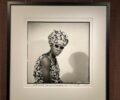
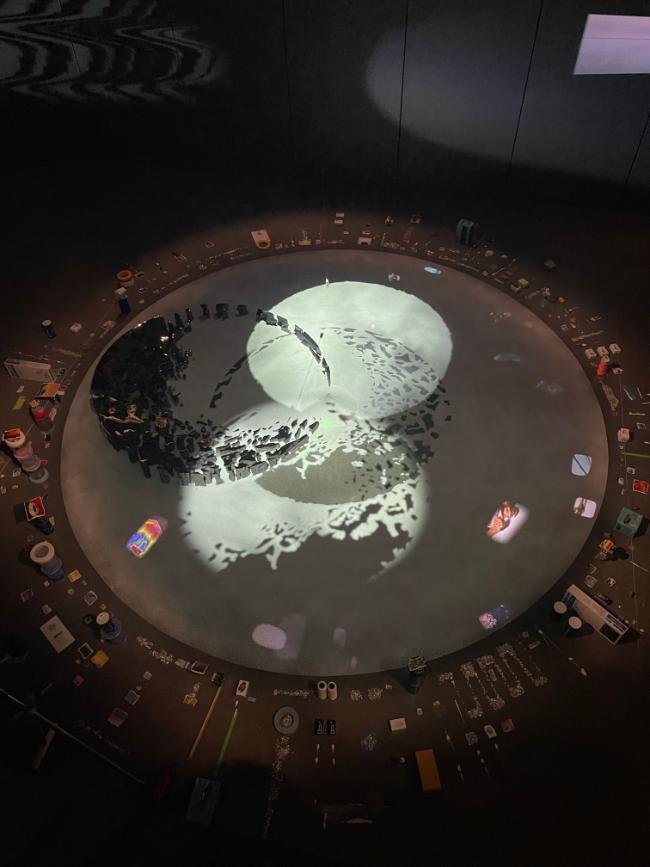
Finally, Sarah Sze’s energetically striking piece inspired by Foucault’s pendulum serves as a kind of anchor on the ground floor, a magnetic centerpiece around which visitors congregated, engaged in quiet conversations about what it all meant. Visiting the bookstore prior to encountering Sze’s piece, I was drawn to the last copy of Michel Foucault’s Archeology of Knowledge. And on a walk the day after touring the exhibit, I happened upon an abandoned copy of Umberto Eco’s Le pendule de Foucault in the wild. Surely a testament to the quantum nature of art.
DETAILS
Fondation Cartier
2, place du Palais-Royal, 1st
Closed Mondays
Full-price ticket: 15 euros. Reduced price: 10 euros
Exposition Générale runs until 23 August 2026
Lead photo credit : Fondation Carter. Photo: Maria Kern
Related Articles
By Maria Kern