
Into the Wood: Countryside Delights in the Bois de Boulogne
- SUBSCRIBE
- ALREADY SUBSCRIBED?
BECOME A BONJOUR PARIS MEMBER
Gain full access to our collection of over 5,000 articles and bring the City of Light into your life. Just 80 USD per year.
Find out why you should become a member here.
Sign in
Fill in your credentials below.
Enjoy a day in the countryside without ever leaving Paris
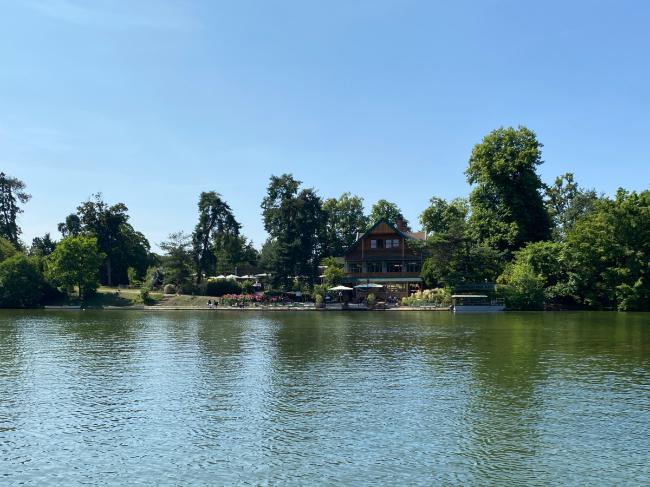
In the eastern sector of the Bois de Boulogne, not far from Porte de la Muette, is the Lac Inférieur. At its center, and accessible only by boat, are two manmade islands: the Grande Ile, home to one of Paris’s most romantic landmarks, the Chalet des Iles; and the Petite Ile, which has a charming landmark of its own, the Kiosque de l’Empereur. The two are connected by a short footbridge, or passerelle.
I was almost wholly ignorant about this part of the Bois, apart from being vaguely aware of the existence of a restaurant called the Chalet des Iles. However, a year or so ago, I learned that my neighbor, Victor Kerkouche, is now heading up the gardening team on both islands, and made a note to go see things for myself.
After years of working in le luxe, at the end of the COVID pandemic Victor changed course in mid-career to pursue his life’s passion and became certified as a jardinier/paysagiste for the Ville de Paris. His new role goes well beyond basic planting and landscaping. He has made it his personal mission always to be mindful of and faithful to the original vision of its founder, no less a personage than the Emperor Napoleon III.
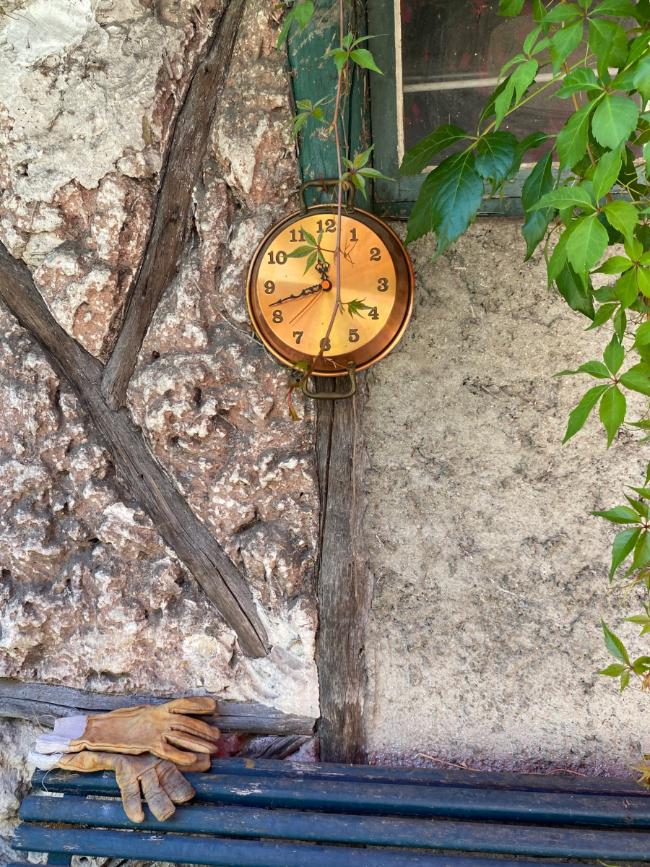
Gardening in the Bois de Boulogne. Photo: Joy Anderson
A romantic dream from the Romantic Era
Long before the Bois de Boulogne was dreamt of, there was the Forêt de Rouvray, a woodland wilderness densely populated with oak trees. For centuries it was the hunting grounds of the kings of France, but with the Revolution came public access, logging and general deforestation. All that changed in 1852 at the start of the Second Empire, when the new emperor, Napoleon III, delegated Baron Haussmann to transform and modernize the City of Paris.
Part of the emperor’s concept was to create poumons verts (green lungs) — parks and gardens within and along the borders of the city where the people of Paris could find space to breath in an increasingly industrialized urban environment. He was particularly invested in the development of the Bois de Boulogne.
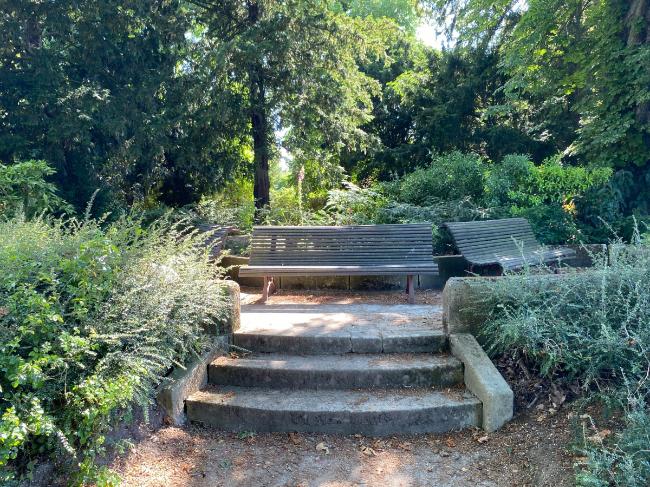
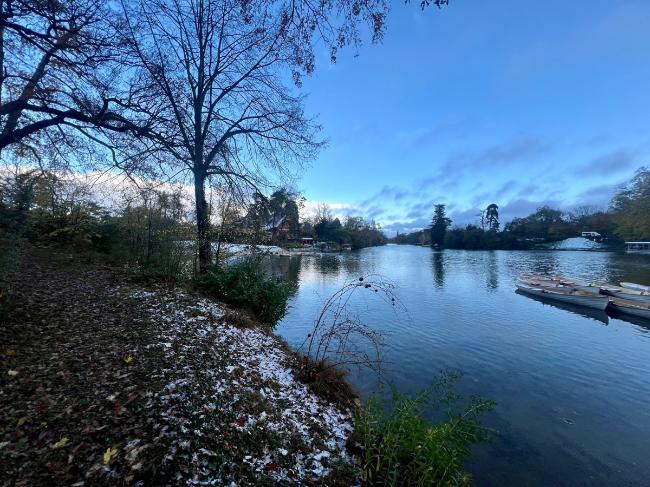
Exploring the Lac Inférieur, Bois de Boulogne. Photo: Joy Anderson
Prior to becoming emperor, Napoleon III had spent several years in exile in England where he was seduced by the natural, unmanicured style of the English garden, in contrast to the geometric precision of its French counterparts. London’s Hyde Park became the inspiration for the Bois de Boulogne. One of its key features is the Serpentine, a large artificial lake for boating and other recreational pastimes, and the emperor was keen to incorporate an equally scenic water element into the landscape of the Bois.
It was quite a challenge but, happily, contemporary hydraulic engineering had become sufficiently advanced for the project to be realized. It involved excavating an area of roughly 40 acres and using the residual soil to construct two islands in the middle of the dugout zone, which was then filled with water pumped from the nearby Canal d’Ourcq. These became known as the Grande Ile, the Petite Ile and the Lac Inférieur (lower lake).
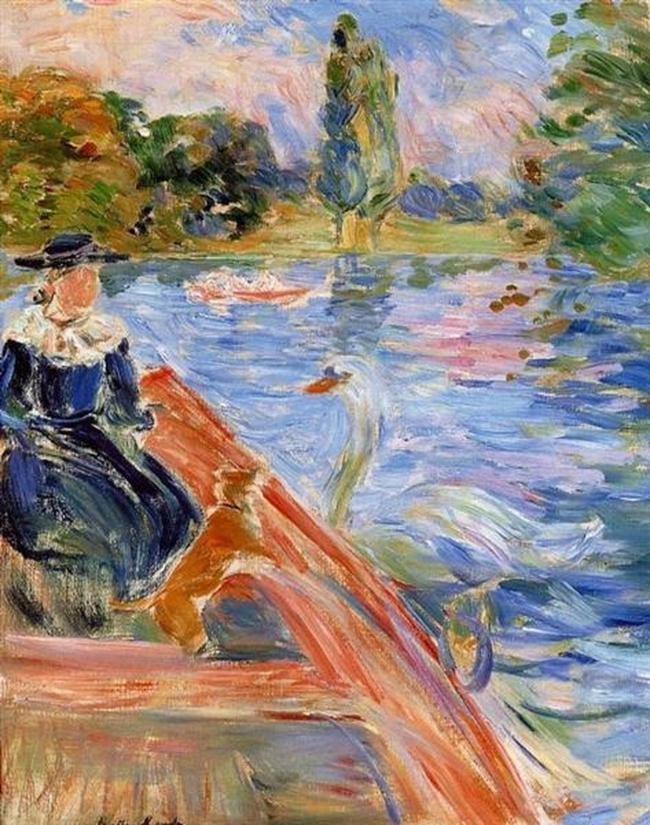
Berthe Morisot, Young Woman in a Boat with Swans, 1884.
Time passes
One day in late June of this year, I decided to take Victor up on his longstanding invitation to show me around the Grande Ile and its environs. A friend with a car offered to drive (definitely the most hassle-free way to get there). We parked easily and walked down to the point of embarkation, where a [free] electric-powered barge carries visitors across the lake in three minutes, right up to the Chalet des Iles (more on that in a bit).
Victor himself arrives every morning around 7:15 am by Vélib. The lake is at its most enchanting in fine weather when the mist is rising and the sun just beginning to shine on the water. The birds are singing, but otherwise there is total calm. His first task on Monday is to inspect both islands in case anything urgently needs attention and then, depending on the season, put together a weekly schedule for pruning, mowing, raking, leaf blowing, etc.
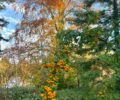
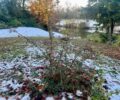

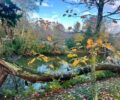
Happily, there is no lack of opportunities for creative projects that combine aesthetics and eco-responsibility. Having been neglected during the pandemic, the islands were ready for a major revitalization. A couple of times a year the City of Paris prepares catalogues of shrubs and blooming plants available from its greenhouses, which are then distributed to all the parks and gardens within its domain, available on a first-come, first-served basis. Victor has taken full advantage of the system, introducing weeping willows, colorful Judas trees, and climbing wisteria, which he particularly likes since it is visible from across the lake.
It turns out I was not the only one unfamiliar with the Grande Ile. While some diners at the Chalet des Iles may go for a stroll after a meal, and despite the inviting lawns, pathways, benches and lovely views, it remains pretty empty which, to be honest, adds to its charm. Certain types of visitors do come for longer visits, including photographers, sunbathers, picnickers and bird lovers.
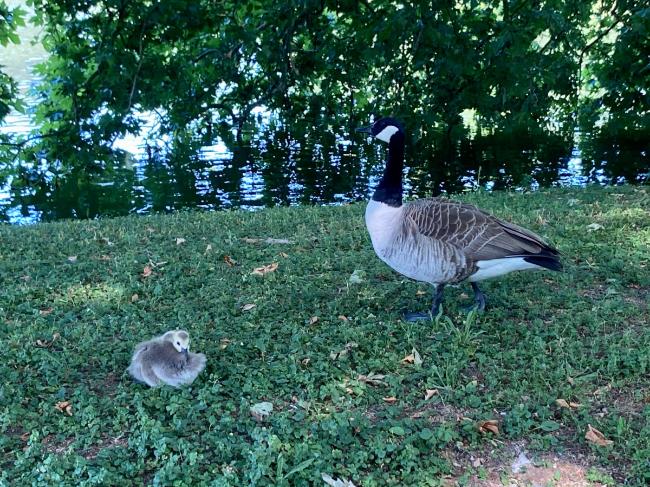
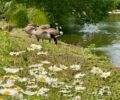
Geese next to the Lac Inférieur, Bois de Boulogne. Photo: Joy Anderson
I guess I have to count myself a bird lover, since one of the highlights of my visit was being able to wander among the Canada geese and their fuzzy goslings. I also saw swans and a heron.
We did not go over to the Petite Ile, since the passerelle is deemed too frail to support a lot of foot traffic (and there are surely liability issues). Victor crosses all the time, however, and he describes the terrain as hilly and rugged, with many more trees and fewer open spaces than on the Grande Ile. There are no real footpaths and no benches.
The picturesque octagonal pergola known as the Kiosque de l’Empereur, once the private retreat of the imperial couple, has seen better days and, although still standing, its wooden structure has fallen into disrepair with no municipal plans in place for renovation.
On the plus side, for wildlife lovers, the island is home to waterfowl, parakeets and tortoises. Nutria can sometimes be sighted as well. There’s talk of a jackal, but that’s almost certainly urban legend.
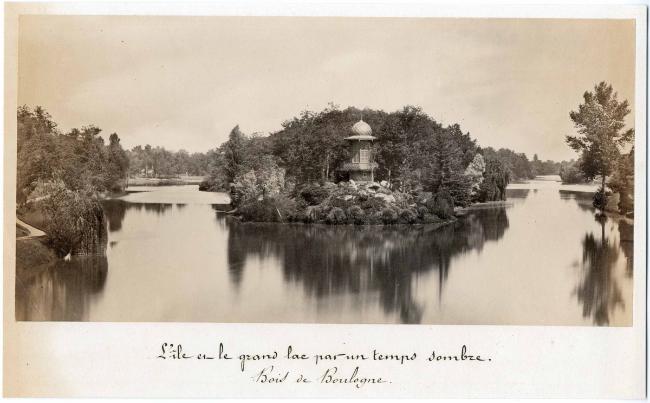
Le Kiosque de l’Empereur by Charles Marville. Public domain.
Going with the flow
The public is not explicitly forbidden from exploring the island, but it is only possible to do so by renting a rowboat from the docks on the opposite shore (March through October only). The Lac Inférieur was expressly designed for recreational usage, especially boating. Most folks are content with a leisurely paddle around the two islands, but for those determined to explore the Petite Ile there is a small dock. Victor told me that some visitors even bring their own inflatable watercraft.
Fishing is not allowed from boats, only from the banks of the mainland, although a number of conditions are attached. Among the varieties of fish in the lake are carp, pike, perch and giant catfish. Swimming is 100 percent forbidden.
A rustic renaissance
Before leaving the Grande Ile, of course I had a good look around the Chalet des Iles. Its origin-story adds yet another intriguing chapter to the history of the Bois.
The original chalet was built in Bern and transported to Paris for the Exposition Universelle of 1867 where it attracted the notice of the emperor. Knowing the Empress Eugénie’s fondness for rustic Swiss style, he had it reconstructed on the Grande Ile and presented it to her as a gift.
After the fall of the Second Empire in 1870 (and the end of the Franco-Prussian war), the chalet and its lake became a fashionable city escape for the beau monde, reaching the height of its popularity during the Belle Epoque. Around the turn of the 20th century it became a restaurant and café and has remained so to this day.
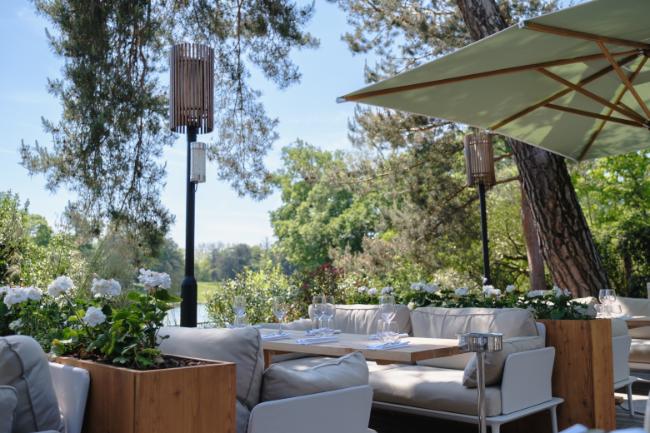
Chalet des Iles © Julien de Gasquet
In 2012, a fire caused significant damage to the property and, though partial repairs were made, it was eventually decided to do an almost complete reconstruction. The restaurant closed for several years and in 2024 the new Chalet des Iles was unveiled. Its architectural profile is the same, but great care was taken to use “green” structural materials throughout, most visibly, in the larch-wood façade.
My overall impression of the new chalet was that there isn’t a bad seat in the house. I felt it as soon as I stepped off the barge, which is just a few yards from the lakeside café tables, and nothing changed my mind when I later inspected the modern-yet-historic-feeling dining room and its outdoor terrace.
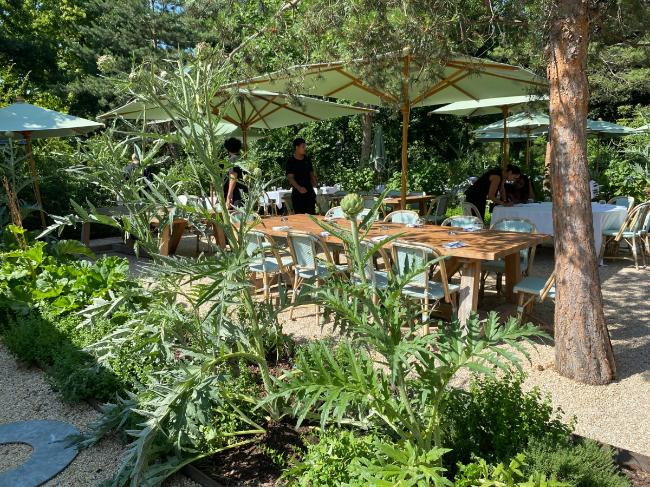
Le Potager, Chalet des Iles. Photo: Joy Anderson
In the rear of the main building is le Potager, a serene open-air venue for small events, where the wooden tables are surrounded by planter boxes. The Chalet des Iles is well-equipped for all kinds of business and social gatherings, especially weddings. I cannot think of a more romantic setting.
Merci, Empereur: Mission accomplished.
Getting there:
Least physical effort: car or taxi
Scenic and energizing: bike or Vêlib
Public transport: options include bus, métro and tram, all with some walking. Best to consult Bonjour RATP
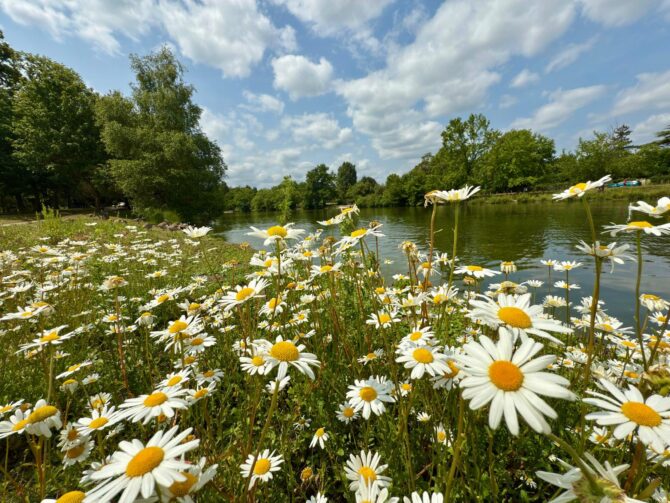
Lead photo credit : Lake in the Bois de Boulogne. Photo: Joy_Anderson
More in Bois de Boulogne
Related Articles
By Joy Anderson
REPLY