The Essential Guide to the 6th Arrondissement

- SUBSCRIBE
- ALREADY SUBSCRIBED?
BECOME A BONJOUR PARIS MEMBER
Gain full access to our collection of over 5,000 articles and bring the City of Light into your life. Just 80 USD per year.
Find out why you should become a member here.
Sign in
Fill in your credentials below.
For travelers to the French capital, the 6th is one of the top city destinations, a quintessential Paris neighborhood brimming with bistros and boutiques and Left Bank literary history. It’s a prime address for people watching at cafe terraces, admiring art in the galleries of Saint-Germain-des-Prés, and strolling through the Jardin du Luxembourg, arguably Parisians’ favorite park. Here’s our full guide with sightseeing, food, drink, and shopping recommendations.
Things to See and Do
Saint-Germain-des-Prés is one of the most charming corners of Paris — a warren of winding medieval streets that escaped Baron Haussmann’s grand 19th-century overhaul. Because of this, the neighborhood retains much of its original street plan, offering a rare glimpse into the city’s pre-modern fabric. It’s also among the most visited areas of Paris, filled with cafés, shops, and elegant old façades that seem frozen in time.
Two of its best-known sacred landmarks, Église Saint-Sulpice and Église Saint-Germain-des-Prés, anchor the 6th arrondissement. The latter also hosts a lively holiday market in the winter months.
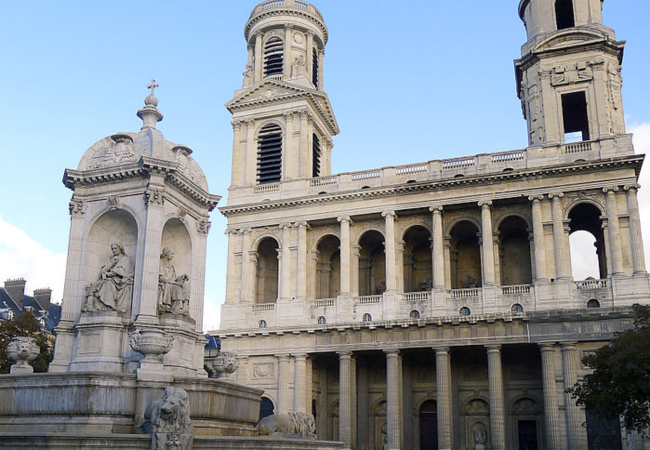
Eglise Saint-Sulpice. Credit: Mbzt/ Wikimedia commons
Long associated with artists and intellectuals (see below for their famous haunts, Café de Flore and Les Deux Magots, both across the street from the Église Saint-Germain-des-Prés), Saint-Germain was also home to Gertrude Stein, who held her renowned salons at 27 rue de Fleurus, welcoming Hemingway, Picasso, and other greats of the early 20th century. Today, the arts scene continues around the northern end of rue de Seine and on rue Dauphine, where Galerie Kreo showcases both established and emerging designers.
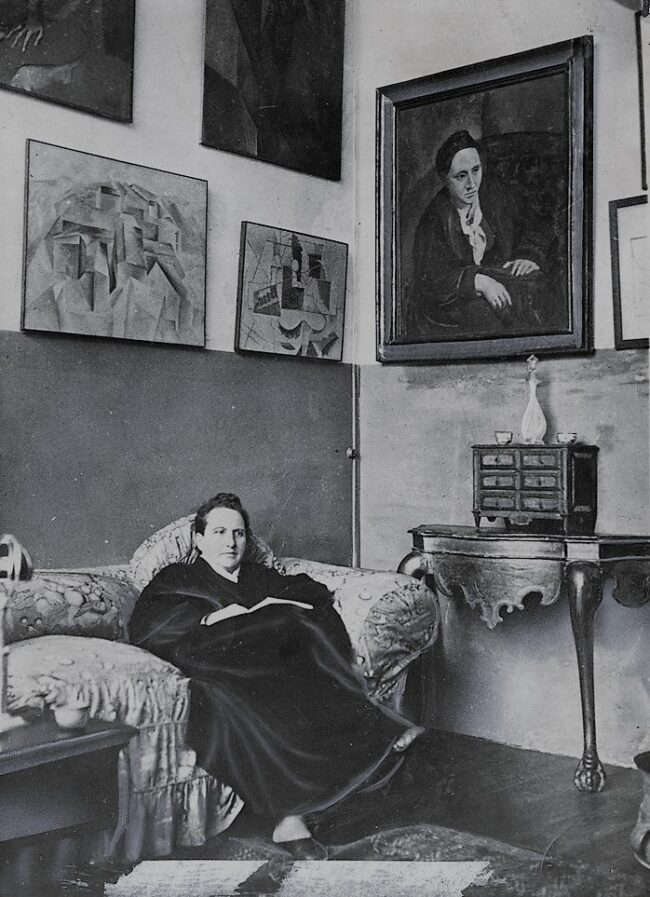
Gertrude Stein at 27 rue de Fleurus with her portrait by Picasso on the wall, May 1930. Public domain
I first learned about another special spot on rue de Seine from Adam Gopnik’s Paris to the Moon (2000), where he describes it as his favorite architectural detail in the city — and it’s just as lovely as he says:
What truly makes Paris beautiful is the intermingling of the monumental and the personal, the abstract and the footsore particular, it and you. A city of vast and imper-sonal set piece architecture, it is also a city of small and intricate, improvised experience. My favorite architectural detail in Paris is the little entrance up the rue de Seine, a tiny archway where, as I have since found out, you can push a poussette right through and get to the grand Institut de France. You aren’t looking at it; and then you and the poussette are in it, right in the driveway where the academicians go. For a moment you are it. The Institut belongs to you. Ten steps more and you are on the pont des Arts. The passage from the big to the little is what makes Paris beautiful, and you have to be prepared to be small-to live, to trudge, to have your head down in melancholy and then lift it up, sideways-to get it.
— Excerpt from Adam Gopnik, Paris to the Moon (2000)
If you go there, keep heading north to the Pont des Arts, now pedestrian-only, which for a time was covered with and sinking from the weight of thousands of “love locks” fastened by couples from around the world.
View this post on Instagram
Of course, one of the 6th arrondissement’s most spectacular sights is the Jardin du Luxembourg, which straddles both the 5th and 6th. The gardens feature two exhibition spaces — the Orangerie and the Musée du Luxembourg — as well as pétanque and tennis courts, a café, the Fontaine Médicis, and a basin fed by the Médicis Aqueduct, where children sail miniature boats. Pull up one of the iconic green Sénat chairs (they come in three models: chair, armchair, and recliner) and take in the views.
And not far away, the historic Odéon Theatre and elegant rue Tournon — with its generous width and graceful new plantings — offer a serene finale to a stroll through this quintessentially Parisian neighborhood.
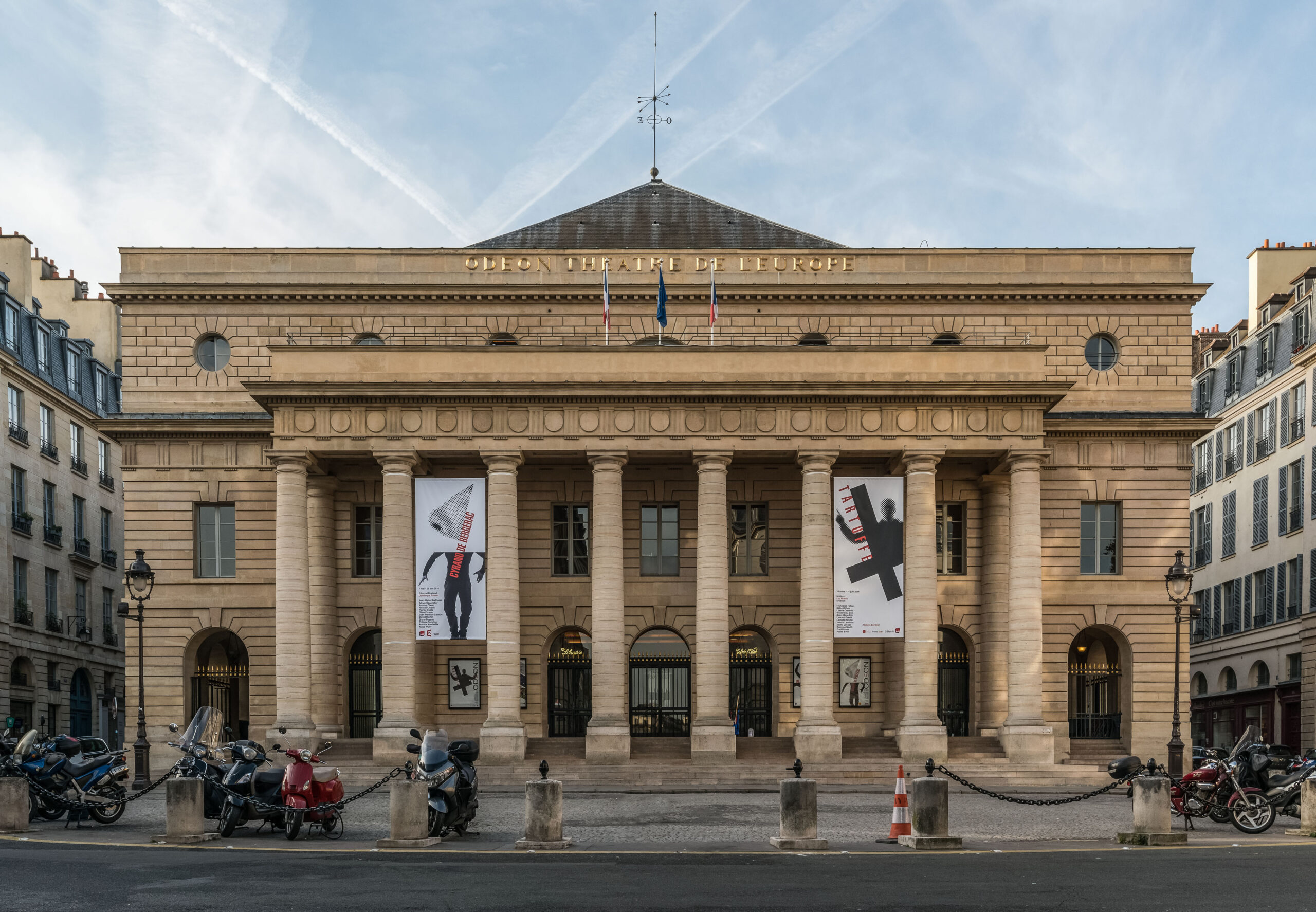
The Théâtre de l’Odéon in the 6th. Photo: Daniel Vorndran / DXR/ Wikimedia commons
Where to Eat
Any guide to where to eat in the 6th will include the iconic and neighboring literary cafes Café de Flore and Les Deux Magots. These days, these are mostly tourist spots, but are solid options for a simple café or classic chocolat chaud.
Moving into heartier fare, the Avant Comptoir has several reliable restaurants in the 6th: Terre, Mer, and Marché. I had a very good meal at Mer this summer, made only better by the server who had a great sense of humor. The Marché location is located in the Marché Saint-Germain building, which is also worth going into as it has food stalls and more places to eat.
If you are looking for oysters, you’ll find plenty in the 6th. Oyster spots include Huiterie Regis, Opium La Cabane, and Huguette Bistrot de la Mer.
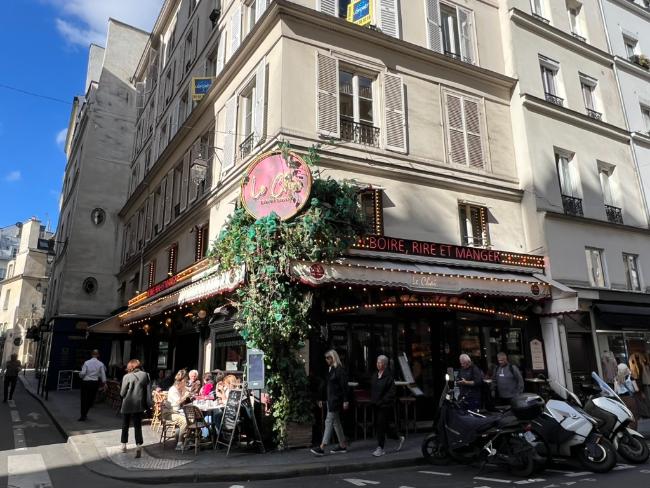
Le Chai. Photo: Elizabeth Cummings
Two other restaurants to note: Le Chai is a solid choice from breakfast through dinner with good food and a pleasant terrace, and is usually not as crowded as nearby places on the rue de Buci. Bistronomic spot Colvert, helmed by Top Chef contestant Arnaud Baptiste, is worth a visit and is listed in the Michelin guide. (Read the BP review here.)
View this post on Instagram
One final important stop is Maison Mulot, boulangerie-pâtisserie-traiteur. My favorite thing to get there is a piece of feuilleté jambon fromage with ham, cheese, pasty, and béchamel sauce layered together. If you are going to eat it there, make sure to have them heat it up.
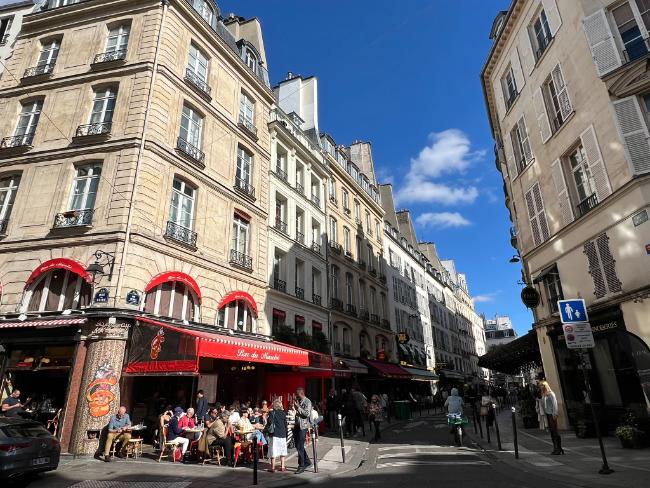
rue de buci. Photo: Elizabeth Cummings
Places to Drink / Nightlife
The rue de Buci has many cafes where you can get a drink late into the night. Around the corner on rue Danton, head to the Hôtel Dame des Arts for a rooftop view — note that it can be hard to get in here without a reservation.
View this post on Instagram
Also nearby is the champagne bar Bubble Bliss, opened in 2024, which aims to be an “embassy of champagne” and carries more than 300 types of bubbly.
Where to Shop
Clothing, mostly women’s
The 6th is THE spot for boutique shopping. There are all the big name brands, but also some smaller ones or even independent. You can find “Made in France” items at L’Habit Francais, and I enjoy visiting the Luxembourg gardens-adjacent outpost of the clothing brand Soeur – though it is a brand carried in department stores – this location is intimate yet comprehensive.
View this post on Instagram
The classic French brand from Provence, Soulieado, is located on the south side of the Marché Saint-Germain building. They have beautiful scarves that make a great gift!
On rue Madame to the west of the Luxembourg Gardens, I came across the women’s clothing store Charlotte Bialas one day while heading to Marin Montagut (where you can buy illustrated decorative objects that make lovely elevated souvenirs), and they have the most divine fabrics. This is a high end place, and the designer-owner has a real eye for tailoring, which she puts to use and on splendid vintage fabrics.
View this post on Instagram
If your luggage is too full after all this shopping, you could head over to Lipault on Boulevard Saint-Germain to buy another one! They have very light nylon models in a variety of colors.
A note on sales: If you have been to France a few times, you’ll know that les soldes happen in January and July, but more and more there are “ventes privées” sales – all you need to do is sign up for the store’s fidelity program to access the pricing, and don’t forget to do duty free.
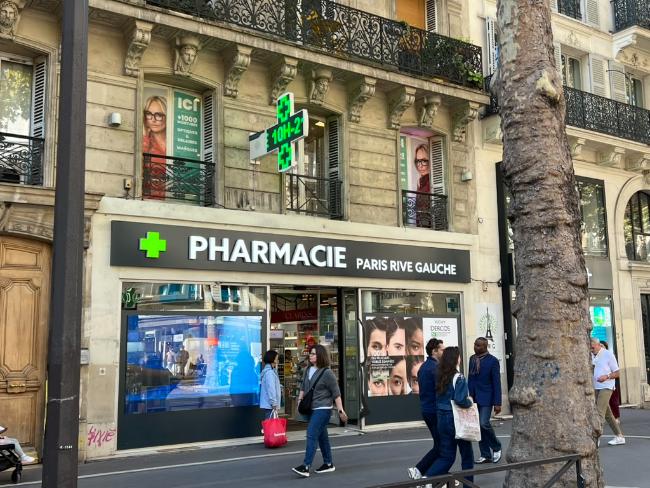
Pharmacie Rive Gauche (formerly Pharmacie Bader). Photo: Elizabeth Cummings
Cosmetics
At the top of many peoples’ shopping list on a trip to France is cosmetics and skin care. While most people go to CityPharma, which can be unbearable, I shop at Pharmacie Rive Gauche (formerly named Pharmacie Bader), which has a full selection of all the main French skincare brands, and a few lesser known brands like Saint-Gervais Mont Blanc and Le Cible. The prices are good, the shop assistants are very knowledgeable, and you don’t have to worry about the massive crowds at CityPharma.
Lead photo credit : Jardin du Luxembourg. Photo credit: Dinkum/ Wikimedia Commons
Related Articles