
Explore Montmartre Cemetery

- SUBSCRIBE
- ALREADY SUBSCRIBED?
BECOME A BONJOUR PARIS MEMBER
Gain full access to our collection of over 5,000 articles and bring the City of Light into your life. Just 80 USD per year.
Find out why you should become a member here.
Sign in
Fill in your credentials below.
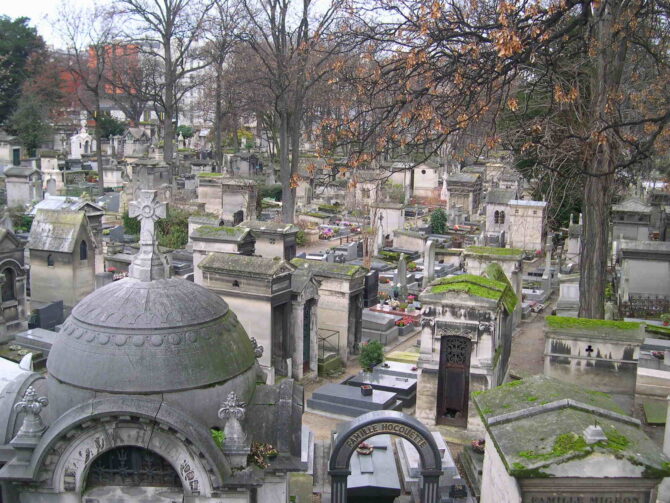
The air is crisp, and the summer sun has faded behind the gray Parisian sky. Autumn is in full swing, presenting the perfect opportunity to explore Paris’s gardens and green spaces. With Halloween approaching, Montmartre Cemetery in the 18th arrondissement is one of the best places to experience the colors of fall while also celebrating spooky season.
Celebrities in Montmartre Cemetery
There are four main cemeteries in Paris and 21 other “Parisian” cemeteries located in Paris and in the suburbs just outside of the city. The four principal cemeteries follow the points of the compass, with Montmartre to the north, Montparnasse to the south, Père Lachaise to the east, and Passy to the west. Cimetière de Montmartre was opened in 1825 and has its fair share of celebrities, including:
- Adolphe Sax, inventor of the saxophone and other instruments
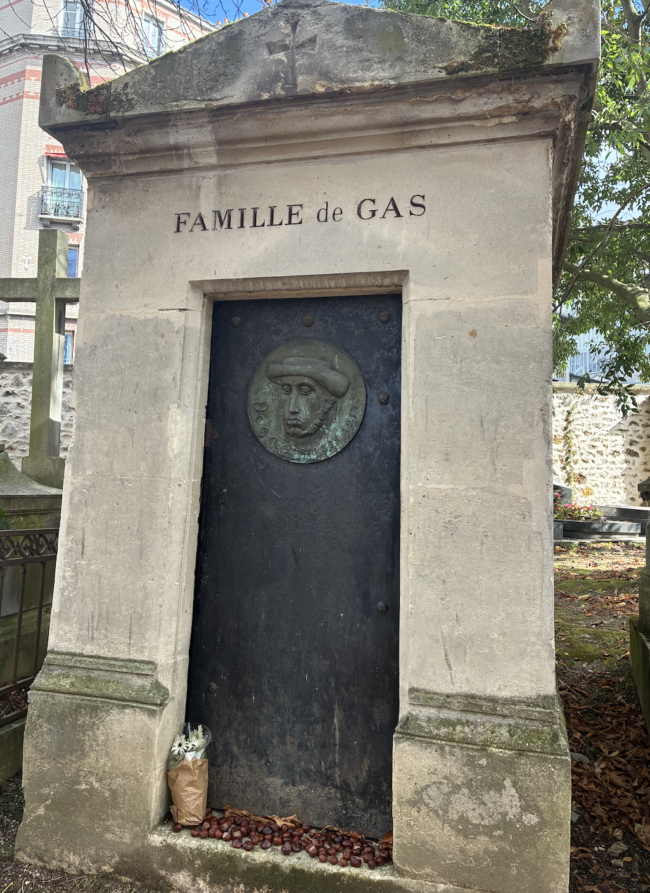
The tomb of Edgar Degas. Photo: Jill Amari
Dalida’s tomb is undoubtedly one of my personal favorites to visit. The unique design, along with the fact that people still leave flowers on her grave, make it a picturesque tribute to the singer. Located more centrally, the gorgeous gothic chapel of Countess Maria Potocka, born Princess Soltikoff in Saint Petersburg, always catches my eye and overshadows the far less noteworthy Degas chapel nearby. Another favorite spot is the memorial garden, which offers a burst of color for wanderers along Avenue de Montmorency.
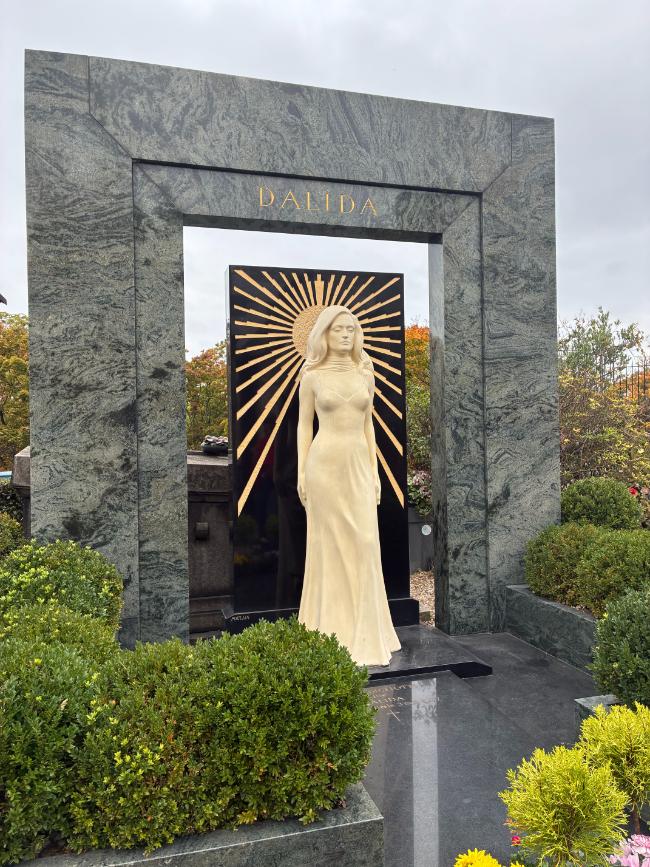
The tomb of Dalida in Montmartre Cemetery. Photo: Jill Amari
History of Montmartre Cemetery
The cemetery’s early history isn’t illustrious: Parisians were no longer allowed to be buried in intracity cemeteries due to health concerns, so much of the deceased population was instead crowded into an old funerary enclosure in the north, called the “Champ du repos” or “Field of rest.” Opened since 1798 (before Montmartre became part of Paris), the enclosure was originally a mass grave for victims who had died during French Revolution riots. The enclosure quickly deteriorated due to overpopulation, as well as grave looters. This decline continued until major renovations took place during the Restoration, allowing the new and larger Montmartre Cemetery to open on January 1, 1825. Since 1888, the blue Caulaincourt bridge has also extended over part of the cemetery, sadly leaving some tombs forever hidden in shadow. The cemetery is now protected as a historic monument and has over 20,000 tombs.
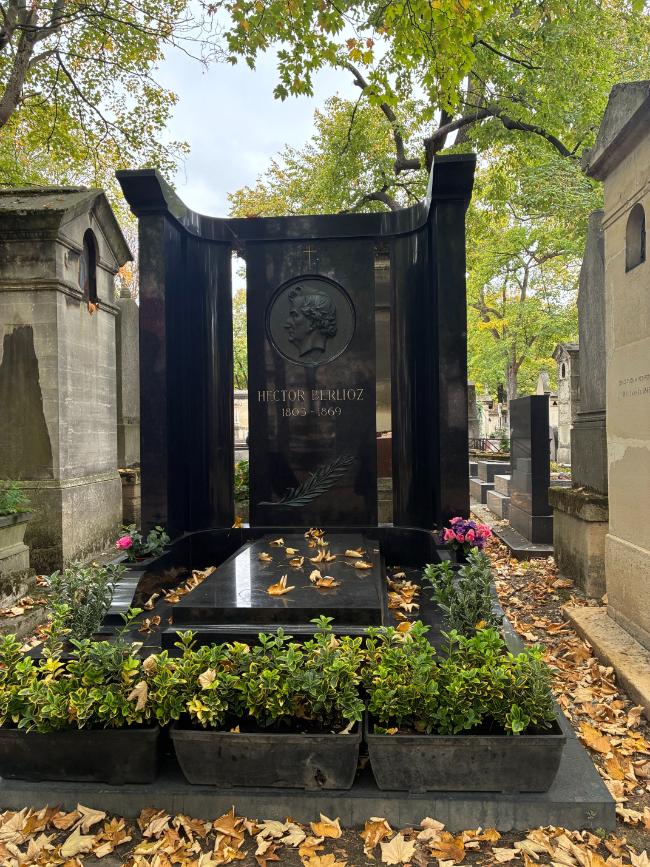
Hector Berlioz’s tomb in Montmartre Cemetery. Photo: Jill Amari
Exploring the Cemetery
With nearly 800 trees, Montmartre Cemetery offers exquisite fall foliage, as well as an impeccable “spooky” atmosphere. As a bonus, the cemetery is known for the many “free cats” who live there. These feline friends are generally comfortable being around humans, as they are taken care of by volunteers from the association L’École du Chats. Since all the cats are vaccinated and have medical interventions when necessary, they are perfectly safe to approach — though they rarely allow strangers to get too close. Look for the cat shelters propped up underneath trees or behind graves, and you may just catch a glimpse of a cat lounging in the sun or darting between the tombstones.
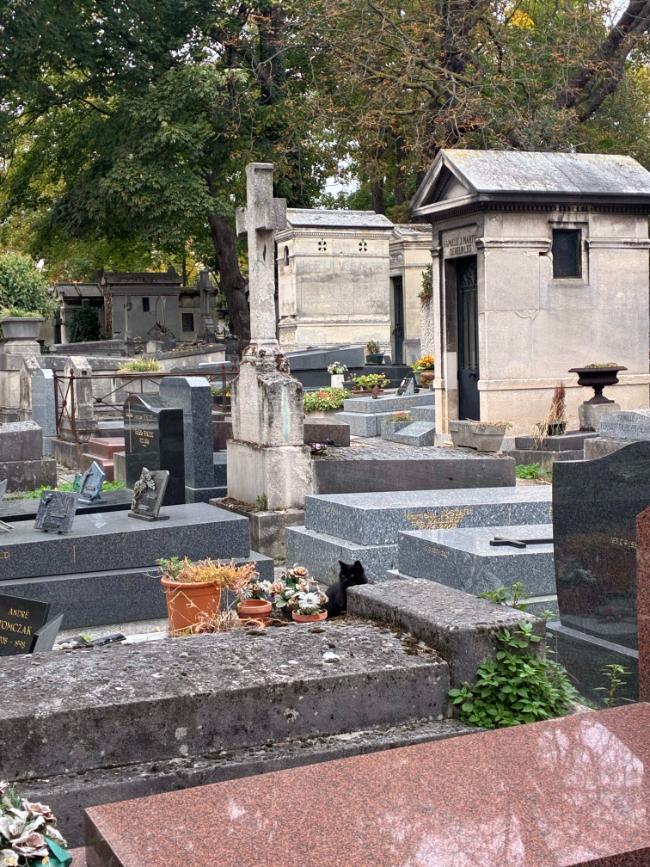
Cats live in Montmartre Cemetery. Photo: Jill Amari
Montmartre Cemetery Today
Montmartre Cemetery is still active and regularly has funeral ceremonies. As a quiet place for contemplation and respect, certain activities aren’t permitted, such as jogging, scavenger hunts, and picnics. To protect the cemetery’s cats, animals are not allowed, and visitors are asked not to feed the cats as they are fed on a regular basis.
The cemetery is open to the public every day, and restrooms are available for free. Hours vary depending on the season, and the cemetery is closed during inclement weather (especially windy weather, due to the large number of trees). Maps listing the most famous tombs are available at the main entrance at 20 Avenue Rachel, and digital maps are also available online, including ones in English and Spanish and for folks with reduced mobility. In addition, the website offers a map specifically listing the tombs of notable women for a unique, self-guided tour. If you’re visiting the cemetery for the first time, using a map is highly recommended! Montmartre Cemetery is known as “Little Père Lachaise” and is just as easy to get lost in.
If you’re up for an adventure this spooky season, or just looking for a way to enjoy October in Paris, stroll around Montmartre Cemetery for an hour or two — it’s an oasis of green, calm, and cats in the heart of one of Paris’s busiest neighborhoods.
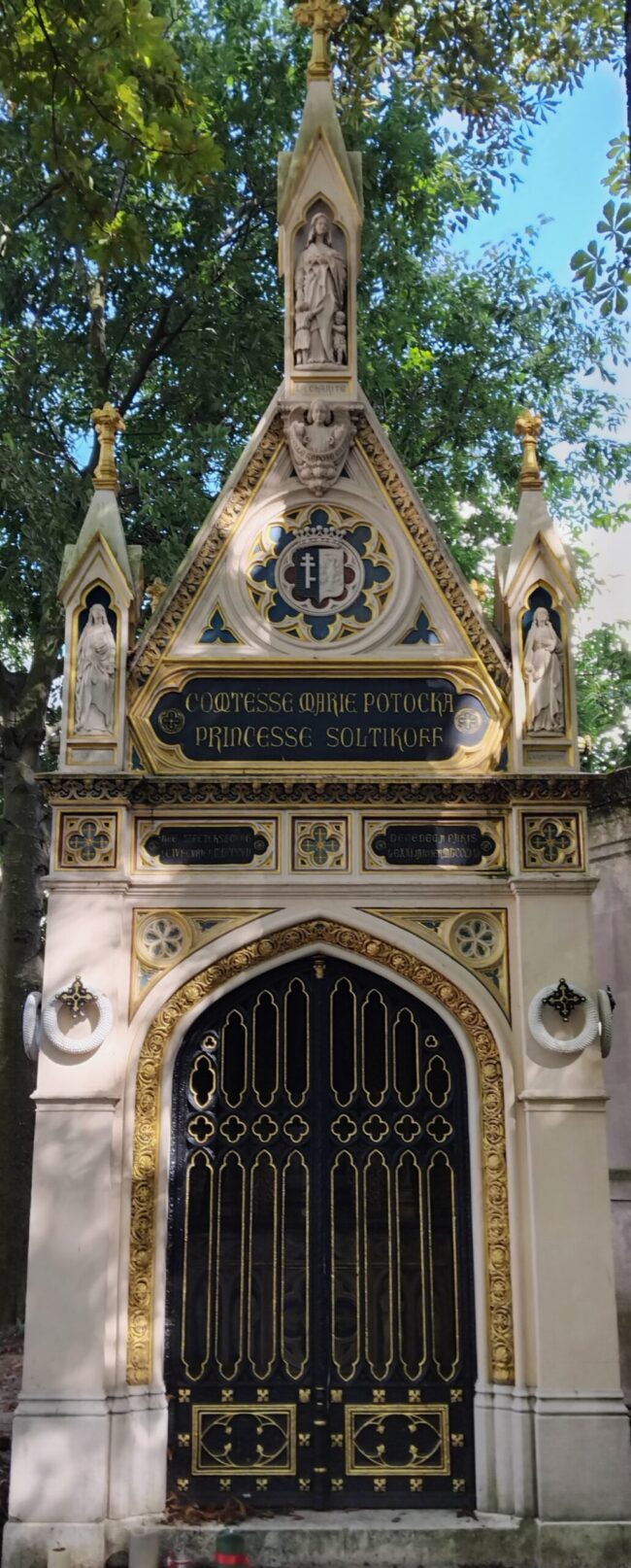
Chapelle Potocka in Montmartre Cemetery. Photo: MOSSOT / Wikimedia commons
Lead photo credit : Montmartre Cemetery. Photo: Elisabetta Cipolla/ Public domain
More in cats in Paris, Dalida, Montmartre, Paris cemetery
Related Articles


By Jill Amari