The Smart Side of Paris: A Philosophical Walk along Rue Réaumur
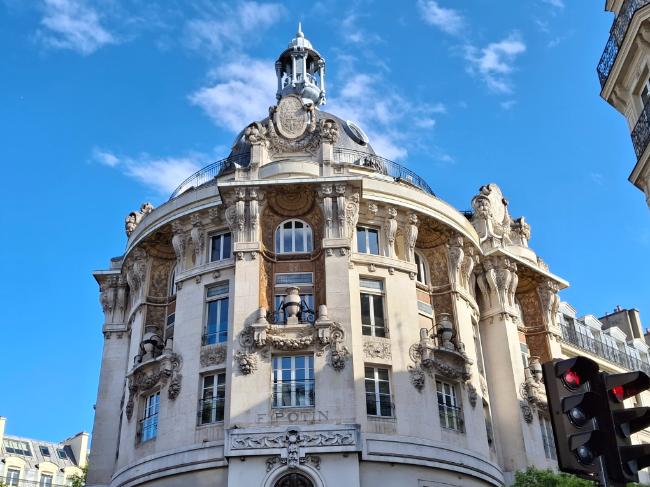
Philosophy professor John Eigenauer shares fascinating and unknown histories of Paris in “The Smart Side of Paris” series
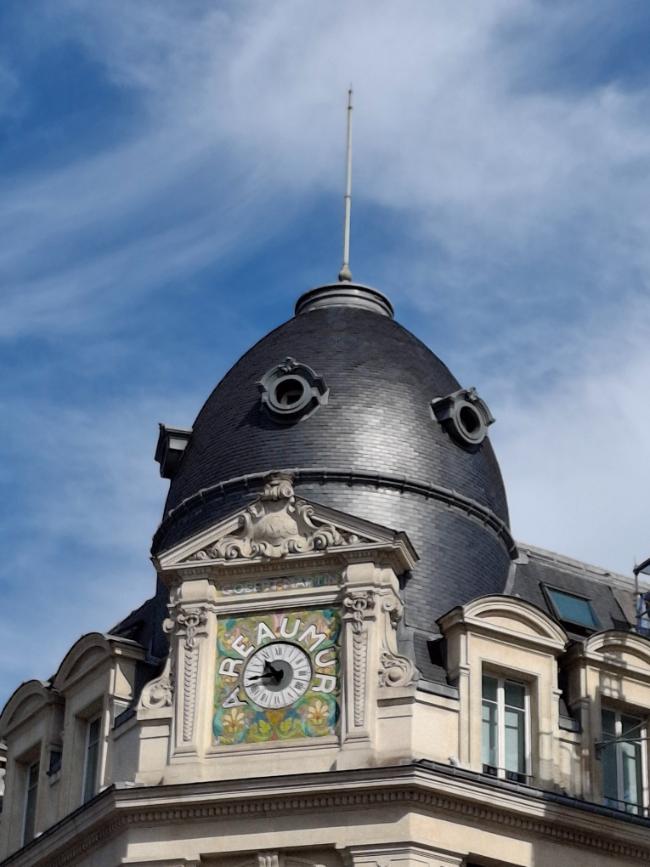
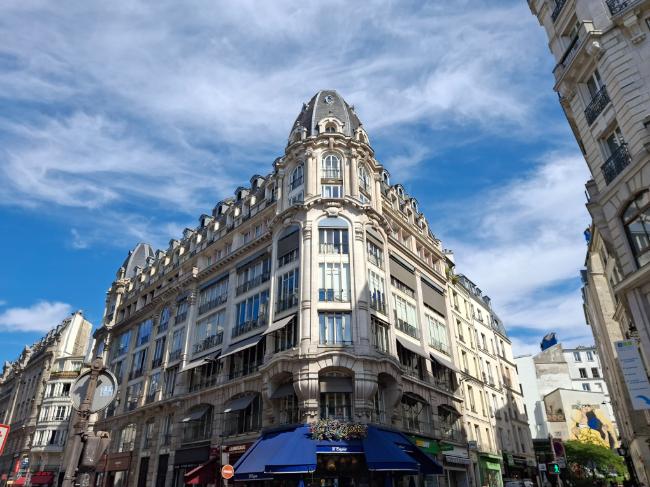
I love to walk rue Réaumur in Paris. The elegant buildings, the magnificent clocks (one of which bears Réaumur’s name), the lovely garrets, and the Bourse de Commerce invite your eyes to revel in a visual banquet. Rue Réaumur is grandiose: the clocks are huge, the garrets capacious, the Roman columns of the Bourse de Commerce, imposing. Everything invites you to look up and admire the expansive.
Rue Réaumur. Photo: John Eigenauer
And yet, René Antoine Ferchault de Réaumur (1683-1757), for whom the street is named, spent his life looking down, peering into microscopes, relentlessly interrogating the lives of insects. Astonished by the immense complexity of the microcosmic world, and marveling at the intricate behavior of insects of every kind, he devoted the better part of his life to understanding insects, their behaviors, and their life processes. A leading member of L’Académie Française, he published, beginning in 1734, a series of books titled Mémoires pour servir à l’histoire des insectes (Memoires to serve as a history of insects) that were to make him famous. He certainly knew more about insects than any living human.
And yet, when a letter landed on his desk from an unknown amateur scientist, it showed Réaumur that there was still much to learn.
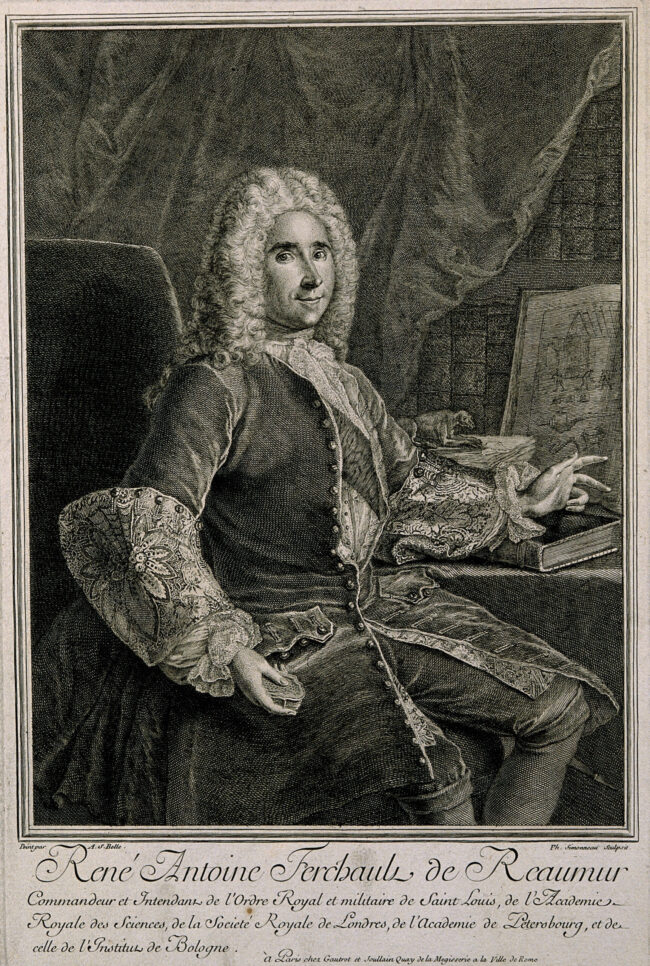
René-Antoine Ferchault de Réaumur. Gravure par Ph. Simonneau, d’après une peinture par A. S. Belle
In the summer of 1740, a young Swiss tutor named Abraham Trembley, living near The Hague, stumbled upon a most perplexing plant. It looked like a plant, but it retreated into itself when touched and even seemed mobile. Fascinated by this miniscule freshwater organism, Trembley assiduously collected samples and observed them. He found that the curious creature possessed descending extensions that looked like roots, but that it used them as legs to move. Was this a plant or an animal?
Wanting to see its inner structure, Trembley cut the tiny thing in half. He wrote that “I expected to see the cut polyps die.” Instead, he discovered that within half a day that two full “animals” had formed, one from each half. He tried this again and again and found that no matter how many pieces he cut the tiny polyp into, that same number formed into a complete polyp.
Still unable to resolve the question of whether it was a plant or an animal, Trembley investigated how it took in nourishment. To his absolute astonishment, he saw a polyp reach out and grab a tiny eel, and guide it to its nearly invisible mouth at the center of its body. He was nearly convinced that this was an animal.
Garret, Rue Réaumur. Photo: John Eigenauer
Not wishing to rush to conclusions, Trembley wrote, in December of 1740, to Réaumur, one of the greatest naturalists of the age. Trembley explained his findings, which he admitted to seeming remarkable to the point of being unbelievable. Réaumur wrote back, intrigued by the young scientist’s findings and asking for samples. When they eventually reached Paris in March of 1741, Réaumur demonstrated Trembley’s findings to “the whole Académie des sciences in Paris” who “attended cutting experiments performed on the polyps,” to the king, and “the intellectual circles of Paris.”
The journal of the French Academy of Sciences reported that “The story of the Phoenix who is reborn from his ashes… offers nothing more marvelous…. From each portion of an animal cut into 2, 3, 4, 10, 20, 30, 40 parts… just as many complete animals are reborn, similar to the first.” Réaumur himself confessed that “… when I saw for the first time two polyps gradually form from one that I had cut in two, I found it hard to believe my eyes; this is a fact that I cannot accustom myself to seeing, after having seen and re-seen it hundreds of times.” Not alone in his astonishment, Réaumur later reported that Parisians would talk about nothing except the polyp if they weren’t primarily obsessed with the ongoing war.
It is certainly an exaggeration to describe all of Paris as speaking of nothing but the polyp. But the exaggeration reveals an effort to show just how important Trembley’s discovery was. It was so important, in fact, that in 1742, Réaumur published Trembley’s findings in the sixth volume of his monumental History of Insects, making the discovery more widely known.
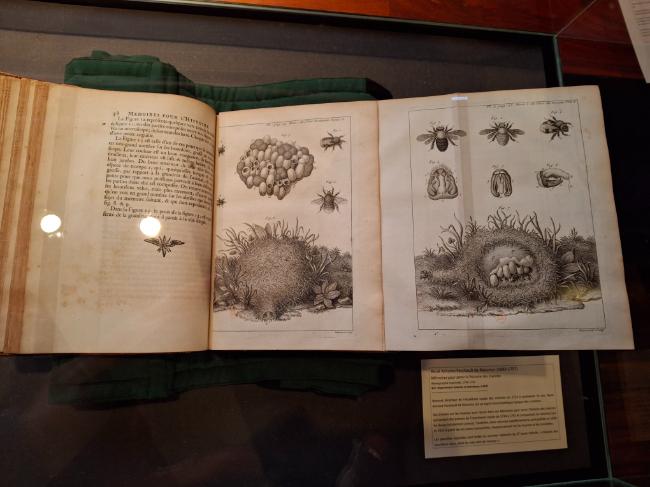
History of Insects. Photo: John Eigenauer
Réaumur initially hesitated to accept Trembley’s findings because “this implied that nature can directly generate complex organized living beings.” If nature alone can create a living being, what role does God play? For Réaumur, that role remained hidden from human understanding. But not at all hidden from the mind and power of the creator. His faith remained firm in the weakness of the human mind to fully comprehend the infinite powers of the creator.
This was not true for everyone. In an age in which people more readily realized the philosophical ramifications of scientific discoveries, Trembley’s polyp became a flashpoint for philosophical and theological debate that lasted for decades. Rousseau called the polyp’s mysterious regenerative powers one of the “leading problems of science and philosophy.” Ever skeptical, Voltaire watched carefully “a vase full of polyps” to see if he could detect any signs of their animality; he did not. Diderot dedicated an article on Polyps for L’Encyclopédie; and he wondered, in D’Alembert’s Dream, if there might be “human polyps inhabiting Jupiter and Saturn.”
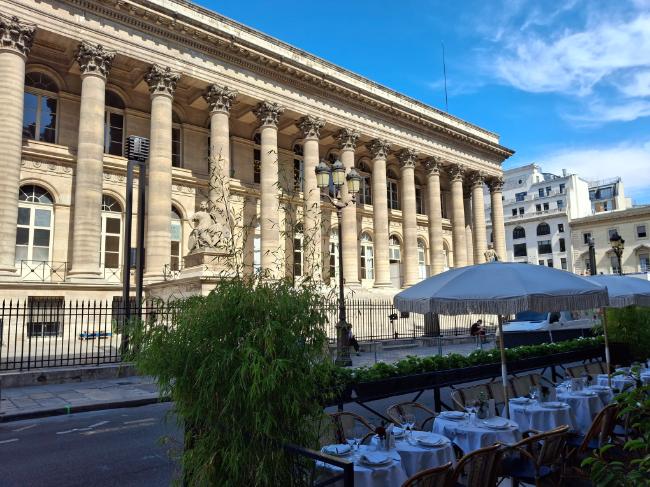
Bourse, Rue Réaumur. Photo: John Eigenauer
But no one seized the philosophical ramifications of Trembley’s polyp like the nearly forgotten Julien Offray de la Mettrie. A bold philosopher (and physician) who was unafraid of reasoning things through to their conclusion, La Mettrie recognized that if an animal could regenerate from parts, this implied that matter itself, without the aid of spirit or a divine being, was able to self-organize. He posited that matter itself may inhere in self-organizing properties. Matter that is naturally in motion could, according to La Mettrie, self-organize in such a way that “animated bodies will have all that is necessary to them in order to move, feel, [and] think…” Trembley’s polyp, it seems, had eliminated the need for God in creation.
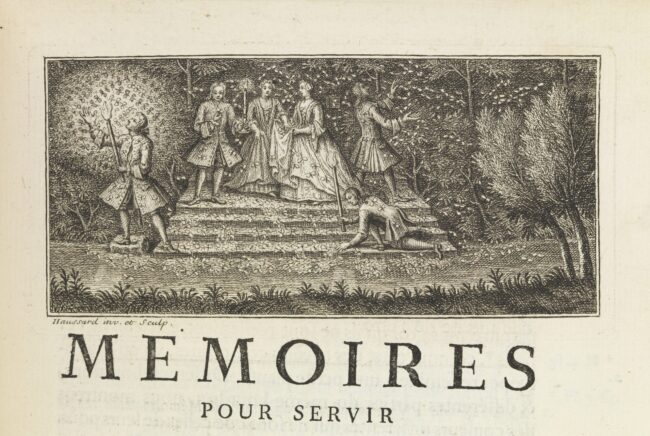
Mémoires pour servir à l’histoire des insectes (1742)
Not so for Réaumur, who, in the first volume of his History of Insects, writes,
“Natural history is the history of His works; there are no demonstrations of His existence more accessible to everyone than those it provides us.” The study of insects “makes them impossible to ignore as products of infinite power and wisdom,” since they clearly demonstrate God’s existence.
It was, indeed, a very philosophical age.
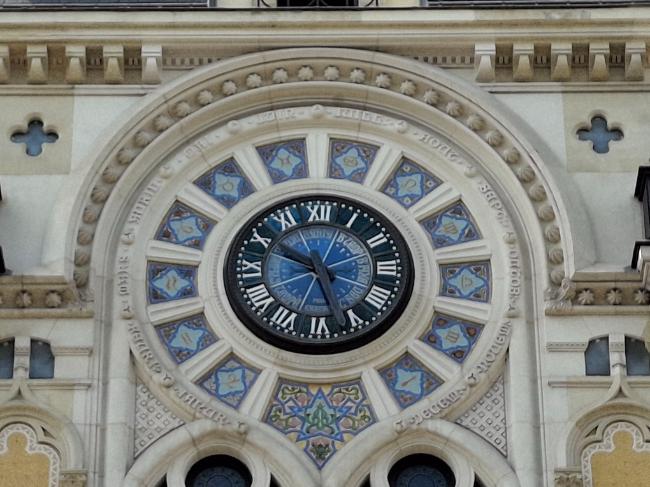
Rue Réaumur. Photo: John Eigenauer
Lead photo credit : A building on rue Réaumur. Photo: John Eigenauer
More in rue Réaumur, The smart side of Paris
Related Articles