
Simone Veil: Remembering the Holocaust
- SUBSCRIBE
- ALREADY SUBSCRIBED?
BECOME A BONJOUR PARIS MEMBER
Gain full access to our collection of over 5,000 articles and bring the City of Light into your life. Just 80 USD per year.
Find out why you should become a member here.
Sign in
Fill in your credentials below.
We shouldn’t let August 25th slip by unmarked. This year, for the 82nd anniversary of the liberation of Paris, there’ll be a number of ceremonies and, at the Hôtel de Ville, an outdoor screening of Diplomacy, the 2014 film which recounts events of the day Parisians got their city back at the end of World War II.
Another way to mark the occasion would be to visit the exhibition running at the Mémorial de la Shoah until October 15th, “Simone Veil: My Sisters and Me.” The photographs, documents, and interview transcripts focus not on Veil’s groundbreaking achievements as a politician and campaigner, but rather on her experience as a Holocaust survivor. Discovering how she and every member of her close-knit, Jewish family were, variously, arrested, interned, deported and murdered is a stark reminder of the suffering of the occupation years and, by extension, the significance of the liberation.
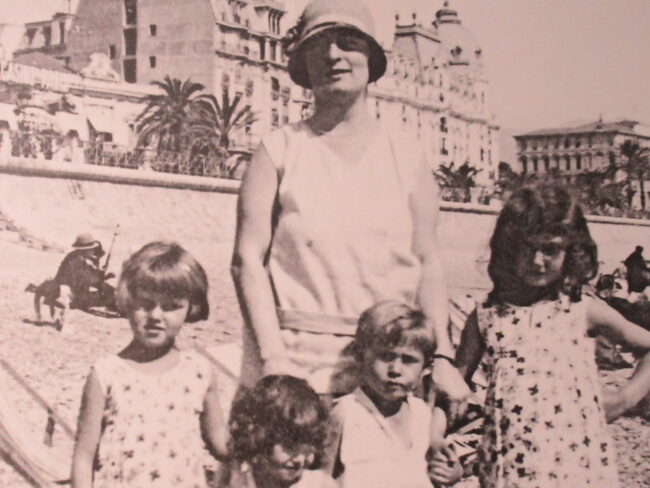
Simone Veil, childhood in Nice. Photographed at the exhibit by Marian Jones
The exhibition starts in the pre-war years, when André and Yvonne Jacob, both non-practicing Jews, were bringing up their four children in Nice. Moments of ordinary family happiness are captured in a snapshot of little Simone on a beach with her mother and three older siblings, in a letter written home from summer camp by 11 year-old Denise which ends “I kiss you millions and billions of times,” in Simone’s reminiscences as an adult that “Nous avons eu une belle enfance“ (“We had a lovely childhood”).
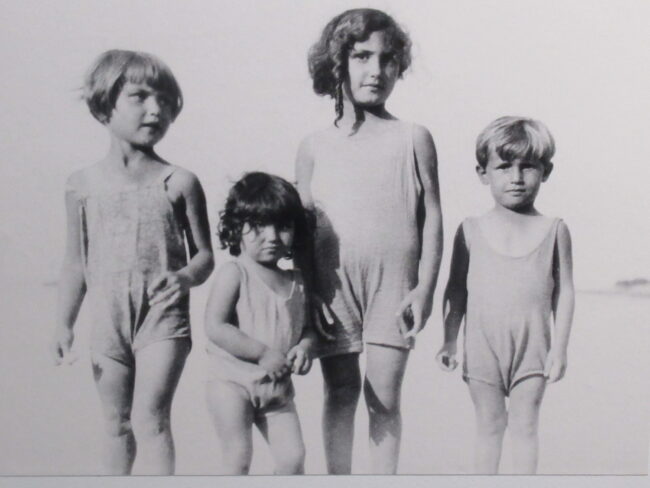
Simone Veil’s childhood in Nice. Photographed at the exhibit by Marian Jones
Next comes evidence of the gathering storm clouds. Under Marshall Pétain’s regime after France’s defeat in 1940, the persecution of the Jews began. Simone’s father, an architect who had trained at the École des Beaux Arts and had fought for France in World War I, was denied the right to practice his profession. Jews had to have the word Juif (Jew) stamped on their ID cards, then they had to wear a yellow star on their clothing. Simone, just a young teenager at this point, recalled protesting about this and being told it would put the family in danger if they didn’t comply. So they did, but as she wrote later, “it was the beginning of a trap.”
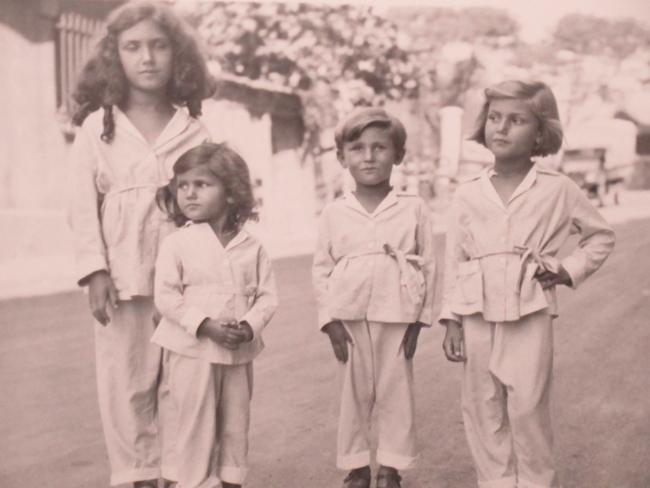
Simone Veil, childhood in Nice. Photographed at the exhibit by Marian Jones
In the summer of 1943, things got much worse. The Italians had been the occupying force in Nice, but after the fall of Mussolini they left and were replaced by the Germans. Letters Simone wrote over the next few months tell of multiple air raids, juxtaposed with descriptions of attempts to carry on as normally as they could – a visit to a pâtisserie, a quarrel with a boyfriend. But then came the day when she was stopped by Gestapo officers who questioned her papers, took her to their headquarters at the Hotel Excelsior, from where she, her mother, brother Jean and sister Milou were all sent to Drancy, an internment camp just outside Paris.
Simone remembered that as they boarded the train to Drancy, an SS guard shouted that if anyone tried to escape, everyone in the carriage would be executed. From Drancy, where they were separated from her brother, the three women were sent to Auschwitz. Forced onto an airless train, so crowded that no one could stretch out a limb, they had nothing to drink and just a bucket for a toilet. They had no idea where they were going or how long the journey would take. Simone’s description of arriving at Auschwitz two days later is terrifying. It was the middle of the night and amid bright searchlights and barking dogs were SS officers, shouting “Raus, raus” (get out) and ordering people into lines. By that point, she said, “we were bewildered, broken, aching all over.”
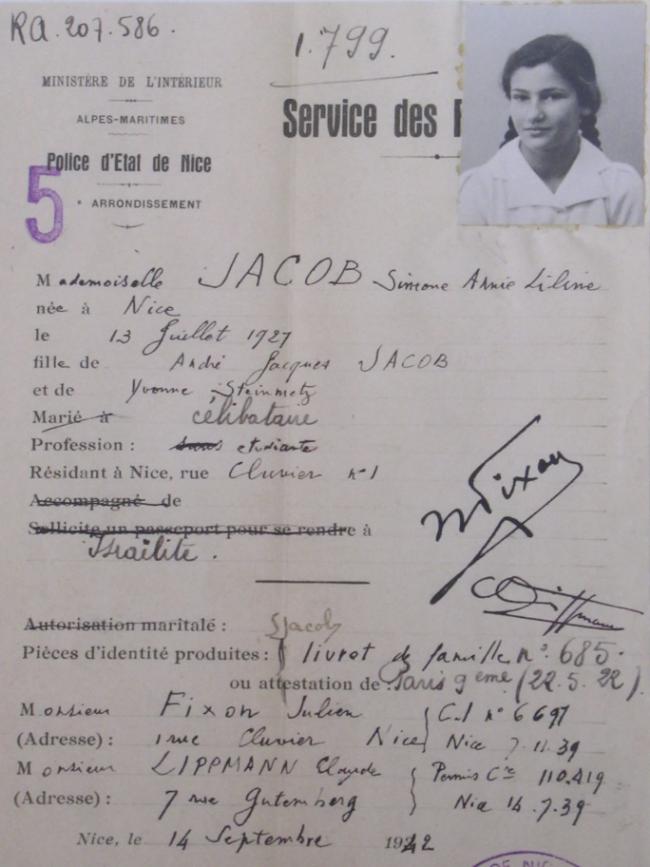
Simone Veil’s ID card. Photographed at the exhibit by Marian Jones
The dehumanizing treatment in Auschwitz is described unsparingly. From the numbers tattooed on the prisoners’ arms on arrival, to the shorn hair and forced wearing of vermin-infested rags, from the watery soup dispensed in rusty tins with no spoon to the fights which broke out over a crust of stale bread, every aspect of daily life was a degradation. Worse still was the trauma of those whose children had been snatched away on arrival, never to be seen again, and the careless cruelty of the reply to anyone who asked where their loved ones had gone: “Look at the smoke over there. That’s all that’s left of them.”
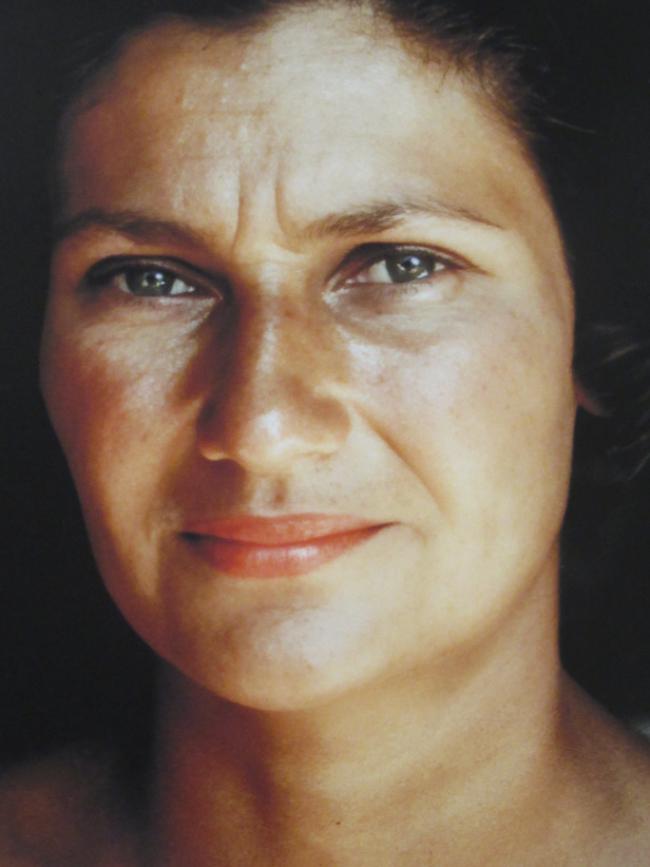
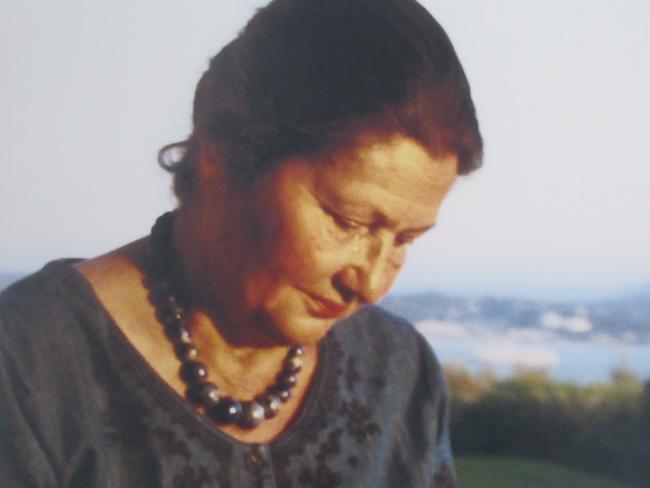
Simone Veil in later life. Photo taken at the exhibition by Marian Jones
Simone, her mother and sister Milou were moved twice more. In April 1945, she and Milou were liberated from Bergen-Belsen, but by this time the family was destroyed. Her mother Yvonne had died of typhoid just a month before the camp’s liberation and the girls were later to learn that neither their brother nor their father had survived the war. Both had died in 1944. The exact facts were never established, but it’s thought that Jean perished in a concentration camp and their father André during a deportation journey from Drancy to the Baltic.
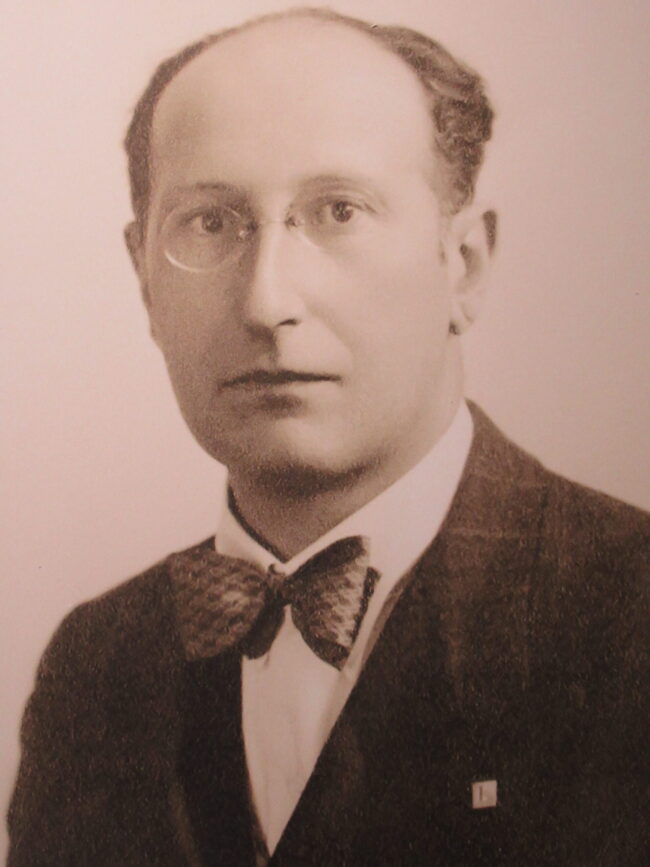
Simone Veil’s father. Photographed at the exhibit by Marian Jones
Of the third sister, Denise, there is a different story. Early in the war she began helping the Resistance, transcribing messages from Radio London and eventually becoming a full-time Résistante in Lyon, distributing the underground papers Libération and Combat, working as a “liaison agent” and helping to co-ordinate links with allies abroad. It was this last activity which led to her downfall. She was caught returning from a mission to pick up supplies parachuted in by the allies and immediately incriminated by the messages she was found to be carrying. Arrested, she was taken to Ravensbrück, then Mauthausen where she remained a prisoner until the liberation.
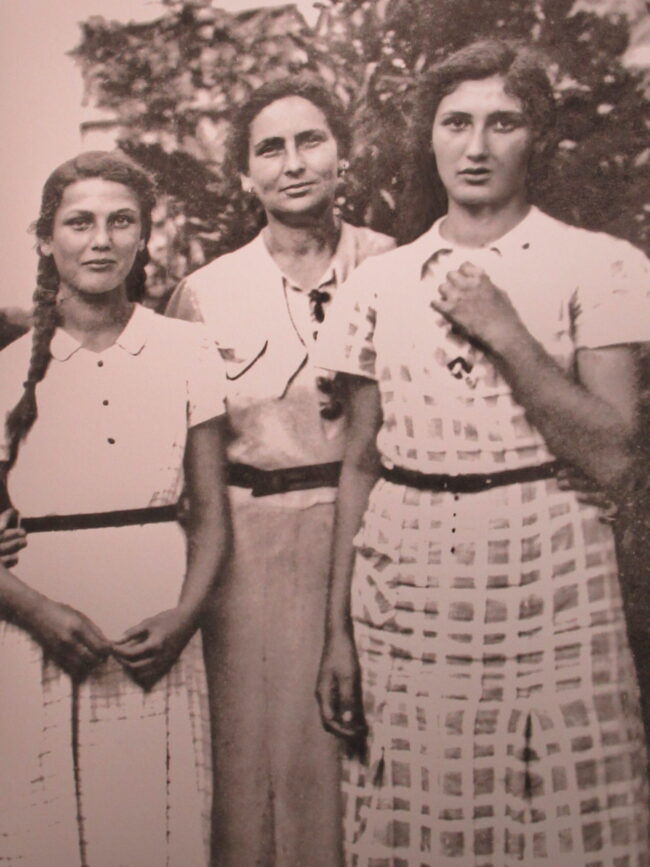
Simone Veil, family photo. Photographed at the exhibit by Marian Jones
Denise is quoted a number of times in the exhibition. One memory centers on the family celebrations for her sister Milou’s 21st birthday on March 18th, 1944. It was as normal a little gathering as could be managed in wartime and she recalled it fondly. But it turned out to be the last time the Jacob family met together because just days later her sisters, mother and brother were all arrested by the Gestapo. She summed up the difficulties and the danger faced by the resistance by explaining succinctly, “I always thought it took only one person to denounce 50, but it took 50 to save just one.”
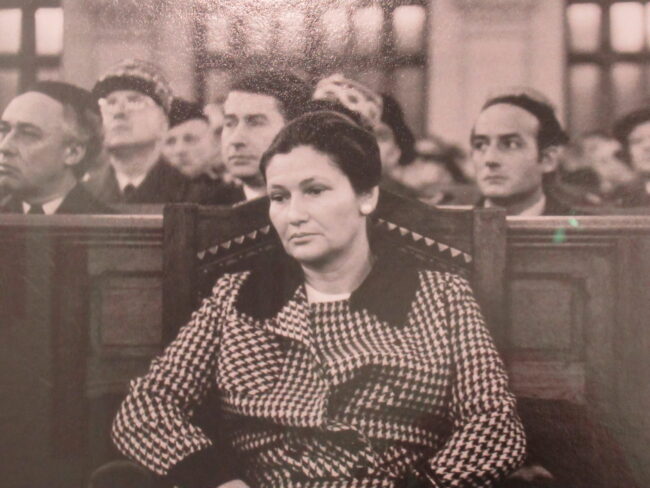
Simone Veil as a politician. Photographed at the exhibit by Marian Jones
Most people visiting the exhibition will know something of Simone Veil’s stellar career as politician and social campaigner. She was, for example, a prominent minister in the French government and also the first female President of the European Parliament. On her death in 2017 she was interred in the Panthéon, an honor granted to only the most esteemed French citizens. Throughout her long career she fought for social justice, campaigning for prison reforms when she was a magistrate and for the decriminalization of abortion when she was Minister of Health in the 1970s. It is often remarked that her life-long work for such causes was rooted in compassion, a quality developed from the suffering she, her family, and so many millions of others endured during the Holocaust.
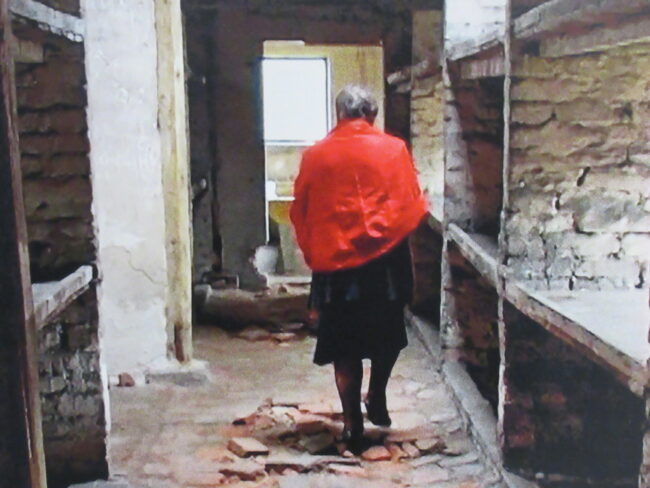
Simone Veil visiting a concentration camp in later life. Photo taken at the exhibition by Marian Jones
The exhibition is primarily a family tale, but its significance is universal. The precise focus on a handful of named individuals is a reminder of what the holocaust really meant in human terms in a way that no history textbook can ever be. It’s a lesson for us and for future generations and an especially fitting one in the week when we remember the liberation of Paris.
DETAILS
Simone Veil: My Sisters and I
Shoah Memorial, 17, Rue Geoffroy l’Asnier, 4th arrondissement
Until October 15th, 2026
Admission free
Nearest metro: Pont Marie (Line 7) or Saint Paul (Line 1)
Lead photo credit : Simone Veil in later life. Photo taken at the exhibition by Marian Jones
More in Mémorial de la Shoah, Simone Veil
Related Articles

By Marian Jones