
In Search of Black Paris
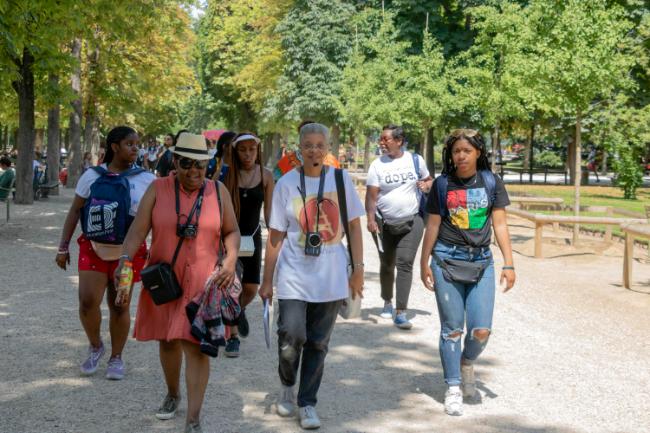
It’s clear from the range of options on the Entrée to Black Paris website that there are many ways to investigate the Black experience in Paris. On their Black Paris Pilgrimage you can tour the Père Lachaise cemetery in the company of a guide who’ll tell you the stories of black writers and musicians buried there. Book Black Images in European Art if you’d like to seek out African art in the Louvre or the Musée du Quai Branly in the company of an expert guide. Or do as I did and join a tour called Black History in and around the Luxembourg Gardens.
Tom Reeves, co-founder with his wife, Dr Monique Y. Wells, of Entrée to Black Paris, met us outside the Petit Journal Jazz Club just near the Luxembourg Gardens. He began the tour by telling us about the US Army Band sent to France in 1917 who traveled the country, playing not just military music, but also ragtime and – brand new to Parisian listeners – jazz. This exciting new form of American culture was warmly greeted in France and, Tom explained, some of the Black members of the band wrote home to say how well they were treated in France and how they hadn’t encountered the same racist attitudes as at home in the US. Of course that’s not the whole story, as the tales which unfolded on the tour make clear.
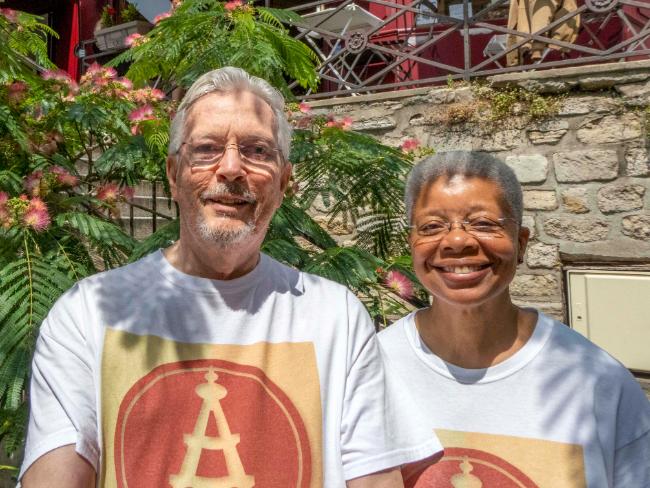
Tom and Monique at Chez Lena et Mimile. Photo credit: Entrée to Black Paris
As we looked over towards the Panthéon we heard the story of how Alexandre Dumas’ body was exhumed in 2002 and reburied in the Pantheon in a ceremony featuring actors dressed as musketeers and the words “All for one and one for all” on the pall covering his coffin. Tom also explained how the life of Felix Éboué, also buried there, illustrated aspects of France’s colonial history. Éboué was born in French Guyana and came to Paris on a scholarship before eventually becoming Governor of Chad and playing a key role alongside General de Gaulle in the formation of the French Free Forces. Such was the admiration for him that de Gaulle himself led the ceremony in 1949 when Éboué was interred in the Pantheon.
We heard too about others honored there even though their remains are elsewhere and although I knew the outline of their stories, I learned many intriguing extra details. I hadn’t realized that the popular poet Aimé Césaire had also been such a political force, representing Martinique at the Assemblée Nationale for nearly half a century and founding the Black Pride Movement Négritude. Some accounts underlined the complexity of the Black experience in Paris. Tom told us how the author Richard Wright had written, shortly after his arrival after World War II, that “It is so good to be somewhere where your color is the least important thing about you,” and yet the outbreak of the Algerian war a decade later caused him to rethink the subjects of race and colonialism in France.

Afrique, Eugène Delaplanche. Photo credit: Entrée to Black Paris
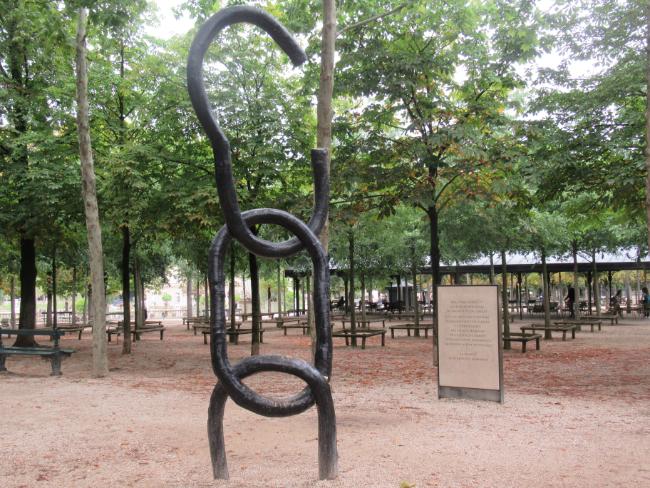
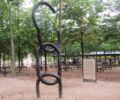
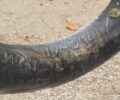
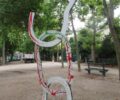
It was fitting to end our walk at the sculpture called Le Cri, l’Écrit, a bronze work consisting of three interconnected rings, the top one being broken open. It was installed on May 10th, 2007, the second National Day of Reflection on France’s history of slavery, the slave trade, and their abolition. Tom encouraged us to look carefully at its symbols and written text, prompting us to think about its meaning. The Entrée to Black Paris website has a post about this sculpture which you can read here.
Tom’s walk made a fascinating introduction to the topic of Black Paris and answered many questions. Yet, a glance at the Entrée to Black Paris website makes clear that they have much else to offer and in order to find out a little more, I put a number of questions to Tom and Monique. Here are their answers.
Can you recommend a book for readers keen to explore the Africa-American experience in Paris, or in France more generally?
Monique: Because I am always looking for reliable sources of historical information about Black American women in Paris, I am recommending two books that fit this description. From Harlem to Paris by Michel Fabre provides a fantastic review of Black American writers in France from 1840-1980. It includes a chapter that focuses on two women writers – Jessie Fawcett and Gwendolyn Brooks. And Bricktop’s Paris – African American Women in Paris between the Two World Wars by T. Denean Sharpley-Whiting is unparalleled in its exploration of the lives of Black female writers, artists, performers, and business owners who ventured to Paris between 1918 and 1939.
Tom: Exiled in Paris by James Campbell is a fascinating account of various creative personalities who came to Paris after World War II, including African American writers Richard Wright and James Baldwin. The book offers a vivid portrait of Left Bank Paris as a haven for Black American writers and other literary exiles.
Do you have a favorite artwork or monument which says something about the Black experience in Paris ?
Monique: My favorite piece of art is L’Afrique by Eugène Delaplanche. It sits regally on the landing in front of the Musée d’Orsay. It was one of six sculptures commissioned for the 1878 Universal Exhibition that took place at the Palais de Trocadéro. I begin my Musée d’Orsay visit, Black Images and Contemporary Artists at the Musée d’Orsay, at this sculpture.
Tom: I like the Fontaine de l’Observatoire, also known as the Fontaine des Quatre-Parties-du-Monde, by Jean-Baptiste Carpeaux. Installed south of the Luxembourg Garden in 1874, the sculpture depicts four female allegorical figures representing the continents of the world – Africa, America, Europe, and Asia – supporting a celestial sphere with a turning motion. There is a broken chain at the ankle of the African figure which is a reference to the abolition of slavery.
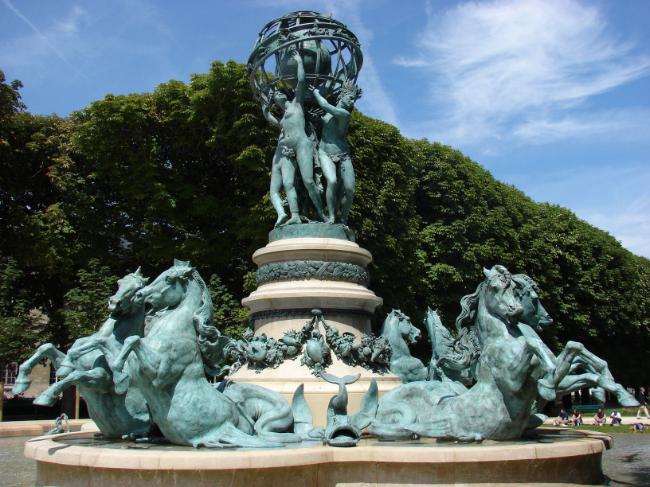
Fontaine des Quatre-Parties-du-Monde, by Jean-Baptiste Carpeaux, in the Jardin des grands Explorateurs. Credit: Entrée to Black Paris
Do you have a favorite Black-owned restaurant in Paris? What do you like to eat there?
Monique: Le Thiossane, at 13, rue du Cardinal Lemoine in the 5th arrondissement. My favorite dish there is Yassa Poulet. I also love their soft beverages – bissap, bouyé, and gingembre.
Tom: Ditto, except that I like Capitaine braisé, a whole braised fish.
Have you learned new things from the people you take on your walking tours?
Monique: Yes! I provided a brief, customized visit to the Luxembourg Garden for a Loïs Mailou Jones scholar and learned that Jones had been discouraged from painting landscapes by Alain Locke because these works did not obviously align with the mission of the Harlem Renaissance to promote Black culture.
Tom: A client’s question about whether slavery existed on mainland France under the Old Regime sent me on a quest to find the answer. I learned that under the Edict of 1716 enslaved people could be brought from the colonies to France, accompanied by their wealthy owners to work in their households as servants, to receive training in specific trades, or to receive instruction in Catholicism.
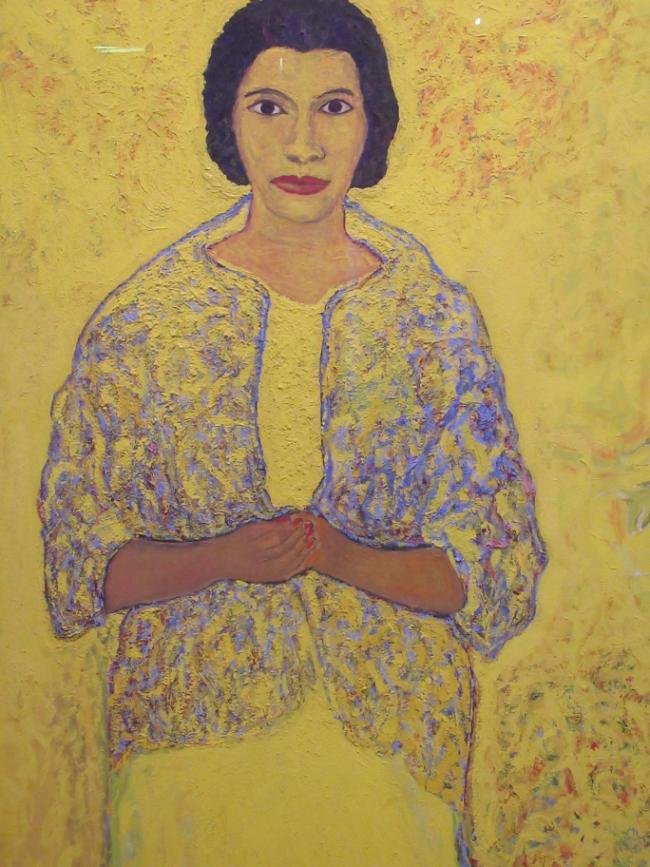
Beauford Delaney portrait of Marian Anderson
What plans do you have for Entrée to Black Paris in the future?
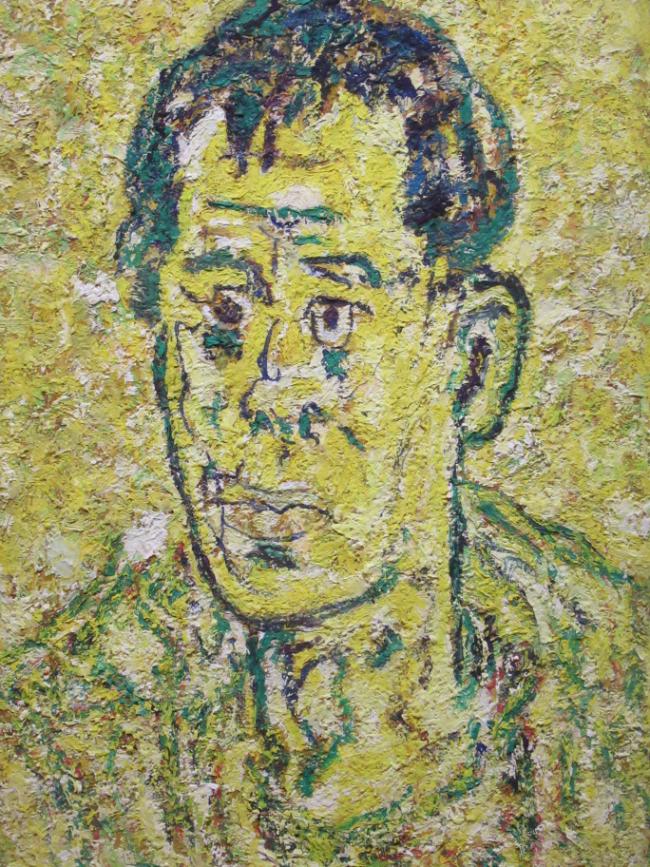
Monique: I recently launched a professional speaking career. I present keynotes and other presentations on Black Paris with a focus on the African-American experience. My favorite topic in this area is the life and art of Beauford Delaney, a brilliant figurative and abstract expressionist painter who was a mentor of James Baldwin.
Tom: We have an extensive library on the history of African Americans in Paris. I plan to read or reread as many of these books as I can and publish a summary or a review of each on our website.
My thanks to both Monique and Tom for their thought-provoking answers. Their Entrée to Black Paris website is a mine of information, packed full of walking schedules, downloadable self-guided walks, reading ideas, restaurant reviews and a blog which is regularly updated with lots of current information and ideas to follow up. It’s a one-stop-shop, definitely the place to look if you seek to delve further into, to quote the homepage, “the best of black Paris history, culture and contemporary life.”
Recommended reading
From Harlem to Paris by Michel Fabre (University of Illinois Press 1991)
Bricktop’s Paris – African American Women in Paris between the Two World Wars by T. Denean Sharpley-Whiting (Suny Press 2015)
Exiled in Paris by James Campbell (University of California Press 2003)
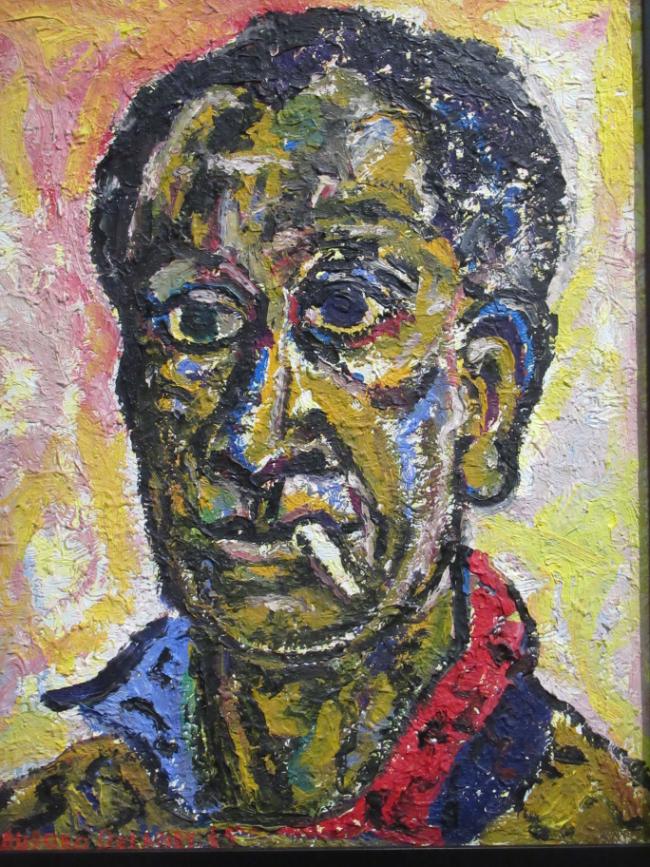
Beauford Delaney self-portrait
Lead photo credit : Monique on the march. Photo credit: Entrée to Black Paris
More in Black Paris, Jardin du Luxembourg, jazz in Paris, pantheon
Related Articles

By Marian Jones