
Celebrating Author George Sand on the 150th Anniversary of her Death
- SUBSCRIBE
- ALREADY SUBSCRIBED?
BECOME A BONJOUR PARIS MEMBER
Gain full access to our collection of over 5,000 articles and bring the City of Light into your life. Just 80 USD per year.
Find out why you should become a member here.
Sign in
Fill in your credentials below.
George Sand was one of the most influential figures in 19th-century France. To mark the 150th anniversary of her death on June 8th of this year, 60 members of the “Parliament of French female writers” are petitioning for her induction into the Panthéon
“The Good Lady of Nohant” has the ring of a medieval epic poem, whose main protagonist sets out on a quest, fighting dragons along the way. George Sand was undeniably a lady but whether a “good” one is contentious. I’d point to the work of the 19th-century poet Keats to illustrate her dualities: she sways between the archetypal femme fatale of “La Belle Dame Sans Merci,” a seductive, dangerous woman who ensnares men, and the narrator of his poem “The Human Seasons,” who feels deeply, dreams vividly, and finds peace in art, literature and nature.
Revered as a guardian angel by the peasants of the Berry region, grudgingly respected by Parisian literary circles, Sand was reviled by the establishment. Nohant, her beloved chateau with which she is irrevocably associated, represented a haven on her life’s journey. Within its framework flicker images of candlelit dinners with artists and writers like Eugène Delacroix and Victor Hugo, accompanied by echoes of her lover Chopin’s music, silenced when, after nine years, he left for Paris under a salacious cloud of gossip, with her daughter Solange. Many visitors come to Nohant throughout the year, hoping to capture the essential spirit of the chateau and the maverick who created it, immortalized as a romantic because of her titillating novels and scandalous love affairs.
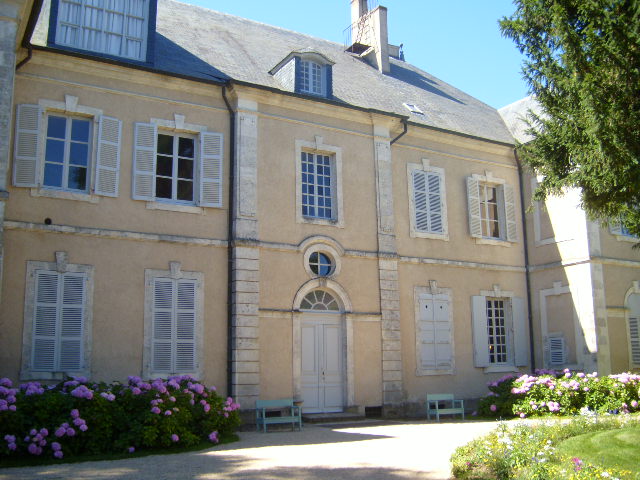
The house of George Sand. Photo: SiefkinDR/ Wikimedia commons
French society tried unsuccessfully to pigeon-hole George Sand. Vilified as a “damn lesbian” by Alfred de Vigny and a “slut” by Charles Baudelaire (both men were jealous of her success), Sand was regarded with suspicion for wearing men’s clothes, smoking in public, and for her love affairs with famous people, prompting a focus on the romantic exploits of her love life, rather than her intellectual and political ones. More recently labeled “androgynous,” she defied its meaning. Clothes were merely a means to an end, not gender-defining. She openly embraced her femininity and sexuality, challenging conformist values with courage and conviction.
She was born Amantine Lucile Aurore Dupin on July 1st, 1804, at 46 rue Meslay in Paris. Her father, Marcel Dupin, was a lieutenant in one of the cavalry regiments for Napoleon’s coronation on December 2nd that year. On his side, she was directly descended from European royalty; Sophie her mother, the beautiful but uneducated daughter of a Parisian bird-seller, embedded her firmly in the common people. Her mismatched parents allowed her to have one foot planted in the Empire, the other in the Republic, providing insights into the complexities and injustices of class. Her father’s aristocratic lineage linked her to the Bonaparte dynasty, yet she would later become a staunch republican.
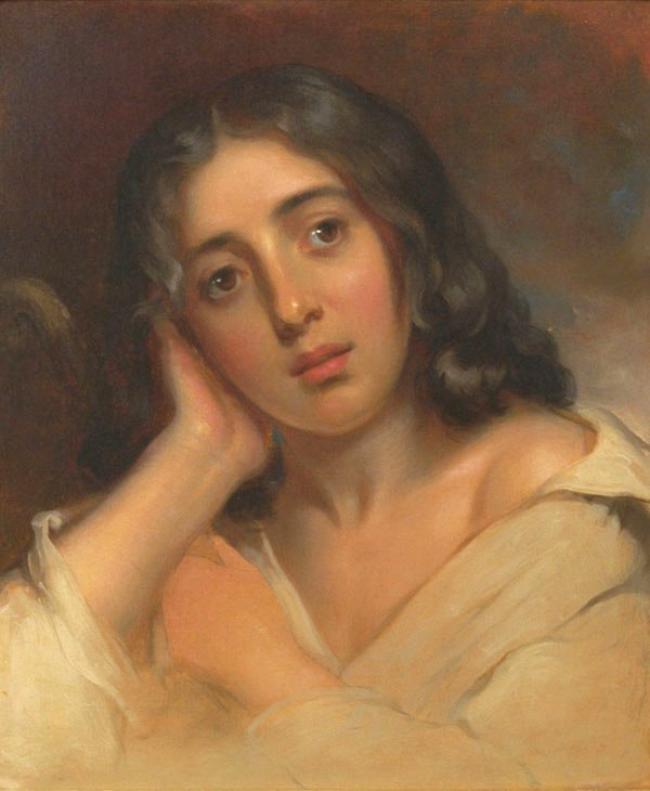
Portrait of George Sand by Thomas Sully, 1826, oil on canvas. Photo: Johnson Collection, Spartanburg, South Carolina/ Wikimedia Commons
Aurore’s early years were spent moving freely among different social groups, surrounded by adults who shaped her opinions. On returning from Spain, where her father was serving with Napoleon’s armies, she stayed with her parents in Nohant, her grandmother’s small chateau in the Berry countryside which she would later inherit. When her father died in a tragic accident, shattering her happy childhood, her grandmother, eager to gain custody of her granddaughter, paid an allowance to her daughter-in-law Sophie to live in Paris. Sophie admired Napoleon and until she left to live in Paris, her young daughter was swept up in her popular adoration for him. With Sophie banished, she listened as her grandmother disseminated anti-Bonaparte gossip in the same way she had disseminated gossip about Marie-Antoinette. Her tutor Deschartres, a progressive free-thinker, couldn’t tolerate anyone praising Bonaparte.
Aurore’s perspective on Napoleon was largely molded by her father, who before his death enthralled her with stories of the great man, whom he admired but did not always support. In a letter he wrote to his mother just after Aurore’s birth, he skeptically described the pomp and glory accompanying the coronation. Writing years later as George Sand, she added her own ironical reflections to her father’s account of Napoleon’s coronation before including it as part of her autobiography, L’Histoire de ma Vie. She made many insightful comments about Napoleon, some openly critical, causing the newspaper La Presse, in which her book first appeared in serial form, to eliminate the entire passage to avoid trouble with the authorities.
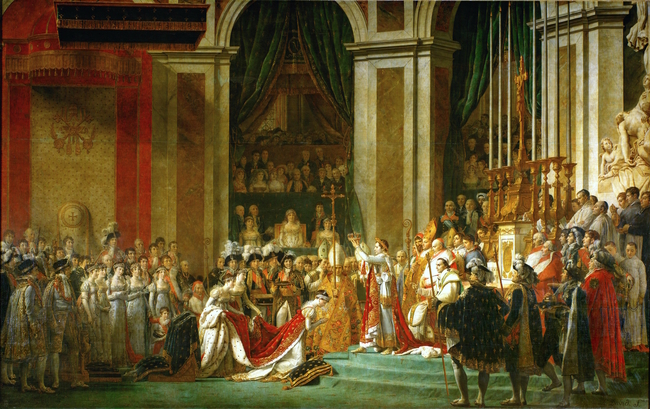
Joséphine kneels before Napoléon during his coronation at Notre Dame. Behind him sits Pope Pius VII. Jacques-Louis David.
As a young girl, she considered becoming a nun, prompting a quick return to Nohant from her Parisian convent school, where she had been sent to curb her wild ways. With the unconventional Deschartres by her side, she read everything from Aristotle to Benjamin Franklin, while mixing with local young people and wearing boys’ clothes when riding around the countryside. After her grandmother’s death, she inherited Nohant but went to Paris to live with her mother Sophie, who dismissed her daughter’s intellectual education as being pointless for young women.
Disenchanted with her mother’s frivolous way of life, she married Baron Casimir Dudevant at age 18, returning to Nohant to live, only to find herself tied to a conventional, controlling husband. Her epiphany came nine years and two children later, when she did the unthinkable. On discovering his will in which he described her as “idiotic,” she negotiated a settlement surrendering her whole estate to him in return for an annual allowance. In 1831, leaving her son with his father, taking her daughter, she followed her friend, the writer Jules Sandeau, to Paris.
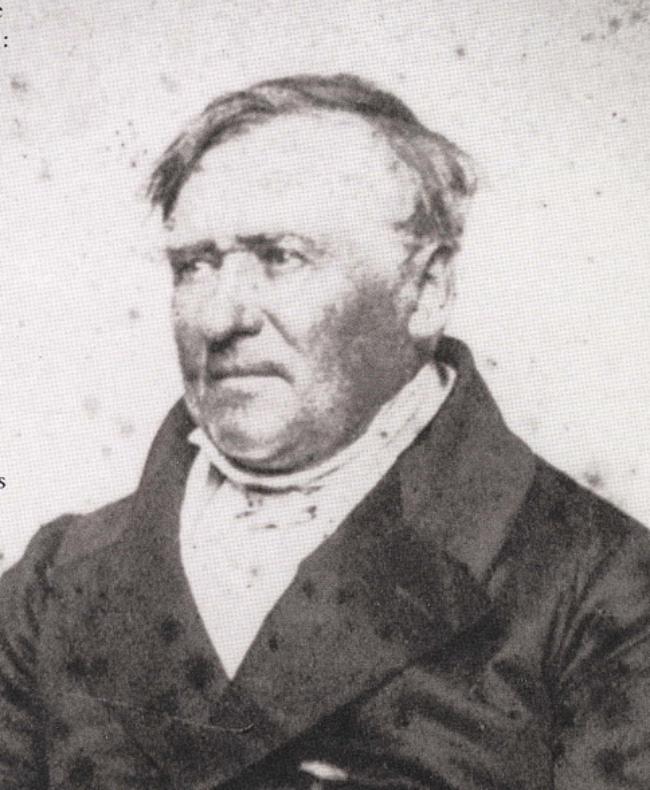
Casimir Dudevant, Sand’s husband, in the 1860s. Unknown author. Public domain.
As an intelligent young woman arriving in a city which had just had a revolution, Sand was determined to take advantage of her new-found freedom. Critics have dismissed this time of her life as self-styled rebellion, depicting her as cross-dressing, cigar smoking and promiscuous. Rejecting society’s restrictions, she immersed herself completely in Parisian life, living with Jules Sandeau, now her lover.
Dressing in men’s clothes, she walked the streets freely, moved in literary and political circles, attended theaters and cafés where women were unwelcome, and most importantly, was taken seriously, becoming a journalist for the newspaper Le Figaro. She got to know several poets, artists, philosophers and politicians, gaining a reputation as a formidable political and literary force by leading figures of the time.
In a male-oriented society in which women did not have opinions worth valuing, certainly not political ones, her obvious political engagement gave her an unprecedented perception of power and the men who controlled it, and by emulating their behavior, coolly turned convention on its head. The number of prominent political figures of the 19th century with whom she formed strong friendships far exceeds that of her lovers, although several of them were not immune to the way she wielded her power, intellect, and sexuality.
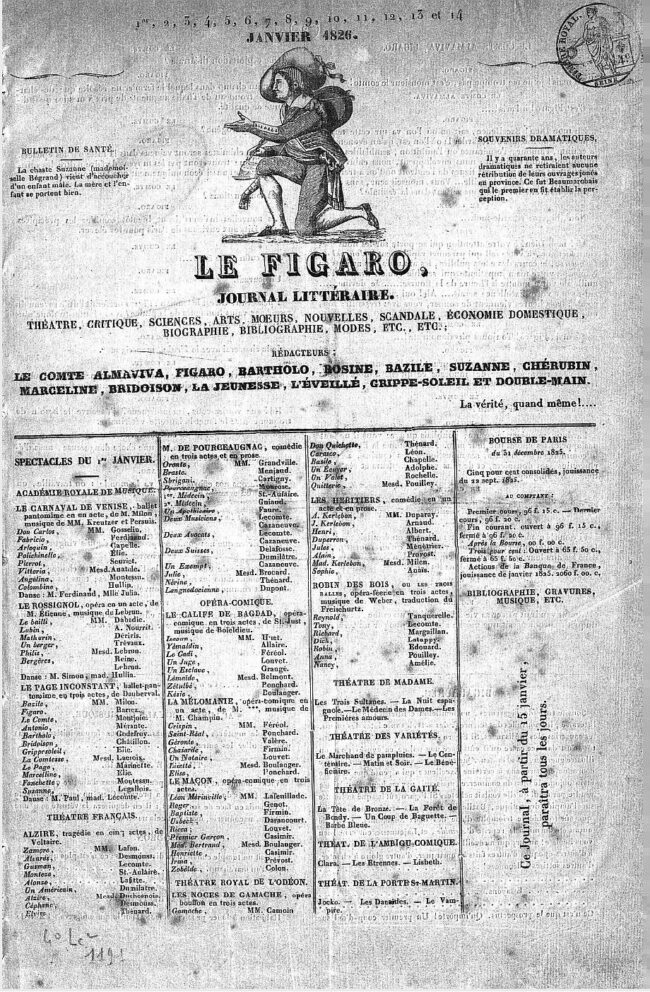
Le Figaro, Premier numéro, daté du « 1er au 14 » janvier 1826. Credit: Bibliothèque Nationale de France / BNF / Gallica. Public domain.
The correspondence between George Sand and Louis Napoleon Bonaparte, which lasted throughout his imprisonment for leading a failed uprising to depose the monarchy until his escape and circuitous route back to Paris, expresses mutual admiration for their strong socialist political beliefs. Universal suffrage, the right of assembly, and the freedom of the press were ideals she believed would be upheld when the Second Republic was proclaimed on February 24th, 1848. She rushed to Paris where she was no drawing-room radical or champagne Republican striking a pose. While other writers stood in the wings, George Sand took center stage, becoming a member of the provisional government of 1848, drafting bulletins and proclamations and starting her own newspaper. She met political activist Armand Barbès, pardoned by Louis Napoleon after 10 years in prison for plotting to overthrow the monarchy, and appointed by him to the Constituent Assembly in April 1848. During those early, heady months of the revolution, they developed a strong, intellectual relationship, discussing political issues as well as their love for literature.
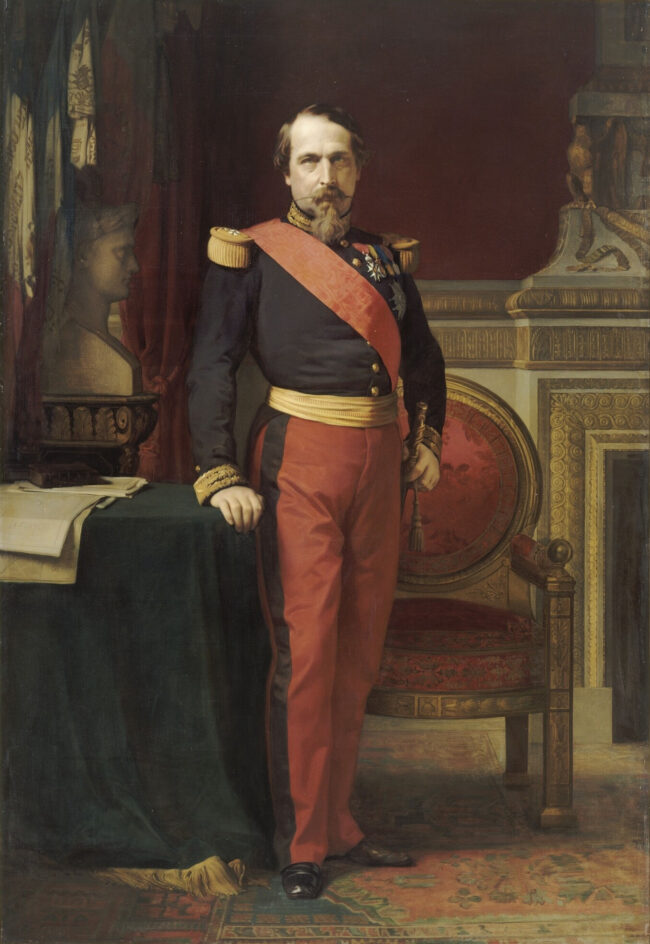
Portrait of Napoléon III by Hippolyte Flandrin. Public domain.
Sand’s brief collaboration with the provisional government deteriorated rapidly when her confidence in Louis Napoleon began to waver. Openly denouncing the terrible repression of the June insurrection, she clung to the hope the Prince Regent could moderate the repression. Afraid of compromising him, she decided against publishing the letters from their correspondence, and supported his election as president. When Barbés was imprisoned for the second time and deported in 1849 for trying to overthrow the government, all illusions of socialism disappeared and she was outspoken in her criticism of the conservative evolution of the regime.
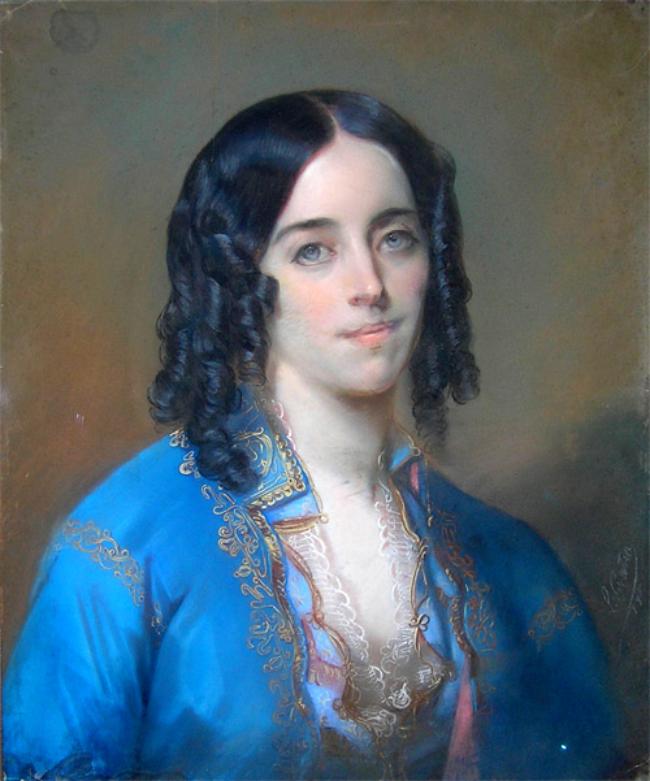
George Sand by Charles Louis Gratia (c. 1835). Image: Site Charles Louis Gratia/ Public domain
While many Republicans were imprisoned or went into exile after Louis Napoléon’s coup d’état on Dec 2nd, 1851, she remained in France. Louis Napoleon tolerated her because she was too famous to suppress – and she still had his letters. Maintaining an ambiguous relationship with the new regime, she appealed to him for clemency and amnesty, negotiating pardons and reduced sentences for many of the people in the revolution. Through her intervention some were saved from execution, others given commuted sentences. When others were being silenced, she used her reputation as an astute political analyst and mediator, and her influential connections to speak out, a constant thorn-in-the-side of the government.
The final straw came a year later, in 1852, when Louis Napoleon declared himself emperor. From thereon she regarded him with disdain, having more respect for his cousin Prince Napoleon Jérôme, whose ear she had and who held far more liberal views than his cousin. The Second Empire viewed her politics with suspicion, stretching its long arm to Nohant where she was under police surveillance. Imagine the turmoil among government spies when the police at La Chatre discovered that a grand carriage, which had entered the Château de Nohant, the home of Madame George Sand, belonged to Prince Napoleon Jérôme.
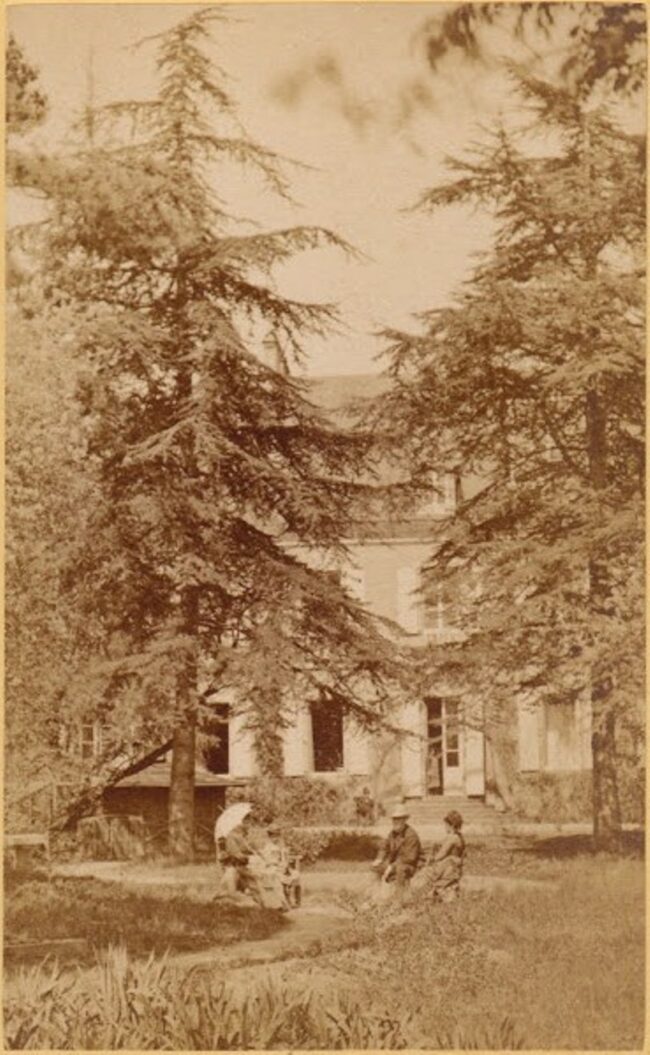
George Sand under a parasol, surrounded by her two granddaughters, Aurore and Gabrielle, and opposite her son Maurice Sand with his wife Lina Calamatta. Public domain
She lived through the whole Napoleonic dynasty, becoming embroiled in France’s social and political turmoil. Her extensive knowledge of political and historical works and her fearless involvement in politics was recognized both inside and outside France, with important figures of the day often asking her advice. Still exiled, Armand Barbès asked her to write a “Book of Struggle,” and Italian politician Guiseppe Mazzini asked her to write a novel which would influence Italian unity. She courteously rejected Mazzini’s request, saying she couldn’t write a novel to serve a cause of which she knew so little. She corresponded regularly with both Barbès and Mazzini over the years, regarding them as true heroes of the revolution.
Paris was George Sand’s playground. Here, adventures were embarked upon, obstacles overcome, friends and lovers lost and gained. Here she fought and played hard, defied convention. The city was her soapbox, from where she fearlessly propounded her belief in socialism, even when it was dangerous to do so. Nohant was her safe haven, where she could entertain and discuss freely everything from politics to art. Upon her death, she was refused a religious service by the church. She was buried on June 10, 1876; Prince Napoleon Jérôme was a pallbearer, joining other Parisian friends and leading figures such as Flaubert and Dumas in carrying the coffin themselves of the “Good Lady of Nohant.” They were followed through the village by thousands. Victor Hugo, who’d sparred with her for decades, delivered a eulogy: “the lyre was within her.”
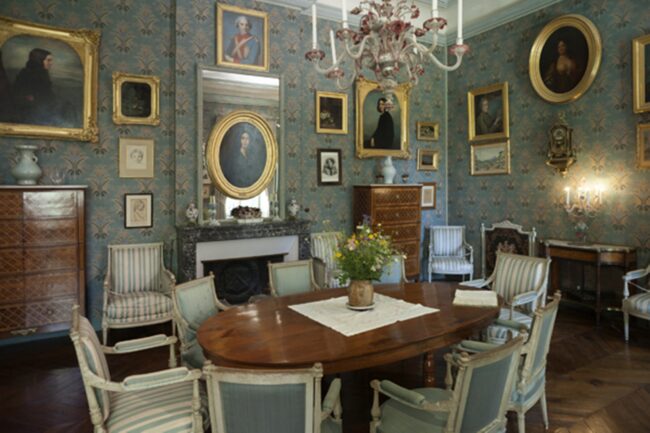
George Sand’s grand salon at Nohant. Photo: PMRMaeyaert / Wikimedia commons
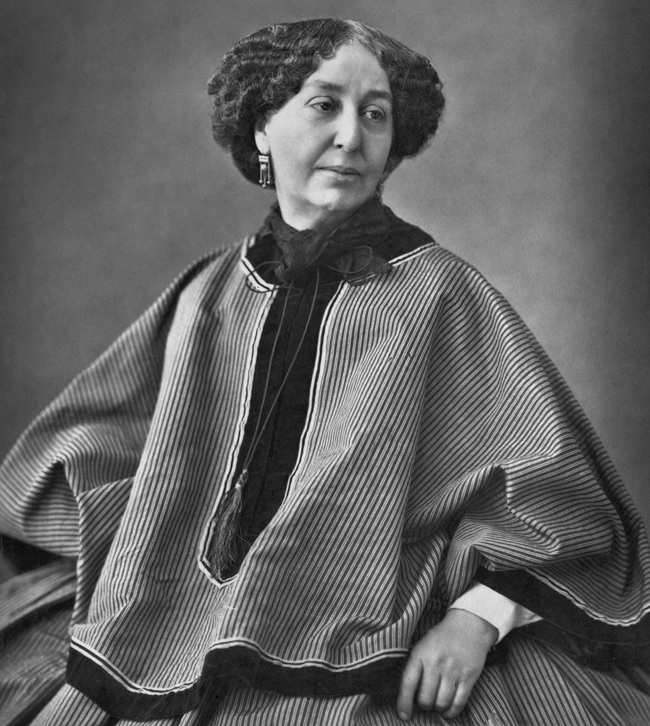
Lead photo credit : George Sand. Portrait by Nadar - Galerie Contemporaine, 126 boulevard Magenta, Paris - Photographe Goupil [et] C° - Cliché Nadar, 51 rue d'Anjou-Saint-Honoré à Paris. Gallica. Ministère de la Culture (France) - Médiathèque de l'architecture et du patrimoine.
Related Articles


By Anne Price