A Journey to Japan Without Leaving Paris
- SUBSCRIBE
- ALREADY SUBSCRIBED?
BECOME A BONJOUR PARIS MEMBER
Gain full access to our collection of over 5,000 articles and bring the City of Light into your life. Just 80 USD per year.
Find out why you should become a member here.
Sign in
Fill in your credentials below.
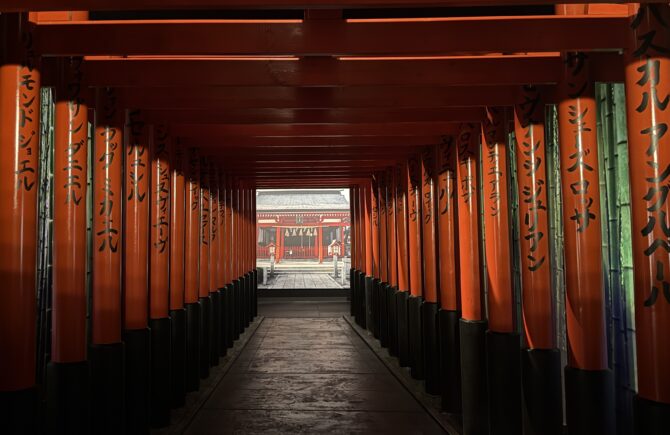
You walk under a crimson torii gate, leaving Paris behind for a moment, lost in space and time. A few rooms later, you are surrounded by waves of color and light as images by Hokusai and Hiroshige drift across the walls in a hypnotic dance.
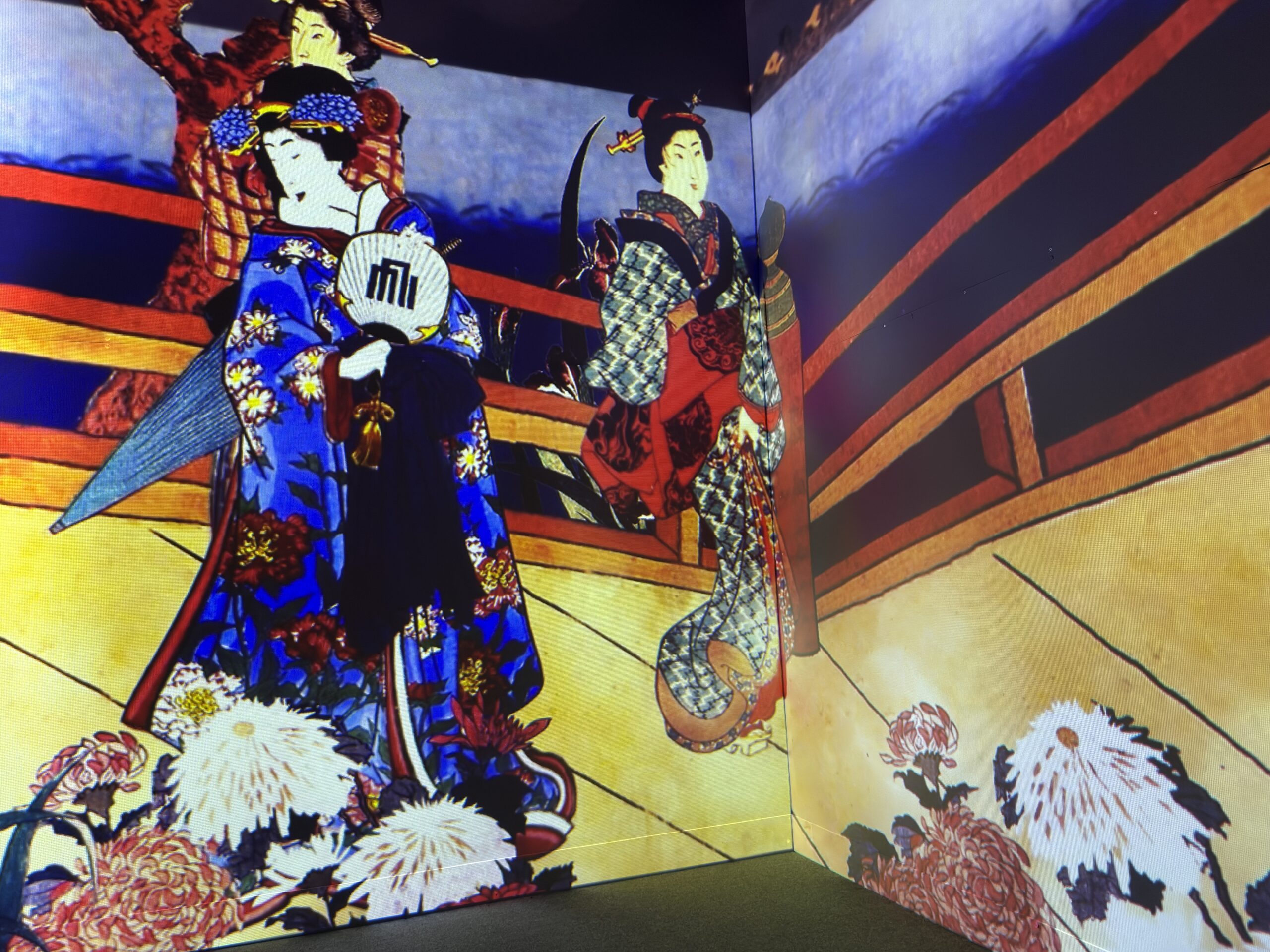
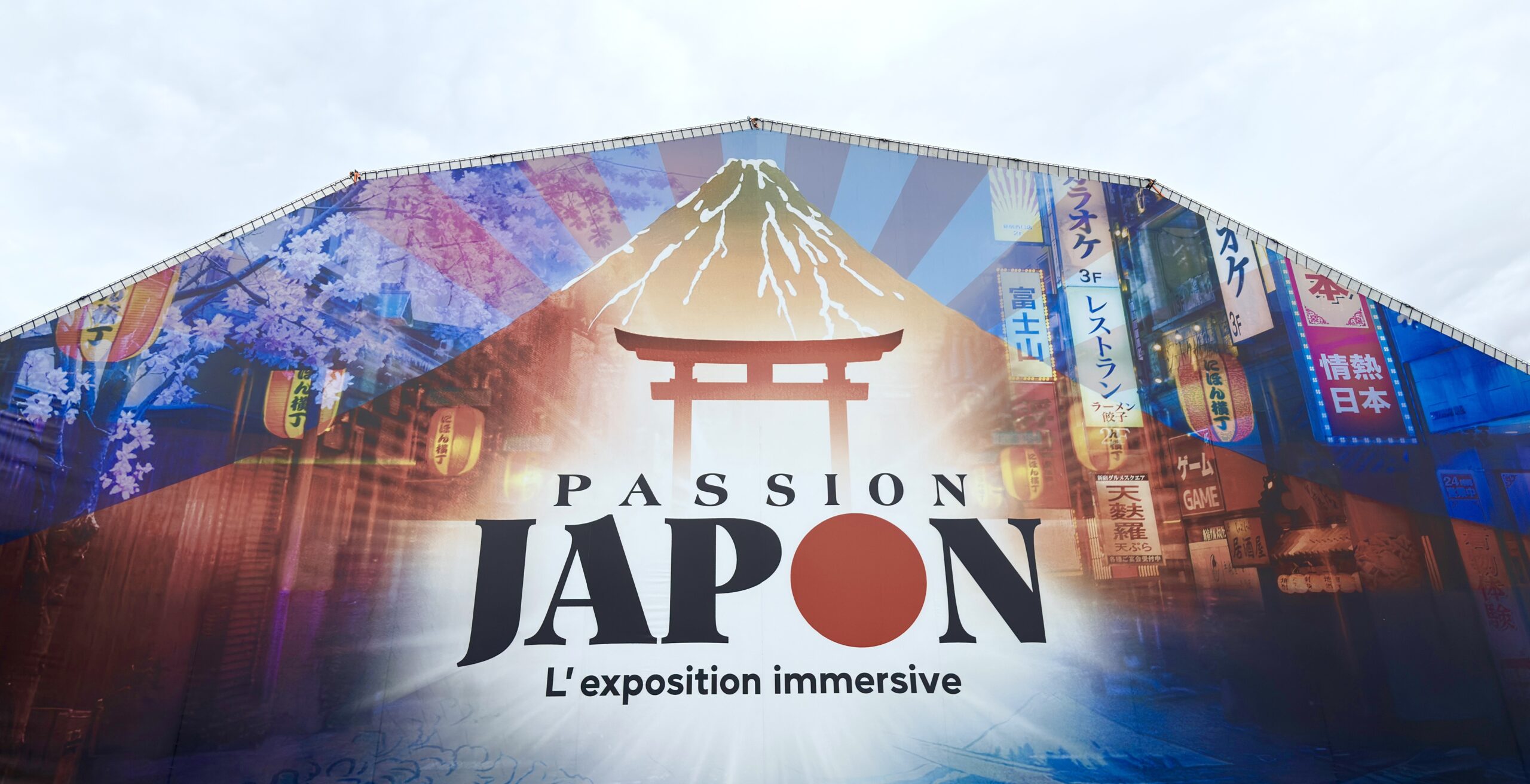
This is Passion Japon, a new exhibition that attempts to distill the essence of Japan —its rituals, artistry, history, and contradictions — into a single immersive experience.
It is true that physically traveling to the Japan archipelago can be an arduous journey, but one that rewards you with many layers of culture and tradition.
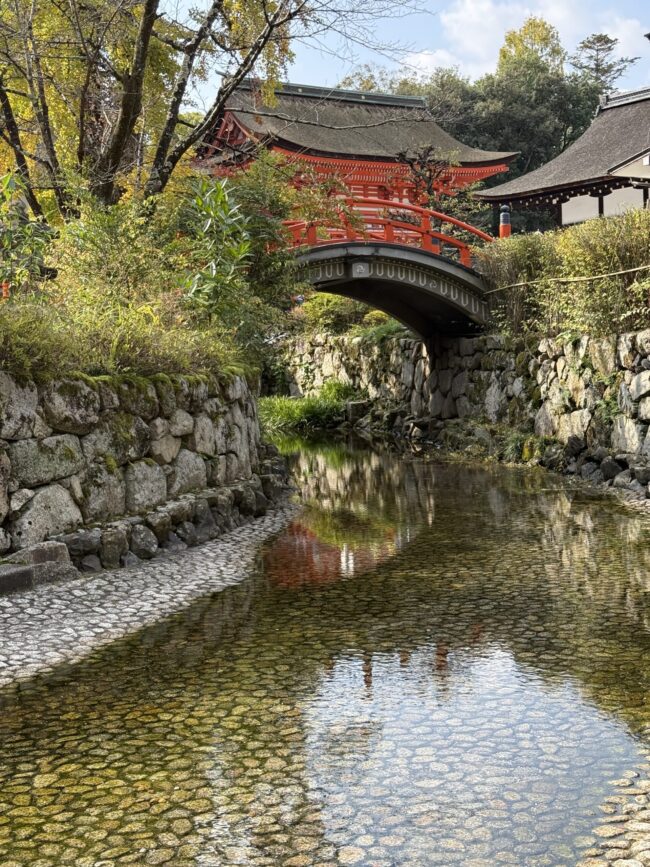
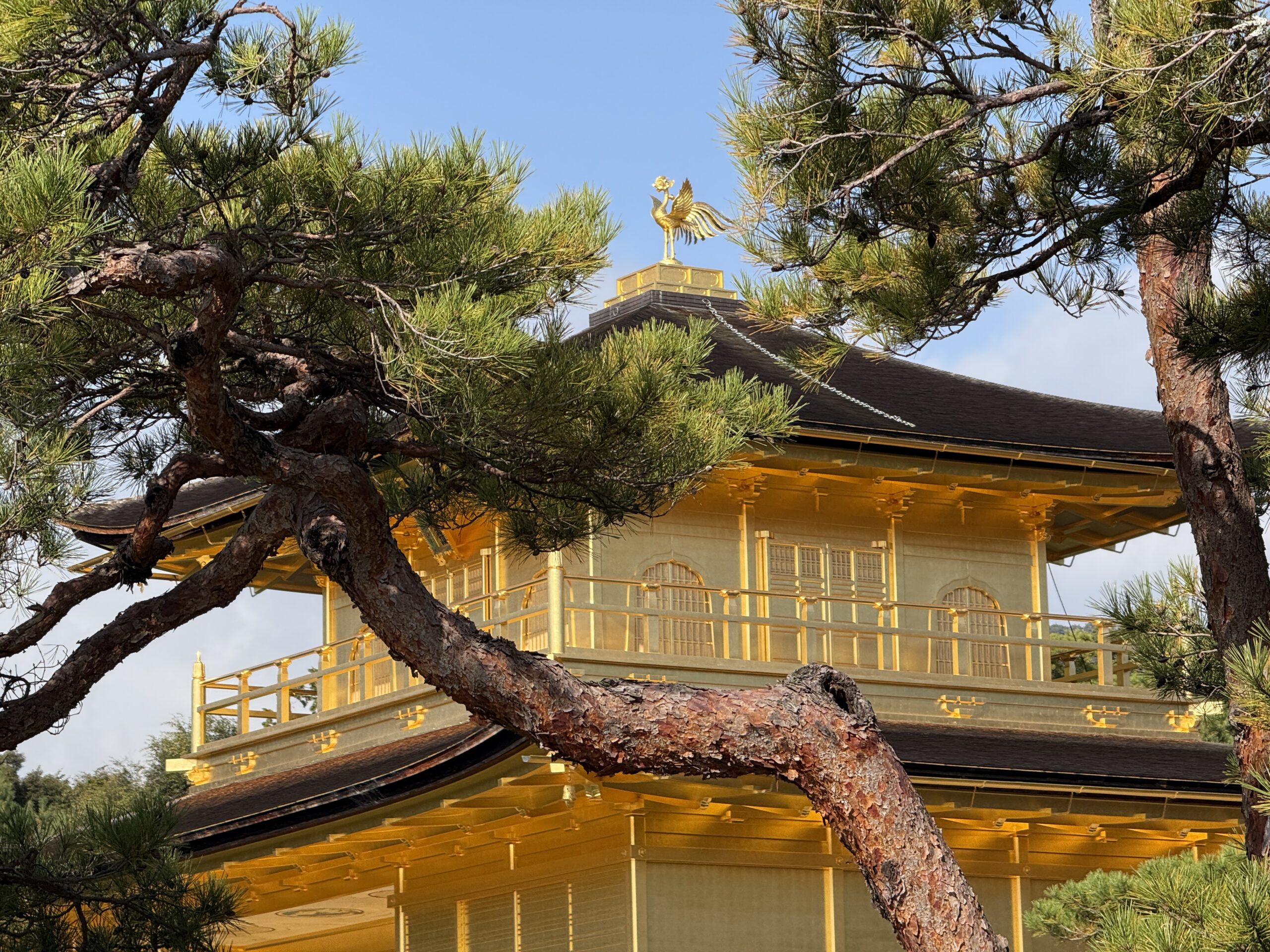
The real Japan. © Meredith Mullins.
Good news. If you can’t make the long haul now, this exhibition will bring a sense of Japan to you at the Parc de la Villette.
Until August 23, you can be transported to the magic, innovation, and grace of a nation where ultramodern energy and traditional life are interwoven.
Passion Japon — described by its creators as a “living museum” and housed in the Espace Chapiteaux — draws you into the sights, sounds, culture, food, and history of this ever-evolving nation.
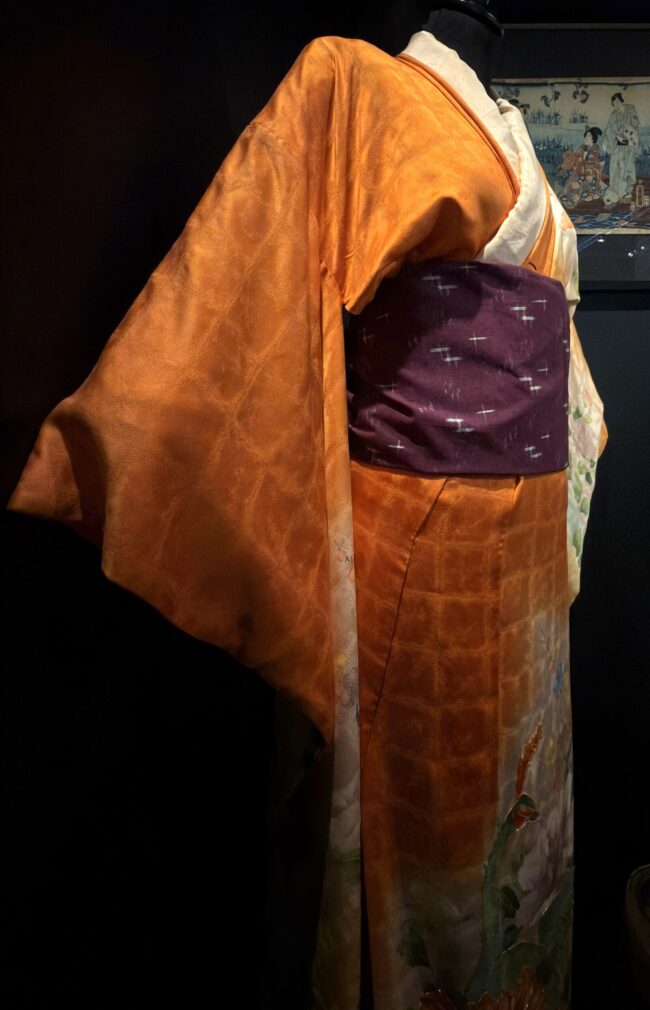
An elegant kimono with obi. © Meredith Mullins.
The exhibit hits the highlights, from the Zen gardens of Kyoto to medieval samurai warriors, from the gentility of the traditional tea ceremony to the global popularity of manga and video games, and from the elegance of silken kimonos to the vivid imagery of some of the most celebrated Japanese artists.
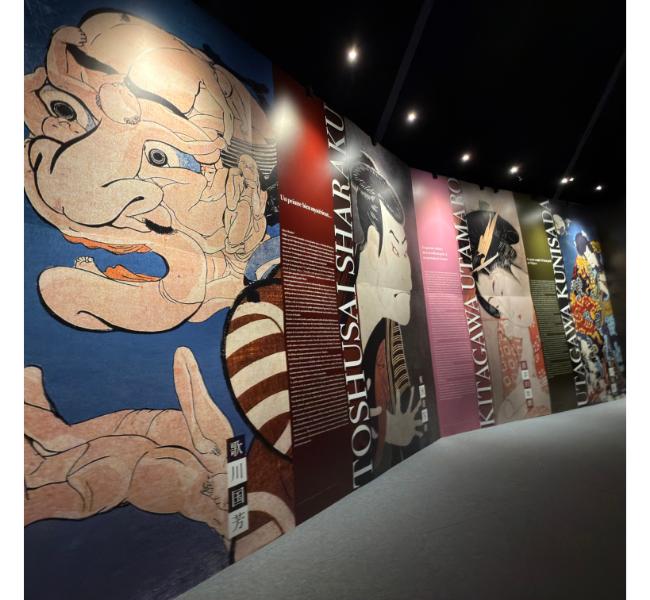
Work from Ukiyo-e print designer Tōshūsai Sharaku. Photo by Meredith Mullins.
Each room presents facts and stories (in French and English) and authentic artifacts from different eras of Japanese history.
Laying a Foundation
Entering the exhibit, you find a wall of fascinating facts about the country, as well as intriguing comparisons between Japan and France. For example, the exhibit notes:
- Japan’s population is about twice that of France despite France being significantly larger.
- The populations of the capitals — Tokyo and Paris — are 13.9 million versus 2.1 million.
- Tokyo Disneyland welcomes about 12 million visitors a year compared with 10 million at Disneyland Paris.
- The average number of magnitude 4+ earthquakes per year is 6 for France and 973 for Japan (yikes!).
- Staple foods in Japan are rice and seafood while France is known for meat, cheese, and bread.
- On average, people live longer in Japan than in France.
While digesting these facts, you’ll find a moment of calm in a typical Japanese garden, historically designed as a miniature world composed of minerals (rocks), plants, and water but where water can also be represented by gravel, sand, or moss.
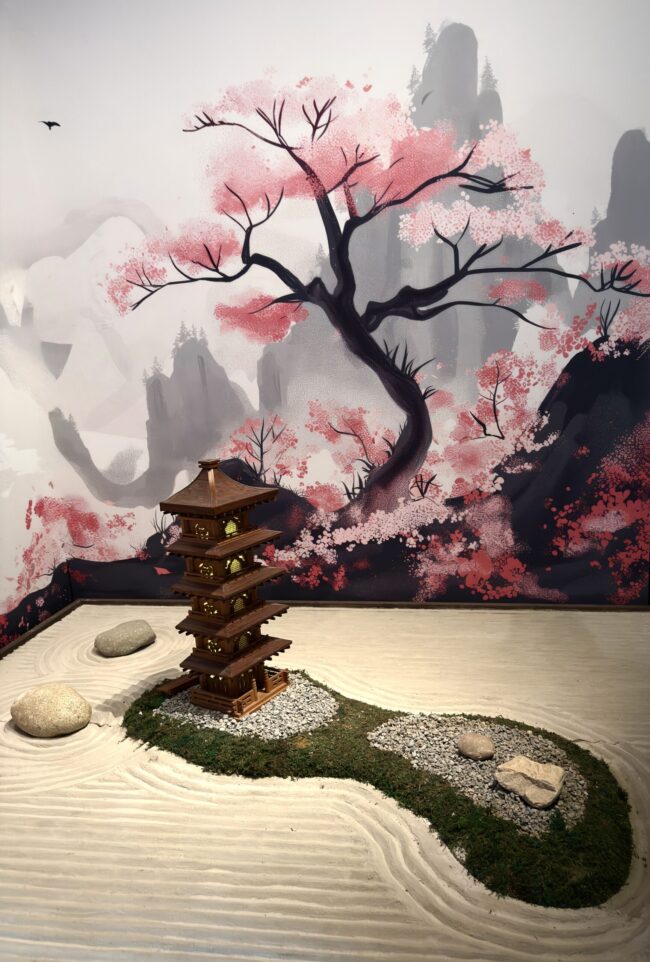
An example of a Zen garden. © Meredith Mullins.
You then walk through red torii gates, the traditional entrance to Shinto shrines, symbolically separating the secular world from the spirit realm. In Japan, Shinto and Buddhism coexist in harmony. The exhibit explains that Buddhism arrived via Korea in the 5th century whereas Shinto is believed to have existed since prehistoric times.
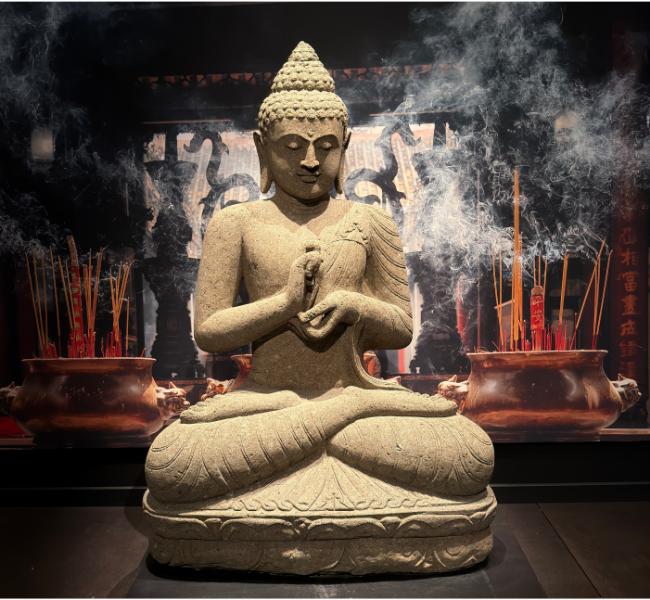
Buddhas are omnipresent in Japan. © Meredith Mullins.
The samurai appear next. They were military nobility serving powerful lords. The exhibit notes that the Japanese often prefer the term bushi, referring not only to warriors but also to a broader code of honor and cultural practice, including the martial arts. The wealthiest of this fighting class were also patrons of the arts and sometimes artists themselves. Their legacy lives on in literature, cinema, and comic books.
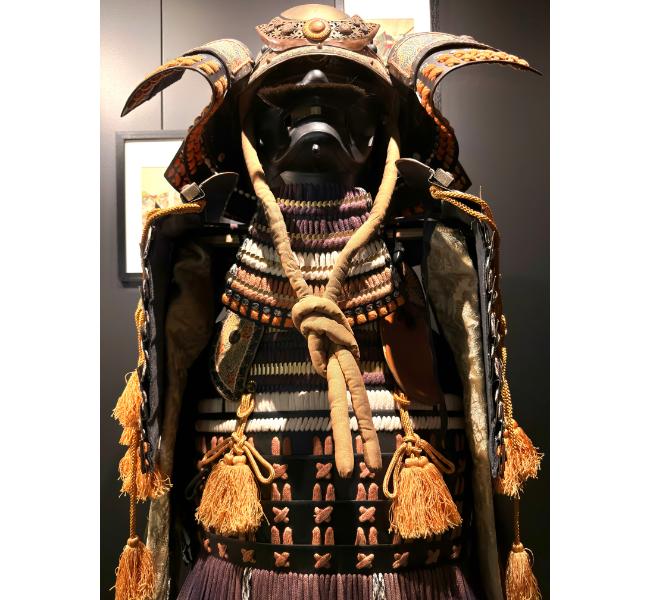
How would you feel facing this warrior in battle? © Meredith Mullins.
Although the exhibit devotes limited space to Japanese clothing, it showcases some beautiful embroidered kimonos and a display of silk, so visitors can feel the quality of the materials used to make this elegant attire for women.
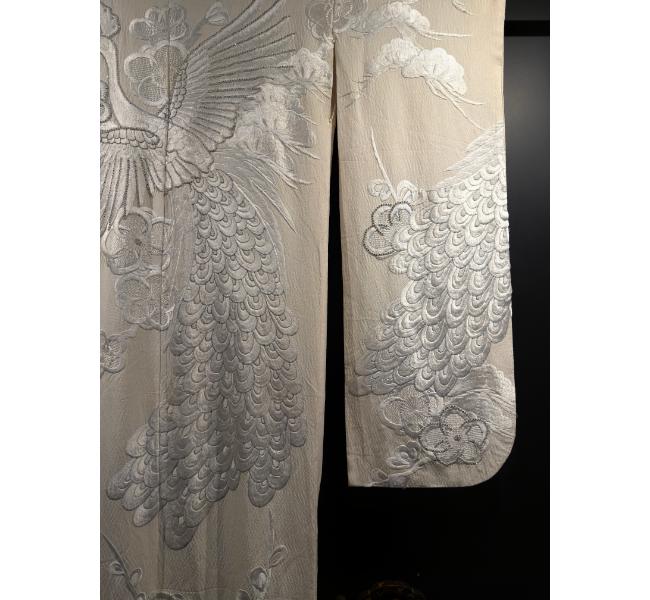
Delicate kimono embroidery. © Meredith Mullins.
Parasols and fans are also on display, an integral part of traditional fashion.
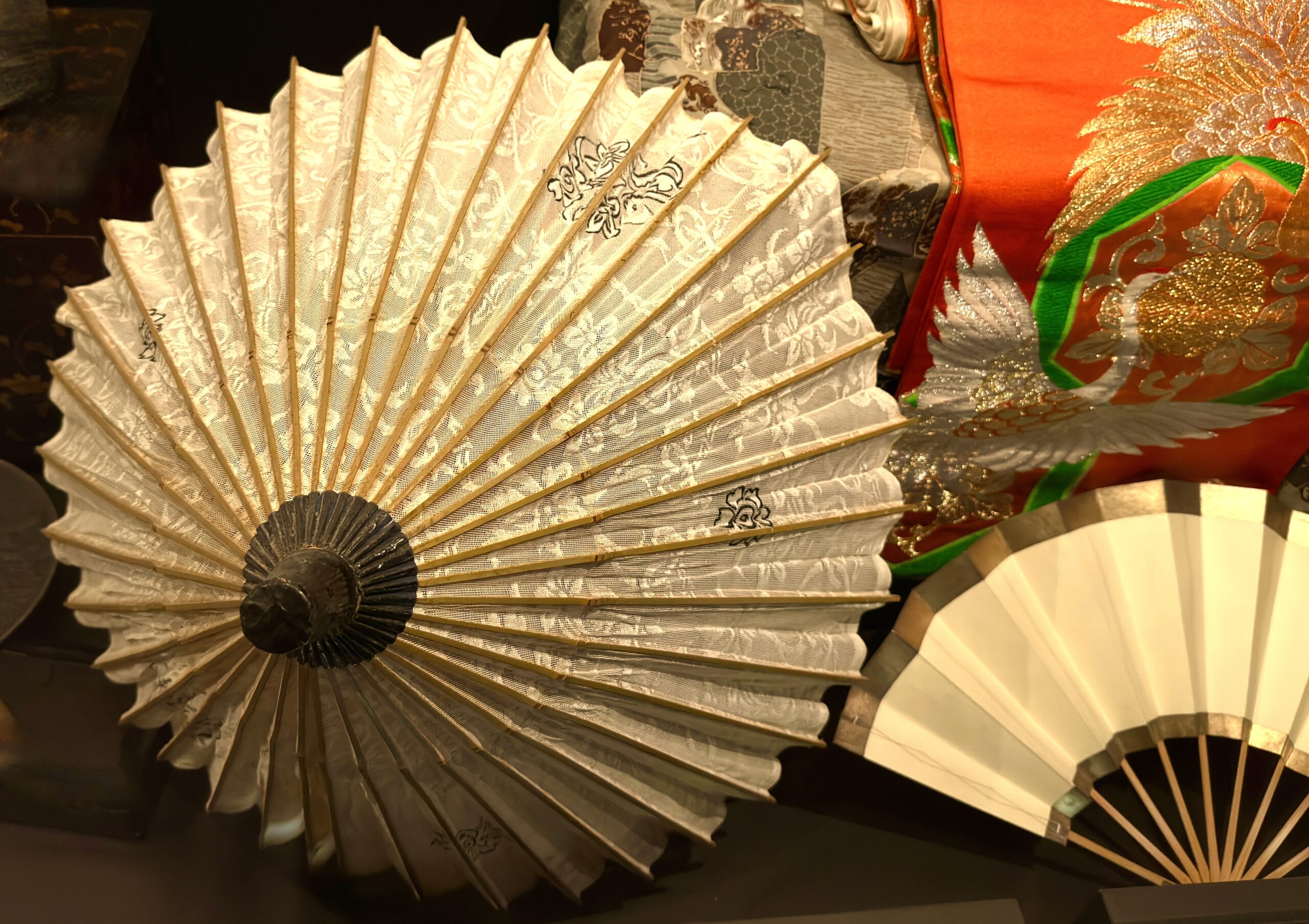
What’s missing is a glimpse of Harajuku youth street fashion, which would further highlight Japan’s striking contrasts between tradition and modernity.
Paying Tribute to the Japanese Arts
The next rooms focus on the arts, especially those of daily life, which have always been central to Japanese culture and philosophy. Origami, ikebana (flower arrangement), calligraphy, and the tea ceremony all reflect a deep reverence for beauty and expression— both grand and subtle.
Origami, the art of paper folding, dates back to the 1300s and is used in both ceremonial and everyday contexts.
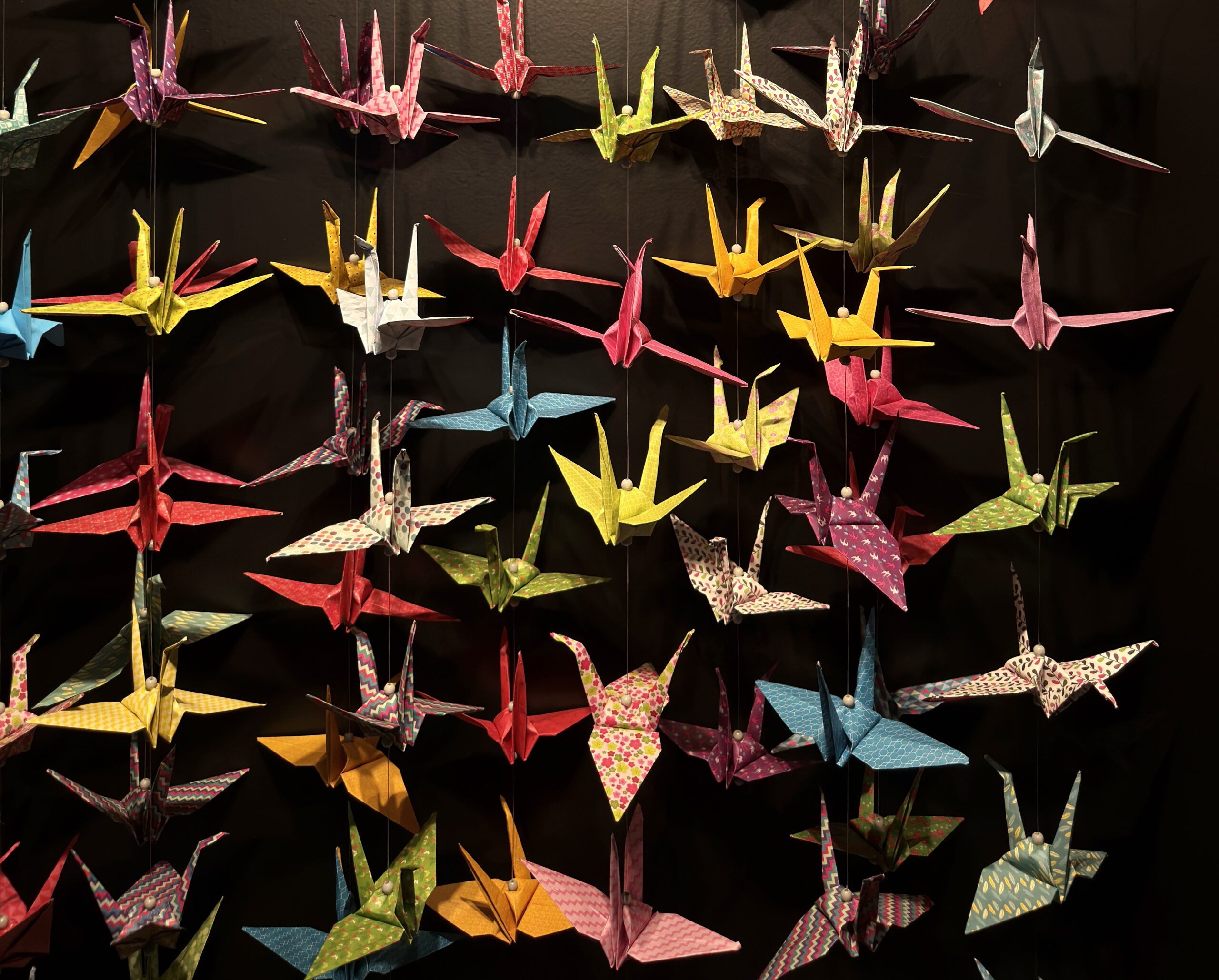
Across Asia, mastery of the “arts of the brushes” has long been highly valued, and in Japan, calligraphy remains one of the most prestigious disciplines.

One particularly captivating art form featured is kintsugi, the art of repairing broken objects using lacquer and powdered gold. It originated when samurai were often gifted tea bowls or other objects as a reward, but the gifts were sometimes broken. The samurai sought master artists to repair them. Instead of hiding the cracks, kintsugi highlighted them, turning damage into part of the object’s beauty.
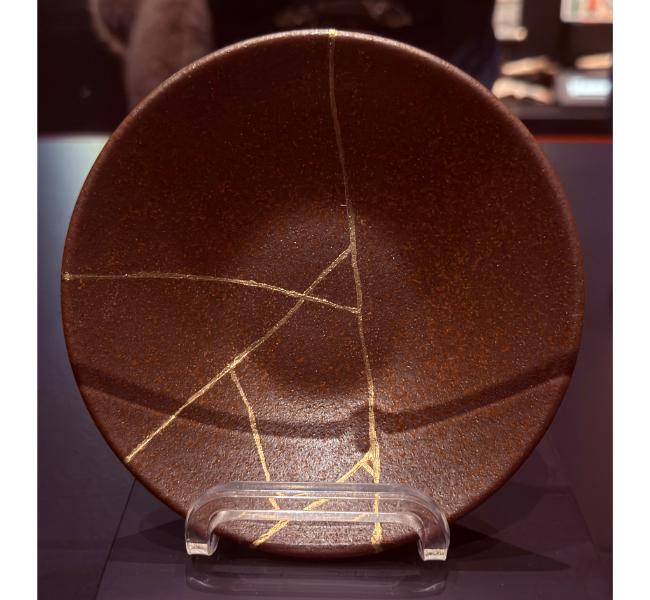
Kintsugi is the art of repairing broken objects with gold, highlighting the flaws as part of the object’s beauty. © Meredith Mullins.
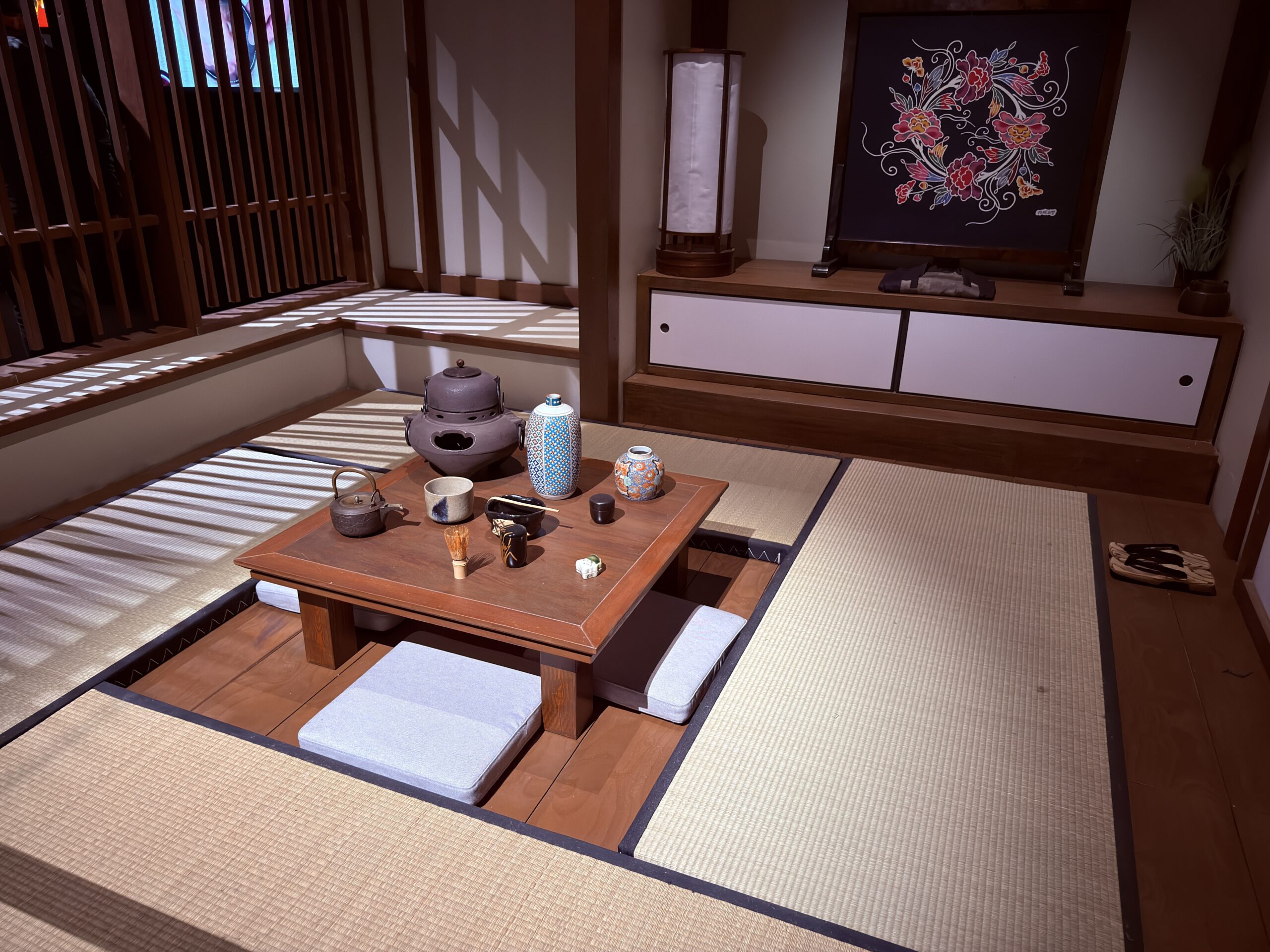
The tea ceremony (chanoyu) is described as a carefully choreographed ritual among friends including discussions about the flowers or calligraphy decorating the room as well as a precise sequence of steps to prepare and drink the green tea. Every object used in the ceremony is thoughtfully crafted and integral to the meditative experience.
The next room explores the two major Japanese theater arts — Noh and Kabuki. The display explains that Noh is a traditional musical dance-drama that emerged in the 14th century. The male performers chanted, sang, and danced to flute and drums telling stories inspired by history. They wore layered costumes and finely carved wooden masks.
Kabuki originated in the early 17th century and was more popular with townspeople rather than aristocrats. While it was originally performed by men and women, Kabuki today is typically performed only by men. Known for its vibrant costumes and dramatic makeup, Kabuki offers lively, entertaining performances in contrast to the quieter, more meditative nature of Noh.
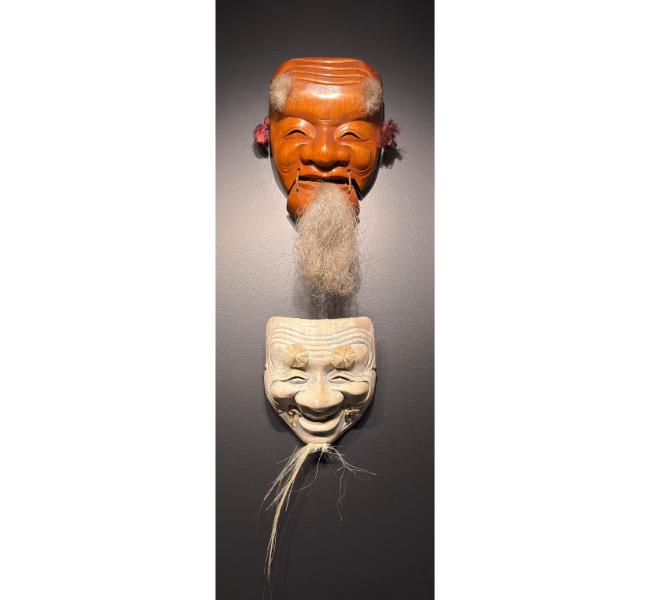
Masks for traditional Japanese theater. © Meredith Mullins.
Feeling the Energy of Modern Japan
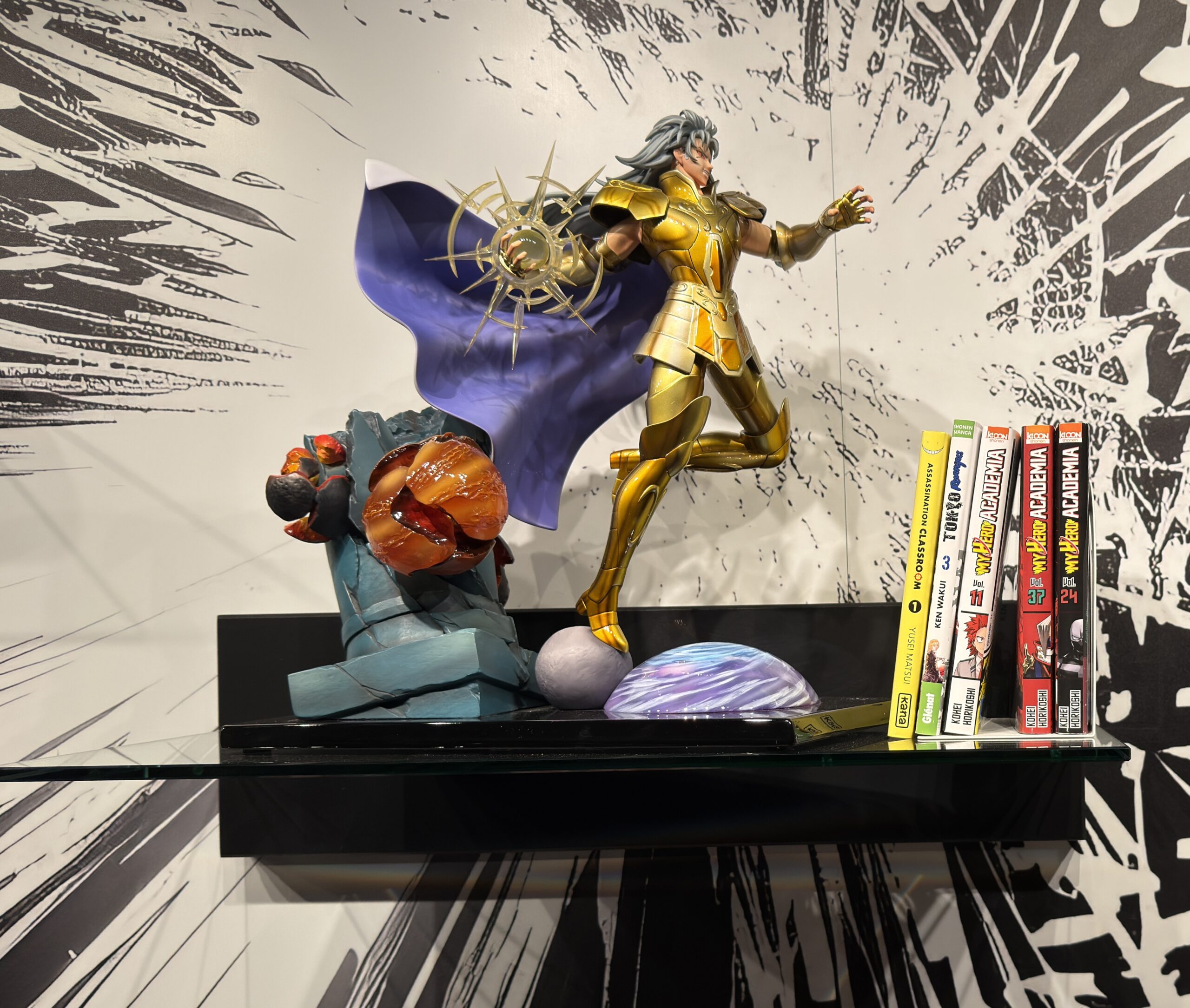
The exhibition then shifts to manga and video games — two popular Japanese modern treasures that have taken over the world.
Manga means comic book in Japanese and emerged in the early 20th century. The most popular series often become anime, films, or video games.
The golden age of video games was fueled by the Japanese companies Nintendo, Sony, NEC, and SEGA.
More rooms follow with a whirlwind tour of Japanese cinema, tattoos, martial arts, cuisine, and lodging, including a life-size replica of a capsule hotel module.
The capsule hotels began around the 1960s and 1970s, designed to provide affordable accommodation (in limited space) mainly near train stations. The most common clients were businessmen (often drunk … Passion Japon’s words, not mine) who missed their last train home.
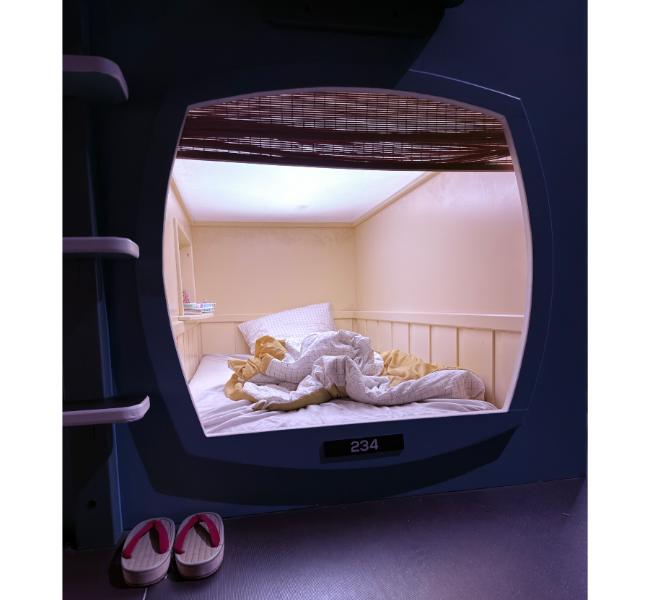
An affordable evening for $20 to $40 (including TV and air conditioning!).
Immersion into Floating Worlds
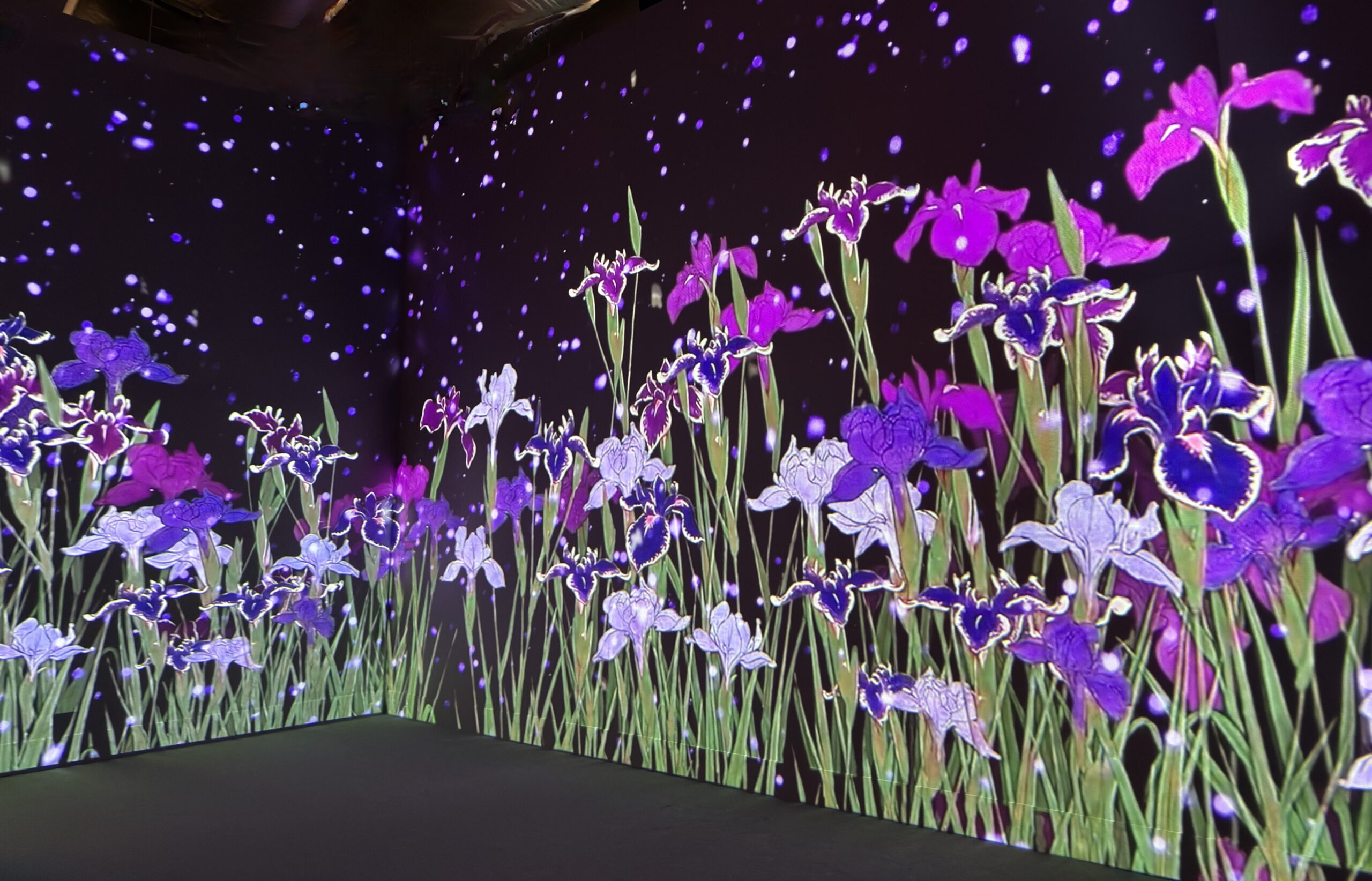
The final rooms are the most psychedelically immersive part of the show. Like the Paris Atelier des Lumières exhibits, the images dance on all the walls of the room and move and merge as you are enveloped in light, sound, and color. These installations pay tribute to the Japanese art form called ukiyo-e, which means “floating world” and honor several Japanese masters, such as Hokusai and Hiroshige. They also inspire children to spontaneously dance in the light and motion. Freedom of spirit to be admired.
What’s Missing from the Exhibit?
You would think that for a truly immersive experience of Japan, you would at least find the beloved Japanese heated toilet seats in the Passion Japon restrooms. Sadly, that detail is missing.
Not to dwell on that feature, but when you return from Japan and sit on your first cold toilet seat, you can’t help but pledge to immediately return to the comforts of Japan or at least to buy a Japanese toilet to install in your own bathroom. (Note: the toilets also play music and do many other wondrous things.)
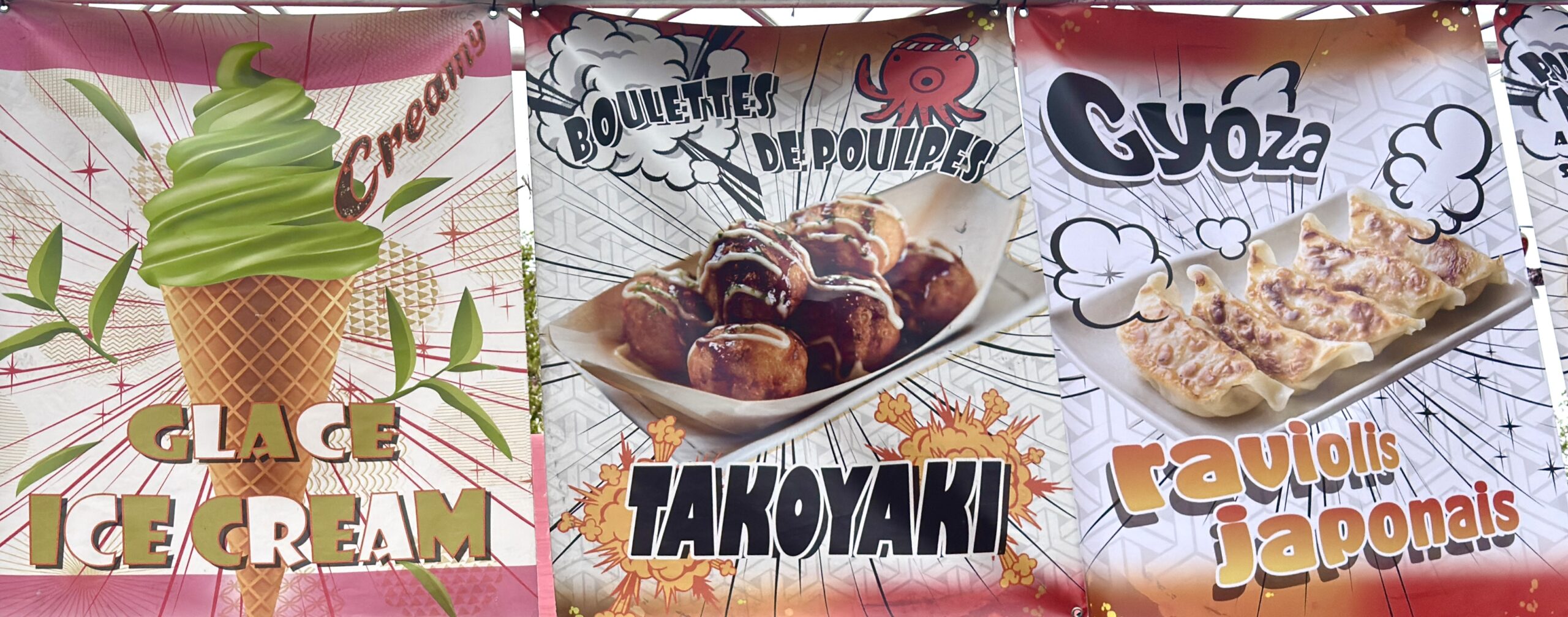
Outside, the Japanese food stand sets a low bar compared with the extraordinary culinary experiences Japan is known for, such as super fresh seafood, locally-grown rice, and carefully crafted delicacies. Still … you can savor a matcha ice cream treat. And, if you close your eyes, you might just feel transported.
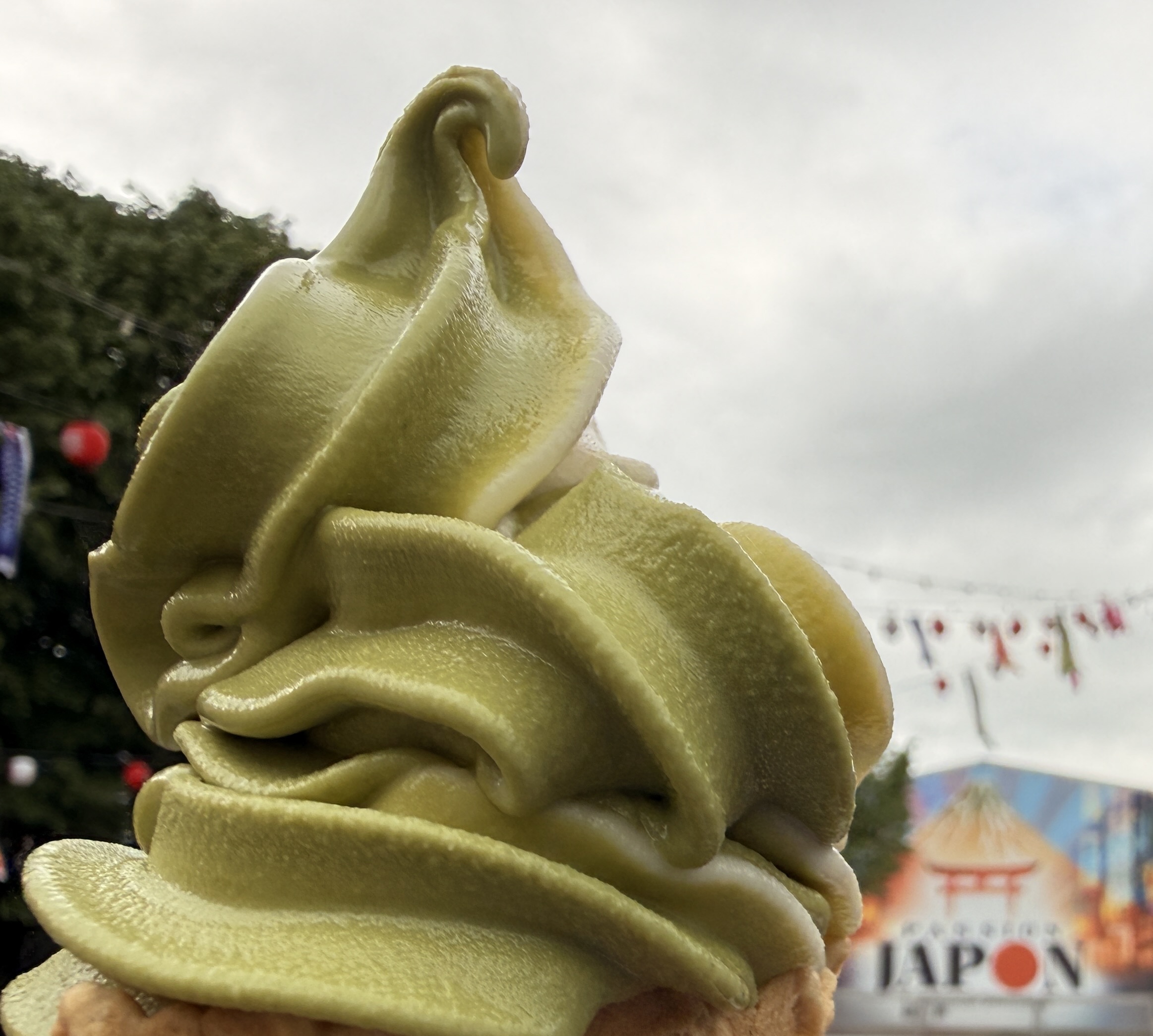
Of course, Passion Japan is not the real thing. It inevitably feels somewhat superficial because nothing could compare to wandering Japan’s streets, sitting quietly in the temples, or eating a delicious kaiseki meal.
The exhibition faces the challenge of defining a rich and layered country — with centuries of cultural, religious, and artistic history — in just an hour or two of rooms.
However, it is not as kitschy as I thought it would be and is worth a visit as a thoughtfully produced introduction to Japan. More importantly, it may inspire you to book that long-awaited adventure.
Information about Passion Japon can be found here.
Author/Photographer Meredith Mullins is presenting her Japan photographs (The Spirit of Japan), along with Japan guide Julien Chameroy and kimono expert Momoko Akita at Adrian Leeds’ Après Midi gathering on May 12 at 3 pm at the Café de la Mairie at 51 rue de Bretagne in the Marais. The event is free for the public. Join us.
Lead photo credit : Shinto torii gates. © Meredith Mullins.
More in Japan, Japan in Paris
Related Articles